The Role of Nouns in English Syntax

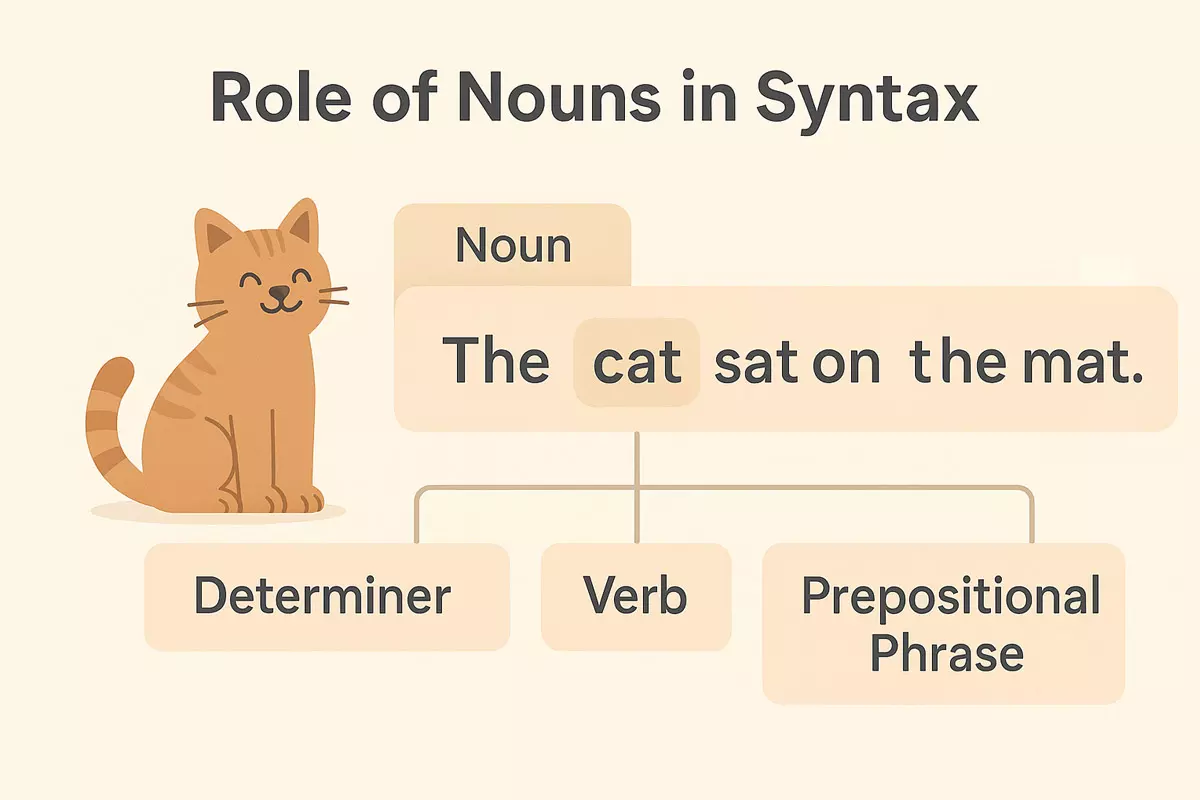 Here we how nouns function as the main part of noun phrases, where they appear in sentences, their role in clause structure, and their connections to verbs, determiners, and prepositions.
Understanding how naming words, or nouns, fit into the structure of English sentences reveals important aspects of how we communicate. Nouns serve as the foundation for expressing ideas, identifying people, places, things, or concepts, and they often act as the subject or object within a sentence. By exploring their function and placement, we gain a clearer sense of how sentences are constructed and how meaning is conveyed. This understanding not only improves our grasp of grammar but also enhances our ability to communicate clearly and effectively in both writing and speech.
Nouns as the Core of Noun Phrases
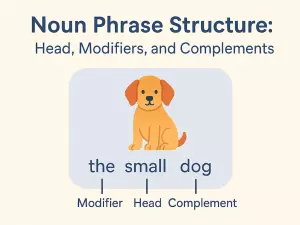
Nouns act as the central element around which noun phrases are built. In English, a noun is typically the "head" of the phrase, meaning all other words in the phrase relate directly to it. For example, in "the old wooden chair," the word "chair" is the main word, and every other word modifies or describes it. This headword is essential: without it, the phrase loses its core meaning.
Typical Structure of Noun Phrases
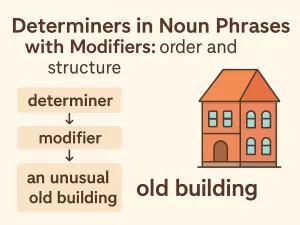
A noun phrase can be simple, such as a single word ("cats"), or more complex, including determiners, adjectives, and even prepositional phrases. Here’s a breakdown of common components:
- Determiner (the, a, this, some)
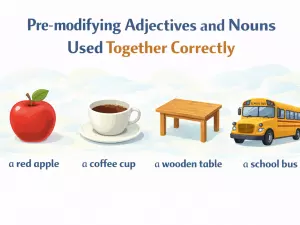
- Pre-modifiers (adjectives or adjective phrases: blue, happy, well-known)
- Noun (Head) (dog, book, teacher)
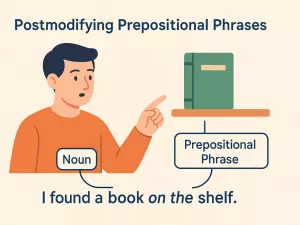
- Post-modifiers (prepositional phrases, relative clauses: in the garden, who sings well)
Each element serves to specify or add detail to the main noun, but the entire phrase revolves around that central word.
Examples of Noun Phrase Expansion
Expanding a noun phrase adds clarity or detail. Consider these examples, moving from simple to complex:
- book
- the book
- the old book
- the old book on the shelf
- the old book on the shelf that I bought last year
- my favorite old book on the shelf
- the large, dusty, leather-bound book on the top shelf
- a collection of rare coins
- the man in the blue jacket
- some interesting stories from childhood
- the beautiful painting by Monet
- that strange noise outside the window
Head Noun and Modifiers: Functional Comparison
The role of the head noun versus its modifiers is distinct. The head carries the core meaning; modifiers clarify, limit, or describe. Here’s a structured comparison:
| Element | Function |
|---|---|
| Head Noun | Provides the main reference point; the essential subject or object. |
| Determiners | Specify which noun is meant (definite, indefinite, demonstrative, etc.). |
| Pre-modifiers | Add descriptive qualities or characteristics before the noun. |
| Post-modifiers | Give extra information after the noun, often with prepositional phrases or clauses. |
Why the Head Noun Matters
Only the head noun is absolutely required; modifiers are optional. The meaning of the entire phrase depends on the identity of the head. For instance, changing "dog" to "cat" in a phrase like "the small brown dog under the table" completely shifts the reference, even though the modifiers stay the same. Understanding how nouns serve as the anchor in these structures is crucial for mastering both basic and advanced English syntax. The flexibility of modifiers allows speakers to tailor their meaning, but the head noun always remains the grammatical and semantic core.
Where Nouns Appear in Sentences
Nouns serve as fundamental building blocks in English sentence structure. They commonly take on roles such as the subject, object, or complement, shaping the meaning and clarity of a statement. Understanding their typical placements helps learners and writers construct clear and accurate sentences.
Common Positions for Nouns
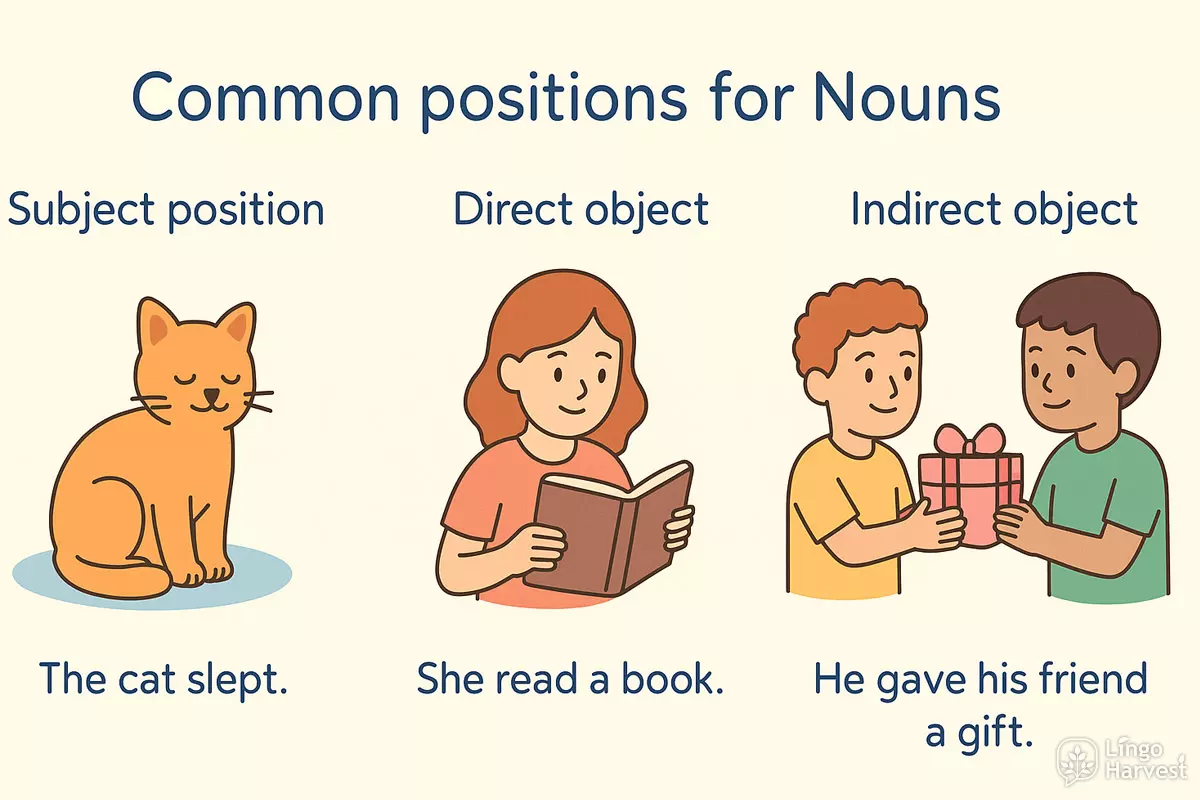
Nouns can be found in several key positions within a sentence. Some of the most frequent placements include:
- Subject position (at the beginning, before the verb): The cat slept.
- Direct object (after the verb): She read a book.
- Indirect object (before the direct object or after "to/for"): He gave his friend a gift. / He gave a gift to his friend.
- Object of a preposition: The letter is on the table.
- Subject complement (after linking verbs like "be"): My father is a teacher.
- Appositive (renaming another noun): My brother, a doctor, lives abroad.
- Vocative (direct address): John, can you help me?
- Possessive construction: Anna’s book is missing.
- Within noun phrases: The old wooden chair creaked.
- As part of compound nouns: Ice cream is popular in summer.
Examples of Noun Placement in Sentences
To illustrate how nouns function in various slots, here are sample sentences showing their flexibility:
- Subject: Dogs bark at strangers.
- Object: She lost her keys.
- Prepositional object: They sat near the window.
- Subject complement: The winner is Sarah.
- Indirect object: I sent my friend a letter.
- Appositive: My cousin, a talented musician, plays piano.
- Direct address: Sam, please listen.
- Possessive: Michael’s car is new.
- Within a phrase: The city park closes at dusk.
- Compound noun: Toothpaste is in the bathroom.
Comparing Noun Roles
| Position | Example Sentence |
|---|---|
| Subject | The child laughed loudly. |
| Direct Object | She bought a sandwich. |
| Indirect Object | He showed his sister the photo. |
| Object of Preposition | The cat jumped onto the sofa. |
| Subject Complement | Her dream is success. |
In summary, nouns are versatile and can occupy various grammatical slots, influencing sentence structure and meaning. Recognizing these positions enables more precise and effective communication in English.
Nouns and Clause Structure
Nouns play a central role in forming English sentences, as they often serve as the building blocks that hold clauses together. Whether functioning as the subject, object, or complement, these words help determine the structure and clarity of statements. Understanding their placement and relationships with other elements is key for both native and non-native speakers.
Core Functions of Nouns in Sentences
Nouns can appear in several syntactic positions, influencing the grammatical structure and meaning. Here are the most common roles:
- Subject: The person, place, or thing performing the action (e.g., Cats sleep).
- Direct Object: The receiver of the action (e.g., She reads books).
- Indirect Object: The entity benefiting from the action (e.g., He gave Anna a gift).
- Subject Complement: Renames or describes the subject (e.g., My friend is a teacher).
- Object Complement: Renames or describes the object (e.g., They elected her president).
Noun Placement and Clause Types
The position of a noun within a sentence often indicates its function. In English, word order is relatively fixed compared to some other languages, and this helps convey meaning clearly. For example, in simple declarative clauses, the subject noun typically precedes the verb, while the object follows.
Examples of Noun Usage in Clauses
Below are various patterns where nouns are essential:
- Children play outside. → Subject
- We saw the movie. → Direct object
- Give him the letter. → Indirect object
- My favorite season is autumn. → Subject complement
- They named the dog Bella. → Object complement
- Patience is important. → Abstract noun as subject
- The team won the match. → Collective noun as subject
- He bought apples and oranges. → Plural nouns as objects
- There are students in the hall. → Existential clause
- What she said surprised everyone. → Noun clause as subject
- We are proud of our achievements. → Noun as object of preposition
- She gave John a book. → Two noun objects
- Running is fun. → Gerund (verbal noun) as subject
Types of Clauses and Noun Roles
Understanding how different clauses incorporate nouns can clarify their function in complex sentences. The table below compares common clause types and how nouns operate within them.
| Clause Type | Example with Noun | Noun Function |
|---|---|---|
| Main Clause | The cat sleeps. | Subject |
| Relative Clause | The book that Mary wrote is new. | Object (within clause) |
| Noun Clause | What you said matters. | Subject |
| Adverbial Clause | She left after the meeting ended. | Object of preposition |
Summary
Recognizing how nouns function within different clause structures is essential for constructing clear and effective sentences. Their placement and syntactic roles shape the overall meaning and flow of English communication.
Relationship to Verbs and Determiners
Nouns play a crucial role in connecting with both verbs and determiners to form meaningful phrases and sentences in English. The link between these parts of speech determines how information is structured, who or what performs an action, and which entities are being referred to. Understanding these connections helps clarify sentence construction and meaning.
How Nouns Interact with Verbs
Nouns typically function as subjects or objects in relation to verbs. The subject noun indicates who or what is performing the action, while the object noun receives the action. This syntactic alignment is essential for expressing clear relationships between actions and participants. For example, in "The cat chased the mouse," "cat" acts as the subject, and "mouse" as the object.
- Subject: Dogs bark.
- Direct object: She reads books.
- Indirect object: He gave his friend a gift.
- Object of preposition: They sat on the bench.
Pairing Nouns with Determiners
Determiners introduce and modify nouns, specifying reference, quantity, or possession. A noun phrase often requires a determiner for grammaticality, especially with singular, countable common nouns. The choice of determiner affects meaning: "a dog" (any dog), "the dog" (a specific dog), "my dog" (possessive), or "some dogs" (indefinite quantity).
- Articles: a, an, the
- Demonstratives: this, that, these, those
- Possessives: my, your, his, her, our, their
- Quantifiers: some, many, few, all, several, each
- Numbers: one, two, three, etc.
- Interrogatives: which, what, whose
Common Patterns: Noun, Verb, and Determiner Combinations
Certain patterns frequently occur in English, combining nouns, verbs, and determiners to create clear statements. These patterns form the backbone of basic English sentence structure.
| Pattern | Example | Notes |
|---|---|---|
| Determiner + Noun + Verb | The bird sings. | Simple subject-verb sentence |
| Determiner + Noun + Verb + Determiner + Noun | A student reads the book. | Includes subject and object with determiners |
| Possessive Determiner + Noun + Verb + Noun | Her brother plays piano. | Shows possession and action |
| Quantifier + Noun + Verb + Determiner + Noun | Many children like this movie. | Quantity and specificity combined |
| Number + Noun + Verb + Noun | Three dogs chased a cat. | Numerical reference |
Key Points to Remember
- Most singular countable nouns need a determiner.
- Verbs agree in number with their subject noun.
- Determiners clarify which noun is meant or how many.
- Some nouns (proper nouns, plurals, uncountables) may not require a determiner.
- Word order is important: typically, determiner + noun + verb + (object).
By recognizing how nouns connect with verbs and determiners, learners can build grammatically correct and meaningful sentences, improving both clarity and expression in English communication.
Nouns Inside Prepositional Phrases
Prepositional phrases play a crucial role in English sentences, and at their core, they typically contain a noun or noun phrase as the object. This structure not only adds detail and specificity but also helps clarify relationships between different parts of a sentence. The noun within such a phrase is called the object of the preposition, and its correct use is essential for clear communication.
How Prepositions and Nouns Work Together
A preposition introduces a relationship—such as location, time, or direction—while the noun following it completes the meaning. For example, in the phrase "under the table," "table" is the noun governed by the preposition "under." This structure is common in both spoken and written English.
Common Prepositions and Their Noun Objects
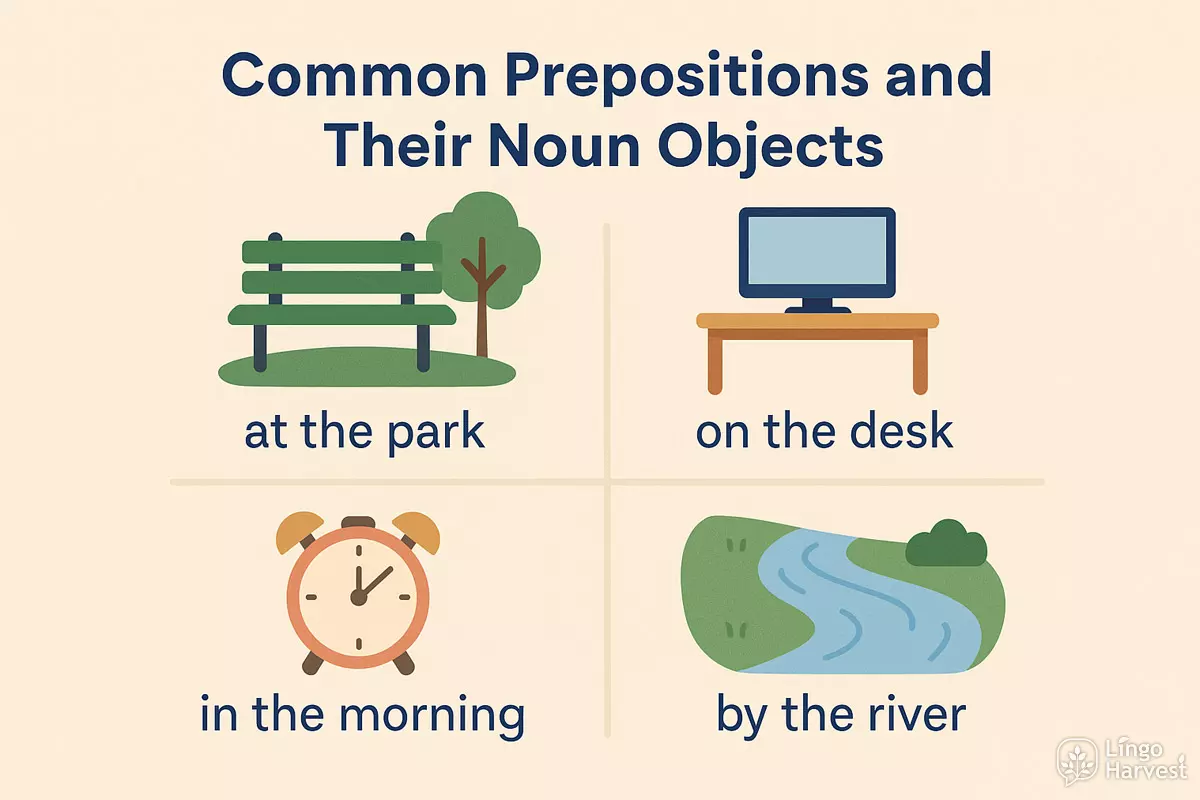
Here are some typical ways nouns appear after prepositions, forming meaningful units in sentences:
- at the park
- on the desk
- in the morning
- by the river
- with a friend
- about the project
- for the team
- to the store
- from the city
- between the lines
- over the bridge
- during the meeting
- among the trees
- through the tunnel
- without permission
- after the show
- before lunch
- behind the building
- beside the road
- under the bed
Patterns and Placement in Sentences
The noun following a preposition can be simple or complex—a single word, a full noun phrase, or even a gerund. This flexibility means that objects of prepositions can convey a wide range of meanings. For example:
- "She sat on the chair."
- "He read about climate change."
- "They succeeded by working together."
Grammatical Features of Nouns in These Phrases
Nouns used as objects of prepositions are almost always in their base form and do not take the subject case. Pronouns change form after prepositions (e.g., "for her," not "for she"). Articles, adjectives, and modifiers can expand the noun for clarity or detail.
| Preposition | Example Noun Object |
|---|---|
| at | the station, noon, high speed |
| in | the box, winter, silence |
| with | my brother, great enthusiasm, a smile |
| about | the plan, her ideas, yesterday's news |
| after | the rain, the exam, dinner |
Summary
Objects of prepositions are a fundamental use of nouns in English syntax, enabling speakers and writers to convey details about place, time, manner, and more. Recognizing and using these structures correctly helps ensure clarity and natural flow in communication.
Nouns in Complex Sentences
Nouns play a pivotal role in shaping the structure and meaning of sentences that contain multiple clauses. In such constructions, they frequently serve as anchors for subordinate clauses, relative clauses, or noun clauses, clarifying relationships between ideas and providing essential information. Understanding how these lexical items function in layered syntax helps unlock the logic behind English sentence construction.
Grammatical Functions of Nouns in Multi-Clause Structures
When sentences become more complex, nouns may take on several roles:
- Acting as subjects or objects within both main and subordinate clauses
- Serving as antecedents for relative clauses (e.g., "The book that she read was fascinating")
- Introducing noun clauses (e.g., "What he said surprised everyone")
- Appearing as objects of prepositions in embedded phrases
- Linking ideas in appositive constructions (e.g., "My friend, a talented musician, plays piano")
Common Patterns and Examples
The following list illustrates how noun usage adapts within longer, more intricate sentences:
- Subject of main clause: The teacher who inspired me retired last year.
- Object of relative clause: I met the author whom you recommended.
- Head noun in appositive phrase: My brother, a doctor, lives abroad.
- Object in noun clause: She believes that honesty matters.
- Indirect object in subordinate clause: Give whoever arrives first the ticket.
- Prepositional object in complex phrase: They talked about the idea that people can change.
- Subject in embedded clause: I know what he wants.
- Object of verb in main clause, subject in subordinate: She saw the man who left early.
- Direct object in infinitive phrase: He asked the students to participate.
- Object of gerund in clause: She is proud of her son winning the award.
- Predicate nominative in complex sentence: The winner is whoever gets the highest score.
- Antecedent for restrictive clause: The city where I was born has changed a lot.
Comparing Noun Roles Across Clauses
| Noun Function | Example in Complex Sentence |
|---|---|
| Subject of Main Clause | The solution that you suggested works well. |
| Object in Subordinate Clause | She found the keys that her brother had lost. |
| Antecedent for Relative Clause | I visited the museum which houses ancient artifacts. |
| Head of Noun Clause | What you decide will affect us all. |
| Appositive | My cousin, a skilled chef, opened a new restaurant. |
Key Takeaways
Nouns in layered sentences are not limited to simple naming; they integrate information, link clauses, and clarify relationships. Mastering their placement and role in such contexts is essential for both comprehension and advanced writing.
Why Nouns Are Central to Syntax
Nouns serve as the backbone of English sentence structure, providing the main reference points for other words and phrases to connect with. In nearly every sentence, the subject and object roles are filled by nouns or noun phrases, making them indispensable for expressing who or what is involved in an action or state. Without these core elements, sentences lose clarity and meaning.
The Structural Role of Nouns
Grammatical relationships in English revolve around nouns. Verbs, adjectives, and prepositions often require nouns to complete their meaning. For example, verbs need subjects and may need objects; adjectives describe nouns, and prepositions link nouns to the rest of the sentence. This interconnectedness makes nouns essential for constructing clear, functional statements.
Examples of Nouns in Key Syntactic Positions
- Subject: The cat slept on the mat.
- Object: She read a book.
- Object of a preposition: He sat beside the window.
- Complement: My favorite color is blue.
- Appositive: Mr. Smith, the teacher, explained the lesson.
- Possessive: Sarah's notebook was missing.
- Direct address: Children, please listen.
- Gerund phrase (noun function): Running is fun.
- Infinitive phrase (noun function): To learn is important.
- Predicate noun: She became a doctor.
How Nouns Anchor Sentence Patterns
The placement of nouns determines core sentence patterns in English. The most basic structures—such as Subject-Verb-Object or Subject-Verb-Complement—depend on nouns to fill their slots. Removing or replacing nouns disrupts the grammaticality and meaning of sentences.
| Sentence Pattern | Example |
|---|---|
| Subject + Verb | Birds sing. |
| Subject + Verb + Object | Children play games. |
| Subject + Verb + Complement | She is a student. |
| Subject + Verb + Indirect Object + Direct Object | Tom gave Anna a gift. |
| Subject + Verb + Prepositional Phrase | The dog sleeps on the sofa. |
Summary
In English syntax, nouns are not just participants in sentences—they are the essential elements around which phrases and clauses are organized. Their ability to serve multiple roles allows for flexibility and precision in communication, highlighting their fundamental importance in constructing meaning.
Practice: Analyze Nouns in Sample Sentences
Understanding the function of nouns within sentences is essential for mastering English syntax. Below, you'll find exercises and examples to help you identify and analyze nouns in context. Pay attention to how nouns can serve as subjects, objects, or complements, and note any modifiers that provide additional information.
Identifying Nouns in Sentences
Read the following sentences and determine which words function as nouns. Consider both common and proper nouns, as well as compound forms.
- The cat chased a mouse through the garden.
- Sarah wrote a letter to her friend.
- Our teacher gave us homework on Monday.
- The city is famous for its architecture and museums.
- Water is essential for life.
Show answers
- 1: cat, mouse, garden
- 2: Sarah, letter, friend
- 3: teacher, homework, Monday
- 4: city, architecture, museums
- 5: Water, life
Classifying Nouns by Type
Nouns can be categorized in several ways. Review the following list and decide which are proper nouns, common nouns, abstract nouns, or collective nouns.
- happiness
- London
- team
- apple
- Mr. Smith
- music
- family
- courage
- river
- Amazon
- information
- jury
Show answers
- Proper nouns: London, Mr. Smith, Amazon
- Common nouns: apple, river
- Abstract nouns: happiness, music, courage, information
- Collective nouns: team, family, jury
Analyzing the Role of Nouns in Sentences
Examine these sentences and identify the grammatical role of each noun (subject, direct object, indirect object, object of preposition, or complement).
- The dog barked loudly.
- She gave her brother a gift.
- We walked to the park.
- His favorite hobby is painting.
- The committee chose a new leader.
Show answers
- 1: dog (subject)
- 2: brother (indirect object), gift (direct object)
- 3: park (object of preposition "to")
- 4: hobby (subject), painting (subject complement)
- 5: committee (subject), leader (direct object)
Comparison of Noun Types
The table below provides a structured comparison of different noun categories, with examples and typical usage.
| Noun Type | Description | Examples |
|---|---|---|
| Common Noun | Names a general item or concept, not specific | book, car, city, happiness |
| Proper Noun | Names a specific person, place, or thing; capitalized | London, Maria, Amazon |
| Abstract Noun | Names an idea, quality, or state rather than a concrete object | freedom, love, knowledge |
| Collective Noun | Refers to a group of people or things as a single entity | team, committee, family |
| Compound Noun | Formed from two or more words combined to create a new meaning | toothbrush, classroom, mother-in-law |
By examining these examples and practicing with varied sentence structures, you deepen your understanding of how nouns function across English syntax. Try creating your own sentences and classify the nouns by type and grammatical role for further practice.