Personal Pronouns: Subject and Object

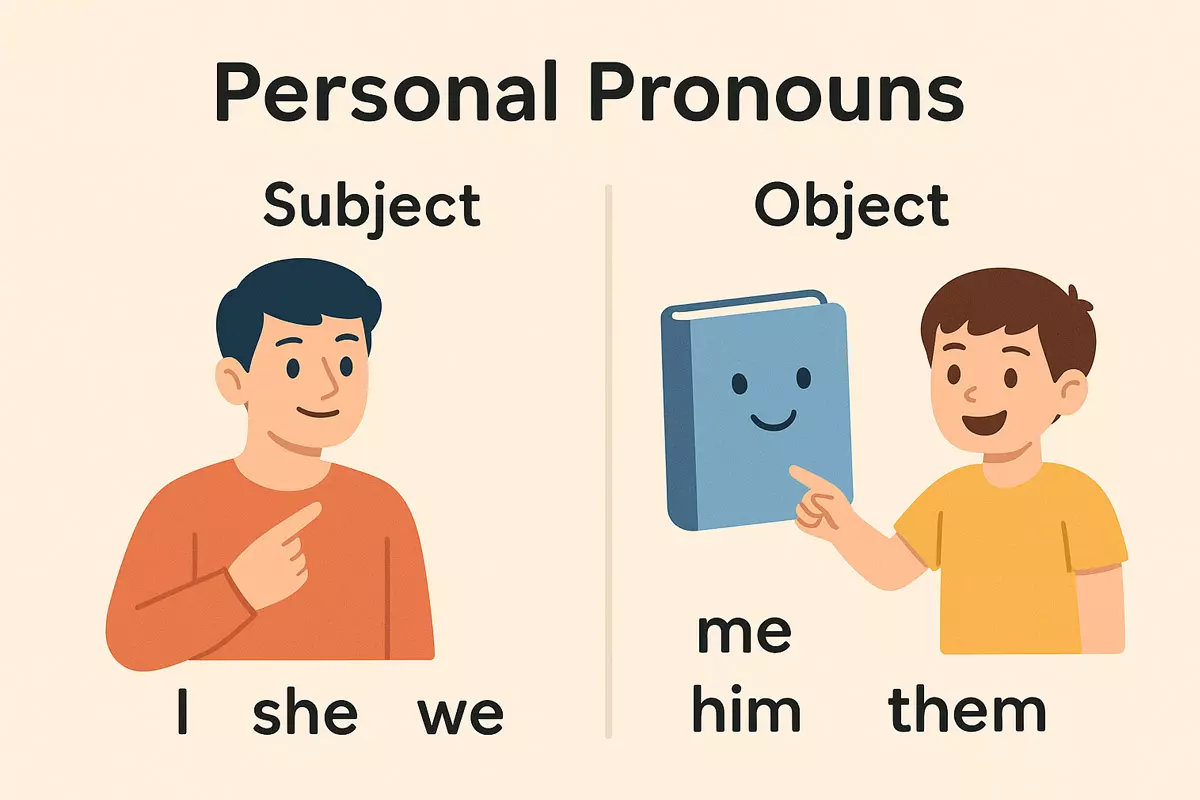 The article defines personal pronouns, lists subject and object pronouns, and explains their correct placement in sentences. It also points out common errors and offers practice exercises on choosing the correct pronoun form.
Understanding how to use the correct words for people performing actions and those receiving them makes everyday English conversations much easier and more effective. By mastering these essential referring terms, you can express your ideas clearly and ensure that your meaning is understood by others. This not only helps prevent misunderstandings but also boosts your confidence when communicating in various situations, whether you are asking for help, giving instructions, or simply sharing information with others.
What Personal Pronouns Are
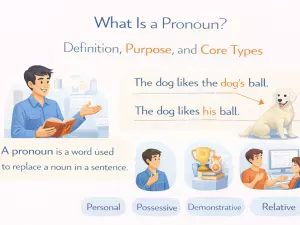
Personal pronouns are special words that stand in for people or things in sentences, helping us avoid unnecessary repetition. Instead of repeating names or nouns, we use these pronouns to refer to the speaker, the listener, or others being talked about. They are a core part of English grammar, making sentences smoother and clearer.
Core Functions and Types
These pronouns typically have two main roles: acting as the subject (the one doing the action) or the object (the one receiving the action) in a sentence. Their form changes depending on their grammatical function. For example, "he" is used as a subject ("He runs."), while "him" is the object form ("I see him.").
Main English Personal Pronouns
You'll find that these words adjust based on number (singular or plural), person (first, second, or third), and sometimes gender. Here are some of the most common ones:
- I
- me
- you
- he
- him
- she
- her
- it
- we
- us
- they
- them
How They Work in Sentences
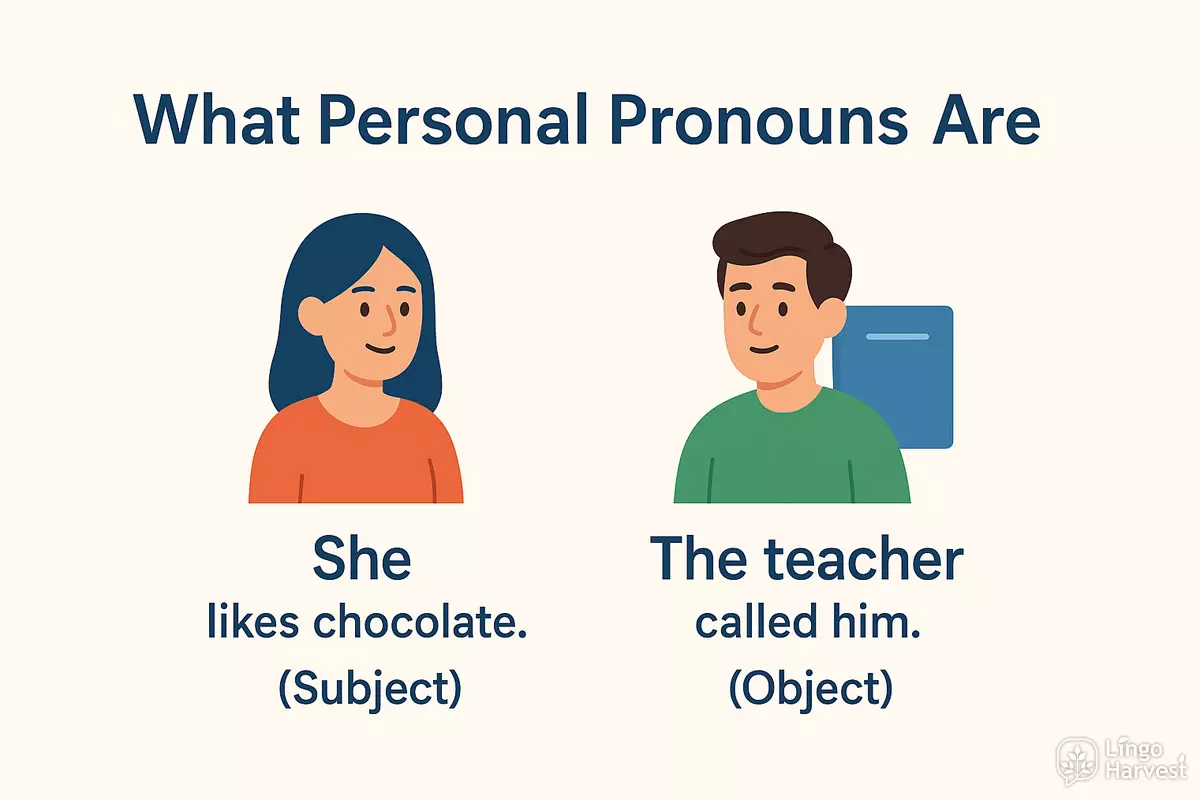
These words help us clarify who is involved in an action or event. For instance:
- She likes chocolate. (subject)
- The teacher called him. (object)
- We are going to the park. (subject)
- Can you help me? (object)
Overview of Forms
The forms of these pronouns differ depending on their role in the sentence. Here’s a clear comparison of subject and object forms:
| Subject Form | Object Form |
|---|---|
| I | me |
| you | you |
| he | him |
| she | her |
| it | it |
| we | us |
| they | them |
Why Use These Pronouns?
Using personal pronouns makes speech and writing less repetitive and more natural. They allow us to refer back to people or things already mentioned, so we don’t have to keep repeating names or nouns. This keeps language efficient and easy to follow.
Subject Pronouns List
Subject pronouns are the words we use in English to indicate who or what is performing the action in a sentence. They are essential for building clear and grammatically correct statements. These pronouns replace nouns, helping us avoid repetition and making our language more fluid. In English, subject pronouns vary depending on number (singular or plural) and person (first, second, or third).
Overview of English Subject Pronouns
Here’s a breakdown of the most common subject pronouns, each with its typical use:
| Pronoun | Used For |
|---|---|
| I | The speaker (first person singular) |
| you | The person spoken to (second person singular/plural) |
| he | A male individual (third person singular) |
| she | A female individual (third person singular) |
| it | Objects, animals, or unknown gender (third person singular, neutral) |
| we | The speaker plus others (first person plural) |
| they | Multiple people or things (third person plural); also used as singular for gender neutrality |
Examples in Sentences
To see subject pronouns in action, consider these sentences:
- I enjoy reading.
- You are welcome to join us.
- He plays the guitar.
- She loves to travel.
- It is raining outside.
- We should start the meeting.
- They finished their homework.
Key Points to Remember
- Always use a subject pronoun before the verb in English sentences—unlike some other languages, omitting it is usually incorrect.
- “You” serves for both singular and plural; context clarifies which is meant.
- “They” is increasingly accepted as a singular pronoun for someone whose gender is unknown or non-binary.
- “It” is only for things, animals, or when gender is irrelevant.
Mastering the use of these pronouns is fundamental for constructing clear, natural sentences and for understanding who the subject is in any statement.
Object Pronouns List
When discussing personal pronouns, it’s important to recognize how object forms function in sentences. These pronouns replace nouns receiving the action, appearing after verbs or prepositions. Understanding them helps avoid awkward repetition and clarifies meaning in both spoken and written English.
Common English Object Pronouns
Here is a straightforward list of the most frequently used object forms:
- me
- you
- him
- her
- it
- us
- them
Each of these words stands in for a noun that is the recipient of an action. For example: “She called him,” or “Give us the keys.” Notice how these words never serve as the subject of a sentence.
Comparing Subject and Object Pronouns
To see how these forms differ from their subject counterparts, look at the structured comparison below:
| Subject Pronoun | Object Pronoun |
|---|---|
| I | me |
| you | you |
| he | him |
| she | her |
| it | it |
| we | us |
| they | them |
Examples in Context
Here are several sentences showing these pronouns in action:
- Can you help me?
- We saw her at the store.
- Did you call them?
- The teacher gave us homework.
- I don’t understand it.
- She invited him to the party.
- He will meet you at noon.
Knowing when and how to use these forms is essential for clear, natural communication in English. They fit after verbs and prepositions, never before the verb as the main actor. Once you get comfortable with these, your sentences become smoother and more precise.
Word Order and Position
In English sentences, personal pronouns take specific places depending on their function. Subject pronouns (like "I," "you," "she") appear before the verb, while object pronouns ("me," "him," "us") follow the verb or preposition. This arrangement helps clarify who is performing the action and who is receiving it.
Subject Pronouns: Typical Placement
Subject pronouns always come before the main verb in a statement. For example:
- She likes coffee.
- We are going to the park.
- They finished early.
- I understand the question.
Questions often invert the subject pronoun and the auxiliary verb:
- Are you ready?
- Can he help?
Object Pronouns: Where Do They Go?
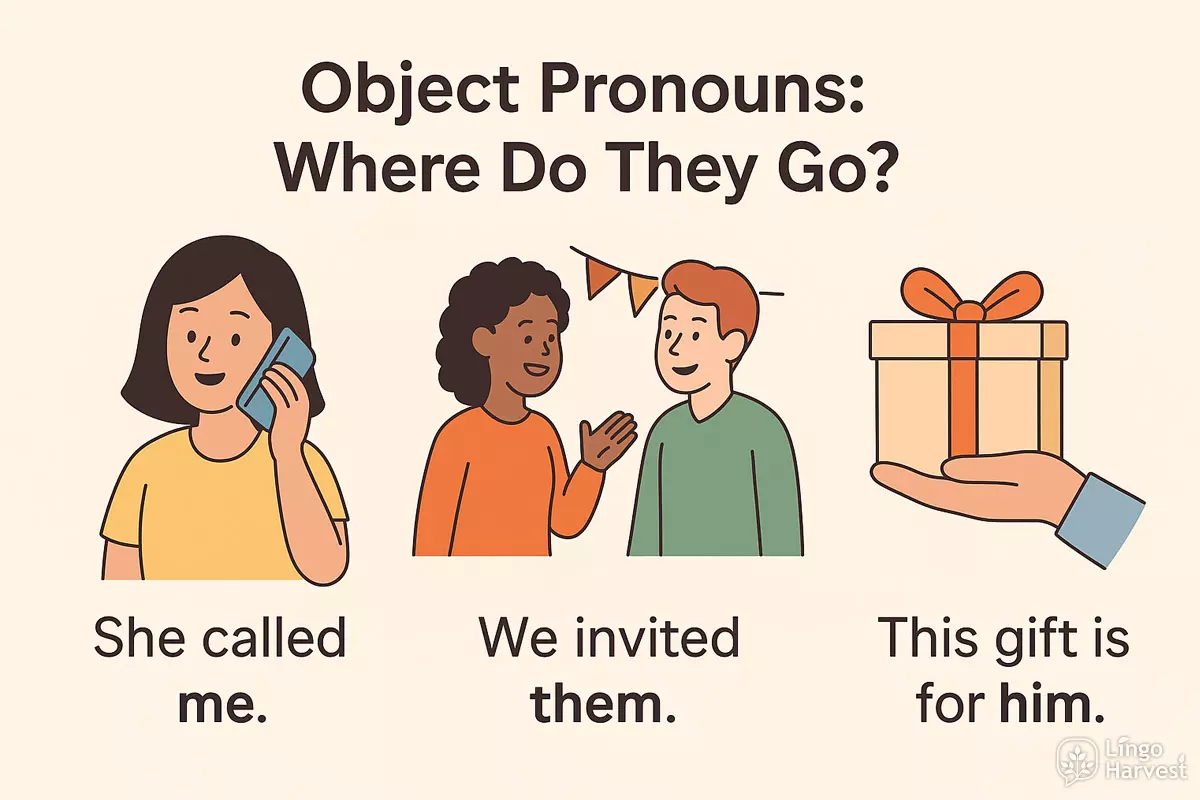
Object pronouns usually follow the verb or a preposition, never starting a sentence. For instance:
- She called me.
- We invited them.
- This gift is for him.
- Can you see us?
- The teacher spoke to her.
Comparing Subject and Object Pronoun Placement
| Subject Pronoun Example | Object Pronoun Example |
|---|---|
| He reads the book. | The teacher saw him. |
| We finished homework. | The coach congratulated us. |
| They will join soon. | She invited them. |
| You need help. | I support you. |
| I understand. | He trusts me. |
Common Patterns to Remember
- Never use object pronouns as the subject of a sentence. ❌ Me like pizza. ✅ I like pizza.
- Subject pronouns do not follow prepositions; object pronouns do. Example: "Give it to her," not "to she."
- In compound subjects or objects, each pronoun keeps its correct form: "John and I went," "He met Sarah and me."
- Commands often imply the subject "you": "Sit down." (You sit down.)
- Short answers use subject pronouns: "Who called?" — "He did."
Getting comfortable with these positions helps sentences sound natural and clear. Consistent placement of subject and object pronouns is a key feature of English grammar and essential for accurate communication.
Using Pronouns in Short Sentences
Short sentences are a great way to practice subject and object pronouns in context. Pronouns help us avoid repeating nouns, making communication smoother and sentences easier to follow. When constructing simple statements, questions, or commands, personal pronouns naturally replace the names of people or things already mentioned or understood from context.
Examples of Subject and Object Pronouns in Simple Sentences
Here are some brief examples showing how these words can be used in everyday speech. Notice how the pronoun replaces a noun and makes the sentence more concise:
- She runs fast. (instead of "Maria runs fast.")
- We saw him at the store. (instead of "We saw John at the store.")
- They are happy.
- Can you help me?
- I finished the book.
- Give it to her.
- He called last night.
- The teacher gave us homework.
- You look tired.
- She invited them to the party.
- It is raining.
- Can they join us?
- We enjoyed the movie.
- Tell me the truth.
- He knows the answer.
- Ask her for help.
Comparing Subject and Object Pronouns
Understanding the difference between subject and object forms can make your sentences clearer. Here’s a quick overview:
| Subject Pronoun | Object Pronoun | Example Sentence |
|---|---|---|
| I | me | I like pizza. / Give me the book. |
| You | you | You are kind. / I see you. |
| He | him | He is here. / Call him. |
| She | her | She sings. / Help her. |
| It | it | It works. / Fix it. |
| We | us | We play chess. / Join us. |
| They | them | They laughed. / Watch them. |
Practicing with short, direct sentences is a simple and effective way to get comfortable using personal pronouns correctly. This makes your speech and writing more natural and fluid.
Typical Errors to Avoid
Mixing up subject and object forms is a frequent stumbling block for learners. These mistakes can slip into both writing and speech, so it’s helpful to know what to watch for. Understanding the basic difference will help you communicate more clearly and sound more natural.
Common Confusions with Pronoun Forms
Some pronouns change form depending on their function in a sentence. For example, “I” is used as a subject, while “me” is the object form. Here are some typical pitfalls:
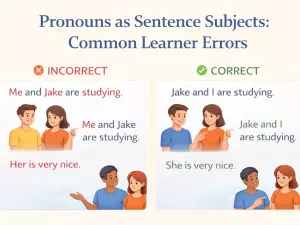
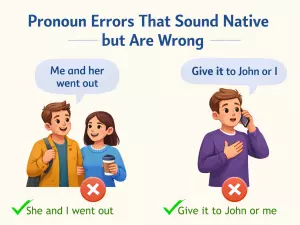
- Using “me” as a subject: Me and Sarah went to the store ❌ (correct: Sarah and I went to the store ✅)
- Using “I” as an object: He gave the book to Sarah and I ❌ (correct: to Sarah and me ✅)
- Confusing “him” and “he”: Him went home early ❌ (correct: He went home early ✅)
- Using “her” as a subject: Her called me yesterday ❌ (correct: She called me yesterday ✅)
- Incorrect after prepositions: Between you and I ❌ (correct: Between you and me ✅)
- After “than” or “as”: She is taller than me (informal but traditional grammar prefers: than I)
- Double subjects: Me, I like pizza ❌ (correct: I like pizza ✅)
- Double objects: He gave it to me and her (correct: to her and me)
- Pronoun case in questions: Who do you think is coming? (correct: Who as subject)
- Compound objects: He invited John and I ❌ (correct: John and me ✅)
Quick Reference: Subject vs. Object Forms
| Subject Form | Object Form | Example Sentence |
|---|---|---|
| I | me | I saw him. / He saw me. |
| he | him | He called. / She met him. |
| she | her | She arrived. / I saw her. |
| we | us | We went home. / They joined us. |
| they | them | They arrived. / I helped them. |
| you | you | You called. / I saw you. |
| it | it | It works. / I fixed it. |
Tips to Steer Clear of Mistakes
Pay attention to whether the pronoun is doing the action (subject) or receiving it (object). When in doubt, try the sentence with just the pronoun: “Me went to the store” sounds wrong, so “I” is correct. Similarly, after prepositions like “to,” “for,” or “with,” use the object form. Review and practice these distinctions to make your English more precise and natural.
Practice: Choose the Correct Form
Test your understanding of subject and object personal pronouns with these exercises. Read each sentence carefully and select the pronoun that fits best. Pay attention to the role the pronoun plays—who is doing the action (subject) and who is receiving it (object).
Fill in the Blank
- ___ went to the store because ___ needed milk. (he/him)
- Maria and ___ are going to the concert with ___. (I/me, them/they)
- Can you help ___ with this homework? (me/I)
- My friends and ___ will meet ___ at the park. (me/I, them/they)
- ___ saw ___ yesterday at the library. (they/them, us/we)
- Could ___ please tell ___ the answer? (you, me/I)
- We invited ___ to join ___ for dinner. (her/she, us/we)
- ___ is the winner, so give ___ the prize. (she/her)
- ___ called ___ last night, but I missed the call. (he/him, me/I)
- ___ and ___ are studying together for the exam. (he/him, she/her)
Match the Correct Pronoun
Choose the appropriate subject or object pronoun for each scenario. This will help reinforce the difference between who is performing an action and who is affected by it.
- ___ (He/Him) likes to read books.
- She invited ___ (they/them) to the party.
- ___ (We/Us) will call you tomorrow.
- Could you help ___ (we/us) with the project?
- ___ (They/Them) are waiting outside.
- The teacher gave ___ (I/me) extra homework.
- ___ (She/Her) and ___ (I/me) finished first.
- My brother saw ___ (she/her) at the station.
- ___ (You/Your) can join ___ (us/we) for lunch.
- ___ (It/Its) is raining outside.
Subject vs. Object Pronouns Overview
Here’s a quick reference table to compare the forms and uses:
| Subject Pronoun | Object Pronoun | Example Sentence |
|---|---|---|
| I | me | I called him. |
| you | you | You saw me. |
| he | him | He met us. |
| she | her | She likes them. |
| it | it | It surprised me. |
| we | us | We invited her. |
| they | them | They thanked you. |
Show answers
Fill in the Blank Answers
- He went to the store because he needed milk.
- Maria and I are going to the concert with them.
- Can you help me with this homework?
- My friends and I will meet them at the park.
- They saw us yesterday at the library.
- Could you please tell me the answer?
- We invited her to join us for dinner.
- She is the winner, so give her the prize.
- He called me last night, but I missed the call.
- He and she are studying together for the exam.
Match the Correct Pronoun Answers
- He likes to read books.
- She invited them to the party.
- We will call you tomorrow.
- Could you help us with the project?
- They are waiting outside.
- The teacher gave me extra homework.
- She and I finished first.
- My brother saw her at the station.
- You can join us for lunch.
- It is raining outside.