Pronouns as Sentence Subjects: Common Learner Errors

 This article explains how to use subject pronouns like I, you, he, she, it, we, and they. It covers when to use pronouns instead of names, common mistakes, coordinated subjects, short answers, dummy subjects, and agreement.
- What subject pronouns do: I, you, he, she, it, we, they
- Subject pronouns vs names: when you must use a pronoun
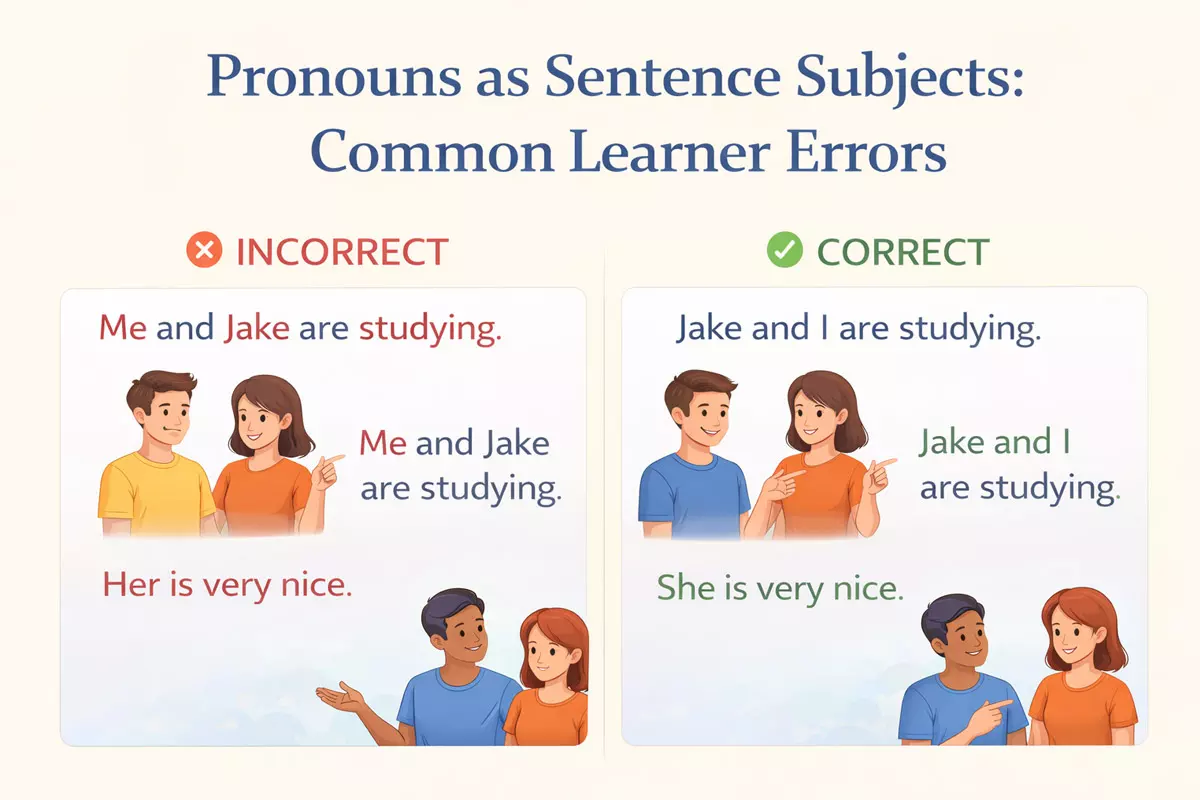
- Common error: using object forms as subjects (Me and John…)
- Coordinated subjects: John and I vs me and John
- Subject pronouns in short answers and tags
- Dummy subjects: it and there in simple patterns
- Subject–verb agreement with pronouns
- Practice: correct typical learner sentences
Many English learners struggle with using pronouns like he, she, or they at the beginning of sentences, and these mistakes can sometimes make their intended message unclear. Learning to use pronouns correctly is important for clear and effective communication because it helps listeners or readers easily understand who or what is being discussed. By paying attention to common errors with pronouns and practicing their correct use, learners can improve their writing and speaking skills, ultimately making their English more natural and understandable.
What subject pronouns do: I, you, he, she, it, we, they
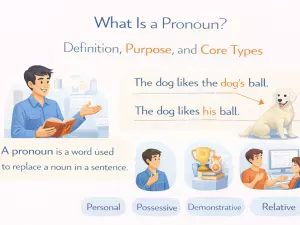
Subject pronouns are the words we use to show who or what is doing the action in a sentence. They replace nouns in the subject position, making sentences clearer and less repetitive. For example, instead of saying "The teacher teaches. The teacher is kind," we can say "She teaches. She is kind." This helps English sound natural and keeps communication efficient.
How subject pronouns function
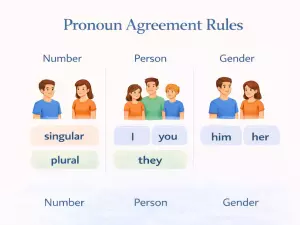
Subject pronouns always come before the verb in a simple sentence. They tell us who the sentence is about and agree with the verb in number and person. Using the correct pronoun helps avoid confusion and common errors, especially for English learners.
- I: refers to the speaker or writer (first person singular).
Example: I am learning English. - You: refers to the person spoken to (second person, singular or plural).
Example: You are reading this article. - He: used for a male person (third person singular).
Example: He likes soccer. - She: used for a female person (third person singular).
Example: She is my friend. - It: used for objects, animals (when gender is unknown), or ideas (third person singular).
Example: It is raining. - We: refers to the speaker and at least one more person (first person plural).
Example: We are going home. - They: refers to more than one person, animal, or thing (third person plural).
Example: They are students.
Common problems with subject pronouns
Learners often make mistakes such as omitting the pronoun, using the wrong form, or confusing "he/she/it" with "they." In English, every sentence (except imperatives) needs a clear subject. Unlike some languages, English does not usually allow the subject to be dropped.
| Pronoun | Example Sentence |
|---|---|
| I | I have a question. |
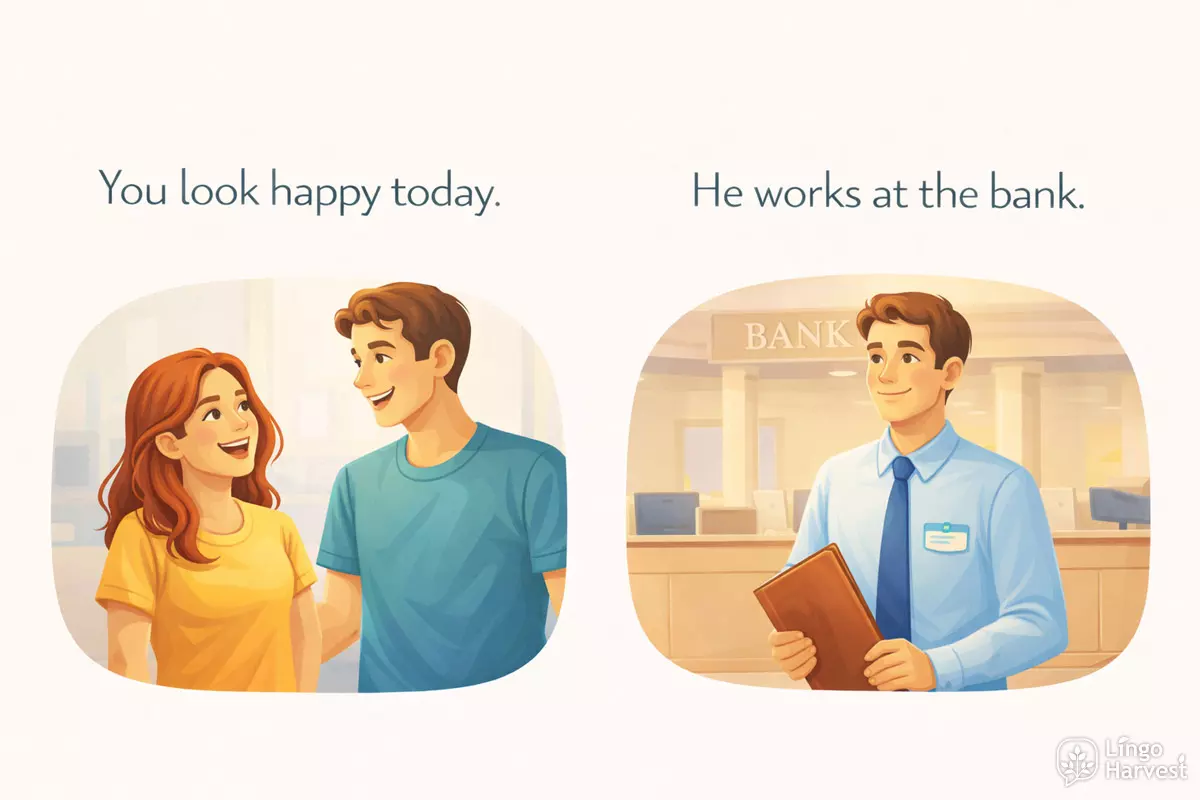
| You | You look happy today. |
| He | He works at the bank. |
| She | She is a doctor. |
| It | It feels cold in here. |
| We | We enjoy learning together. |
| They | They play basketball after school. |
Quick tips for using subject pronouns
- Always use a subject pronoun; don’t leave it out (❌ Like: "Is raining." ✅ Correct: "It is raining.").
- Match the pronoun with the verb form (✅ "She works," not "She work").
- Remember "it" is for things, animals, and ideas, not people.
- Use "they" for more than one person or thing, or for groups.
- Don’t confuse "he" and "she"—"he" is for males, "she" for females.
Getting comfortable with these small but important words is key to writing and speaking English accurately. Practice noticing how they are used in everyday sentences to avoid common learner mistakes.
Subject pronouns vs names: when you must use a pronoun
English sentences almost always need a subject, and this subject is frequently a pronoun (like he, she, it, they). While using a person’s name is possible, there are important situations where a pronoun is required for clarity, flow, or grammatical correctness. Learners often confuse when it’s acceptable to repeat names and when a pronoun is necessary, leading to awkward or incorrect sentences.
When you must use a subject pronoun
- After the subject has already been named, to avoid repetition:
Maria loves cats. She has three. - When the subject is not a specific person or thing:
It is raining. - With general statements:
They say it will snow. - In sentences where the subject is unknown or not important:
It seems that nobody is home. - For natural-sounding English, especially in conversation or narratives.
Common errors: double subjects and missing pronouns
A frequent mistake is using both a name and a pronoun as the subject (double subject), or omitting the pronoun when it is needed. Here are some examples to clarify:
- ❌ Incorrect: John he likes pizza.
- ✅ Correct: John likes pizza. / He likes pizza.
- ❌ Incorrect: Is raining outside.
- ✅ Correct: It is raining outside.
Comparing names and pronouns in subject position
| Name as Subject | Pronoun as Subject |
|---|---|
| Emily is here. | She is here. |
| The dog barked. | It barked. |
| My friends arrived. | They arrived. |
| Mr. Lee teaches math. | He teaches math. |
| The computer crashed. | It crashed. |
Tips for choosing between names and pronouns
- Use the name the first time you mention someone or something; use a pronoun after that.
- Never use both at the same time as the subject.
- Always include a pronoun when English requires a subject (even if your native language allows dropping it).
- Use it as a “dummy” subject for weather, time, or general statements: It is late.
- Switch to pronouns for smoother, less repetitive sentences.
Common error: using object forms as subjects (Me and John…)
Many English learners mistakenly use object pronouns like me, him, or her as the subject of a sentence, especially in phrases such as "Me and John went to the store." While this is common in informal spoken English, it is not considered correct in standard written or formal speech. Instead, subject forms should be used (e.g. I, he, she).
Why does this mistake happen?
This error often occurs because object pronouns are frequently heard in conversation, and they can sound more natural to some speakers. In addition, languages with different pronoun case systems may influence learners to use the wrong form.
Standard English subject pronouns
The subject of a sentence should always use the subject pronoun form. Here’s a quick reference:
- I (not me)
- He (not him)
- She (not her)
- We (not us)
- They (not them)
- You (same for subject and object)
- It (same for subject and object)
Examples: incorrect vs. correct usage
When combining pronouns and names as the subject, always use the subject form:
| Incorrect Subject | Correct Subject |
|---|---|
| Me and John went home. | John and I went home. |
| Her and I are friends. | She and I are friends. |
| Him and Alex will come. | He and Alex will come. |
| Us are leaving now. | We are leaving now. |
| Them and me finished first. | They and I finished first. |
| Me and her have the tickets. | She and I have the tickets. |
| Him and his brother play chess. | He and his brother play chess. |
| Us and them are ready. | We and they are ready. |
| Me is next. | I am next. |
| Them are late again. | They are late again. |
Tips to avoid this mistake
- Mentally remove the other person’s name: Would you say "Me went to the store"? If not, use "I".
- Put your own pronoun last: "John and I", not "I and John".
- Practice with common combinations: "She and I", "He and they", "We and you".
- Listen for correct forms in news, podcasts, and formal writing.
Developing the habit of using the correct pronoun forms in the subject position will make your English sound more natural and clear. This small change can have a big impact on how your sentences are understood.
Coordinated subjects: John and I vs me and John
Grammatically, personal pronouns change form depending on their function in a sentence. When two people are joined as the subject (for example, yourself and another person), English uses the subject pronoun form: “John and I went to the store.” Many learners mistakenly use the object form (“me and John”) as the subject, especially in informal speech. This is considered incorrect in standard written English.
Correct usage of pronouns in compound subjects
When a pronoun is part of the subject, always use the subject form: I, you, he, she, we, they. The object forms (me, him, her, us, them) are reserved for objects of verbs or prepositions.
| Incorrect ❌ | Correct ✅ |
|---|---|
| Me and John are going to the concert. | John and I are going to the concert. |
| Me and Sarah finished the project. | Sarah and I finished the project. |
| Me and you should talk. | You and I should talk. |
| Me and my brother cooked dinner. | My brother and I cooked dinner. |
| Me and he will join the team. | He and I will join the team. |
| Me and my friend are leaving now. | My friend and I are leaving now. |
| Me and the manager discussed the plan. | The manager and I discussed the plan. |
| Me and my parents live nearby. | My parents and I live nearby. |
| Me and my classmates finished early. | My classmates and I finished early. |
| Me and my sister will arrive later. | My sister and I will arrive later. |
Common patterns and mistakes
Learners often switch word order or use the wrong pronoun form, especially when placing themselves first ("Me and John"). In formal English, it’s polite to mention yourself last: “John and I,” not “I and John.”
Object pronouns in coordinated objects
When the pronoun is part of the object, the object form is correct:
- The teacher called John and me.
- She saw him and me at the park.
- They invited you and me to dinner.
Quick reference: subject vs. object forms
| Subject Form (use as subject) | Object Form (use as object) |
|---|---|
| I | me |
| he | him |
| she | her |
| we | us |
| they | them |
Tips for learners
- Always use the subject form for pronouns joined with “and” as the subject.
- Put yourself last in the subject group for politeness.
- If unsure, try the sentence with only the pronoun: “I am going” (correct), “Me am going” (incorrect).
Mastering these patterns helps avoid one of the most common pitfalls for non-native speakers and makes your English sound more natural and correct.
Subject pronouns in short answers and tags
Using the correct subject pronoun is essential when replying briefly or forming question tags. In English, short answers almost always require a subject pronoun rather than repeating the noun or using nothing at all. Mistakes in this area can make speech sound unnatural or even confusing.
Short answers: common patterns and errors
When replying to yes/no questions, English speakers rarely repeat the main noun. Instead, they use a subject pronoun with the appropriate auxiliary verb. Learners sometimes omit the pronoun or use the noun again, both of which are ungrammatical. For example:
- ✅ Correct: "Are you coming?" — "Yes, I am."
- ❌ Incorrect: "Yes, coming." / "Yes, John is."
- ✅ Correct: "Did they leave?" — "No, they didn't."
- ❌ Incorrect: "No, didn't." / "No, the students didn't."
Learners often forget to use the pronoun, especially in informal speech or in translation from languages where this is acceptable.
Question tags: pronoun consistency
Question tags always require a subject pronoun that matches the main clause. Using a noun or omitting the pronoun is incorrect. It's important to match the pronoun to the subject, not to another noun in the sentence.
| Example Sentence | Tag with Pronoun |
|---|---|
| Anna is here, | isn't she? |
| Your friends can help, | can't they? |
| This works, | doesn't it? |
| We should go, | shouldn't we? |
| That boy likes pizza, | doesn't he? |
Tips for avoiding errors
- Always use a subject pronoun in short answers, never just the verb.
- In question tags, check the subject of the main sentence and use the matching pronoun.
- Do not repeat the noun or use a name in the tag or short answer.
- Watch out for collective nouns and neutral objects; use they or it as needed.
Mastering subject pronouns in these structures helps sentences sound natural and clear. Practicing with varied examples is the best way to build confidence and accuracy.
Dummy subjects: it and there in simple patterns
English often requires a subject in every sentence, even when the action or state doesn’t logically have one. In these cases, “it” and “there” fill the subject position, acting as “dummy” or “empty” subjects. This can be confusing for learners whose first languages allow subjectless sentences or use different structures. Understanding how and when to use these pronouns helps avoid common mistakes and makes English sound more natural.
When to use “it” as a dummy subject
The word “it” frequently introduces statements about time, weather, distance, or general situations. Rather than referring to a specific object, “it” simply fills the grammatical requirement for a subject. Here are some common patterns:
- It is raining.
- It’s late.
- It seems that everyone is here.
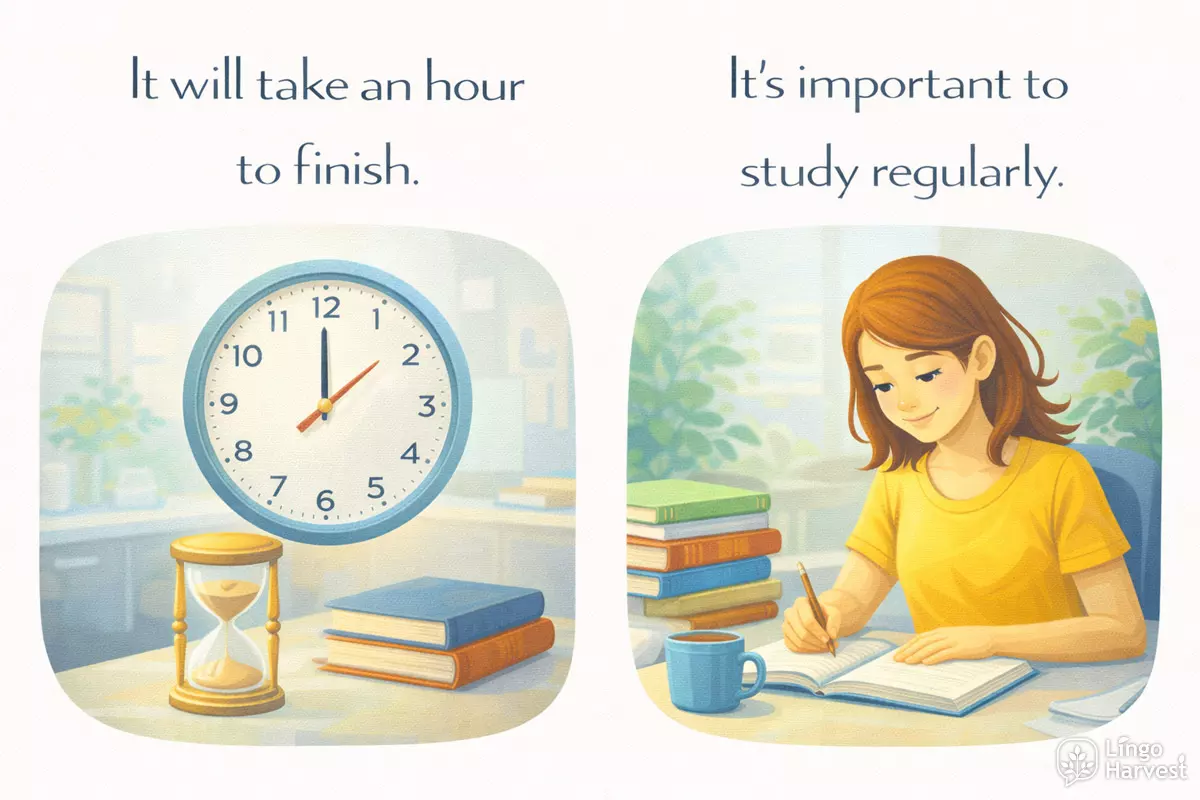
- It will take an hour to finish.
- It’s important to study regularly.
- It was cold yesterday.
- It’s difficult to explain.
- It looks like they’ve left.
- It’s five o’clock.
- It doesn’t matter.
- It is clear that he’s tired.
- It’s easy to get lost here.
When to use “there” as a dummy subject
“There” is used to introduce the existence or presence of something, usually followed by a form of “be” and a noun or noun phrase. This structure is especially useful when the real subject comes after the verb. Typical uses include:
- There is a book on the table.
- There are many students in the class.
- There was a problem with the computer.
- There will be a test tomorrow.
- There has been an accident.
- There seems to be a mistake.
- There used to be a park here.
- There might be a delay.
- There isn’t any milk left.
- There could be another solution.
Common learner errors with dummy subjects
Learners often omit dummy subjects, use the wrong one, or try to translate directly from their own language’s structure. This can result in sentences like “Is raining” (missing “it”) or “Exists a problem” (missing “there”). Here’s a quick reference showing correct and incorrect uses:
| Incorrect Example | Correct Example |
|---|---|
| Is cold outside. | It is cold outside. |
| Exists a problem. | There is a problem. |
| Rains a lot here. | It rains a lot here. |
| In the room are many people. | There are many people in the room. |
Tips for mastering these patterns
- Remember that English generally requires a subject in every sentence.
- Use “it” for weather, time, general situations, and impersonal statements.
- Use “there” to introduce new information about existence or presence.
- Double-check your sentences for a subject, especially when translating from another language.
- Practice with common patterns to build automaticity.
Getting comfortable with “it” and “there” as empty subjects is an important step toward more fluent, natural English. Notice these structures in everyday English, and try to incorporate them in your own speaking and writing.
Subject–verb agreement with pronouns
Understanding how verbs change with different pronouns is a key challenge for English learners. Mistakes often happen because some pronouns (like "he," "she," and "it") require a different verb form than others (like "I," "we," "they," or "you"). This is especially noticeable in the present simple tense, where the verb typically adds an "-s" with third person singular subjects.
Common patterns and pitfalls
Learners frequently forget to add the "-s" for third person singular, or mistakenly use it with other pronouns. For example, "She go to school" ❌ instead of "She goes to school" ✅. Similarly, "They goes" is incorrect because "they" is plural.
- I am (not "I is" or "I are")
- You are (works for both singular and plural "you")
- He/She/It is (not "he are")
- We are
- They are
- I have (not "I has")
- He/She/It has (not "he have")
- She likes (not "she like")
- They like (not "they likes")
- It works (not "it work")
- We work
- You do / He does
- They eat / She eats
Quick reference: Present simple verb forms
| Subject Pronoun | Correct Verb Form (Present Simple) |
|---|---|
| I | walk |
| You | walk |
| He / She / It | walks |
| We | walk |
| They | walk |
Special notes on collective and indefinite pronouns
Some words like "everyone," "somebody," and "nobody" are treated as singular, so the verb also takes a singular form: "Everyone knows," not "Everyone know." This is a frequent source of confusion, since these words may refer to groups but are grammatically singular.
Tips for accuracy
- Always match the verb ending to the subject: add -s or -es with third person singular in the present simple.
- Double-check forms of to be: I am, he is, they are.
- Watch out for irregular verbs like have and do.
- Remember that you can be singular or plural, but it always takes are in the present tense.
- Paying attention to these points helps avoid common subject–verb agreement mistakes with pronouns.
Practice: correct typical learner sentences
Learners often make errors when using pronouns as subjects, especially with agreement, clarity, and omission. Below, you’ll find common mistakes, guidance on correcting them, and targeted exercises to help reinforce accurate use of subject pronouns.
Consider these typical sentences produced by learners. For each, decide what is incorrect and how to fix it. Focus on subject pronouns: their presence, agreement with the verb, and reference to the correct noun.
Frequent Errors in Subject Pronoun Use
- Leaving out the subject pronoun in English sentences (especially for speakers of languages that allow dropping pronouns).
- Using the wrong pronoun form (e.g., “him” instead of “he”).
- Repeating the noun and pronoun (“My friend she likes music.”).
- Mismatching the pronoun and verb (“They is happy.”).
- Confusing gender or number (“He are my sisters.”).
- Unclear pronoun reference (“She said she will come,” but there are two females just mentioned).
- Using “it” instead of “he” or “she” for people, or vice versa.
- Forgetting to use “it” for weather, time, or distance (“Is raining.”).
- Mixing up “we” and “us,” “they” and “them” in subject position.
- Using double subjects (“My brother he is tall.”).
- Using object pronouns as subjects (“Me go home.”).
- Switching between singular and plural in the same sentence (“She are teachers.”).
- Using “they” for singular when it’s not appropriate (“They is my friend.”).
- Not using “it” for impersonal constructions (“Is late now.”).
- Incorrect use of “one” or “you” as generic subjects (“One must to study hard.”).
Correction Task: Spot and Fix the Errors
- Is raining outside.
- My brother he likes football.
- Me am tired today.
- They is going to the store.
- Maria said she will call, but she didn’t say when she will call her.
- He are my best friends.
- Them want to play with us.
- It are cold in here.
- My sisters, she is a doctor.
- One must to be careful.
Show answers
- It is raining outside.
- My brother likes football. or He likes football.
- I am tired today.
- They are going to the store.
- Maria said she will call, but didn’t say when. (or clarify which “she” is meant)
- They are my best friends.
- They want to play with us.
- It is cold in here.
- My sister is a doctor. or She is a doctor.
- One must be careful.
Subject Pronoun Forms: Quick Reference
| Person/Number | Subject Pronoun |
|---|---|
| First singular | I |
| Second singular | you |
| Third singular (male) | he |
| Third singular (female) | she |
| Third singular (thing/animal) | it |
| First plural | we |
| Second plural | you |
| Third plural | they |
Short Quiz: Choose the Correct Pronoun
- (____) am going to the park. (I / Me)
- (____) is my teacher. (He / Him)
- (____) are playing football. (They / Them)
- (____) is raining. (It / He)
- (____) want to help you. (We / Us)
- (____) can wait here. (You / Your)
- (____) is calling right now. (She / Her)
- (____) looks expensive. (It / They)
- (____) are ready to start. (We / Us)
- (____) need more time. (They / Them)
Show answers
- I am going to the park.
- He is my teacher.
- They are playing football.
- It is raining.
- We want to help you.
- You can wait here.
- She is calling right now.
- It looks expensive.
- We are ready to start.
- They need more time.
Review each correction and example to develop a strong sense of how subject pronouns work in English sentences. Consistent practice with these patterns will help you avoid the most frequent mistakes.