Pronoun Errors That Sound Native but Are Wrong

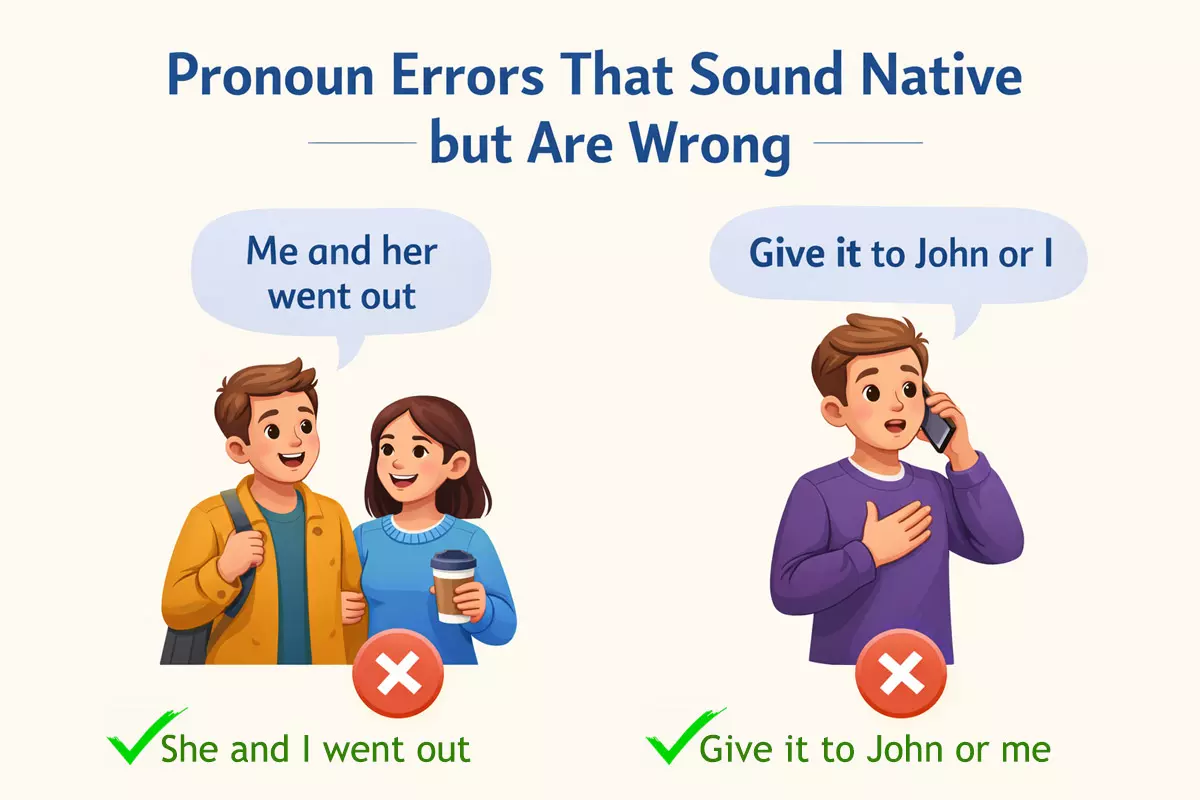 Some pronoun errors seem fine in speech but are wrong in formal writing. This article explains why, shows common near-native mistakes, contrasts correct and incorrect uses, and offers editing strategies and practice to catch subtle errors.
- Why some pronoun errors sound acceptable
- Influence of spoken English on mistakes
- Common near-native pronoun errors
- Cases where natives simplify but exams don’t
- Context-dependent correctness
- Editing strategies to catch subtle errors
- Contrast examples: correct vs incorrect
- Practice: spot hidden pronoun errors
Even skilled English speakers sometimes make subtle mistakes with pronouns such as he, she, or they, often without realizing it. These errors are common and can happen even to those who are otherwise fluent and confident in their communication. Because pronouns are used so frequently in everyday conversation, it is easy to overlook minor issues or inconsistencies, leading to misunderstandings or confusion. Paying close attention to how pronouns are used can help anyone, regardless of their level of expertise, communicate more clearly and accurately.
Why some pronoun errors sound acceptable
Certain pronoun mistakes slip by unnoticed, even among native speakers, because they mirror common speech patterns or mimic the rhythm of everyday conversation. While these forms may be technically incorrect, they often sound “right” due to how language is processed and the influence of spoken habits.
Patterns from spoken English
In casual speech, people frequently use pronouns in ways that would be marked wrong in formal writing. For example, “Me and him went to the store” is widely heard, despite the standard “He and I went to the store.” Over time, repeated exposure makes these mistakes blend into what sounds normal.
- “It’s me” instead of “It is I”
- “Who did you see?” instead of “Whom did you see?”
- “Him and me are coming” instead of “He and I are coming”
- “Between you and I” instead of “Between you and me”
- “Her and John’s car” instead of “John’s and her car”
- “Me and Sarah will help” instead of “Sarah and I will help”
- “Us teachers need a break” instead of “We teachers need a break”
- “It’s them” instead of “It is they”
- “Whomever wants to join” instead of “Whoever wants to join”
- “You did better than me” instead of “You did better than I (did)”
- “This is for she and I” instead of “This is for her and me”
- “Me neither” instead of “Nor I”
Why the errors persist
Several factors contribute to the persistence of these mistakes:
- Frequency in conversation: Hearing a form repeatedly makes it feel correct.
- Reduced emphasis on grammar rules: In casual settings, people prioritize ease and speed over strict correctness.
- Similarity to other structures: Some errors sound similar to correct forms, causing confusion.
- Influence of local dialects: Regional varieties can legitimize certain nonstandard usages.
- Ambiguity in complex sentences: When sentences get long, the correct pronoun case may be harder to track.
Common confusion: Subject vs. object pronouns
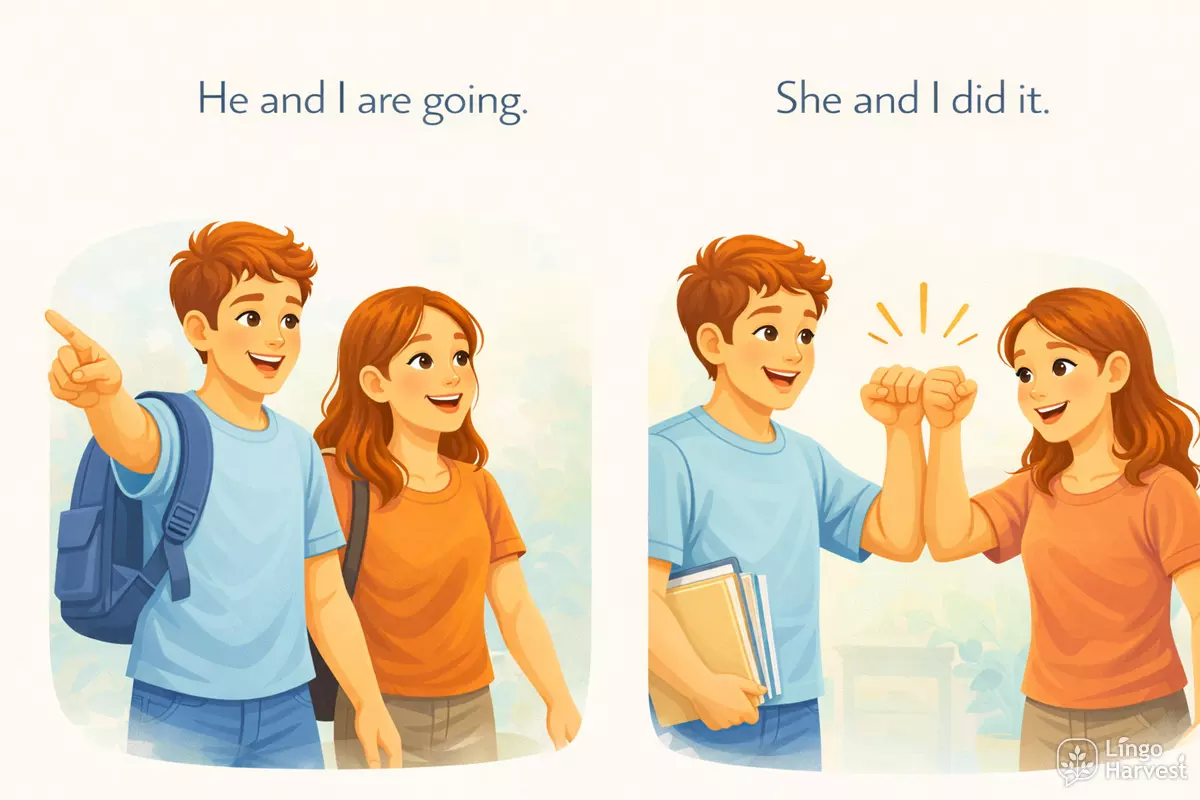
Mixing up subject and object pronouns is especially frequent in coordinate phrases (like “You and me”). Here’s a quick comparison of standard and nonstandard forms:
| Nonstandard (Common in speech) | Standard (Correct in writing) |
|---|---|
| Me and him are going | He and I are going |
| Her and me did it | She and I did it |
| Between you and I | Between you and me |
| Us students arrived early | We students arrived early |
Ultimately, these slips sound natural because of habit, exposure, and the way our brains favor familiar patterns over strict grammar rules. Recognizing them is the first step toward mastering both casual and formal English.
Influence of spoken English on mistakes
Everyday speech patterns often shape how we use pronouns, sometimes leading to errors that feel natural to native speakers but are technically incorrect. Spoken English tends to favor clarity and speed, allowing for shortcuts or informal constructions that differ from standard written grammar. Over time, these habits can influence what sounds “right” to our ears, even when a grammar guide would disagree.
Common Speech-Driven Pronoun Errors
Many mistakes arise when the forms used in conversation slip into writing, or when relaxed speech blurs the distinction between subject and object pronouns. Here are some of the most frequent examples heard in casual English:
- “Me and him went to the store.” (Should be “He and I went…”)
- “Her and me saw it already.” (Correct: “She and I saw it…”)
- “It’s between you and I.” (Should be “between you and me”)
- “Who do you want to see?” (In formal writing: “Whom do you want to see?”)
- “Him and his brother are coming.” (Correct: “He and his brother…”)
- “Us teachers need a break.” (Standard: “We teachers need a break.”)
- “That’s her.” (In some contexts: “That is she.”)
- “Me neither.” (Formal: “Nor I.”)
- “It’s me.” (Technically: “It is I.”)
- “Them guys are funny.” (Standard: “Those guys are funny.”)
- “Who’s them?” (Correct: “Who are they?”)
- “Give it to whoever needs it.” (In some cases: “Give it to whomever needs it.”)
- “This is between she and I.” (Correct: “between her and me”)
- “There’s a difference between we and they.” (Should be “between us and them”)
- “It’s for he who works hardest.” (Standard: “for him who works hardest”)
Why Do These Mistakes Happen?
Several factors in conversational English can encourage these errors:
- Overcorrection: Speakers try to “sound proper” and use subject pronouns where object pronouns are needed (“for you and I” instead of “for you and me”).
- Ellipsis and reduction: Omitting words or simplifying phrases in speech can hide the correct pronoun’s role (“Me too” instead of “So do I”).
- Imitation: Children and adults alike repeat what they hear, especially from influential speakers, even if it’s not standard.
- Speed and informality: Quick exchanges favor familiar forms, not always the grammatically correct ones.
- Lack of feedback: In conversation, listeners rarely correct pronoun mistakes, so habits persist.
Comparison: Speech vs. Standard Forms
To highlight how spoken usage diverges from formal grammar, here’s a look at some typical examples:
| Spoken English | Standard Form |
|---|---|
| Me and her are going. | She and I are going. |
| It’s them. | It is they. |
| Us kids love pizza. | We kids love pizza. |
| Between you and I | Between you and me |
| Who should I give it to? | To whom should I give it? |
| Him and me went out. | He and I went out. |
These examples show how informal language can normalize mistakes. While many of these forms are widely accepted in speech, they are still considered errors in formal contexts. Recognizing this influence can help learners and native speakers alike spot and correct subtle pronoun slip-ups in their own writing.
Common near-native pronoun errors
Even advanced English learners sometimes make subtle mistakes with pronouns that most native speakers would rarely notice—or may not even realize are incorrect. These errors often slip through because they sound natural in conversation, especially when influenced by a speaker’s first language or by informal speech patterns.
Typical tricky mistakes with English pronouns
- Using “me” instead of “I” (or vice versa) after “than” or “as”: “She is taller than me” (should be “than I” in formal writing).
- Mixing up “who” and “whom”: “Who did you give it to?” (technically “Whom did you give it to?”)
- Incorrect reflexive pronouns: “Myself and John went to the store” (should be “John and I”).
- Overusing “they” as a generic pronoun where “he or she” is formally required.
- Confusing “its” and “it’s”: “The company increased it’s profits” (should be “its”).
- Double subjects or objects: “Me, I think it’s fine.”
- Unnecessary object pronouns: “Where is it at?” (“Where is it?” is correct.)
- Redundant pronouns: “My friend she lives in London.”
- Ambiguous pronoun reference: “When Lisa met Sarah, she was late.” (Who was late?)
- Using “her” instead of “hers”: “Is this book her’s?” (should be “hers”).
- “Them” for “those”: “I like them shoes.”
- “Him” for “his”: “That is him car.”
- Switching “their” and “there”: “There going to the park.”
- “One” and “they” mixed: “One should watch their language.” (Formally, “his or her language.”)
- Misusing “each other” and “one another.”
- Using “this” or “that” without clear reference: “He said this would work.” (What is “this”?)
- “Who’s” for “whose”: “Who’s book is this?”
- Using “it” when the subject is clear: “My cat, it is sleeping.”
Comparison of confusing pronoun forms
| Incorrect Usage | Correct Form |
|---|---|
| Me and him went to the store. | He and I went to the store. |
| Between you and I, it’s a secret. | Between you and me, it’s a secret. |
| Her and me are friends. | She and I are friends. |
| Whom is coming to dinner? | Who is coming to dinner? |
| This is her’s. | This is hers. |
| The team lost it’s chance. | The team lost its chance. |
These patterns often stem from listening to informal speech, which is more forgiving about pronoun usage. However, in academic, professional, or written contexts, these errors can stand out. By noticing these subtle slips, advanced learners can polish their English even further and avoid misunderstandings—or the impression of carelessness—when using pronouns.
Cases where natives simplify but exams don’t
Native speakers often use shortcuts in spoken English that sound completely natural in conversation, but these same shortcuts can lead to mistakes on grammar tests or in formal writing. Exams typically require precise, textbook usage—especially with pronouns—while everyday speech favors efficiency and clarity. Recognizing the difference helps learners avoid errors that may feel “normal” but are technically incorrect according to strict rules.
Common Pronoun Shortcuts in Everyday Speech
- Using “me” instead of “I” in compound subjects: “Me and John are going” instead of “John and I are going.”
- Dropping relative pronouns: “That’s the guy I saw” instead of “That’s the guy whom I saw.”
- Overusing “they” for singular antecedents: “If anyone calls, tell them I’m busy” instead of “tell him or her I’m busy.”
- Using “who” in object position: “Who did you see?” instead of “Whom did you see?”
- Mixing up “who” and “that”: “She’s the friend that helped me” instead of “who helped me.”
- Using “it’s me” instead of “it is I.”
- Replacing “my friends and I” with “me and my friends.”
- Leaving out “that” in restrictive clauses: “The book I bought is great” instead of “The book that I bought is great.”
- Using “us” instead of “we” in subjects: “Us kids are hungry” versus “We kids are hungry.”
- Say “between you and I” instead of “between you and me.”
- Using “he” or “she” after prepositions: “For he and I, it was easy” instead of “For him and me.”
- Employing “them” for inanimate objects: “I put them on the table” (referring to books) instead of “those books.”
- Reducing questions: “Who you talking to?” instead of “Whom are you talking to?”
- Using “who’s” for “whose”: “Who’s book is this?” instead of “Whose book is this?”
How These Shortcuts Can Cause Exam Errors
While these simplified forms are widely accepted in everyday settings, language tests and formal writing expect full, grammatically correct structures. Examiners look for subject-object agreement, proper use of relative pronouns, and correct case. Missing these details—even if they sound natural—can cost you points.
| Native (Informal) | Exam/Standard (Formal) |
|---|---|
| Me and Sarah went to the store. | Sarah and I went to the store. |
| Who did you give it to? | To whom did you give it? |
| If anyone calls, tell them I’ll call back. | If anyone calls, tell him or her I’ll call back. |
| It’s me. | It is I. |
| Between you and I, this is secret. | Between you and me, this is secret. |
| Who’s car is this? | Whose car is this? |
| Us students need more time. | We students need more time. |
| The person I spoke to was helpful. | The person to whom I spoke was helpful. |
In summary, being aware of how spoken English often bends the rules—and how exams enforce them—can help learners avoid mistakes that sound “native” but aren’t correct in formal contexts. Practice recognizing these differences to boost both your conversational fluency and your test performance.
Context-dependent correctness
Whether a pronoun choice is correct often depends on the specific grammatical or conversational context. Some pronoun errors go unnoticed by native speakers because they sound natural in everyday speech, but they may not be correct in formal or precise usage. The acceptability of certain pronoun forms can change depending on sentence structure, the presence of prepositions, or the level of formality.
Common situations where context matters
- After linking verbs: “It is I” vs. “It’s me”
- Following prepositions: “between you and me” vs. “between you and I”
- Reflexive pronouns: “Please contact myself” vs. “Please contact me”
- Relative clauses: “the person who I saw” vs. “the person whom I saw”
- Subject vs. object position: “He and I went” vs. “Him and me went”
- With comparative structures: “She is taller than me” vs. “She is taller than I”
- Generic pronouns: “One must do one’s best” vs. “You must do your best”
- Ambiguous reference: “They said they would call” (who is ‘they’?)
- Pronoun agreement with collective nouns: “The team lost its game” vs. “The team lost their game”
- Possessive before gerunds: “I appreciate your coming” vs. “I appreciate you coming”
- Double subjects: “My brother, he is late”
- Redundant pronouns: “Where is she at?”
- Case after than/as: “He is smarter than her” vs. “He is smarter than she”
- Pronouns in elliptical constructions: “Nobody did better than me” vs. “Nobody did better than I”
Comparing casual and formal standards
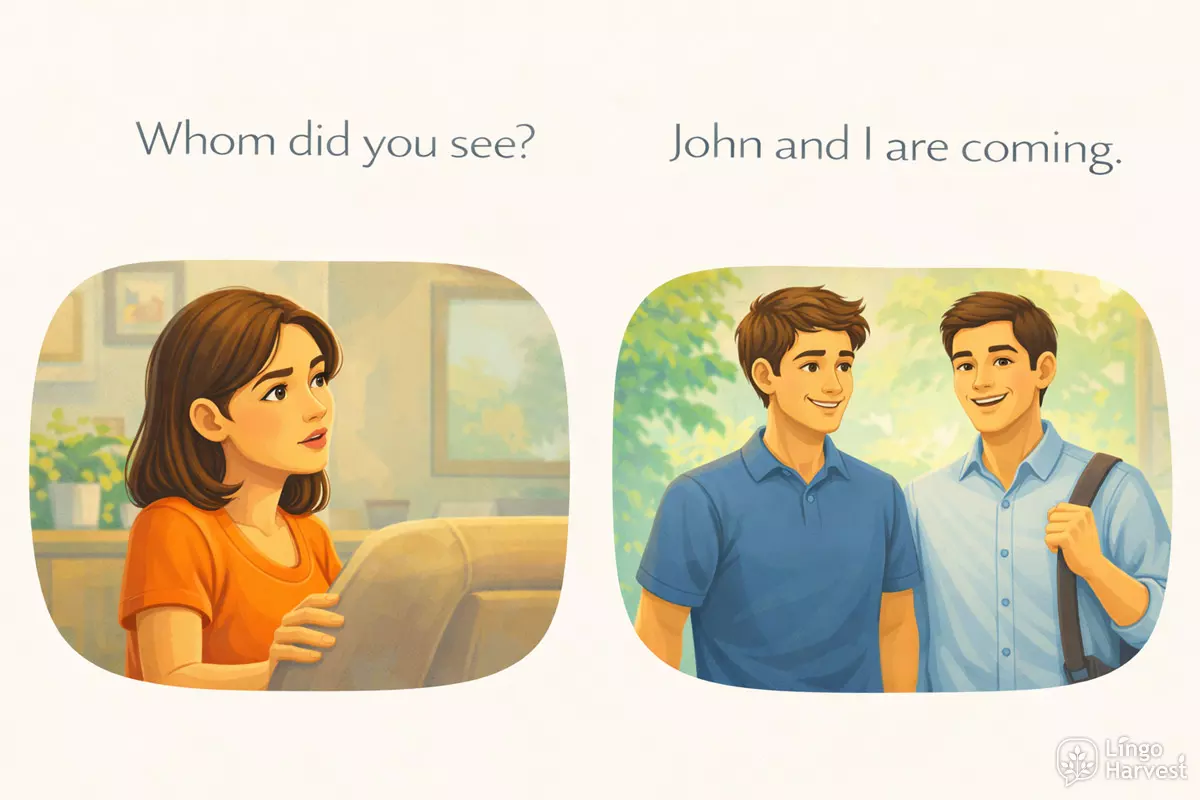
Some forms that feel “right” in speech may be frowned upon in academic or written English. The table below highlights how context can determine which pronoun is considered correct or acceptable.
| Casual Usage | Formal Usage | Typical Context |
|---|---|---|
| It’s me | It is I | Answering “Who is it?” |
| Between you and I | Between you and me | After a preposition |
| Him and me went | He and I went | Compound subject |
| She is taller than me | She is taller than I | Comparisons |
| Who did you see? | Whom did you see? | Object of a verb |
| Me and John are coming | John and I are coming | Subject position |
Understanding how pronoun correctness shifts with context helps avoid mistakes that sound natural but are technically inaccurate. Paying attention to sentence structure and formality can guide you toward the right choice, especially in writing or formal speech.
Editing strategies to catch subtle errors
Careful editing is essential for identifying pronoun mistakes that native speakers often overlook. These errors can slip by because they “sound right” in casual speech, making them tricky to catch during proofreading. To spot these issues, editors should slow down and look for patterns that frequently cause confusion, especially in longer or more complex sentences.
Slow, Deliberate Reading
Reading aloud or subvocalizing helps break the autopilot mode. Hearing the sentences forces you to process every word, making it easier to notice if a pronoun doesn’t clearly refer to its antecedent or if there’s a mismatch in number or gender.
Checklist for Common Pronoun Pitfalls
- Check for unclear antecedents (What exactly does “it” or “they” refer to?)
- Ensure pronoun and antecedent agree in number and gender
- Look for shifts between subject and object pronouns (e.g., “between you and I” vs. “between you and me”)
- Identify unnecessary repetition or omission of pronouns
- Spot cases where “who” vs. “whom” should be used
- Watch for “they” used with singular antecedents (unless intentionally singular ‘they’)
- Check reflexive pronouns (e.g., “myself” used in place of “me” or “I”)
- Review sentences with multiple people to confirm clarity (e.g., “she told her that...”)
- Pay attention to pronouns after than/as (e.g., “smarter than me” vs. “smarter than I”)
- Be wary of pronouns at the start of sentences lacking clear context
Comparison Table: Correct vs. Common (But Wrong) Pronoun Usage
| Incorrect (Sounds Native) | Correct Form |
|---|---|
| Between you and I, this works. | Between you and me, this works. |
| Each student must hand in their paper. | Each student must hand in his or her paper. (or: their, if singular 'they' is accepted) |
| Who do you trust? | Whom do you trust? |
| He gave the book to John and I. | He gave the book to John and me. |
| My friend and me went to the store. | My friend and I went to the store. |
| Everyone needs to bring their own lunch. | Everyone needs to bring his or her own lunch. (or: their, if singular 'they' is accepted) |
Additional Techniques
- Reverse the order: Rewrite sentences with multiple pronouns to check if the meaning still holds.
- Highlight pronouns: Temporarily mark all pronouns in a draft for focused review.
- Peer review: Ask another reader to identify unclear references, as they bring a fresh perspective.
- Use grammar tools: Automated checkers can catch some errors, but always verify manually—tools may miss subtle context.
By applying these methods, writers and editors increase their chances of catching subtle mistakes that even experienced speakers may miss. Consistent, detail-oriented review is the best defense against errors that blend in with everyday language.
Contrast examples: correct vs incorrect
When it comes to pronouns, English speakers—both native and non-native—often make subtle mistakes that sound natural in conversation but are technically incorrect. These errors usually happen because spoken English is more relaxed, and rules get bent or ignored. Seeing the differences side by side makes it easier to notice where things go wrong.
Common Mistakes with Subject and Object Pronouns
It's easy to mix up subject and object pronouns, especially in casual speech. Here are some instances where the wrong form is commonly used, followed by the correct version:
- ❌ Me and John went to the store.
✅ John and I went to the store. - ❌ Her and me saw the movie.
✅ She and I saw the movie. - ❌ Between you and I, this is a secret.
✅ Between you and me, this is a secret. - ❌ They gave it to John and I.
✅ They gave it to John and me.
Who vs. Whom Confusion
The difference between "who" and "whom" is often ignored in speech, but it's important for formal writing or careful communication. Notice how the function in the sentence changes which form is correct:
- ❌ Who did you give it to?
✅ Whom did you give it to? - ❌ Whom is coming to the party?
✅ Who is coming to the party?
Reflexive Pronoun Pitfalls
Reflexive pronouns like "myself" and "yourself" are often used incorrectly as substitutes for subject or object pronouns. Here are some frequent errors:
- ❌ Myself and Sarah will handle it.
✅ Sarah and I will handle it. - ❌ Let John or myself know.
✅ Let John or me know.
Comparisons with Than or As
People sometimes choose the wrong pronoun after words like "than" or "as." The correct form depends on the implied part of the sentence:
- ❌ She is taller than me. (acceptable in casual speech, but formally)
✅ She is taller than I (am). - ❌ He likes ice cream more than her.
✅ He likes ice cream more than she (does).
Summary Table: Side-by-Side Comparison
| Incorrect Example | Correct Example |
|---|---|
| Me and him are leaving. | He and I are leaving. |
| Give it to she and I. | Give it to her and me. |
| Who should I send this to? | To whom should I send this? |
| Myself will handle the call. | I will handle the call. |
| He is as smart as me. | He is as smart as I (am). |
Understanding these distinctions will help you avoid mistakes that are common even among fluent speakers. Paying attention to the context and function of pronouns is the key to getting them right—especially in writing or formal situations.
Practice: spot hidden pronoun errors
Native-like but incorrect pronoun use can be surprisingly tricky to identify, especially in speech or informal writing. Below, you'll work through real examples and subtle mistakes that often go unnoticed. Try to spot which sentences use pronouns incorrectly—even if they sound “natural.”
Find the incorrect pronoun
Read each sentence carefully and decide if the pronoun is used correctly. Remember, errors may involve agreement, reference, or ambiguity, not just obvious mistakes.
- Everyone should bring their own lunch.
- If a student wants to succeed, they must study hard.
- Neither John nor his friends remembered his keys.
- The committee made their decision yesterday.
- Each of the girls finished their homework early.
- My brother and me went to the concert.
- There’s someone who left their umbrella.
- She gave the book to myself.
- The dog chased its tail until it got tired.
- Between you and I, this is a secret.
- Every teacher has their own style.
- One of the boys forgot their backpack.
- It’s me who is responsible.
- Neither of the answers are correct, is it?
- If anybody calls, tell them I’ll call back.
Show answers
- 1. Correct in informal English; formally, “his or her.”
- 2. Same as above—acceptable in modern English.
- 3. Incorrect: “his friends” is plural, but “his keys” refers only to John. Should clarify: “Neither John nor his friends remembered their keys.”
- 4. Incorrect: “committee” is singular; should be “its decision.”
- 5. Incorrect: “Each” is singular; should be “her homework.”
- 6. Incorrect: “My brother and I went…”
- 7. Correct in modern English (singular ‘they’).
- 8. Incorrect: “She gave the book to me.”
- 9. Correct.
- 10. Incorrect: “Between you and me…”
- 11. Correct in current usage.
- 12. Incorrect: “One” is singular; should be “his backpack” (if gender known) or “his or her backpack.”
- 13. Informally accepted, but formally: “It is I who am responsible.”
- 14. Incorrect: “Neither” is singular; should be “is it?”
- 15. Correct (singular ‘they’).
Common hidden pronoun traps
Some pronoun mistakes are easy to miss because they’re frequent in spoken English. Here’s a list of patterns to watch out for:
- Using “they/their” with singular indefinite pronouns (“Everyone should do their best”).
- Reflexive pronouns used incorrectly (“myself” instead of “me” or “I”).
- Ambiguous references: a pronoun that could refer to more than one noun.
- Pronoun agreement: matching singular/plural forms properly.
- Formal vs. informal register: “It is I” vs. “It’s me.”
- Compound subjects: “My friend and me went…” (should be “my friend and I”).
- Collective nouns: “The team lost their game” (should be “its game” in American English).
- Gender-specific forms: using “his or her” vs. “their.”
- Case errors after prepositions (“between you and I” instead of “between you and me”).
- Misplaced pronoun reference: unclear what “it” or “they” refers to.
Quick review: pronoun agreement
| Incorrect Usage | Corrected Version |
|---|---|
| Each of the students finished their test. | Each of the students finished his or her test. |
| The team forgot their uniforms. | The team forgot its uniforms. |
| My friend and me went to the store. | My friend and I went to the store. |
| Someone left their phone on the table. | Someone left his or her phone on the table. (Or: their, in informal English) |
| Between you and I, it’s a secret. | Between you and me, it’s a secret. |
Review these examples and patterns to strengthen your ability to catch subtle pronoun errors, even in sentences that sound perfectly natural.