Reflexive Pronouns: Myself, Yourself, Ourselves

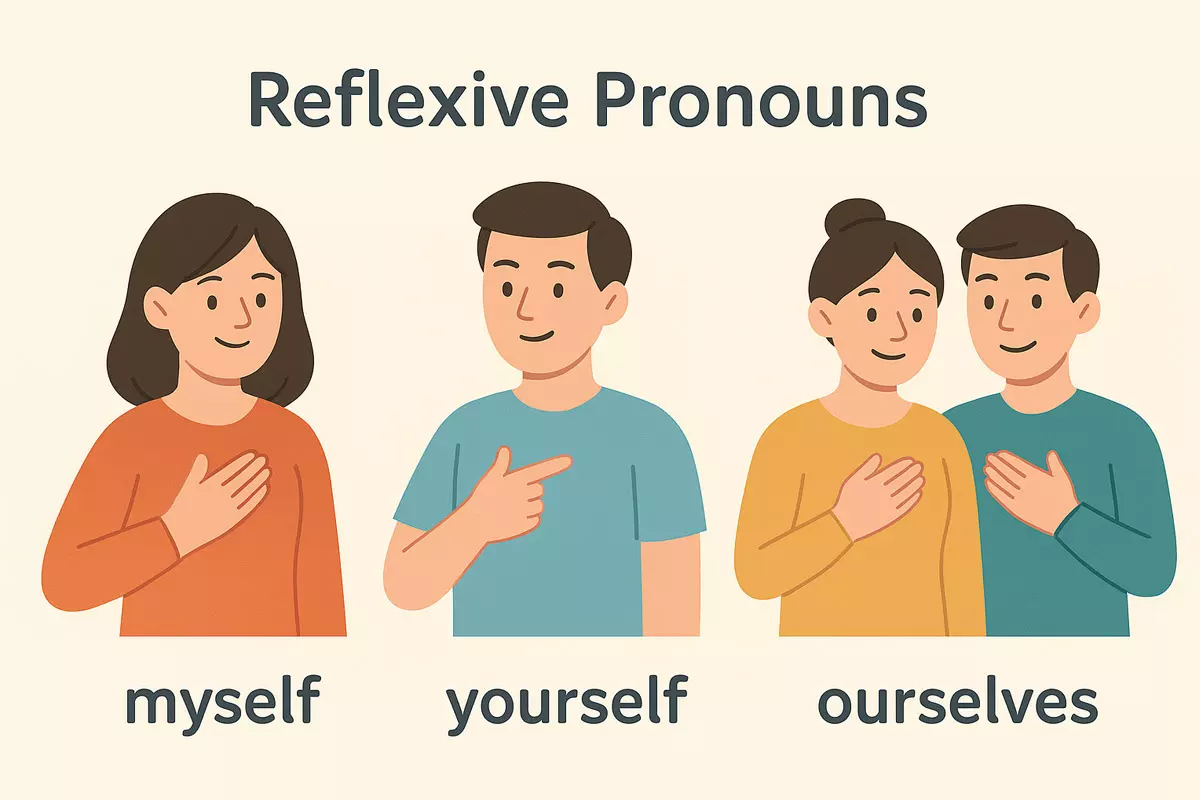 This article explains the meaning of reflexive pronouns, provides a full list, and details when to use them. It covers common verbs, mistakes beginners make, tips to avoid overuse, and offers practice sentences for learning.
Have you ever wondered why we say things like I did it myself or you should help yourself? Words such as myself and yourself are called reflexive pronouns, and they help us show that the action in the sentence is directed back to the subject. Using reflexive forms adds clarity and emphasis, making it clear who is involved and highlighting personal responsibility or direct involvement. Understanding how to use these pronouns correctly can make your communication more precise and effective in everyday situations.
What Reflexive Pronouns Mean
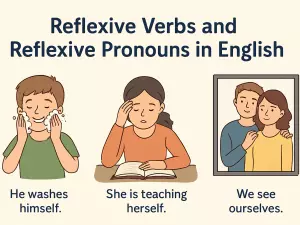
Reflexive pronouns are special words in English that refer back to the subject of the sentence. They are used when the person doing the action and the person receiving the action are the same. For example, in "She taught herself Spanish," herself points back to she. These pronouns help avoid confusion and make sentences clearer by showing that the subject is acting on itself, not on someone else.
Common Reflexive Pronouns
- myself
- yourself
- himself
- herself
- itself
- ourselves
- yourselves
- themselves
You’ll see reflexive forms used in many everyday situations, such as when someone does something alone, or to emphasize that the subject did not get help. For instance, "We built the house ourselves" means no one helped "us"—the action was done only by the people mentioned.
When to Use Reflexive Pronouns
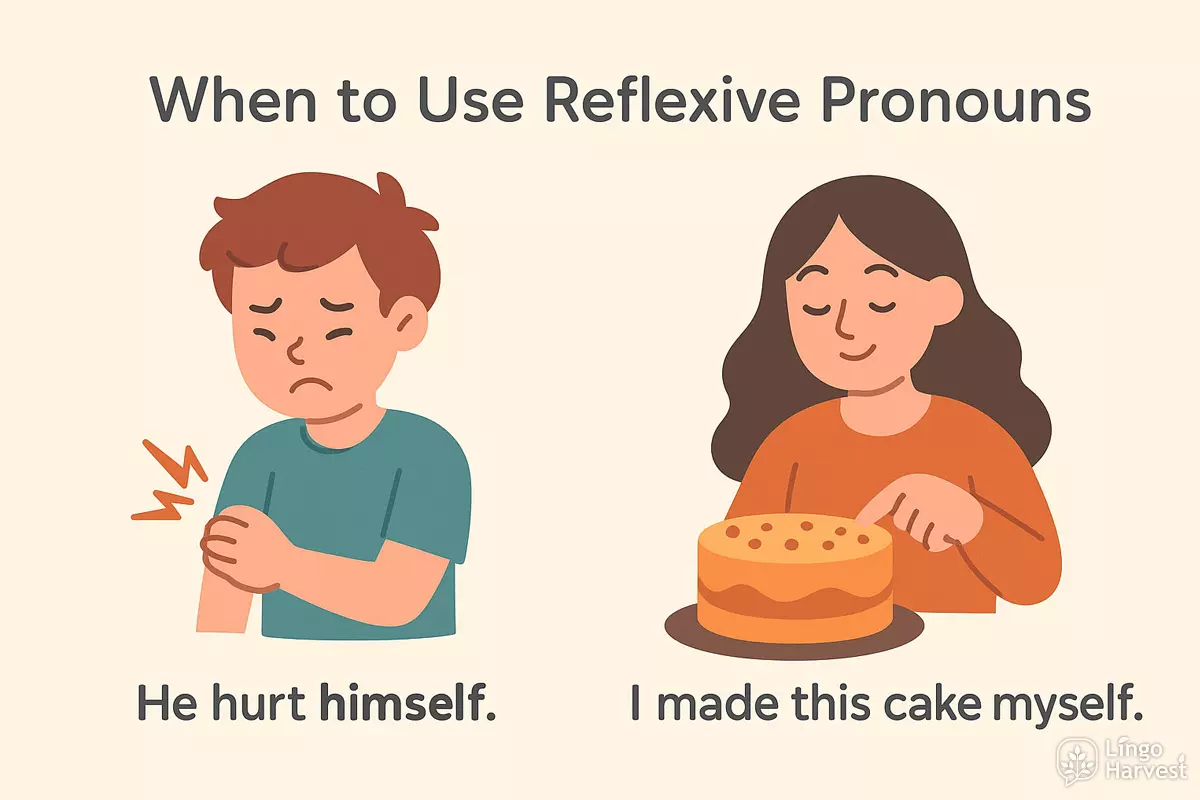
- To show the subject and object are the same: "He hurt himself."
- For emphasis: "I made this cake myself."
- With certain verbs (like "enjoy," "pride," or "introduce"): "She introduced herself."
- After prepositions when the reference is the subject: "They did it by themselves."
- To avoid confusion in indirect speech: "They told themselves it would be fine."
Reflexive vs. Non-Reflexive Pronouns
It’s important not to use these forms when the subject and object are different. For example, saying "She gave myself a gift" is incorrect; it should be "She gave me a gift."
| Subject Pronoun | Reflexive Pronoun |
|---|---|
| I | myself |
| you (singular) | yourself |
| he | himself |
| she | herself |
| it | itself |
| we | ourselves |
| you (plural) | yourselves |
| they | themselves |
In summary, reflexive pronouns clarify who is doing and receiving the action in a sentence. They help avoid ambiguity and add emphasis when needed. Using them properly makes your English more precise and natural.
Full Reflexive Pronoun List
Reflexive pronouns are special words in English used when the subject and object of a sentence are the same person or group. They help add emphasis or clarify who is performing the action. Each personal pronoun has a corresponding reflexive form that matches its number and person.
All English Reflexive Pronouns
Here’s an overview of the main reflexive pronouns you’ll encounter in English. These forms are used to refer back to the subject of the sentence, whether singular or plural, and also to show emphasis.
| Personal Pronoun | Reflexive Pronoun |
|---|---|
| I | myself |
| you (singular) | yourself |
| he | himself |
| she | herself |
| it | itself |
| we | ourselves |
| you (plural) | yourselves |
| they | themselves |
Examples in Sentences
To see how these pronouns function, consider the following sample sentences:
- I cooked dinner myself.
- Did you finish the project yourself?
- He blamed himself for the mistake.
- She introduced herself at the meeting.
- The cat cleaned itself.
- We organized the event ourselves.
- You should treat yourselves to a day off.
- They completed the challenge themselves.
Quick Reference: Usage Tips
Reflexive forms are used both for emphasis and when the subject and object are the same. They never replace regular subject or object pronouns and shouldn’t be used where a standard pronoun is needed. For collective actions, use the plural version (e.g., ourselves, themselves). For singular subjects, choose the singular form. Knowing the correct reflexive pronoun helps your English sound natural and clear. Keep this list handy for reference as you practice!
When to Use Reflexives
Reflexive pronouns like myself, yourself, ourselves, and others serve specific roles in English sentences. They are not interchangeable with regular pronouns; instead, they show that the subject and the object of the verb are the same person or group. Understanding the main situations where these forms are appropriate helps avoid common mistakes.
Situations That Call for Reflexive Pronouns
- When the subject and object are the same: Use a reflexive to show that the action returns to the doer.
Example: "She taught herself Spanish." - For emphasis (intensive use): Sometimes, these pronouns add emphasis to the subject.
Example: "I baked this cake myself." - With certain verbs: Some verbs are commonly followed by reflexive forms, especially to indicate self-directed actions.
Examples: "enjoy yourself," "introduce yourself," "help yourself." - To avoid ambiguity: Sometimes, a reflexive makes it clear who is affected by the action.
Example: "John looked at himself in the mirror." - Describing daily routines: Many activities use reflexives to show self-care or personal actions.
Examples: "wash yourself," "dress herself," "shave himself." - With prepositions: When the subject and object of a preposition are the same, reflexives are used.
Example: "He was talking to himself." - After certain prepositions: Especially after by to mean 'alone' or 'without help.'
Example: "She went to the party by herself." - When giving instructions or invitations: To sound polite or give permission.
Example: "Please help yourself to some coffee." - In idioms and fixed expressions: Some phrases require a reflexive form.
Examples: "Behave yourself," "make yourself at home." - To stress sole responsibility: Emphasizing that no one else was involved.
Example: "He fixed the car himself."
Common Reflexive Pronouns in English
| Subject | Reflexive Pronoun | Example Sentence |
|---|---|---|
| I | myself | I made breakfast for myself. |
| you (singular) | yourself | You should take care of yourself. |
| he | himself | He introduced himself. |
| she | herself | She blamed herself for the mistake. |
| it | itself | The cat cleaned itself. |
| we | ourselves | We prepared ourselves for the test. |
| you (plural) | yourselves | Did you enjoy yourselves? |
| they | themselves | They taught themselves to play guitar. |
In summary, reflexive pronouns are used for self-reference, emphasis, and clarity in many everyday contexts. Recognizing when to use these words helps make your English clearer and more natural.
Common Verbs with Reflexives
Many English verbs can be used together with reflexive pronouns to show that the subject and object of the action are the same person. Some verbs almost always require a reflexive pronoun, while others only use one in particular contexts. Below, you'll find frequent actions and situations where reflexive forms are natural and necessary.
Everyday Actions

Certain daily activities often pair with reflexive pronouns. Here are some useful examples:
- wash yourself – She washed herself after painting.
- dress oneself – The toddler can dress himself now.
- introduce oneself – Please introduce yourself to the class.
- hurt oneself – Be careful not to hurt yourself.
- enjoy oneself – Did you enjoy yourself at the party?
- pride oneself – He prides himself on his punctuality.
- prepare oneself – They prepared themselves for the exam.
- remind oneself – I have to remind myself to stay calm.
- teach oneself – She taught herself to play guitar.
- express oneself – It’s hard to express myself in another language.
- convince oneself – He convinced himself it was the right choice.
- defend oneself – She defended herself against the accusation.
- blame oneself – Don’t blame yourself for the mistake.
- absent oneself – He absented himself from the meeting.
- amuse oneself – The children amused themselves with games.
- find oneself – She found herself in an awkward situation.
- cut oneself – He cut himself while cooking.
- talk to oneself – Do you ever talk to yourself?
Verbs That Rarely Use Reflexives
Some actions, like see, meet, or relax, are not generally used with reflexive pronouns in English. For example, we say “I relax” (not “I relax myself”). This is a key difference from some other languages.
Reflexive vs. Non-Reflexive Meaning
With certain verbs, adding a reflexive pronoun changes the meaning. For instance, “help” by itself means to assist someone else, but “help yourself” means to take something for yourself (as in food at a party). Here’s a short comparison:
| Verb Alone | With Reflexive Pronoun |
|---|---|
| He introduced the speaker. | He introduced himself. |
| She taught the class. | She taught herself. |
| They blamed the weather. | They blamed themselves. |
| Help the guests. | Help yourself (to some food). |
Understanding which verbs can take reflexive pronouns helps you sound more natural in English and avoid common mistakes. Practice using these forms in real-life situations to build your confidence.
Avoiding Overuse
Using reflexive pronouns such as "myself," "yourself," or "ourselves" can add clarity or emphasis, but using them too often or incorrectly can make writing sound awkward or confusing. It's important to know when these forms are truly necessary and when a simpler pronoun or noun would be clearer.
Common Pitfalls
Writers sometimes insert reflexive forms where a standard pronoun is more natural. For example, "Please contact myself if you have questions" should be "Please contact me." Overusing these words often happens in formal emails or speech when people want to sound more professional, but it can have the opposite effect.
When to Use (and When Not To)
Reflexive pronouns are appropriate in these cases:
- When the subject and object are the same: I hurt myself.
- For emphasis: I myself finished the project.
- In idiomatic expressions: Behave yourself.
They are not needed:
- As a replacement for subject or object pronouns: She and myself will attend ❌ → She and I will attend ✅
- After most prepositions: Between yourself and me ❌ → Between you and me ✅
Examples of Appropriate vs. Unnecessary Use
| Correct Usage | Overuse or Wrong Usage |
|---|---|
| I made it myself. | Myself made it. |
| He blames himself for the mistake. | He blames myself for the mistake. |
| We enjoyed ourselves at the party. | Ourselves enjoyed the party. |
| She introduced herself. | Please send the report to myself. |
| You should be proud of yourself. | Between yourself and myself, this is a secret. |
Tips for Natural Usage
- Use the standard pronoun (me, you, him, her, us, them) unless the subject and object are the same person or group.
- Read sentences aloud; if the reflexive word sounds forced, try replacing it with a simpler pronoun.
- Reserve reflexive forms for emphasis or when the action returns to the doer.
- If unsure, check if removing the reflexive word changes the meaning. If not, it’s probably unnecessary.
Choosing the right pronoun helps sentences flow and ensures clarity. Save reflexive forms for truly reflexive actions or to add emphasis—otherwise, keep things simple for your reader.
Beginner Mistakes
When first learning how to use words like “myself,” “yourself,” and “ourselves,” it’s easy to slip up. Many learners confuse when these words should be used or choose the wrong form. Understanding the most common pitfalls can help you sound more natural and avoid awkward phrasing.
Common Confusion: When to Use Reflexive Forms
Reflexive pronouns are often mixed up with personal pronouns or used unnecessarily. Here are some typical issues:
- Using a reflexive pronoun when a simple subject or object pronoun is correct (e.g., saying “Please contact myself” instead of “Please contact me”).
- Forgetting to use a reflexive pronoun when the subject and object are the same (e.g., “I hurt me” instead of “I hurt myself”).
- Choosing the wrong word for the subject (e.g., “He did it himself” versus “He did it hisself” ❌).
Incorrect Forms and Overcorrection
Sometimes, people try to sound more formal by overusing these constructions. For example:
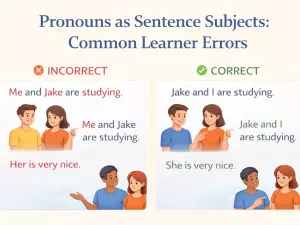
- “Myself and John went to the store” ❌ (should be “John and I went…”)
- “If you have questions, ask myself” ❌ (should be “ask me”)
These errors happen because reflexive pronouns are only used when the subject and object refer to the same person or group, or for emphasis.
Mixing Up Singular and Plural Forms
Another frequent area of confusion is matching the right pronoun to the subject. Here’s a quick reference for the correct forms:
| Subject | Reflexive Pronoun |
|---|---|
| I | myself |
| you (singular) | yourself |
| he | himself |
| she | herself |
| it | itself |
| we | ourselves |
| you (plural) | yourselves |
| they | themselves |
Examples of Typical Mistakes
Recognizing patterns in errors can help you remember the right forms. Watch out for these:
- Saying “Theirselves” or “Hisself” instead of “themselves” or “himself”
- Using “myself” as the subject: “Myself will do it” ❌
- Leaving out the pronoun: “She introduced to myself” ❌
- Adding extra words: “Each one of ourselves” instead of simply “ourselves”
- Mixing up “yourself” and “yourselves” depending on singular or plural “you”
- Using reflexives with actions that don’t reflect back to the subject (e.g., “He gave the book to myself”)
- Trying to sound formal but ending up incorrect: “Should you have questions, contact myself.”
- Confusing possessives: “my self” (two words) instead of “myself” (one word)
- Repeating the subject: “She herself she cleaned the room” ❌
- Using a reflexive where an object pronoun is needed: “He saw myself at the store”
Paying attention to these typical slip-ups will help you use these forms accurately and confidently in everyday English.
Practice Sentences
To help reinforce your understanding of reflexive pronouns such as myself, yourself, and ourselves, try reading and completing the following example sentences. Each one demonstrates how these words are used in real communication, highlighting both subject-verb agreement and appropriate contexts. Practicing with these structures will help you internalize the correct usage.
Examples in Context
- I made this cake myself.
- Did you finish the project yourself?
- We prepared the presentation ourselves.
- She taught herself to play the piano.
- They organized the event themselves.
- He blamed himself for the mistake.
- Take care of yourself while I’m away.
- We found ourselves lost in the city.
- You should be proud of yourself for passing the exam.
- The cat cleaned itself after eating.
- Sometimes, I talk to myself when I am thinking.
- The children dressed themselves before school.
Fill-in-the-Blank Sentences
- Anna fixed her bike by __________.
- We will handle the situation __________.
- Please introduce __________ to the group.
- Did you make this model __________?
- The dog entertained __________ while we were out.
Show answers
- herself
- ourselves
- yourself
- yourself
- itself
Comparison of Reflexive Pronouns
| Subject Pronoun | Reflexive Pronoun | Example Sentence |
|---|---|---|
| I | myself | I will do it myself. |
| you (singular) | yourself | You can help yourself to some tea. |
| we | ourselves | We enjoyed ourselves at the party. |
| they | themselves | They built the house themselves. |
| he | himself | He introduced himself to everyone. |
| she | herself | She reminded herself to call her friend. |
| it | itself | The machine turns itself off at night. |
| you (plural) | yourselves | You should prepare yourselves for the test. |
Short Quiz
Choose the correct reflexive pronoun to complete each sentence:
- Lucy taught __________ to swim.
- We can handle this __________.
- Did you make this cake __________?
- The cat hurt __________ jumping from the wall.
Show answers
- herself
- ourselves
- yourself
- itself