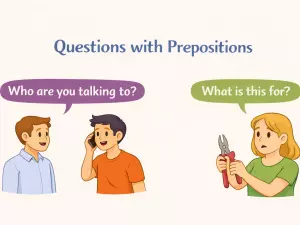
Interrogative Pronouns: Who, What, Which

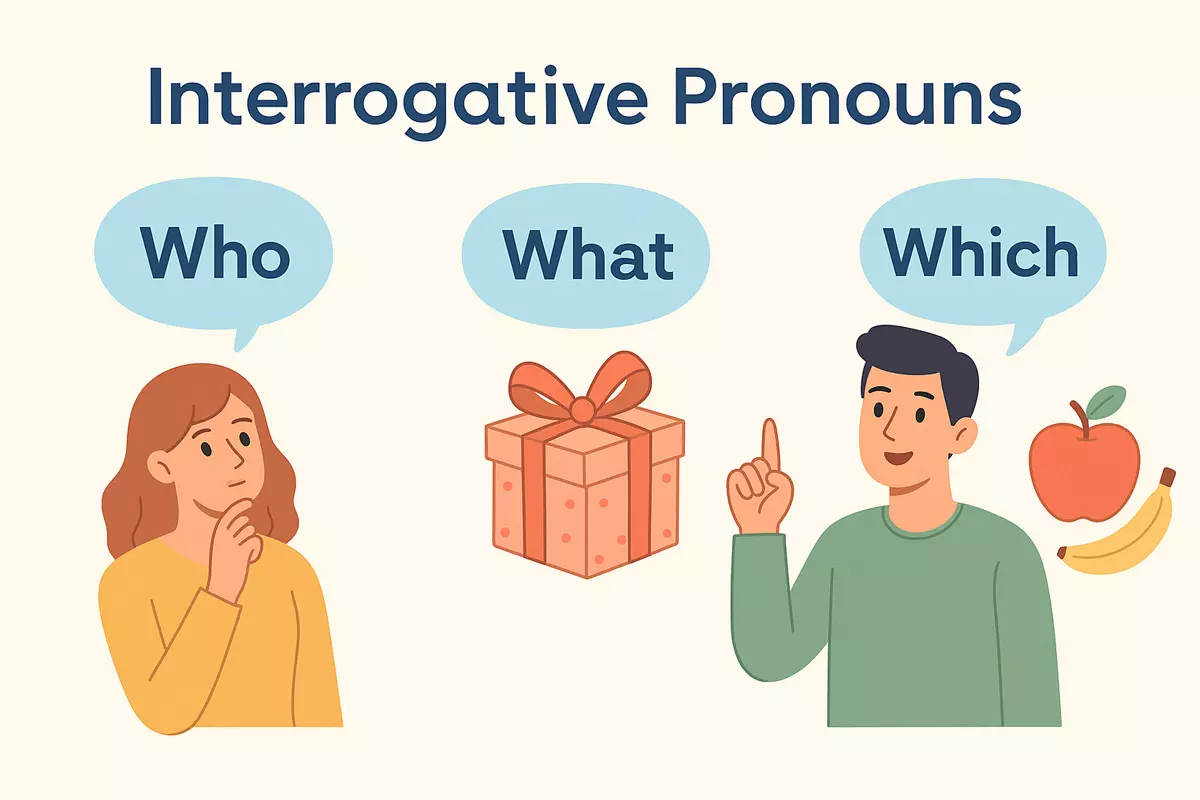 This article explains interrogative pronouns, when to use each form, and their position in questions. It includes daily English examples, tips to avoid confusing them with determiners, and a short practice for building your own questions.
Learning how to ask questions in English is an important skill for effective communication. Words such as who, what, where, when, why, and how are commonly used to seek information, clarify details, and keep conversations flowing smoothly. By understanding and practicing these essential question words, you can express curiosity, gather relevant facts, and engage more confidently in discussions. Mastering the use of question words will help you become a better communicator and make it easier to connect with others in everyday situations.
What Interrogative Pronouns Are
Interrogative pronouns are special words used to ask questions about people, things, or choices. Instead of naming a specific person or object, they stand in for the unknown information you want to find out. These pronouns help form direct questions and sometimes indirect questions, allowing conversations to flow naturally when details are missing or unclear.
How Interrogative Pronouns Work
When you need to ask for details—such as a person’s identity, a chosen item, or a specific reason—these pronouns step in. They are placed at the start of the question or clause, signaling that the answer will provide new information. For example, in “Who is coming to dinner?” the word “who” replaces the name of the person you’re asking about.
Common English Interrogative Pronouns
- Who – used for people (e.g., “Who called you?”)
- Whom – formal, for the object of a verb or preposition (e.g., “Whom did you see?”)
- Whose – asks about possession (e.g., “Whose keys are these?”)
- What – refers to things or information (e.g., “What happened?”)
- Which – used when choosing from a known set (e.g., “Which book do you want?”)
Key Features
- They do not refer to a specific noun until the answer is given.
- They are always question words, but can also introduce indirect questions (“Tell me what you need.”).
- Some, like “who” and “whom,” change form to match their role in the sentence.
- “Which” and “what” can be used for both people and things, depending on context.
Examples in Sentences
- Who left their bag here?
- What did you buy at the store?
- Which of these is your favorite?
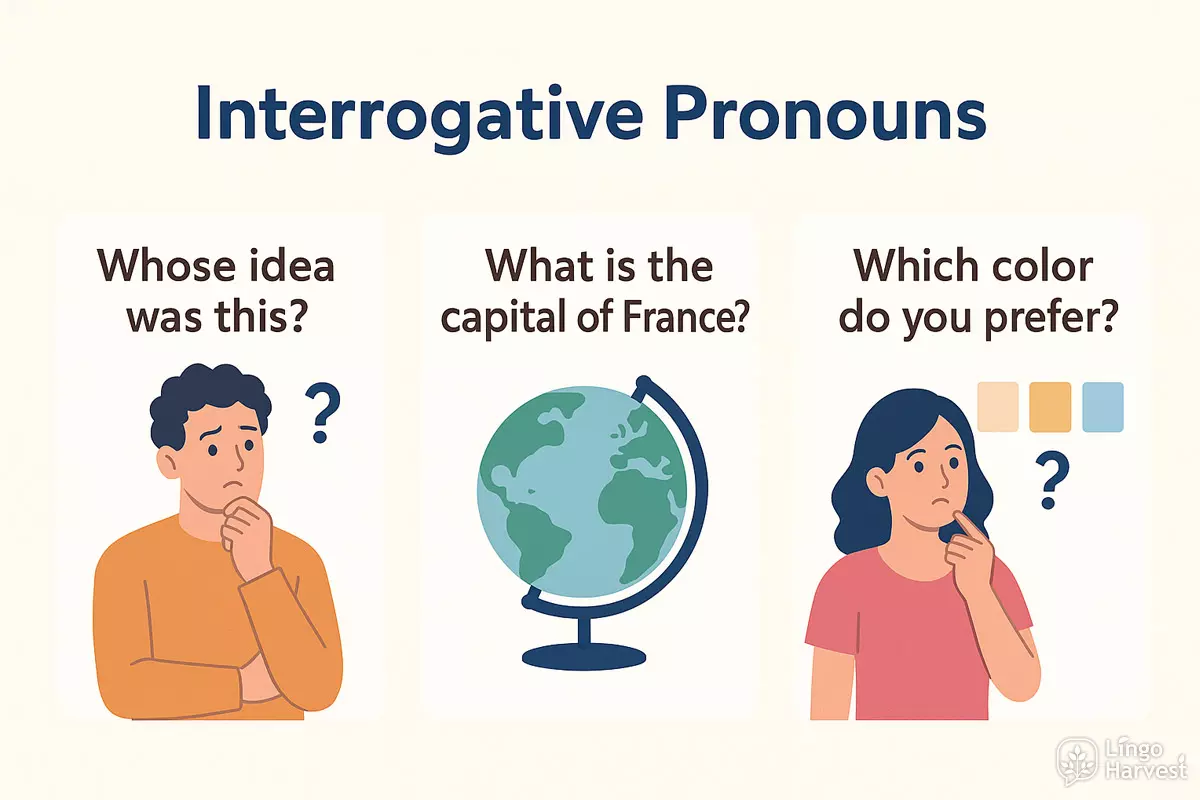
- Whose idea was this?
- Whom should I contact about the problem?
- What is the capital of France?
- Which color do you prefer?
- Who will join us for lunch?
- Whose phone keeps ringing?
- What makes you happy?
Understanding these pronouns helps you ask clear questions and gather the information you need. Their role is essential in both spoken and written English, especially when you don’t have all the details and need to fill in the blanks.
When to Use Each Form
Understanding the right context for "who," "what," and "which" helps you ask clear and precise questions. Each interrogative pronoun serves a distinct purpose depending on the information you want to obtain. Here’s how to decide which word fits your question.
Who
"Who" is used when referring to people. Use it when you want to know the identity of a person or people involved in an action. It never refers to things or animals (except in personification or poetic contexts).
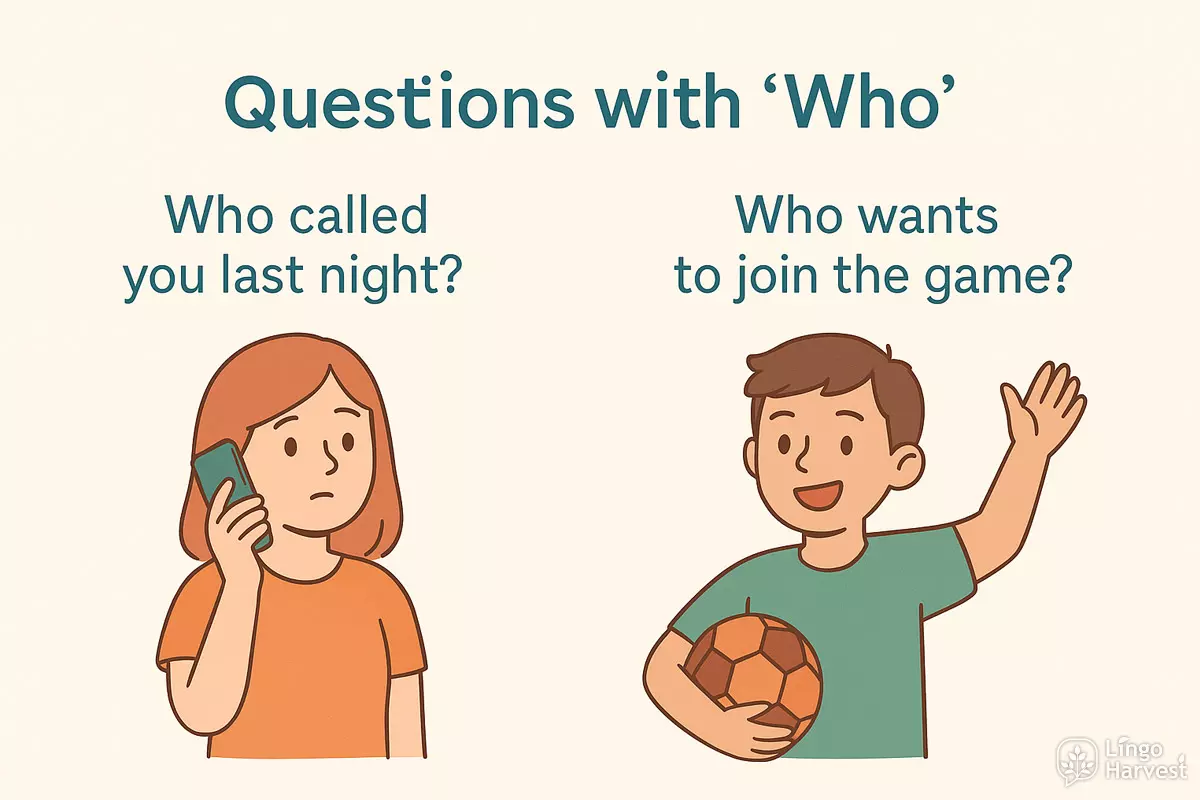
- Who called you last night?
- Who is your teacher?
- Who won the match?
What
"What" is the choice for asking about things, ideas, actions, or even people in some less formal or indirect questions. It helps when you’re seeking general information or clarification.
- What is your favorite book?
- What happened at the meeting?
- What do you need?
- What made you decide that?
Which
"Which" is specific: use it when you have a limited, known set of options. It can refer to both people and things, but only when the choices are clear or already mentioned.
- Which color do you prefer, blue or green?
- Which train goes to the airport?
- Which is your seat?
- Which of these students is Anna?
Quick Comparison
To see the differences at a glance, consider the following table:
| Pronoun | Used For | Example Question |
|---|---|---|
| Who | People (identity unknown) | Who is knocking at the door? |
| What | Things, actions, general information | What is that noise? |
| Which | Specific choice from a defined group | Which movie do you want to watch? |
Tips for Choosing Correctly
- Use "who" only for people, never for things.
- Choose "what" when the range of possible answers is open or unknown.
- Opt for "which" when the answer must be one of a known, limited set.
- For animals, "what" is standard, but "who" may appear in special cases (e.g., pets).
- When in doubt, think about whether you’re asking for identity ("who"), information ("what"), or selection ("which").
Applying these guidelines makes your questions clearer and more effective in conversation or writing.
Position in Questions
When asking questions in English, interrogative pronouns like who, what, and which usually come at the very start of the sentence. This initial placement signals that the sentence is a question and highlights the information being requested. For example, in "Who is at the door?" or "What did you see?", the interrogative word appears before the verb and the subject (if the subject isn’t the pronoun itself). However, the arrangement can shift slightly depending on what is being asked or when forming indirect questions. In direct questions, the pattern is typically: interrogative pronoun + auxiliary verb + subject + main verb. With subject questions, the pronoun stands in for the subject and is followed immediately by the verb (e.g., "Who called you?").
Typical Patterns for Interrogative Pronouns
- Who + verb (for subject questions): "Who knows the answer?"
- Who + auxiliary + subject + verb (for object questions): "Who did you meet?"
- What + verb/auxiliary + subject + verb: "What happened?" / "What did you eat?"
- Which + noun + verb/auxiliary + subject + verb: "Which book is yours?" / "Which color do you prefer?"
Examples of Word Order with Interrogative Pronouns
| Interrogative Pronoun | Example Question |
|---|---|
| Who | Who called this morning? |
| What | What are you doing? |
| Which | Which dress do you like? |
| Who (object) | Who did you invite? |
| What (subject) | What happened next? |
| Which (with noun) | Which team won? |
Special Notes
- In indirect questions, the interrogative pronoun does not move to the front: "I wonder who will come."
- Sometimes, prepositions can appear before the interrogative, especially in formal English: "To whom did you speak?"
- In casual speech, prepositions usually stay at the end: "Who did you speak to?"
Understanding where to place who, what, and which in a question helps your sentences sound natural and clear. The position of these pronouns is a key part of forming questions that are easy to understand.
Examples from Daily English
Understanding how to use "who," "what," and "which" in everyday conversations can make speaking and listening to English much easier. These question words help you ask for information about people, things, or choices. Below are practical situations and sample questions that show how these pronouns appear in real life.
Questions with "Who"
- Who is at the door?
- Who made this cake?
- Who do you trust the most?
- Who called you last night?
- Who wants to join the game?
Questions with "What"
- What is your favorite movie?
- What did you eat for breakfast?
- What are you doing right now?
- What happened here?
- What does this word mean?
Questions with "Which"
- Which color do you prefer, blue or green?
- Which book did you choose?
- Which bus goes to the city center?
- Which of these shirts is yours?
- Which team won the match?
| Question Word | Typical Use | Sample Question |
|---|---|---|
| Who | Asking about people | Who is your teacher? |
| What | Asking about things, ideas, or actions | What time is it? |
| Which | Choosing from a limited set | Which seat is taken? |
These examples show how flexible and useful interrogative pronouns are in conversations, whether you’re meeting someone new, making decisions, or gathering important details in daily life. Practicing these forms will help you sound more natural and confident in English.
Avoiding Confusion with Determiners
Many English learners mix up interrogative pronouns (like “who,” “what,” and “which”) with similar-looking determiners. The confusion usually arises because some words serve as both, depending on their role in the sentence. Understanding the distinction helps to form clear questions and avoid common mistakes.
Key Differences Between Interrogative Pronouns and Determiners
Interrogative pronouns stand in for nouns and ask about people or things (for example, “Who called?” or “What happened?”). Determiners, on the other hand, come before nouns and help specify which one you mean (like “Which book?” or “What time?”).
- Who is only a pronoun. Example: “Who wants tea?”
- What can be a pronoun (“What happened?”) or a determiner (“What color do you like?”).
- Which can also be a pronoun (“Which is yours?”) or a determiner (“Which movie did you see?”).
Spotting the Difference in Use
When “what” or “which” comes directly before a noun, it is working as a determiner, not a pronoun. If it stands alone, it acts as a pronoun. “Who” is never a determiner, so it’s less likely to cause confusion.
Common Mistakes to Watch For
Learners often use pronouns where a determiner is needed, or vice versa. Here are some mistakes and corrections:
- ❌ “What you want book?” → ✅ “Which book do you want?”
- ❌ “Which is your favorite color?” (correct as a pronoun, but if you name the color, use determiner) → ✅ “Which color is your favorite?”
- ❌ “What pen do you prefer?” (correct, because “what” is a determiner here)
At-a-Glance: Interrogative Pronouns vs. Determiners
| Word | As Pronoun | As Determiner |
|---|---|---|
| Who | Who is knocking? | ❌ (not used as determiner) |
| What | What happened? | What time is it? |
| Which | Which is yours? | Which book do you prefer? |
| Whose | Whose is this? | Whose bag is this? |
Useful Tips
- Remember: If the question word is directly followed by a noun, it’s acting as a determiner.
- “Who” never comes before a noun; it always stands alone.
- Practice by making questions both with and without a noun right after the question word.
- Review common phrases: “What time,” “Which way,” “Whose car,” etc.
Grasping these distinctions makes question formation easier and helps you sound more natural in English conversations.
Short Practice: Build Questions
Creating well-formed questions with interrogative pronouns is a key skill in English. Practice helps you get comfortable choosing between "who," "what," and "which" in different contexts. Let's try building questions using these pronouns with a variety of subjects and objects.
Below are prompts. For each, form a question using the correct interrogative pronoun ("who," "what," or "which"). Pay attention to whether you are asking about a person, a thing, or making a choice from a set.
Form Questions: Choose the Right Interrogative Pronoun
- _____ is your best friend?
- _____ did you see at the park?
- _____ of these books is your favorite?
- _____ happened at the meeting?
- _____ do you want for dinner?
- _____ broke the window?
- _____ color do you prefer, blue or green?
- _____ is making that noise?
- _____ are you thinking about?
- _____ of the two movies should we watch?
- _____ called you last night?
- _____ is your bag on the floor?
- _____ do you need to finish your homework?
- _____ of these keys opens the door?
- _____ wrote this poem?
Show answers
- Who is your best friend?
- Who did you see at the park?
- Which of these books is your favorite?
- What happened at the meeting?
- What do you want for dinner?
- Who broke the window?
- Which color do you prefer, blue or green?
- Who is making that noise?
- What are you thinking about?
- Which of the two movies should we watch?
- Who called you last night?
- Why is your bag on the floor?
- What do you need to finish your homework?
- Which of these keys opens the door?
- Who wrote this poem?
Patterns for Building Questions
Notice how the choice of interrogative pronoun depends on what information you want:
- Who – for people (subject or object)
- What – for things, actions, or ideas
- Which – for a specific choice among options
| Interrogative Pronoun | Example Question | When to Use |
|---|---|---|
| Who | Who is calling? | Ask about a person |
| What | What is that noise? | Ask about a thing or idea |
| Which | Which pen is yours? | Choose from a set |
| Which | Which of these is correct? | Choose among given options |
Try It Yourself
Take a moment to create your own questions using "who," "what," and "which." Think about a recent event, a group of objects, or people you know. How would you ask about them? Practice helps you internalize the patterns and use them with confidence.