Choice Questions in English: How to Ask About Alternatives

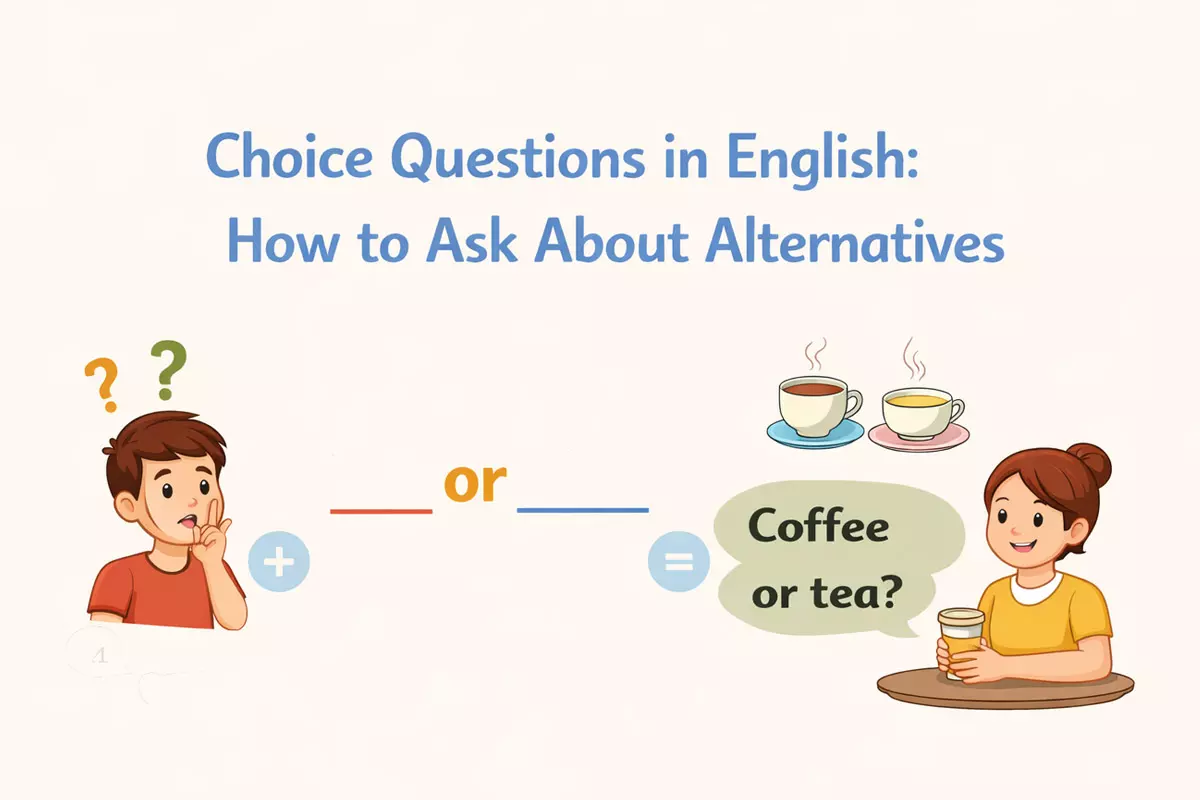 This article explains what choice questions are, how they are structured, and how to use or and proper intonation. It also compares them to yes/no questions, covers short answers, common mistakes, and includes practice exercises.
Knowing how to present choices in English conversations is important for effective communication. By mastering questions that offer options, you can clearly express your preferences, understand others' intentions, and make interactions smoother. This skill is useful in everyday situations, such as deciding on activities, making plans, or choosing between products. Practicing these types of questions not only improves your language abilities but also builds confidence in expressing yourself and understanding others during daily conversations.
What Choice Questions Are
When you want to ask someone to choose between two or more possibilities, English uses what are called “choice questions.” Instead of asking for open-ended information, these questions present specific options and expect the listener to select one. This makes them different from yes/no questions or wh-questions, since the answer is expected to be one of the given alternatives.
Typically, you form these questions by listing the alternatives, often joined by the word “or.” The structure is simple: present the options clearly so the listener knows exactly what to choose between. Sometimes, the speaker may also use a short phrase at the beginning (like “Would you like…” or “Do you want…”) to introduce the options.
Common Patterns for Choice Questions
There are a few basic patterns you’ll see when offering alternatives. Here are some of the most useful structures:
- Would you like coffee or tea?
- Is your appointment on Monday or Tuesday?
- Should we meet at home or at the office?
- Do you prefer sweet or savory snacks?
- Are you traveling by train or by bus?
- Will you stay here or go out?
- Is this answer correct or incorrect?
- Would you rather read or watch TV?
- Do you want pizza, pasta, or salad?
- Are you calling about sales or support?
- Should I email you today or tomorrow?
- Do you need help now or later?
- Is your name spelled with an “i” or a “y”?
- Did you see it first or second?
How Choice Questions Differ From Other Questions
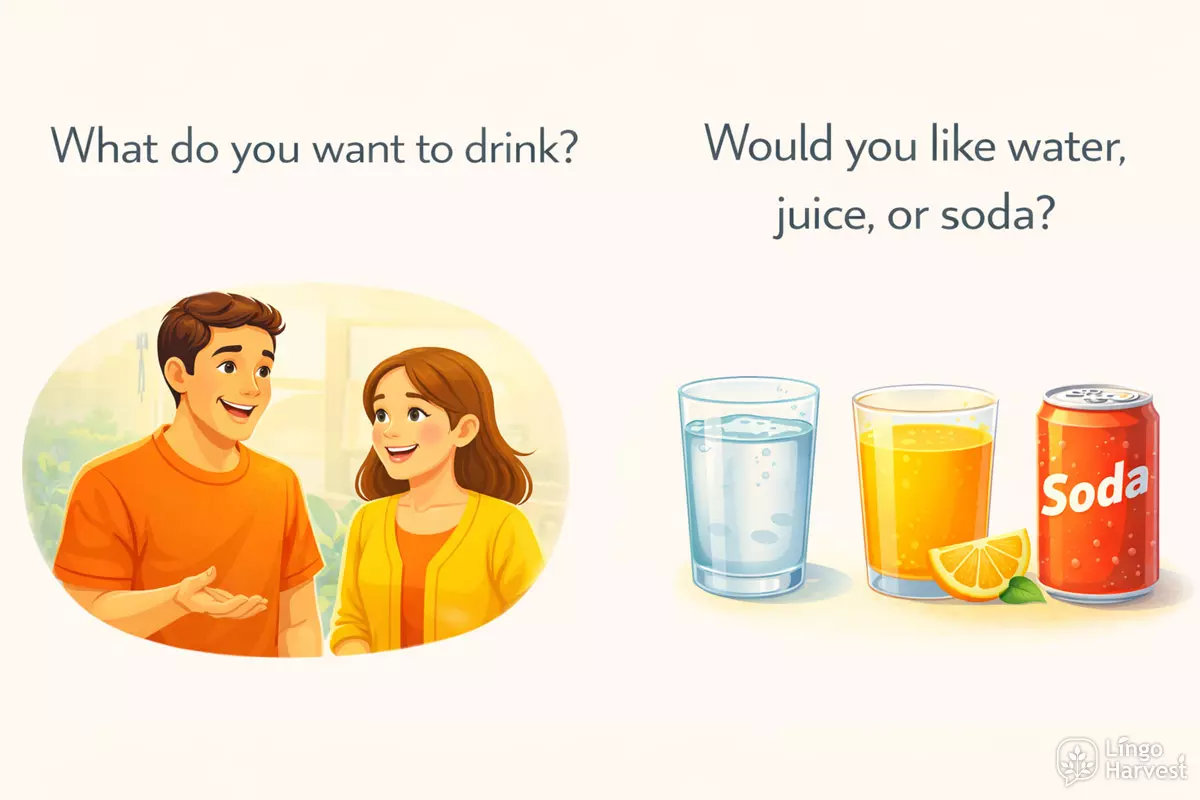
Unlike yes/no questions, which expect a simple confirmation or denial, choice questions require you to select one of the presented options. This makes them especially useful in situations where clarity and decision-making are important. They are also different from wh-questions (like “What,” “Where,” “Why”), which ask for open-ended information rather than offering a set of alternatives.
| Type of Question | Example |
|---|---|
| Choice Question | Do you want tea or coffee? |
| Yes/No Question | Do you want coffee? |
| Wh-Question | What do you want to drink? |
| Alternative with More Than Two Options | Would you like water, juice, or soda? |
Choice questions are practical in everyday English, helping speakers clarify preferences, make plans, and avoid misunderstandings. Recognizing and using these patterns can make your communication more direct and effective.
Structure of Choice Questions
When you want to ask someone to choose between two or more options in English, there are certain patterns and word choices that make your question clear and natural. These questions often follow a predictable format, but there are important variations depending on the context and how many alternatives you want to present. Understanding this structure helps you communicate choices smoothly in conversation, exams, or writing.
Basic Patterns for Alternative Questions
The most common way to offer alternatives is by using "or" between options. The word order, auxiliary verbs, and intonation (in speech) all play a role in making these queries sound natural. Here are some typical formats:
- Do you want tea or coffee?
- Is your appointment at 3 or 4?
- Should we meet here or at the café?
- Will you travel by train or by bus?
- Would you prefer to start now or wait?
- Are these keys yours or mine?
- Is it raining, or is it just cloudy?
- Will you stay home or go out tonight?
- Do you like apples or oranges?
- Have you finished your homework or not yet?
Key Components of Choice Questions
- Auxiliary verb: Often starts the question (Do, Is, Will, Should, etc.).
- Subject: The person or thing the question is about.
- Main verb: The action or state being discussed.
- Options: The alternatives, usually joined by "or".
Comparing Yes/No and Alternative Questions
It's easy to confuse questions that require a simple "yes" or "no" with those that offer alternatives. The table below shows how the form and expected answers differ:
| Question Type | Example | Expected Answer | Key Feature |
|---|---|---|---|
| Yes/No Question | Do you like pizza? | Yes / No | Single option, confirmation |
| Choice Question | Do you want pizza or pasta? | Pizza / Pasta | Alternatives offered |
| Tag Question | It's raining, isn't it? | Yes / No | Statement + short question |
| Open-ended Question | What would you like to eat? | Any answer | Invites explanation or detail |
Tips for Formulating Clear Alternatives
- Use "or" only once, before the final option in a list.
- Keep choices parallel in structure (e.g., both nouns, both verbs).
- Pronunciation and intonation matter in speech: rising tone for the first item, falling for the last.
- For more than two options, list them with commas: "Do you want tea, coffee, or juice?"
- If offering a negative and a positive, clarify: "Have you finished, or not yet?"
Mastering these formats makes your questions more precise and helps avoid misunderstandings when you want people to pick between alternatives.
Using Or in Questions
When you want to ask someone to choose between two or more options, the word or is essential. It lets you present alternatives clearly, whether you’re making a casual suggestion or seeking a specific answer. This structure is common in both spoken and written English, and mastering it helps you communicate choices smoothly.
Typical Patterns with or
The most common way to offer options is to place or between the alternatives. Usually, these questions start with an auxiliary verb (like Do, Is, Are, Will, etc.) or a question word (like What, Which, Who).
- Do you want tea or coffee?
- Is your appointment today or tomorrow?
- Will you travel by train or by bus?
- Are we meeting at the office or the café?
- Should I call you now or later?
- Which color do you prefer, blue or green?
- Would you like to eat in or take out?
- Who will present first, John or Maya?
- Is this your book or someone else’s?
- Do you need a pen or a pencil?
Forming Clear Choices
Notice how the choices are placed directly after or without unnecessary words. This keeps the question direct and easy to answer. You can use this structure with two, three, or even more alternatives, but two is the most common in everyday conversation.
Yes/No vs. Alternative Questions
Not all questions with or are the same. Some require a simple yes or no, while others expect you to pick from the options. Here’s a comparison:
| Question Type | Expected Answer |
|---|---|
| Yes/No Question with "or" | Yes or No Example: Is this your phone or not? |
| Choice Question with "or" | One of the options Example: Do you want juice or water? |
| Open-ended with "or" | Flexible answer Example: Which route is faster, Main Street or Oak Avenue? |
| Polite offer with "or" | Preference Example: Would you prefer to sit inside or outside? |
Tips for Effective Use
- Keep the options balanced and clear; avoid making one choice much longer than the other.
- Use rising intonation for the first option and falling for the last when speaking.
- If you want to include “both” or “neither” as possible answers, make that clear in the question.
- For three or more choices, you can use commas and add “or” before the final item: Would you like tea, coffee, or juice?
By practicing these patterns, you’ll gain confidence in asking about alternatives in English conversations.
Intonation in Choice Questions
When asking about alternatives, the way your voice rises or falls can completely change the meaning of a question. In English, questions that offer choices—such as “Would you like tea or coffee?”—use distinctive pitch patterns to clarify whether you expect the listener to pick one option or if any answer is possible. Mastering these pitch movements helps your questions sound natural and clear.
How Pitch Patterns Work
In alternative questions, speakers usually raise their voice slightly on the first option and drop it on the final choice. This rising-falling pattern signals that a decision between the given alternatives is expected. If you use a rising pitch at the end, it can sound like a yes/no question instead, which may confuse the listener.
- “Do you want chicken or fish?” (Rise on “chicken,” fall on “fish”)
- “Should we meet at noon or one?” (Rise on “noon,” fall on “one”)
Common Intonation Patterns
The table below shows typical intonation patterns for choice-based questions, so you can compare them with other question types:
| Question Type | Intonation Pattern |
|---|---|
| Alternative (Choice) Question | Rise on first alternative, fall on final alternative |
| Yes/No Question | Rising intonation at the end |
| Wh- Question | Falling intonation at the end |
| Tag Question (seeking agreement) | Rising or falling, depending on certainty |
Examples of Choice Questions with Intonation Cues
Below are more examples to help you hear and practice the typical sound patterns:
- “Is your appointment on Monday or Tuesday?”
- “Would you prefer to call or email?”
- “Should I bring snacks or drinks?”
- “Are we meeting at the library or the café?”
- “Do you want to go now or later?”
- “Will you travel by train or bus?”
- “Is your project due on Friday or Monday?”
- “Would you like to read fiction or nonfiction?”
- “Are you ordering pizza or pasta?”
- “Should we start with the introduction or the summary?”
Why Intonation Matters
Getting the pitch right in alternative questions helps your listener understand they need to choose from the options given. If you use a flat or incorrect pattern, your intent might be misunderstood, leading to confusion or unexpected answers. Practicing these patterns out loud can greatly improve both your clarity and confidence when asking about alternatives.
Choice Questions vs Yes/No Questions
When learning to ask questions in English, it’s important to understand how asking for alternatives is different from seeking a simple confirmation. Questions that offer a selection, such as "Do you want tea or coffee?", require the listener to choose between options. In contrast, yes/no questions only expect an answer of "yes" or "no", like "Do you want tea?".
How Each Type Works
Alternative questions (also known as choice or "or" questions) present two or more possibilities, prompting the respondent to pick one. These are useful for clarifying preferences or making decisions. On the other hand, yes/no questions are direct and seek agreement or disagreement with a statement or suggestion.
| Type | Typical Example | Expected Answer | Purpose |
|---|---|---|---|
| Choice Question | Would you like pizza or pasta? | Pizza / Pasta | To select between alternatives |
| Yes/No Question | Do you like pizza? | Yes / No | To confirm or deny a statement |
| Choice Question | Is your meeting at 10 or 11? | 10 / 11 | To clarify a detail |
| Yes/No Question | Is your meeting at 10? | Yes / No | To check one detail |
Common Patterns and Examples

- Would you prefer juice or water?
- Should we meet today or tomorrow?
- Is your name Anna or Maria?
- Do you want to walk or take the bus?
- Is the answer A, B, or C?
- Will you have soup or salad?
- Are we watching a movie or going out?
- Do you want this one or that one?
- Should I call you or email you?
- Are you leaving now or later?
- Is it raining or just cloudy?
- Would you like coffee, tea, or hot chocolate?
- Is the class online or in person?
- Do you want to start early or late?
- Will you pay by card or cash?
Quick Tips for Using Each Type
- Use alternative questions when you need a specific choice from several possibilities.
- Use yes/no questions to quickly confirm facts or get agreement.
- Remember: choice questions often use "or" to separate options.
- With yes/no questions, start with an auxiliary verb (Do/Is/Are/Will/Can, etc.).
Understanding when to use a choice question versus a yes/no question helps make your communication clearer and more precise. Each form has its place, and choosing the right one depends on what kind of answer you need.
Short Answers to Choice Questions
When responding to questions that offer alternatives, English speakers often use brief replies rather than full sentences. These concise responses make conversations flow smoothly and avoid unnecessary repetition. The way you answer depends on whether the question is a yes/no alternative or a more open “A or B” format.
How Short Answers Work
For alternative questions (like “Do you want tea or coffee?”), the reply is usually just the option you prefer. If someone asks, “Is it raining or snowing?” you can simply say “Raining.” When the question asks for confirmation (“Did you call or text him?”), the same pattern applies: choose and state the correct option.
Typical Short Answer Patterns
- Just the choice: “Coffee.” / “Red.” / “The morning.”
- With a polite phrase: “Tea, please.” / “Neither, thanks.”
- To clarify: “No, I took the bus.” / “I’ll have salad.”
- Both options: “Both are fine.”
- Neither option: “Neither.” / “None.”
- Uncertainty: “I’m not sure.” / “Either is okay.”
- Preference: “I prefer the window seat.”
- Correction: “Actually, I called.”
- Negative: “Not really.”
- Affirmative: “Yes, the blue one.”
Common Examples
Below are some typical exchange patterns you might encounter:
- “Would you like soup or salad?” → “Salad, please.”
- “Is this yours or hers?” → “Hers.”
- “Are you coming by car or train?” → “By train.”
- “Do you want pizza or pasta?” → “Pizza.”
- “Is it open or closed?” → “Closed.”
- “Should we meet at 5 or 6?” → “6 works.”
- “Will you stay or leave?” → “I’ll stay.”
- “Do you want the window or the aisle?” → “Aisle, thanks.”
- “Is your appointment Monday or Tuesday?” → “Tuesday.”
- “Would you rather walk or drive?” → “Walk.”
Comparing Short and Full Answers
| Full Answer | Short Answer |
|---|---|
| I would like tea, please. | Tea, please. |
| My appointment is on Monday. | Monday. |
| Neither option is good for me. | Neither. |
| I’m not sure which one. | Not sure. |
| Both are fine for me. | Both. |
Using short forms is natural in spoken English and helps keep conversations efficient. If you want to sound more polite, add “please” or “thanks” at the end of your answer. These brief responses are especially useful in everyday situations, from ordering food to making plans.
Common Learner Mistakes
When English learners try to form questions about alternatives, they often stumble over word order, conjunctions, and clarity. These errors can make questions hard to understand or even change their meaning. Being aware of frequent pitfalls helps you ask clear and natural-sounding questions.
Mixing Up "Or" and "And"
A frequent error is confusing the use of "or" for alternatives and "and" for combining choices. This can lead to ambiguity, especially in yes/no questions.
- Incorrect: Do you want tea and coffee? (Implies both)
- Correct: Do you want tea or coffee? (Presents a choice)
Incorrect Question Structure
Learners sometimes copy statements directly or use the wrong auxiliary verb. Direct translation from their native language can cause awkward phrasing.
- Incorrect: You want pizza or burger?
- Correct: Do you want pizza or a burger?
Omitting Articles and Prepositions
Forgetting articles ("a," "an," "the") or necessary prepositions is a common slip, especially with countable nouns.
- Incorrect: Would you like apple or orange?
- Correct: Would you like an apple or an orange?
Using "Which" vs. "What"
Learners often mix up these question words, especially when offering a limited set of alternatives.
- Incorrect: What do you prefer, tea or coffee? (Acceptable, but less precise with a small set)
- Correct: Which do you prefer, tea or coffee?
Forgetting Subject-Verb Agreement
Mistakes with singular/plural forms can cause confusion, especially in longer questions.
- Incorrect: Does John or his friends wants to go?
- Correct: Do John or his friends want to go?
Overusing "Or" in Long Questions
Placing too many alternatives in one question can overwhelm the listener and make your question unclear.
- Better: Limit to two or three clear options.
- Use a follow-up question if needed.
Confusing "Either/Or" and "Neither/Nor"
Some learners use these pairs incorrectly when offering alternatives or expressing negative choices.
| Expression | Example |
|---|---|
| Either...or | You can have either soup or salad. ✅ |
| Neither...nor | I want neither tea nor coffee. ✅ |
| Incorrect | I want either tea nor coffee. ❌ |
| Incorrect | You can have neither soup or salad. ❌ |
Forgetting to Use Rising Intonation
Spoken questions about choices usually have a rising intonation at the end. A flat or falling tone can make your question sound like a statement.
Summary List: Frequent Issues with Alternative Questions
- Using "and" instead of "or" when offering a choice
- Missing auxiliary verbs (do/does/would/can)
- Leaving out articles before countable nouns
- Mixing up "which" and "what"
- Incorrect subject-verb agreement
- Making questions too long or complex
- Improper use of "either/or" and "neither/nor"
- Using statements instead of questions
- Neglecting question intonation in speech
- Forgetting to repeat the main verb when needed (e.g., "Do you want tea or coffee?" not "Do you want tea or coffee?")
Awareness of these typical errors helps you craft clearer, more natural alternative questions in English.
Practice Exercises and Self-Check
This section gives you a chance to apply what you've learned about framing alternative questions in English. You'll encounter different formats—sentence completion, error spotting, and transformation tasks—to test your recognition and usage of various ways to ask about choices.
Identify the Correct Form
Read each sentence and decide if it uses the right structure for offering alternatives. If it’s incorrect, rewrite it so it sounds natural.
- Would you prefer tea or coffee?
- Do you want to go the park or staying home?
- Which do you like better: reading or to watch movies?
- Is it raining or sunny today?
- Do you want pizza or do you like pasta?
- Are we meeting today or tomorrow?
- Does she want to call you or sending a message?
- Which is cheaper: buying online or go to the store?
- Do you usually travel by bus or driving?
- Is he working from home or at the office?
Show answers
- Correct as is.
- Incorrect. Correct: Do you want to go to the park or stay home?
- Incorrect. Correct: Which do you like better: reading or watching movies?
- Correct as is.
- Incorrect. Correct: Do you want pizza or pasta?
- Correct as is.
- Incorrect. Correct: Does she want to call you or send a message?
- Incorrect. Correct: Which is cheaper: buying online or going to the store?
- Incorrect. Correct: Do you usually travel by bus or drive?
- Correct as is.
Choose the Best Question
For each situation, pick the most suitable way to ask about alternatives from the options.
- Your friend is deciding what to drink at a café.
a) Do you like coffee?
b) Would you like coffee or tea?
c) Do you want something? - You want to know if your classmate prefers working in the morning or evening.
a) Do you work morning?
b) Do you like morning or evening better for working?
c) When do you work? - Someone asks how you want your eggs.
a) Do you want eggs?
b) Do you want eggs or toast?
c) Would you like your eggs boiled or fried? - Your friend is choosing a movie to watch.
a) Did you watch a movie?
b) Would you like to watch a comedy or an action movie?
c) Why do you like movies? - You are ordering dessert at a restaurant.
a) Would you like cake or ice cream?
b) Do you like desserts?
c) Where is the dessert menu? - You want to know if your colleague prefers email or phone calls.
a) Do you use email?
b) Would you rather email or call?
c) When do you call? - Your friend is buying a new phone.
a) Would you like the black one or the blue one?
b) Do you have a phone?
c) Where did you buy it? - You are planning a trip with a friend.
a) Would you like to travel by train or by plane?
b) Did you travel last year?
c) Where do you live? - You want to know what kind of music your friend prefers.
a) Would you like music?
b) Do you prefer pop or rock?
c) Why do you listen to music? - Someone offers you a seat.
a) Would you like to sit here or over there?
b) Do you sit often?
c) Where do you sit?
Show answers
- b) Would you like coffee or tea?
- b) Do you like morning or evening better for working?
- c) Would you like your eggs boiled or fried?
- b) Would you like to watch a comedy or an action movie?
- a) Would you like cake or ice cream?
- b) Would you rather email or call?
- a) Would you like the black one or the blue one?
- a) Would you like to travel by train or by plane?
- b) Do you prefer pop or rock?
- a) Would you like to sit here or over there?
Common Patterns for Asking About Choices
Here are several effective ways to ask about alternatives in English. Notice the range of verbs and structures:
- Would you prefer A or B?
- Do you want X or Y?
- Which do you like better: A or B?
- Is it X or Y?
- Do you like A more than B?
- Shall we do A or B?
- Should I bring X or Y?
- Are you going to A or B?
- Will you have X or Y?
- Do you prefer A to B?
- Is your answer A or B?
- Do you want to go by bus or by train?
- Would you like to eat in or take away?
- Is this for here or to go?
- Do you need help now or later?
Transform Statements into Choice Questions
Rewrite each statement as a question that offers alternatives.
- You can have soup. You can also have salad.
- We could watch a movie. We could go out for dinner.
- She wants to travel by plane. She also likes trains.
- He will call you. He might email instead.
- You can stay at home. You can go for a walk.
- They can start now. They can wait until later.
- She wants to study online. She wants to attend classes in person.
- We can meet in the morning. We can meet in the evening.
- He plans to take the bus. He plans to drive.
- You can order pizza. You can cook dinner.
Show answers
- Would you like soup or salad?
- Shall we watch a movie or go out for dinner?
- Does she want to travel by plane or by train?
- Will he call you or email you?
- Do you want to stay at home or go for a walk?
- Should they start now or wait until later?
- Does she want to study online or attend classes in person?
- Shall we meet in the morning or in the evening?
- Does he plan to take the bus or drive?
- Do you want to order pizza or cook dinner?
Alternative Question Starters: Comparison Table
To help you recognize and use a range of question openers, see the following summary table:
| Starter | Example |
|---|---|
| Would you prefer... | Would you prefer juice or water? |
| Do you want... | Do you want to stay or leave? |
| Which do you like better... | Which do you like better: summer or winter? |
| Shall we... | Shall we eat in or go out? |
| Will you have... | Will you have tea or coffee? |
| Is it... | Is it finished or not yet? |
Taking time to practice these different formats will help you ask about alternatives more naturally and fluently in everyday English conversations.