What Are Verbs? Core Definition

 This article explains what verbs express, their main functions, and where they appear in sentences. It covers basic verb types and forms, highlights common beginner mistakes, and includes short practice tasks to help you improve.
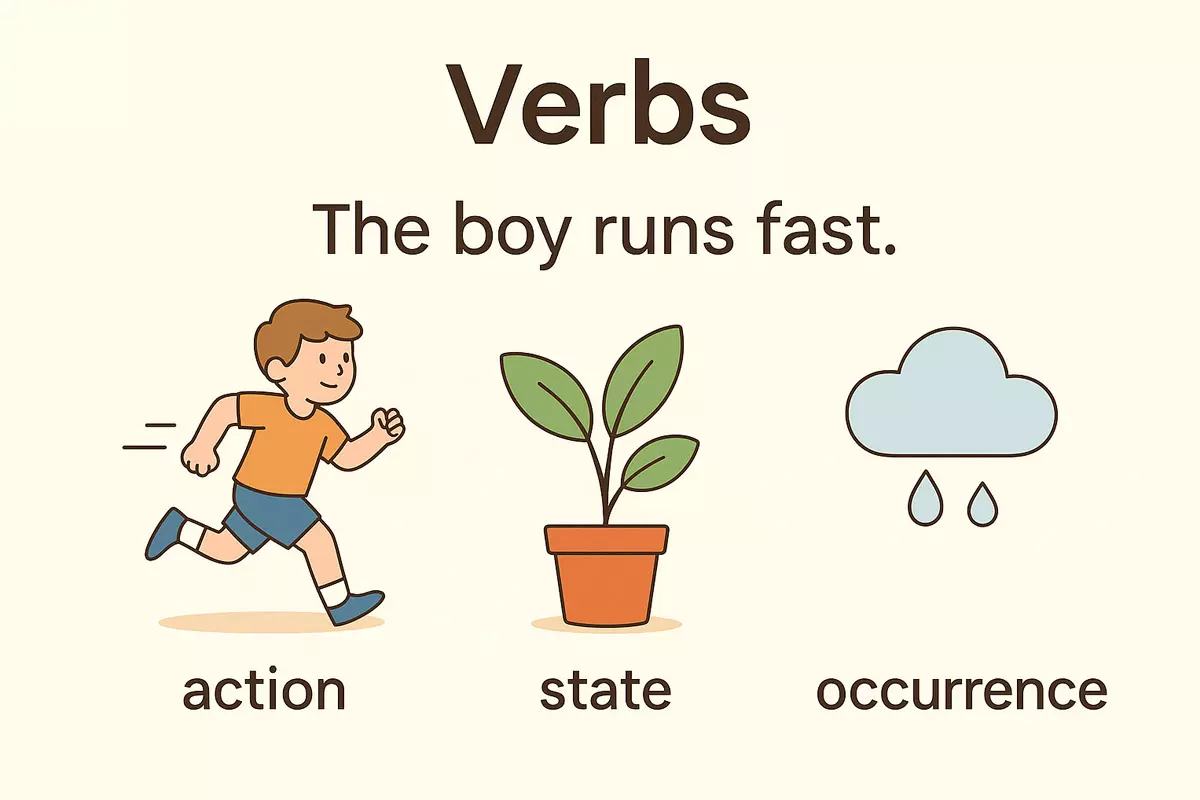
Every sentence contains a word that expresses either action or a state of being, serving as the driving force behind communication. These essential words, known as verbs, are fundamental to constructing meaningful sentences and conveying ideas clearly. By understanding how verbs function within a sentence, you lay the groundwork for mastering grammar and improving your overall ability to express thoughts effectively. Mastery of verbs not only enhances your writing but also enables you to communicate with greater precision and confidence.
What Verbs Express
Verbs are dynamic elements in language, revealing actions, states, or occurrences. They do much more than simply tell us what someone does; verbs allow us to understand time, possibility, necessity, and even the speaker’s attitude. In every sentence, the verb is crucial for conveying what is happening or what exists, and it often provides clues about when, how, and under what conditions the action or state takes place.
Types of Meaning Conveyed by Verbs
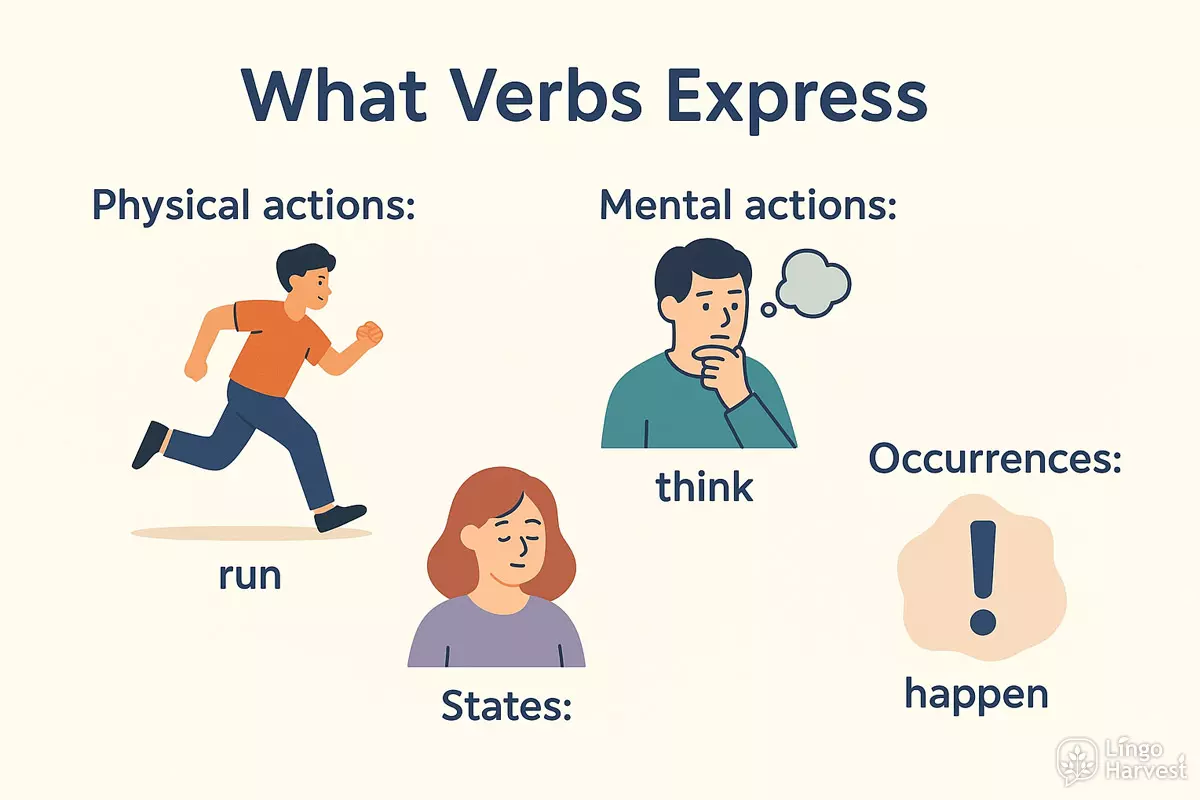
A verb can show a wide range of meanings, depending on its form and context. Here are some main categories:
- Physical actions: run, write, build, throw
- Mental actions: think, guess, imagine, remember
- States: exist, belong, seem, know
- Occurrences: happen, develop, change, grow
- Possession: have, own, possess
- Feelings and senses: love, hear, notice, prefer
- Obligation and necessity: must, need, require
- Possibility and ability: can, might, manage, allow
- Permission: may, permit, authorize
- Requests and commands: order, ask, suggest, demand
- Change of state: become, turn, get, fall
- Existence: be, remain, appear
How Verbs Indicate Time, Mood, and Voice
Not only do verbs reveal what is happening, but they also indicate when it occurs, how it is viewed (such as real or hypothetical), and who is performing the action. These features are called tense, mood, and voice:
| Feature | What It Shows |
|---|---|
| Tense | When the action or state occurs (past, present, future) |
| Mood | Attitude or intent: factual (indicative), command (imperative), hypothetical (subjunctive), etc. |
| Voice | Whether the subject does the action (active) or receives it (passive) |
| Aspect | Whether the action is ongoing, completed, repeated, or habitual |
Examples Across Contexts
Here are a few sample sentences showing how verbs can express different shades of meaning:
- She runs every morning. → action, present habitual
- The cake was eaten by the children. → passive voice
- I might travel next year. → possibility, future
- They have known each other for years. → state, perfect aspect
- Please close the window. → command, imperative mood
- He became a teacher. → change of state
In summary, verbs serve as the backbone of sentences, revealing not only the nature of the action or state but also providing essential information about time, manner, and the relationships between the participants involved. Understanding what verbs express is key to grasping meaning in any language.
Main Verb Functions
Verbs are essential in shaping the meaning and structure of sentences. Their actions, states, and links provide the backbone for clear communication in English. Understanding how verbs operate can help you recognize their significance in both simple and complex statements.
Expressing Actions and Events
At their core, verbs often describe what someone or something does. This includes physical actions, mental activities, or occurrences. For example:
- run
- think
- arrive
- build
- decide
- write
- sing
- discover
- jump
- imagine
These words help convey who is performing an action and what exactly is happening.
Indicating States or Conditions
Not all verbs refer to dynamic activities. Some represent a condition or state of being. Examples include:
- be
- seem
- belong
- own
- know
- exist
- appear
- feel (in certain contexts)
These verbs describe situations rather than actions, such as “She is happy” or “They belong here.”
Linking Subjects to Information
Linking verbs connect the subject with more information, typically an adjective or noun. The most common example is “be,” but others exist:
- become
- seem
- remain
- appear
- grow (in some contexts)
- turn (in some contexts)
For instance, “The sky turned gray” or “He became a doctor.” Here, the verb acts as a bridge rather than showing an action.
Helping Other Verbs
Auxiliary, or “helping,” verbs work with main verbs to add meaning. They can show tense, mood, or voice. Common helping verbs include:
- have (has, had)
- do (does, did)
- be (am, is, are, was, were, being, been)
- can
- will
- may
- might
- should
- must
- shall
For example, “She has finished her work” or “They were seen at the event.”
Verb Functions Compared
To clarify how verbs serve different roles, consider the following structured comparison:
| Role | Description | Examples in Sentences |
|---|---|---|
| Action | Shows what the subject does or what happens | They run every morning. She paints landscapes. |
| State | Describes a condition or situation | He knows the answer. The cake smells delicious. |
| Linking | Connects the subject to a subject complement | The weather is cold. She became a teacher. |
| Helping | Works with a main verb to form tense, mood, or voice | We have finished the project. You will go tomorrow. |
Summary
From showing actions to connecting ideas, verbs serve a variety of purposes in English. Recognizing these diverse roles makes it easier to analyze and construct sentences with accuracy and clarity.
Verb Position in Sentences
Understanding where verbs typically appear helps clarify sentence structure in English. In most cases, verbs follow the subject, but there are notable exceptions and variations, especially in questions and commands. Word order can affect meaning, emphasis, and clarity.
Common Patterns in English Sentences
In standard statements, the verb usually comes right after the subject. However, in questions and some other constructions, the verb's placement shifts. Here are typical patterns:
- Subject + Verb + Object: She reads books.
- Question (Auxiliary + Subject + Verb): Did you eat?
- Imperative (Verb first): Close the door.
- Negative (Subject + Auxiliary + not + Verb): He does not swim.
- Adverb Placement: They often travel.
- Passive Voice (Subject + Form of "be" + Past Participle): The cake was eaten.
- Questions with "wh-" words: Where do you live?
- There is/are constructions: There are birds outside.
- Subordinate Clauses: Because she was late, we left.
- Conditional Sentences: If it rains, we will stay home.
- Inversion for Emphasis: Never have I seen such a sight.
- Direct Speech: He said, "I am coming."
- Indirect Speech: He said that he was coming.
- Relative Clauses: The man who called is here.
- With Modal Verbs: You should study.
- With Infinitives: She wants to learn.
- With Gerunds: He enjoys swimming.
- With Phrasal Verbs: Turn off the light.
Comparing Word Order: Statements vs. Questions
Sometimes, seeing the contrast between regular sentences and questions makes the difference clearer. Here’s a quick reference:
| Type | Example |
|---|---|
| Statement | She plays the piano. |
| Yes/No Question | Does she play the piano? |
| Wh- Question | What does she play? |
| Command | Play the piano. |
Special Cases and Emphasis
Inversion and adverb placement can shift the verb for emphasis or style. For example, “Rarely does he complain” moves the auxiliary before the subject. In formal writing or poetry, you may also find unusual verb positions for effect. Recognizing these patterns helps build clear, natural sentences and improves both writing and comprehension.
Basic Verb Types
Verbs fall into several main categories, each serving a different function in sentences. Understanding these distinctions can clarify how actions, states, and relationships are expressed in language. Let’s explore the most common kinds you’ll encounter.
Action Verbs
Action verbs describe what someone or something does. These words show physical or mental activities. For example, you can run, think, build, or remember. They are the backbone of most sentences, indicating events or processes.
- run
- jump
- write
- create
- explore
- imagine
- fix
- study
- plan
- travel
Linking Verbs
Linking verbs act as connectors between the subject and further information about it. They do not express action, but instead link to a subject’s state or identity. The most common linking verb is be (am, is, are, was, were), but others include become and seem.
- am
- is
- are
- was
- were
- become
- seem
- appear
- remain
- feel
Auxiliary (Helping) Verbs
Auxiliary verbs, also known as helping verbs, work alongside main verbs to form tenses, voices, or moods. They help express necessity, possibility, or time. Common examples are have, do, and will.
- have
- has
- had
- do
- does
- did
- will
- shall
- can
- might
Transitive vs. Intransitive Verbs
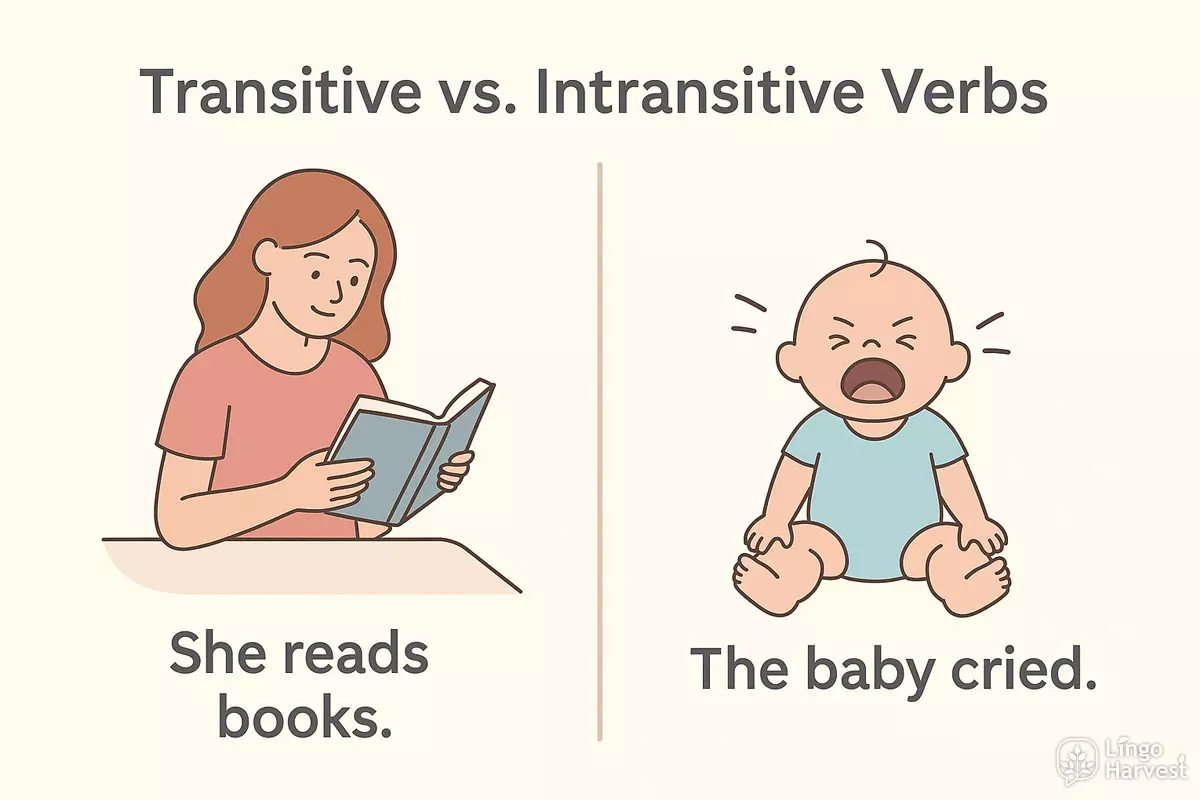
Verbs can also be classified based on whether they need an object. Transitive verbs require a direct object to complete their meaning, while intransitive verbs do not. Some verbs can be both, depending on context.
| Type | Definition | Example |
|---|---|---|
| Transitive | Needs a direct object | She reads books. |
| Intransitive | Does not need an object | The baby cried. |
| Both | Can be used with or without an object | He runs (every morning) / He runs a business. |
Stative Verbs
Stative verbs describe conditions or situations that are static or unchanging, such as emotions, senses, or states of being. Words like love, know, and belong fall into this group.
- know
- believe
- love
- own
- prefer
- hate
- understand
- belong
- contain
- seem
Recognizing these categories helps you use verbs more effectively, whether you’re forming questions, making statements, or describing actions and states.
Verb Forms Overview
Understanding how verbs change and adapt in a sentence is essential for mastering grammar. Each verb can appear in several forms, and these forms determine how it fits into different tenses, moods, and voices. Let’s break down the main types you’ll encounter and how they function in everyday language.
Principal Forms of Verbs
Most verbs in English have three core forms: the base form, the past simple, and the past participle. Some verbs, called irregular verbs, don’t follow predictable patterns, so their forms must be memorized.
- Base form (e.g., walk, see)
- Past simple (e.g., walked, saw)
- Past participle (e.g., walked, seen)
- Present participle (e.g., walking, seeing)
- Third person singular (e.g., walks, sees)
Regular vs. Irregular Patterns
Regular verbs follow a consistent pattern for forming their past tense and participles (just add -ed). Irregular verbs, on the other hand, change unpredictably and require extra attention. Here’s a comparison of how these forms look for both types:
| Verb | Base Form | Past Simple | Past Participle | Present Participle |
|---|---|---|---|---|
| Regular: work | work | worked | worked | working |
| Irregular: go | go | went | gone | going |
| Irregular: eat | eat | ate | eaten | eating |
| Irregular: write | write | wrote | written | writing |
Additional Verb Forms and Uses
Beyond the main forms, verbs can appear as infinitives (to + base form) and in participle phrases. These forms help express time, intention, and ongoing actions. Here are some common ways verbs show up:
- Infinitive: to run, to play
- Gerund: running, playing
- Present perfect: have eaten, has worked
- Past perfect: had seen, had finished
- Passive voice: was given, is known
- Future forms: will go, is going to eat
- Conditional: would try, could win
- Imperative: Stop!, Listen!
- Modal: can swim, should leave
Recognizing the variety of verb forms is key to constructing clear, accurate sentences. Whether you’re forming questions, negatives, or complex tenses, choosing the right form makes your meaning clear and precise.
Beginner Mistakes
Misunderstandings about action words are extremely common when starting out. One frequent issue is confusing verbs with other parts of speech, like adjectives or nouns. For example, in the sentence “The running water,” some might wrongly identify “running” as a verb, when it actually acts as an adjective describing “water.” Recognizing how context changes a word’s function is essential. Another stumbling block is tense usage. Many English learners mix up past, present, and future forms. It’s easy to say “He go to school yesterday” instead of the correct “He went to school yesterday.” Irregular patterns add to the confusion, so memorizing common exceptions helps.
Mixing Up Verb Forms
Mistakes often occur with the base, past, and participle forms. For instance, using “drinked” instead of “drank” or “eated” instead of “ate.” To clarify, here are some commonly confused forms:
- go → went (not “goed”)
- eat → ate (not “eated”)
- see → saw (not “seed”)
- run → ran (not “runned”)
- do → did (not “doed”)
- come → came (not “comed”)
- give → gave (not “gived”)
- write → wrote (not “writed”)
- swim → swam (not “swimmed”)
- sing → sang (not “singed”)
- buy → bought (not “buyed”)
- take → took (not “taked”)
Confusing Auxiliary and Main Verbs
Learners sometimes mix up helping verbs (like “is,” “have,” “will”) with main action words. For example, “She is play tennis” should be “She is playing tennis.” The auxiliary “is” needs to be followed by the -ing form for continuous tenses.
Subject-Verb Agreement
Matching the verb with the subject in number and person is another common error. For example, “He walk to school” instead of “He walks to school.” Remember, third person singular in the present tense usually adds -s or -es.
Negatives and Questions
Forming negatives and questions often trips up beginners. Using “He don’t like apples” instead of “He doesn’t like apples” is a typical mistake. The auxiliary “do/does” takes the negative form, not the main action word.
Summary Table: Frequent Verb Errors
| Mistake | Correct Example |
|---|---|
| He go to school yesterday | He went to school yesterday |
| She eat breakfast now | She is eating breakfast now |
| I doed my homework | I did my homework |
| They was happy | They were happy |
| He don’t like tea | He doesn’t like tea |
| We walks every day | We walk every day |
| Is she play piano? | Is she playing piano? |
| She have a dog | She has a dog |
Staying mindful of these challenges can help anyone develop a more accurate grasp of action words and their usage. Practice and review make a big difference in mastering these core elements of English sentences.
Short Practice Tasks
Use these activities to reinforce your understanding of what verbs are and how they function in sentences. Try each one before checking your responses to get the most out of the exercises.
1. Spot the Verbs
Read the sentences and pick out all the words that are verbs. Some sentences contain more than one action or state word.
- The cat sleeps on the warm windowsill.
- Anna and Tom run every morning.
- We are happy to help with your project.
- Lightning flashed and thunder roared.
- He feels tired after work.
Show answers
- 1. sleeps
- 2. run
- 3. are, help
- 4. flashed, roared
- 5. feels
2. Verb Forms: Simple Present, Past, and Participle
Look at the following base verbs. Fill in their simple past and past participle forms.
| Base Form | Simple Past | Past Participle |
|---|---|---|
| go | ||
| eat | ||
| make | ||
| see | ||
| walk | ||
| take | ||
| write | ||
| play | ||
| drive | ||
| begin |
Show answers
- go – went – gone
- eat – ate – eaten
- make – made – made
- see – saw – seen
- walk – walked – walked
- take – took – taken
- write – wrote – written
- play – played – played
- drive – drove – driven
- begin – began – begun
3. Choose the Correct Verb
Select the right verb to complete each sentence. Only one choice is correct for each blank.
- Birds often (fly / swim) in the sky.
- She (reads / eats) a book every night.
- The baby (cries / laughs) when he is hungry.
- They (build / sleep) a new house on the street.
- We (listen / run) to music together.
Show answers
- 1. fly
- 2. reads
- 3. cries
- 4. build
- 5. listen
4. Expand the List: Common Verbs
Here are more examples of everyday verbs in English. Review them and try making your own sentences using each one:
- jump
- think
- sing
- open
- close
- draw
- find
- bring
- show
- read
- catch
- throw
- ride
- choose
- learn
- grow
- sit
- stand
- buy
- sell