Modal Verbs: Structural Role

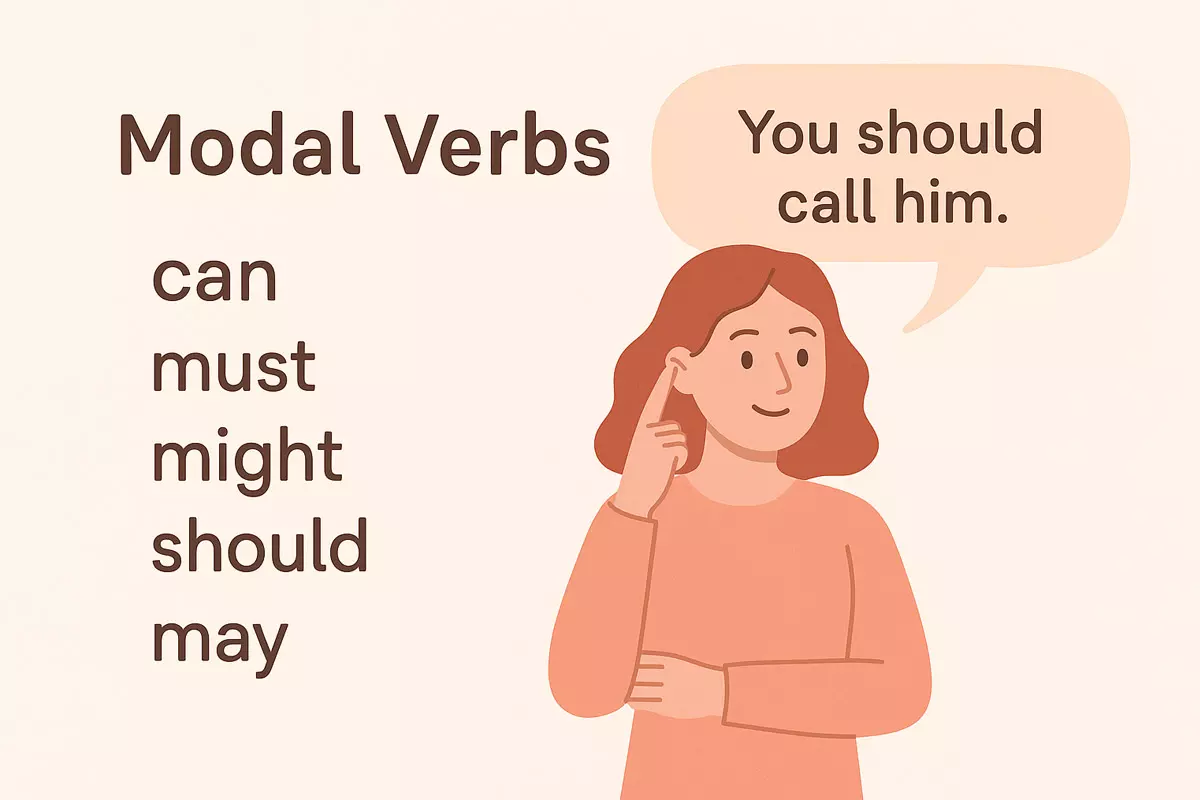 Here we what modal verbs express, lists the main modals, explains their verb structure and grammar rules, discusses degrees of certainty, points out common errors, and provides short practice exercises.
English sentences express possibility, necessity, or permission using specific auxiliary verbs such as can, must, and may. These words, often called modal verbs, play a crucial role in shaping both the meaning and structure of sentences. By mastering how modals function in different contexts, you can communicate ideas more precisely and confidently. Developing a solid grasp of their grammatical impact not only clarifies your intentions but also enhances your overall fluency and effectiveness in English communication.
What Modal Verbs Express
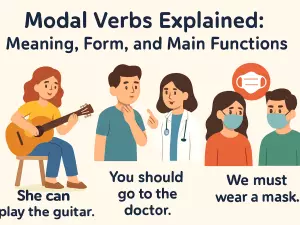
Modal verbs serve as essential tools for expressing a range of attitudes, meanings, and shades of certainty in English. Instead of stating facts directly, these auxiliary verbs allow speakers to indicate possibility, necessity, obligation, permission, ability, or even probability. Their structural role is to modify the main verb, shaping the overall intent behind a statement or question. This flexibility makes them invaluable in both spoken and written communication.
Core Functions of Modal Verbs
The primary functions covered by modals include:
- Ability: Indicating what someone can or cannot do (e.g., can, could).
- Permission: Asking for or granting consent (e.g., may, can).
- Obligation: Expressing necessity or duty (e.g., must, have to, should).
- Possibility: Suggesting something is likely or might happen (e.g., might, could, may).
- Advice: Offering recommendations (e.g., should, ought to).
- Requests: Making polite or direct asks (e.g., could, would, can).
- Offers: Proposing help or action (e.g., shall, can, will).
- Prohibition: Stating what is not allowed (e.g., must not, cannot).
- Deduction: Drawing conclusions based on evidence (e.g., must, can't, might).
- Habitual Action: Describing repeated actions in the past (e.g., would, used to).
- Suggestions: Recommending a course of action (e.g., could, shall, might).
- Expectation: Expressing what is supposed or likely (e.g., should, ought to).
Degrees of Certainty and Possibility
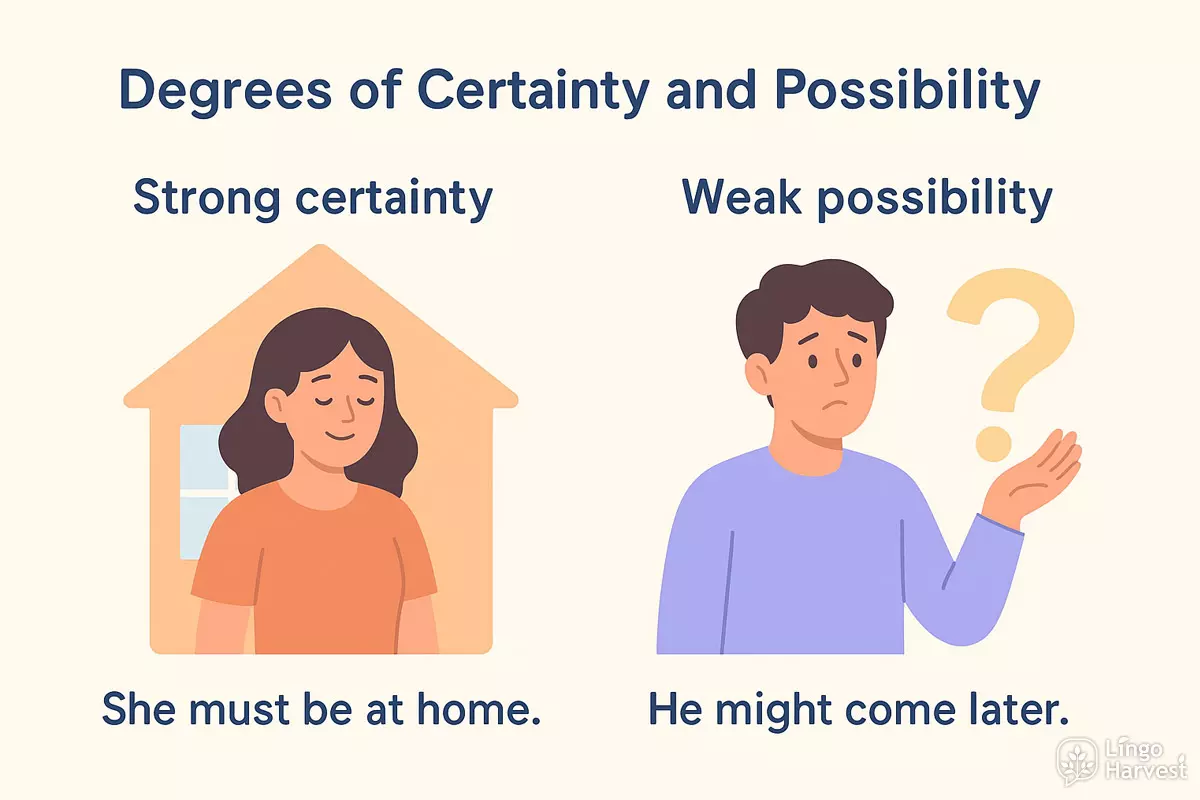
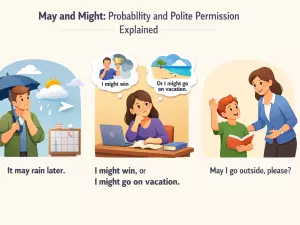
One of the most powerful uses of these verbs is to signal how sure the speaker is about something. For instance, "must" conveys a high degree of certainty, while "might" indicates only a slight chance. The choice of modal shapes the strength of the statement.
| Modal | Level of Certainty | Example |
|---|---|---|
| Must | Strong certainty | She must be at home. ✅ |
| Might | Weak possibility | He might come later. → |
| Could | Moderate possibility | It could rain today. |
| Can't | Strong impossibility | That can't be true. ❌ |
Summary
Through modal verbs, speakers can adjust the tone, clarify their intentions, and navigate social norms. These auxiliaries never stand alone; they always pair with the base form of a main verb to express nuances in meaning, from polite requests to firm obligations.
Main Modal List
Understanding which words function as modals is essential for mastering their structural role in English sentences. These auxiliary verbs help express possibility, necessity, permission, ability, and more. Below, you'll find a breakdown of core modal verbs, their typical uses, and some important distinctions.
Core Modal Verbs in English
English relies on a specific set of verbs to convey modality. The most widely used include:
- can
- could
- may
- might
- must
- shall
- should
- will
- would
- ought to
- need (as a modal)
- dare (as a modal)
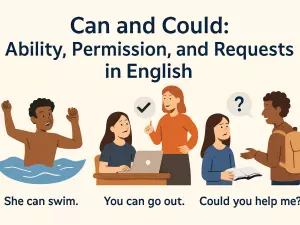
Each of these verbs has a unique function. For example, "can" and "could" generally express ability or possibility, while "must" signals obligation or logical deduction.
Typical Modal Structures
Modal verbs follow consistent grammar patterns. They do not take "-s" in the third person, are not used with "to" (except "ought to"), and are followed by the base form of the main verb. For instance: "She can swim," not "She cans swim."
Comparison of Modals: Function and Example
| Modal Verb | Function | Example |
|---|---|---|
| can | Ability, permission, possibility | He can speak French. |
| may | Permission, possibility | You may leave now. |
| must | Obligation, deduction | You must wear a helmet. |
| should | Advice, expectation | You should see a doctor. |
| would | Polite requests, hypothetical situations | Would you help me? |
| might | Possibility, suggestion | We might go out later. |
Notes on Semi-Modals
Some expressions act like modals, though their structure is slightly different. Examples include "have to," "be able to," "be allowed to," and "need to." These are often called semi-modals because they combine a main verb with an auxiliary. For instance, "You have to finish your work" expresses necessity but uses "have" plus "to."
Summary
Recognizing the main auxiliary verbs and their patterns is crucial for constructing clear, accurate statements about ability, permission, necessity, and more. Mastery of these forms enhances both written and spoken English, allowing for precise and nuanced expression.
Verb Structure After Modals
When using modal verbs, the word or phrase that follows them takes a particular grammatical form. Typically, modals are directly followed by the base form of a verb—this means the verb appears without "to," and never carries an -s, -ed, or -ing ending in the present tense. This structure remains consistent regardless of the subject.
Standard Construction
After a modal verb (such as "can," "should," or "might"), the next verb stays in its simplest form. For example, we say "She can swim," not "She can swims" or "She can to swim." This rule applies to all standard modals, including less common ones like "shall" or "may."
- can go
- could see
- may come
- might try
- must finish
- shall begin
- should ask
- will help
- would like
- ought to leave
- need not worry
- dare say
Negative and Question Forms
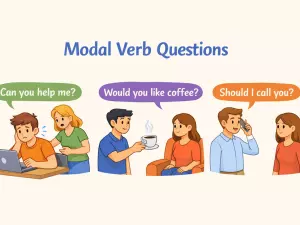
Modals make it easy to form negatives and questions. To create a negative, simply add "not" directly after the modal ("should not go"). For questions, place the modal at the beginning of the sentence ("Can you help?").
Modal + Perfect or Passive Structures
Sometimes, the verb after a modal can be part of a more complex phrase. To refer to the past, use "have" plus the past participle. For passive meaning, use "be" plus the past participle.
| Modal Pattern | Example Sentence |
|---|---|
| Modal + base verb | She might call later. |
| Modal + not + base verb | You should not worry. |
| Modal + have + past participle | He could have left early. |
| Modal + be + past participle | The work must be finished by noon. |
| Modal + be + -ing | She may be waiting for us. |
Common Mistakes to Avoid
- Adding "to" after a modal (❌ "can to go")
- Using a modal with a verb in -ing or -ed form (❌ "should going", "must finished")
- Adding -s for third person singular (❌ "he can goes")
Understanding how verbs behave after modals helps your speech and writing sound natural and correct. Stick to the base form, and remember the patterns for negatives, questions, and complex tenses.
No -s and No Infinitive Rules
When working with modal verbs in English, two core structural rules set them apart from regular verbs: they do not take the third person singular "-s" ending, and they are never followed by the infinitive marker "to." This means modal verbs remain the same for all subjects, and the verb that follows is always in the base form.
Consistency Across Subjects
Unlike most verbs, modals don't change form with different subjects. For example, we say "She can swim," not "She cans swim." This uniformity makes them predictable and easy to use, but also means learners must avoid common errors linked to regular verb patterns.
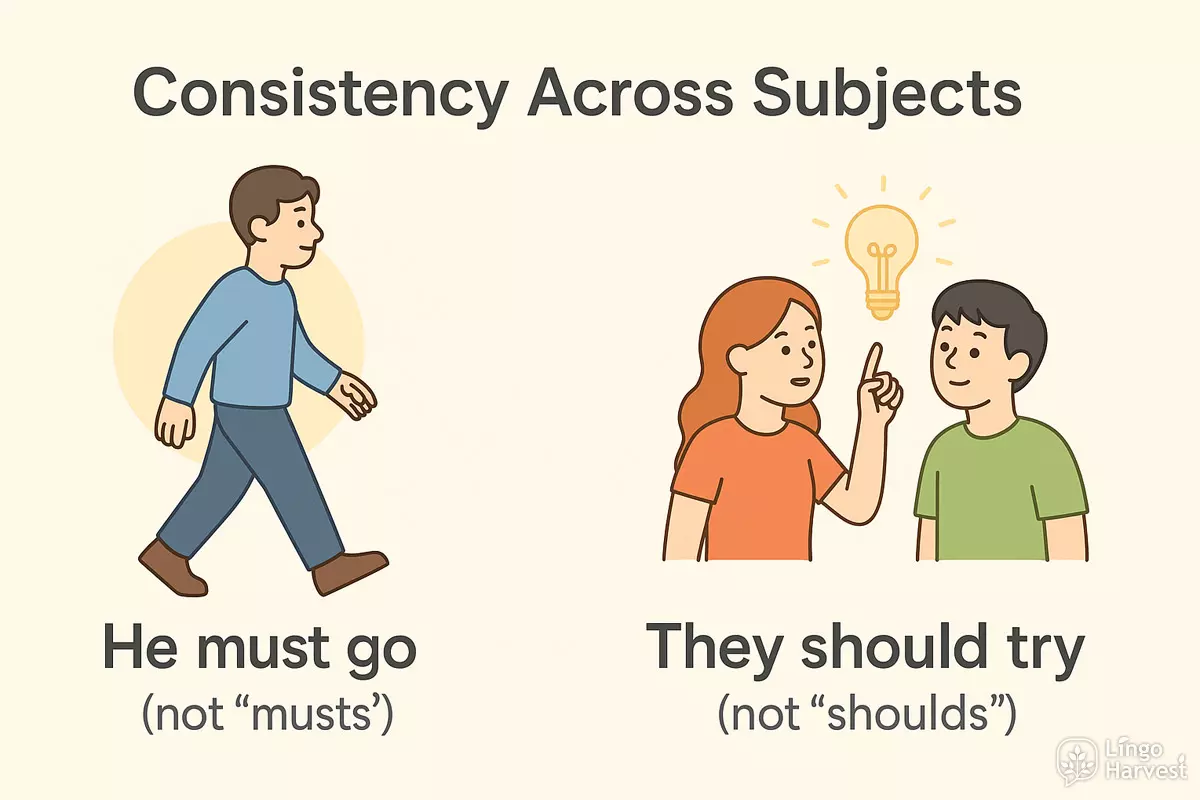
- He must go (not "musts")
- They should try (not "shoulds")
- I will call (not "wills")
- You could help (not "coulds")
Never Paired with "to" Before the Verb
Modals are always followed directly by the base form of a verb, never by "to" plus the infinitive. This is a structural requirement and one of the clearest signals of modal verb use in a sentence.
- ✅ She might finish early.
- ❌ She might to finish early.
- ✅ We must leave now.
- ❌ We must to leave now.
- ✅ You should see a doctor.
- ❌ You should to see a doctor.
Summary Table: Modal Verb Structure
| Incorrect Form | Correct Form |
|---|---|
| He cans play. | He can play. |
| She musts to go. | She must go. |
| They shoulds to help. | They should help. |
| I will to come. | I will come. |
Common Modal Verb Patterns
The following examples illustrate the standard structure after a modal:
- can drive
- could understand
- may enter
- might join
- must finish
- shall begin
- should watch
- will return
- would prefer
- ought to leave (note: "ought" is the exception, usually followed by "to")
- need not worry
- must not touch
- can’t swim
- shouldn’t lie
- may not enter
- couldn’t remember
- will not wait
- would rather stay
These structural features are essential for accuracy and fluency when using modal verbs. Remember, the base form of the verb always follows, and the modal itself never changes—no "-s" and no "to" before the verb.
Degrees of Certainty
Modal verbs help speakers express how sure or unsure they are about a statement, possibility, or event. This feature is essential in English for conveying shades of meaning, ranging from absolute certainty to mere speculation. The choice of modal often signals how confident the speaker feels about their assertion, allowing for nuanced communication.
How Modals Convey Confidence
Different modal verbs and phrases indicate varying levels of sureness. For instance, some modals show that something is almost guaranteed, while others highlight doubt or a remote chance. Understanding these distinctions is crucial for both clarity and politeness in conversation and writing.
| Modal Verb | Level of Certainty | Example Sentence |
|---|---|---|
| must | near certainty | She must be home by now. |
| will | definite prediction | They will arrive at 8 o'clock. |
| should | high probability | It should rain later. |
| may | possibility | He may know the answer. |
| might | weak possibility | We might see her at the party. |
| could | theoretical possibility | It could be true. |
| can't | impossibility | This can’t be correct. |
| would | conditional certainty | I would help if I could. |
Common Patterns and Synonyms
- Definitely: Signals absolute confidence. Example: "She is definitely coming."
- Probably: Suggests high likelihood. Example: "They are probably at home."
- Possibly: Indicates a chance, but not certainty. Example: "It is possibly broken."
- Unlikely: Expresses doubt. Example: "That is unlikely to happen."
- Almost certainly: Near total assurance. Example: "He is almost certainly the winner."
- Perhaps: A tentative suggestion. Example: "Perhaps we should wait."
- Surely: Implies strong belief. Example: "Surely, you have heard the news?"
- Maybe: Offers a neutral or unsure tone. Example: "Maybe she forgot."
- Without doubt: Removes uncertainty. Example: "He is without doubt the best candidate."
- Impossible: Denies any chance. Example: "It's impossible to finish in time."
- There's a chance: Acknowledges possibility. Example: "There's a chance it will snow."
- Highly likely: Strong probability. Example: "It's highly likely to succeed."
Selecting the right modal or certainty phrase is more than a grammatical choice—it shapes how your message is received. By mastering these distinctions, speakers can fine-tune their intent, making their statements clearer and more precise.
Common Errors
Misusing modal verbs often leads to confusion in meaning or ungrammatical sentences. Learners sometimes struggle with the unique structure of modals, especially their lack of "-s" endings, their use with bare infinitives, and their distinct negative and question forms. Below are some frequent pitfalls and misconceptions that can arise when constructing sentences with these auxiliary verbs.
Typical Mistakes in Modal Verb Structure
- Adding "-s" for third-person singular (e.g., He cans swim ❌ instead of He can swim ✅)
- Using "to" after a modal verb (e.g., She must to leave ❌ instead of She must leave ✅)
- Incorrect negative forms (e.g., She don’t can go ❌ instead of She cannot go ✅)
- Mixing modals with auxiliary "do" in questions (e.g., Do you can help? ❌ instead of Can you help? ✅)
- Using two modals together (e.g., He will can come ❌ instead of He will be able to come ✅)
- Incorrect past forms (e.g., She musted go ❌ versus She had to go ✅)
- Omitting the modal in necessary contexts (e.g., You close the door when the intention is You should close the door)
- Confusing "should" and "must" for advice and obligation (e.g., You must see this movie when a suggestion is meant: You should see this movie)
- Forgetting subject-verb inversion in questions (e.g., Can you help? ✅ vs. You can help? ❌)
- Using full infinitives after modals (e.g., He can to swim ❌ instead of He can swim ✅)
- Using modals in continuous forms (e.g., She musting go ❌)
- Confusing "could" and "can" for present ability (e.g., I could swim now ❌ instead of I can swim now ✅)
- Incorrect placement of not (e.g., He can goes not ❌ versus He cannot go ✅)
- Forming questions incorrectly (e.g., Can goes he? ❌ instead of Can he go? ✅)
Comparison: Modals vs. Regular Verbs
| Incorrect Structure | Correct Structure |
|---|---|
| He cans swim. | He can swim. |
| She must to leave. | She must leave. |
| Do you can help? | Can you help? |
| He will can come. | He will be able to come. |
| She musted go. | She had to go. |
| He can to swim. | He can swim. |
| He can goes not. | He cannot go. |
| Can goes he? | Can he go? |
Structural Reminders
Remember, modal verbs are always followed by the base form of the main verb, never take "-s" or "-ed" endings, and form questions and negatives without auxiliary "do." Avoid using more than one modal in a verb phrase, and choose the right modal for meaning and tense.
Short Practice
Understanding how modal verbs function in sentence structure is crucial for mastering English grammar. Below, you'll find exercises and examples that focus on identifying, using, and transforming these auxiliary verbs within different contexts.
Identify the Modal Verb
Read each sentence and pick out the modal verb:
- You should check your work before submitting it.
- They might arrive late due to the traffic.
- We must finish this project today.
- He can speak three languages fluently.
Show answers
- should
- might
- must
- can
Transform the Sentences
Change these statements into questions, maintaining correct word order with the modal:
- She will join us for dinner.
- They could solve the puzzle.
- You may leave early.
- He should call his parents.
Show answers
- Will she join us for dinner?
- Could they solve the puzzle?
- May you leave early?
- Should he call his parents?
Modal Verb Functions: Quick Reference
Here is a summary table showing common modal verbs and their core structural roles in sentences.
| Modal Verb | Function in Structure |
|---|---|
| can, could | Express ability or possibility; used before the base verb |
| may, might | Indicate permission or probability; precede the base verb |
| must | Show necessity or strong obligation; comes before the base verb |
| should, ought to | Suggest advice or expectation; used before the main verb |
| will, would | Mark future intention or polite requests; directly before the base verb |
Practice: Fill in the Blank
Choose the correct modal for each sentence:
- You ____ (can/must) park here; it’s allowed.
- We ____ (should/will) study more for the exam.
- He ____ (may/could) be at the library right now.
- They ____ (would/might) help if you ask them.
Show answers
- can
- should
- may
- might
By practicing these patterns, you’ll become more comfortable with the way modal verbs fit into English sentence structure, whether you are forming questions, giving advice, or expressing possibility and necessity.