Verb Complementation: What Verbs Require

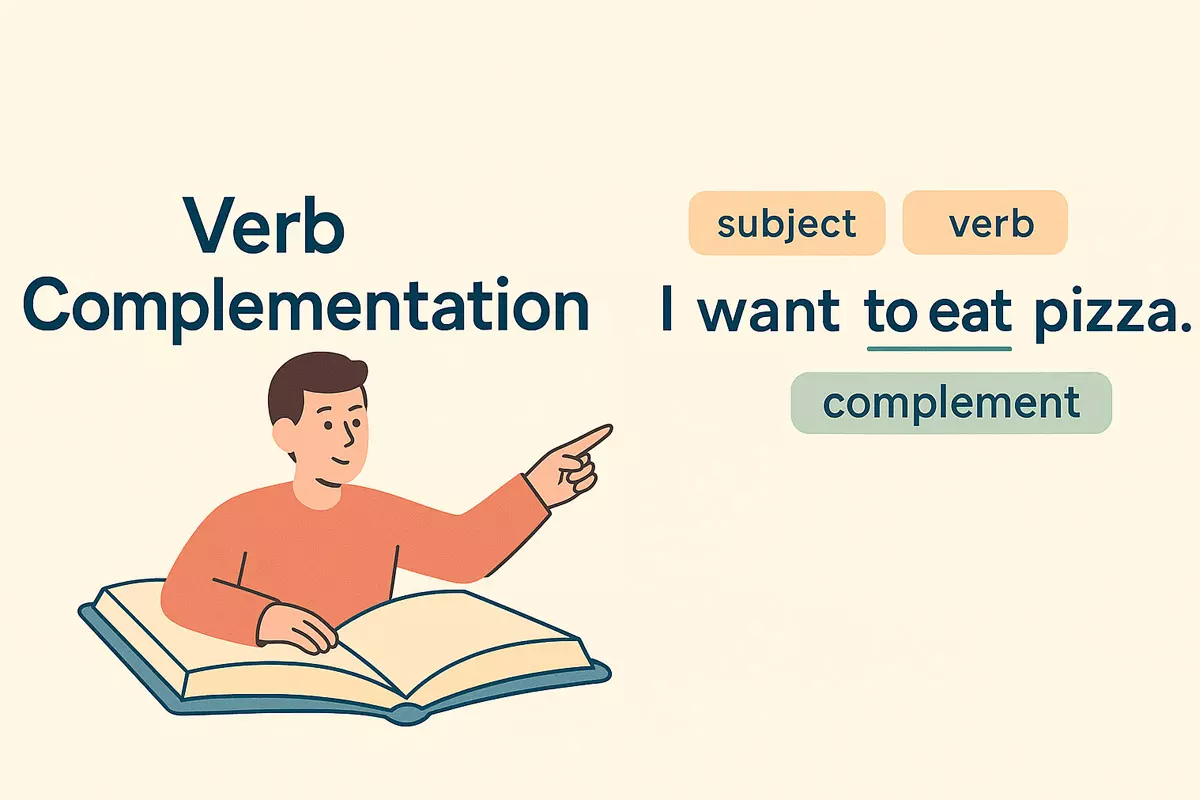 This article explains complementation in English, covering how verbs take objects, infinitives, gerunds, and clauses. It shows common patterns with examples and includes a short practice section to help you apply what you've learned.
Have you noticed that some verbs seem incomplete on their own, while others make sense without any extra words? Knowing which verbs require an object and which can stand alone is crucial for writing clear and natural English sentences. Mastering this distinction not only helps you avoid awkward constructions but also improves your overall communication skills. By paying attention to how verbs function in context, you can express your ideas more accurately and fluently.
Meaning of Complementation
When discussing verbs and their patterns, "complementation" refers to the way verbs interact with other words or structures to complete their meaning. Many verbs cannot stand alone; they require additional information—complements—to form a complete and clear idea. This concept is central to understanding how sentences are built, as the type of complement needed depends on the verb itself.
What Is a Complement?
A complement is a word, phrase, or clause that is necessary to complete the meaning of a verb. Without the right complement, a sentence may sound incomplete or confusing. For example, in "She gave," the idea is unfinished; we expect to know what was given or to whom. Adding "him a book" completes the thought: "She gave him a book."
Types of Verb Complements
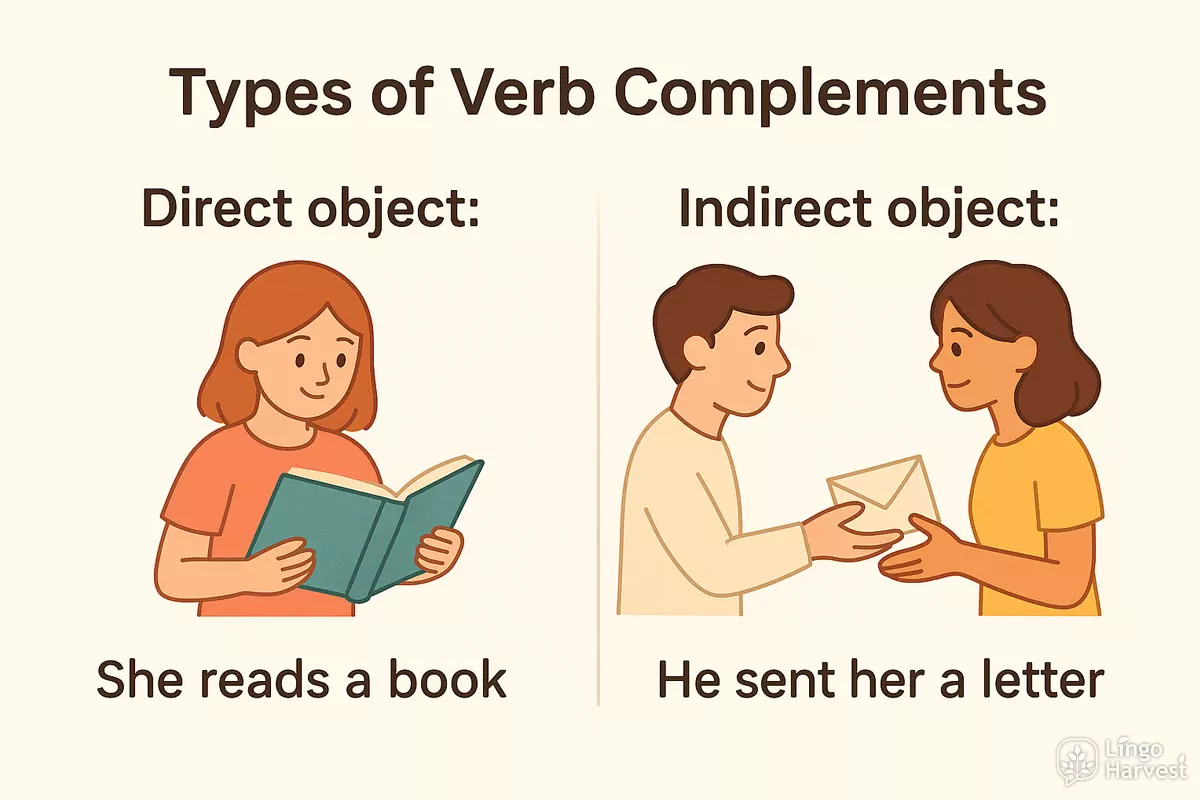
There are several kinds of complements that verbs may require. Here are some common types:
- Direct object: Receives the action directly (e.g., "She reads a book").
- Indirect object: The recipient of the action (e.g., "He sent her a letter").
- Prepositional phrase: Provides additional details (e.g., "They looked at the painting").
- Infinitive phrase: Begins with "to" + verb (e.g., "He wants to leave").
- Gerund phrase: Begins with a verb ending in -ing (e.g., "She enjoys swimming").
- That-clause: Introduces a statement (e.g., "I think that you are right").
- Wh-clause: Uses words like what, where, how (e.g., "She knows where they went").
- Adjective complement: Completes the meaning of an adjective linked to the verb (e.g., "They made him happy").
- Bare infinitive: The verb without "to" (e.g., "Let him go").
- Object complement: Further describes the object (e.g., "They elected him president").
Why Is This Important?
Understanding which complements a verb requires is crucial for proper sentence construction. Some verbs can take more than one type, while others are limited. For example, "offer" can be followed by a direct object and an infinitive ("She offered him to help"), but "arrive" does not take a direct object at all.
Examples of Verb and Complement Patterns
The following table shows how different verbs require specific complements to make sense:
| Verb | Example with Required Complement | Type of Complement |
|---|---|---|
| enjoy | She enjoys reading. | Gerund phrase |
| ask | They asked her to leave. | Object + Infinitive |
| depend | It depends on the weather. | Prepositional phrase |
| suggest | I suggest that we wait. | That-clause |
| make | They made him apologize. | Object + Bare infinitive |
| give | She gave him a gift. | Indirect + Direct object |
| arrive | They arrived late. | Adverbial (not a complement) |
Summary
In essence, the way a verb combines with other elements in a sentence is not random; each verb has a set of patterns it allows. Recognizing these patterns helps speakers and writers use verbs accurately and clearly, ensuring their sentences convey the intended meaning.
Verbs with Objects
Many verbs in English need something or someone to receive their action—these are called transitive verbs. When a verb takes an object, it means the verb’s meaning is incomplete without another word or phrase that tells us who or what is affected. For example, in “She reads books,” the verb “reads” needs “books” to make sense.
How Direct and Indirect Objects Work
Direct objects receive the action directly (“He kicked the ball”), while indirect objects answer to whom or for whom the action is done (“She gave her friend a gift”). Some verbs can take both kinds, while others only need one.
Common Verbs That Take Objects
Here are several frequently used verbs that typically require an object to form a complete sentence:
- bring
- eat
- find
- make
- open
- play
- see
- show
- take
- tell
- use
- write
- carry
- fix
- love
- send
- teach
- buy
- borrow
- ask
Patterns: Verb + Object vs. Verb Only
Some verbs always require an object, while others do not. Compare:
- Correct: She opened the window. ✅
- Incorrect: She opened. ❌
- Correct: He wrote a letter. ✅
- Incorrect: He wrote. ❌
However, some verbs can be used with or without an object, depending on the intended meaning:
- “She reads.” (no object, general action)
- “She reads novels.” (object specified)
Transitive and Ditransitive Verbs Compared
Some verbs can take two objects: a direct and an indirect. Here’s a structured comparison:
| Verb Type | Example Sentence | Objects Required |
|---|---|---|
| Transitive | She painted the wall. | One (direct) |
| Ditransitive | He gave his friend a book. | Two (indirect + direct) |
| Transitive | They watched the movie. | One (direct) |
| Ditransitive | She sent her mother a letter. | Two (indirect + direct) |
Summary
Knowing which verbs require an object helps you avoid incomplete or unclear sentences. When learning new vocabulary, it’s useful to check if the verb expects a direct or indirect object, as this affects sentence structure and meaning.
Verbs with Infinitives
Many English verbs are followed by the base form of another verb, introduced by "to." This structure—often called the "to-infinitive"—is essential to master, as it shapes meaning and grammatical correctness. Some verbs require this pattern, while others never use it, so it's important to recognize which verbs fit this category.
Common Verbs That Take the To-Infinitive
Some of the most frequent verbs that demand a "to" plus base verb include:
- agree
- decide
- hope
- learn
- manage
- offer
- plan
- promise
- refuse
- seem
- want
- wish
- expect
- fail
- forget
- intend
- need
- pretend
- appear
These verbs are typically followed by "to" plus the base form, for example: "She decided to leave," or "They hope to win."
Patterns and Usage Notes
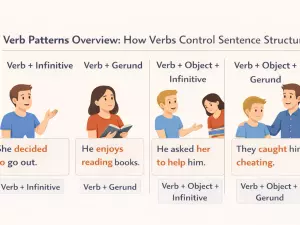
The to-infinitive can sometimes include an object before the infinitive, especially with verbs like "ask," "tell," or "want." For example, "I asked him to help," or "They want us to join." In other cases, the verb is directly followed by the to-infinitive without an object.
Comparing Verb Patterns
Some verbs are often confused because they can take either a gerund (-ing form) or an infinitive, but their meaning may shift, or only one form is correct in standard usage. Here's a comparison of verbs and their typical complementation patterns:
| Verb | Typical Complement | Example |
|---|---|---|
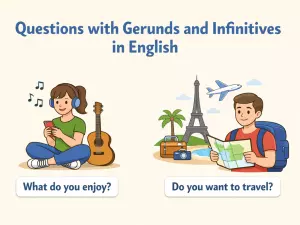
| want | to + verb | I want to travel. |
| enjoy | verb + -ing | She enjoys reading. |
| decide | to + verb | They decided to stay. |
| suggest | verb + -ing | He suggested going out. |
| hope | to + verb | We hope to see you. |
| avoid | verb + -ing | Please avoid making noise. |
Summary Tips
To use verb complementation accurately, memorize which verbs require the "to" form. When in doubt, check reliable sources or practice with common verbs from the list above. Over time, recognizing these patterns will become second nature and help you avoid common errors.
Verbs with Gerunds
Many English verbs are naturally followed by a gerund (the -ing form of a verb), rather than an infinitive. This pattern is essential for correct sentence structure and often changes the meaning if used incorrectly. Understanding which verbs require this form helps avoid common mistakes and makes your English more fluent. Some verbs are always paired with gerunds when they take another verb as their complement. For example, “enjoy” is never followed by an infinitive: we say “enjoy swimming,” not “enjoy to swim.” This is a fixed grammatical requirement, not just a stylistic choice.
Common Verbs That Take Gerunds
Here is a selection of verbs that are typically followed by a gerund:
- admit
- avoid
- consider
- delay
- deny
- discuss
- enjoy
- finish
- imagine
- involve
- keep
- mention
- mind
- miss
- postpone
- practice
- recommend
- risk
- suggest
- understand
Using these verbs with an infinitive instead of a gerund is incorrect. For example, “She suggested going to the museum,” not “She suggested to go.”
Patterns and Sentence Examples
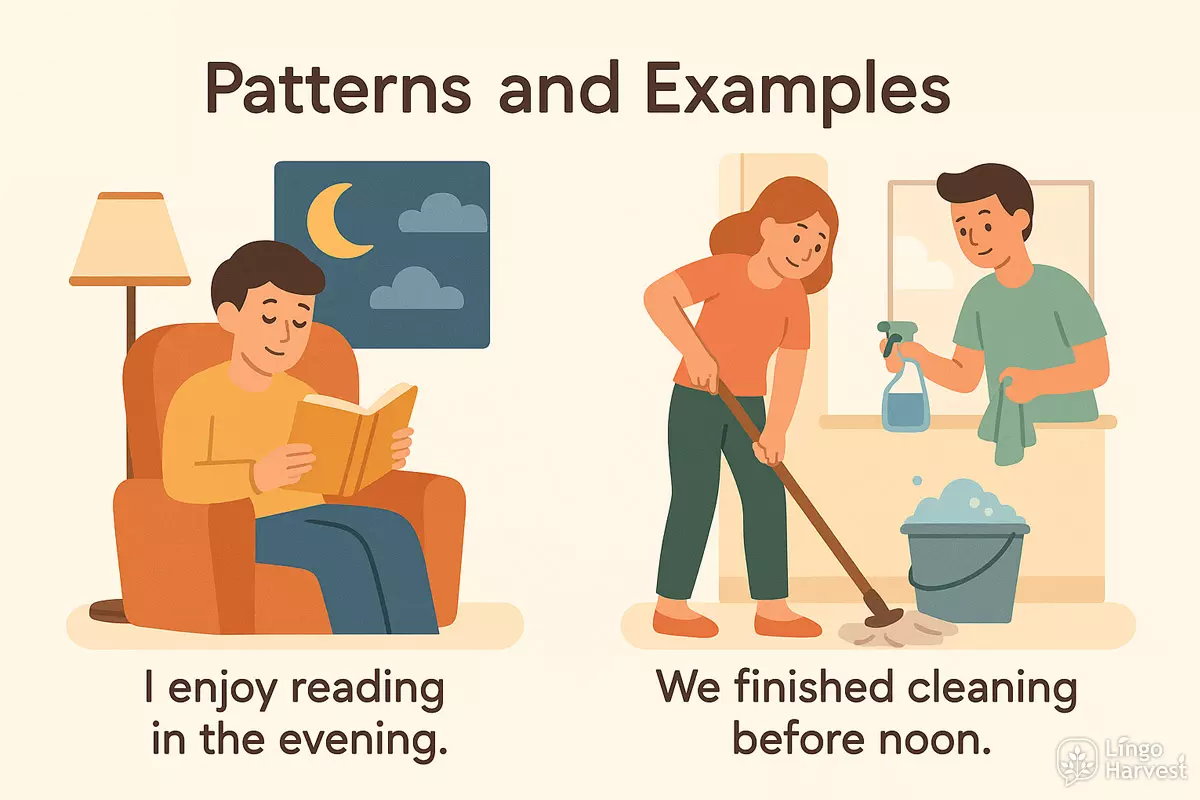
The typical structure is: verb + gerund. Here are some sample sentences to illustrate the usage:
- He admitted cheating on the test.
- They avoided talking about the problem.
- I enjoy reading in the evening.
- We finished cleaning before noon.
- She recommends trying the new restaurant.
Gerund versus Infinitive: Key Differences
Some verbs can take both a gerund and an infinitive, but the meaning often changes. However, the verbs listed above are strict: they do not allow an infinitive as a complement.
| Verb | Correct Example (with Gerund) |
|---|---|
| avoid | They avoided answering the question. |
| enjoy | She enjoys cooking Italian food. |
| suggest | I suggest leaving early. |
| finish | We finished preparing the report. |
| risk | He risked losing all his money. |
Paying attention to which verbs require the -ing form will help you use more natural, accurate English. If in doubt, consult a reliable resource or memorize the most common patterns. Over time, these combinations will feel more intuitive.
Verbs with Clauses
Many English verbs are followed by a clause, not just a noun or infinitive. These verbs require an entire phrase—often starting with "that", "if", or a question word—to complete their meaning. Mastering which verbs connect with clauses helps you build more complex, accurate sentences.
Common Patterns for Clause Complements
Some verbs naturally take a clause as their object. In most cases, these are reporting verbs, verbs of thinking, or verbs expressing certainty, doubt, or necessity. The most typical patterns include:
- Verb + that-clause: say that, believe that, know that, insist that
- Verb + if/whether-clause: ask if, wonder whether, doubt if
- Verb + wh-clause: explain why, remember how, decide what
Examples of Verbs Commonly Followed by Clauses
Here is a selection of verbs often used with clause complements:
- admit
- agree
- announce
- believe
- claim
- decide
- doubt
- explain
- forget
- guess
- hope
- imagine
- know
- learn
- notice
- predict
- realize
- remember
- say
- suggest
- think
- understand
- wonder
Types of Clauses Used with Verbs
The structure of the clause often depends on the verb:
- That-clauses: Used after most reporting or thinking verbs. Example: "She believes that he is honest."
- If/whether-clauses: Used for indirect questions or uncertainty. Example: "I asked if they were coming."
- Wh-clauses: Used for indirect questions. Example: "He explained why it happened."
Comparing Verb Patterns with Clause Complements
| Verb | Clause Types Used | Example Sentence |
|---|---|---|
| think | that-clause, wh-clause | I think that she will win. / I think what you said is true. |
| ask | if/whether-clause, wh-clause | He asked if they were ready. / She asked when the train leaves. |
| know | that-clause, wh-clause | We know that it’s possible. / I know how to do it. |
| suggest | that-clause | They suggested that we start early. |
| wonder | if/whether-clause, wh-clause | I wonder if she will call. / He wondered why it happened. |
Notes on Usage
Not all verbs can take every type of clause. For example, "suggest" is usually followed by a that-clause, not a wh- or if-clause. Some verbs can take more than one kind, but the meaning may change slightly. Being familiar with these patterns helps avoid common errors and makes your English sound more natural.
Common Patterns
When looking at how verbs link with other words, certain structures tend to appear frequently in English. These relationships determine what type of word or phrase can follow a particular verb. Understanding these typical configurations helps with both accuracy and fluency.
Typical Structures After Verbs
Some verbs are followed by objects, some by infinitives, others by gerunds, and a few by clauses. Here are some of the most widely encountered forms:
- Verb + object (e.g., bring a book)
- Verb + to-infinitive (e.g., decide to leave)
- Verb + bare infinitive (e.g., let him go)
- Verb + gerund (e.g., enjoy reading)
- Verb + that-clause (e.g., think that it’s true)
- Verb + wh-clause (e.g., explain what happened)
- Verb + object + infinitive (e.g., want him to stay)
- Verb + object + bare infinitive (e.g., make her laugh)
- Verb + object + gerund (e.g., catch him stealing)
- Verb + preposition + gerund (e.g., insist on coming)
- Verb + preposition + noun (e.g., depend on weather)
- Verb + noun + as + noun/adjective (e.g., describe him as talented)
Comparing Verb Patterns
Some verbs can be followed by more than one type of complement, but the meaning may change. Others are much more rigid and only work with a specific structure. Here’s a quick comparison of common verbs and what can follow them:
| Verb | Possible Complements | Example |
|---|---|---|
| advise | object + to-infinitive / gerund | She advised him to wait. She advised waiting. |
| enjoy | gerund only | They enjoy singing. |
| let | object + bare infinitive | Let her leave. |
| promise | to-infinitive / object + to-infinitive | He promised to help. He promised her to help. |
| suggest | gerund / that-clause | I suggest leaving. I suggest that you leave. |
| help | bare infinitive / to-infinitive | She helped carry the bags. She helped to carry the bags. |
Key Points to Remember
- Verbs differ in what can follow them; memorizing typical pairings is helpful.
- Some verbs allow more than one structure, often with a shift in meaning or emphasis.
- Errors often come from using the wrong form after a verb—pay attention to patterns in context.
By noticing these regularities, you can make more natural choices when linking verbs with their complements in speech and writing.
Short Practice
Understanding which verbs require specific types of complements is essential for constructing clear and accurate sentences. To help you internalize these patterns, try the following exercises and reference examples. This will reinforce your grasp of how different verbs interact with objects, infinitives, or gerunds.
Identify the Correct Complement Type
For each verb below, decide what kind of complement it typically takes. Choose from: (a) direct object (noun/pronoun), (b) infinitive (to + verb), or (c) gerund (verb + -ing).
- enjoy
- promise
- avoid
- decide
- suggest
- refuse
- finish
- expect
- stop
- hope
Show answers
- enjoy – (c) gerund
- promise – (b) infinitive
- avoid – (c) gerund
- decide – (b) infinitive
- suggest – (c) gerund
- refuse – (b) infinitive
- finish – (c) gerund
- expect – (b) infinitive
- stop – (c) gerund (most common), but can take infinitive with change in meaning
- hope – (b) infinitive
Common Patterns: Verb + Complement
Here are some frequently used verbs grouped by the type of complement they require. This reference can help you when writing or editing sentences.
| Verb + Gerund | Verb + Infinitive | Verb + Object + Infinitive |
|---|---|---|
| enjoy doing | decide to go | want someone to help |
| avoid meeting | plan to visit | ask her to stay |
| suggest leaving | hope to win | expect him to call |
| finish reading | promise to try | tell them to wait |
| consider moving | offer to help | remind me to bring |
| keep working | refuse to answer | invite you to join |
| risk losing | agree to come | persuade us to leave |
| deny breaking | learn to swim | allow him to enter |
| miss seeing | manage to finish | teach her to drive |
| postpone meeting | fail to notice | force them to pay |
Quick Sentence Correction
Decide if the underlined verb + complement structure is correct. If not, correct it.
- I suggest to go to the museum.
- They agreed going together.
- She offered to help with the project.
- We enjoyed to watch the film.
- He told me to wait outside.
Show answers
- Incorrect: "suggest going"
- Incorrect: "agreed to go"
- Correct
- Incorrect: "enjoyed watching"
- Correct