Participial Adjectives: -ed and -ing Forms

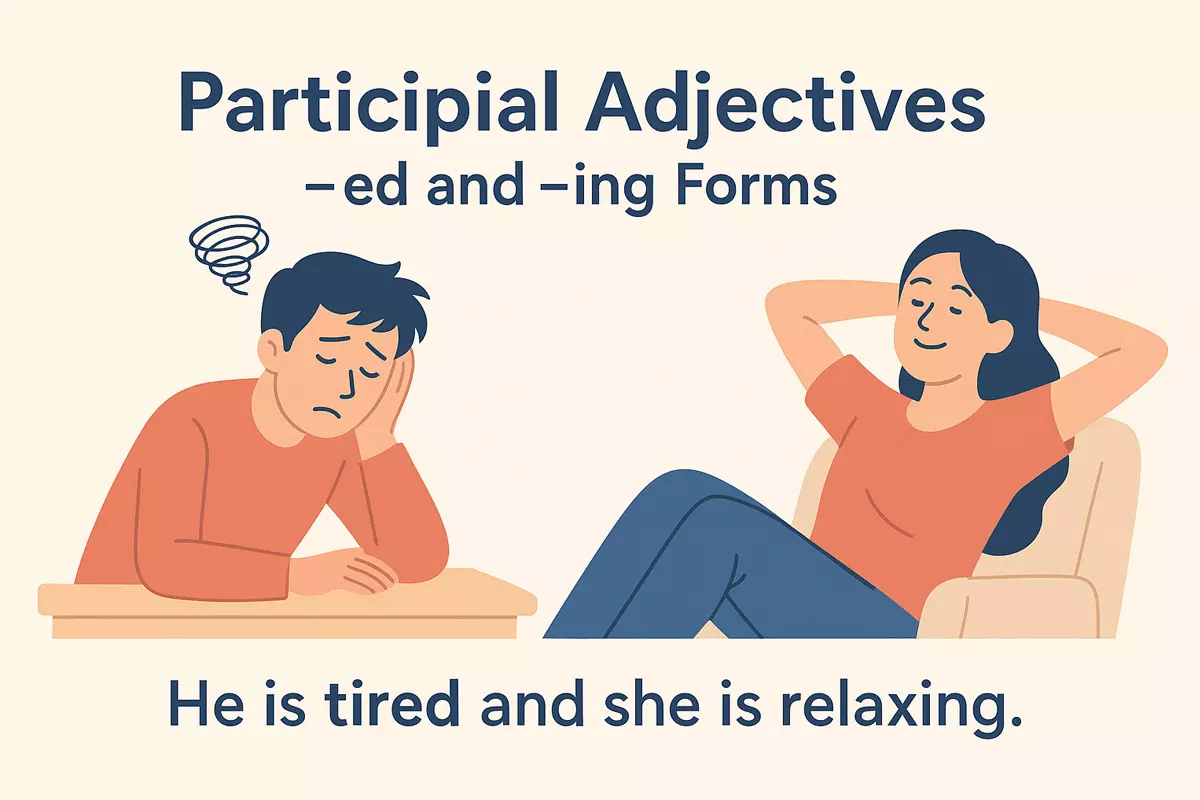 Here we the meanings of -ed and -ing adjectives, how to use them for feelings and things, common adjective pairs, typical beginner mistakes, and includes practice sentences to reinforce correct usage.
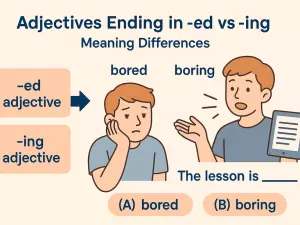
Words ending in -ed or -ing can be tricky because they often describe feelings or the things that cause those feelings. For example, excited describes how someone feels, while exciting describes something that makes people feel that way. Understanding the difference helps you add clear and vivid detail to your sentences. When you want to express your own emotions, use the -ed form, and when you want to describe something that produces those emotions, use the -ing form. This simple rule can make your writing more precise and expressive.
-ed Meaning
Adjectives ending in -ed are typically formed from verbs and describe the feelings or states experienced by a person, animal, or sometimes an object. These forms indicate how someone or something feels as a result of an action or event, rather than what causes the feeling. For example, when someone is "bored," they are experiencing the state of boredom; the focus is on the receiver of the effect.
Usage of -ed Adjectives
These descriptive words are commonly used to talk about emotions and reactions. The subject of the sentence is usually the one who experiences the effect. Here are some typical contexts:
- "The children looked tired after the long trip." (They feel tired.)
- "She was confused by the instructions." (She feels confusion.)
- "He felt excited about the concert." (He feels excitement.)
Common -ed Adjectives
Here is a list of frequently used adjectives with the -ed ending. These words generally describe temporary emotions or states:
- amused
- annoyed
- bored
- confused
- depressed
- disappointed
- embarrassed
- excited
- frightened
- interested
- pleased
- relaxed
- shocked
- surprised
- tired
- worried
- satisfied
- exhausted
- thrilled
- confounded
Comparing -ed and -ing Forms
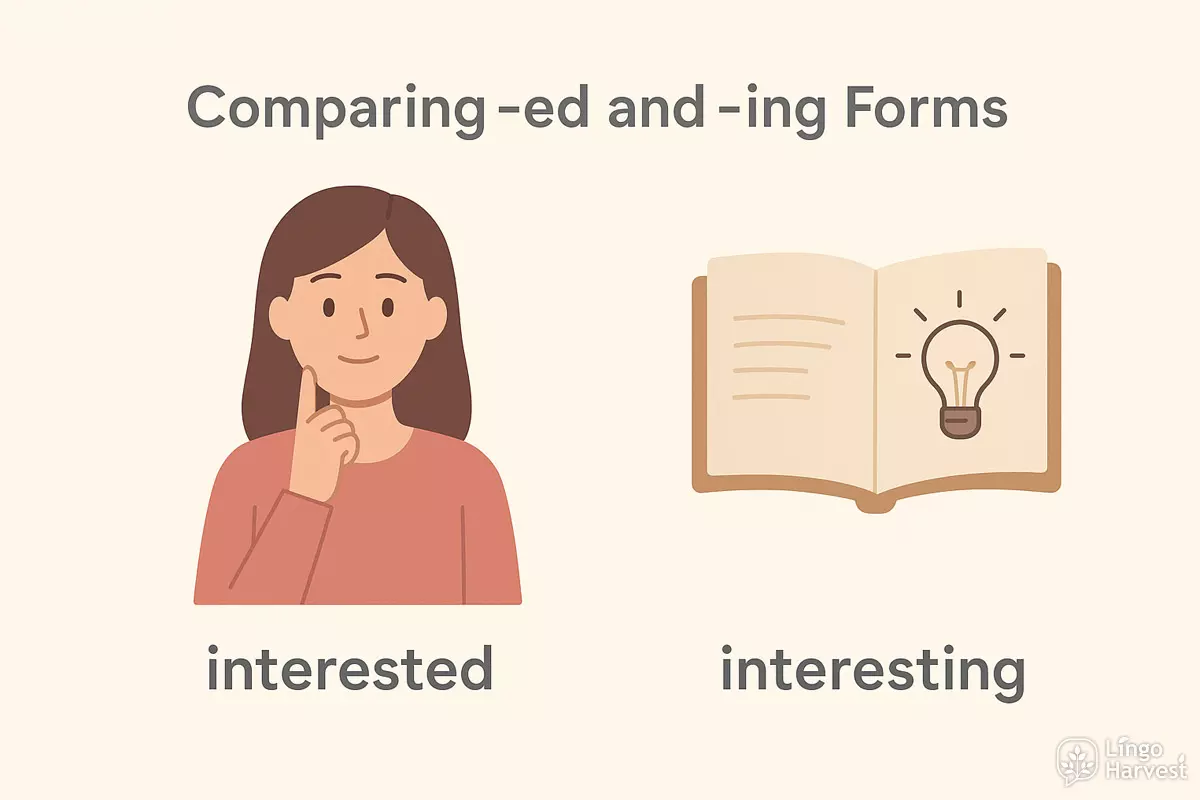
It is useful to compare adjectives ending in -ed with their -ing counterparts. While -ed shows the receiver of the feeling, -ing refers to the thing or person that causes the feeling. See the table below for a clear comparison:
| -ed Form (Describes the feeling) | -ing Form (Describes the cause) |
|---|---|
| She is interested in the topic. | The topic is interesting. |
| They felt bored during the lecture. | The lecture was boring. |
| He was frightened by the noise. | The noise was frightening. |
| We are excited about the trip. | The trip is exciting. |
| She felt annoyed by the delay. | The delay was annoying. |
To sum up, adjectives ending in -ed describe the effect on a person or animal, not what creates the feeling. Recognizing this pattern helps learners avoid common mistakes and communicate emotions clearly in English.
-ing Meaning
When describing nouns, adjectives ending in -ing generally express an active sense. They indicate that the person or thing causes a particular feeling or effect. These forms are derived from verbs, and they usually tell us what someone or something does to others. For example, a "boring lecture" means the lecture makes people feel bored. The focus is on the source or cause of the emotion or characteristic.
Common Uses of -ing Adjectives
- Describing things that cause emotions: A "frightening movie" (the movie causes fear), a "confusing instruction" (the instruction causes confusion).
- Talking about ongoing actions: "Running water" (water that is currently flowing), "exciting match" (a match that excites viewers).
- Situations or events: "Shocking news," "amusing story," "challenging task."
- General qualities: "Interesting book," "relaxing music," "annoying noise."
Typical -ing Adjective Examples
- amazing
- confusing
- disappointing
- entertaining
- exciting
- fascinating
- frightening
- inspiring
- interesting
- overwhelming
- relaxing
- shocking
- surprising
- tiring
- worrying
Comparing -ing and -ed Adjectives
| Adjective (-ing form) | Example Sentence |
|---|---|
| amusing | The comedian told an amusing story. |
| boring | This book is boring. |
| confusing | The map is confusing. |
| exciting | It was an exciting game. |
| frightening | That noise was frightening. |
| tiring | Moving house is tiring. |
| shocking | The ending was shocking. |
| annoying | The alarm is annoying. |
Key Points to Remember
- -ing adjectives describe the effect something has on people or things.
- They are not used to describe how people feel, but what causes the feeling.
- Common mistake: Don’t use -ing to talk about your own emotions (say "I am bored," not "I am boring").
Describing Feelings
When talking about emotions in English, it’s common to use participial adjectives ending in -ed and -ing. These forms help us express both how people feel and what causes those emotions. Understanding the difference is essential for clear and natural communication.
How -ed and -ing Adjectives Work
Adjectives ending in -ed usually describe a person’s feelings or reactions. In contrast, those ending in -ing refer to the thing, situation, or person that causes those feelings. For example, if a movie is “boring,” the audience feels “bored.”
- -ed: describes the emotion experienced by someone (e.g., “She felt surprised by the news.”)
- -ing: explains what causes the emotion (e.g., “The news was surprising.”)
Common Examples
Here are some participial adjective pairs that are often used to express emotions and reactions:
- amused / amusing
- annoyed / annoying
- bored / boring
- confused / confusing
- disappointed / disappointing
- embarrassed / embarrassing
- excited / exciting
- exhausted / exhausting
- frightened / frightening
- interested / interesting
- pleased / pleasing
- relaxed / relaxing
- satisfied / satisfying
- shocked / shocking
- surprised / surprising
- tired / tiring
- worried / worrying
Patterns in Sentences
Typically, you’ll see these adjectives used like this:
- “I was amazed by the magician’s trick.” ✅
- “The magician’s trick was amazing.” ✅
- “He felt confused after the explanation.”
- “The explanation was confusing.”
Quick Reference Table
| Emotion (-ed form) | Cause (-ing form) |
|---|---|
| interested | interesting |
| frightened | frightening |
| embarrassed | embarrassing |
| annoyed | annoying |
| excited | exciting |
| tired | tiring |
| satisfied | satisfying |
| shocked | shocking |
Tips for Learners
To avoid confusion, remember: if you are expressing how someone feels, use the -ed form. If you are describing the thing that makes someone feel that way, use the -ing form. Practicing with real-life examples can help you master these adjective pairs and sound more natural in conversation.
Describing Things
When we talk about the appearance, feelings, or qualities of people, objects, or situations, participial adjectives ending in -ed and -ing are frequently used. These forms help us express not just what something is, but how it affects people or how it is experienced. The choice between the two endings depends on whether we are focusing on the person’s response or the thing’s characteristic.
How -ed and -ing Forms Differ
Adjectives ending in -ed describe how someone feels. In contrast, those ending in -ing describe the thing or situation that causes the feeling. For example, if a movie is boring, the viewers are bored. This relationship is consistent across many verbs.
- The -ed form: shows the reaction or feeling (excited, worried, tired).
- The -ing form: describes the source or quality (exciting, worrying, tiring).
Common Participial Adjective Pairs
It’s helpful to see how these pairs work. Here are some frequently used examples:
- amused / amusing
- annoyed / annoying
- astonished / astonishing
- bored / boring
- confused / confusing
- depressed / depressing
- disgusted / disgusting
- disappointed / disappointing
- embarrassed / embarrassing
- excited / exciting
- exhausted / exhausting
- frightened / frightening
- interested / interesting
- pleased / pleasing
- relaxed / relaxing
- shocked / shocking
- satisfied / satisfying
- surprised / surprising
- terrified / terrifying
- worried / worrying
Usage in Sentences
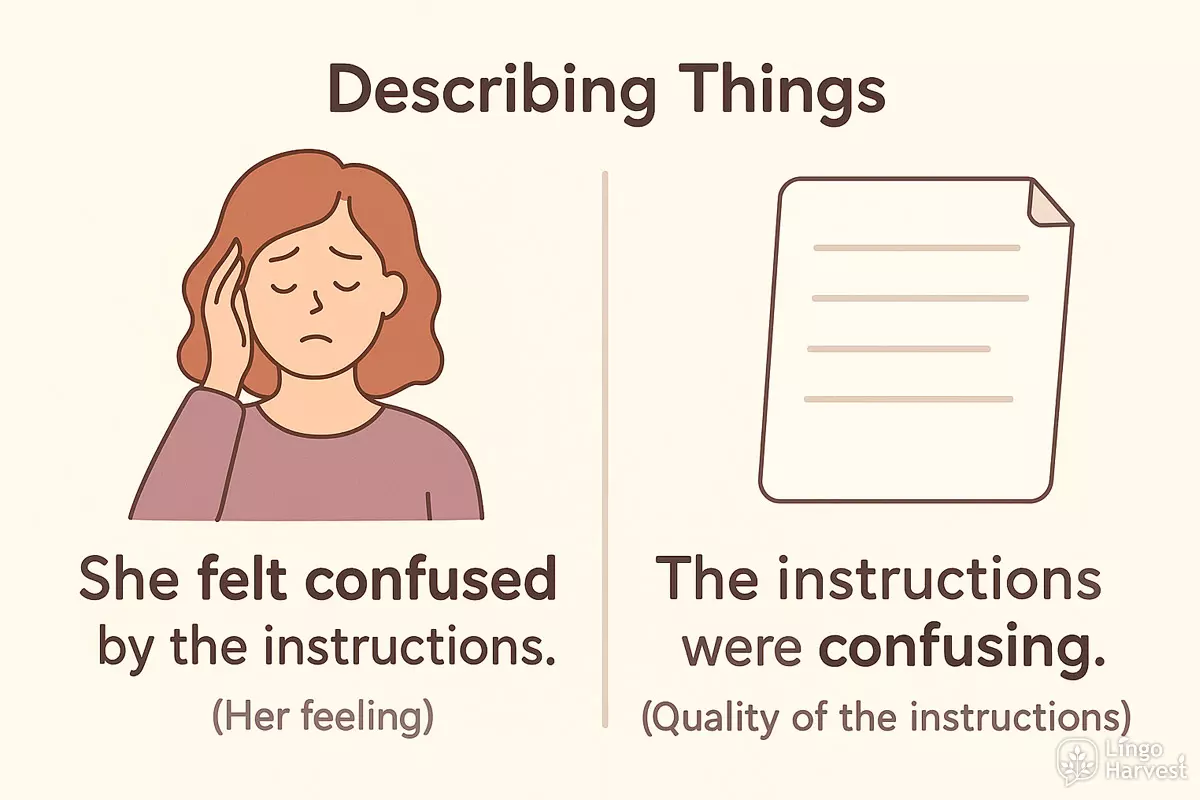
To clarify how these forms appear in real contexts, consider the following examples:
- She felt confused by the instructions. (Her feeling)
- The instructions were confusing. (Quality of the instructions)
- He is interested in art. (His emotion)
- The exhibition was interesting. (The exhibition’s effect)
Quick Reference: -ed vs. -ing
| -ed Form (Person’s feeling) | -ing Form (Thing’s quality) |
|---|---|
| I am bored. | This book is boring. |
| They were shocked. | The news was shocking. |
| She felt relaxed. | The music was relaxing. |
| We’re amused. | The joke is amusing. |
| He’s frightened. | The movie is frightening. |
Knowing when to use each participial adjective form leads to clearer and more accurate descriptions in English. By matching the ending to either the experience or the cause, you can convey exactly what you mean.
Common Pairs
Many English adjectives are formed from verbs ending in -ed or -ing, and they often come in pairs that describe related but distinct meanings. The -ed form usually describes how someone feels, while the -ing form describes the characteristic of something or someone that causes that feeling. Recognizing these word pairs can help you choose the right adjective in context.
Typical -ed / -ing Adjective Matches
Some verb roots commonly form both types of participial adjectives. Here are some widely used examples:
- amused / amusing
- bored / boring
- confused / confusing
- disappointed / disappointing
- excited / exciting
- exhausted / exhausting
- frightened / frightening
- interested / interesting
- pleased / pleasing
- shocked / shocking
- surprised / surprising
- tired / tiring
- worried / worrying
- annoyed / annoying
- embarrassed / embarrassing
- satisfied / satisfying
- terrified / terrifying
- thrilled / thrilling
- disgusted / disgusting
- interested / interesting
How the Pairs Work in Sentences
The difference between the two forms is clear when you use them in context. The -ed adjectives describe a person's emotional state, while -ing adjectives describe the thing or situation causing the emotion.
| Feeling (-ed) | Cause (-ing) |
|---|---|
| I am bored. | This movie is boring. |
| She felt excited. | The news was exciting. |
| He is confused. | The instructions are confusing. |
| They were frightened. | The storm was frightening. |
| We are interested. | Your story is interesting. |
Tips for Usage
To decide which form to use, consider whether you are talking about a feeling (use -ed) or describing the thing that produces that feeling (use -ing). For example: “I’m tired after this tiring day.” This distinction helps make your English clearer and more expressive.
Beginner Mistakes
Mixing up -ed and -ing adjectives is extremely common for new learners. These forms look similar, but their meanings are quite different. The -ed form describes how someone feels, while the -ing form describes the thing or situation causing the feeling. Confusing the two can make sentences unclear or even change the intended meaning.
Common Confusion: Who Feels, What Causes?
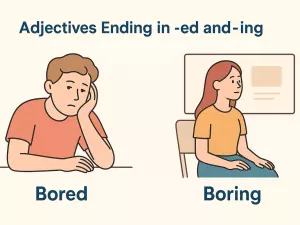
Students often use the wrong ending when talking about emotions or characteristics. For example, saying “I am boring” instead of “I am bored” changes the meaning entirely. The first means you cause boredom in others; the second means you feel that way yourself.
- He is bored (he feels uninterested).
- He is boring (he makes others feel uninterested).
- The movie was exciting (it caused excitement).
- I was excited (I felt excitement).
- She is annoyed (she feels irritated).
- She is annoying (she irritates others).
- The story is confusing (it causes confusion).
- We are confused (we feel confusion).
- The instructions are frustrating.
- He looks frustrated.
- The news was shocking.
- They were shocked.
- It’s an amazing view.
- We were amazed by the view.
- The task is tiring.
- I feel tired.
- Her joke was embarrassing.
- He felt embarrassed.
Mixing Up Descriptions
Another pitfall is using the wrong participial adjective to describe things or people. For example, describing a book as “bored” doesn’t make sense, because objects don’t have feelings. Similarly, saying “I am interesting” may be true, but if you mean you feel interested, it’s the wrong form.
Quick Comparison Table
| Person/Thing | Correct Adjective | Incorrect Example |
|---|---|---|
| I (feeling) | Tired, bored, excited | I am tiring, I am boring, I am exciting |
| Something (causing feeling) | Tiring, boring, exciting | The movie is tired, The class is bored |
| He/She (describes mood) | Annoyed, confused, embarrassed | He is annoying, She is confusing, He is embarrassing |
| Situation (describes effect) | Annoying, confusing, embarrassing | The situation is annoyed, The test is confused |
Summary Tips
Pay attention to who or what you’re describing. Use -ed for feelings and -ing for causes. If you’re unsure, ask yourself: “Is this about how someone feels, or what makes them feel that way?” This simple question helps avoid the most frequent errors with participial adjectives.
Practice Sentences
Understanding how to use -ed and -ing participial adjectives is easier with practical examples. Below, you’ll find a variety of sentences and exercises to help you distinguish between these forms. Remember, -ing forms usually describe the thing causing a feeling, while -ed forms describe the person experiencing the feeling.
Common Participial Adjectives in Sentences
- The boring lecture made everyone sleepy.
- I was bored during the meeting.
- This puzzle is confusing.
- She felt confused by the instructions.
- The movie was exciting from start to finish.
- He looked excited to see his friends.
- The sound was annoying to everyone in the room.
- We were annoyed by the constant noise.
- The news is shocking.
- Many people are shocked by the announcement.
- Her results were surprising.
- He seemed surprised by his score.
- The story was amusing for children.
- They felt amused by the comedian’s jokes.
- The task was tiring, but we finished it.
- After work, I am usually tired.
Exercise: Choose the Correct Form (-ed or -ing)
- The book was so (interested / interesting) that I couldn’t put it down.
- She felt (embarrassed / embarrassing) after her mistake.
- This math problem is (challenged / challenging).
- We were (frustrated / frustrating) by the delay.
- It’s (depressed / depressing) to see so much rain.
Show answers
- interesting
- embarrassed
- challenging
- frustrated
- depressing
Comparison Table: -ed vs -ing Forms in Context
| Sentence with -ing | Sentence with -ed |
|---|---|
| The frightening movie made me jump. | I was frightened by the movie. |
| His jokes are always entertaining. | The audience felt entertained. |
| That was a disappointing result. | She is disappointed with her score. |
| It’s a worrying situation. | Everyone is worried about the future. |
Fill in the Blanks
Complete the sentences with the correct participial adjective (-ed or -ing):
- He was _________ (surprise) by the test results.
- The instructions are _________ (confuse).
- I find grammar rules _________ (fascinate).
- We felt _________ (relax) after the holiday.
- The noise outside is _________ (disturb).
Show answers
- surprised
- confusing
- fascinating
- relaxed
- disturbing
Reviewing these patterns and practicing with real examples helps build confidence in choosing between -ed and -ing adjective forms. Try creating your own sentences to reinforce your understanding.