What Are Adverbs? General Definition

 This article explains what adverbs describe, their main functions, and basic forms. It highlights common types, compares adverbs and adjectives, points out typical mistakes, and offers a short practice section for review.
If you want your sentences to be more engaging and precise, learning how to use modifiers effectively is key. Modifiers are words or phrases that provide additional information about actions, qualities, or other descriptors, helping you create clearer and more vivid descriptions. By choosing the right modifiers, you can add nuance and detail, making your writing more interesting and easier for readers to visualize. Mastering modifiers allows you to express ideas with greater clarity and style, enhancing both written and spoken communication.
What Adverbs Describe
Adverbs add detail to sentences by modifying verbs, adjectives, other adverbs, or even entire clauses. They help answer questions like “how?”, “when?”, “where?”, “to what extent?”, and “how often?”, providing a clearer picture of the action or quality being discussed. These words function as versatile modifiers, shaping the meaning and nuance of statements in subtle or significant ways.
How Adverbs Modify Different Parts of Speech
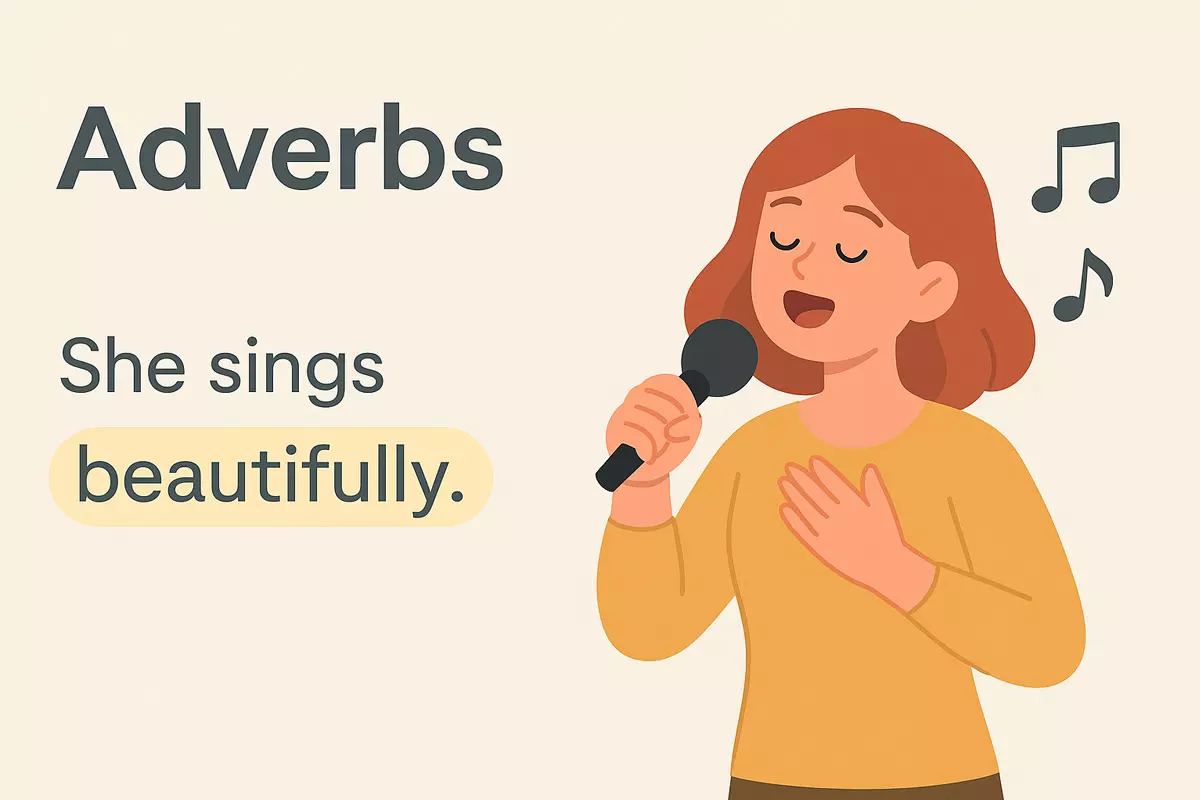
Adverbs most commonly modify verbs, giving information about how an action takes place. For example, in “She sings beautifully,” the adverb “beautifully” tells us in what manner she sings. They can also modify adjectives, as in “incredibly fast runner,” where “incredibly” intensifies “fast.” Additionally, adverbs can adjust the meaning of other adverbs, such as in “very quickly.”
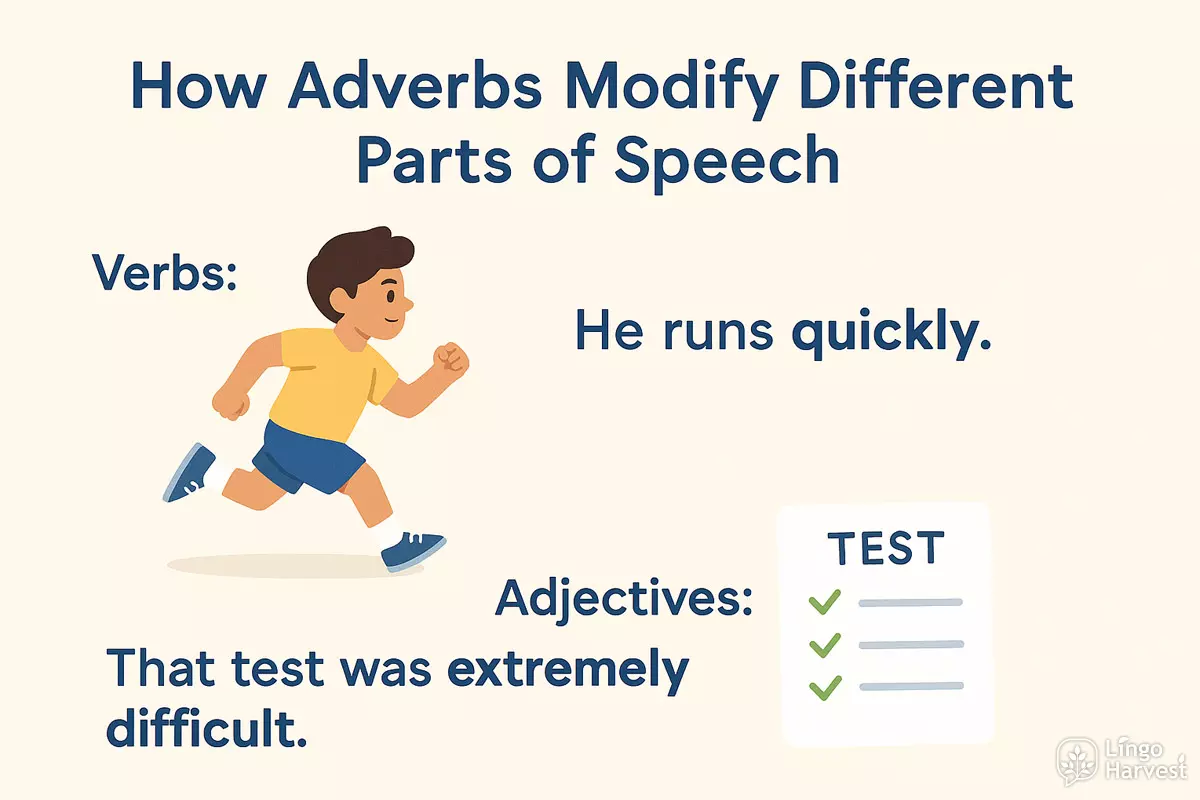
- Verbs: “He runs quickly.”
- Adjectives: “That test was extremely difficult.”
- Other adverbs: “She finished almost immediately.”
- Sentences or clauses: “Unfortunately, we missed the bus.”
Main Types of Information Conveyed
Adverbs are classified by the type of detail they provide. Here are some of the most common ways they add information:
- Manner (how?): softly, angrily, well, quickly, carelessly
- Time (when?): now, later, yesterday, soon, always
- Place (where?): here, outside, everywhere, above, nearby
- Degree (to what extent?): very, almost, completely, quite, barely
- Frequency (how often?): often, seldom, never, always, occasionally
- Certainty: definitely, probably, perhaps, surely, possibly
Examples of Adverbs in Context
To see how these modifiers work in real sentences, consider the following examples, each showing a different function:
- She always arrives early. (frequency)
- The cat sat quietly on the windowsill. (manner)
- We will meet outside. (place)
- He was completely surprised. (degree)
- Perhaps it will rain today. (certainty)
Overview of Adverb Modifications
| Modifier | What It Describes | Example |
|---|---|---|
| Verb | Action or occurrence | She laughed loudly. |
| Adjective | Quality or state | It was remarkably easy. |
| Adverb | Another adverb | He spoke very softly. |
| Sentence/Clause | Whole idea or statement | Thankfully, they succeeded. |
In summary, adverbs are essential for expressing details about actions, qualities, and even entire situations. By modifying verbs, adjectives, other adverbs, or whole sentences, they enrich communication and clarify meaning.
Main Functions
Adverbs play a key role in adding detail and precision to sentences. They offer extra information about how, when, where, and to what degree actions or qualities occur. By modifying verbs, adjectives, other adverbs, or even entire sentences, these words help speakers and writers convey more nuanced meanings.
How Adverbs Modify Verbs
One of the most common uses is to describe the manner, time, frequency, or place of an action. For example, in "She spoke softly," the word "softly" tells us how she spoke. Similarly, "He arrived late" clarifies when the action happened.
- Quickly (e.g., "He ran quickly.")
- Yesterday (e.g., "They left yesterday.")
- Everywhere (e.g., "She searched everywhere.")
- Sometimes (e.g., "We sometimes swim.")
- Carefully (e.g., "Please drive carefully.")
- Never (e.g., "I never eat meat.")
- Outside (e.g., "The kids are playing outside.")
- Already (e.g., "I've already finished my work.")
- Very (e.g., "She sings very well.")
- Clearly (e.g., "He explained clearly.")
Modifying Adjectives and Other Adverbs
Adverbs can intensify or limit the meaning of adjectives and other adverbs. For instance, in "extremely cold," the word "extremely" makes the adjective "cold" stronger. In "almost always," "almost" modifies the frequency adverb "always," softening its meaning.
Expressing Degree, Frequency, and Certainty
These words often indicate how much, how often, or how certainly something happens. For example, "She is quite talented" (degree), "He rarely forgets" (frequency), or "They will probably win" (certainty). Such details help communicate intention and expectation more precisely.
Comparison of Adverbs
Some adverbs can take comparative and superlative forms to show differences in degree or manner. See the table below for a quick overview:
| Base Form | Comparative | Superlative |
|---|---|---|
| Fast | Faster | Fastest |
| Well | Better | Best |
| Early | Earlier | Earliest |
| Hard | Harder | Hardest |
| Late | Later | Latest |
Summing Up Their Roles
In summary, adverbs are essential for clarifying actions, describing intensities, and expressing frequency or certainty. They help transform simple statements into richer, more informative communication, making language more flexible and expressive.
Common Adverb Types
Adverbs come in several varieties, each serving a unique function in a sentence. While many people think of these words as simply describing how something happens, their roles are much broader. Some modify verbs, others adjust adjectives or even whole clauses, fine-tuning the meaning and nuance of what we say or write.
Categories Based on Meaning
- Adverbs of Manner: Indicate how an action occurs (e.g., quickly, quietly, well, badly).
- Adverbs of Time: Specify when something happens (e.g., now, soon, yesterday, always, already).
- Adverbs of Place: Tell us where something happens (e.g., here, everywhere, outside, nearby, upstairs).
- Adverbs of Frequency: Show how often an action takes place (e.g., often, rarely, sometimes, never, usually).
- Adverbs of Degree: Convey intensity or extent (e.g., very, almost, too, quite, nearly, just).
- Adverbs of Certainty: Express how sure we are about something (e.g., certainly, probably, definitely, possibly).
- Interrogative Adverbs: Used in questions (e.g., how, when, where, why).
- Relative Adverbs: Introduce clauses and relate them to nouns (e.g., where, when, why).
Form and Placement Variations
Most adverbs are formed by adding -ly to an adjective, but not all follow this pattern. For example, "fast" and "hard" are adverbs that lack the typical ending. Placement can also vary: some adverbs appear at the start of a sentence, some at the end, and others in the middle, depending on what they modify.
| Adverb Type | Typical Examples | Sample Sentence |
|---|---|---|
| Manner | quickly, carefully, loudly | She spoke quietly during the meeting. |
| Time | now, already, yesterday | I have already finished my homework. |
| Place | here, outside, everywhere | The children are playing outside. |
| Frequency | often, always, never | He never drinks coffee in the evening. |
| Degree | very, almost, too | She was very excited about the trip. |
| Certainty | certainly, probably, definitely | They will probably arrive late. |
| Interrogative | how, when, where | When did you call? |
| Relative | where, when, why | This is the reason why I left. |
Summary
Understanding the various roles and forms of adverbs helps clarify their function in English. Whether you’re describing how, when, or where something happens, or specifying the degree or certainty, these words add important details to sentences. Expanding your knowledge of these categories will make your speech and writing more precise and expressive.
Basic Forms
Adverbs come in a variety of shapes and serve several functions in sentences. Most commonly, they modify verbs, adjectives, or even other adverbs, providing details about manner, time, place, frequency, degree, and more. Many adverbs are formed by adding -ly to an adjective, but not all follow this pattern. Some words are inherently adverbial, and others have irregular forms.
Common Patterns for Adverb Formation
One of the most frequent ways to create an adverb in English is by attaching -ly to the end of an adjective. For instance, "quick" becomes "quickly," and "happy" turns into "happily." However, there are exceptions and irregularities to be aware of.
- fast → fast (no change)
- hard → hard (not "hardly" for the same meaning)
- good → well
- late → late (not "lately" for the same meaning)
- early → early
- high → high
- straight → straight
- daily → daily
- wrong → wrong
- long → long
- near → near (but "nearly" has a different meaning)
- loud → loudly (but "loud" is sometimes used informally)
- easy → easily
- slow → slowly (but "slow" is also common in speech)
- clear → clearly
- sure → surely
- real → really
- safe → safely
- gentle → gently
Types of Adverbs
English adverbs can be grouped by the kind of information they provide. Here are several main categories:
- Manner: describes how something happens (e.g., "quickly," "softly")
- Time: tells when something happens (e.g., "now," "yesterday," "soon")
- Place: indicates location (e.g., "here," "outside," "everywhere")
- Frequency: shows how often (e.g., "always," "never," "sometimes")
- Degree: expresses intensity or extent (e.g., "very," "quite," "almost")
- Focusing: highlights part of a sentence (e.g., "only," "even")
- Interrogative: used in questions (e.g., "how," "when," "where")
Regular vs. Irregular Forms
Some adverbs follow predictable patterns, while others do not. The table below compares a few regular and irregular examples:
| Adjective | Adverb |
|---|---|
| quick | quickly |
| happy | happily |
| good | well |
| hard | hard |
| late | late |
| easy | easily |
| fast | fast |
Some adverbs look exactly like their adjective forms, while others change spelling or use entirely different words. Recognizing these patterns makes it easier to use them correctly and naturally in speech or writing.
Adverbs vs Adjectives
Understanding the difference between adverbs and adjectives helps make sentences clearer and more precise. Both are describing words, but they modify different parts of a sentence. Adjectives describe nouns and pronouns, providing details about what something or someone is like. Adverbs, on the other hand, typically modify verbs, adjectives, or other adverbs, explaining how, when, where, or to what extent an action occurs.
What Do They Modify?
- Adjectives: Give information about nouns or pronouns. For example: "The blue car," "a happy child."
- Adverbs: Describe verbs, adjectives, or other adverbs. For example: "She runs quickly," "a very tall building," "finished quite early."
Common Forms and Endings
Many adverbs end with -ly, but not all do. Likewise, adjectives can take various forms. Here are some examples:
- Adjective: slow → Adverb: slowly
- Adjective: happy → Adverb: happily
- Adjective: good → Adverb: well
- Adjective: loud → Adverb: loudly
- Adjective: fast → Adverb: fast (same form, different function)
- Adjective: hard → Adverb: hard (again, same form; context tells which is which)
- Adjective: late → Adverb: late
- Adjective: daily → Adverb: daily
- Adjective: careful → Adverb: carefully
- Adjective: easy → Adverb: easily
Comparison Table
| Function | Example |
|---|---|
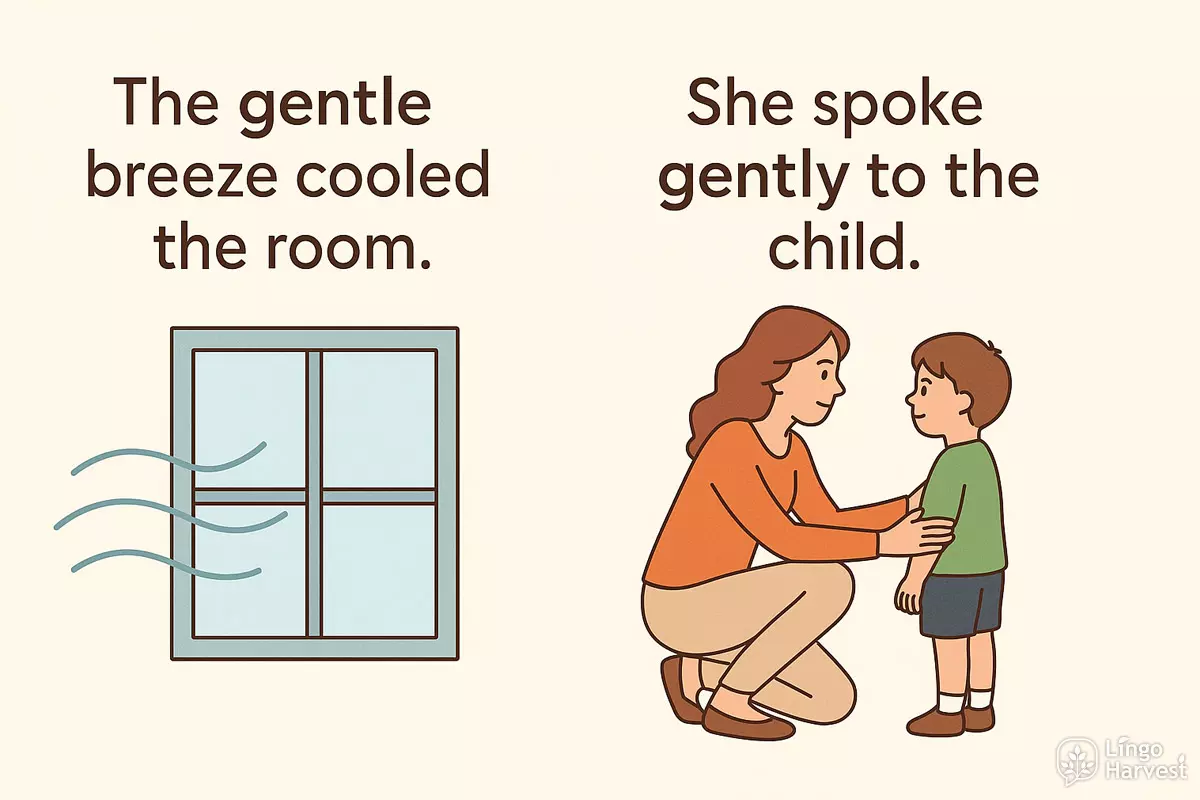
| Describes a noun/pronoun (adjective) | The gentle breeze cooled the room. |
| Describes a verb (adverb) | She spoke gently to the child. |
| Describes an adjective (adverb) | The movie was incredibly exciting. |
| Describes another adverb (adverb) | He finished the exam remarkably quickly. |
Quick Tips for Telling Them Apart
- If the word is telling you how something is done, it’s probably an adverb.
- If it answers what kind, which one, or how many about a noun, it’s likely an adjective.
- Not all adverbs end in -ly, and some words can serve as both (like "fast" or "hard").
- Try the word in a sentence with a noun and a verb to see what it modifies.
Knowing which modifier to use can improve clarity and style in both writing and speech. Paying attention to what each word is describing will help you choose the correct form every time.
Typical Mistakes
Misunderstanding how adverbs function in sentences can lead to common errors, especially for language learners and even native speakers. Many issues arise from confusing adverbs with adjectives, overusing certain modifiers, or placing them incorrectly within a sentence.
Confusing Adverbs and Adjectives
It’s easy to mix up adverbs and adjectives, since they often look similar. Remember, adjectives describe nouns, while adverbs modify verbs, adjectives, or other adverbs. For example, saying “She sings beautiful” instead of “She sings beautifully” is a frequent slip.
Incorrect Placement
Adverb placement can subtly change the meaning of a sentence or make it sound awkward. Placing the modifier too far from the word it’s meant to describe can lead to confusion. For instance, “He only eats vegetables” (meaning vegetables are all he eats) versus “He eats only vegetables” (meaning he eats nothing but vegetables).
Overusing Intensifiers
Words like “very,” “really,” and “extremely” are sometimes used too often, making writing less precise. Relying on these intensifiers instead of specific vocabulary can weaken sentences.
Common Usage Errors
- Using “good” instead of “well” (e.g., “She did good” ❌ → “She did well” ✅)
- Writing “fastly” instead of “fast” (since “fast” is already an adverb)
- Placing adverbs between “to” and the verb in infinitives (“to quickly run” instead of “to run quickly” in formal writing)
- Mixing up “hard” and “hardly” (e.g., “He works hardly” ❌ means he barely works; “He works hard” ✅ means he puts in effort)
- Using “slow” as an adverb (“Drive slow” ❌ should be “Drive slowly” ✅)
- Forgetting to add “-ly” when needed (e.g., “He spoke calm” ❌ → “He spoke calmly”)
- Redundant adverbs with strong verbs (“He shouted loudly” — “shouted” already implies loudness)
- Double negatives with adverbs (“He didn’t hardly try” is incorrect in standard English)
- Using “more better” instead of “better”
- Incorrectly using “much” with countable nouns (“much apples” ❌ should be “many apples”)
- Using “too” where “very” is intended (“I am too happy” usually means excessively happy, not just very happy)
- Switching “late” (adjective/adverb) and “lately” (adverb meaning recently)
- Using “most” instead of “almost” (“Most everyone left” ❌ should be “Almost everyone left”)
- Placing adverbs after the verb when standard English prefers before (“She always is late” ❌ → “She is always late”)
Comparing Adverbs and Adjectives
Clarifying differences between adverbs and adjectives can help avoid frequent errors. See the comparison below:
| Incorrect Usage | Correct Usage |
|---|---|
| She runs quick. | She runs quickly. |
| He did bad on the test. | He did badly on the test. |
| Drive safe! | Drive safely! |
| She sings beautiful. | She sings beautifully. |
Recognizing these pitfalls helps ensure your sentences are both clear and accurate. By staying aware of common slip-ups, you can improve both your writing and speaking, making your language more precise and effective.
Short Practice
To solidify your understanding of how adverbs function, let’s explore a few typical exercises and examples. These tasks will help you recognize how such words modify verbs, adjectives, and even other adverbs in sentences.
Identify the Adverbs
Read each sentence and pick out the adverb(s):
- She sings beautifully in the choir.
- They arrived very late to the meeting.
- Tom quickly finished his homework.
- The weather was surprisingly warm today.
- We will leave soon.
Show answers
- beautifully
- very, late
- quickly
- surprisingly
- soon
Choose the Correct Option
Select the word that completes each sentence correctly:
- He speaks (quiet/quietly) in public.
- She can run (fast/fastly).
- This test is (extremely/extreme) difficult.
- The dog barked (loud/loudly) at night.
Show answers
- quietly
- fast
- extremely
- loudly
Common Adverbs for Practice
Here are some frequently used adverbs. Try making your own sentences with each:
- always
- never
- often
- quickly
- carefully
- easily
- sometimes
- already
- almost
- just
- hardly
- well
- soon
- everywhere
- here
- then
- too
- quite
Adverb Placement Comparison
Notice how the meaning or emphasis can change depending on where the adverb is placed. Review these examples:
| Sentence | Adverb Placement |
|---|---|
| She rarely eats sweets. | Before the verb |
| He finished the exam quickly. | After the object |
| Usually, we have lunch at noon. | At the beginning |
| They have already left. | Between auxiliary and main verb |
| She is always cheerful. | Between verb ‘be’ and adjective |
Practicing with these examples will help you recognize and use adverbs more naturally in your own writing and speech.