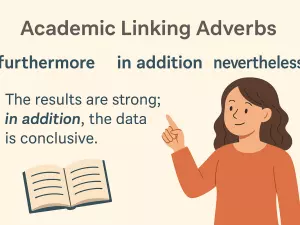
Conjunctive Adverbs: Linking Independent Clauses

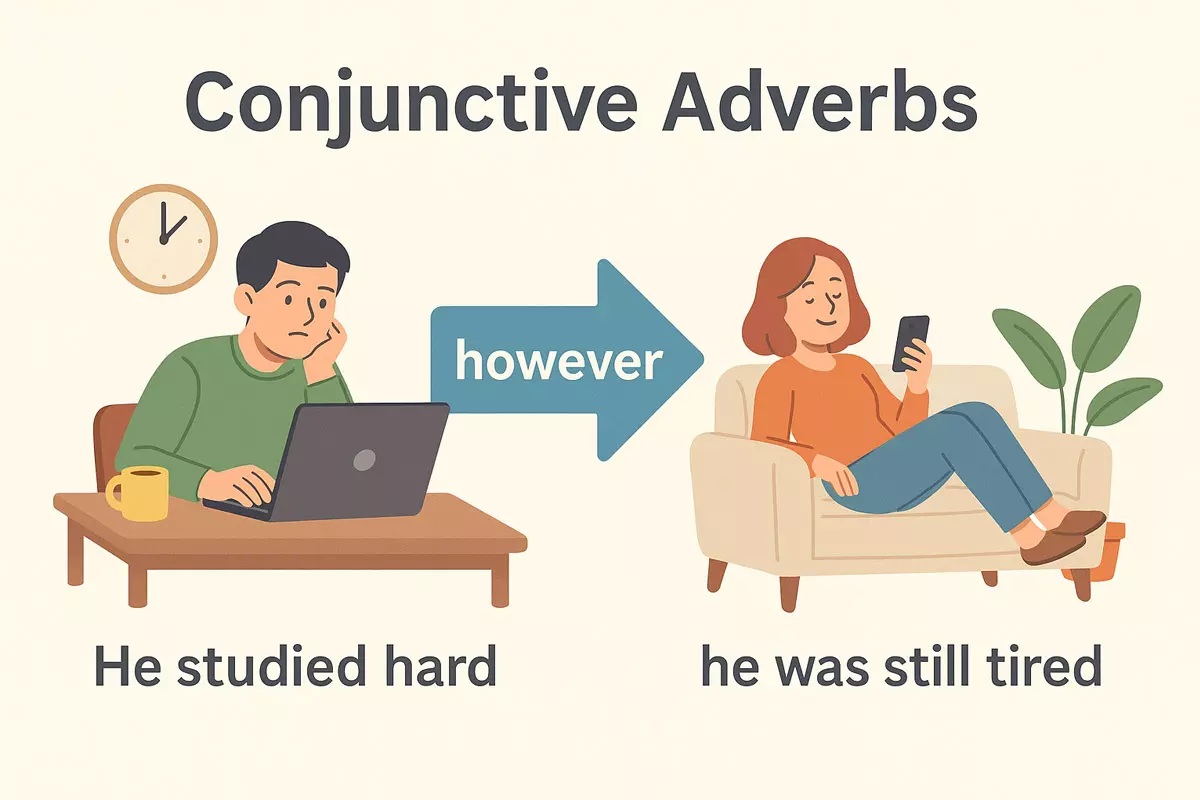 The article explains the role of conjunctive adverbs, how they connect clauses, and the basic punctuation rules. It also lists common words, shows usage patterns with examples, and provides practice items to reinforce learning.
Achieving clarity and flow in your writing largely depends on how effectively you connect complete thoughts. To smoothly link two independent sentences, you can use specific adverbs known as conjunctive adverbs. Words like however, therefore, meanwhile, and consequently help your ideas transition seamlessly from one point to the next. These adverbs not only join sentences but also clarify the relationship between them, making your writing more coherent and easy to follow for your readers.
Role of Conjunctive Adverbs
Conjunctive adverbs act as bridges between independent clauses, helping writers clarify relationships such as contrast, cause and effect, sequence, or comparison. These words and phrases provide essential cues for readers, making complex sentences easier to follow and understand. By signaling transitions, they guide the flow of ideas and maintain coherence in writing.
Connecting Ideas Clearly
When used properly, these linking words show how two statements relate to each other. For example, "however" introduces contrast, while "therefore" signals a logical result. This clarity helps readers grasp the intended meaning without confusion.
Common Functions of Conjunctive Adverbs
- Expressing contrast (e.g., however, nevertheless, on the other hand)
- Showing cause and effect (e.g., therefore, consequently, thus)
- Adding information (e.g., furthermore, moreover, in addition)
- Indicating sequence or time (e.g., meanwhile, subsequently, then)
- Summarizing or concluding (e.g., finally, in conclusion, overall)
- Emphasizing a point (e.g., indeed, certainly, undoubtedly)
- Comparing (e.g., similarly, likewise)
- Clarifying (e.g., namely, that is, specifically)
- Providing alternatives (e.g., otherwise)
- Restating (e.g., in other words)
Impact on Sentence Structure
Writers often place conjunctive adverbs at the beginning of a clause, followed by a comma. They can also appear mid-sentence for emphasis or rhythm. Importantly, when joining two independent clauses with a conjunctive adverb, a semicolon typically precedes it, and a comma follows.
Examples: Linking Clauses with Conjunctive Adverbs
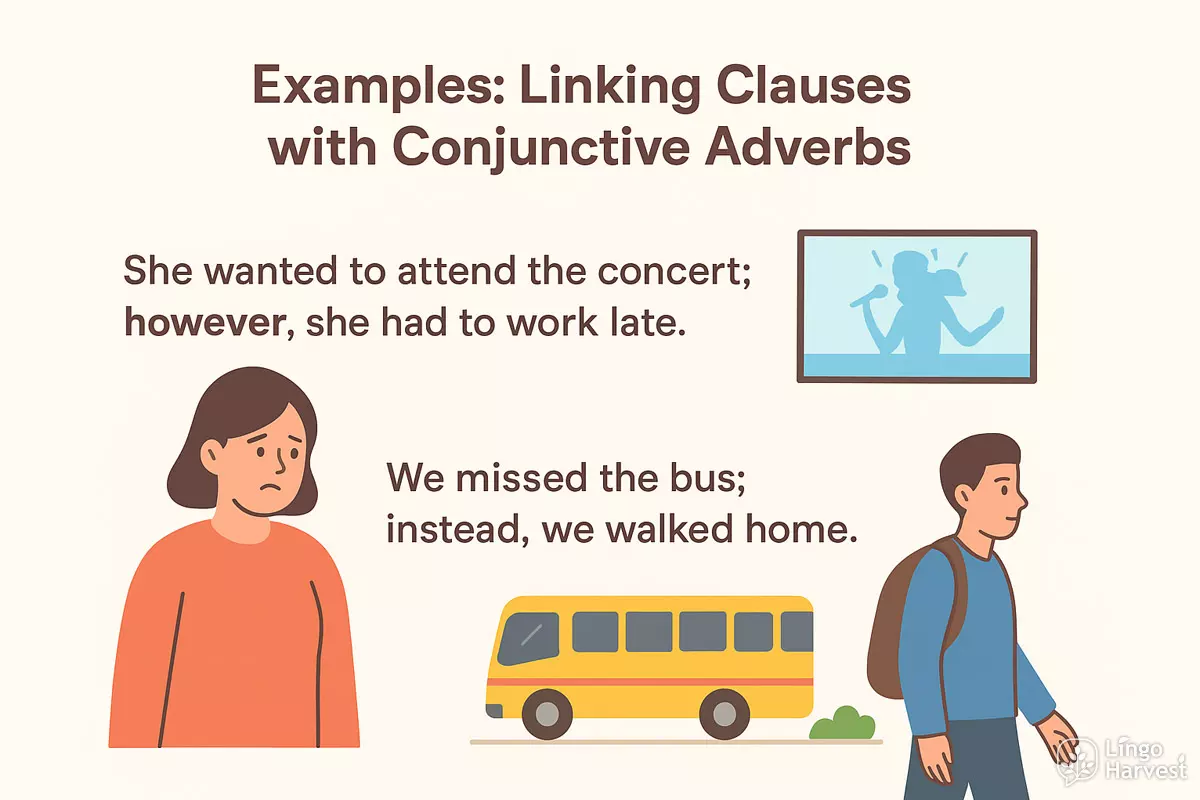
- She wanted to attend the concert; however, she had to work late.
- The team practiced hard; consequently, they won the championship.
- He forgot his umbrella; therefore, he got soaked in the rain.
- We missed the bus; instead, we walked home.
- It was a challenging problem; nonetheless, they found a solution.
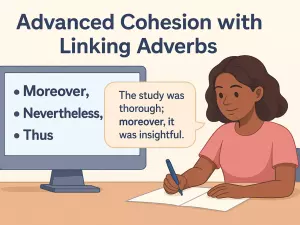
- They finished the project on time; moreover, the results exceeded expectations.
- The weather was terrible; nevertheless, the event continued as planned.
- I have several errands to run; meanwhile, you can finish your homework.
- The instructions were unclear; thus, many people made mistakes.
Comparison: Conjunctive Adverbs vs. Coordinating Conjunctions
| Conjunctive Adverb | Coordinating Conjunction | Example |
|---|---|---|
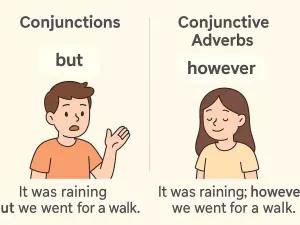
| however | but | She was tired; however, she finished her work. She was tired, but she finished her work. |
| therefore | so | He forgot the meeting; therefore, he missed the update. He forgot the meeting, so he missed the update. |
| moreover | and | The solution was effective; moreover, it was inexpensive. The solution was effective, and it was inexpensive. |
| otherwise | or | You must hurry; otherwise, you will be late. You must hurry, or you will be late. |
Why Use Conjunctive Adverbs?
These linking words add precision and sophistication to writing. They allow for complex, nuanced connections between ideas that simple conjunctions may not fully provide. When chosen thoughtfully, they enhance both the logic and style of written communication.
Connecting Clauses
When writing complex sentences, conjunctive adverbs serve as bridges between two complete thoughts. They clarify the relationship between ideas, whether it's contrast, cause and effect, sequence, or addition. Using these connectors correctly not only improves flow but also prevents choppy or confusing writing.
How Conjunctive Adverbs Link Sentences
Conjunctive adverbs such as however, therefore, and meanwhile typically join two independent clauses. They’re usually placed after a semicolon and followed by a comma. For example: She wanted to go for a walk; however, it started to rain. This punctuation pattern helps readers follow logic and structure.
Common Conjunctive Adverbs
Writers have a variety of options to express relationships between clauses. Here are some of the most frequently used conjunctive adverbs:
- however
- therefore
- meanwhile
- consequently
- nevertheless
- furthermore
- moreover
- otherwise
- accordingly
- instead
- hence
- similarly
- thus
- subsequently
- likewise
- nonetheless
- as a result
- additionally
Functions of Conjunctive Adverbs
To choose the right connector, consider the relationship you want to show:
- Contrast: however, nevertheless, instead, on the other hand
- Cause/Effect: therefore, thus, consequently, as a result
- Addition: furthermore, moreover, additionally
- Sequence/Time: meanwhile, subsequently, then
- Similarity: likewise, similarly
Punctuation Patterns
Proper punctuation is crucial when using these connectors. The standard format is:
- First clause ; conjunctive adverb , second clause.
- Example: The train was late; consequently, we missed the meeting.
Avoid using just a comma, as this leads to a comma splice ❌.
| Relationship | Example with Conjunctive Adverb |
|---|---|
| Contrast | He studied hard; however, he did not pass the exam. |
| Addition | She enjoys hiking; furthermore, she likes kayaking. |
| Cause/Effect | The roads were icy; therefore, school was canceled. |
| Sequence | We packed our bags; meanwhile, the car was warming up. |
| Similarity | He loves music; similarly, his sister is a pianist. |
Using conjunctive adverbs effectively helps readers follow your argument and see how ideas fit together. Mastery of these connectors is a key skill for clear, polished writing.
Punctuation Basics
Understanding how to properly link two independent clauses with conjunctive adverbs is essential for clear, effective writing. These adverbs, such as "however," "therefore," and "meanwhile," act as bridges between complete thoughts. The punctuation you choose shapes the flow and meaning of your sentences.
Common Patterns with Conjunctive Adverbs
When joining independent clauses, the most accepted format is to use a semicolon before the conjunctive adverb and a comma afterward. This structure signals a strong connection between the two ideas while maintaining grammatical correctness. For example: She wanted to go for a walk; however, it started raining. Other adverbs that work in this way include:
- therefore
- consequently
- moreover
- nevertheless
- furthermore
- otherwise
- instead
- meanwhile
- likewise
- accordingly
- similarly
- nonetheless
- still
- besides
- subsequently
- hence
- thus
- in contrast
- incidentally
How to Punctuate Correctly
Writers often make mistakes with punctuation when using these linking words. Here are some key points to remember:
- Do not use only a comma to join two independent clauses with a conjunctive adverb. (Comma splice ❌)
- Use a semicolon before and a comma after the adverb:
He was late; consequently, he missed the meeting. ✅ - If the adverb starts a new sentence, place a comma after it:
She was tired. However, she finished her work. - Do not use a semicolon if the second clause is not independent.
Quick Reference: Punctuation Patterns
| Pattern | Example |
|---|---|
| Semicolon + conjunctive adverb + comma | It was cold; therefore, we stayed inside. |
| Period + conjunctive adverb + comma | It was raining. Nevertheless, we went out. |
| Comma splice (incorrect) | It snowed, however, the roads were open. ❌ |
| No punctuation needed for one clause | Meanwhile, dinner was cooking. |
Common Words
When connecting two independent clauses, certain linking adverbs frequently appear in English writing. These transitional expressions clarify the relationship between ideas, whether adding information, showing contrast, or indicating cause and effect. Recognizing these words and understanding how they function can help you construct smoother, more logical sentences.
Frequently Used Linking Adverbs
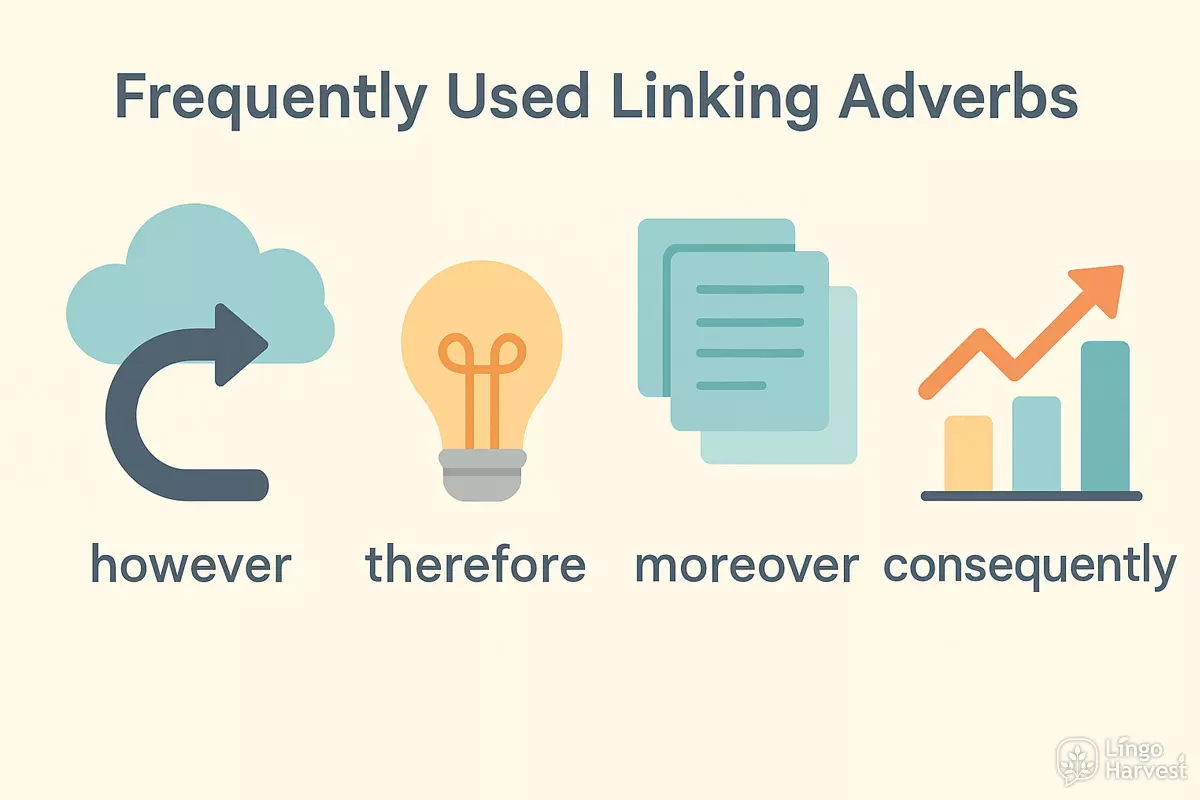
Some adverbs are especially popular for joining independent thoughts. Here are several that you’ll often see in formal and academic contexts:
- however
- therefore
- moreover
- consequently
- nevertheless
- furthermore
- meanwhile
- otherwise
- instead
- besides
- thus
- accordingly
- hence
- still
- likewise
- similarly
- nonetheless
- subsequently
Comparing Function and Meaning
Some of these connectors are used to show contrast, while others indicate results or add information. Here is a quick overview of several commonly confused conjunctive adverbs and their primary functions:
| Adverb | Typical Use |
|---|---|
| however | Introduces a contrast or exception to the previous statement. |
| therefore | Shows a logical result or consequence of the previous idea. |
| moreover | Adds an additional, often emphatic, point to reinforce the prior statement. |
| nevertheless | Signals an unexpected outcome or persistent condition despite the previous idea. |
| consequently | Indicates a direct effect or result stemming from the earlier clause. |
| otherwise | Suggests an alternative or what might happen if the previous statement isn’t true. |
Usage Patterns
When connecting independent clauses, writers often rely on conjunctive adverbs to create smooth transitions and clarify relationships. These linking words—such as "however," "therefore," or "meanwhile"—add nuance by signaling contrast, cause and effect, sequence, or emphasis. Their placement and punctuation are important for clarity and correctness.
Common Structures
Conjunctive adverbs typically appear after a semicolon and are followed by a comma when joining two independent clauses. For example: She wanted to go hiking; however, it began to rain. Alternatively, they can introduce a sentence or clause after a period for added emphasis.
- Semicolon + conjunctive adverb + comma: He studied hard; consequently, he passed the exam.
- Period + conjunctive adverb + comma (new sentence): He was late. Nevertheless, he finished the project on time.
- Mid-sentence (interrupting): The plan, moreover, seemed unrealistic.
Transitional Functions
These adverbs serve various roles based on the relationship between clauses. Here are several functions and examples:
- Contrast: however, nevertheless, on the other hand, still
- Cause and Effect: therefore, consequently, thus, hence
- Addition: moreover, furthermore, additionally, besides
- Time/Sequence: meanwhile, subsequently, then, afterward
- Comparison: similarly, likewise
- Emphasis: indeed, certainly
- Summary: finally, in conclusion
Comparison of Common Conjunctive Adverbs
| Conjunctive Adverb | Typical Purpose |
|---|---|
| however | showing contrast or exception |
| therefore | indicating result or consequence |
| moreover | adding information or reinforcing a point |
| meanwhile | expressing simultaneous events or time shifts |
| consequently | stating an effect or logical outcome |
| nevertheless | introducing a surprising or unexpected contrast |
| similarly | drawing parallels or comparisons |
| furthermore | emphasizing additional points |
Tips for Effective Use
Writers should avoid overusing conjunctive adverbs, as too many can disrupt flow. Choose the most precise word for the relationship intended, and remember to punctuate carefully. If in doubt, read the sentence aloud to check for natural transitions.
Sample Sentences
When learning how to join independent clauses smoothly, practical examples are essential. Conjunctive adverbs such as however, therefore, meanwhile, and consequently help clarify relationships between separate ideas. Below, you’ll find a range of illustrative sentences and a breakdown of common patterns for using these linking words correctly.
Common Patterns with Conjunctive Adverbs
Writers often use a semicolon before the connector and a comma after it. For instance:
- She wanted to go for a walk; however, it started to rain.
- The train was delayed; therefore, we arrived late.
- He studied very hard; consequently, he passed the exam.
- The team played well; nevertheless, they lost the match.
- We ran out of milk; thus, we couldn’t make pancakes.
- The instructions were unclear; as a result, mistakes were made.
- She loves classical music; meanwhile, her brother prefers rock.
- The weather was terrible; nonetheless, we continued our hike.
- He didn’t like the movie; instead, he watched a documentary.
- The food was spicy; similarly, the drinks were strong.
- He missed the meeting; accordingly, he was uninformed.
- The experiment failed; furthermore, it damaged the equipment.
- She always arrives early; likewise, her friend is never late.
- The car wouldn’t start; subsequently, we took the bus.
- She was tired; still, she finished her work.
- He apologized; even so, she remained upset.
Comparing Correct and Incorrect Usage
Understanding punctuation is key when connecting two independent ideas with these adverbs. Here’s a quick comparison:
| Correct Usage | Incorrect Usage |
|---|---|
| She forgot her umbrella; therefore, she got wet. | She forgot her umbrella, therefore she got wet. |
| He didn’t like the meal; instead, he ordered dessert. | He didn’t like the meal instead he ordered dessert. |
| It was late; nevertheless, they continued working. | It was late nevertheless, they continued working. |
| We needed more time; consequently, the deadline was extended. | We needed more time consequently the deadline was extended. |
Tips for Using Linking Words Effectively
- Use a semicolon before and a comma after the adverb when joining two sentences.
- Don’t use a comma alone to connect independent clauses with a conjunctive adverb.
- Choose a connector that matches the logical relationship between your ideas.
- Vary your linking words for clearer and more engaging writing.
These examples and tips should help clarify how to connect thoughts using conjunctive adverbs, making your writing more cohesive and precise.
Practice Items
Strengthen your grasp of how to connect independent clauses using transitional adverbs. These exercises include fill-in-the-blank tasks, sentence combining, and error correction. Review the sample sentences and try to apply the linking words in context.
Fill in the Blanks
Choose the most appropriate conjunctive adverb from the list to complete each sentence: however, therefore, meanwhile, consequently, instead, furthermore, nevertheless, otherwise, moreover, still, thus, besides, similarly, accordingly, finally, subsequently, conversely, indeed.
- It was raining; _______, we decided to stay indoors.
- She studied hard; _______, she passed the exam with flying colors.
- He didn’t like the movie; _______, he stayed until the end.
- The bakery was closed; _______, we bought bread at the supermarket.
- She arrived late; _______, the meeting had already started.
Show answers
- however
- therefore
- nevertheless
- instead
- consequently
Combine Independent Clauses
Join the following pairs of sentences using a suitable conjunctive adverb and correct punctuation. Try to vary the linking word each time.
- She forgot her umbrella. She got wet.
- Tom wanted to go hiking. It started snowing heavily.
- I finished my homework. I watched a movie.
- The team practiced every day. They lost the championship.
Show answers
- She forgot her umbrella; consequently, she got wet.
- Tom wanted to go hiking; however, it started snowing heavily.
- I finished my homework; then, I watched a movie.
- The team practiced every day; nevertheless, they lost the championship.
Spot the Error
Each sentence below contains a mistake in the use or punctuation of conjunctive adverbs. Identify and correct the errors.
- I was tired, however I finished the project.
- He is allergic to nuts; besides he always reads food labels.
- The train was delayed, therefore we arrived late.
- She wanted to rest; meanwhile, her friends went hiking.
Show answers
- I was tired; however, I finished the project.
- He is allergic to nuts; besides, he always reads food labels.
- The train was delayed; therefore, we arrived late.
- Correct as is.
Common Conjunctive Adverbs
Here’s a reference list of commonly used adverbs for connecting independent clauses. Notice their subtle differences in meaning and usage.
- however
- therefore
- meanwhile
- consequently
- instead
- furthermore
- nevertheless
- otherwise
- moreover
- still
- thus
- besides
- similarly
- accordingly
- finally
- subsequently
- conversely
- indeed
Comparison of Common Linking Words
| Conjunctive Adverb | Typical Use |
|---|---|
| however | Shows contrast or exception: "I wanted to go; however, it was too late." |
| therefore | Indicates result or consequence: "She was sick; therefore, she stayed home." |
| meanwhile | Expresses simultaneous actions or events: "He cooked dinner; meanwhile, she set the table." |
| nevertheless | Indicates contrast, similar to "however": "It was raining; nevertheless, we went outside." |
| furthermore | Adds information: "The exam was difficult; furthermore, it was very long." |
| consequently | Shows effect or outcome: "He missed the bus; consequently, he was late." |
| instead | Indicates alternative or replacement: "We didn't go out; instead, we watched a movie." |
| otherwise | Indicates negative consequence if a condition is not met: "Hurry up; otherwise, you’ll miss the train." |