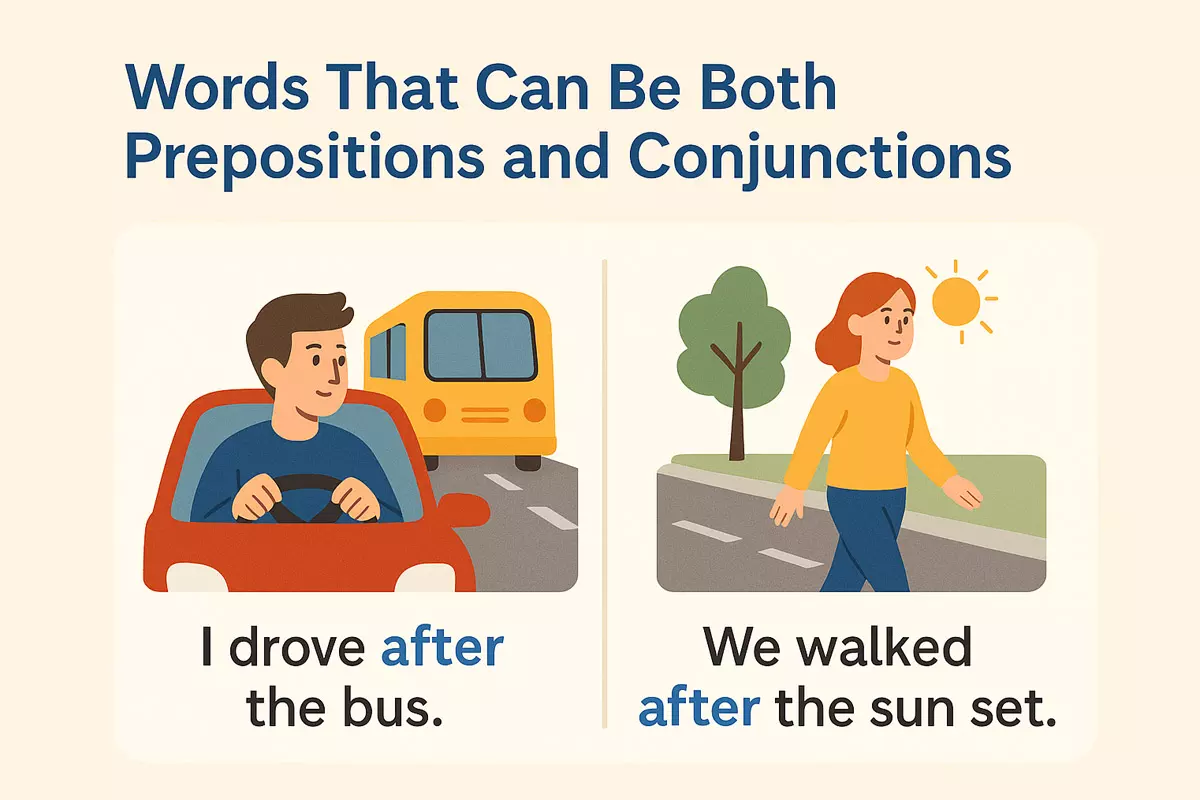
Words That Can Be Both Prepositions and Conjunctions

 Here we dual-function words in English, explaining how their meaning changes with position. It provides common examples, usage tips, frequent beginner errors, and a short practice section to reinforce understanding.
Some terms in English serve multiple functions by not only linking ideas but also indicating relationships between words within a sentence. These versatile words can act as connectors, joining clauses or sentences to create a smooth flow of thought, while at other times, they function as relational markers, clarifying the connection between different elements in a sentence. Understanding how these words shift roles depending on context helps improve both writing and comprehension skills, making communication clearer and more effective.
Dual-Function Words
Some English words serve two grammatical purposes: they act as connectors between sentences and also show relationships between other words or phrases. Recognizing these versatile terms can help with both understanding and constructing clearer sentences. Many of these terms are short, frequently used, and their role depends on context.
Common Examples and Their Uses
Here are several words that can function as both joining words and relational markers. In one context, they may link clauses; in another, they show direction, time, or reason.
- After
- Before
- Since
- Until
- While
- As
- Because
- For (in older or formal usage)
- Though
- Except
- Than
- Unless
- Where
- When
- Until
- Since
- So (in some informal structures)
How Context Changes Function
The grammatical role of these items depends on what follows them. If the word is followed by a noun or noun phrase, it typically shows a relationship (location, time, etc.). If followed by a clause (with subject and verb), it often links two ideas or actions.
| Word | As Preposition | As Conjunction |
|---|---|---|
| After | We went out after lunch. | After we finished, we left. |
| Since | I've lived here since 2010. | Since you asked, I'll explain. |
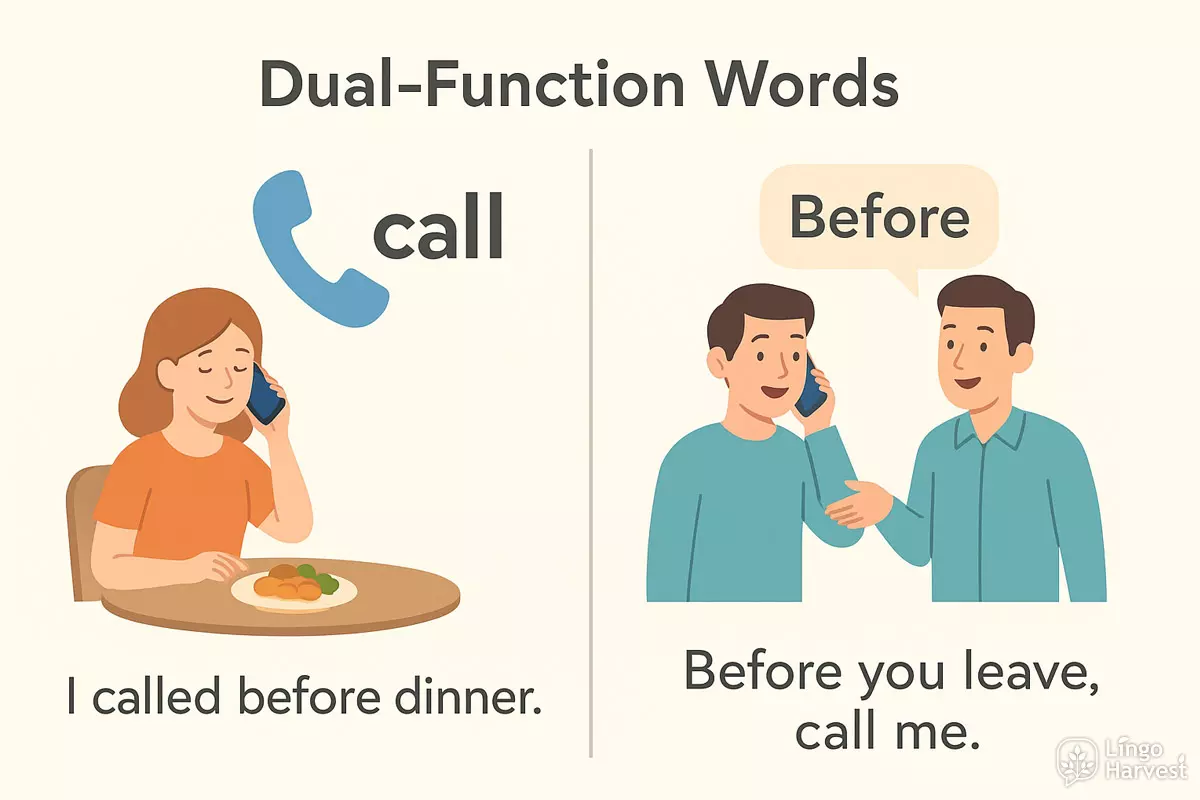
| Before | I called before dinner. | Before you leave, call me. |
| Until | Wait until Monday. | Stay here until I return. |
| While | He slept while on the bus. | While I was there, it rained. |
Tips for Spotting Dual Roles
- Check what comes after the word. A noun/noun phrase usually signals a preposition; a full clause suggests a connector.
- Some words, like since and while, often appear in both roles, so context is crucial.
- When in doubt, try substituting the word with another known preposition or conjunction to test the meaning.
These flexible vocabulary items add variety and precision to sentences. Understanding their shifting roles can make both writing and reading English more effective.
How Meaning Changes
Understanding how certain words function as both prepositions and conjunctions often comes down to their role in connecting ideas or phrases. When a word acts as a preposition, it typically links a noun or pronoun to another element in the sentence, focusing on relationships like time, place, or direction. As a conjunction, that same word joins entire clauses, showing logical connections such as cause, contrast, or condition.
Shifts in Function and Context
The difference is usually clear from the structure of the sentence. Prepositions are followed by nouns or noun phrases, while conjunctions introduce dependent clauses. For example, "after" in "after dinner" (preposition) versus "after we ate" (conjunction). This shift can subtly alter the meaning or emphasis in a sentence, even when the word itself does not change.
Common Words With Dual Roles
Here’s a list of words that often switch between these two grammatical functions, each with distinct usage patterns:
- After (after the meeting / after you arrive)
- Before (before sunrise / before you go)
- Since (since Monday / since you called)
- Until (until noon / until it stops raining)
- While (while the movie / while we waited)
- As (as a teacher / as you wish)
- Because of (because of traffic / because you were late)
- For (for an hour / for he was tired)
- Than (than me / than I expected)
- Since (since childhood / since it happened)
- Until (until tomorrow / until you finish)
- Except (except John / except it rains)
Comparing Use Cases
To make these differences clearer, here’s a structured comparison of how the same word can take on different grammatical roles, depending on its placement and what follows it:
| Word | As Preposition | As Conjunction |
|---|---|---|
| After | We met after lunch. | We met after we finished lunch. |
| Before | She left before sunrise. | She left before the sun rose. |
| Since | He’s lived here since 2010. | He’s lived here since he graduated. |
| Until | Wait until Friday. | Wait until the show ends. |
| While | We chatted while dinner. | We chatted while we ate dinner. |
Subtle Shifts in Meaning
Switching from preposition to conjunction can lead to nuanced differences in emphasis. For instance, "since last week" focuses on a time period, while "since you left" emphasizes the event or action. Recognizing these shifts helps avoid ambiguity and promotes clearer communication.
Summary
Overall, the transition between prepositional and conjunctive uses hinges on what the word connects—whether it’s a noun phrase or a whole clause. By paying attention to these patterns, you can better understand and use these flexible words in your writing and speech.
Position Rules
Understanding where to place words that serve as both prepositions and conjunctions is key for clear and correct sentences. Their role in a sentence often determines their placement and the structure they introduce. These words sometimes appear before nouns or pronouns, and other times they precede full clauses.
Typical Placement Patterns
When functioning as prepositions, these words usually come directly before a noun phrase or pronoun. As conjunctions, however, they introduce a subordinate clause—often linking two ideas or actions. Recognizing their function in context helps avoid ambiguity.
- Before noun/pronoun: “After the meeting, we left.” (preposition)
- Before a clause: “After we finished, we left.” (conjunction)
- At the start of a sentence: “Since Monday, it’s been quiet.” or “Since you left, it’s been quiet.”
- Mid-sentence: “She stayed until midnight.” or “She stayed until everyone had gone.”
Common Words Used in Both Roles
Here are some of the most frequent words that can act as either prepositions or conjunctions, with brief notes on their placement:
- After
- Before
- Since
- Until
- While
- As
- Because of (preposition), Because (conjunction)
- Though
- Except
- For
- Like
- Than
- Unless
- Without
- Once
- Whereas
- When
- Although
- Even though
- Since
How Function Affects Position
The grammatical function—preposition or conjunction—decides whether these words are followed by a noun phrase or a subject + verb. For instance, “before lunch” (preposition) versus “before you arrive” (conjunction). The meaning can shift subtly depending on this placement, so it's important to pay attention to what follows these flexible words.
| Word | Preposition Example | Conjunction Example |
|---|---|---|
| After | We met after lunch. | We met after we finished work. |
| Since | I’ve lived here since 2020. | I’ve lived here since you moved out. |
| Until | Wait until midnight. | Wait until the guests arrive. |
| Before | Wash your hands before dinner. | Wash your hands before you eat. |
| While | Not used as a preposition. | I read while he cooked. |
| As | He works as a teacher. | He sang as he worked. |
Tips for Correct Usage
- Check what follows: a noun phrase signals a preposition; a subject + verb signals a conjunction.
- Do not use a preposition before a full clause (“after that we left” ❌).
- Use these words at the beginning or middle of a sentence, depending on emphasis and flow.
- Watch for meaning changes: “since” can indicate time or cause, depending on context.
Mastering the placement of these versatile words helps ensure clarity and natural flow in both writing and speech.
Common Examples
Understanding which words serve as both prepositions and conjunctions can clarify many confusing grammar questions. Several English terms change their function depending on the context of the sentence. Below, you’ll find a breakdown of some frequently encountered words that play this double role, along with explanations and sample usages.
Words Often Used as Both Prepositions and Conjunctions
- After – As a preposition: “We went for coffee after the meeting.” As a conjunction: “We went for coffee after the meeting ended.”
- Before – Preposition: “Finish your homework before dinner.” Conjunction: “Finish your homework before you eat.”
- Since – Preposition: “He’s lived here since 2010.” Conjunction: “He’s lived here since he moved to the city.”
- Until – Preposition: “Wait until noon.” Conjunction: “Wait until the bell rings.”
- While – Preposition (less common, in older or formal English): “While the storm, we stayed inside.” Conjunction: “We stayed inside while it rained.”
- As – Preposition: “As a teacher, she is patient.” Conjunction: “As she was tired, she left early.”
- Than – Preposition: “He is taller than me.” Conjunction: “She is smarter than I am.”
- Because of – As a prepositional phrase: “The game was canceled because of rain.” (Compare with the conjunction “because”: “The game was canceled because it rained.”)
- Except – Preposition: “Everyone except John was there.” Conjunction: “Everyone was there except John didn’t come.” (Note: the conjunction use is informal or dialectal.)
- But – Preposition (rare, mostly in archaic or poetic English): “No one but her knew the answer.” Conjunction: “She wanted to go, but she was tired.”
- For – Preposition: “This gift is for you.” Conjunction (formal or literary): “He was sad, for he had lost his friend.”
- Like – Preposition: “She sings like a professional.” Conjunction (informal, especially in American English): “Nobody understands me like you do.”
Usage Comparison
Below is a structured look at how some of these terms function in both roles, with examples for clarity.
| Word | As a Preposition | As a Conjunction |
|---|---|---|
| After | She left after lunch. | She left after the movie ended. |
| Since | We’ve been friends since school. | We’ve been friends since we met. |
| Before | Call me before noon. | Call me before you leave. |
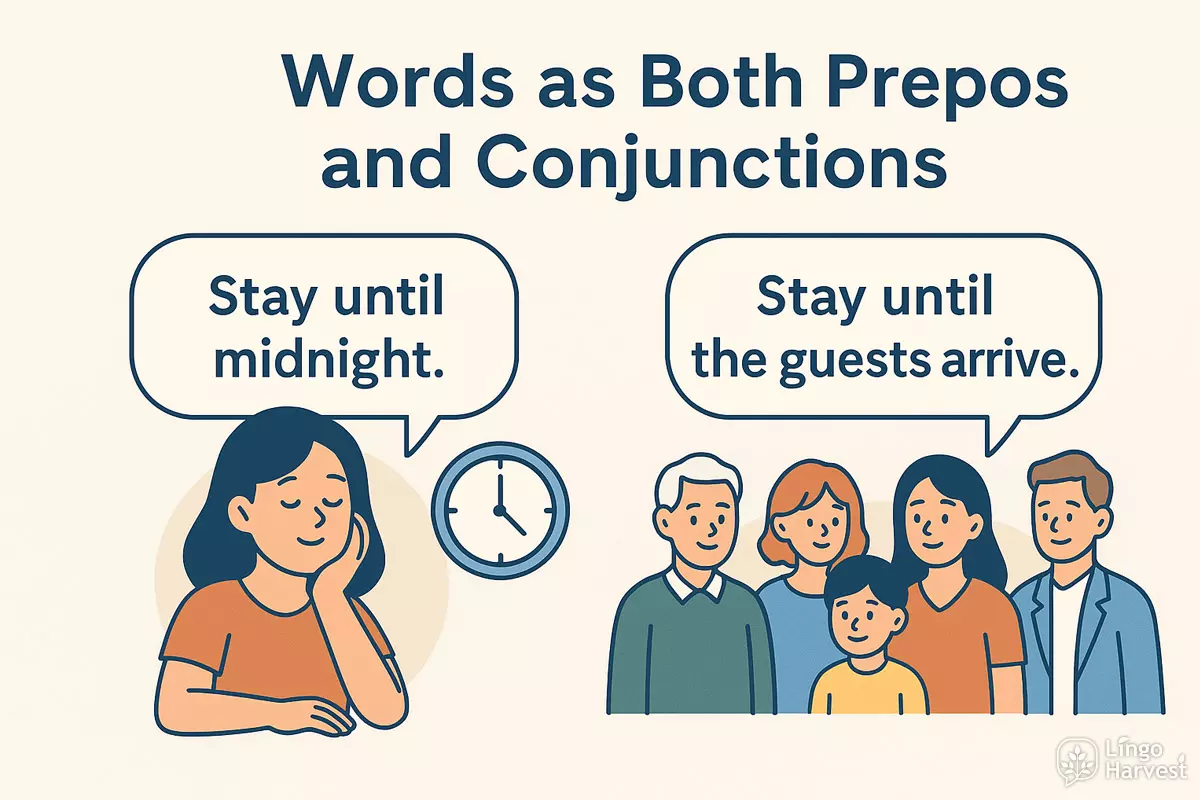
| Until | Stay until midnight. | Stay until the guests arrive. |
| For | He waited for an hour. | He waited, for the door was locked. |
| Than | She’s taller than me. | She’s taller than I am. |
Notes on Usage
Some of these words, such as “while” and “but,” are far more common as conjunctions, while their prepositional uses may sound formal, old-fashioned, or regional. Understanding the context and the structure of the sentence will help you determine the correct function of these versatile words. This flexibility is one of the reasons English can be both challenging and expressive.
Usage Tips
When dealing with words that serve as both linking words and relational markers in sentences, context is everything. These terms can often shift meaning and function depending on where they appear, so careful attention to sentence structure is crucial.
Identify Function by Position
The easiest way to determine if a word is acting as a connector or as a relational indicator is to check its position and the elements it connects:
- If it introduces a clause (a group of words with a subject and verb), it's likely serving a joining role.
- If it links a noun or pronoun to another word, it’s probably a relational marker.
Common Words with Dual Roles
Many familiar English words can act in either capacity. Some of the most frequent include:
- After
- Before
- Since
- Until
- While
- As
- Because
- Though
- Than
- When
- Where
- If
- Though
- Once
- Unless
- Even though
- Although
- So that
Quick Comparison of Use
Below is a structured look at how a few of these words function in different contexts:
| Word | As Preposition | As Conjunction |
|---|---|---|
| After | We went home after dinner. | We went home after we finished dinner. |
| Before | She called before noon. | She called before the meeting started. |
| Since | He has lived here since 2010. | He has lived here since he graduated. |
| Until | Wait until tomorrow. | Wait until the rain stops. |
| While | He read while on the train. | He read while she slept. |
Practical Tips
- Check for subjects and verbs after the word: if present, it’s likely acting as a clause connector.
- Practice rewriting sentences: swap phrases to see if the word still connects two clauses or just links a noun to another word.
- Use context clues: time, place, or reason indicators often hint at the word’s function.
- Remember: not all words that can be both will always act as both in every sentence.
Understanding how these flexible words operate will help you craft clearer, more precise sentences and avoid ambiguity in your writing.
Beginner Errors
Many English learners confuse words that function as both prepositions and conjunctions, often misusing them in sentences. This usually happens because these words can look and sound similar in both roles, but their grammatical requirements are different. For example, after a preposition, you must use a noun or pronoun, while a conjunction typically connects two clauses. Not recognizing this distinction can result in awkward or incorrect sentences.
Common Mistakes with Dual-Role Words
Some words—like "before," "after," "since," and "until"—are particularly tricky because they can join ideas as conjunctions or show relationships as prepositions. Mixing up their usage is a frequent source of error. Here are typical problems:
- Using a full clause after a preposition (“I went home after I finished work.” ❌ should be: “I went home after work.”)
- Placing only a noun after a conjunction (“He stayed since yesterday.” ❌ should be: “He stayed since the party ended.”)
- Forgetting to check what follows the word (noun or clause)
- Assuming “because” is a preposition (it’s only a conjunction)
- Writing double connectors (“After when he arrived…” ❌ should be: “After he arrived…” or “When he arrived…”)
- Using “until” with just a noun when a clause is needed (“Wait until the bus.” ❌ should be: “Wait until the bus arrives.”)
- Confusing “since” as a time preposition vs a reason conjunction
- Placing a pronoun after a conjunction without a verb (“Before him left.” ❌ should be: “Before he left.”)
- Mixing up “while” (never a preposition) with “during” (never a conjunction)
- Using "as" incorrectly in time expressions (“As the meeting, we talked.” ❌ should be: “During the meeting, we talked.” or “As we met, we talked.”)
Spotting the Difference: Structure and Function
Understanding whether a word is acting as a preposition or a conjunction comes down to what follows it. Here’s a quick reference:
| Word | Preposition Example | Conjunction Example |
|---|---|---|
| After | after lunch | after I finished lunch |
| Before | before the meeting | before we met |
| Since | since Monday | since I arrived |
| Until | until midnight | until the show ends |
| As | (rare as preposition: as a teacher) | as I was leaving |
Avoiding Pitfalls
To prevent these slip-ups, always check what immediately follows the word: is it a noun or pronoun (use the prepositional form), or is it a subject and verb (use the conjunction form)? Reading your sentences aloud and comparing them to native usage can also help you internalize the correct patterns. With practice, you’ll quickly recognize which construction fits the context and avoid the most common traps.
Short Practice
To solidify your understanding of words that serve as both connectors and relational terms, let’s try identifying their function in context. Below are several sentences; your task is to decide if the highlighted word is acting as a preposition or a conjunction.
Identify the Function
- She left before the meeting ended.
- After the rain stopped, we went outside.
- I'll call you until I get an answer.
- We waited until midnight.
- You can stay since you finished your work.
- He’s been tired since last week.
- I brought an umbrella because it looked like rain.
- They arrived before noon.
- The party continued after everyone left.
- While you were sleeping, I finished the project.
Show answers
- Preposition
- Conjunction
- Conjunction
- Preposition
- Conjunction
- Preposition
- Conjunction
- Preposition
- Preposition
- Conjunction
Quick Reference: Dual-Use Words
Here’s a handy list of words that often appear both as prepositions and conjunctions. Try making your own sentences with each, switching up their roles.
- After
- Before
- Since
- Until
- While
- As
- Because of / Because
- Though
- Unless
- When
- Once
- If
Mini Challenge: Transform the Sentence
Change the function of the word in parentheses in each sentence. Rewrite the sentence so the word acts as the other part of speech (from preposition to conjunction, or vice versa).
- I couldn’t sleep after midnight. (preposition)
- We’ll leave before the sun sets. (conjunction)
- They have been friends since childhood. (preposition)
- Until you finish, you can’t go out. (conjunction)
Show answers
- I couldn’t sleep after the party ended. (conjunction)
- We’ll leave before dinner. (preposition)
- They have been friends since they met at school. (conjunction)
- Until tomorrow, you have to stay inside. (preposition)
Practicing with real sentences helps clarify how context determines whether these flexible words are linking phrases or showing relationships. Continue experimenting with your own examples to gain confidence.