Types of Determiners: Articles, Quantifiers, Demonstratives

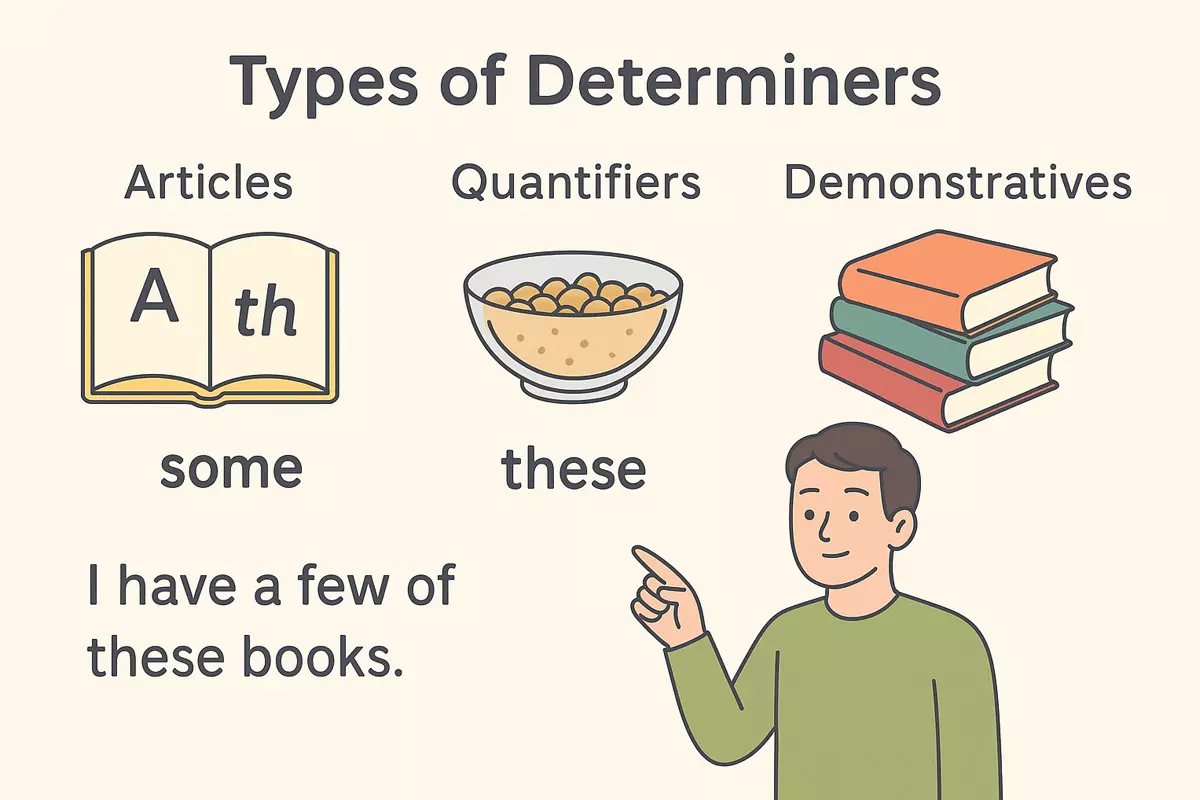 Here we article, quantifier, and demonstrative determiners, explains their meaning differences and placement rules, provides example phrases, and offers a mini practice section to reinforce understanding.
Have you ever considered how small words can significantly influence the meaning of your sentences? Words such as articles, demonstratives, and quantifiers act as essential tools that help specify and clarify what you intend to communicate. By choosing the right ones, you make your writing and speech more accurate and easier for others to understand. These seemingly minor components are fundamental in shaping effective communication, ensuring that your message is both clear and precise.
Article Determiners
Articles are a core part of English grammar, serving as small but essential words placed before nouns to clarify meaning. There are two main types: definite and indefinite, each with unique uses that shape how we understand a sentence. Understanding when and why to use "a," "an," or "the" helps speakers convey specificity, generality, or uniqueness.
Types of Articles
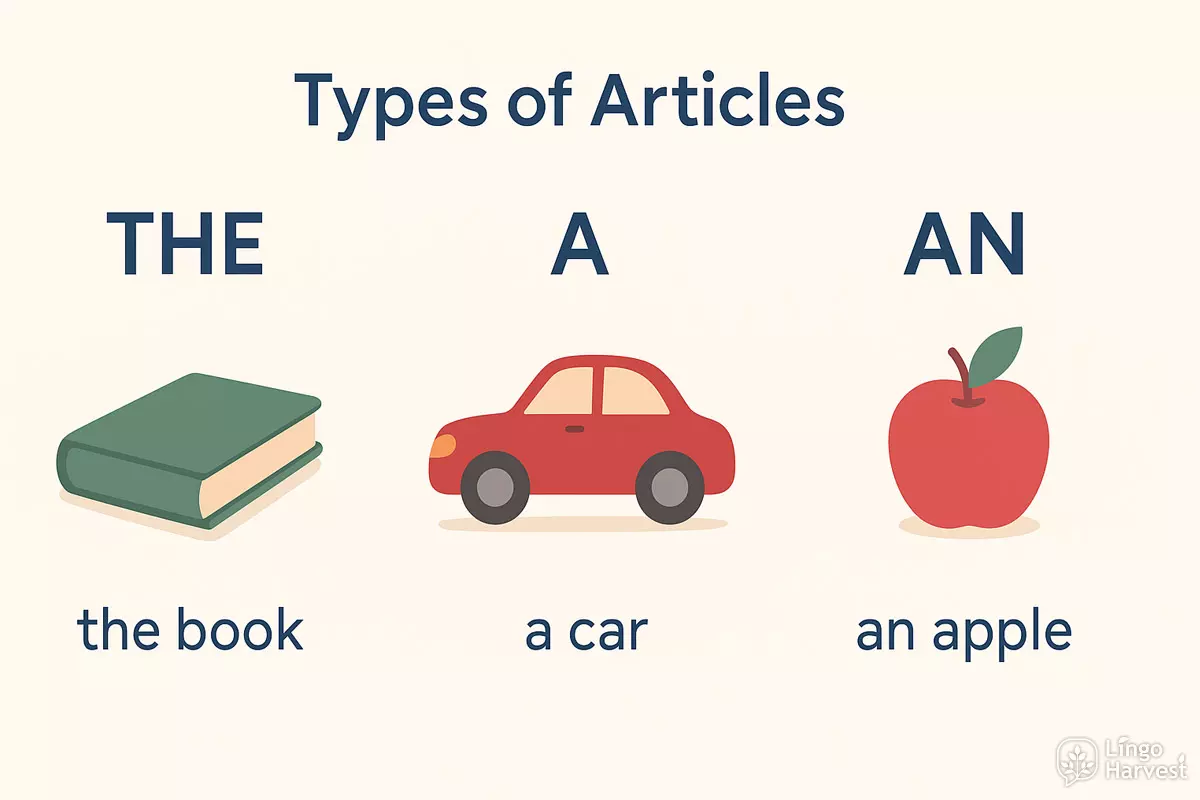
English uses three primary articles:
- The – known as the definite article, used for specific or previously mentioned items.
- A – an indefinite article, used before words beginning with a consonant sound.
- An – another indefinite article, used before words starting with a vowel sound.
When to Use Each Article
The choice between these forms depends on context and pronunciation:
- Use the when both the speaker and listener know which item is meant: Pass me the salt.
- Use a before singular, countable nouns starting with a consonant sound: a dog, a university.
- Use an before singular, countable nouns starting with a vowel sound: an apple, an hour.
Key Patterns and Examples
Here are some common situations and examples with articles:
- I saw a movie last night. (any movie, not specified)
- The movie was exciting. (specific movie already mentioned)
- She wants an orange. (any orange, not a specific one)
- He is an honest man. ("honest" begins with a vowel sound)
- They visited a university. ("university" starts with a "juː" sound, which is a consonant sound)
- We met a European artist. ("European" starts with a "juː" sound)
- The sun rises in the east. (unique item – only one sun)
- She is a doctor. (profession, non-specific)
- He became the president. (unique position)
- I need a pen and an eraser.
- The dogs in the yard are barking. (specific group)
- A child needs care. (any child, general statement)
- The children in this class are smart. (specific children)
- Give me an umbrella. (any umbrella)
- The umbrella by the door is mine. (specific umbrella)
Comparison of Article Usage
Below is a structured comparison of how the definite and indefinite articles function in context:
| Form | When to Use | Example |
|---|---|---|
| a | Before words starting with a consonant sound; singular, countable nouns; non-specific | a car, a book, a university |
| an | Before words starting with a vowel sound; singular, countable nouns; non-specific | an apple, an hour, an umbrella |
| the | Before specific or previously mentioned items; unique nouns; groups already known | the sun, the answer, the children |
Common Mistakes
Confusion often arises with words beginning with silent letters, acronyms, or unique sounds. For example, "an honor" (silent 'h'), "a university" ('u' as 'juː'), or "an FBI agent" (pronounced 'eff'). Always focus on the initial sound, not just the letter. Mastering articles provides clarity and precision in communication, and their correct use is a hallmark of natural-sounding English.
Quantifier Determiners
Words that indicate quantity help specify how much or how many of something is being discussed. These expressions are essential for clarifying information in both spoken and written English. They answer questions like "How much?" or "How many?" and can refer to countable or uncountable nouns.
Common Types and Usage
Quantifying words fall into several categories based on whether they are used with countable nouns (e.g., books, apples), uncountable nouns (e.g., water, information), or both. Some are used in positive statements, while others fit better in negatives or questions.
- Some — used in positive sentences with both countable and uncountable nouns (e.g., some bread, some ideas).
- Any — often found in negative sentences or questions (e.g., any milk, any suggestions?).
- Much — mostly with uncountable nouns (e.g., much time, much effort).
- Many — used with countable nouns (e.g., many cars, many options).
- Few — indicates a small number of countable items (e.g., few friends).
- Little — refers to a small amount of something uncountable (e.g., little patience).
- Several — a number more than a few, but not many (e.g., several questions).
- A lot of / Lots of — informal, used with both noun types (e.g., a lot of money, lots of books).
- Plenty of — suggests more than enough (e.g., plenty of food).
- Each / Every — refer to individuals in a group (e.g., each student, every day).
- No — for zero quantity (e.g., no time, no apples).
- All — total quantity or number (e.g., all people, all information).
- Most — the majority (e.g., most students, most advice).
- Enough — the necessary amount (e.g., enough chairs, enough water).
Patterns and Placement
These determiners almost always come before the noun or before adjectives describing the noun:
- She has many interesting ideas.
- We need some fresh bread.
- Is there any information available?
Countable vs. Uncountable: Quick Comparison
| With Countable Nouns | With Uncountable Nouns |
|---|---|
| many, few, several, a few, each, every, no, some, any, a lot of, most, all, plenty of, enough | much, little, a little, some, any, a lot of, most, all, plenty of, enough, no |
| Example: many books, few options, several chairs | Example: much water, little time, a lot of sugar |
| ✅ Correct: few apples ❌ Incorrect: few money |
✅ Correct: little patience ❌ Incorrect: little chairs |
Tips for Choosing the Right Form
- Use many, few, several with things you can count. - Use much, little with things you cannot count. - Some and any are flexible and work with both types. - Double-check the noun's countability if unsure. Understanding how to select the proper word for quantity can help you express yourself more precisely and avoid common mistakes.
Demonstrative Determiners
Words like “this,” “that,” “these,” and “those” signal exactly which person or thing is being referred to, often pointing to something nearby or far away in space or time. These terms help clarify whether you mean one or more items, and whether they are close or distant from the speaker. In English, the choice depends on both number (singular or plural) and proximity (near or far).
Forms and Usage
The demonstratives in English change form depending on whether they describe a singular or plural noun, and whether the object is near or far. Here’s how they break down:
- This: singular, something near the speaker (e.g., this book).
- That: singular, something farther away (e.g., that chair).
- These: plural, things near the speaker (e.g., these apples).
- Those: plural, things farther away (e.g., those cars).
Examples in Sentences
Using demonstrative words sets a clear reference. Consider these examples:
- This phone is new.
- That mountain looks tall.
- These cookies are delicious.
- Those shoes belong to Sarah.
- I prefer this option over that one.
- Could you pass me those papers?
- These questions are easy.
- This is my favorite mug.
- That was a great movie.
- Those dogs are noisy.
- Do you need these keys?
- That answer is correct.
- These instructions are confusing.
Comparison Table
| Form | Usage Example | Number | Proximity |
|---|---|---|---|
| This | This bag is heavy. | Singular | Near |
| That | That tree is old. | Singular | Far |
| These | These pencils are sharp. | Plural | Near |
| Those | Those buildings are tall. | Plural | Far |
Common Mistakes
It’s easy to mix up which demonstrative to use, especially for plural or distant objects. For example, saying “this apples” is incorrect; “these apples” is the right choice. Always match the word to both the number and the distance of what you’re talking about.
Quick Reference
- Use “this” and “these” for things close to you.
- Use “that” and “those” for things farther away.
- Remember: “this/that” for singular, “these/those” for plural.
Meaning Differences
Understanding how articles, quantifiers, and demonstratives shape a sentence’s message is essential for clear English communication. Each group influences the reference, amount, or specificity of the noun it modifies, creating subtle but important contrasts in meaning.
Articles: Definite vs. Indefinite
Articles signal whether we’re talking about something specific or something more general. For example:
- The cat (refers to a particular, known cat)
- A cat (any single cat, not specified)
- An apple (any apple, not a specific one)
Using “the” narrows the reference, while “a/an” keeps it open.
Quantifiers: Expressing Quantity or Amount
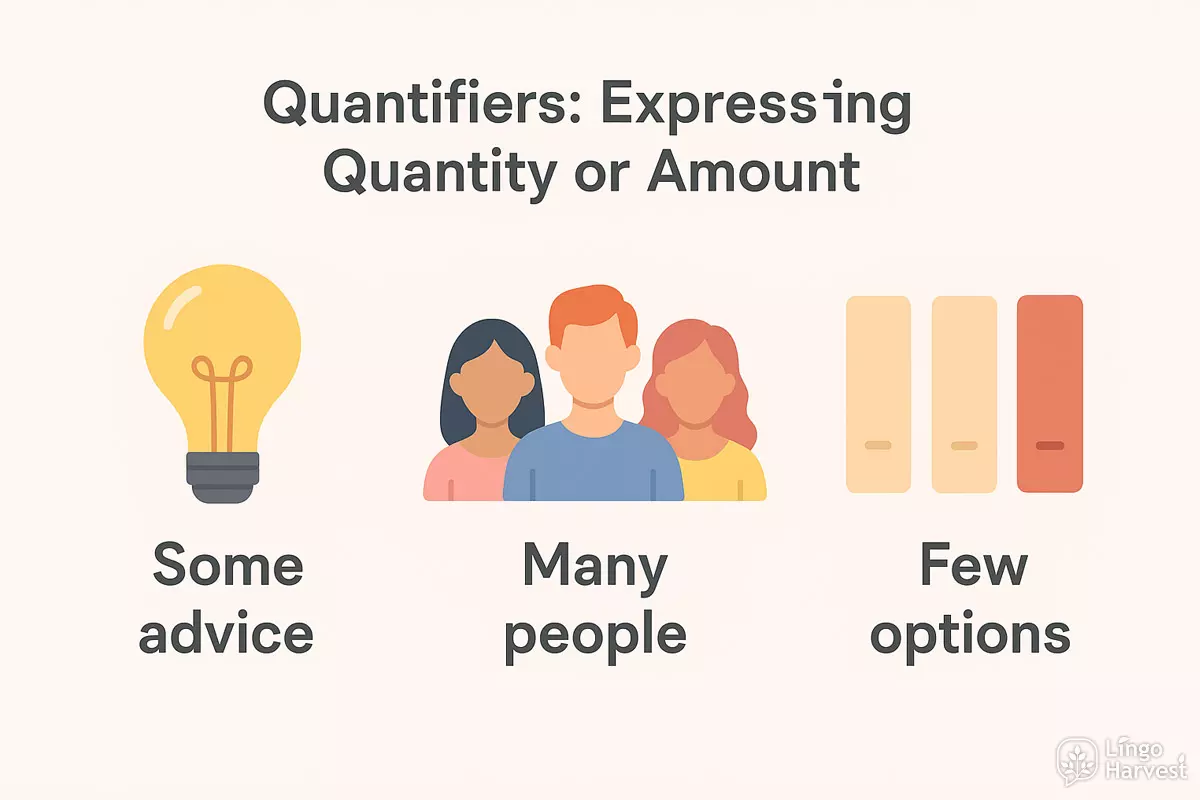
Quantifiers provide information about how much or how many of something there is, but they also give clues about the speaker’s attitude or the context. For instance:
- Some advice (an unspecified amount, but more than none)
- Many people (a large number of people)
- Few options (not many, possibly not enough)
- Much time (a large amount of time, with uncountable nouns)
- Every student (all students, considered individually)
Choices like “few” versus “a few” or “little” versus “a little” can even change the overall positivity or negativity of the statement.
Demonstratives: Pointing Out Specifics
Demonstratives such as “this,” “that,” “these,” and “those” make the reference even more precise by indicating location (near or far) and number (singular or plural). For example:
- This book (one book, close to the speaker)
- Those cars (multiple cars, far from the speaker)
They help the listener know exactly which thing or things are meant.
Comparing the Main Determiner Types
| Type | Function & Example | Effect on Meaning |
|---|---|---|
| Article | The dog barked. | Refers to a specific, previously known dog. |
| Quantifier | Many dogs barked. | Indicates a large, but indefinite, number of dogs. |
| Demonstrative | That dog barked. | Points out one particular dog, often with context or location. |
Quick Reference: Typical Uses
- Use articles to define or generalize (the, a, an).
- Apply quantifiers to describe amount or quantity (some, several, all, each).
- Choose demonstratives to specify exact items (this, that, these, those).
In summary, selecting the right determiner changes not just the grammar, but also the nuance and clarity of your message.
Placement Rules
Understanding where to position determiners in English sentences is essential for clarity and correctness. Determiners—such as articles, quantifiers, and demonstratives—almost always come before the noun they modify, but their order can shift depending on the combination used and the presence of adjectives or other modifiers.
The Usual Order of Determiners
When more than one determiner appears with a noun, they typically follow a set sequence. This order helps prevent confusion and maintains natural phrasing.
- All (e.g., all, both, half)
- Determiner (e.g., articles: a, an, the)
- Quantifier (e.g., some, many, few, several)
- Demonstrative (e.g., this, that, these, those)
- Possessive (e.g., my, your, their)
- Adjective(s) (e.g., red, large, interesting)
- Noun (e.g., book, apples, house)
For example: All these beautiful old houses
Examples of Determiner Placement
To help visualize how different types of determiners fit together, here are examples with various combinations:
- This book (demonstrative + noun)
- My two cats (possessive + quantifier + noun)
- Some delicious cookies (quantifier + adjective + noun)
- The first three chapters (article + ordinal + quantifier + noun)
- Those red shoes (demonstrative + adjective + noun)
- Every single day (quantifier + adjective + noun)
- Her many friends (possessive + quantifier + noun)
- All my old books (all + possessive + adjective + noun)
- Each student (quantifier + noun)
- Some of these apples (quantifier + demonstrative + noun)
Restrictions and Common Mistakes
Some determiners do not combine well, and certain pairings are incorrect. For instance, you cannot use two articles together, or combine a demonstrative with another article.
- ❌ the my book
- ❌ these the apples
- ✅ my book
- ✅ these apples
Comparison of Determiner Placement
| Pattern | Example |
|---|---|
| Article + Adjective + Noun | the blue car |
| Quantifier + Noun | many students |
| Demonstrative + Noun | this idea |
| Possessive + Noun | her phone |
| Quantifier + Demonstrative + Noun | some of those books |
| All + Possessive + Noun | all my friends |
In summary, the position of determiners is generally fixed before the noun, and understanding their correct sequence helps avoid awkward or incorrect constructions. Always check for compatibility, and remember that not all determiners can be used together.
Examples in Phrases
Understanding how determiners work in real language helps clarify their function. Below, you’ll find a range of phrase samples using articles, quantifiers, and demonstratives. These examples show how these words shape meaning and specify nouns in everyday English.
Articles in Common Expressions
- A dog barked loudly.
- An apple a day keeps the doctor away.
- The sun rises in the east.
- He found an old coin on the street.
- She adopted a kitten.
Quantifiers in Use
- Some students are absent today.
- Many people enjoy music.
- Few mistakes were found.
- All children must wear helmets.
- Each ticket costs five dollars.
- Several options are available.
- No answers were correct.
- Much time was wasted.
Demonstratives in Context
- This book is interesting.
- That car is expensive.
- These shoes are comfortable.
- Those houses look old.
Comparing Determiners in Phrases
| Determiner | Sample Phrase |
|---|---|
| Article (the) | The cat sat on the mat. |
| Quantifier (some) | Some water spilled on the floor. |
| Demonstrative (these) | These cookies are delicious. |
| Quantifier (few) | Few people know the answer. |
| Demonstrative (that) | That idea sounds promising. |
| Article (an) | An umbrella is useful in the rain. |
Each group of determiners brings its own nuance to phrases. Articles help identify or specify, quantifiers express amount or number, and demonstratives point out particular items. Observing these patterns in context can make it much easier to use determiners naturally in your own sentences.
Mini Practice
Try these exercises to check your understanding of articles, quantifiers, and demonstratives in real sentences. Focus on choosing the most natural option for each blank. Some sentences may have more than one possible correct answer, but try to pick the best fit.
Fill in the Blank: Choose the Correct Determiner
- ______ apple a day keeps the doctor away.
- Could you pass me ______ salt, please?
- There are ______ students in the library today.
- ______ books on that shelf are mine.
- Do you have ______ questions about the lesson?
- ______ of these pens belongs to you?
- We need ______ more chairs for the meeting.
- ______ umbrella over there is broken.
- She has visited ______ countries in Europe.
- ______ people like spicy food.
Show answers
- An
- the
- some / many / a few
- Those
- any
- Which
- a few / some
- That
- several / many
- Most / Many / Some
Identify the Type
For each underlined word, decide if it's an article, quantifier, or demonstrative:
- These cookies are delicious.
- I’d like some water, please.
- Can you open the window?
- Many people enjoy hiking.
- That dog is very friendly.
Show answers
- Demonstrative
- Quantifier
- Article
- Quantifier
- Demonstrative
Common Determiners Reference
Here's a quick overview of some typical words in each category to help you review:
| Articles | Quantifiers | Demonstratives |
|---|---|---|
| a, an, the | some, any, much | this, that |
| many, few, several | these, those | |
| all, most, each | ||
| every, no, both |
When you practice, pay attention to how these words change the meaning of a sentence. Notice when to use each group based on what you want to express: quantity, specificity, or pointing out something directly.