What Are Articles? Core Theory

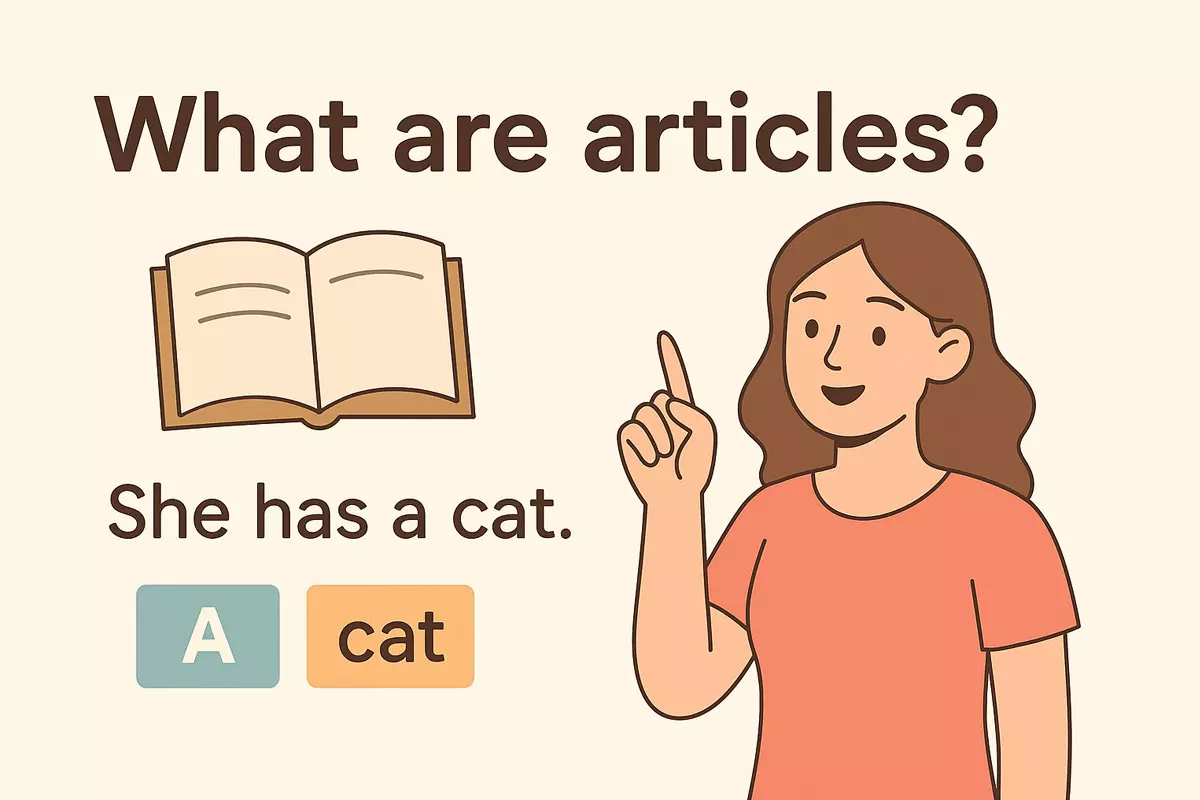 This article explains what articles do, the different types, how they relate to meaning and reference, and where to place them. It covers usage with count and non-count nouns, common mistakes, and includes short practice exercises.
Articles like "a," "an," and "the" may seem insignificant, but they play a crucial role in English by specifying and clarifying nouns. Using these words correctly helps listeners and readers understand whether we are referring to something specific or something more general. Mastering the use of articles is essential for effective communication, as it allows us to convey our intended meaning clearly and avoid confusion in both writing and speech.
What Articles Do
Articles play a subtle but essential role in language. They help specify whether something is familiar or new to the listener, and clarify which particular thing or things you mean. By placing an article before a noun, you give readers or listeners clues about context, quantity, and uniqueness.
Clarifying Specificity and Generality
Articles can signal if you’re talking about a specific object or about things more generally. For example, saying “a cat” introduces any cat, not a particular one, while “the cat” refers to a specific cat already known in the conversation.
Signaling Definite and Indefinite Reference
The choice of article can indicate whether you mean something definite (clear and known) or indefinite (not previously identified). This distinction helps avoid confusion and guides the listener to the right interpretation.
- Definite article (the): points to a particular noun understood by both speaker and listener.
- Indefinite articles (a, an): introduce something not previously mentioned or not unique.
- Zero article: sometimes, no article is used, especially with plurals or abstract nouns, to speak in general terms.
Examples of How Articles Affect Meaning
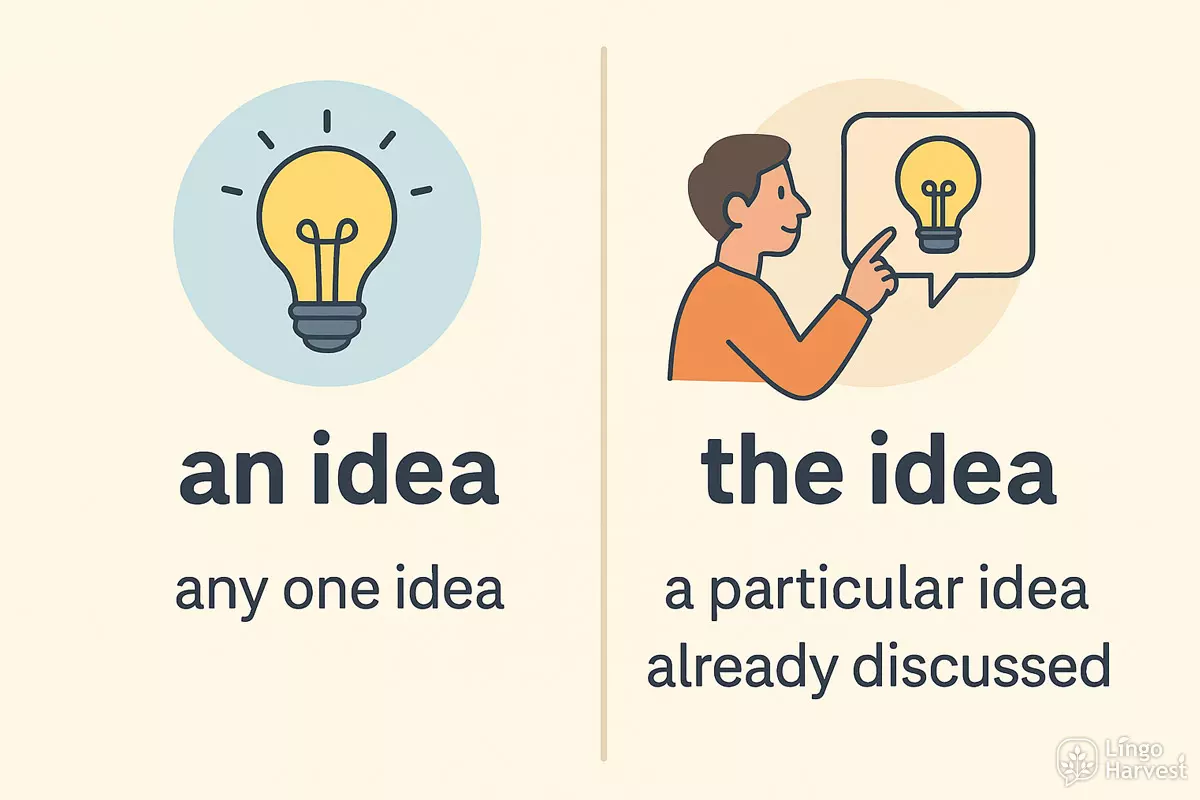
Choosing different articles can completely change the nuance of a sentence. Consider these variations:
- a dog → any dog, not specific
- the dog → a particular dog, already known
- dogs → dogs in general, with no article at all
- an apple → any single apple
- the apples → specific apples previously mentioned
- music → in general, with no article
- the music → a certain piece or type of music
- an idea → any one idea
- the idea → a particular idea already discussed
- a car → any car
- the car → a specific car both know
Comparing Article Use
| Form | Typical Function |
|---|---|
| the | Refers to something specific or previously mentioned. |
| a / an | Introduces something new or not specified. |
| (no article) | Used for generalizations, plurals, or certain abstract nouns. |
Articles act as signposts in communication, helping listeners and readers follow who or what you’re talking about. They set the scope for nouns and help avoid ambiguity, making sentences more precise and meaningful.
Types of Articles
When discussing articles in grammar, we typically refer to the small words that come before nouns to clarify meaning. In English, these words help us specify whether we are talking about something specific or something more general. Understanding the difference between the main varieties is key to using them correctly.
Definite and Indefinite Forms
English uses two main categories: the definite article and the indefinite articles. The definite article, “the,” points to a particular item or group that both the speaker and listener recognize. Indefinite articles, “a” and “an,” introduce something non-specific or mentioned for the first time.
- Definite: “the”
Example: The book on the table is mine. - Indefinite: “a” (before consonant sounds), “an” (before vowel sounds)
Examples: A cat sat outside. An apple was on the plate.
Usage Patterns and Special Cases
Articles aren’t always used the same way across all nouns. Sometimes, certain nouns don’t require any article at all, especially when talking about things in a general sense or when using proper nouns.
- No article: I like music. She went to school.
- Zero article with proper nouns: London is a big city.
- Plural and uncountable nouns: Books are useful. Water is essential.
Comparison Table: Key Article Types
| Article Type | Example Use | Function | Notes |
|---|---|---|---|
| Definite (“the”) | The sun is bright. | Specifies a particular noun known to both speaker and listener | Used with singular, plural, and uncountable nouns |
| Indefinite (“a”, “an”) | An umbrella is useful. | Indicates a non-specific, singular noun | “A” for consonant sounds, “an” for vowel sounds |
| Zero Article | Children play outside. | No article used; refers to things in general | Common with plural or uncountable nouns |
| Partitive (rare in English) | Some water is cold. | Indicates a part of a whole (some, any) | Not always classified as articles in English grammar |
Additional Examples
Knowing when to use or omit these small words can be tricky. Here are more scenarios:
- “The” for unique objects: The moon is full tonight.
- “A” before jobs or roles: She is a doctor.
- No article with meals: We had lunch at noon.
- “An” before an adjective: He is an excellent teacher.
- No article with languages: She speaks Spanish.
- “The” with superlatives: It’s the best solution.
- “The” with oceans and rivers: The Amazon is long.
- No article for most street names: She lives on Baker Street.
- “A” with singular countable nouns: I saw a bird.
- Zero article for sports: He plays football.
Mastering these distinctions helps make communication clearer and more natural, whether you’re writing, reading, or speaking English.
Meaning and Reference
Articles in English—such as "a," "an," and "the"—serve to clarify how nouns connect to the world around us. They help distinguish whether we’re talking about something specific or something more general. This distinction is crucial for clear communication, especially when it comes to new versus known information, or whether we expect our listener to identify the noun in question.
How Articles Signal Specificity
Definite and indefinite articles act as signals for how much the speaker assumes the listener already knows. "The" points to a particular item, often one already mentioned or obvious in the context. "A" or "an" indicates any member of a group, not a specific one. Zero article (no article) can also signal general ideas or categories.
- The cat sat on the mat. (a particular cat, likely known to both speaker and listener)
- A cat sat on the mat. (any cat, not specified which one)
- Cats are curious animals. (cats in general, no article needed)
Reference Types in Context
The way articles work depends on whether the noun refers to something unique, general, or previously mentioned. Here’s a comparison of typical uses:
| Article | Reference Type | Example |
|---|---|---|
| The | Specific, known, or unique | The sun rises in the east. |
| A/An | Non-specific, first mention | I saw a bird in the garden. |
| Zero Article | General, plural, or abstract | Books are expensive. |
Common Patterns and Examples
Articles often follow predictable patterns with different noun types. Here are some useful examples that illustrate how articles guide the listener:
- Give me the pen on the table.
- She wants to be a doctor. → profession
- Water is essential for life. (no article with uncountable noun)
- He bought a car. (any car, not specified)
- Did you feed the dog? (the one we both know)
- Children need sleep. (all children, general)
- Can I have an apple?
- The Amazon is a river in South America.
- She’s reading a book. (one, not specified)
- Music brings people together. (general concept)
- I visited the Eiffel Tower. (unique landmark)
- Let's go to the park.
- History fascinates me.
- He is an engineer.
- Coffee is popular worldwide.
Key Takeaways
Articles provide subtle but important cues about which things are being talked about, and how familiar or identifiable they are. Mastery of these signals helps in avoiding ambiguity and achieving more precise expression.
Basic Position Rules
Understanding where to place articles in sentences is essential for clarity and grammatical accuracy. Articles typically appear before nouns, but their exact location can vary depending on what else modifies the noun. For example, adjectives or adverbs may come between the article and the noun, while quantifiers or demonstratives usually take precedence over articles.
Standard Placement with Nouns
Articles—whether definite, indefinite, or zero—almost always precede the noun they modify. This is true for both singular and plural forms, and for countable and uncountable nouns.
- a cat (singular, indefinite)
- the dogs (plural, definite)
- an apple (singular, indefinite, vowel sound)
- the information (uncountable, definite)
Position with Modifiers
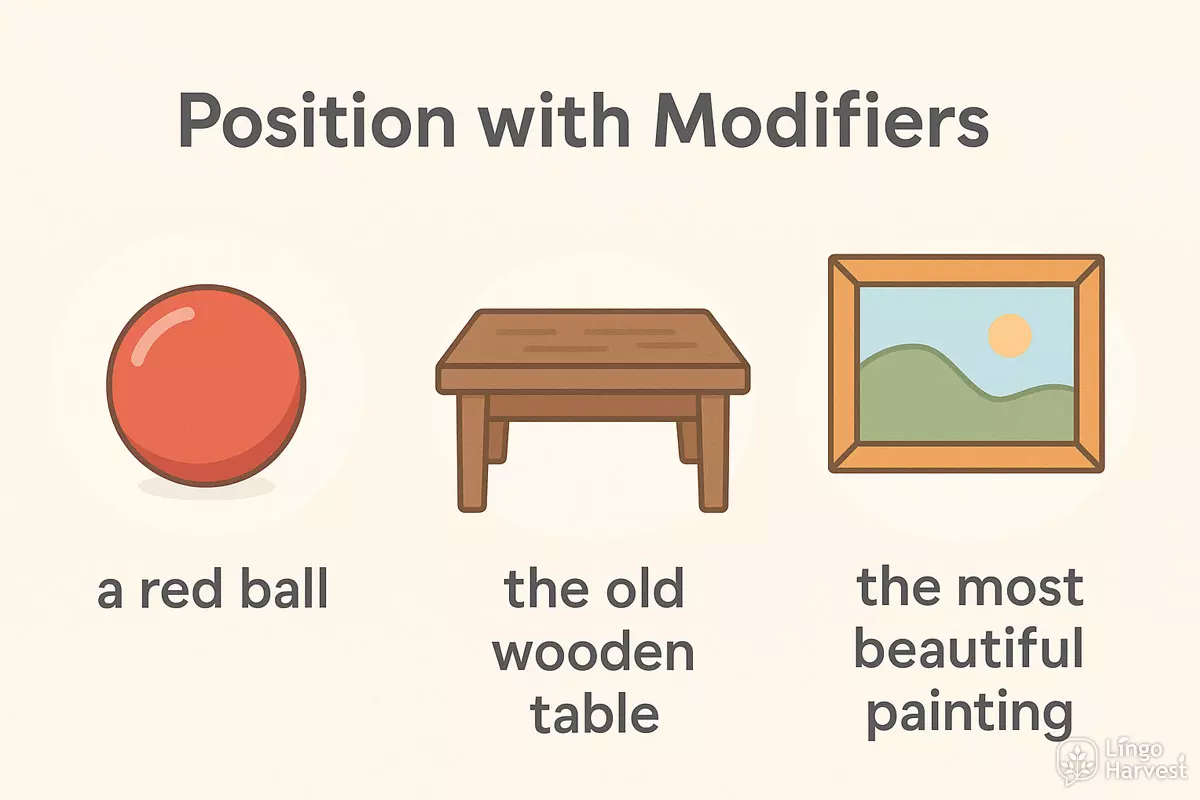
When adjectives or other modifiers are present, the article still comes first, followed by any adjectives, then the noun:
- a red ball (article + adjective + noun)
- the old wooden table
- an interesting idea
- the most beautiful painting
Order with Quantifiers and Demonstratives
Articles generally do not appear together with demonstratives (this, that, these, those) or possessives (my, your, his, etc.). Instead, these words replace the article:
- this book ❌ the this book
- my car ❌ the my car
Some quantifiers can combine with articles, but the order matters. If both are present, the article usually comes after the quantifier:
- some of the students
- many of the houses
Table: Article Placement Patterns
| Pattern | Example |
|---|---|
| Article + Noun | a dog, the city |
| Article + Adjective + Noun | an old friend, the blue sky |
| Quantifier + of + Article + Noun | all of the cake, none of the answers |
| Demonstrative/Possessive + Noun | this chair, her idea (no article) |
| Article omitted (zero article) | Water is essential. Books are useful. |
Additional Guidance
- Articles are rarely used after prepositions but before the noun: in the park, on a table. - When multiple adjectives are used, the article still leads: an exciting new project. - Some set phrases omit articles: go to school, at home. Mastering these core placement principles helps produce natural, precise sentences and avoids common pitfalls in article usage.
Count vs Non-Count Contexts
Understanding when to use articles depends heavily on whether a noun is countable or uncountable. In English, this distinction shapes which articles are possible or required, and it also affects meaning.
Countable Nouns
Countable nouns refer to things that can be counted as individual units. These can be singular or plural, and they work with both definite and indefinite articles. For example, you can say “a book,” “the chair,” or “some apples.” The use of “a” or “an” signals a single, unspecified item, while “the” refers to a specific one. Plural countables may also appear without any article when the reference is general (“Books are useful”).
Non-Count (Uncountable) Nouns
Uncountable nouns represent substances, qualities, or concepts that are not easily separated into individual elements. Words like “water,” “information,” and “happiness” fall into this group. These nouns do not use “a” or “an,” but may appear with “the” if the context is specific (“the water in this glass”), or with no article when speaking in general terms (“Water is essential”).
| Noun Type | Possible Articles | Example Sentences |
|---|---|---|
| Singular Countable | a, an, the | a cat, the chair |
| Plural Countable | the, (no article), some | the books, books, some apples |
| Uncountable | the, (no article), some | the information, information, some water |
| Uncountable (specific) | the | the advice you gave |
Common Examples
Some words can be both countable and uncountable, but their meaning changes. For instance:
- “Chicken” (meat, uncountable): I ate chicken for lunch.
- “Chicken” (animal, countable): There are three chickens in the yard.
- “Light” (uncountable, general): Light travels fast.
- “Light” (countable, specific): I turned off the lights.
Quick Reference: Typical Uncountable Nouns
- Advice
- Information
- Furniture
- Equipment
- Rice
- Music
- Sand
- Knowledge
- Weather
- Progress
- Traffic
- Luggage
- News
- Research
- Water
- Air
- Money
- Time (general concept)
- Work
- Homework
Using articles correctly with these types of nouns is essential for clear communication. When in doubt, check if you can count the noun or if it refers to a general mass or concept. This will guide your choice of article and help avoid common mistakes.
Common Confusions
Understanding how articles function can be tricky, especially for learners whose native languages lack them or use them differently. Many mix-ups come from subtle meanings, exceptions, or overlaps with other determiners. Here are some of the most frequent stumbling blocks and how to navigate them.
Definite vs. Indefinite Usage
People often struggle to decide when to use "a/an" or "the." The difference seems simple: "a/an" introduces something new or non-specific, while "the" refers to something known or previously mentioned. However, context can make this choice less clear-cut. For example, "I saw a dog" (any dog) versus "I fed the dog" (a specific dog, perhaps already known in the conversation).
Zero Article Situations
Sometimes, no article is needed at all, which can be just as confusing. English omits articles with most plural and uncountable nouns when speaking generally: "Dogs are friendly," "Information is valuable." Deciding when to use no article takes practice and attention to meaning.
Articles with Proper Nouns
Proper nouns like names of cities, people, or companies usually appear without articles. But exceptions abound: "the United States," "the Amazon," "the Netherlands." There’s no single rule that covers every case, so learners often need to memorize exceptions.
Common Mix-Ups: Examples
- Using "the" with general statements: Incorrect: The dogs are friendly. Correct: Dogs are friendly.
- Omitting "the" with unique objects: Incorrect: Sun is hot. Correct: The sun is hot.
- Adding "a/an" to uncountable nouns: Incorrect: I need a advice. Correct: I need advice.
- Forgetting "the" with superlatives: Incorrect: Everest is highest mountain. Correct: Everest is the highest mountain.
- Misusing articles with countries: Incorrect: The France is beautiful. Correct: France is beautiful.
- Using "a" before vowel sounds: Incorrect: a apple. Correct: an apple.
- Omitting articles in fixed phrases: Incorrect: in morning. Correct: in the morning.
- Adding unnecessary articles: Incorrect: The Mount Everest. Correct: Mount Everest.
- Confusing "the" with possessives: Incorrect: the my book. Correct: my book.
- Plural generalizations: Incorrect: The children like ice cream. Correct: Children like ice cream.
Quick Comparison Table
| Form | Typical Use |
|---|---|
| a / an | Refers to a single, non-specific item or entity; used for first mentions ✅ "I saw a cat." |
| the | Refers to something specific or already known to the listener ✅ "The cat was black." |
| (no article) | Used for general ideas, plural nouns, uncountable nouns ✅ "Cats are pets." / "Information is power." |
| Proper nouns with/without "the" | Some names require "the" (the UK, the Amazon), others do not (France, John). No consistent pattern; check each case. |
These challenges are common even among advanced speakers. The best way to master article use is through attentive reading and listening, noticing how articles interact with meaning and context. Over time, these patterns become more intuitive.
Short Practice
Understanding the use of articles can be challenging, so let's explore some practical exercises and examples to clarify the basic rules. The following tasks will help you distinguish when to use “a,” “an,” “the,” or leave a noun without any article at all. Read each item carefully, and try to decide which article (if any) fits best.
Fill in the Blank
Choose the correct article (“a,” “an,” “the,” or none) for each sentence below:
- ___ apple a day keeps the doctor away.
- I saw ___ elephant at the zoo yesterday.
- She wants ___ cup of tea.
- ___ sun rises in the east.
- He is ___ honest man.
- ___ cars are expensive these days.
- We visited ___ museum in Paris.
- Can you pass me ___ salt, please?
- ___ Mount Everest is the highest mountain.
- ___ children are playing in the park.
Show answers
- An
- An
- A
- The
- An
- — (no article)
- The
- The
- — (no article)
- The
Quick Reference: Article Usage Patterns
Review these common situations to reinforce when to use each type of article or omit one. This summary table can help you spot patterns more easily:
| Type | When to Use | Example |
|---|---|---|
| Indefinite (“a/an”) | First mention, one of many, not specific | a dog, an engineer |
| Definite (“the”) | Specific, already mentioned, unique | the book, the sun |
| Zero article | Plural or uncountable in general sense | Dogs are friendly. Milk is white. |
| Special cases | Proper names, some institutions, meals | Mount Everest, at home, have lunch |
Identify the Rule
For each sentence below, select the rule that explains the article choice:
- He is an artist.
- The moon looks beautiful tonight.
- Children like to play outside.
- We live near the river.
Show answers
- “An” before a singular countable noun starting with a vowel sound.
- “The” for something unique (there is only one moon).
- No article for plural nouns in a general sense.
- “The” for something specific and known to the speaker/listener.
Practicing these patterns regularly will make choosing the correct article much more intuitive. Review the examples and explanations until you feel comfortable with the different uses.