Definite Article “the”: Theoretical Use

 The article explains the meaning of 'the' and when to use it with specific, known, singular, plural, abstract, and unique nouns. It also highlights typical learner errors and provides practice items for better understanding.
Learning when and why to use the word that, which often points to something specific, can significantly improve our communication skills in English. By exploring its underlying logic, we can see how this simple word helps us express meaning with greater clarity and precision in both spoken and written language. Mastering its use not only enhances our ability to convey ideas accurately but also ensures that our messages are understood as intended, making everyday interactions smoother and more effective.
What “the” Means
The definite article “the” is used to signal that a noun refers to something specific and identifiable to both the speaker and listener. It doesn’t introduce new or unknown items; instead, it points to things already mentioned, unique in context, or easily recognized by everyone in the conversation. This small word helps clarify which particular thing is meant, eliminating ambiguity.
Defining Uniqueness and Specificity
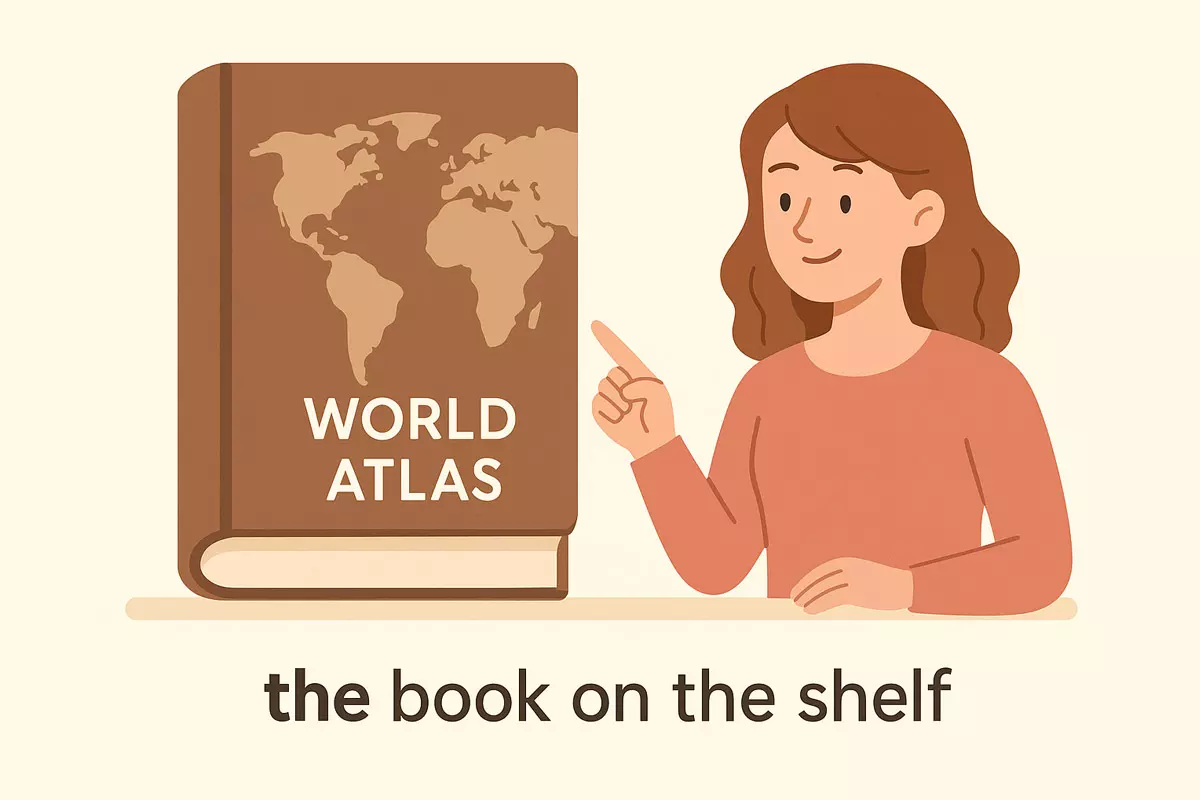
When you use this article, you’re indicating that there is only one possible referent in the situation. For instance, “the sun” refers to our unique star, and “the book on the table” singles out a particular book previously specified or visible to both people talking. In other words, “the” turns a common noun into a specific instance.
Common Uses in English
- Talking about something already mentioned: “I saw a cat. The cat was black.”
- Referring to something unique: “the moon,” “the president”
- With superlatives or ordinals: “the best day,” “the first time”
- When context makes it clear: “Open the door.”
- With certain geographical names: “the Amazon,” “the Netherlands”
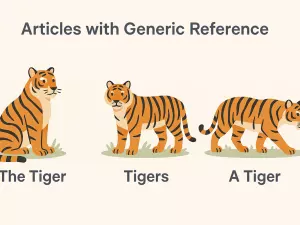
- For things representing a whole group: “the tiger is endangered”
- With musical instruments: “She plays the piano.”
- Before adjectives referring to groups: “the rich,” “the elderly”
- When both speaker and listener know what is meant: “Pass me the salt.”
- With time expressions: “in the morning,” “during the summer”
Comparing Definite, Indefinite, and Zero Articles
| Form | Typical Use | Example |
|---|---|---|
| The (definite) | Identifies a specific or previously known thing | The dog that barked is mine. |
| A/An (indefinite) | Introduces something new or non-specific | I saw a dog in the park. |
| Zero article | Used with plurals or uncountables in general statements | Dogs are friendly animals. |
Context Is Key
Choosing whether or not to use “the” depends on what the listener already knows or can infer. If the noun is unique, previously mentioned, or clear in context, the definite article is appropriate. Otherwise, an indefinite article or no article may be better. Mastering this choice is fundamental to sounding natural and precise in English.
Specific vs Known Reference
Understanding when to use the definite article often hinges on whether something is particular in context or already familiar to the listener. The distinction between a precise item and an item both speaker and listener recognize is subtle but important.
What Makes a Reference “Specific”?
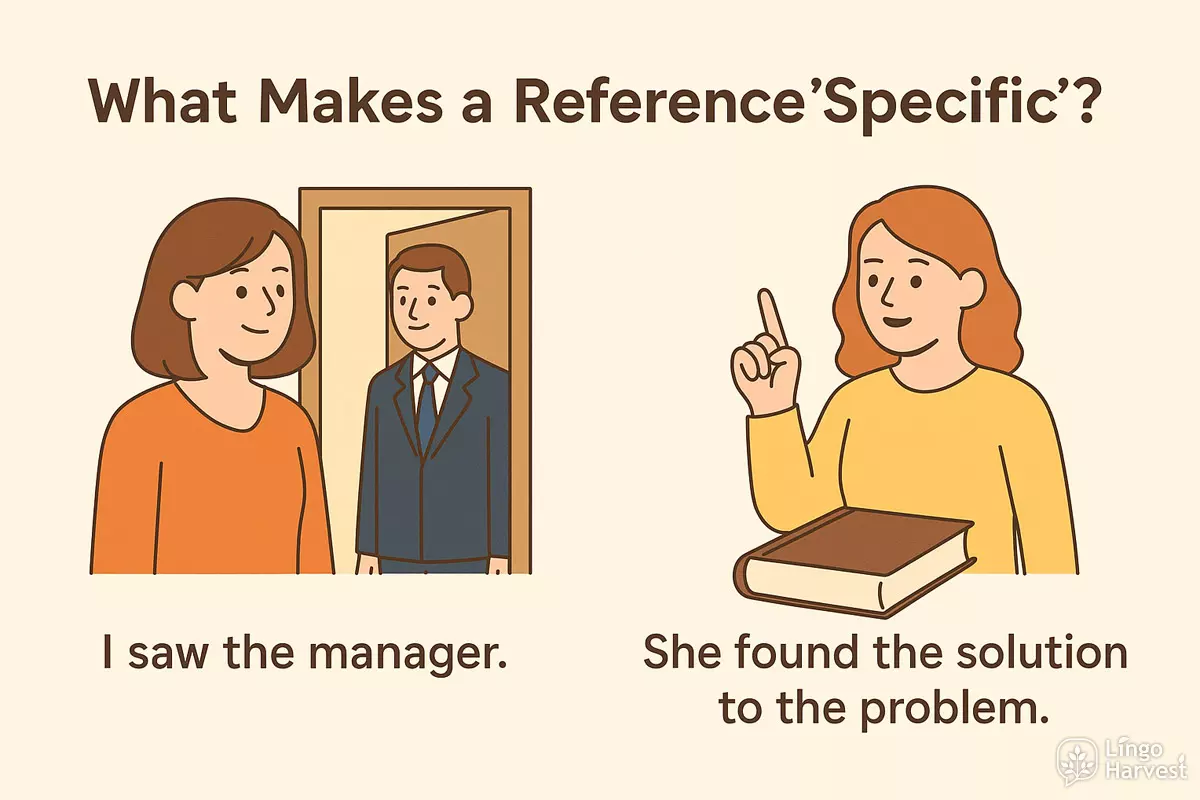
When a noun refers to a unique or clearly identified entity, it’s seen as specific. The hearer may not have prior knowledge, but the speaker’s intention narrows down what is meant. For example:
- “I saw the manager.” (Refers to a particular manager relevant in context.)
- “She found the solution to the problem.” (A definite, unique solution in this scenario.)
What Counts as “Known”?
A noun is “known” if both people in the conversation have encountered or discussed it before, or if it is common knowledge. For instance:
- “The sun rises in the east.”
- “Did you feed the cat?” (Assuming both know which cat is meant.)
Comparing Specific and Known Uses
The same article can signal either situation. Here’s how they compare in usage:
| Example | Interpretation |
|---|---|
| The book you lent me | Specific: Identified by the relative clause; not necessarily previously discussed. |
| The car outside | Specific: Defined by its location or context. |
| The internet | Known: Universally recognized concept. |
| The keys are on the table | Known: Both parties know which keys and which table are meant. |
| The president is speaking | Known: The only president relevant to the context or country. |
| The movie we saw last night | Specific and Known: Referenced by shared experience. |
Common Patterns Indicating Definite Reference
Certain cues strongly suggest a definite article is needed. Consider these patterns:
- Shared experience (“the party last week”)
- Unique objects (“the moon”)
- Superlatives (“the best option”)
- Ordinal numbers (“the first step”)
- Context-defining phrases (“the answer to your question”)
- Institutional roles (“the principal”)
- Geographical features (“the Amazon River”)
- Parts of a previously mentioned whole (“the handle of the door”)
- Assumed knowledge (“the airport” when only one is nearby)
- Titles or ranks (“the Queen”)
- Physical surroundings (“the window” in the room)
- Famous works (“the Mona Lisa”)
- Natural phenomena (“the wind”)
- Organizations (“the United Nations”)
- Time phrases (“the past year”)
- Instrumental phrases (“play the piano”)
Summary
The definite article links language to context and shared understanding. Whether highlighting a particular entity or something already known, “the” signals to the listener that the noun is uniquely identifiable in this conversation, either through specificity or mutual awareness.
Singular and Plural Use
The definite article “the” functions with both single and multiple nouns, but its use can subtly shift depending on whether it introduces a singular entity or a group. When referring to a unique or specific item, “the” highlights that only one is meant. With plural nouns, it often signals that the group is familiar, previously mentioned, or defined by context.
Using “the” with Singular Nouns
Singular nouns with “the” typically point to one particular thing. This could be a person, place, or object known to the speaker and listener, or something unique in its category.
- The sun rises in the east.
- She opened the window.
- I saw the president yesterday.
- Pass me the salt, please.
- He parked near the station.
“The” with Plural and Uncountable Nouns
When “the” is used with plural or uncountable terms, it points to a certain group or mass, not just any group. The context usually makes it clear which group is referenced.
- The books on the table are mine.
- Did you feed the cats?
- She enjoys the arts.
- We visited the Alps last summer.
- He doesn’t like the cold.
Comparing Definite Article Use: Singular vs. Plural
| Singular Example | Plural Example |
|---|---|
| The child is sleeping. | The children are sleeping. |
| The apple was delicious. | The apples were delicious. |
| The car is new. | The cars are new. |
| The teacher explained the lesson. | The teachers explained the lessons. |
| The river flows fast. | The rivers flow fast. |
Key Patterns to Notice
- Use “the” when both speaker and listener know which person, place, or thing is meant.
- It identifies a specific item, regardless of whether it is one or many.
- With unique things (the sky, the internet), the article is always used, singular or plural.
- In generic references, “the” is not used (e.g., “Apples are tasty” vs. “The apples on the plate are tasty”).
- Uncountable nouns (the information, the water) take “the” when the context is specific.
Understanding how “the” interacts with different noun forms helps clarify meaning and avoids ambiguity, ensuring your message is both precise and natural.
Abstract and Unique Nouns
When discussing the use of the definite article “the,” it’s important to consider how it applies to concepts, qualities, or entities that are either intangible or one of a kind. These include things like emotions, fields of study, and universally recognized objects or titles. The definite article is frequently used when referring to such items in a generalizing or universally accepted sense.
Abstract Concepts
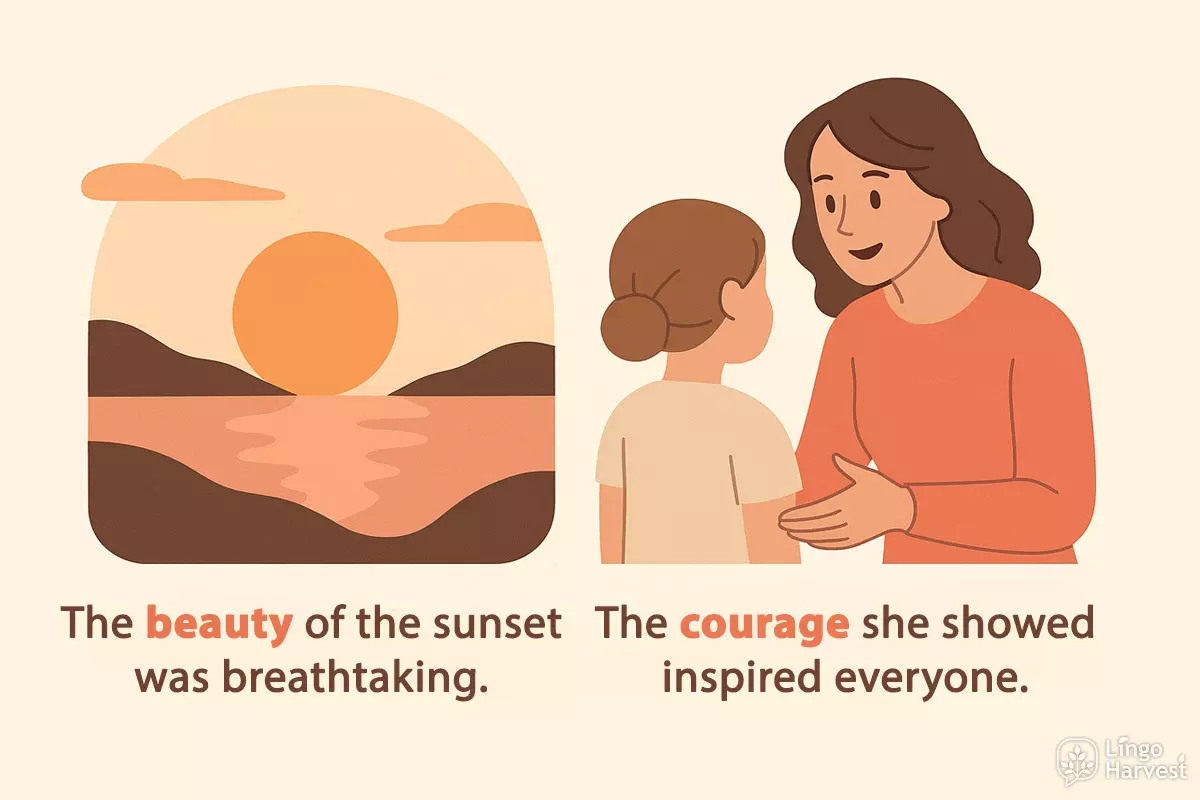
Abstract nouns—such as “honesty,” “beauty,” or “wisdom”—are usually uncountable and do not refer to a specific object. In English, “the” is used with these nouns only when we are specifying a particular instance or aspect of the concept. For example:
- The beauty of the sunset was breathtaking.
- The courage she showed inspired everyone.
- The importance of education cannot be overstated.
Without “the,” these words refer to the concept in general, not a specific manifestation.
Unique Entities
Certain nouns refer to entities that are considered unique or singular in the world or within a context. These include:
- the sun
- the moon
- the internet
- the president
- the North Pole
- the universe
- the government
- the Queen
- the environment
- the past
- the future
- the world
- the sky
- the human body
- the ocean
- the law
- the Bible
- the economy
- the press
- the Prime Minister
In these cases, “the” signals that the noun refers to a singular, universally recognized entity, not just any example.
Comparison: Abstract vs. Unique Noun Usage
| Type | Example with “the” |
|---|---|
| Abstract concept (specific instance) | The courage of the firefighters was praised. |
| Abstract concept (general, no “the”) | Courage is essential in difficult times. |
| Unique entity | The sun rises in the east. |
| Unique title | The president addressed the nation. |
| General abstract (no article) | Love conquers all. |
Typical Learner Errors
Misunderstanding when to use or omit the definite article is a common issue for English learners. This confusion often results from differences between English and the learner’s native language, as not all languages have an equivalent for “the.” Patterns of misuse can make speech sound unnatural or obscure the intended meaning.
Frequent Mistakes with “the”
- Adding “the” before general or uncountable nouns (e.g., the happiness instead of happiness)
- Omitting “the” when referring to a specific, unique object (e.g., sun is hot instead of the sun is hot)
- Using “the” with proper names that do not require it (e.g., the London instead of London)
- Forgetting “the” with superlatives or ordinal numbers (e.g., biggest city instead of the biggest city)
- Incorrect use with places (e.g., the school vs. school) depending on context
- Placing “the” before abstract nouns inappropriately (e.g., the information is important when speaking in general)
- Dropping “the” in set expressions (e.g., go to hospital vs. go to the hospital)
- Using “the” with languages or meals (e.g., the English, the breakfast)
- Confusing “the” with “a/an” in first vs. subsequent mentions
- Overusing “the” due to literal translation from other languages
Contrast: Correct vs. Incorrect Usage
| Incorrect Usage | Correct Usage |
|---|---|
| I like the music. | I like music. (general statement) |
| She went to the bed early. | She went to bed early. (set phrase) |
| The Mount Everest is high. | Mount Everest is high. |
| This is the best solution. | This is the best solution. (correct usage with superlative) |
| I saw the dogs in park. | I saw dogs in the park. |
| He speaks the Spanish. | He speaks Spanish. |
| Give me the information. | Give me the information. (if specific) / Give me information. (if general) |
| We went to the school to study. | We went to school to study. (purpose matters) |
| The John is my friend. | John is my friend. |
| I have the breakfast at 8. | I have breakfast at 8. |
Tips to Avoid Mistakes
- Ask yourself: Is the noun specific and unique, or general?
- Remember, proper names and languages rarely take “the.”
- Superlatives and ordinal numbers nearly always require “the.”
- Check common phrases (“go to bed,” “go to school”) for article usage.
- Compare with your native language, but be aware of false friends.
Awareness of these patterns helps learners develop more natural, accurate usage of articles in English.
Practice Items
Understanding how to use the definite article in English requires both theory and practical application. Below you’ll find a variety of exercises designed to reinforce your grasp of when and why “the” is used, covering both classic rules and trickier exceptions. Pay close attention to context: articles often depend on whether a noun is specific, unique, or previously mentioned.
Fill in the Blank
Insert “the” where appropriate. Leave the space blank if no article is needed.
- ______ sun rises in ______ east.
- She visited ______ Louvre during her trip to Paris.
- I saw ______ interesting movie last night.
- ______ water in this glass is cold.
- ______ lions are dangerous animals.
- He lives near ______ Thames.
- ______ Mount Everest is the highest mountain in the world.
- ______ history is a fascinating subject.
- We met at ______ airport.
- ______ apples on the table are fresh.
Show answers
- The sun rises in the east.
- She visited the Louvre during her trip to Paris.
- I saw an interesting movie last night. (no “the”)
- The water in this glass is cold.
- - Lions are dangerous animals. (no “the” for general species)
- He lives near the Thames.
- — Mount Everest is the highest mountain in the world. (no “the” before Mount Everest)
- - History is a fascinating subject. (no “the” for school subjects in general)
- We met at the airport.
- The apples on the table are fresh.
Contextual Judgement
Decide if “the” should be used in each sentence. Mark with ✅ for correct use, ❌ for incorrect use.
- The Earth revolves around the Sun.
- He went to the school to talk to the principal.
- She loves the chocolate.
- The happiness is important in life.
- The Himalayas are beautiful.
Show answers
- ✅ The Earth revolves around the Sun.
- ✅ He went to the school to talk to the principal. (specific school)
- ❌ She loves the chocolate. (should be “She loves chocolate.” unless referring to specific chocolate)
- ❌ The happiness is important in life. (should be “Happiness is important in life.”)
- ✅ The Himalayas are beautiful.
Comparison Table: Definite Article Usage
This table contrasts common scenarios where “the” is required versus those where it is omitted, helping clarify theoretical application.
| With “the” | Without “the” |
|---|---|
| The Pacific Ocean | Mount Fuji |
| The president of the company | President Lincoln |
| The best option | Best results come from practice. |
| The United States | Canada |
| The sky is blue today. | Sky can be many colors at sunset. (general statement) |
Short Writing Task
Write 2–3 sentences about your favorite place, using “the” appropriately to refer to specific features, locations, or known objects.
Show answers
Example: My favorite place is the park near my house. The trees there are very tall, and I love sitting on the bench by the lake.