What Are Interjections? Complete Theory

 This article explains what interjections are, their grammatical role, and the types of reactions they express. It covers their form, sentence restrictions, provides examples, and includes a mini practice to help reinforce learning.
A single word can instantly convey surprise, joy, or frustration, demonstrating how expressive bursts add emotion and color to our conversations. Often overlooked in grammar lessons, these words—known as interjections—take many forms and serve various purposes. Whether expressing excitement, disappointment, or amazement, interjections play a vital role in everyday speech by making our communication more dynamic and relatable. Understanding their uses can enhance both our writing and our spoken interactions.
What Interjections Are
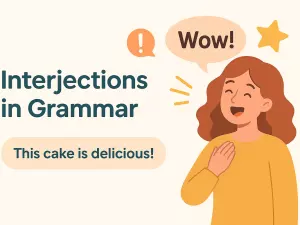
Interjections are short words or phrases that express emotions, reactions, or sudden feelings. They often stand alone and don’t fit neatly into the grammatical structure of a sentence. Instead, these words inject color, energy, or emotion into communication, helping to convey surprise, joy, pain, hesitation, or other spontaneous responses. Commonly, they are followed by an exclamation point, but sometimes a comma is used if the emotion is milder.
Key Features of Interjections
- Express emotions such as excitement, annoyance, or surprise.
- Usually appear at the beginning of a sentence, but can also occur in the middle or end.
- Do not modify or relate grammatically to other words in the sentence.
- Can be a single word (“Wow!”), phrase (“Oh no!”), or even a sound (“Ugh!”).
- Often used in spoken language, informal writing, dialogue, or creative texts.
Examples of Common Interjections
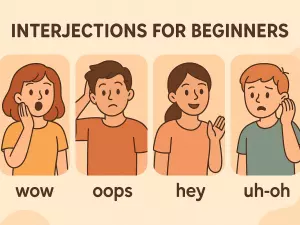
- Wow!
- Oops!
- Hey!
- Yikes!
- Bravo!
- Ouch!
- Hmm...
- Alas!
- Yay!
- Phew!
- Gosh!
- Ah!
- Whoa!
- Hurray!
- Oops!
- Ugh!
- Oh!
- Eek!
- Well!
Types of Interjections
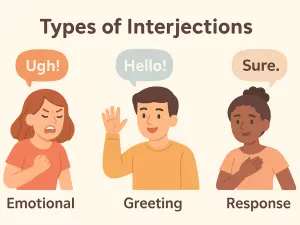
There are several categories, often based on the emotion or context they convey. Some interjections show positive feelings (such as “Yay!”), while others signal negative reactions (“Ugh!”). Some simply attract attention (“Hey!”), and others express agreement or hesitation (“Well,” “Um”).
How Interjections Function in Sentences
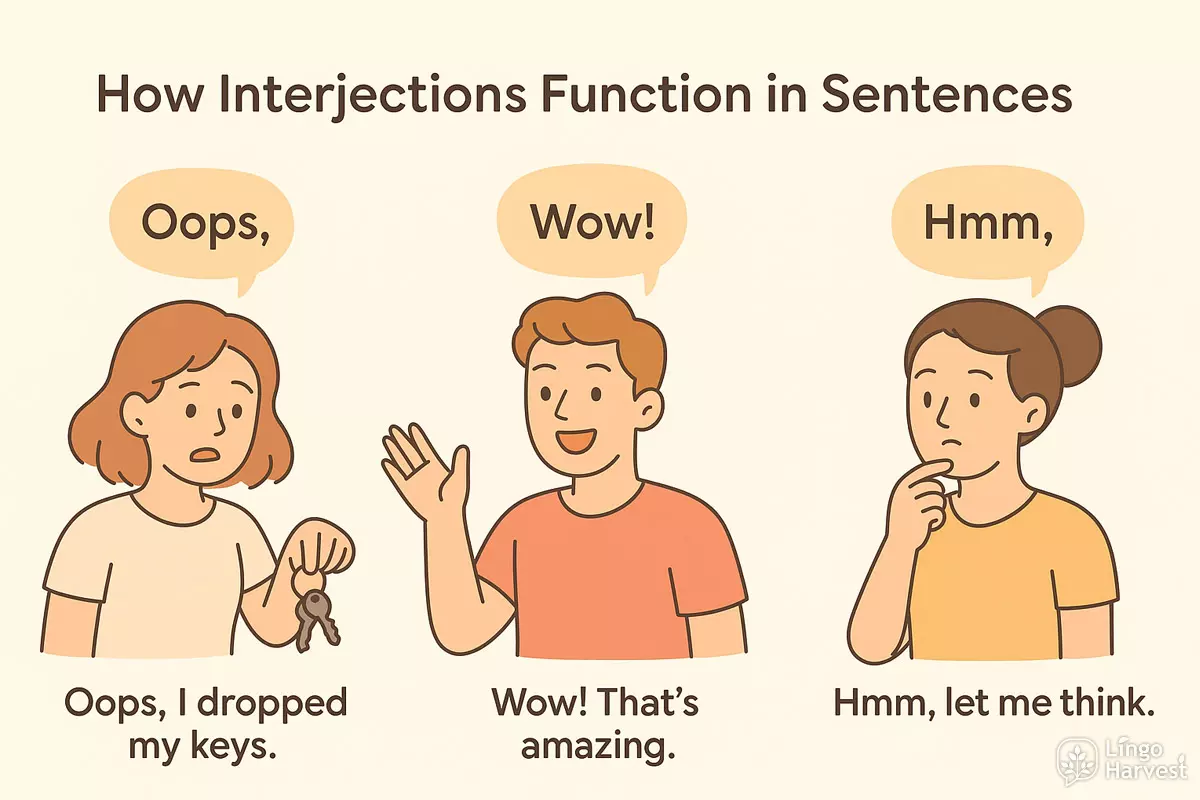
Unlike nouns or verbs, these expressions do not interact with other sentence elements. They can appear on their own, or be separated from the main sentence by punctuation. For example:
- “Oops, I dropped my keys.”
- “Wow! That’s amazing.”
- “Hmm, let me think.”
In summary, these expressive words and phrases add emotional nuance and immediacy to language, making conversations more vivid and relatable.
Role in Grammar
Interjections stand apart from the core structure of sentences; they rarely interact with the grammatical rules that govern nouns, verbs, or adjectives. Instead, their main function is to express emotions, reactions, or sudden feelings, often adding color or immediacy to spoken and written communication. These words or phrases can appear at the beginning, middle, or end of a sentence, but they don't affect subject-verb agreement or sentence syntax.
How Interjections Function
Although interjections are considered independent elements, they serve important communicative purposes:
- Express surprise or shock (e.g., Wow!)
- Show pain or discomfort (e.g., Ouch!)
- Indicate joy or excitement (e.g., Yay!)
- Signal hesitation or uncertainty (e.g., Um, er)
- Draw attention (e.g., Hey!)
- Respond to a situation (e.g., Oh no!)
- Convey agreement or approval (e.g., Bravo!, Exactly!)
- Express dismissal or indifference (e.g., Meh, Whatever)
- Show relief (e.g., Phew!)
- Imitate sounds (e.g., Bang!, Yikes!)
Grammatical Independence
Interjections do not have inflectional forms; they don't change for tense, number, or gender. This sets them apart from other word classes. They can be followed by exclamation points for strong emotion, or by commas for a milder tone. For example:
- Oops! I dropped the glass.
- Well, let's try again.
Position in Sentences
These expressive words can appear in various positions, but they are often set off from the rest of the sentence by punctuation. Here are some typical placements:
- Beginning: Hey, are you listening?
- Middle: That was, ugh, a terrible idea.
- End: We made it, hooray!
Comparison with Other Parts of Speech
Interjections differ from other word classes by not fulfilling a grammatical role in the clause. While nouns, verbs, adjectives, and adverbs all serve specific syntactic functions, interjections simply convey feeling or reaction.
| Word Class | Main Function | Example |
|---|---|---|
| Noun | Names a person, place, or thing | dog, city, happiness |
| Verb | Describes an action or state | run, think, is |
| Adjective | Modifies a noun | happy, blue, tall |
| Interjection | Expresses emotion or reaction | Wow!, Oops!, Huh? |
Summary
While interjections may seem less formal or essential than other word types, they play a key role in making language more expressive and natural. Their unique position outside the standard grammatical framework gives speakers and writers a way to communicate feelings instantly and directly.
Types of Reactions
When people use interjections, the effect can vary widely based on context and emotion. These spontaneous words or short phrases often express feelings, attitudes, or sudden responses, and their impact depends on both the sound and intent behind them.
Common Emotional Responses
Interjections can signal a range of emotions, from happiness and surprise to frustration or disappointment. Here are some typical categories:
- Surprise: Wow! Oh! Whoa!
- Joy: Yay! Hooray! Woo-hoo!
- Disgust: Yuck! Ew! Ugh!
- Pain: Ouch! Ow! Yow!
- Relief: Phew! Whew!
- Anger: Grr! Hey! Blast!
- Agreement: Yes! Yeah! Uh-huh!
- Confusion: Huh? Eh?
- Disapproval: Tsk! Tut! Boo!
- Calling attention: Look! Listen! Hey!
Positive vs. Negative Exclamations
Not all interjections are neutral; some naturally convey positive or negative feelings. Here’s how they can be grouped:
- ✅ Positive: Bravo! Cheers! Fantastic!
- ❌ Negative: Alas! Darn! Oops!
Function and Placement
Interjections can stand alone or be inserted into sentences. They might appear at the beginning, middle, or end, but they’re usually set off by punctuation (commas, exclamation marks). This helps signal the intended reaction to readers or listeners.
Comparison of Interjection Reactions
| Interjection | Typical Reaction or Feeling |
|---|---|
| Oops! | Minor mistake or accident |
| Wow! | Amazement or admiration |
| Ugh! | Disgust or displeasure |
| Yay! | Excitement or happiness |
| Oh no! | Alarm or disappointment |
| Phew! | Relief after stress |
| Hey! | Calling attention or expressing surprise |
Subtle and Strong Reactions
Some interjections are gentle, such as “hmm” (thinking) or “oh” (mild surprise), while others pack a punch—think “ouch!” or “bravo!” The intensity often matches the speaker’s emotion, making these words useful for coloring conversations and writing. In summary, interjections trigger a spectrum of responses, from subtle curiosity to strong emotional outbursts, depending on word choice, tone, and context. They help convey immediate feelings and shape the mood in both speech and text.
Form and Structure
Interjections stand out from other parts of speech because they’re independent words or short phrases, not grammatically connected to the rest of the sentence. They typically express emotions, reactions, or sudden feelings, and often appear at the start or end of a sentence. These words are usually set off by commas or exclamation marks, and may even form a sentence on their own.
Common Patterns and Placement
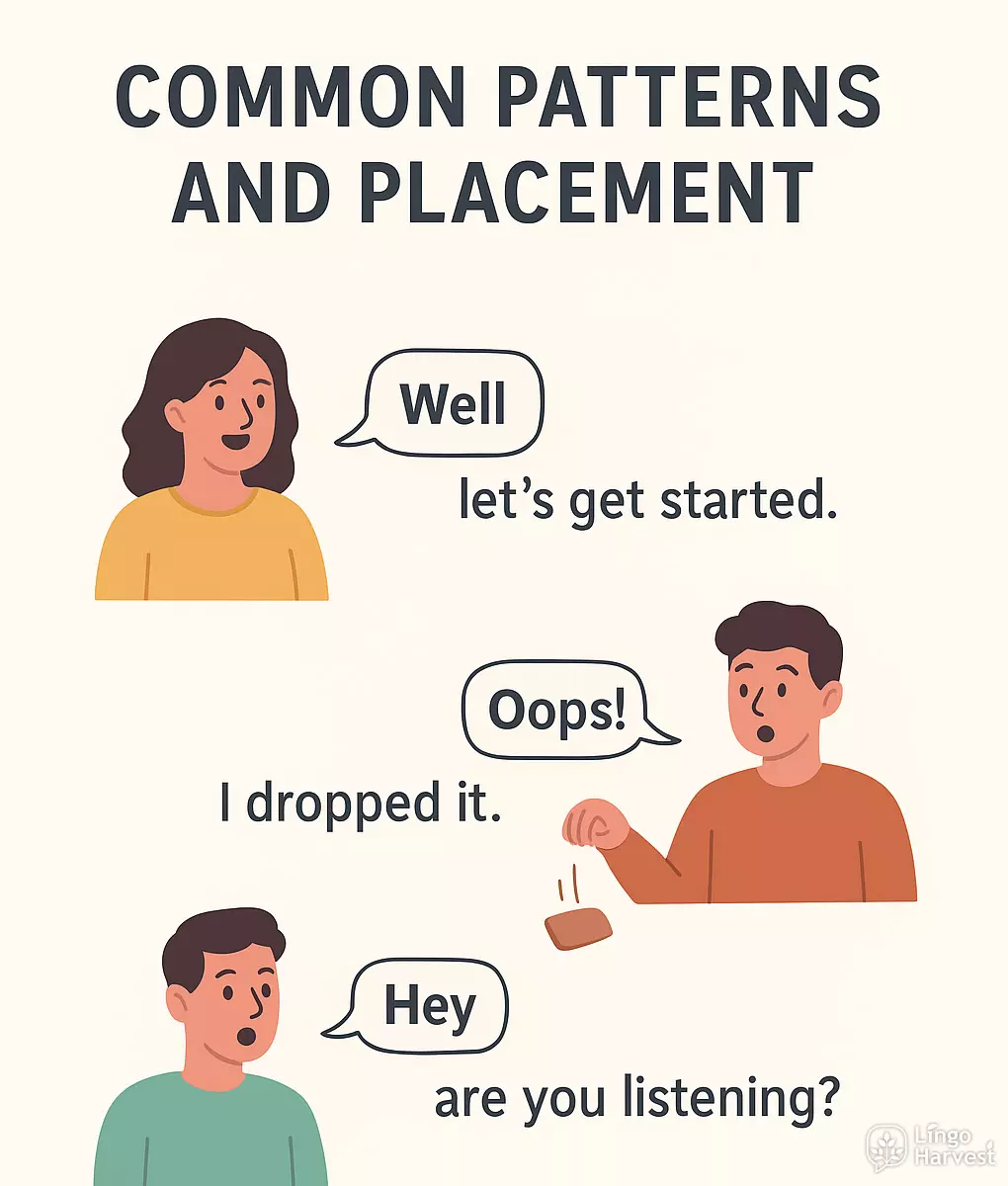
You’ll find that these expressions often come before what they comment on, though they can also follow or be inserted within a sentence. Their punctuation helps indicate the speaker’s tone—exclamation marks for strong emotion, commas or periods for milder feelings.
- Wow! That’s amazing.
- Oh, I didn’t see you there.
- Well, let’s get started.
- Oops! I dropped it.
- Hey, are you listening?
- Huh? What did you say?
- Yikes, that looks dangerous.
- Phew, that was close.
- Uh-oh, here comes trouble.
- Bravo! You did it.
- Hmm, let me think.
- Ouch! That hurt.
- Alas, we lost the game.
- Yay! We won!
- Ugh, I’m too tired.
- Aha! I found it.
- Shh! Be quiet.
- Whoa, slow down!
- Hurray! School’s out.
- Eh, I don’t know.
Single Words vs. Phrases
Some interjections are made up of a single word, while others use short phrases. Both types function similarly in speech and writing, though the phrase versions may provide a bit more nuance or context.
| Type | Examples |
|---|---|
| Single-word | Wow, Oops, Hey, Alas, Bravo, Ouch, Hurray, Eh |
| Phrase | Oh no, All right, Good grief, Oh dear, My goodness, No way, Well done |
Capitalization and Punctuation
Typically, these exclamatory words are capitalized at the beginning of sentences or when they stand alone. Punctuation marks—especially exclamation points—play a crucial role in conveying the intended emotion or force. For milder feelings, a comma or period is enough. Overall, interjections are highly flexible in how they appear, but they always serve to add immediacy or emotional color to language. Their simplicity and variety make them easy to spot and use in both speech and writing.
Restrictions in Sentences
Interjections are unique in their usage, but they do face several limitations within sentence structure. These words or phrases, expressing emotion or reaction, do not function like typical sentence elements such as verbs or nouns. Instead, their placement, punctuation, and overall role are quite restricted compared to other parts of speech.
Placement Limitations
Interjections most often appear at the very beginning of a sentence, before the main clause. It’s also possible for them to be inserted in the middle or even at the end, but this is far less common and can disrupt the flow if overused. They are rarely embedded within phrases or clauses that carry grammatical weight.
- Wow, that was impressive!
- Oh no, I forgot my keys.
- Hey, are you listening?
- Alas, we lost the match.
Punctuation Rules
Another key restriction involves punctuation. Interjections are usually set off with commas, exclamation marks, or sometimes question marks, never periods. The punctuation signals the emotion or intensity being conveyed, but overusing exclamation marks can make writing appear unpolished.
- Oops! I dropped it.
- Aha, now I see!
- Hmm, let me think.
- Ugh, that’s annoying.
Grammatical Independence
Interjections do not interact with sentence grammar. They are not subjects, verbs, or objects, and cannot modify or be modified by other words. This means they can’t be inflected for tense, number, or case. Their role is always to convey emotion, surprise, or reaction, standing apart from the sentence’s main structure.
Typical Usage Patterns
Writers should avoid stringing multiple interjections together or using them in formal writing. Additionally, some interjections are context-dependent and may not make sense in every situation.
| Interjection | Restriction Example |
|---|---|
| Oh | Cannot be used as a verb or noun: ❌ I ohed the news. |
| Wow | Should not be embedded within a clause: ❌ The wow dog ran fast. |
| Oops | Cannot take modifiers: ❌ Very oops! → Incorrect. |
| Hey | Rarely used at sentence end: ❌ That’s great, hey. (awkward) |
| Alas | Uncommon in everyday speech; formal or poetic contexts preferred. |
| Whew | Not suitable for academic or technical writing. |
| Yikes | Should not be repeated: ❌ Yikes yikes! |
| Bravo | Not used to describe actions: ❌ He bravoed the singer. |
Summary of Main Limitations
To sum up, interjections:
- Are generally placed at the start of sentences.
- Stand apart from sentence grammar.
- Rely on specific punctuation.
- Cannot be inflected or modified.
- Are rarely used in formal or technical writing.
Understanding these boundaries helps you use interjections effectively and naturally, while keeping your writing clear and appropriate for the context.
Examples
Interjections serve as spontaneous expressions of emotion, reaction, or sudden remark within sentences. They can stand alone or be inserted in dialogue to convey feelings like surprise, joy, frustration, or hesitation. Below are various ways these expressive words and phrases appear in everyday language.
Common Single-Word Interjections
- Wow! — shows amazement or surprise.
- Ouch! — signals pain or discomfort.
- Oops! — used for minor mistakes or accidents.
- Hey! — gets attention or expresses annoyance.
- Yikes! — conveys shock or alarm.
- Bravo! — gives praise or approval.
- Ugh! — demonstrates disgust or annoyance.
- Hurray! — expresses joy or celebration.
- Eh? — asks for repetition or shows confusion.
- Phew! — relief after a tense moment.
- Alas! — expresses sorrow or regret.
- Aha! — signals a sudden realization.
- Shh! — tells someone to be quiet.
- Yay! — shows happiness or excitement.
- Nope! — informal way to say "no."
- Yum! — indicates something tastes good.
- Whoa! — used for surprise or to warn to stop.
- Hmm… — suggests thinking or uncertainty.
- Gosh! — mild surprise or astonishment.
- Uh-oh! — signals trouble or a problem.
Interjections in Sentences
To see how these work in context, here are a few sample sentences:
- Wow! That was an incredible performance.
- Oops, I dropped my keys again.
- Hey! Don’t touch that.
- Phew, we made it just in time.
- Alas! The tickets are sold out.
Types of Interjections: Emotions and Functions
| Emotion/Function | Example Interjection |
|---|---|
| Surprise | Wow!, Gosh!, Whoa! |
| Joy | Yay!, Hurray!, Bravo! |
| Pain | Ouch!, Ow! |
| Disgust | Ugh!, Ew! |
| Confusion | Eh?, Huh? |
| Relief | Phew!, Whew! |
| Warning | Hey!, Watch out! |
| Realization | Aha!, Oh! |
These various forms illustrate how such words add emotion and spontaneity to spoken and written language, making communication more vivid and immediate. Interjections often stand out with punctuation like exclamation marks, helping to set the tone and mood instantly.
Mini Practice
Understanding how interjections function is easier with hands-on tasks and real examples. Use this section to check your grasp of these expressive words and their uses in sentences.
Identify the Interjection
Read each sentence. Which word is the interjection?
- Wow, that was an amazing performance!
- Oops, I dropped my keys again.
- Hey, could you pass the salt?
- Yikes, that was a close call.
- Oh, I almost forgot about the meeting.
Show answers
- Wow
- Oops
- Hey
- Yikes
- Oh
Choose the Best Interjection
Select the most suitable interjection for each situation below:
- ______! That’s incredible news!
- ______! I didn’t see you there.
- ______! This tastes awful.
- ______! We finally made it.
- ______! I can’t believe I won!
- Oh
- Yuck
- Hooray
- Wow
- Oops
- Hey
Show answers
- Wow
- Oh
- Yuck
- Hooray
- Hey
Useful Examples: Common Interjections
Here are several frequently used interjections in English. Try using them in your own sentences to get comfortable with their tone and meaning:
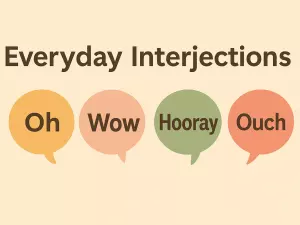
- Wow
- Oops
- Hey
- Yikes
- Oh
- Hooray
- Ouch
- Yum
- Bravo
- Ugh
- Hmm
- Alas
- Gee
- Phew
- Shh
- Aha
- Whoa
- Yay
- Eek
- Er
Spot the Tone
Match each interjection to the feeling it most often expresses:
| Interjection | Typical Feeling |
|---|---|
| Ouch | Pain |
| Yay | Joy |
| Oops | Accident/Mistake |
| Alas | Sorrow |
| Yuck | Disgust |
| Huh | Confusion |
| Bravo | Approval |
| Whoa | Surprise |
Quick Challenge: Add an Interjection
Rewrite each sentence to include a suitable interjection at the beginning.
- I forgot my phone at home.
- This pizza is delicious.
- We won the game!
- The test was harder than I expected.
Show answers
- Oops, I forgot my phone at home.
- Yum, this pizza is delicious.
- Hooray, we won the game!
- Yikes, the test was harder than I expected.