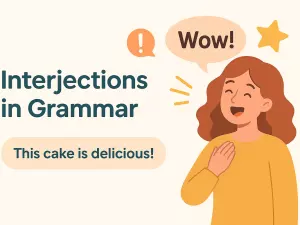
Interjections vs Fillers: Structural Difference

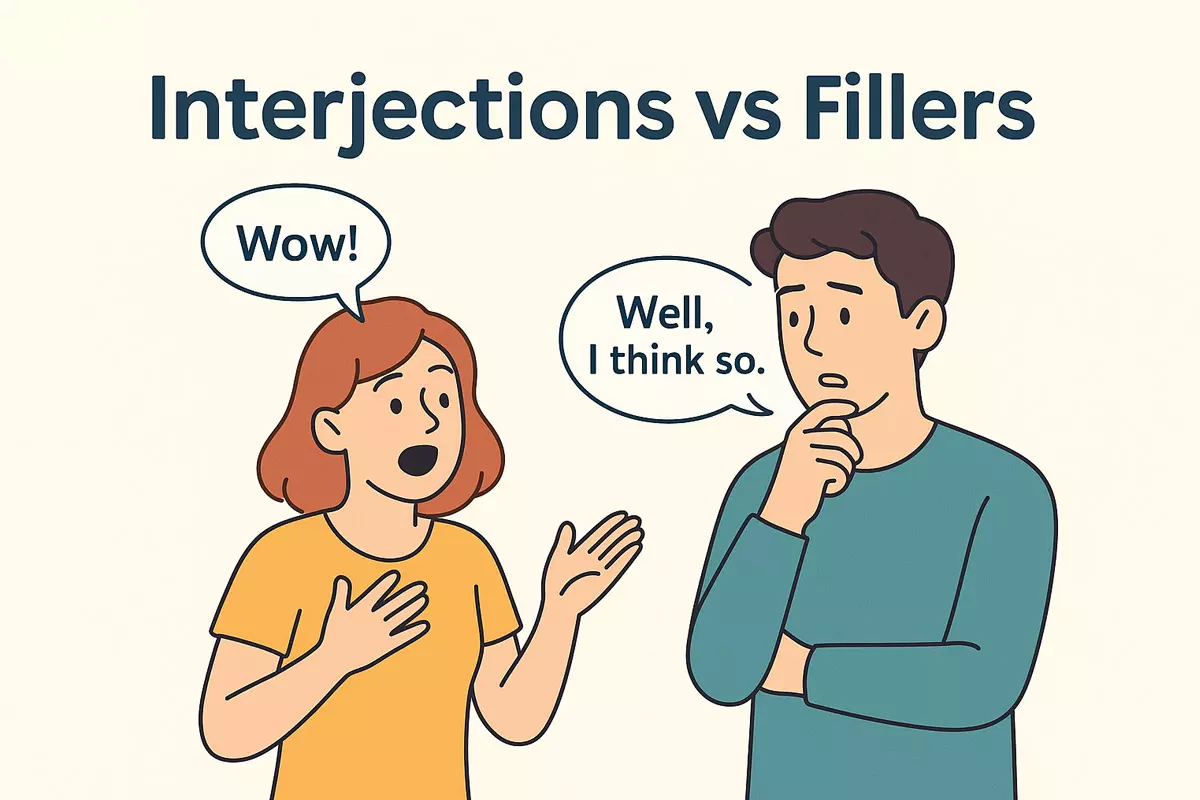 The article defines interjections and fillers, compares their grammar and discourse roles, and lists their typical forms. It also gives examples to highlight the differences and offers a quick practice to help you recognize them in real conversations.
Everyday speech often includes both sudden outbursts and hesitant pauses, each serving a unique function in communication. Spontaneous exclamations, such as wow or oh no, express immediate emotion and can interrupt the flow of conversation, while filler words like um or well are typically used to buy time as we think about what to say next. Recognizing the difference between these elements highlights an interesting contrast in how we structure our sentences and manage real-time conversation.
What Interjections Are
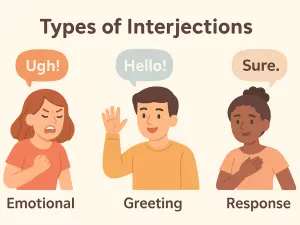
Interjections are words or short phrases that express spontaneous emotion, reaction, or sentiment, often standing apart from the main grammatical structure of a sentence. These expressions can signal surprise, pain, joy, hesitation, or even a greeting. Unlike other parts of speech, these utterances typically do not interact with the sentence’s syntax, making them unique in both form and function.
How Interjections Function in Language
These words operate independently, often set off by commas or exclamation marks. They can appear at the start, middle, or end of a sentence and are not grammatically connected to other words. Their primary purpose is to convey the speaker’s feelings or to attract attention, rather than to add informational content.
Common Types and Examples
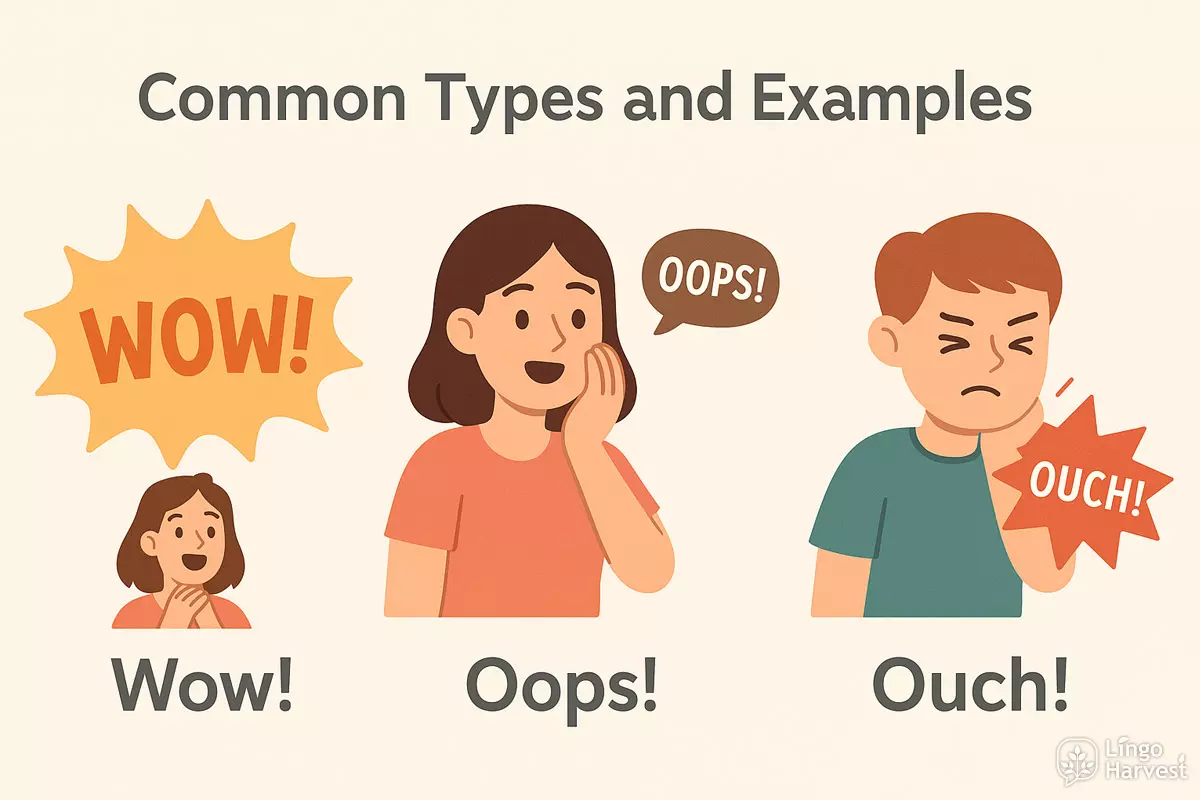
There is a wide range of interjections in English, each serving different expressive purposes. Some indicate positive emotions, others negative, and some are neutral or context-specific. Here are some frequently used examples:
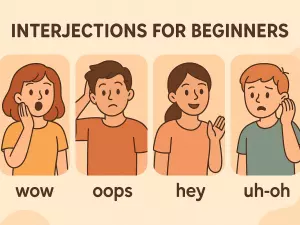
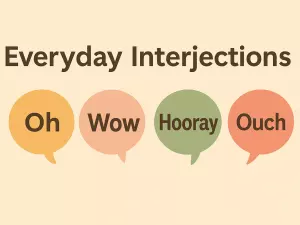
- Wow!
- Oops!
- Ouch!
- Hey!
- Oh!
- Yikes!
- Hurray!
- Ugh!
- Bravo!
- Alas!
- Ah!
- Yay!
- Aha!
- Phew!
- Hmm!
- Shh!
- Whoa!
- Eek!
- Er...
- Gosh!
Distinctive Features of Interjections
Interjections are characterized by the following traits:
- They can stand alone as complete utterances.
- They often reflect immediate emotional states or reactions.
- They are typically punctuated with commas or exclamation points.
- They do not modify, describe, or relate to other sentence elements grammatically.
Interjections vs. Other Sentence Elements
Unlike nouns, verbs, or adjectives, these expressions do not play a grammatical role within the sentence structure. Their presence is optional and mainly serves to add color or emotional nuance. They can be omitted without changing the factual meaning of the statement, though the tone may shift. In summary, interjections are unique linguistic tools that allow speakers to convey feelings instantly and directly, often with just a single word or sound.
What Fillers Are
Fillers are short words, sounds, or phrases that speakers use to pause, think, or maintain the flow of conversation, especially when searching for the right word or organizing thoughts. Unlike content words, these expressions do not add significant meaning to a sentence but instead serve a structural or pragmatic function. They allow speakers to hold the conversational floor or indicate hesitation without complete silence.
Common Characteristics of Fillers
- Usually brief and easy to pronounce
- Appear in both formal and informal speech
- Do not change the grammatical structure of a sentence
- Signal hesitation, uncertainty, or a need for time to think
- Can be language-specific or universal (e.g., "um" in English, "eh" in Japanese)
Examples of Fillers in Everyday Language
Speakers frequently use various expressions as verbal placeholders. Here are some common examples:
- um
- uh
- er
- like
- you know
- well
- so
- hmm
- ah
- okay
- I mean
- right
- actually
- sort of
- basically
- literally
- just
- anyway
- alright
- see
How Fillers Function in Conversation
Fillers help speakers manage the rhythm of speech. They can buy time to think, soften a statement, or help maintain control of a conversation turn. Sometimes, these sounds or words reduce awkward silences and signal to listeners that the speaker has not finished their thought.
Filler Use Across Languages
While the specific forms vary, nearly all languages have their own set of fillers. Their frequency and social acceptability may depend on context and culture. For example, "eh" is common in Canadian English, while "eto" or "ano" appear frequently in Japanese speech.
Fillers vs. Content Words
Unlike nouns, verbs, or adjectives, fillers do not contribute to the core message of a sentence. Their main role is to manage conversation flow, not to convey concrete information. Overusing these expressions, however, can sometimes distract from the speaker's message or make speech seem less confident.
Grammar vs Discourse Role
When examining how interjections and fillers function in communication, it’s important to distinguish their structural roles in language from how they guide conversation. Interjections—words like “wow,” “ouch,” or “hey”—have a clear grammatical identity. They stand alone, express emotion or reaction, and are not grammatically linked to surrounding sentences. Fillers, such as “um,” “uh,” “like,” or “you know,” operate differently: they serve as pauses or hesitation markers and help manage the flow of conversation, but do not carry independent grammatical meaning.
Structural Position in Sentences
Interjections are often set off by punctuation and do not alter the sentence’s syntactic structure. Fillers, however, are typically embedded within sentences, interrupting but not structurally modifying them. For example, “Wow, that’s amazing!” versus “That’s, um, amazing.”
Communicative Function
While interjections directly convey feelings or reactions, fillers signal hesitation, uncertainty, or the need for thinking time. This difference shapes their respective discourse roles: interjections add emotional color, while fillers facilitate spoken interaction and smooth out speech.
Comparison Table: Interjections vs Fillers in Structure and Use
| Feature | Interjections | Fillers |
|---|---|---|
| Grammatical Status | Standalone word or phrase | Not a separate part of speech |
| Sentence Integration | Outside sentence structure | Within sentence flow |
| Primary Function | Express emotion or reaction | Mark hesitation or pause |
| Examples | wow, ouch, hey, oops, yikes, ah, uh-oh, bravo, alas, phew | uh, um, er, like, you know, well, so, actually, basically, I mean |
| Discourse Role | Conveys speaker’s attitude | Manages turn-taking, signals thinking |
Quick Summary
- Interjections are grammatically independent and primarily emotional.
- Fillers are embedded in speech, functioning as conversational tools.
- Both types affect how listeners interpret spoken language, but in distinct ways.
Typical Forms
Interjections and fillers appear in speech with distinct patterns and structural behaviors. While both can interrupt or punctuate spoken language, their linguistic makeup and usage set them apart. Interjections often stand alone as complete exclamations, whereas fillers tend to blend into sentences, helping speakers manage pauses or hesitation.
Common Interjections
Words categorized as interjections usually function independently, often expressing emotion or reaction. These forms generally do not require grammatical connection to surrounding words. Examples include:
- Wow!
- Ouch!
- Hey!
- Yikes!
- Oops!
- Hooray!
- Ugh!
- Bravo!
- Oh!
- Huh?
- Phew!
- Alas!
- Yay!
- Ah!
- Shh!
- Boo!
- Eek!
- Gosh!
These exclamations can stand alone or be inserted into dialogue, but they do not serve a grammatical function within sentences.
Typical Fillers
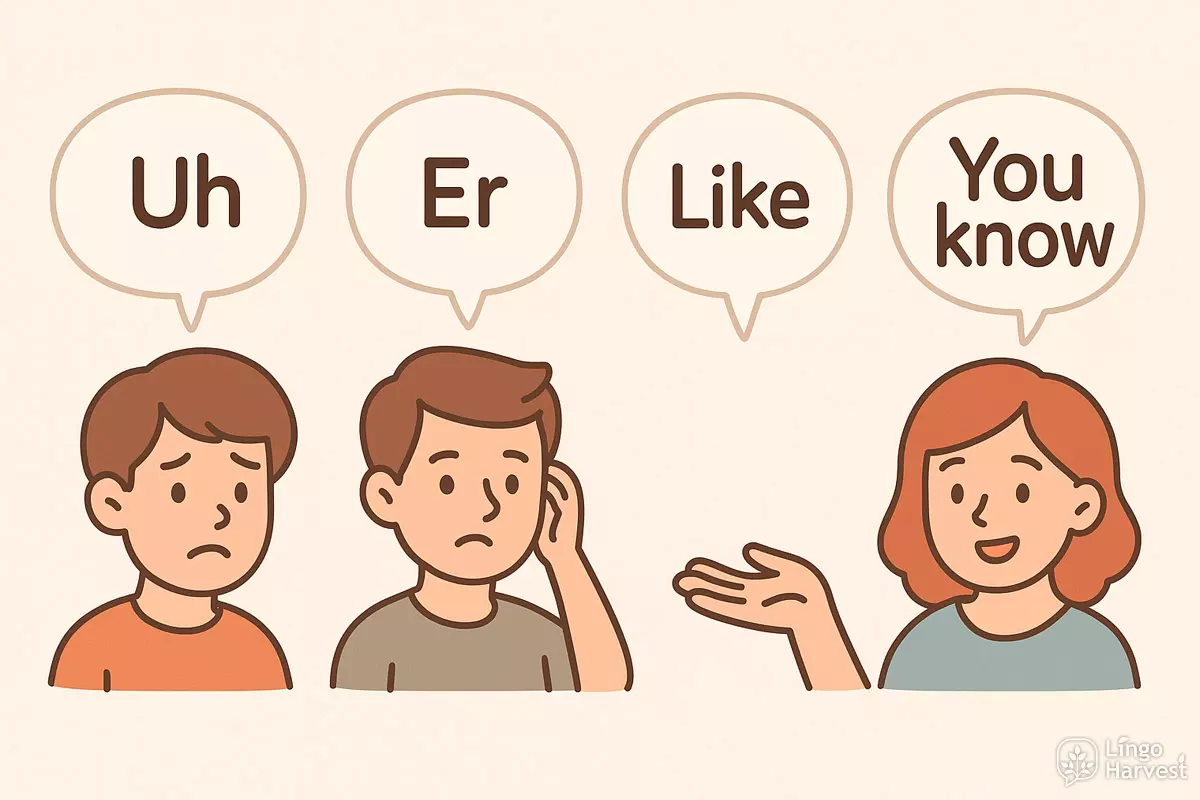
Conversational fillers are short sounds or words that speakers use to pause, think, or soften statements. Unlike interjections, they rarely carry emotional weight and often connect with the flow of speech. Frequent examples include:
- Um
- Uh
- Er
- Like
- You know
- Well
- So
- I mean
- Actually
- Basically
- Right
- Okay
- Sort of
- Kind of
- Hmm
- Anyway
- Alright
- See
These elements help maintain conversation flow or buy time for the speaker to think.
Structural Comparison
Below is a summary comparing the structural features of interjections and fillers:
| Feature | Interjections | Fillers |
|---|---|---|
| Primary function | Express emotion or reaction | Manage pauses or hesitation |
| Grammatical independence | Usually stand alone | Integrated into sentences |
| Typical examples | Wow!, Oops!, Ugh! | Um, like, you know |
| Emotional content | Often high | Usually low or neutral |
| Formality | Can appear in both formal and informal settings (often informal) | Primarily informal speech |
Understanding these patterns helps clarify how each type functions in everyday language and why their forms are rarely interchangeable.
Examples to Compare
Looking at real usage helps clarify how interjections and fillers function differently. Both appear in speech, but their roles and grammatical placement set them apart. Below, you’ll find typical words and phrases that illustrate their unique characteristics.
Common Interjections in English
- Wow!
- Oops!
- Hey!
- Yikes!
- Hurray!
- Ugh!
- Alas!
- Oh!
- Bravo!
- Ouch!
- Yay!
- Phew!
These words express emotion directly and often stand alone, sometimes punctuated with an exclamation mark. They don’t usually connect to the grammatical structure of a sentence.
Typical Fillers Used in Conversation
- Um
- Uh
- Like
- You know
- Well
- So
- Er
- I mean
- Actually
- Basically
- Right
- Okay
Fillers are used to pause, hesitate, or soften statements while thinking or searching for words. They rarely carry emotion and are embedded in sentences, not set apart.
Side-by-Side Comparison
| Interjection Example | Filler Example |
|---|---|
| Ouch! That hurt. | Um, I’m not sure what you mean. |
| Wow! Look at that! | So, I was thinking we could leave early. |
| Hey! Watch out! | Well, it depends on the weather. |
| Oh, I didn’t know that. | You know, I really enjoyed the movie. |
| Phew! That was close. | Like, it was really unexpected. |
Notice how interjections are typically at the start and separated—sometimes even forming a sentence on their own. Fillers, meanwhile, are woven into speech to maintain flow or buy time during pauses. This highlights the core structural difference between the two.
Quick Practice
Understanding the difference between interjections and fillers is much easier with hands-on tasks. Try identifying which words or phrases act as interjections (expressing emotion, often standing alone) and which function as fillers (pausing or hesitating within a sentence). Review the examples below and test your recognition skills.
Identify: Interjection or Filler?
Decide whether each highlighted word is an interjection or a filler:
- Wow, that’s amazing!
- So, um, what do you think?
- Oops, I dropped it.
- It was, like, really surprising.
- Hey, over here!
- She was, well, not very happy.
- Yikes! That was close.
- I was, uh, just leaving.
- Oh, I didn’t see you there.
- He said, you know, it might rain.
Show answers
- 1. Interjection
- 2. Filler
- 3. Interjection
- 4. Filler
- 5. Interjection
- 6. Filler
- 7. Interjection
- 8. Filler
- 9. Interjection
- 10. Filler
Common Examples: Interjections vs Fillers
Here’s a side-by-side comparison of typical interjections and fillers often heard in conversation:
| Interjections | Fillers |
|---|---|
| Wow! | Um |
| Oops! | Uh |
| Hey! | Like |
| Yikes! | You know |
| Oh! | Well |
| Ouch! | So |
| Hurray! | I mean |
| Aha! | Actually |
| Alas! | Basically |
| Phew! | Right |
Task: Create Your Own Sentences
Write two sentences for each type: one using an interjection and one using a filler. Try to use different words from those listed above. This will help reinforce the structural difference between these two elements.
Show answers
- Sample interjection: "Eek! There’s a spider on the wall!"
- Sample filler: "I was, er, thinking about your suggestion."