Types of Interjections: Emotional, Greeting, Response

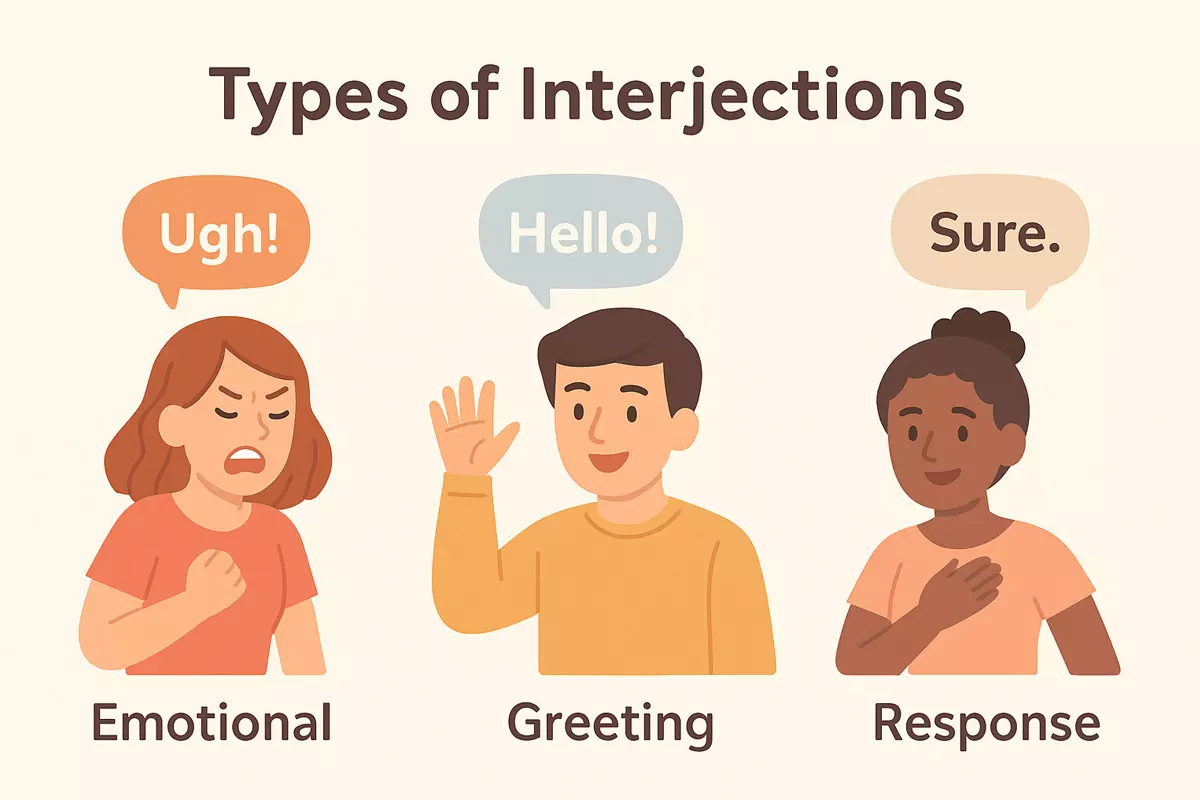 Here we different types of interjections, including emotional, greeting, and response interjections. It explains their meanings, the impact of tone, provides examples, and includes a practice set to reinforce learning.
Have you ever noticed how a single word can instantly convey excitement, surprise, or even serve as a quick greeting? Words like these, often called interjections, bring energy and spontaneity to our conversations. Whether someone shouts wow in amazement, says hey to get your attention, or exclaims oh in response to unexpected news, these expressions help us communicate emotions quickly and naturally. They add color to our language and make interactions feel more lively and genuine.
Emotional Interjections
Expressions of feelings like surprise, joy, frustration, or pain are often communicated through short, spontaneous words. These utterances add color and authenticity to speech, capturing genuine reactions in a single word or phrase. They generally stand alone or are inserted at the beginning of sentences, signaling the speaker's mood or emotional state.
Common Types and Examples
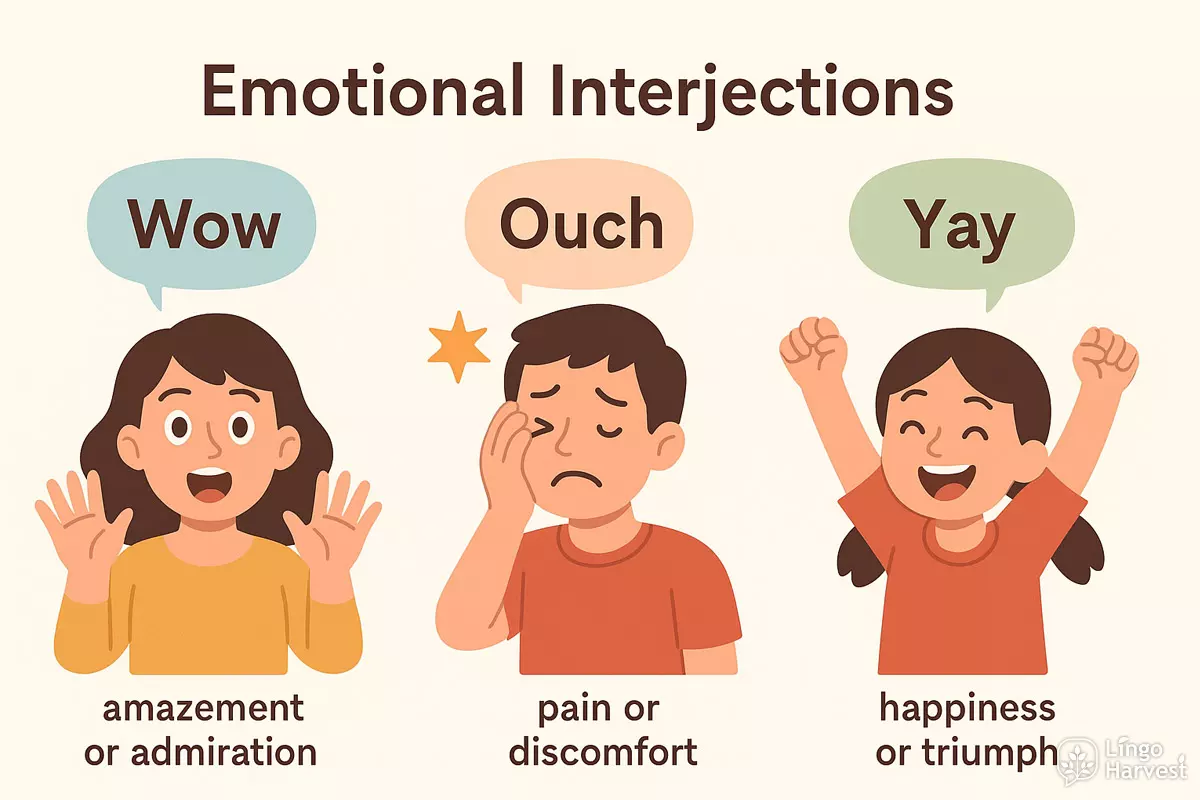
People use a wide variety of these exclamations in everyday conversation. Some express excitement, others show annoyance, while some reveal disappointment or relief. Here are several widely used forms:
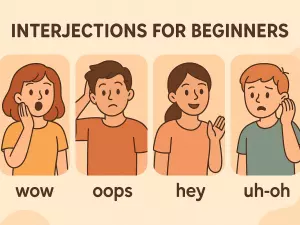
- Wow – amazement or admiration
- Ouch – pain or discomfort
- Yay – happiness or triumph
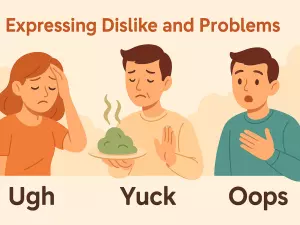
- Oops – mild embarrassment or mistake
- Ugh – disgust or frustration
- Hurray – celebration or approval
- Alas – sorrow or regret
- Phew – relief
- Oh no – concern or dismay
- Bravo – praise or encouragement
- Eek – fear or surprise
- Yikes – alarm or shock
- Whew – relief after anxiety
- Ah – realization or satisfaction
- Hmm – thoughtfulness or hesitation
- Yuck – dislike or disgust
- Gosh – mild surprise
- Geez – exasperation or disbelief
- Aww – sympathy or affection
How These Words Function
Such exclamations are not grammatically connected to other parts of the sentence. Their main role is to convey the speaker’s inner feelings directly to the listener. Placement is flexible—at the start, end, or even alone as a reaction.
Degrees of Emotion
Some of these expressions are stronger than others. For instance, "Wow!" often signals intense surprise, while "Oh" might simply hint at mild interest or realization. Context and tone help clarify the speaker’s intent.
| Feeling | Sample Interjections |
|---|---|
| Surprise | Wow, Oh, Gosh, Yikes |
| Pain/Discomfort | Ouch, Ow, Ugh |
| Happiness/Joy | Yay, Hurray, Woohoo |
| Disgust | Yuck, Ugh, Ew |
| Sorrow/Regret | Alas, Oh no, Aww |
| Relief | Phew, Whew, Ah |
These brief words enrich conversations by quickly signaling emotional states, making interactions livelier and more relatable. They are essential for authentic, expressive communication.
Greeting Interjections
Expressions used to mark the start of a conversation or acknowledge someone’s arrival are a crucial part of everyday language. These words or short phrases help set the tone for social interactions, often conveying friendliness, surprise, or warmth. Unlike emotional outbursts, salutatory interjections are typically neutral or positive and serve a clear social function.
Common Examples and Usage
People use various short exclamations or single words to signal a hello or goodbye, or to catch someone’s attention. These forms are usually informal, but a few can be used in more formal settings. Here are some typical examples:
- Hello!
- Hi!
- Hey!
- Yo!
- Howdy!
- Greetings!
- Welcome!
- Good morning!
- Good evening!
- Bye!
- See ya!
- Farewell!
- Ta-ta!
- Goodbye!
- Later!
- Peace!
- Salutations!
- Cheers!
Contexts and Connotations
The setting and relationship between speakers often influence which interjection fits best. For example, “Howdy!” or “Yo!” might be reserved for friends or casual acquaintances, while “Greetings!” or “Good morning!” can be suitable even in professional contexts. Tone and body language also affect interpretation—an enthusiastic “Hey!” can feel inviting, while a monotone “Hi” might seem indifferent.
Comparing Formality and Usage
| Expression | Typical Context | Formality Level |
|---|---|---|
| Hello! | Universal; any situation | Neutral |
| Hey! | Friends, peers | Informal |
| Good morning! | Work, meetings, formal greetings | Formal/Neutral |
| Yo! | Younger speakers, casual gatherings | Very informal |
| Farewell! | Formal departures, written correspondence | Formal |
| Cheers! | Partings, informal British English | Informal |
Key Points to Remember
Choosing an appropriate word to open or close an interaction helps establish rapport and set expectations. While some phrases work almost anywhere, others are best kept for close friends or specific social groups. Adjusting your choice to suit the context and relationship will make communication smoother and more natural.
Response Interjections
When we react instantly to what someone says, short words or phrases often pop out—these are known as reply expressions or reaction words. They help us show agreement, surprise, doubt, or simply acknowledge what we’ve heard. These small linguistic tools keep conversations flowing smoothly, signaling our feelings or attitudes in the moment.
Common Uses and Functions
Reply words serve a range of purposes in dialogue. They can:
- Show understanding or agreement (e.g., "okay", "sure")
- Express surprise or disbelief ("really?", "no way!")
- Convey hesitation or uncertainty ("hmm", "uh")
- Signal approval or encouragement ("great!", "well done!")
- Offer sympathy or concern ("oh no", "ouch")
- Express boredom or indifference ("meh", "whatever")
- Indicate a quick answer ("yes", "no")
Examples of Reaction Words
Here are some typical expressions used to respond instantly in conversation:
- Wow!
- Oh!
- Uh-huh
- Aha!
- Oops
- Eh?
- Yikes!
- Uh-oh
- Exactly!
- Nope
- Right!
- Fine
- Really?
- Sure
- Absolutely!
- Hmm
- Alright
- Got it!
- Whoa!
- Well...
How They Work in Conversation
These brief responses often come at the start or end of a sentence, or even stand alone. For example:
- "Oh, I didn’t know that!"
- "Hmm, I’m not sure."
- "Wow! That’s amazing."
- "Right, let’s do it."
- "Nope, not today."
Comparison with Other Interjection Types
Reaction words differ from greetings or emotional outbursts. While greetings like "hello" or "hey" start interactions, and emotional expressions like "ouch" or "hooray" show strong feelings, reply interjections mostly function to respond, acknowledge, or keep the conversational rhythm.
| Purpose | Typical Words/Phrases |
|---|---|
| Agreement/Acknowledgment | Okay, uh-huh, right, sure |
| Surprise/Disbelief | Really?, no way!, wow |
| Disagreement/Refusal | No, nope, nah |
| Hesitation/Thinking | Hmm, well..., uh |
| Sympathy/Concern | Oh no, ouch, uh-oh |
In conversation, these quick, instinctive responses help us stay engaged, clarify our feelings, and make interactions more natural. They may seem small, but they play a big part in how we connect with others.
Meaning and Tone
Interjections serve as quick expressions of feeling, reaction, or intent, and their impact depends on both the word itself and the way it’s delivered. These small words or phrases help communicate mood, attitude, or spontaneity, often outside the structure of full sentences. The context in which an interjection appears—whether it’s a burst of joy, a greeting, or a brief reply—shapes how the message is received.
How Interjections Convey Emotion
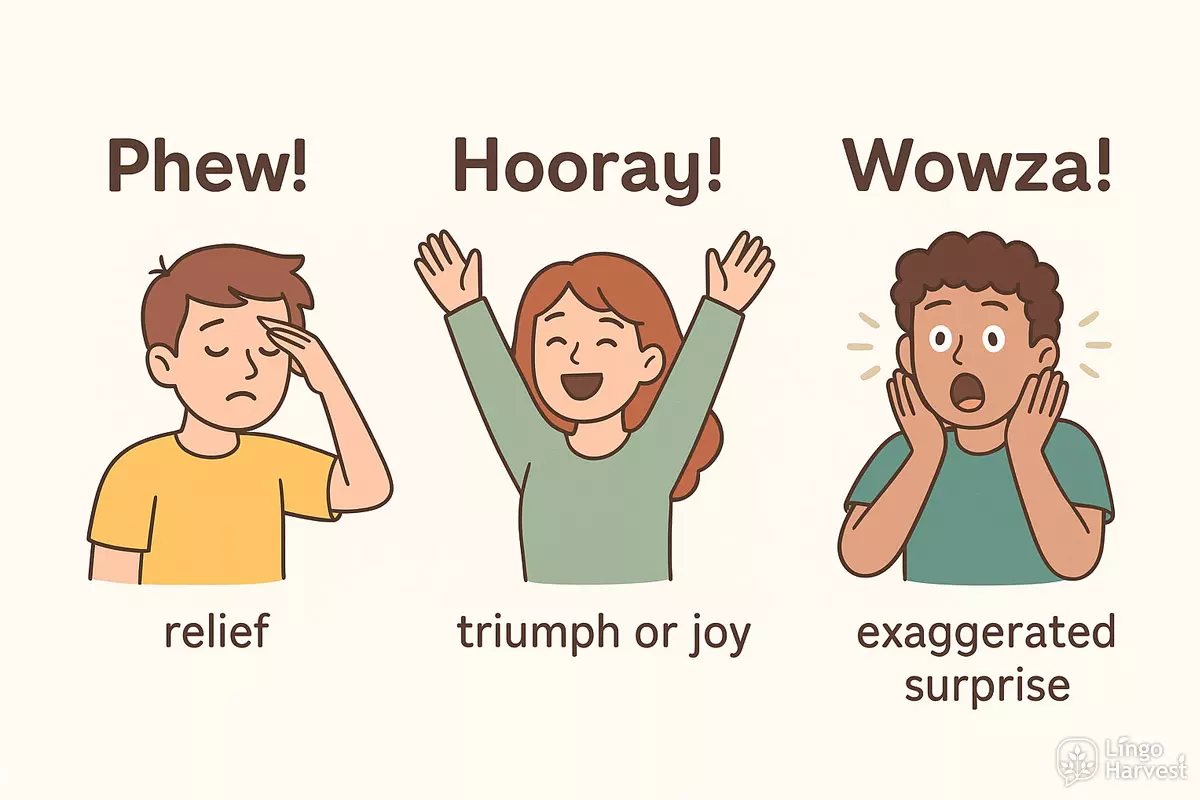
Words like "wow," "ouch," or "yay" instantly signal strong emotions. Their primary function is to project what the speaker is feeling, often without explanation. The tone can range from excitement to pain, surprise, or disappointment. For example:
- Wow! – surprise or admiration
- Ouch! – pain or discomfort
- Yay! – happiness or celebration
- Ugh! – frustration or disgust
- Phew! – relief
- Oops! – minor mistake or accident
- Hooray! – triumph or joy
- Oh no! – dismay
- Wowza! – exaggerated surprise
- Yikes! – alarm or concern
Greeting and Response Interjections
Some interjections are used to start or acknowledge interactions, setting the mood for conversation. They often reflect courtesy, enthusiasm, or familiarity, such as:
- Hey! – friendly or casual greeting
- Hello! – standard greeting
- Hi! – informal greeting
- Goodbye! – farewell
- See ya! – informal farewell
- Thanks! – gratitude
- Sure! – agreement
- Nope! – negative reply
- Absolutely! – strong agreement
- Maybe! – uncertainty
Shaping the Mood with Intonation
The emotional weight of an interjection changes with vocal emphasis. A softly spoken "oh" may show mild surprise, while a shouted "oh!" suggests shock or alarm. Punctuation also guides the reader’s interpretation—exclamation marks increase intensity, while ellipses or periods can signal hesitation or understatement.
Comparing Types of Interjections
| Type | Typical Use and Tone | Examples |
|---|---|---|
| Emotional | Expresses feelings—often spontaneous and strong | Wow, Ouch, Yikes, Ugh |
| Greeting | Initiates or ends an interaction; sets a friendly or formal mood | Hello, Hey, Hi, Goodbye |
| Response | Signals agreement, disagreement, or a quick reaction | Yes, Nope, Sure, Maybe |
Understanding these nuances lets speakers and writers adjust their language to match the intended mood or reaction, ensuring their message is clear and appropriately colored by feeling.
Structural Notes
Interjections serve as expressive tools in language, punctuating speech with emotion, signaling responses, or offering greetings. Their structure is often simple—sometimes just a single syllable or word—yet their function can be nuanced depending on context and intent.
Position in Sentences
Most interjections stand alone at the beginning of a sentence or utterance, separated by a comma or exclamation point. This placement emphasizes their spontaneous nature. Occasionally, they appear mid-sentence, set off by punctuation, especially in informal dialogue.
Common Forms and Variations
Interjective expressions vary in length and complexity. Some are fixed words, while others are sounds or phrases adapted to context. Many emotional exclamations are onomatopoeic, mimicking natural reactions (like “ugh” or “wow”).
- Short, single-word forms: “Hey!”, “Oops!”, “Wow!”
- Longer phrases: “Oh my!”, “Good grief!”
- Sound-based: “Ahem”, “Phew”, “Yikes”
- Reduplications: “Ha ha”, “Tut tut”
Functional Comparison of Interjection Types
Below is a comparison of how different classes of interjections operate in everyday usage.
| Type | Typical Usage & Examples |
|---|---|
| Emotional | Express feelings or reactions, often spontaneous. Examples: “Wow!”, “Ouch!”, “Yay!”, “Ugh!” |
| Greeting | Used to initiate interaction or acknowledge presence. Examples: “Hello!”, “Hey!”, “Hi!”, “Yo!” |
| Response | React to statements, questions, or situations. Examples: “Sure!”, “Nope!”, “Eh!”, “Well...” |
Expanded Examples of Interjections
A variety of expressions fall under each category. Here are several common interjections, grouped by function:
- Emotional: “Ah!”, “Eek!”, “Phew!”, “Bravo!”, “Yikes!”, “Alas!”, “Hurrah!”, “Boo!”
- Greeting: “Howdy!”, “Greetings!”, “Salutations!”, “Yo!”, “Welcome!”
- Response: “Okay!”, “Fine!”, “Indeed!”, “Right!”, “No way!”, “Huh?”, “Exactly!”
Notes on Punctuation and Capitalization
Interjections often appear with exclamation marks to convey intensity, but commas or periods can also be used for milder tone. When starting a sentence, they are capitalized; within a sentence, capitalization depends on their position and emphasis. In summary, the structure of interjections is marked by brevity, flexibility, and expressive punctuation. Their form and placement highlight their unique role in conveying emotion, signaling responses, or establishing social connection in conversation.
Examples
When exploring different kinds of interjections, it’s helpful to see how they work in various real-life situations. Each type—emotional, greeting, and response—serves a unique communicative purpose. Below, you’ll find a range of sample words and phrases, along with explanations and usage scenarios that illustrate how these short expressions add color and clarity to conversations.
Emotional Interjections
These words or sounds express feelings such as surprise, joy, disappointment, or pain. They often stand alone and convey emotion instantly without needing a full sentence.
- Wow! → amazement or admiration (“Wow! That’s incredible!”)
- Oh no! → dismay or concern (“Oh no! I forgot my keys.”)
- Yikes! → fear or alarm (“Yikes! That was close.”)
- Ouch! → sudden pain (“Ouch! That hurt.”)
- Hurray! → happiness or celebration (“Hurray! We won!”)
- Uh-oh! → realization of a mistake (“Uh-oh! I made a mess.”)
- Alas! → regret or sorrow (“Alas! It was not to be.”)
- Yay! → excitement or delight (“Yay! School’s out!”)
- Ugh! → disgust or frustration (“Ugh! This is so annoying.”)
- Bravo! → praise or approval (“Bravo! Excellent performance!”)
Greeting Interjections
These serve to start or end interactions politely or warmly. They are often used when meeting or parting with someone.
- Hello! → general greeting (“Hello! How are you?”)
- Hey! → informal greeting (“Hey! What’s up?”)
- Hi! → casual greeting (“Hi! Nice to see you.”)
- Goodbye! → parting (“Goodbye! See you soon.”)
- Bye! → informal farewell (“Bye! Take care.”)
- Welcome! → greeting someone arriving (“Welcome! Come in.”)
- Yo! → very informal greeting (“Yo! Long time no see.”)
- Hiya! → friendly, informal greeting (“Hiya! How’s it going?”)
Response Interjections
These are used to reply quickly, to show agreement, disagreement, understanding, or other reactions in a conversation.
| Response Interjection | Typical Use |
|---|---|
| Yes! | Affirmation (“Yes! That’s correct.”) |
| No! | Negation (“No! I don’t think so.”) |
| Hmm… | Thinking or considering (“Hmm… I’m not sure.”) |
| Uh-huh | Agreement (“Uh-huh, I see.”) |
| Eh? | Request for repetition or clarification (“Eh? What did you say?”) |
| Well… | Hesitation or introduction to a response (“Well… it depends.”) |
| Okay! | Acceptance or readiness (“Okay! Let’s go.”) |
| Sure! | Agreement or permission (“Sure! No problem.”) |
Using these expressive words and phrases can make speech more natural and lively. They help listeners immediately understand the speaker’s intent, mood, or reaction, often bridging the gap between formal language and everyday conversation.
Practice Set
To reinforce your understanding of emotional, greeting, and response interjections, try these exercises. You'll find sentence completion, identification tasks, and a matching activity. Focus on recognizing the role and feeling each word conveys, not just its category.
1. Complete the Sentences
Fill in the blanks with an appropriate interjection from the options in parentheses. Each option fits a specific type: emotional, greeting, or response.
- ____! I didn’t expect to see you here. (Wow, Hello, Oops)
- ____, that was a close call! (Yikes, Hi, Ahem)
- ____, can you hear me at the back? (Hey, Alas, Oh)
- ____! You got the answer right. (Congratulations, Bravo, Well)
- ____, I must have made a mistake. (Oops, Good morning, Hurray)
Show answers
- Hello!
- Yikes,
- Hey,
- Bravo!
- Oops,
2. Identify the Type
Read each interjection and decide if it is emotional, a greeting, or a response.
- Alas
- Hey
- Oops
- Goodbye
- Yes
- Wow
- No
- Cheers
- Well
- Yay
Show answers
- Alas – Emotional
- Hey – Greeting
- Oops – Emotional
- Goodbye – Greeting
- Yes – Response
- Wow – Emotional
- No – Response
- Cheers – Greeting
- Well – Response
- Yay – Emotional
3. Matching Exercise
Match the interjection to its likely meaning or use.
| Interjection | Typical Meaning/Use |
|---|---|
| Oops | Mistake or accident |
| Wow | Surprise or admiration |
| Hey | Attracting attention, greeting |
| No | Denial or negative response |
| Yay | Celebration or happiness |
| Well | Hesitation or response |
| Alas | Sadness or regret |
| Hello | Greeting |
| Yes | Affirmation or agreement |
| Cheers | Toast or informal farewell |
4. Create Your Own
Write three original sentences, each using a different type of interjection (one emotional, one greeting, one response). Challenge yourself to use less common examples if you can.
Show answers
- Emotional: Ugh, I can’t believe it’s raining again.
- Greeting: Howdy, partner!
- Response: Absolutely, I’ll join you at noon.