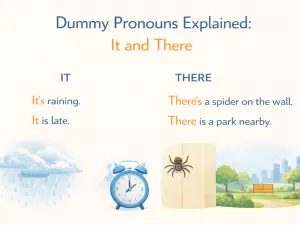
How to Use Nouns After “There Is” and “There Are”

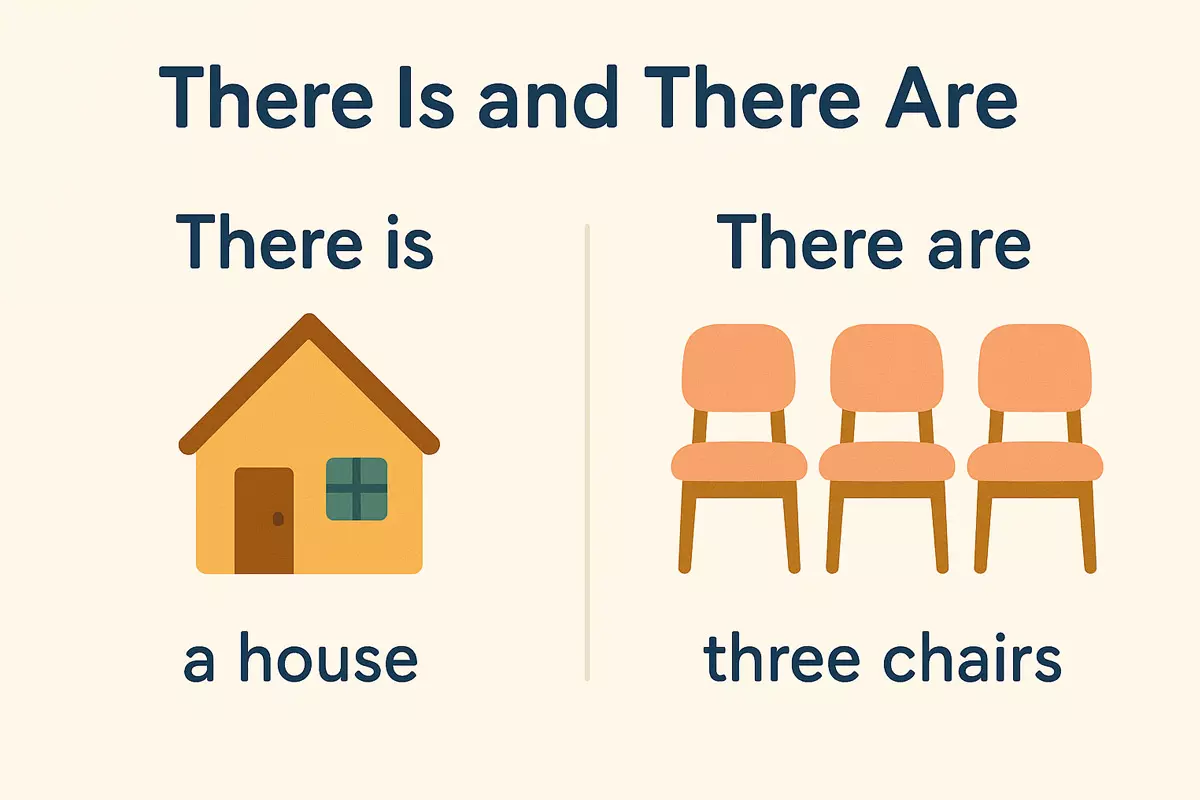 Here we how to use there is and there are, focusing on their meaning, usage with countable and uncountable nouns, singular and plural forms, and patterns for affirmative, negative, and question sentences.
Have you ever wondered why we say "there is a cat" but "there are cats"? Understanding when to use "there is" versus "there are" depends on whether the noun that follows is singular or plural. Use "there is" for a single item or something uncountable, such as "there is water on the table." Use "there are" for more than one item, like "there are books on the shelf." By paying attention to the number of things you are describing, your English will sound much more natural and clear in everyday conversations.
Meaning and Usage
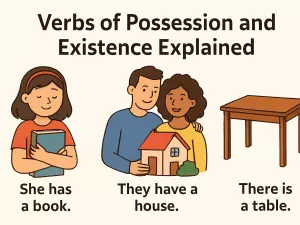
The phrases “there is” and “there are” introduce the existence or presence of something. They’re commonly used to talk about things, people, or situations in a general way, often when the subject is new information. The choice between “is” and “are” depends on whether you’re mentioning a single item or more than one.
When to Use “There Is” and “There Are”
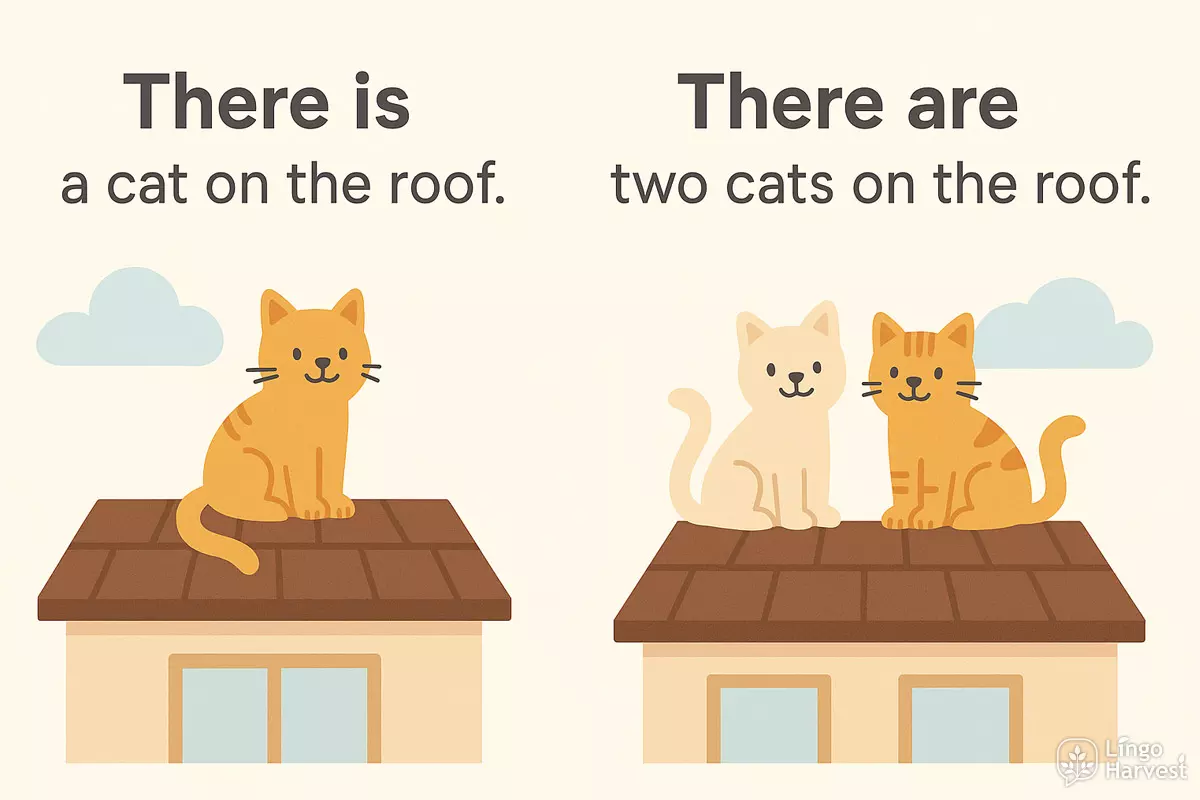
Use “there is” for singular nouns or uncountable nouns, and “there are” for plural nouns. This structure is helpful for making statements, asking questions, or describing what exists in a particular place or situation.
| Singular / Uncountable | Plural |
|---|---|
| There is a cat on the roof. | There are two cats on the roof. |
| There is some milk in the fridge. | There are many books on the table. |
| There is a problem. | There are several options. |
| There is water in the glass. | There are students in the classroom. |
Common Patterns and Examples
- There is a dog outside. ✅
- There are three chairs in the kitchen.
- Is there a message for me?
- Are there any apples left?
- There is no electricity.
- There are a few things to discuss.
- There is some sugar in the bowl.
- There are too many cars on the street.
- There is nothing else to do.
- There are new students this year.
- There is a chance of rain tonight.
- There are problems we need to solve.
- There is plenty of time.
- There are several ways to answer.
- There is no doubt about it.
Pay attention to the noun following “there is/are.” If it’s singular or uncountable, use “is.” If it’s plural, use “are.” This agreement helps sentences sound natural and clear. In questions, simply invert the verb: “Is there…?” or “Are there…?”
Countable vs Uncountable Nouns
Understanding the difference between nouns that can be counted and those that cannot is essential when using “there is” and “there are.” This distinction affects which verb form you use and how you structure your sentences in English.
What Are Countable Nouns?
Countable nouns refer to things you can count as individual units. They have both singular and plural forms. For example, you can say “one apple” or “two apples.” These nouns work with numbers and quantifiers like “many,” “a few,” or “several.”
- book → books
- chair → chairs
- idea → ideas
- student → students
- car → cars
- dog → dogs
- tree → trees
- child → children
- pen → pens
- house → houses
What Are Uncountable Nouns?
Uncountable nouns (also called mass nouns) describe substances, concepts, or collective categories that you cannot count as separate items. These words do not have a plural form, and they often refer to things like liquids, qualities, or abstract ideas. You would not say “waters” or “knowledges” in standard usage.
- water
- information
- advice
- music
- rice
- furniture
- money
- news
- bread
- equipment
How This Affects “There Is” and “There Are”
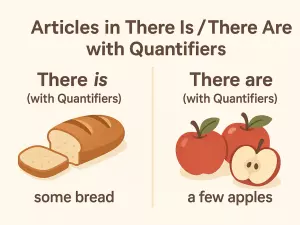
The choice between “there is” and “there are” depends on whether the noun is singular, plural, or not countable. Use “there is” for singular and uncountable nouns, and “there are” for plural countable nouns.
| Noun Type | Example with “There is/are” |
|---|---|
| Singular countable | There is a cat on the roof. |
| Plural countable | There are three cats on the roof. |
| Uncountable | There is milk in the fridge. |
| Uncountable | There is some information in the email. |
Common Mistakes to Avoid
It’s easy to confuse these noun types, especially when translating from languages with different grammar rules. Remember:
- ❌ There are a bread on the table. → ✅ There is bread on the table.
- ❌ There is many books here. → ✅ There are many books here.
Mastering this distinction will help you create more accurate and natural English sentences.
Singular vs Plural Forms
Understanding when to use a singular or plural noun after “there is” and “there are” is essential for clear English communication. The choice depends on the number of items or people you are referring to. “There is” is followed by a singular noun or an uncountable noun, while “there are” introduces a plural noun. This distinction helps listeners and readers immediately understand how many items are present.
When to Use “There Is”
Use “there is” before a singular countable noun or any uncountable noun. For example:
- There is a book on the table. ✅
- There is milk in the fridge. ✅
- There is an apple in the basket. ✅
- There is no time left. ✅
Notice that uncountable nouns (e.g., “water,” “information”) also require “there is.”
When to Use “There Are”
Switch to “there are” if you’re talking about more than one countable item:
- There are two books on the table. ✅
- There are several apples in the basket. ✅
- There are many reasons to go. ✅
- There are children playing outside. ✅
With plural nouns, “are” signals that you’re mentioning more than one thing or person.
Common Mistakes to Avoid
Using the wrong verb form is a frequent error. For example:
- There is two books on the table. ❌ (Incorrect)
- There are an apple in the basket. ❌ (Incorrect)
Always match the verb (“is” or “are”) with the noun’s number.
Quick Reference Table
| Verb Phrase | Appropriate Noun Type & Example |
|---|---|
| There is | Singular countable noun: There is a cat. |
| There is | Uncountable noun: There is water. |
| There are | Plural countable noun: There are cats. |
| There are | Plural with numbers: There are five books. |
Expanded Examples
Here are more sample phrases showing correct usage:
- There is a message for you.
- There is no electricity.
- There are three chairs in the room.
- There are many options available.
- There is a problem with the car.
- There are students waiting outside.
- There is a spider in the corner.
- There are flowers in the garden.
- There is coffee on the table.
- There are clouds in the sky.
- There is a movie tonight.
- There are sandwiches in the fridge.
Using the correct form not only avoids confusion but also helps your English sound natural and accurate. Matching the verb and noun number is a simple rule that makes a big difference in everyday communication.
Affirmative and Negative Patterns
Understanding how to use positive and negative constructions with “there is” and “there are” is essential for clear English. These patterns help you describe what exists or doesn’t exist in a place or situation. The structure you choose depends on whether you’re talking about singular or plural nouns, as well as whether you want to affirm or deny the presence of something.
Affirmative Forms
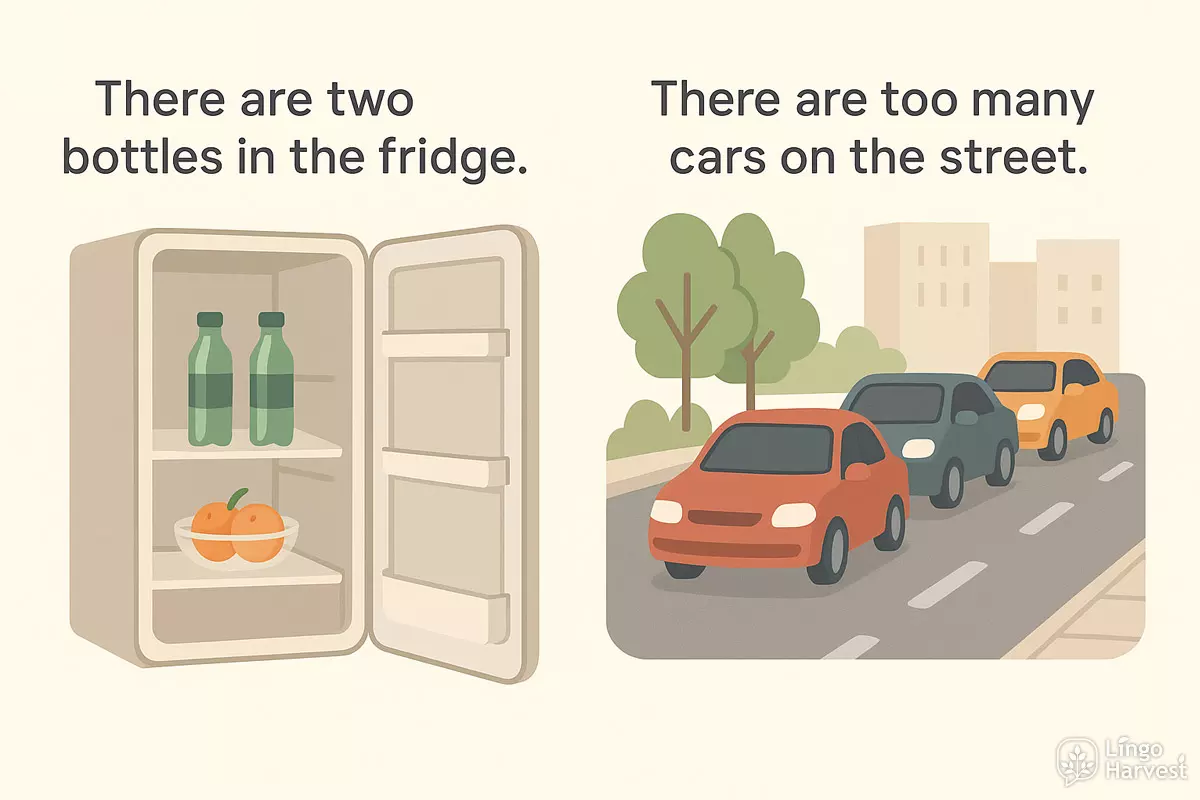
Use “there is” for singular or uncountable nouns, and “there are” for plural nouns. This is the basic way to state that something exists or is present.
- There is a book on the table.
- There is some water in the glass.
- There are three cats in the garden.
- There are many people in the room.
- There is an apple in the basket.
- There are several options available.
- There is a problem with the computer.
- There are two bottles in the fridge.
- There is enough time to finish.
- There are too many cars on the street.
Negative Forms
To express that something does not exist or is not present, use “there isn’t” or “there is not” for singular/uncountable nouns, and “there aren’t” or “there are not” for plurals. The contraction is common in spoken English.
- There isn’t any milk left.
- There are not any cookies in the jar.
- There isn’t a bus stop nearby.
- There aren’t any children in the park.
- There isn’t much time.
- There aren’t enough chairs.
- There isn’t a solution right now.
- There aren’t any messages for you.
- There isn’t any water in the bottle.
- There aren’t any trains at night.
Quick Comparison Table
| Pattern | Example |
|---|---|
| Affirmative (singular/uncountable) | There is a dog in the yard. |
| Affirmative (plural) | There are books on the shelf. |
| Negative (singular/uncountable) | There isn’t any sugar left. |
| Negative (plural) | There aren’t any tickets available. |
Tips for Usage
- Remember to match “is” with singular or uncountable nouns, and “are” with plurals.
- In negative forms, “any” is often used with plural or uncountable nouns.
- For questions, invert the word order (e.g., “Is there a problem?”).
- Use contractions (“isn’t”, “aren’t”) in informal speech and writing.
By mastering these sentence structures, you’ll be able to describe presence or absence of things more naturally in English conversations and writing.
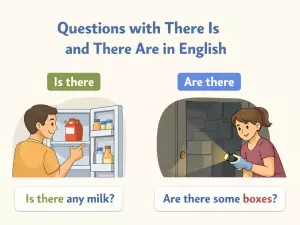
Questions with There Is/Are
Forming questions with “there is” and “there are” is a practical way to ask about the existence or presence of people, objects, or situations. In English, the word order changes in questions: the verb (“is” or “are”) comes before “there.” This structure is useful for checking information, clarifying details, or starting conversations about what is present or available.
How to Form These Questions
To create a question, place the verb (“is” or “are”) before “there.” For example:
- Is there a problem?
- Are there any snacks left?
If you want to ask about quantity or specifics, you can add words like “how many” or “what.” For example:
- Is there a bathroom on this floor?
- Are there many students in the class?
- How many books are there on the table?
Common Patterns and Examples
Here are some useful question patterns with sample sentences:
- Is there a bank nearby?
- Is there any milk in the fridge?
- Is there a reason for the delay?
- Are there any messages for me?
- Are there enough chairs for everyone?
- Are there children in the park?
- Are there any tickets available?
- Is there a difference between these options?
- How many people are there in your group?
- What is there to do in this city?
- Are there more cookies?
- Is there a train at 8 o’clock?
- Are there good restaurants around here?
- Is there a way to fix this?
- How much time is there before the meeting?
- Are there any questions?
- Is there an answer to this question?
Short Answers to These Questions
When responding, you can use short answers:
- Yes, there is. ✅
- No, there isn’t. ❌
- Yes, there are. ✅
- No, there aren’t. ❌
Summary Table: Question Forms
| Question Type | Example |
|---|---|
| Singular (Is there...?) | Is there a problem? |
| Plural (Are there...?) | Are there any apples? |
| How many + plural noun | How many cars are there? |
| Is/Are there + adjective/noun | Are there good options? |
By mastering these patterns, you can confidently ask about the existence or presence of things in both formal and informal situations. Experiment with different nouns and question words to make your English more flexible and natural.
Common Mistakes
Using "there is" and "there are" with nouns can seem simple, but English learners often encounter recurring errors. These usually involve agreement between the verb and noun, incorrect use of singular or plural forms, or confusion with countable and uncountable nouns.
Agreement Issues
One frequent pitfall is mismatching the verb with the noun that follows. "There is" should pair with singular or uncountable nouns, while "there are" matches plural nouns. Mixing these up can make sentences sound unnatural or incorrect.
- Incorrect: There is many problems. ❌
- Correct: There are many problems. ✅
- Incorrect: There are a big cake on the table. ❌
- Correct: There is a big cake on the table. ✅
Countable vs. Uncountable Nouns
Another source of confusion comes from not distinguishing between countable and uncountable nouns. For example, "information" is uncountable, so "there is" is used, not "there are."
- Incorrect: There are some information about the conference. ❌
- Correct: There is some information about the conference. ✅
- Incorrect: There are a furniture in the room. ❌
- Correct: There is some furniture in the room. ✅
Word Order and Extra Words
Students sometimes add unnecessary words or confuse the order of elements. The verb must come before the noun, and articles (a, an, the) or quantifiers (some, any, many) should be used correctly.
- Incorrect: There some people are outside. ❌
- Correct: There are some people outside. ✅
- Incorrect: There is the apples in the basket. ❌
- Correct: There are apples in the basket. ✅
Summary Table: Correct Usage Patterns
| Pattern | Example |
|---|---|
| There is + singular noun | There is a cat in the garden. |
| There is + uncountable noun | There is water in the glass. |
| There are + plural noun | There are books on the shelf. |
| There are + quantifier + plural noun | There are many options available. |
Other Frequent Missteps
Learners also tend to:
- Use "there's" with plural nouns (e.g., "There's two dogs" instead of "There are two dogs").
- Forget articles with singular countable nouns (e.g., "There is cat" instead of "There is a cat").
- Apply "there is" to lists starting with a plural noun ("There is apples and oranges" instead of "There are apples and oranges").
- Confuse "there is/are" with "it is/they are."
- Use double subjects ("There it is a problem" instead of "There is a problem").
Paying attention to noun forms, verb agreement, and correct structure will help avoid these typical errors when using "there is" and "there are" in English sentences.
Practice: Write Sentences with There Is/Are
To gain confidence using “there is” and “there are,” it helps to make your own sentences. Start with simple ideas about what you see around you, and pay attention to whether the noun is singular or plural. Remember, “there is” matches with singular nouns or uncountable nouns, and “there are” fits plural nouns.
Sentence Building Tasks
Look at the prompts below. Use each one to write a sentence using “there is” or “there are.” Think about number (singular/plural) and choose the correct form. Try to expand your sentences by adding adjectives or location details.
- a cat / on the sofa
- five books / on the table
- some water / in the glass
- a lot of people / in the park
- an old tree / in the yard
- many cars / in the parking lot
- no milk / in the fridge
- two windows / in this room
- a letter / for you
- several chairs / near the wall
Show answers
- There is a cat on the sofa.
- There are five books on the table.
- There is some water in the glass.
- There are a lot of people in the park.
- There is an old tree in the yard.
- There are many cars in the parking lot.
- There is no milk in the fridge.
- There are two windows in this room.
- There is a letter for you.
- There are several chairs near the wall.
Common Patterns
Below are some typical sentence structures for “there is” and “there are.” Review these to see how the grammar fits with different nouns and phrases:
- There is a/an + singular noun + (place/time).
- There are + plural noun + (place/time).
- There is + uncountable noun + (place/time).
- There are + number + plural noun + (place/time).
- There is no + singular/uncountable noun + (place/time).
- There are no + plural noun + (place/time).
Spot the Error
Read each sentence. Decide if it is correct (✅) or incorrect (❌). If it is wrong, think about how to fix it.
- There is three apples on the plate.
- There are a dog in the yard.
- There is some sugar in the bowl.
- There are two doors in the kitchen.
- There is a beautiful garden behind the house.
Show answers
- ❌ There are three apples on the plate.
- ❌ There is a dog in the yard.
- ✅ Correct.
- ✅ Correct.
- ✅ Correct.
Quick Reference: Singular vs. Plural
| Singular/Uncountable | Plural |
|---|---|
| There is a cat. | There are cats. |
| There is an apple. | There are apples. |
| There is some water. | There are some bottles of water. |
| There is a problem. | There are problems. |
| There is no milk. | There are no cookies. |
Practice often by describing your surroundings. With repetition, using “there is” and “there are” will become natural in your writing and speaking.