Dummy Pronouns Explained: It and There

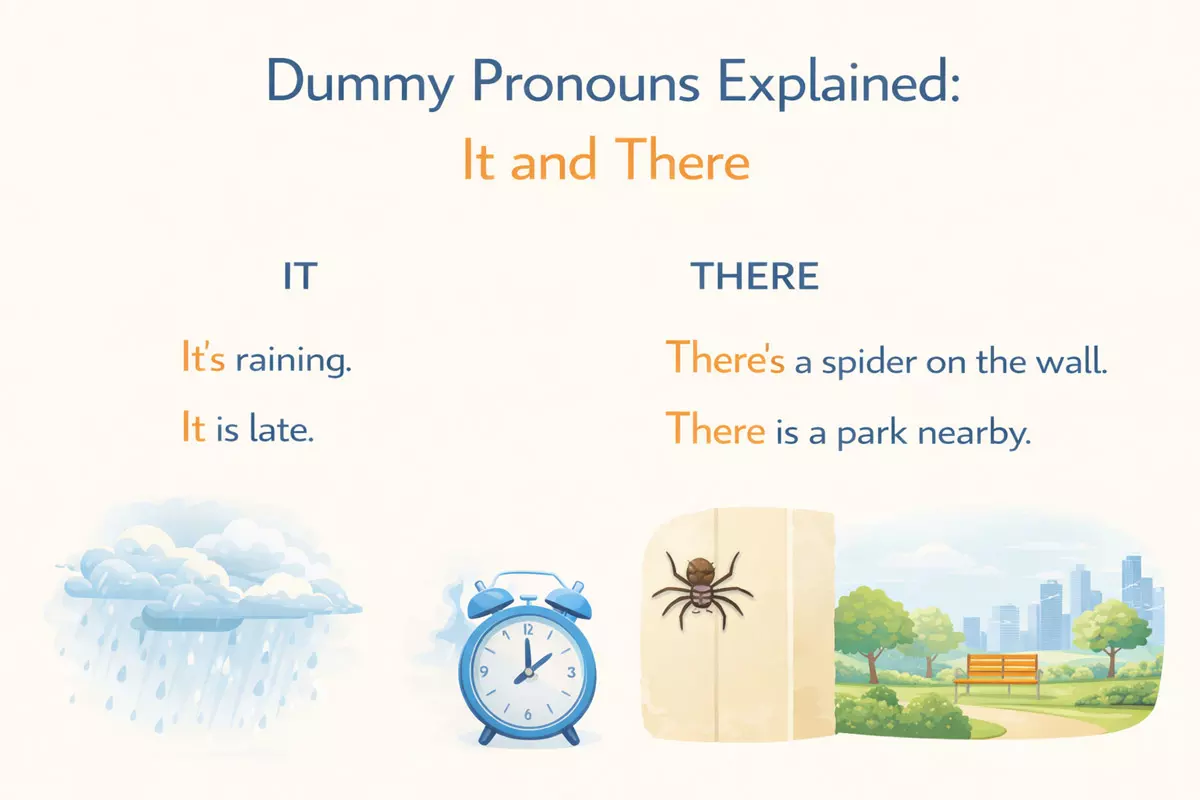 This article explains dummy pronouns like it and there, showing how they work with weather, time, distance, and situations. It covers existential there, agreement rules, common mistakes, and offers practice with correct sentence patterns.
- What dummy pronouns are: pronouns without a real referent
- Dummy it for weather, time, distance, and situations
- Existential there: There is/There are meaning and structure
- It vs there: choosing the correct pattern
- Agreement basics: There is vs There are
- Common learner mistakes: *Is raining, *There have
- Using dummy it with clauses: It’s important to...
- Practice: rewrite sentences using it/there correctly
Have you ever noticed that English often starts sentences with words like "it" or "there" even when they don't seem to refer to anything specific? These are called placeholder subjects, and they play a crucial role in making sentences grammatically correct and easier to understand. By learning how and when to use these placeholders, you can improve your English fluency and make your sentences sound more natural, especially in both spoken and written communication.
What dummy pronouns are: pronouns without a real referent
Dummy pronouns are words like "it" and "there" that act as placeholders in sentences, even though they do not refer to any specific person, place, or thing. In English, some sentences need a subject for grammatical reasons, but sometimes there isn’t a real subject to refer to. Instead of leaving the subject position empty, English uses these stand-in words to complete the sentence.
Why do we use dummy pronouns?
English grammar typically requires every sentence to have a subject. When there is no logical subject—like when talking about the weather, time, or existence—dummy pronouns fill the gap. Without them, sentences would sound incomplete or ungrammatical.
Common situations for dummy pronouns
You’ll often see these pronouns in the following contexts:
- Talking about the weather: It is raining.
- Describing time or distance: It is late. / It is a long way to the station.
- Expressing general existence: There is a book on the table.
- Introducing delayed subjects: It seems that she left early.
- Starting sentences for emphasis: It was John who called.
- Using with infinitives or clauses: It is important to listen.
- Reporting events or situations: There happened to be a storm.
- Stating facts impersonally: It appears that the meeting is canceled.
- Describing conditions: It would be better to wait.
- For existential statements: There are five people in the room.
- Announcing changes: There comes a time when you must decide.
- With “seem” and “appear”: It seems they’re gone.
- Weather idioms: It snowed last night.
- Impersonal advice: It helps to practice daily.
- With “be” for events: There was a concert yesterday.
How dummy pronouns differ from regular pronouns
Unlike “he,” “she,” “they,” or “we,” these stand-ins don’t point to any noun or previously mentioned idea. They exist purely for grammatical structure, not for meaning.
| Pronoun Type | Refers to Something? | Example Sentence |
|---|---|---|
| Personal pronoun | Yes ✅ | She likes music. |
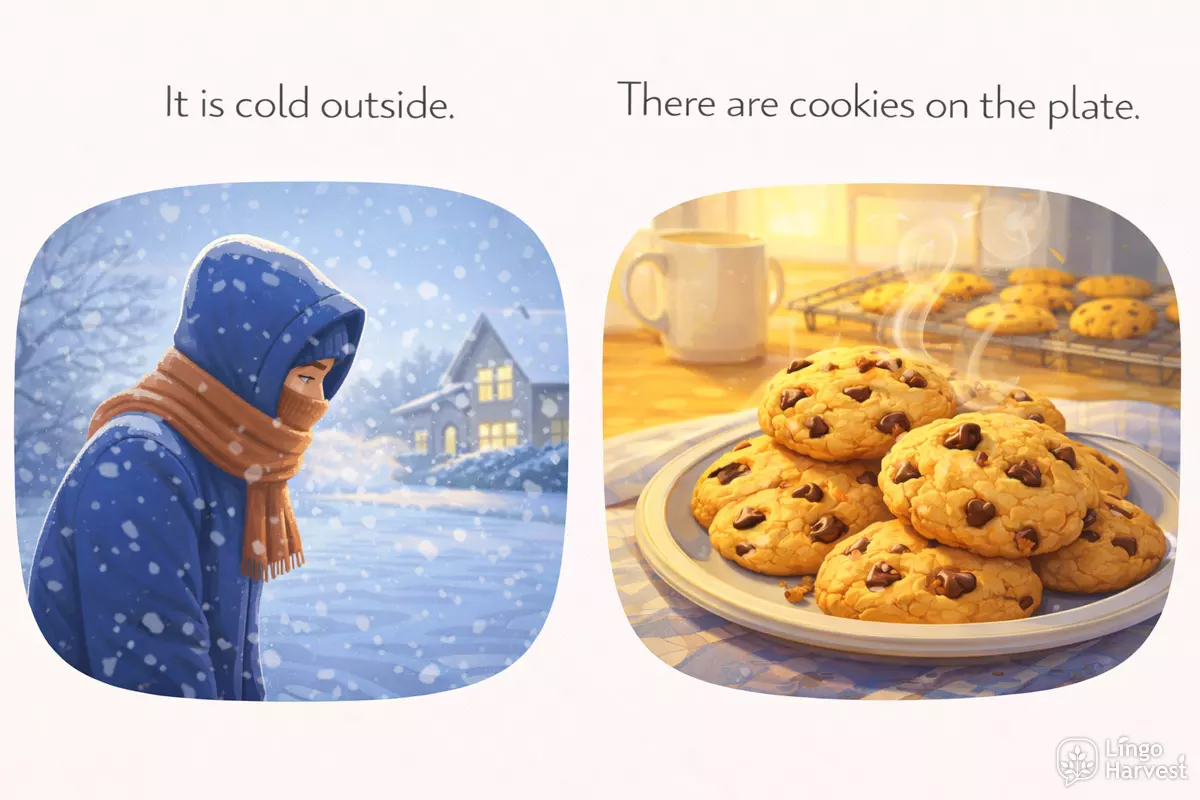
| Dummy pronoun | No ❌ | It is cold outside. |
| Dummy pronoun | No ❌ | There are cookies on the plate. |
| Demonstrative pronoun | Yes ✅ | This is my bag. |
Key takeaway
Placeholding pronouns like "it" and "there" keep English sentences clear and grammatically correct, even when there’s nothing concrete to refer to. They’re essential for expressing weather, time, existence, and many impersonal situations.
Dummy it for weather, time, distance, and situations
In English, the pronoun it often appears in sentences where there’s no specific subject. This is especially common when talking about weather, time, distance, or general situations. Native speakers use this construction naturally, but it can be confusing for learners since “it” doesn’t refer to anything concrete in these cases.
Weather Expressions
When discussing the weather, “it” acts as a placeholder subject. The sentence needs a subject for grammatical reasons, even though nothing is really being identified.
- It’s raining.
- It was sunny yesterday.
- It will snow tonight.
- It gets windy in the afternoon.
- It feels humid today.
Telling the Time
For time, English also requires a subject, so “it” fills that role. The focus is on the time itself rather than a person or thing.
- It’s ten o’clock.
- It was late when we arrived.
- It’s almost midnight.
- It will be noon soon.
Talking About Distance
When describing how far something is, “it” acts as a grammatical subject. This helps speakers focus on the measurement itself.
- It’s five miles to the beach.
- It isn’t far from here.
- It takes two hours to drive there.
- It’s a short walk to the station.
Describing Situations or General Circumstances
“It” often introduces general comments or sets the scene without referring to a specific object or person.
- It’s important to stay hydrated.
- It seems strange to me.
- It’s hard to say.
- It appears that everyone is ready.
- It would be nice to visit Paris.
- It looks like rain.
Summary Table: Dummy “it” in Context
| Type | Example Sentence |
|---|---|
| Weather | It’s cold outside. |
| Time | It’s 3:30 PM. |
| Distance | It’s twenty kilometers to the city. |
| Situation | It’s difficult to explain. |
These uses of “it” are essential for natural-sounding English. They might not refer to a specific thing, but they provide necessary structure and clarity in everyday conversation.
Existential there: There is/There are meaning and structure
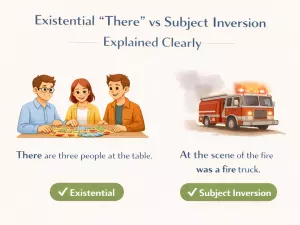
In English, the word there often acts as a “dummy” or “existential” subject when we want to talk about the existence or presence of something. This is different from using there as an adverb of place (Put it there). The existential use is a common way to introduce new information, especially when the actual subject comes later in the sentence.
What does existential there do?
It helps us talk about what exists, happens, or is present. Instead of starting with the thing itself, we start with “there,” followed by a form of the verb be (is, are, was, were, etc.), and then mention what exists. This structure is especially useful in spoken and written English when introducing topics, describing situations, or giving information in a neutral way.
Basic patterns and variations
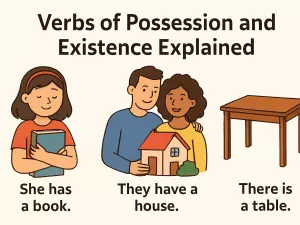
- There is a book on the table. (Singular, present)
- There are two cats outside. (Plural, present)
- There was a loud noise last night. (Singular, past)
- There were many people at the party. (Plural, past)
- There will be a meeting tomorrow. (Future)
- There has been an accident. (Present perfect)
- There had been some confusion. (Past perfect)
- There can be problems with this approach. (Modal + be)
- There may be a solution. (Modal + be)
- There should be more information. (Modal + be)
Structure details
The basic structure is:
- There + be + subject (+ place/time)
The verb be agrees with the real subject that comes after it. For example, we say There is a cat (singular) but There are cats (plural). This agreement is important for correct grammar.
| Form | Example |
|---|---|
| There is (singular) | There is a problem. |
| There are (plural) | There are many solutions. |
| There was (singular, past) | There was an error in the report. |
| There were (plural, past) | There were several mistakes. |
| There will be (future) | There will be a test next week. |
| There has been (present perfect) | There has been a change. |
| There had been (past perfect) | There had been delays. |
Common uses and features
- Great for introducing new information: There’s a new restaurant in town.
- Often used in spoken English for natural flow.
- Can begin sentences when the real subject is unknown, unimportant, or comes later.
- Frequently used with quantifiers: There are some apples. There isn’t any milk.
- Can combine with modals: There might be a delay. There could be a problem.
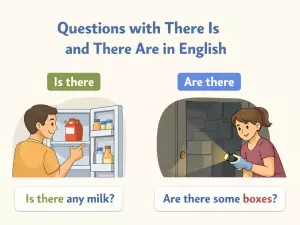
- Negative and question forms: Is there a bathroom? There aren’t any tickets left.
In summary, using existential there is a practical way to express the presence, absence, or existence of people, things, or situations. It keeps sentences clear, neutral, and easy to follow, especially when introducing new topics or facts.
It vs there: choosing the correct pattern
Understanding when to use "it" or "there" as a dummy pronoun depends on the sentence structure and the type of information you want to highlight. Both words fill the subject position when there is no specific noun to refer to, but their usage patterns differ.
When to use "it"
"It" typically functions as a subject when referring to time, weather, distance, or general conditions. It can also introduce clauses where the real subject comes later in the sentence. Here are some common uses:
- Weather: It is raining.
- Time: It’s 7 o’clock.
- Distance: It’s five miles to the station.
- Impersonal statements: It seems they are late.
- With infinitive or gerund clauses: It’s important to study.
- With that-clauses: It’s clear that he knows.
- With adjectives describing situations: It’s easy to forget.
- Referring to an unknown or unspecified thing: It knocked at the door.
When to use "there"
"There" introduces sentences where the real subject comes after the verb, often to talk about the existence or presence of something. It's common with forms of "be" and sometimes with modal verbs. Typical uses include:
- Stating existence: There is a book on the table.
- Talking about quantities: There are five cars outside.
- Announcing events: There will be a meeting tomorrow.
- Reporting incidents: There was an accident on Main Street.
- With modal verbs: There might be a problem.
- With past/future forms: There had been a mistake.
- Describing opportunities/possibilities: There could be another way.
- With indefinite subjects: There seems to be confusion.
Quick comparison: "it" vs "there"
| Pattern | Typical Example |
|---|---|
| "It" for time, weather, distance | It’s sunny today. / It’s 3 km to the beach. |
| "It" + adjective + to/that clause | It’s difficult to decide. / It’s clear that she left early. |
| "There" + be + noun | There is a problem. / There were many people. |
| "There" + modal + be + noun | There may be an issue. / There will be a test. |
Common mistakes to avoid
- Don’t use "it" to introduce the existence of something: ❌ It is a book on the table. ✅ There is a book on the table.
- Don’t use "there" with weather or time: ❌ There is raining. ✅ It is raining.
- Don’t use "there" before adjectives + to/that clauses: ❌ There is important to finish. ✅ It is important to finish.
Choosing between these pronouns depends on whether you are introducing existence or describing a condition. With practice, recognizing the correct pattern becomes much more intuitive.
Agreement basics: There is vs There are
Understanding how “there is” and “there are” agree with the subject is a key part of using dummy pronouns correctly in English. The choice between these two forms depends on whether the noun that follows is singular or plural. “There is” is used for singular nouns or uncountable things, while “there are” fits with plural nouns. The verb must always match the noun that comes after it, not the dummy subject “there.”
How to decide which form to use
Look at the first noun after “there” to determine agreement. This noun is the real subject, even though it comes after the verb. For example, in “There is a problem,” “problem” is singular, so we use “is.” In “There are two problems,” “problems” is plural, so we use “are.” This rule applies even if the sentence begins with a prepositional phrase or other introductory words.
Common patterns and examples
- There is a cat on the roof.
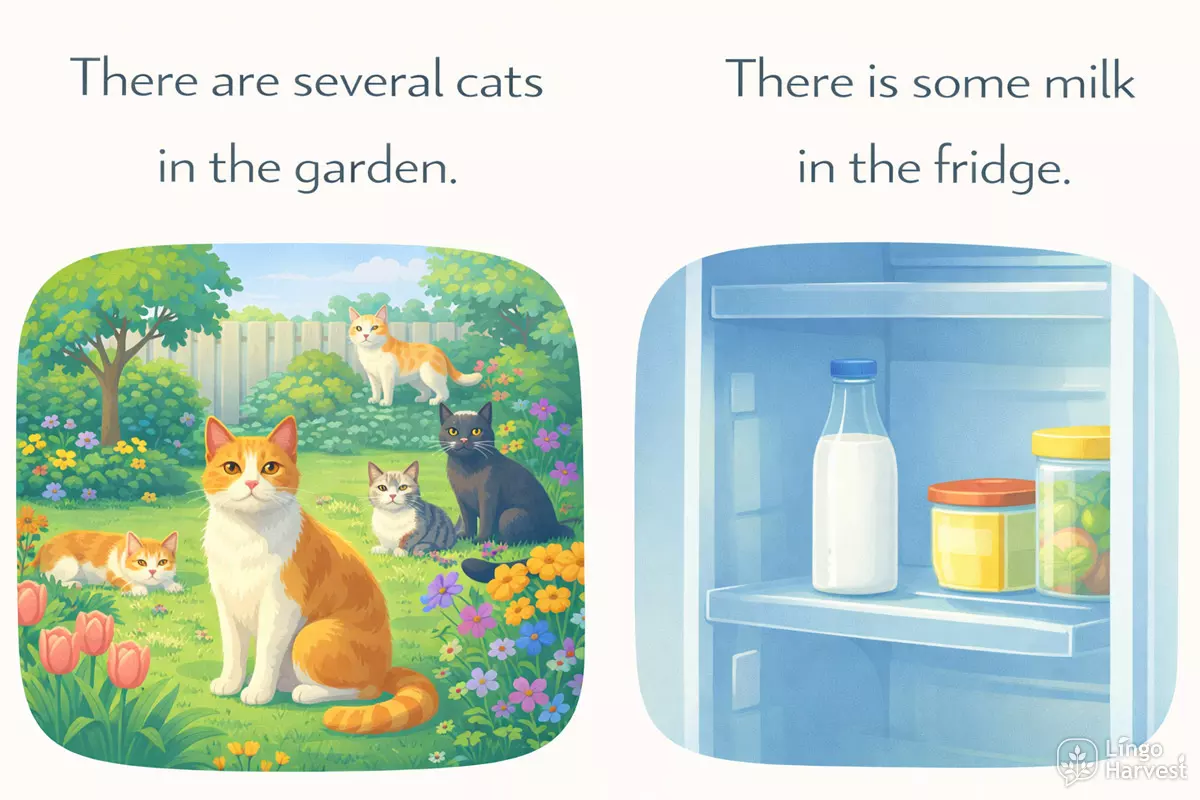
- There are several cats in the garden.
- There is some milk in the fridge.
- There are many options available.
- There is an answer to your question.
- There are two solutions to this issue.
- There is a lot of noise outside.
- There are few reasons to worry.
- There is a book on the table.
- There are books on every shelf.
- There is nothing left to say.
- There are no tickets remaining.
- There is one more thing.
- There are three keys in my pocket.
Special notes and exceptions
Sometimes, sentences start with a list of nouns, mixing singular and plural. In these cases, English usually agrees with the first noun:
- There is a pen and two pencils on the desk. (agrees with “a pen”)
- There are two pencils and a pen on the desk. (agrees with “two pencils”)
In informal speech, you might hear “there’s” used with plural nouns (“There’s two dogs outside”), but this is not standard in formal writing.
Quick reference: Singular vs Plural with “there”
| Example phrase | Correct verb form |
|---|---|
| There is a problem | Singular |
| There are problems | Plural |
| There is some water | Uncountable (singular) |
| There are many reasons | Plural |
| There is nothing | Singular/negative |
| There are no answers | Plural/negative |
Remember, “there” is not the true subject. Always check the first real noun after the verb to pick the correct form. This helps your sentences sound natural and grammatically correct.
Common learner mistakes: *Is raining, *There have
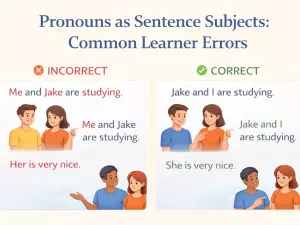
Learners of English often struggle with using “it” and “there” as dummy pronouns, especially when forming statements about the weather or existence. These errors typically happen because some languages don’t require a subject in these cases, but English does. Omitting these necessary pronouns or using the wrong one can make sentences sound unnatural or confusing.
Omitting the dummy subject “it”
A frequent issue is dropping “it” in weather expressions or time statements. For example, people say “Is raining” instead of “It is raining.” In English, a subject is always needed, even if it doesn’t refer to anything specific.
- Incorrect: Is cold outside.
- Correct: It is cold outside.
- Incorrect: Will be dark soon.
- Correct: It will be dark soon.
- Incorrect: Seems like a good idea.
- Correct: It seems like a good idea.
Confusing “there” with “it” (and vice versa)
Another common slip is mixing up “there” and “it” in sentences about existence or location. Learners might say “It is a park near my house” instead of “There is a park near my house.” The word “there” is used to indicate that something exists or is present.
- Incorrect: It is a restaurant on this street.
- Correct: There is a restaurant on this street.
- Incorrect: It are many people here.
- Correct: There are many people here.
Using “there have” instead of “there is/are”
A classic error is saying “There have” instead of “There is/are” or “There has/have been.” This tends to happen when learners transfer grammar from their native language.
- Incorrect: There have a problem.
- Correct: There is a problem.
- Incorrect: There have many cars on the street.
- Correct: There are many cars on the street.
- Incorrect: There have been an accident.
- Correct: There has been an accident.
Summary table: Dummy pronoun errors and corrections
| Common Error | Correct English |
|---|---|
| Is raining | It is raining |
| Will be hot tomorrow | It will be hot tomorrow |
| There have a cat | There is a cat |
| It are two books | There are two books |
| There have many options | There are many options |
| Is late | It is late |
| There have been an error | There has been an error |
| Is important to study | It is important to study |
| There is raining | It is raining |
| It is many people here | There are many people here |
Tips to avoid these mistakes
- Always include “it” in weather, time, and impersonal statements.
- Use “there” to introduce the existence or presence of something.
- Remember: “there is” for singular, “there are” for plural.
- Check if your sentence needs a subject, even if it feels optional in your own language.
Understanding how “it” and “there” work as dummy pronouns will help you produce more natural and correct English sentences. Practice carefully, and these patterns will soon feel automatic.
Using dummy it with clauses: It’s important to...
Dummy "it" often appears at the beginning of sentences when we want to introduce a statement about actions, facts, or situations using a clause. This structure lets us focus on the idea or activity itself, rather than a clear subject. Native speakers rely on this pattern to express opinions, necessity, or possibility in a clear, natural way.
Common Patterns with Dummy "It"
You’ll frequently find "it" followed by adjectives and a "to"-infinitive or a "that"-clause. These expressions are used to give opinions, make recommendations, or describe something’s importance. Here are some typical examples:
- It’s important to stay hydrated during hot weather.
- It’s difficult to learn a new language as an adult.
- It’s possible to finish the project by Friday.
- It’s necessary to wear safety gear in the lab.
- It’s unusual to see snow in April here.
- It’s easy to forget your password.
- It’s dangerous to drive without a seatbelt.
- It’s helpful to write things down.
- It’s not allowed to smoke inside the building.
- It’s exciting to travel to new places.
- It’s clear that he needs more time.
- It’s surprising that she didn’t call.
- It’s likely that they will win.
- It’s possible that the meeting will be canceled.
- It’s essential to lock the doors.
- It’s hard to explain the problem.
- It’s best to arrive early.
- It’s rare to find a mistake in his work.
Why Use Dummy "It"?
This structure helps make sentences less awkward when the real subject is a long clause. Instead of starting a sentence directly with a verb phrase or a complex clause, "it" acts as a placeholder, allowing the key information to come after the verb. For example:
- Awkward: To understand quantum physics is challenging.
- Natural: It’s challenging to understand quantum physics.
Dummy "It" with "That"-Clauses
Another common use is with "that"-clauses, especially in formal writing or speech. Here, "it" introduces a statement or opinion about a fact:
- It’s obvious that she cares about her work.
- It’s unfortunate that the event was canceled.
- It’s true that exercise improves health.
- It’s possible that we made a mistake.
Summary Table: Dummy "It" Patterns
| Pattern | Example |
|---|---|
| It + be + adjective + to-infinitive | It’s vital to check your work. |
| It + be + adjective + that-clause | It’s clear that he’s tired. |
| It + be + noun phrase + to-infinitive | It’s a mistake to ignore the warnings. |
| It + be + noun phrase + that-clause | It’s a fact that water boils at 100°C. |
In summary, using dummy "it" with clauses allows for smoother, more natural expression, especially when making general statements, giving advice, or emphasizing the importance or difficulty of actions and facts. This pattern is a key feature of fluent English, helping speakers organize complex information clearly.
Practice: rewrite sentences using it/there correctly
Understanding how to use “it” and “there” as dummy pronouns is essential for clear English. Below, you’ll find practical exercises to help you recognize when to use each one. Dummy pronouns fill the subject position in sentences where no actual subject exists, especially in weather, time, or existence statements. Try rewriting the sentences that follow, inserting either “it” or “there” as needed.
Rewrite the following sentences with the correct dummy pronoun
- Is a lot of noise in the street.
- Rains a lot in April.
- Seems that the meeting is cancelled.
- Was a strange smell in the kitchen.
- Will be a party tonight.
- Is important to arrive on time.
- Are many people in the park today.
- Looks like we’re lost.
- Isn’t any milk left in the fridge.
- Was very cold yesterday.
- Appears to be a problem with the printer.
- Is exciting to travel to new places.
- Was nothing to do in the small town.
- Seems to be a misunderstanding.
- Will be sunny tomorrow.
Common patterns for “it” and “there”
- It is used for time, weather, distance, or when starting sentences with adjectives or clauses (e.g. “It is raining,” “It is important to study”).
- There is used to indicate the existence or presence of something (e.g. “There is a cat on the roof”).
Quick reference: When to use “it” or “there”
| Context | Dummy Pronoun | Example |
|---|---|---|
| Weather, temperature, time | It | It is snowing. It is 5 o’clock. |
| Existence or presence | There | There are two books on the table. |
| Impersonal statements (adjective + infinitive/that clause) | It | It is necessary to wait. It seems that he left. |
| Announcing events or facts | There | There will be a concert next week. |
Check your answers
Show answers
- There is a lot of noise in the street.
- It rains a lot in April.
- It seems that the meeting is cancelled.
- There was a strange smell in the kitchen.
- There will be a party tonight.
- It is important to arrive on time.
- There are many people in the park today.
- It looks like we’re lost.
- There isn’t any milk left in the fridge.
- It was very cold yesterday.
- It appears to be a problem with the printer.
- It is exciting to travel to new places.
- There was nothing to do in the small town.
- It seems to be a misunderstanding.
- It will be sunny tomorrow.