How to Use “It” for Weather, Time, and Distance

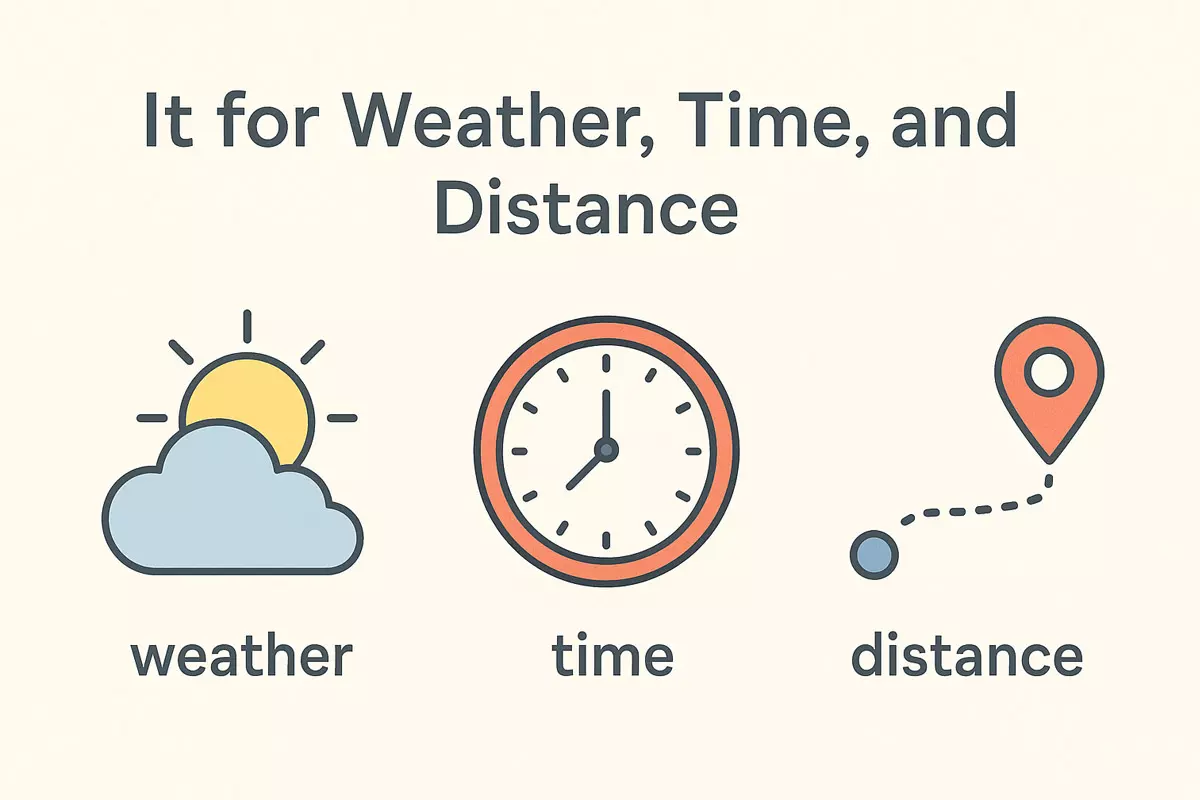 Here we why we use it in weather, time, and distance expressions, points out common mistakes, and gives real spoken English examples. It also includes practice exercises to help you master these uses.
Learning how to talk about weather, time, and distance in English can greatly improve your communication skills. By mastering these subtle language patterns, you will not only sound more natural and fluent but also avoid common mistakes that can lead to confusion. Paying attention to the typical ways native speakers discuss these topics makes it easier to participate in everyday conversations and ensures your meaning is clearly understood. With practice, these expressions become second nature, boosting your confidence when speaking English with others.
Why We Use It
English relies on the word “it” in sentences about weather, time, and distance because these topics don’t have a clear, concrete subject. When describing conditions like rain, temperature, or durations, there isn’t a person or specific object performing the action. Instead, “it” serves as a placeholder, allowing us to construct natural-sounding statements.
Making Sentences Possible
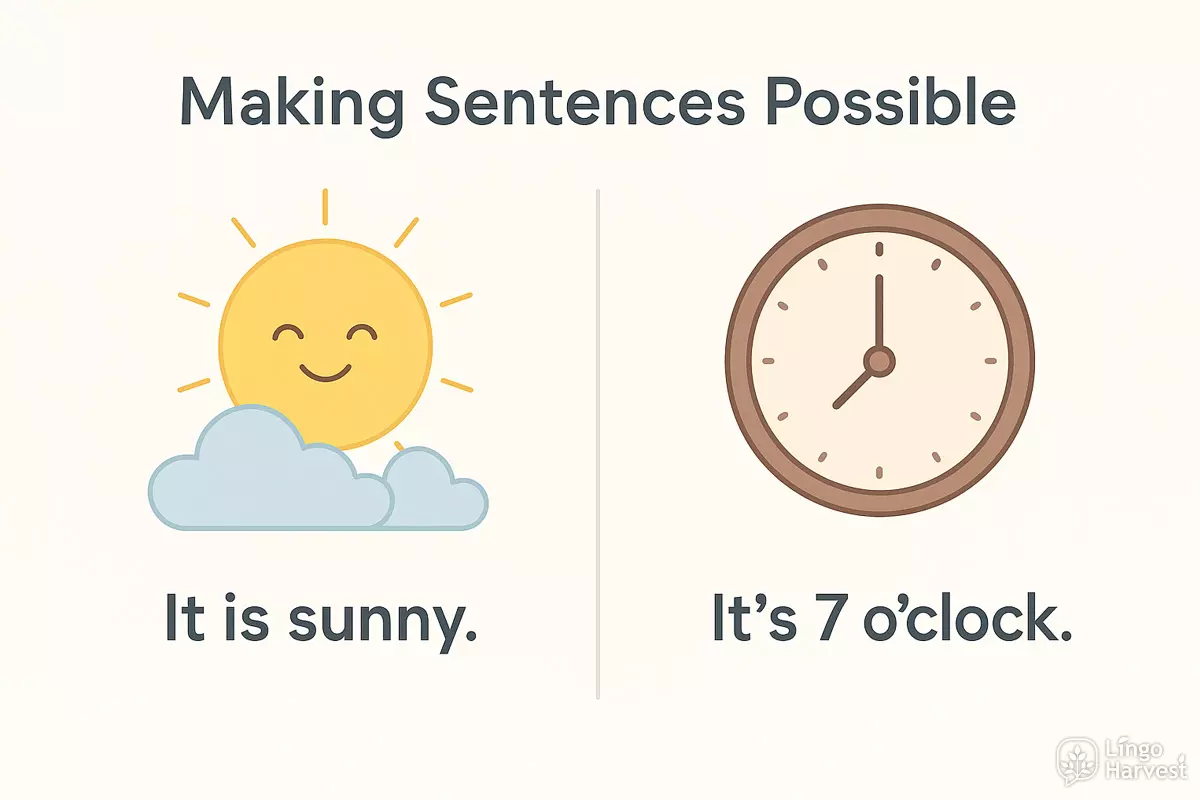
Without a subject, English sentences feel incomplete. For example, we can’t just say, “Is raining.” Instead, we say, “It is raining.” This dummy subject makes the sentence grammatically correct and easy to understand.
- “It is sunny.” → Describes weather conditions clearly.
- “It’s 7 o’clock.” → Tells time without confusion.
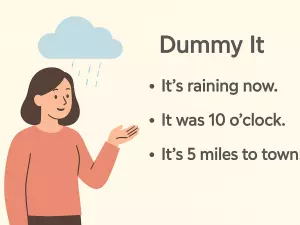
- “It’s 5 miles to the park.” → Explains distance naturally.
Why Not Use Another Subject?
Other languages may use different structures or leave the subject out entirely, but in English, omitting the subject is ungrammatical. Using other pronouns (like “he” or “they”) would be confusing, since weather, time, and distance aren’t people or things. That’s why “it” is the natural choice.
Common Expressions Using “It”
Here are some of the most frequent patterns where “it” acts as the subject in these contexts:
- It’s raining / snowing / windy / cold
- It looks cloudy today
- It is 6:30
- It’s midnight / noon
- It takes 10 minutes to walk there
- It’s a long way to the station
- It will be sunny tomorrow
- It’s 20 degrees outside
- It feels like summer
- It’s about 2 hours by car
- It’s late / early
- It’s time to leave
- It’s five kilometers from here
- It might snow later
- It’s getting dark
Summary Table: When “It” is Needed
| Type of Statement | Example with “It” |
|---|---|
| Weather | It is raining. |
| Time | It’s 3 o’clock. |
| Distance | It’s 10 miles to the city. |
| Duration | It takes an hour to cook. |
In short, using “it” for these topics keeps English sentences clear and consistent. This small word plays a big role in making statements about weather, time, and distance possible and easy to understand.
It for Weather Expressions
In English, “it” is the standard subject when talking about the weather, even though there is no specific person or thing being referred to. This usage may feel strange to learners, but it’s completely natural for native speakers. When you describe the current conditions outside, “it” acts as a placeholder subject.
Common Patterns with “It” for Weather
We use “it” with a variety of verbs and adjectives to describe what’s happening outside. Here are some typical sentence structures:
- It is + adjective (e.g., It is sunny.)
- It is + verb-ing (e.g., It is raining.)
- It + verb (e.g., It snows.)
- It + will/can/might + verb (e.g., It might snow tomorrow.)
This structure helps you talk about weather in a simple, clear way. Notice that “it” does not refer to anything specific; it’s just a grammatical necessity.
Examples of Weather Sentences with “It”
Here are some common ways you might hear or use “it” to describe different weather situations:
- It’s cold today.
- It was windy last night.
- It is snowing outside.
- It will be sunny tomorrow.
- It’s getting cloudy.
- It often rains in April.
- It might hail later.
- It’s freezing!
- It’s pouring (rain).
- It was foggy this morning.
- It’s humid in the summer.
- It could thunder this afternoon.
- It’s drizzling now.
- It seems warm for December.
- It would be nice if it cleared up.
Different Weather Verbs and Adjectives
You can combine “it” with many weather-related words. Here are some useful options:
- Sunny
- Rainy
- Cloudy
- Windy
- Snowy
- Foggy
- Stormy
- Hot
- Cold
- Freezing
- Humid
- Dry
- Wet
- Clear
- Overcast
- Drizzling
- Pouring
- Thundering
Weather Expression Overview
| Expression | Meaning/Example |
|---|---|
| It’s sunny. | The sun is shining; no clouds. |
| It’s raining. | Rain is falling from the sky. |
| It’s snowing. | Snowflakes are falling. |
| It’s windy. | There is a lot of wind. |
| It’s foggy. | Visibility is low due to fog. |
| It’s hot. | The temperature is high. |
| It’s cold. | The temperature is low. |
| It’s humid. | The air feels wet and sticky. |
| It’s drizzling. | Light rain is falling. |
| It’s overcast. | The sky is completely covered with clouds. |
Using “it” in this way makes your weather descriptions natural and easy to understand. Remember that this is the standard English pattern for weather topics, and you’ll hear it used every day.
It for Time Expressions
English uses the pronoun “it” as a neutral subject to talk about time, especially when stating the hour, date, or parts of the day. This construction helps form natural, clear statements about time, even if there is no direct subject. Instead of saying “Now is 3 o’clock,” native speakers say “It is 3 o’clock.” The word “it” doesn’t refer to any specific thing here—it’s simply a grammatical tool.
Common Situations Using “It” with Time
- Clock time: “It’s 7:15.”
- Part of the day: “It’s midnight.”
- Date: “It’s Monday.”
- Specific dates: “It’s the 20th of June.”
- Weekdays: “It’s Friday.”
- Seasons: “It’s spring.”
- Special occasions: “It’s my birthday.”
- General time: “It’s late.”
- Beginning or end of something: “It’s the start of the year.”
- Describing periods: “It’s lunchtime.”
- Time to do something: “It’s time to leave.”
- Time since an event: “It’s been two years since we met.”
- Indicating age: “It’s been 10 years since I graduated.”
- Time left: “It’s only five minutes until the show.”
- Time for an event: “It’s almost dinner.”
Patterns and Structure
The basic structure for these sentences is: It + be (is/was/will be) + time expression. This pattern keeps statements about time simple and clear. For example:
- “It will be dark soon.”
- “It was early when we arrived.”
- “It is quarter past eight.”
Comparing “It” with Other Subjects
In English, “it” is almost always required when talking about time. Using other subjects would sound unnatural or confusing. Here’s a quick comparison:
| Correct Usage | Incorrect Usage |
|---|---|
| It is 9 o’clock. | ❌ The clock is 9 o’clock. |
| It’s Sunday. | ❌ Sunday is. |
| It’s time for lunch. | ❌ Lunch is time. |
| It was late. | ❌ The day was late. |
It for Distance and Measurements
Using “it” to discuss how far things are, or to describe measurements, is a common pattern in English. This construction helps express distances, lengths, heights, and similar concepts in a simple, neutral way. Instead of specifying the subject, “it” stands in as the grammatical subject, making the sentence smooth and clear.
Common Patterns and Examples
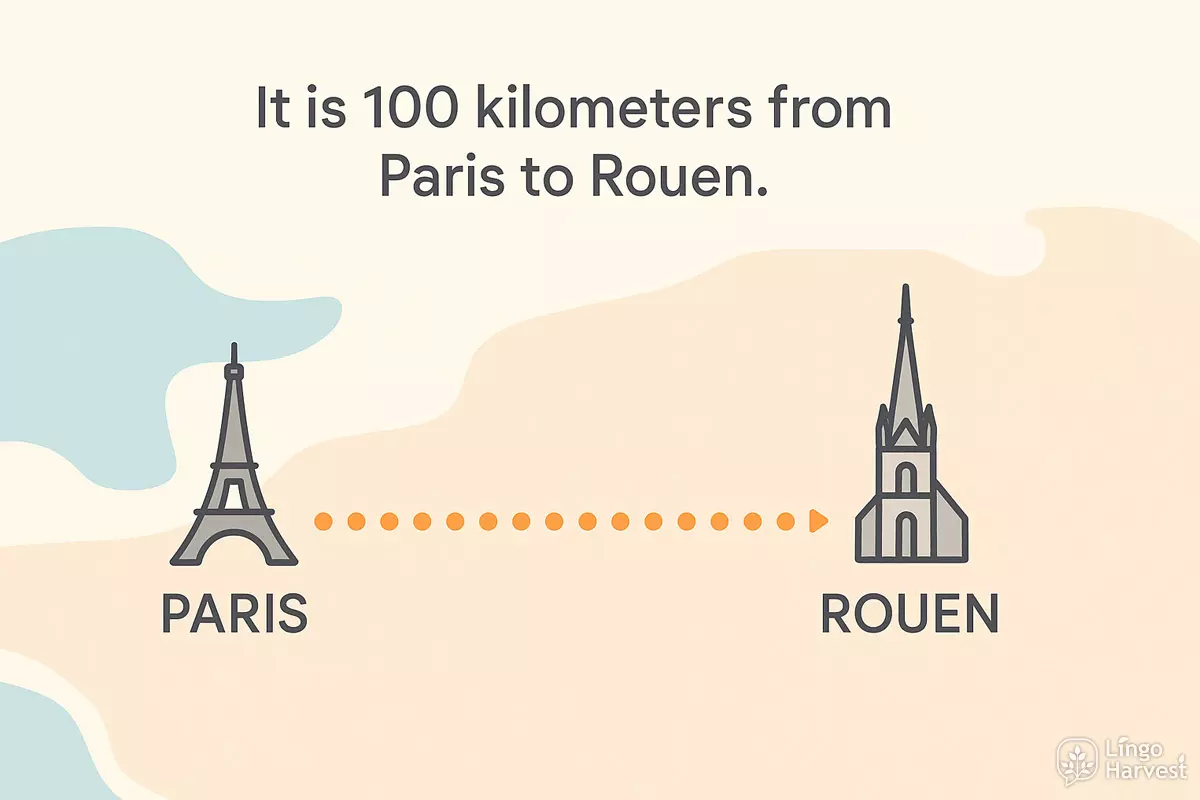
When talking about how far one place is from another, or when describing the size of something, “it” is placed at the start of the sentence. Here are some typical ways this is used:
- It is three miles to the nearest town.
- It’s about 15 minutes from here to the airport.
- It is two meters wide.
- It’s a ten-minute walk to the station.
- It is 100 kilometers from Paris to Rouen.
- It’s only five minutes by car.
- It is 20 steps to the mailbox.
- It’s 70 degrees in the room.
- It is 1.5 liters in the bottle.
- It’s 200 meters to the bus stop.
- It is 5 kilometers around the lake.
- It’s 50 centimeters tall.
- It is 4 hours by train.
- It’s a mile down the road.
- It is 8 feet high.
- It’s 2 blocks from here.
- It is 10 pounds heavier.
- It’s 6 inches thick.
- It is 30 minutes until sunset.
- It’s 400 pages long.
How This Structure Works
This use of “it” is impersonal. Rather than focusing on what is being measured, the emphasis is on the measurement or distance itself. This is especially helpful when the actual subject is either obvious or not important to specify.
| Example Sentence | Usage/Meaning |
|---|---|
| It’s five kilometers to the beach. | Describes the length of the route to a destination. |
| It is two hours by car. | Gives an estimate of travel time using “it.” |
| It’s 30 degrees outside. | States a measurement (temperature) in an impersonal way. |
| It’s 100 meters from the house to the school. | Specifies the distance between two locations. |
Points to Remember
- “It” is always singular in these sentences, no matter the distance or measurement.
- This construction is used with time, length, area, volume, weight, and distance.
- Prepositions like “to,” “from,” “by,” and “until” often appear after the measurement.
- Questions follow the same pattern: “How far is it to the city?” or “How long is it to walk there?”
By mastering this structure, you can describe routes, sizes, and quantities smoothly and naturally, just as native speakers do.
Avoiding Common Mistakes
Understanding how to use “it” for weather, time, and distance is crucial for sounding natural in English. Many learners mix up when “it” is required and when another subject should be used. To help clarify, let’s look at typical errors and how to correct them.
Common Errors with “It”
Many mistakes happen when learners try to translate directly from their native language or overthink the subject of the sentence. Here are frequent slip-ups:
- Leaving out “it”: Saying “Is raining” instead of “It is raining.”
- Adding an unnecessary subject: “The weather is it cold” instead of “It is cold.”
- Using “this” or “that” instead of “it”: “This is snowing” rather than “It is snowing.”
- Trying to use a specific noun: “The time is late” instead of “It is late.”
- Omitting “it” in distance questions: “How far to the station?” instead of “How far is it to the station?”
- Using “he” or “she” for weather: “He is raining” (incorrect; use “it”).
- Confusing “it’s” with “its”: “Its raining” instead of “It’s raining.”
- Placing “it” after the verb: “Is cold it” (wrong order).
- Translating idioms literally: “It makes hot” (incorrect for “It’s hot”).
- Using plural forms: “They are raining” (should be “It is raining”).
Quick Reference for Correct Usage
Here’s a handy table to compare incorrect and correct forms when talking about weather, time, and distance:
| Incorrect Example | Correct Example |
|---|---|
| Is raining. | It is raining. |
| This is snowing. | It is snowing. |
| How far to the park? | How far is it to the park? |
| The time is 8 o’clock. | It is 8 o’clock. |
| Its cold outside. | It’s cold outside. |
| They are raining. | It is raining. |
| Is late. | It is late. |
| He is raining. | It is raining. |
| The weather is it hot. | It is hot. |
| It makes hot. | It is hot. |
Tips to Remember
- Always use “it” as the subject when talking about weather, time, or distance.
- Never use “he,” “she,” or “they” for these impersonal sentences.
- Don’t add extra nouns or pronouns.
- For questions, keep “it” in the sentence: “What time is it?” not “What time?”
- Check contractions: “It’s” = “It is,” while “its” is possessive.
- With practice, these patterns will soon feel automatic and help you sound more fluent.
Spoken English Examples
When talking about weather, time, or distance in everyday English, the pronoun “it” is used as a neutral subject. This makes sentences sound natural and fluent. Below are practical sample sentences and patterns you might hear or use in conversation.
Using “It” for Weather
People almost always use “it” when describing the weather. Here are some everyday phrases:
- It’s raining outside.
- It was sunny all day.
- It gets cold in the evenings.
- It will be windy tomorrow.
- It’s snowing right now.
- It doesn’t look like it’ll clear up soon.
- It felt humid this morning.
- It might storm later.
Talking About Time with “It”
English speakers rely on “it” to talk about the current time or how much time has passed.
- It’s 7 o’clock.
- It’s almost midnight.
- It was late when we got home.
- It’s time to leave.
- It took an hour to finish.
- It will be too early to call.
Describing Distance Using “It”
“It” also helps express distances, making sentences clear and concise.
- It’s five miles to the nearest gas station.
- It takes about ten minutes to walk there.
- It isn’t far from here.
- It was a long drive home.
- It will only take a few minutes.
Pattern Comparison Table
| Context | Example with “It” |
|---|---|
| Weather | It’s cloudy today. |
| Time | It’s already noon. |
| Distance | It’s a short walk to school. |
| Duration | It took two hours to get there. |
Quick Tips for Natural Speech
- Don’t replace “it” with “this” or “that” for weather, time, or distance—native speakers always use “it.” ❌ “This is raining.” ✅ “It is raining.”
- Use contractions (“It’s”) for casual speech.
- Remember: “It” is required even if the real subject is obvious from context.
Practice: Complete the Sentences
Understanding how to use "it" for talking about the weather, time, and distance is important for clear everyday English. Below are exercises to help you practice using "it" in the correct contexts. Read each sentence and choose the best way to complete it.
Fill in the Blank: Weather, Time, and Distance
Insert "it" where appropriate to complete these sentences. Consider whether the sentence is about weather, time, or distance.
- ______ is raining outside, so take an umbrella.
- ______ is 7 o’clock in the morning.
- ______ is sunny and warm today.
- ______ is three kilometers from my house to the school.
- ______ is cold and windy in December.
- ______ is half past nine right now.
- ______ is about 20 minutes by bus to the city center.
- ______ is snowing in the mountains.
- ______ is late; we should go home.
- ______ is foggy this morning.
- ______ is a long walk from here to the station.
- ______ is getting dark outside.
Show answers
- It is raining outside, so take an umbrella.
- It is 7 o’clock in the morning.
- It is sunny and warm today.
- It is three kilometers from my house to the school.
- It is cold and windy in December.
- It is half past nine right now.
- It is about 20 minutes by bus to the city center.
- It is snowing in the mountains.
- It is late; we should go home.
- It is foggy this morning.
- It is a long walk from here to the station.
- It is getting dark outside.
Choose the Correct Sentence
Decide which sentence uses "it" correctly for weather, time, or distance.
-
- a) Is raining outside.
- b) It is raining outside.
-
- a) Is five o’clock.
- b) It is five o’clock.
-
- a) It is two miles from here to the park.
- b) Is two miles from here to the park.
-
- a) It is snowing.
- b) Snowing it is.
Show answers
- b) It is raining outside.
- b) It is five o’clock.
- a) It is two miles from here to the park.
- a) It is snowing.
Quick Reference: Patterns with "It"
Here are some common ways "it" is used for these topics. Review these patterns to help you with the exercises above.
- It + is/was + [weather adjective/noun]: It is cloudy. It was sunny.
- It + is/was + [time]: It is midnight. It was half past ten.
- It + is/was + [distance]: It is five miles to the beach. It was a short drive home.
- It + is/was + [weather verb-ing]: It is snowing. It was raining.
Practice using these patterns to make your own sentences about the weather, time, and how far places are. The more you practice, the more natural these expressions will become in your English conversations.