Everyone, Someone, Anyone, No One: Easy Grammar Guide

 This article explains indefinite pronouns, showing how to use them in positive, negative, and question forms. It covers verb agreement, common mistakes, pronunciation tips, and includes a fill-in-the-blank practice activity.
Many English learners struggle with words like everybody, somebody, anybody, and nobody, but understanding their differences is simpler than it seems. Everybody refers to all people in a group, while somebody means an unspecified person. Anybody is used when referring to any person, often in questions or negatives, and nobody means no person at all. By recognizing these distinctions, you can use each word accurately and confidently in everyday conversations.
Indefinite Pronoun Basics
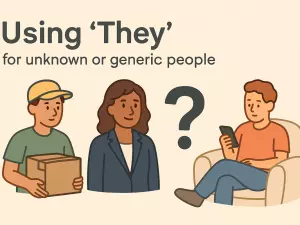
Indefinite pronouns are words that refer to non-specific people or things. Instead of naming a particular person or object, they allow us to speak in general terms. These pronouns are especially useful when you want to talk about someone, anyone, everyone, or no one without being exact. They are common in both spoken and written English, helping to make sentences smoother and less repetitive.
What Makes a Pronoun Indefinite?
Unlike personal pronouns (like he, she, or they), indefinite pronouns do not point to one specific person or thing. They can refer to an unknown, unspecified, or general group. This makes them flexible, but sometimes confusing for learners.
Common Indefinite Pronouns
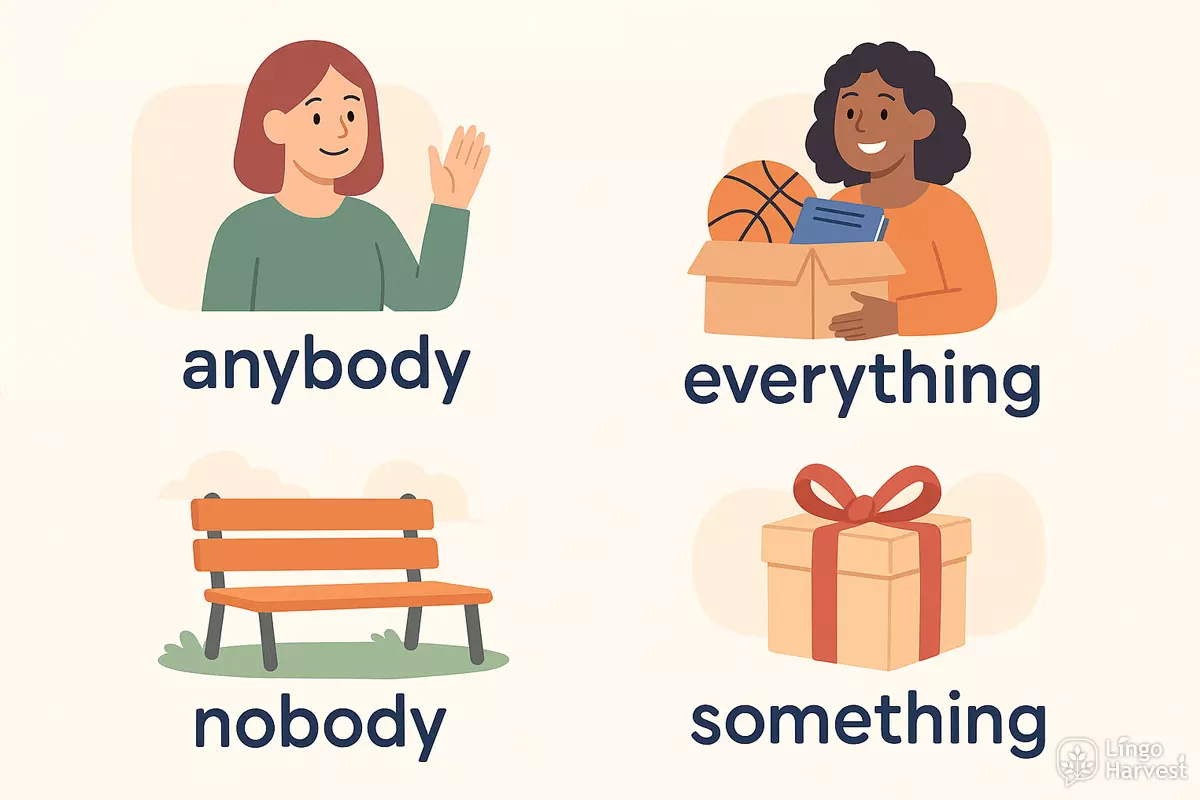
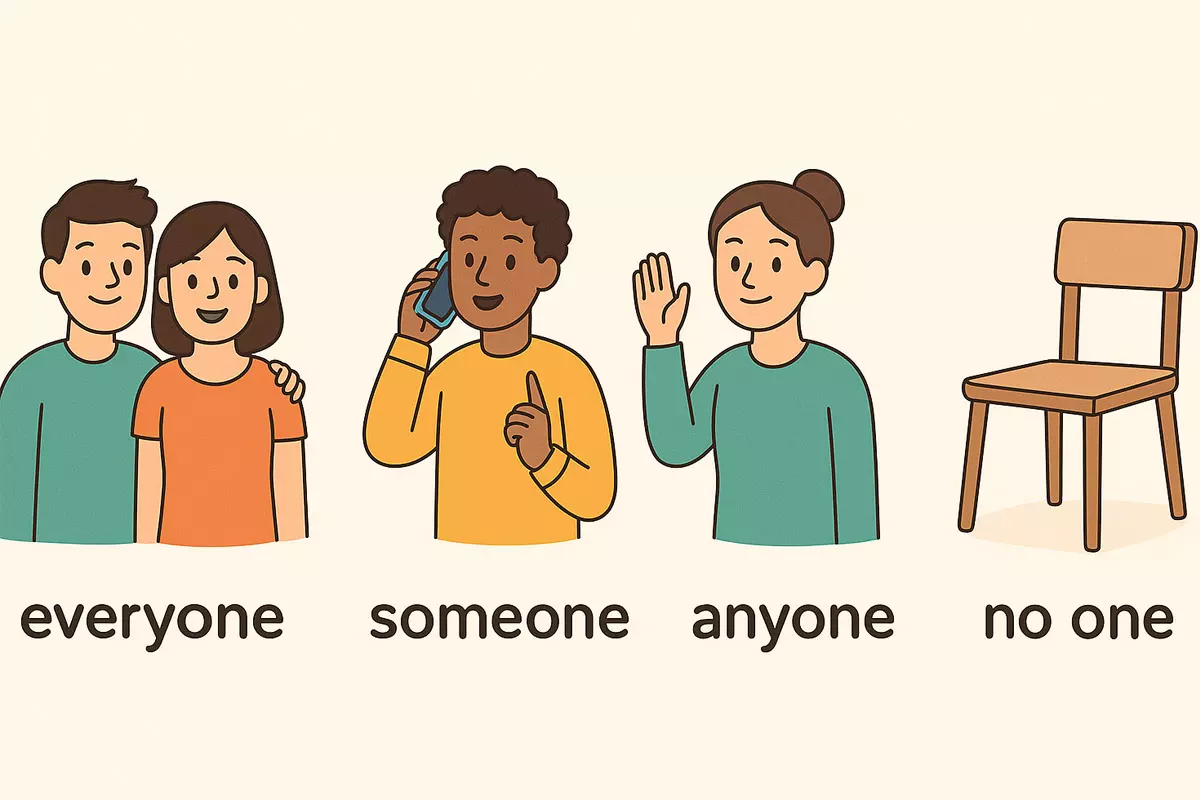
- everyone
- someone
- anyone
- no one
- everybody
- somebody
- anybody
- nobody
- everything
- something
- anything
- nothing
- each
- either
- neither
- all
- many
- few
- several
- some
How Are They Used?
These pronouns can act as the subject or object in a sentence. For example: Someone left their bag, or I didn’t see anyone at the park. They are usually singular and take singular verbs (e.g., Everyone is ready), but the pronoun “their” is often used for gender neutrality.
Quick Comparison Table
| Pronoun | Meaning | Example Sentence |
|---|---|---|
| everyone / everybody | all people | Everybody is welcome. |
| someone / somebody | an unknown person | Someone called you. |
| anyone / anybody | any person (no restriction) | Can anyone help me? |
| no one / nobody | not a single person | No one knows the answer. |
Tips for Using Indefinite Pronouns
- Most take a singular verb: Everybody enjoys music.
- Use “their” for gender-neutral situations: Someone left their coat.
- Some can refer to things as well as people: something, anything, nothing, everything.
- Negative forms usually start with “no-”: nobody, nothing.
- Be careful with double negatives: I didn’t see anybody (not “I didn’t see nobody”❌).
Mastering these pronouns will make your English more natural and help you express ideas without repeating nouns. They are simple but powerful tools for clear communication.
Positive, Negative, and Question Use
Understanding how to use everyone, someone, anyone, and no one correctly in different types of sentences is essential for clear English communication. Each word fits naturally in statements, negatives, and questions, but their use changes depending on the context.
Affirmative Sentences
In positive statements, these pronouns refer to people in a general or specific way. Here's how they function:
- Everyone means all people in a group. Everyone enjoyed the party.
- Someone refers to an unspecified person. Someone left their bag here.
- Anyone is often used when it doesn’t matter who. Anyone can join the club.
- No one means not a single person. No one answered the door.
Negative Sentences
Negatives with these words can be tricky. Notice that no one is already negative, so it doesn’t need ‘not’. The others often combine with ‘not’ to make negatives.
- Not everyone (some people, but not all): Not everyone agreed with the decision.
- Not someone (rare, usually rephrased): It wasn’t someone I knew.
- Not anyone = no one: There isn’t anyone outside.
- No one: No one was at home.
Questions
In questions, these pronouns help ask about people in different ways:
- Is everyone ready? (Are all people ready?)
- Did someone call me? (Did an unknown person call?)
- Did anyone see my keys? (Did at least one person see?)
- Is no one coming? (Is it true that nobody is coming?)
Quick Comparison Table
| Example Word | Affirmative | Negative | Question |
|---|---|---|---|
| Everyone | Everyone is here. ✅ | Not everyone agrees. ❌ | Is everyone okay? → |
| Someone | Someone called you. ✅ | Not someone I know. ❌ | Did someone help? → |
| Anyone | Anyone can try. ✅ | Not anyone can enter. ❌ | Did anyone see this? → |
| No one | No one knows. ✅ | — (already negative) | Is no one listening? → |
Usage Notes
When making negative sentences, avoid double negatives with these pronouns (e.g., “No one didn’t come” is incorrect in standard English). Also, in questions, anyone is the most common choice, as it’s neutral and works for open-ended queries.
More Examples
- Everyone has a ticket. ✅
- No one wants to leave early. ✅
- Can anyone help me? →
- Is someone at the door? →
- Not everyone likes spicy food. ❌
- Did anyone finish the project?
- No one called last night.
- Has someone seen my notebook?
- Anyone who is interested may apply.
- Not anyone can solve this puzzle.
These patterns help you choose the right pronoun for affirmative, negative, and interrogative contexts—and avoid common mistakes.
Singular Agreement with Verbs
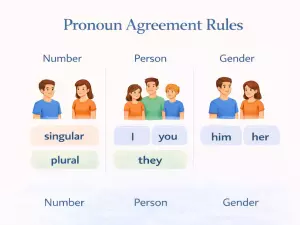
When using words like everyone, someone, anyone, and no one, it’s important to remember that they always take a singular verb form. Even though these pronouns refer to groups or people in general, grammatically they are treated as singular. This means you should use verbs ending in -s or -es in the present simple, just as you would with he, she, or it.
Common Mistakes to Watch Out For
Many learners mistakenly match these pronouns with plural verbs, especially because they seem to refer to more than one person. However, the correct grammatical pattern requires a singular verb.
- ✅ Everyone likes chocolate. (Correct)
- ❌ Everyone like chocolate. (Incorrect)
- ✅ No one knows the answer.
- ❌ No one know the answer.
- ✅ Someone wants to speak with you.
- ❌ Someone want to speak with you.
- ✅ Anyone has a question?
- ❌ Anyone have a question?
Examples in Different Tenses
The rule applies not only to present simple but also to other tenses. Here are some useful patterns:
- Everyone is ready. (Present simple: be)
- Someone was here earlier. (Past simple: be)
- No one has finished yet. (Present perfect)
- Anyone was invited?
- Someone has left their bag.
- Everyone enjoys the party.
- No one remembers his name.
- Anyone wants dessert?
- Someone needs help.
- Everyone agrees with you.
- No one believes that story.
- Anyone knows the way?
Quick Reference Table
| Indefinite Pronoun | Singular Verb Example |
|---|---|
| Everyone | Everyone is here. |
| Someone | Someone wants to help. |
| Anyone | Anyone knows the answer? |
| No one | No one remembers the date. |
Common Mistakes
Many learners get confused when choosing between words like "everyone," "someone," "anyone," and "no one." These pronouns seem similar, but using them incorrectly can change the meaning of a sentence or make it sound unnatural. Here, we'll look at the most frequent errors and how to avoid them.
Mixing Up Pronouns
It's easy to swap "everyone" with "anyone," or "someone" with "no one," especially in negative or interrogative sentences. Each word has a specific function—some refer to all people, others to just one or none. Getting these mixed up can lead to misunderstandings.
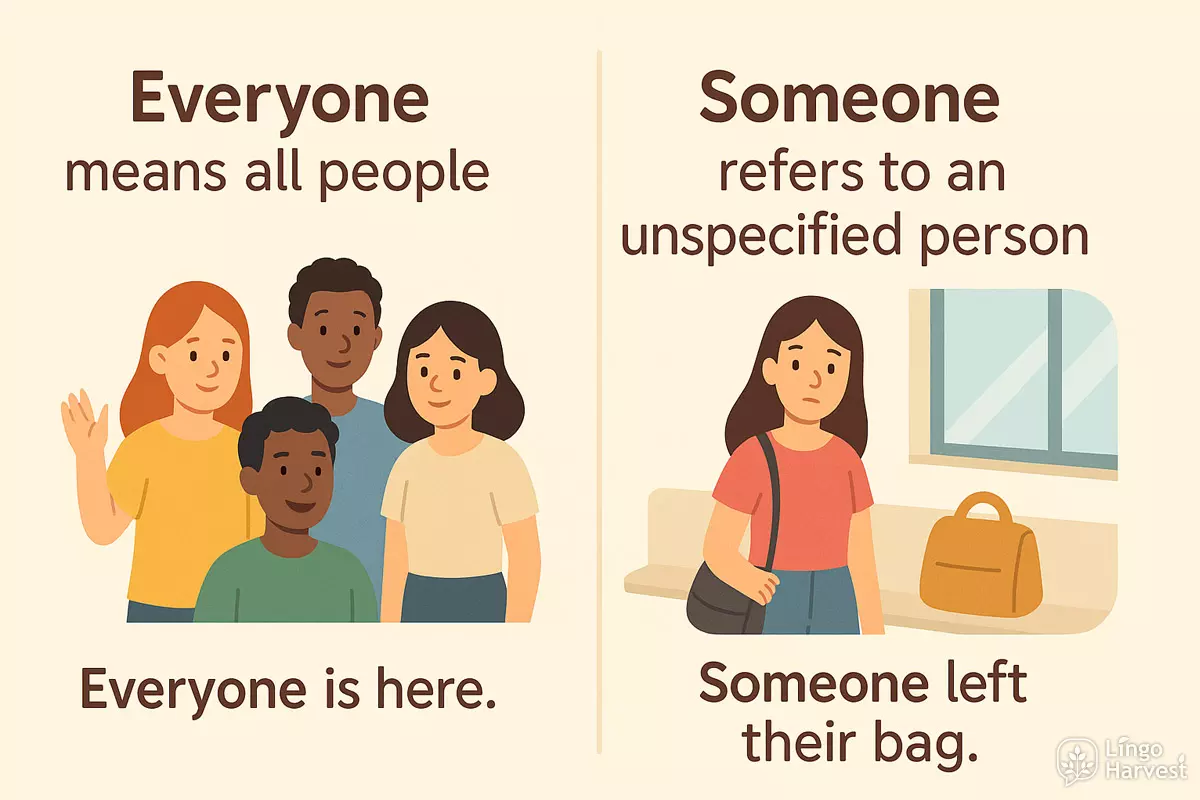
- Everyone means all people; Everyone is here.
- Someone refers to an unspecified person; Someone left their bag.
- Anyone means any person at all; Is anyone home?
- No one means not a single person; No one called me.
Double Negatives
In English, double negatives are usually incorrect with these pronouns. For example:
- ❌ I don’t know no one here.
- ✅ I don’t know anyone here.
- ✅ I know no one here.
Avoid combining "not" with "no one" or "nobody." Instead, use "anyone" or "anybody" after a negative.
Verb Agreement Issues
People sometimes use the wrong verb form with these indefinite pronouns. Remember, they are always singular and take a singular verb, even though they refer to more than one person:
- ❌ Everyone are happy.
- ✅ Everyone is happy.
- ✅ No one knows the answer.
Confusing Possessive Forms
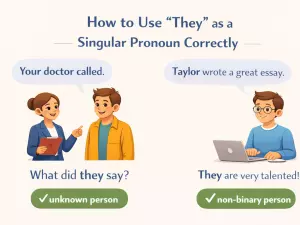
Possessive pronouns with these words can cause trouble. Use "their" if the gender is unknown. For example:
- Someone left their umbrella.
- Everyone should bring their ID.
Using "his/her" is possible but less natural in modern English.
Summary Table: When to Use Each Word
| Word | Meaning | Typical Use |
|---|---|---|
| Everyone | All people in the group | Affirmative statements Everyone is ready. |
| Someone | An unspecified person | Affirmative statements Someone called you. |
| Anyone | Any person (no matter who) | Questions/Negatives Did anyone see that? |
| No one | Not a single person | Negative statements No one answered. |
Quick Checklist of Tricky Areas
- Don’t use plural verbs: say "Everyone knows," not "Everyone know."
- Use "anyone" in questions and negatives, "someone" in positives.
- Never write "no one" as one word (avoid "noone").
- Don’t combine "not" with "no one" ("not no one" is incorrect).
- Use "their" for unknown gender with these pronouns.
- Remember: "everyone" and "everybody" are interchangeable; "no one" and "nobody" are too.
- Be careful with meaning changes: "No one can help" (nobody can), "Anyone can help" (everybody is able to).
- Do not use "anyone" in affirmative statements unless you mean "it doesn’t matter who."
Paying attention to these details will make your English sound more natural and help you avoid the most frequent pitfalls when using these common pronouns.
Pronunciation and Stress Tips
Understanding how to say words like "everyone," "someone," "anyone," and "no one" clearly can help you sound more natural in English. These words are made up of two parts, and where you put the stress matters for listeners to understand you easily.
Where to Place the Stress
For most of these indefinite pronouns, the emphasis falls on the first part of the word. For example, "EVERYone," "SOMEone," and "ANYone" all have primary stress at the beginning. "No one" is a little different, as it is two separate words, so both are pronounced clearly, but "NO" is usually a bit stronger.
- EVERYone – stress on "EV"
- SOMEone – stress on "SOME"
- ANYone – stress on "AN"
- NO one – stress on "NO"
Common Pronunciation Tips
- Keep the second part ("-one") short and less stressed: /wʌn/
- In fast speech, "anyone" often sounds like "EN-ee-wun," not "AN-ee-wun"
- "Everyone" is pronounced /ˈev.ri.wʌn/ – not "every-won"
- Don’t blend "no one" into "none" – they sound different
- Vowels in the second part are usually reduced (a quick schwa sound)
- Practice saying these words in short sentences to master the rhythm
Audio-Friendly Patterns
Native speakers tend to reduce the "one" part so it almost sounds like "w’n" (/wən/). You can listen for this reduction in everyday conversation. Notice, too, that "someone" and "anyone" both use a short "uh" sound in the last syllable.
| Word | IPA Pronunciation | Stressed Syllable | Example Sentence |
|---|---|---|---|
| everyone | /ˈev.ri.wʌn/ | EV | Everyone is here. ✅ |
| someone | /ˈsʌm.wʌn/ | SOME | Someone called you. ✅ |
| anyone | /ˈen.i.wʌn/ | AN | Is anyone home? ✅ |
| no one | /ˈnoʊ wʌn/ | NO | No one answered. ✅ |
Quick Practice Tips
- Say the first syllable louder and longer
- Reduce the "one" to a quick, soft sound
- Record yourself and compare with native speakers
- Practice in phrases, not just isolated words
Getting the word stress right helps your speech sound clearer and more fluent, especially with these common pronouns.
Practice: Fill the Blanks with Correct Word
Understanding the difference between “everyone,” “someone,” “anyone,” and “no one” is easier when you try real-life examples. Below, you’ll find sentences with missing words. Your task is to decide which of the four options belongs in each blank. Think about the meaning: Is the statement about all people, just one unknown person, any possible person, or no person at all?
Choose the Best Option
Read each sentence and select the correct word: everyone, someone, anyone, or no one.
- _________ left their bag in the classroom. Does it belong to you?
- It was so quiet that _________ said a word during the meeting.
- Can _________ help me carry these boxes?
- _________ in the team received a medal for their hard work.
- _________ knows the answer to this question. Can you try?
- Was there _________ at the door just now?
- _________ can join the club; it’s open to all students.
- We waited, but _________ came to the party.
- _________ should always try their best on a test.
- If _________ calls, tell them I’ll be back soon.
Show answers
- Someone
- No one
- Anyone
- Everyone
- Someone
- Someone
- Anyone
- No one
- Everyone
- Anyone
Quick Reference: When to Use Each Word
- Everyone: All people in a group (Everyone is here).
- Someone: An unknown person, but at least one (Someone called you).
- Anyone: Any person at all, no restrictions (Anyone can answer).
- No one: Not a single person (No one was late).
Try More: Fill in the Blanks
Here are a few more sentences for extra practice. Again, fill each blank with the proper word.
- _________ has seen my keys?
- _________ brought snacks for the group.
- Is _________ interested in joining us?
- _________ finished the assignment before the deadline.
Show answers
- Anyone
- Someone
- Anyone
- No one
Practicing with these examples will help you confidently choose the right word in context. Pay attention to whether you mean all, some, any, or none, and you’ll master these terms quickly.