Nothing, Something, or Anything: Simple Usage Guide

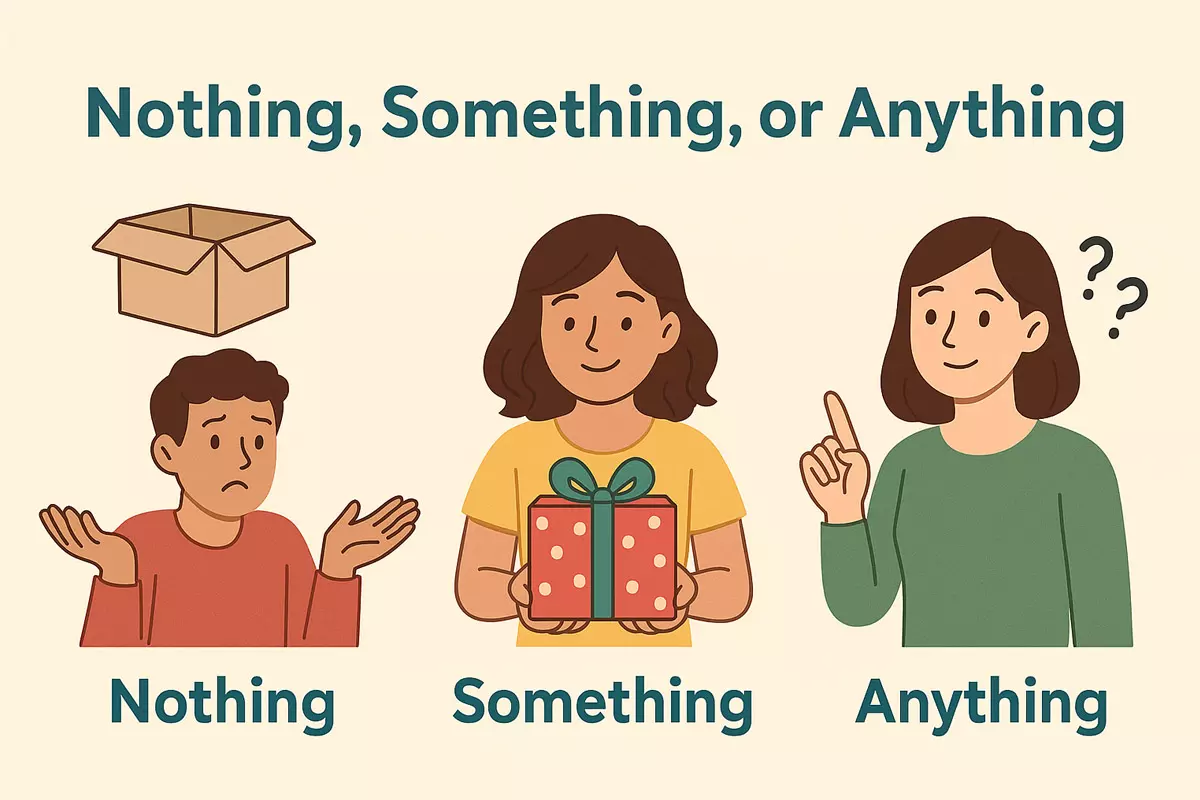 Here we how to use nothing, something, and anything in affirmative, negative, and question sentences, highlights context differences and double negatives to avoid, lists common collocations, and provides practice choosing the correct form.
Understanding the differences between words such as nothing, something, and anything can be challenging for both English learners and native speakers. These words are often confused because they refer to the presence or absence of things in different contexts. Nothing means not a single thing; something refers to an unspecified thing; and anything can mean any thing at all, often used in questions or negative sentences. Learning when and how to use each word correctly will improve your communication and make your English sound more natural.
Affirmative, Negative, and Question Use
When choosing between "nothing," "something," or "anything," context determines which word is correct. These terms often appear in different types of sentences: positive statements, negatives, and questions. Mastering their use helps your English sound natural and clear.
How Usage Changes with Sentence Type
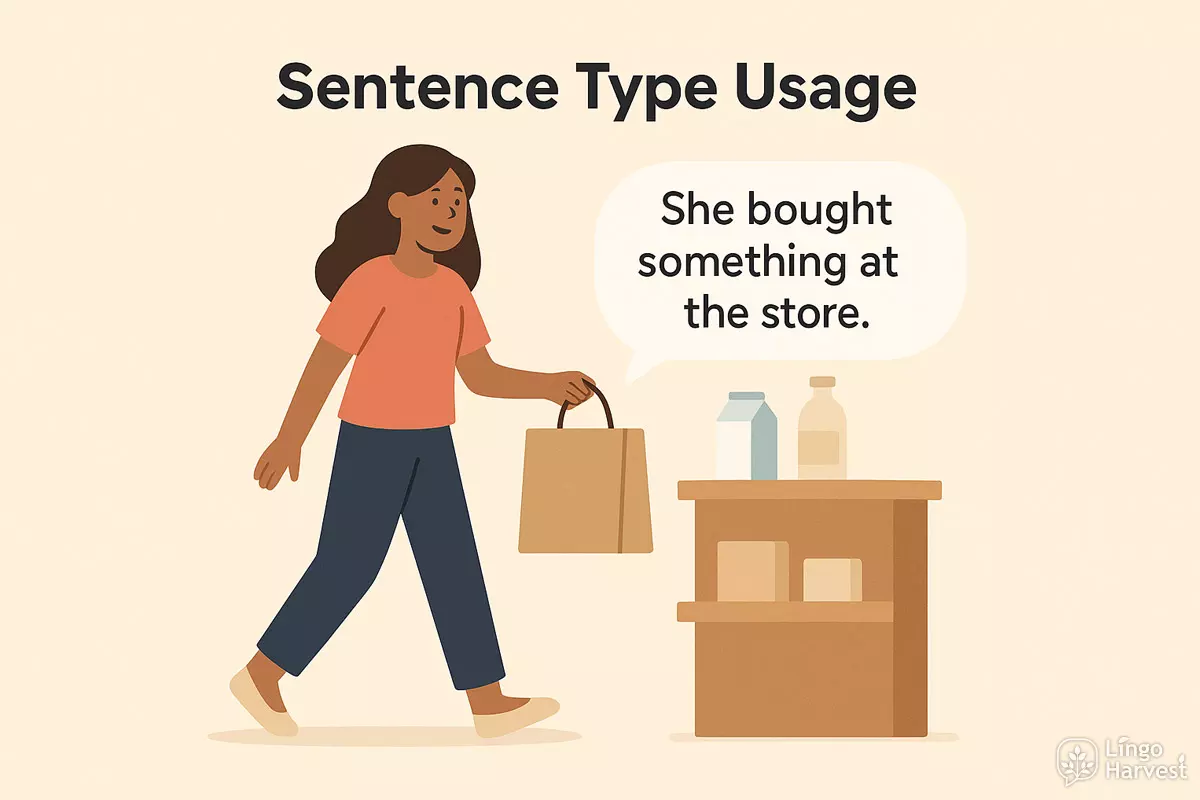
- Affirmative statements commonly use "something":
She bought something at the store. - Negative sentences usually take "anything" or "nothing":
He didn't see anything unusual.
There was nothing in the box. - Questions often use "anything," but "something" is possible when expecting a "yes":
Did you find anything?
Would you like something to drink?
Quick Reference: Common Patterns
| Sentence Type | Correct Word | Example |
|---|---|---|
| Positive/Affirmative | something | I have something to tell you. |
| Negative | anything / nothing | I don't want anything. There is nothing here. |
| Question | anything / something (specific offer) | Did you hear anything? Would you like something to eat? |
| After "if" | anything | If you need anything, call me. |
| After "without" | anything / nothing | She left without anything. She left with nothing. |
Expanded Example List → Usage in Context
- Is there anything I can do? (question)
- I need something to write with. (affirmative)
- She didn’t say anything. (negative)
- They found nothing in the room. (negative)
- Would you like something to eat? (offer)
- We never get anything done on Fridays. (negative)
- If anything happens, call me. (conditional)
- There isn’t anything interesting on TV. (negative)
- He wants something new for his birthday. (affirmative)
- No one saw anything suspicious. (negative)
- She said nothing about the accident. (negative)
- Have you got anything to declare? (question)
- He didn’t bring anything to the party. (negative)
- I have nothing to add. (negative)
- There must be something we can do. (affirmative)
- Did you hear anything last night? (question)
- She wants to eat something sweet. (affirmative)
- Without anything to lose, he tried again. (negative context)
Tips to Remember
- Use "something" for positive ideas or offers.
- Choose "anything" in negatives, questions, and after "if."
- Pick "nothing" for strong negatives or when emphasizing absence.
By paying attention to these patterns, your use of these words will become more accurate and fluent.
Context Differences
Understanding when to use "nothing," "something," or "anything" depends heavily on the situation and the speaker's intent. These words often seem interchangeable, but their meanings shift based on whether the sentence is positive, negative, or a question. Choosing the right term helps your message sound natural and clear.
Positive Statements
In affirmative sentences, "something" is commonly used to indicate an unspecified thing that exists or is done. "Anything" can sometimes be used for emphasis, but typically suggests a broader, more open choice.
- There's something in my bag. ✅
- You can eat anything you like. ✅
Negative Statements
When expressing negation, English often switches to "anything" instead of "something." "Nothing" makes the statement absolute, while "anything" keeps it open but negative.
- I didn't see anything unusual. ✅
- There's nothing in the box. ✅
Questions
For questions, "anything" is typical and signals a broad possibility, while "something" suggests the speaker expects a particular answer or possibility.
- Did you find anything? ✅
- Did you hear something outside? (Implies the speaker suspects a sound.) ✅
Quick Comparison Table
| Usage Context | Typical Word Choice |
|---|---|
| Affirmative | "something" for specific but unknown items; "anything" for unlimited choice |
| Negative | "anything" in negative sentences; "nothing" for absolute absence |
| Questions | "anything" for open questions; "something" when suspecting a specific thing |
| Offers/Requests | "something" to suggest; "anything" to invite any option |
Summary of Typical Expressions
Here are some common patterns where the choice varies:
- I want something to drink.
- Is there anything I can do?
- She saw nothing unusual.
- He didn't buy anything.
- There's something wrong.
- If you need anything, call me.
- Would you like something to eat?
- No, I don't want anything.
- Did you hear anything?
- There's nothing left.
- Let's do something fun.
- You can pick anything you want.
- She has nothing to say.
- He needs something new.
- Don't touch anything!
Choosing among these terms depends on whether the context is positive, negative, or interrogative, and whether the speaker is being specific or general. This awareness helps avoid misunderstandings and makes your English sound more natural.
Double Negatives to Avoid
Mixing words like nothing, anything, and negative verbs can often lead to confusing or incorrect sentences. In English, stacking two negatives doesn’t make a stronger negative—instead, it usually creates a logical error or an unintended positive meaning. This is a common issue for learners and sometimes even for native speakers in informal speech or writing.
What Is a Double Negative?
A double negative occurs when two negative words appear in the same clause, often resulting in confusion. For example: “I don’t know nothing” is incorrect because both don’t and nothing serve as negatives. The intended meaning is “I don’t know anything.”
Common Patterns That Cause Problems
- Didn’t + nothing (❌ Incorrect: “She didn’t see nothing.” → Correct: “She didn’t see anything.”)
- Can’t + nobody (❌ Incorrect: “He can’t find nobody.” → Correct: “He can’t find anybody.”)
- Don’t + nowhere (❌ Incorrect: “I don’t want to go nowhere.” → Correct: “I don’t want to go anywhere.”)
- Never + nothing (❌ Incorrect: “They never said nothing.” → Correct: “They never said anything.”)
- Hardly + no one (❌ Incorrect: “There was hardly no one there.” → Correct: “There was hardly anyone there.”)
- Without + nothing (❌ Incorrect: “She left without nothing.” → Correct: “She left with nothing.” or “She left without anything.”)
- Doesn’t + nothing (❌ Incorrect: “It doesn’t mean nothing.” → Correct: “It doesn’t mean anything.”)
- Can’t + nothing (❌ Incorrect: “We can’t do nothing.” → Correct: “We can’t do anything.”)
- Wasn’t + nowhere (❌ Incorrect: “The keys weren’t nowhere.” → Correct: “The keys weren’t anywhere.”)
- Don’t + neither (❌ Incorrect: “I don’t like it neither.” → Correct: “I don’t like it either.”)
Why Double Negatives Are Problematic
Using two negatives can unintentionally flip your meaning. For instance, “I don’t know nothing” could technically mean “I know something,” although it’s rarely meant that way. In standard English, use only one negative in a clause for clarity.
| Incorrect Example | Corrected Version |
|---|---|
| She didn’t see nothing. | She didn’t see anything. |
| He can’t find nobody. | He can’t find anybody. |
| I don’t want to go nowhere. | I don’t want to go anywhere. |
| They never said nothing. | They never said anything. |
| There was hardly no one there. | There was hardly anyone there. |
| It doesn’t mean nothing. | It doesn’t mean anything. |
| We can’t do nothing. | We can’t do anything. |
| The keys weren’t nowhere. | The keys weren’t anywhere. |
Quick Tips
- Pair negative words (not, never, can’t, don’t) with anything, anyone, anywhere—not with nothing, no one, nowhere.
- Listen for negative words in your sentence; if you spot two, try rephrasing with a positive alternative.
- In formal writing and speech, always avoid double negatives to ensure your meaning is clear.
Common Collocations
When learning how to use “nothing,” “something,” and “anything,” it’s helpful to see the typical words they appear with in everyday English. These expressions often combine with certain verbs and prepositions, forming set phrases that sound natural to native speakers. Recognizing these patterns can improve both comprehension and fluency.
Typical Phrases with “Nothing”

- Nothing special
- Nothing to do
- Nothing at all
- Nothing but (meaning “only”)
- Nothing like (for comparison)
- Nothing to lose
- Nothing matters
- Nothing new
- Nothing in common
- For nothing (meaning “for free” or “without reason”)
Frequent Pairings with “Something”
- Something to eat/drink
- Something else
- Something wrong/right
- Something new
- Something interesting
- Something to say
- Something in common
- Something important
- Do something
- Say something
Common Uses with “Anything”
- Anything else
- Anything to add
- Anything you want/need
- Anything at all
- Anything for you
- Anything goes
- More than anything
- Hardly anything
- If anything (to introduce a contrast)
- Don’t do anything
Side-by-Side Comparison
| Expression | Typical Usage |
|---|---|
| Nothing to do | “There’s nothing to do in this town at night.” |
| Something else | “Would you like something else to drink?” |
| Anything at all | “If you need anything at all, just ask.” |
| Nothing but | “He eats nothing but pizza.” |
| Do something | “Let’s do something fun this weekend.” |
| Don’t do anything | “Please don’t do anything dangerous.” |
Recognizing these frequent pairings can help you sound more natural when expressing absence, uncertainty, or possibility. Practice using these patterns in your own sentences to reinforce your understanding.
Usage in Everyday Speech
Everyday conversations rely on "nothing," "something," and "anything" to express presence, absence, or uncertainty. These words help speakers clarify what exists, what is possible, and what is unknown. Understanding their subtle differences makes communication clearer and avoids confusion.
Common Patterns and Examples
- Nothing: Used to state that zero things are present or relevant.
Example: "There is nothing in the fridge." - Something: Indicates an unspecified, but existing, thing or fact.
Example: "I heard something outside." - Anything: Refers to any possible thing, often in questions or negatives.
Example: "Did you see anything unusual?" - Use nothing for total absence: "She said nothing during the meeting."
- Use something when you know there is at least one thing, but not exactly what: "There’s something in my shoe."
- Use anything in offers or requests: "Would you like anything to drink?"
- For negative statements, "anything" fits: "I don’t want anything."
- Affirmative sentences rarely use "anything": "Anything can happen" (meaning any possible thing).
- Questions with "anything" invite open responses: "Is there anything I can do?"
- Responses with "nothing" are definite: "Nothing is wrong."
- "Something" can suggest mystery or surprise: "There’s something strange about him."
- In polite refusals, "nothing" is common: "Thank you, but I need nothing else."
- When unsure, "anything" covers all possibilities: "I’ll eat anything."
- In indirect speech, the choice changes meaning: "He said nothing" vs. "He said something."
- For offers, "anything" is more open: "If you need anything, let me know."
Quick Comparison
| Word | Typical Use | Sample Sentence |
|---|---|---|
| Nothing | Absence of all things | "Nothing happened." |
| Something | At least one unknown thing | "Something smells good." |
| Anything | Any possible thing (often negative or questions) | "Did you find anything?" |
Choosing between these words depends on context—affirmative, negative, or interrogative sentences. Mastery comes from noticing how native speakers use them in daily interactions, adjusting your usage for clarity and nuance.
Practice: Choose the Correct Option
Understanding the difference between “nothing,” “something,” and “anything” is key to choosing the correct word in various situations. Let’s test your grasp of these words with a few exercises. Read each sentence carefully and select the best option to complete it. This will help you become more confident in everyday conversations and written English.
Fill in the Blank: Select the Right Word
Choose whether “nothing,” “something,” or “anything” fits best in the following sentences:
- There isn’t _______ in the box. It’s empty.
- I need _______ to drink. I’m thirsty.
- Did you see _______ unusual at the party?
- If you need _______ else, just ask me.
- He said _______ during the meeting. He was silent.
- Would you like _______ to eat?
- She found _______ interesting in the bookshop.
- There’s _______ we can do now. We must wait.
- Is there _______ I can help you with?
- They brought _______ for the picnic, so we had to go back.
Show answers
- nothing
- something
- anything
- anything
- nothing
- something
- something
- nothing
- anything
- nothing
Identify the Usage Context
Match each word to its typical context. Use the list below to guide your understanding:
- Used in negative statements
- Used in questions or offers
- Used in positive statements
| Word | Common Context |
|---|---|
| nothing | |
| anything | |
| something |
Show answers
- nothing: Used in negative statements
- anything: Used in questions or offers
- something: Used in positive statements
Spot the Error
Some sentences below use “nothing,” “something,” or “anything” incorrectly. Identify which ones need to be corrected:
- I didn’t see nothing in the garden.
- She wants anything to eat.
- Is there anything I can do for you?
- There is something in your bag.
Show answers
- I didn’t see nothing in the garden. → Incorrect (should be “I didn’t see anything in the garden.”)
- She wants anything to eat. → Incorrect (should be “She wants something to eat.”)
- Is there anything I can do for you? → Correct
- There is something in your bag. → Correct
Practicing these distinctions will help you avoid common mistakes and use these words naturally in English. Review your answers and repeat as needed to reinforce your understanding.