Who vs Which: How to Choose Between People and Things

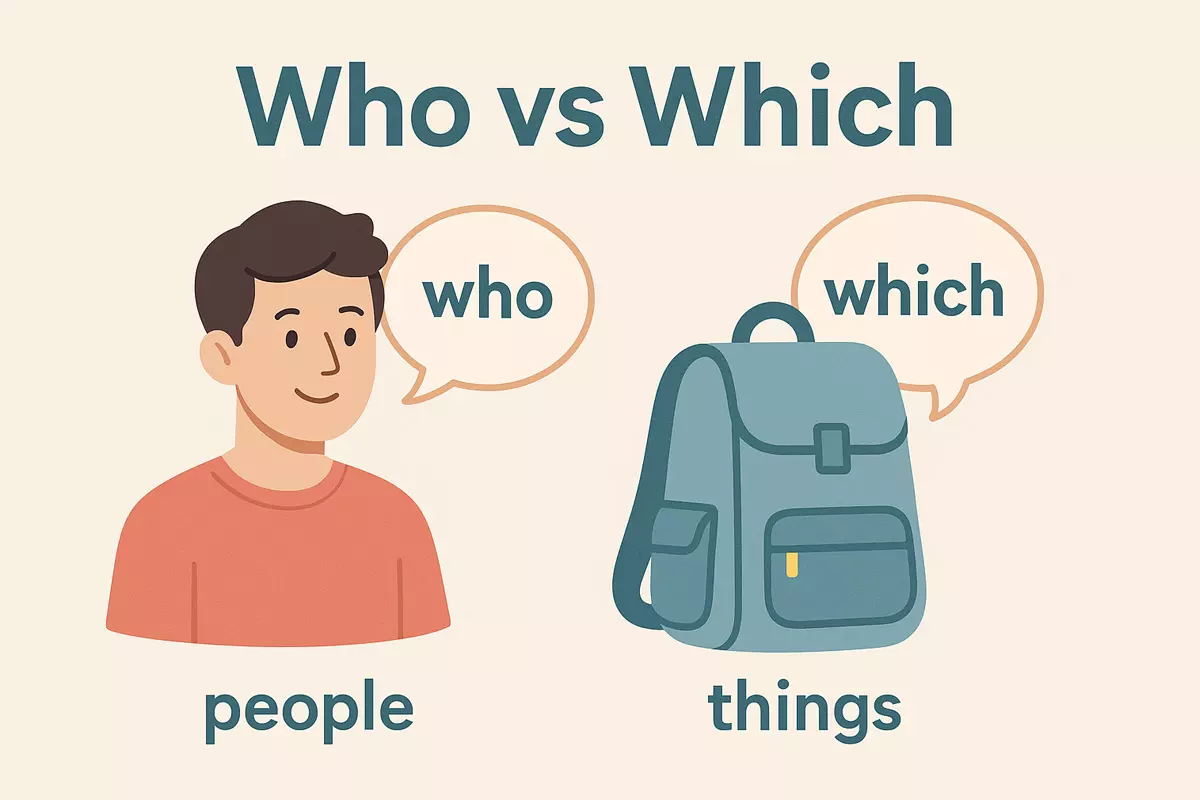 Here we the use of relative pronouns, focusing on when to use who and which, the difference between who and that, and common mistakes. It also offers practice exercises to help you select the correct pronoun.
Choosing between “who” and “which” can be tricky, but understanding their proper use makes your writing clearer and more precise. Use “who” when referring to people, as in “The teacher who explained the lesson was helpful.” Use “which” when talking about things or animals, for example, “The book which I borrowed was fascinating.” Remembering this distinction will help you communicate more effectively and avoid common grammar mistakes in your writing.
Relative Pronouns Overview
Relative pronouns connect clauses and help clarify which person or thing we’re talking about. In English, these words introduce “relative clauses” that give extra information about nouns. Understanding when to use each term is essential for clear, precise sentences.
What Are Relative Pronouns?
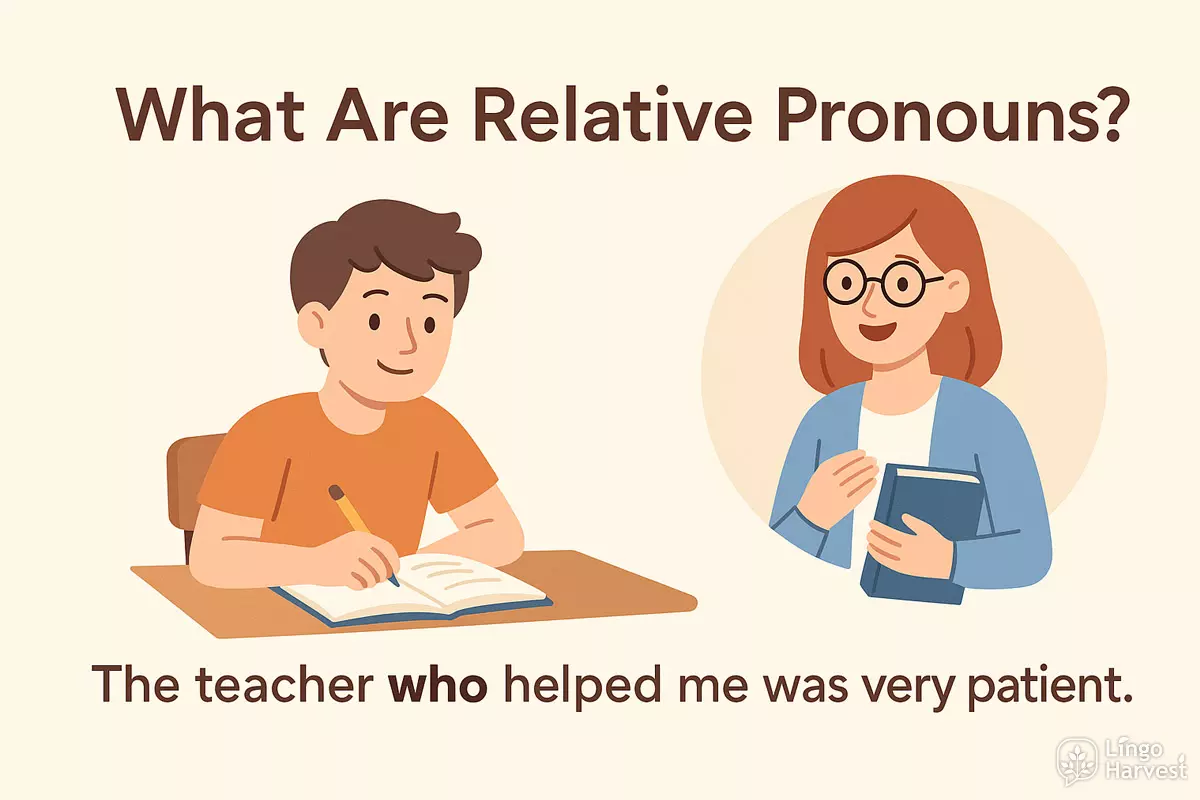
Relative pronouns are words like who, which, that, whom, and whose. They refer back to nouns or pronouns and link them to additional details. For example:
- The teacher who helped me was very patient.
- The book which you lent me is fascinating.
- This is the artist whose work we admire.
Their main job is to make sentences less repetitive by avoiding the need to start a new sentence every time you add information.
Choosing the Right Pronoun: People vs. Things
The choice depends on what you’re referring to:
- Who – refers to people (e.g., The woman who called you).
- Which – refers to things or animals (e.g., The car which broke down).
- That – can refer to people or things in some contexts, but is less formal.
- Whom – used for people as the object of a verb or preposition (formal).
- Whose – shows possession for people or things.
Common Relative Pronouns at a Glance
| Relative Pronoun | Typical Use | Example |
|---|---|---|
| Who | People (subject) | The engineer who designed this bridge is famous. |
| Whom | People (object, formal) | The person whom you met is my colleague. |
| Which | Things/animals | The laptop which I use is new. |
| That | People or things (informal/restrictive) | The movie that we watched was thrilling. |
| Whose | Possession (people/things) | The author whose book won a prize. |
Quick Reference List
Here are some more examples to illustrate different uses:
- The doctor who treated me was kind.
- The singer who performed last night is famous.
- The dog which barked all night is tired now.
- The painting which hangs in the hall is valuable.
- The student whom you saw is my friend.
- The house that Jack built is old.
- The company whose products we use is reliable.
- The child whose toy was lost is crying.
- The movie that won the award is a comedy.
- The friend who invited me lives abroad.
- The idea which you suggested is interesting.
- The car that she drives is electric.
Relative pronouns help structure complex ideas and make writing more fluid. Choosing the right one depends on whether you’re talking about people, things, or showing possession.
When to Use Who
The pronoun who is reserved for talking about people or, in some cases, animals with names or personalities. If you are referring to a person—whether it’s a specific individual, a group, or an unknown person—this is the word to use. It helps make your sentence clear and direct, ensuring readers know you’re referencing someone, not something.
Typical Contexts for "Who"
- Identifying a person: "She is the one who called you."
- Describing a group of people: "The teachers who work here are dedicated."
- Referring to an unknown individual: "Who left their bag on the bench?"
- Talking about a named pet or animal with a personality: "Max, who loves walks, barked loudly."
- In questions about people: "Who is coming to dinner?"
- After prepositions (formal): "To whom should I address this?"
- With job titles or roles: "The nurse who helped me was very kind."
- In relative clauses: "The author who wrote that book is famous."
- Introducing a clause about a person: "Anyone who wants to join is welcome."
- Emphasizing a specific person: "He is the only one who knows the answer."
Common Mistakes to Avoid
- Don’t use who for objects or things (use which instead).
- Avoid using who for animals unless they are pets with given names or personalities.
Quick Reference: "Who" Usage at a Glance
- ✅ People (men, women, children, groups)
- ✅ Named animals with a relationship or personality
- ❌ Never for things, places, or general animals
Remember, who makes your writing more personal and precise when you’re describing humans or animals treated as individuals. If you’re unsure, ask yourself: are you talking about a person or a thing? If it’s a person, who is the right choice.
When to Use Which
Deciding between "who" and "which" depends on what you are referring to in your sentence. "Who" is reserved for people, while "which" is used for things, animals, or groups where individuality isn’t emphasized. It’s not just a matter of grammar tradition—this distinction helps make your meaning clear and avoids awkward phrasing.
General Guidelines
- Use who when talking about a specific person or people.
- Use which for objects, animals (when not personified), and abstract concepts.
- "That" can sometimes replace either, but it’s more neutral and less formal.
- When referring to pets or animals with names or personalities, "who" may be used for effect, but "which" is standard.
Common Usage Patterns
Here are typical scenarios to help distinguish between the two:
- The teacher who helped me.
- The book which I borrowed.
- Children who are learning to read.
- The car which broke down.
- Friends who support you.
- The solution which works best.
- The doctor who treated me.
- The movie which won an award.
- The artist who painted this.
- The idea which inspired change.
- People who travel often.
- Tools which save time.
- The neighbor who lives next door.
- The policy which was introduced last year.
Comparison Table: "Who" vs "Which"
| Refers To | Example Sentence |
|---|---|
| People | The engineer who designed the bridge. |
| Things/Objects | The bridge which crosses the river. |
| Animals (non-personalized) | The dog which barked all night. |
| Groups (non-human) | The committee which made the decision. |
Tips for Clear Usage
- Whenever you’re unsure, ask if the subject is a person or not—this usually points to the correct choice.
- In formal writing, avoid using "which" for people to maintain clarity and professionalism.
- In casual speech, some variation exists, but following the standard rules keeps your English precise.
Difference Between Who and That
When deciding between "who" and "that," the main distinction is based on what you’re referring to—people or things. "Who" is traditionally used for human beings and sometimes for animals with names, while "that" is typically used for objects, groups, or animals without personal names. Understanding when to use each word helps keep your writing clear and grammatically correct.
When to Use "Who"

"Who" is specifically reserved for people. It's used to introduce relative clauses that give more information about a person or people. For example:
- The teacher who helped me is retiring.
- Students who study regularly tend to perform better.
- The artist who painted this mural is famous in our city.
You can also use "who" for pets or animals when they are personified or have a name: The dog who saved my life is called Max.
When to Use "That"
"That" is more flexible. It can refer to things, groups, or sometimes animals. It’s commonly used in defining (restrictive) clauses, which are essential to the meaning of the sentence. Here are some examples:
- The book that I borrowed was fascinating.
- This is the team that won the championship.
- She wore the dress that her friend designed.
- The movie that we watched last night was thrilling.
While "that" can refer to people in informal speech, standard written English prefers "who" for humans.
Quick Reference: Usage Comparison
| Usage | Example |
|---|---|
| People (humans) | The scientist who discovered the cure is famous. ✅ |
| Things/objects | The phone that you lost was expensive. ✅ |
| Groups (teams, organizations) | The company that made this product is reliable. ✅ |
| Named animals (personified) | My cat who loves tuna is sleeping. ✅ |
| General animals | The bird that sings every morning wakes me up. ✅ |
Summary List: Choosing the Right Word
- Use who for people.
- Use that for things and objects.
- Who can be used for animals if they’re given human qualities or names.
- That is preferred for groups or organizations.
- In formal writing, avoid using that for people.
- Both words introduce clauses, but "who" makes it clear you’re talking about a person.
- If unsure, ask if the word refers to a person—if yes, use "who."
- For non-human or inanimate subjects, stick with "that."
Choosing between "who" and "that" often comes down to the subject of your sentence. Being mindful of this distinction will make your writing more precise and professional.
Common Mistakes
Many learners confuse “who” and “which” because both are used to introduce relative clauses, but their functions are different. Misusing these pronouns can make sentences sound unnatural or even change their meaning. Let’s look at frequent pitfalls and how to avoid them.
Mixing Up People and Things
A typical error is using “which” for people or “who” for objects. “Who” should refer to humans (or sometimes animals with names or personalities), while “which” is reserved for things, animals, or groups.
- ❌ The teacher which helped me was kind.
✅ The teacher who helped me was kind. - ❌ The book who is on the table is mine.
✅ The book which is on the table is mine.
Using “Which” Instead of “That” or “Who”
Another frequent slip is substituting “which” for “that” or “who” in restrictive clauses. While “which” is correct for non-essential clauses about things, “that” is often preferred in defining clauses, and “who” is used for people.
- ❌ The woman which lives next door is a doctor.
✅ The woman who lives next door is a doctor. - ❌ The car who broke down was new.
✅ The car which broke down was new. - ❌ The students which passed the test are happy.
✅ The students who passed the test are happy.
Omitting the Pronoun Incorrectly
Sometimes, omitting “who” or “which” leads to confusion or incorrect sentence structure. While it's possible to drop the pronoun in some cases, doing so indiscriminately can cause errors.
- ❌ The man helped me was very nice.
✅ The man who helped me was very nice. - ❌ The dog barked ran away.
✅ The dog which barked ran away.
Quick Reference Table
| Incorrect Usage | Corrected Version |
|---|---|
| The artist which painted this is famous. | The artist who painted this is famous. |
| The phone who is ringing is mine. | The phone which is ringing is mine. |
| The children which play outside are noisy. | The children who play outside are noisy. |
| The movie who we watched was long. | The movie which we watched was long. |
| The scientist which made the discovery won a prize. | The scientist who made the discovery won a prize. |
Summary List of Typical Errors
- Referring to people with “which”
- Referring to objects with “who”
- Replacing “who” or “that” with “which” in restrictive clauses about people
- Omitting the pronoun where it is needed for clarity
- Mixing up usage with animals (use “who” for pets, “which” for animals in general)
- Confusing “who” with “whom” (though this is a different issue, it often overlaps)
- Using “which” at the beginning of a sentence to refer to people
- Forgetting subject-verb agreement when replacing the pronoun
- Using both “who” and “which” for the same noun in the same sentence
- Applying “which” to groups of people (use “who” instead)
Avoiding these typical errors will help your sentences sound natural and precise. By paying attention to whether you’re referring to a person or a thing, you’ll make the right choice every time.
Practice: Choose the Right Pronoun
Let’s build confidence in selecting between "who" and "which" by working through some practical exercises. Remember: "who" refers to people, and "which" is used for animals and things. Context clues in a sentence often reveal which pronoun fits best. Try the following activities to sharpen your instincts.
Quick Identification Exercise
Read each sentence and decide whether "who" or "which" correctly fills the blank.
- The scientist _____ discovered the vaccine became famous worldwide.
- The book _____ you lent me was fascinating.
- The teacher _____ helped me was very patient.
- The car _____ won the race is electric.
- The artist _____ painted this mural lives nearby.
- The movie _____ we watched last night was thrilling.
- The woman _____ called you is my aunt.
- The computer _____ crashed needs repair.
- The student _____ answered the question correctly smiled.
- The cake _____ you baked tastes delicious.
Show answers
- who
- which
- who
- which
- who
- which
- who
- which
- who
- which
Spot the Error
Some sentences below use the wrong pronoun. Identify if the pronoun is correct (✅) or incorrect (❌).
- The teacher which explained the lesson was very clear.
- The phone which rang belonged to my friend.
- The child who lost her toy was crying.
- The song who you played is my favorite.
- The animal which escaped was found later.
Show answers
- ❌ ("which" should be "who")
- ✅ (correct)
- ✅ (correct)
- ❌ ("who" should be "which")
- ✅ (correct)
Summary Table: When to Use "Who" vs "Which"
| Referent | Correct Pronoun | Example |
|---|---|---|
| Person | who | The doctor who treated me was kind. |
| Animal (non-personified) | which | The dog which barked is mine. |
| Thing/Object | which | The car which is parked outside is new. |
| Group of People | who | The students who passed are happy. |
Challenge: Create Your Own Sentences
Try writing three sentences: one with "who" for a person, one with "which" for a thing, and one with "which" for an animal. Then, check if you used each pronoun appropriately.
Show answers
- Example for "who": The engineer who designed the bridge visited the site.
- Example for "which" (thing): The painting which hangs in the gallery is famous.
- Example for "which" (animal): The cat which sleeps all day is very old.