The Verb “To Be” in Present Simple: Full Beginner Guide

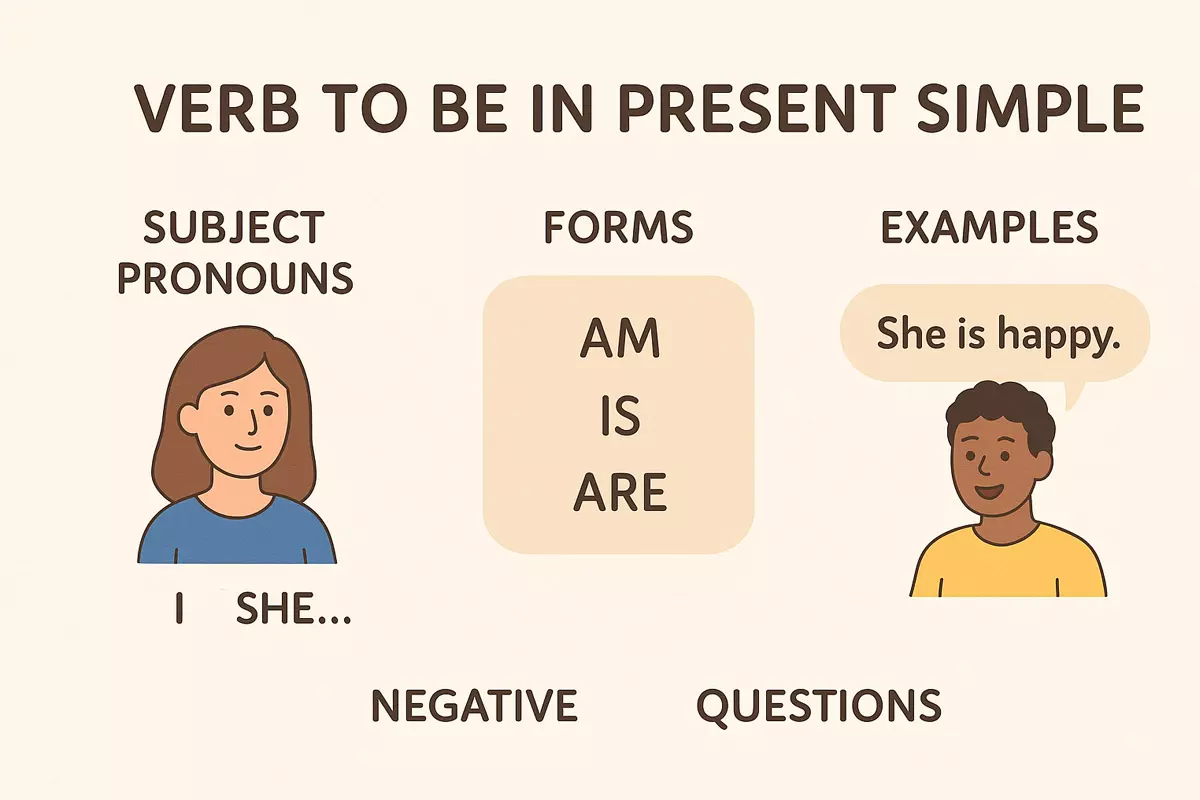 This article explains the different forms of the verb to be in the present simple tense. It covers how to make affirmative and negative sentences, ask yes/no and WH questions, avoid common errors, and includes a practice table.
Learning to express existence and identity in English is essential for beginners, as it allows you to communicate clearly about people, objects, and ideas. This guide introduces the basic verb that links subjects with descriptions or states, helping you form sentences such as "She is a student" or "The book is on the table." By practicing these structures, you will gain confidence in everyday conversations and be able to describe yourself, others, and the world around you with greater accuracy and ease.
Forms of To Be
Understanding how "to be" changes with different subjects is essential for constructing basic English sentences. In the present simple tense, this verb has three main forms: "am," "is," and "are." The choice depends on the subject of the sentence. Each form pairs with specific pronouns or nouns, and using the correct version helps your sentences sound natural and clear.
Present Simple Forms and Usage
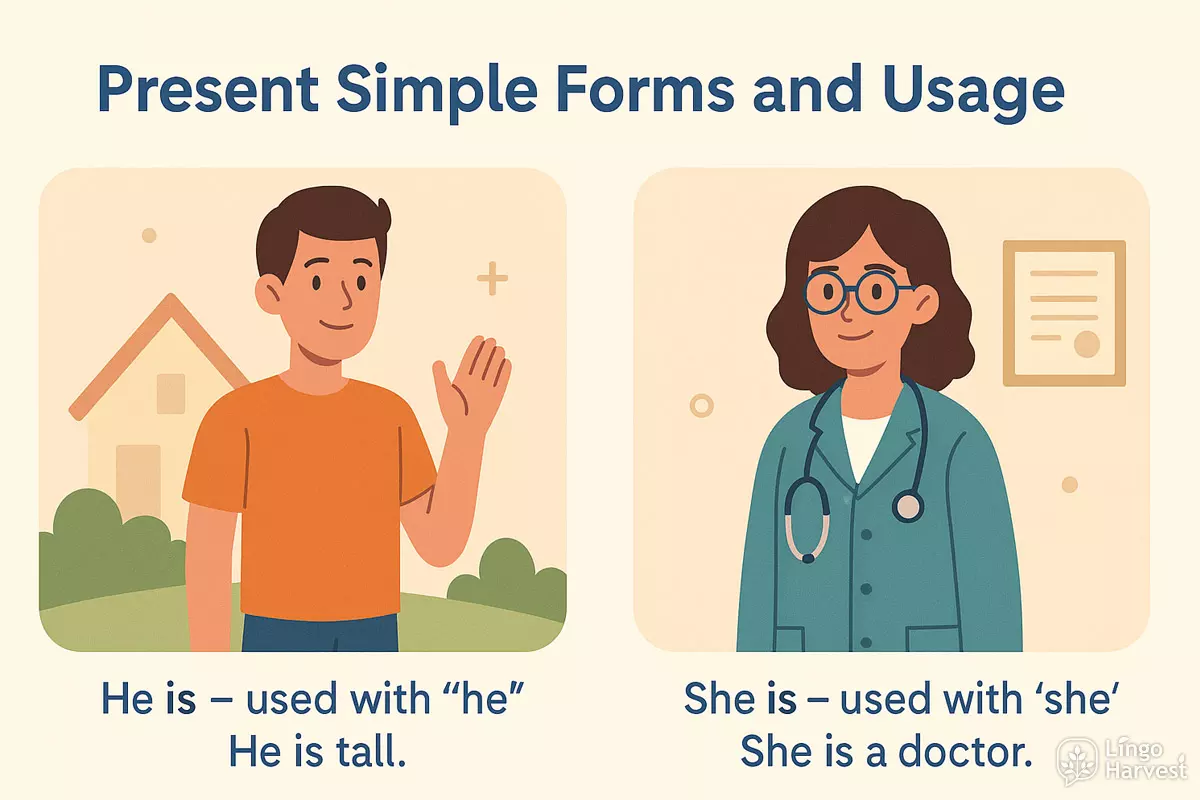
The verb "to be" acts as a connector between the subject and more information about it, such as a description, occupation, or location. Here’s a breakdown of which form matches each subject:
- I am – used only with "I". Example: I am happy.
- You are – used for both singular and plural "you". Example: You are a student.
- He is – used with "he". Example: He is tall.
- She is – used with "she". Example: She is a doctor.
- It is – used for things, animals, or ideas. Example: It is cold.
- We are – used with "we". Example: We are friends.
- They are – used with "they". Example: They are here.
Summary Table: Present Simple Forms
| Subject | Correct Form | Example Sentence |
|---|---|---|
| I | am | I am ready. |
| You | are | You are early. |
| He | is | He is my brother. |
| She | is | She is at home. |
| It | is | It is Monday. |
| We | are | We are classmates. |
| They | are | They are tired. |
Quick Reference: Key Points
- Use am only with "I".
- Choose is for singular third-person (he, she, it).
- Select are with "you," "we," and "they," both singular (for "you") and plural.
- These forms do not change with gender (he/she) or number (you singular/plural).
Examples in Context
- I am a beginner. ✅
- You are kind.
- He is a teacher.
- She is from Spain.
- It is a cat.
- We are excited.
- They are neighbors.
- You are all welcome.
- It is not difficult.
- We are not late.
- They are not students.
- I am not tired.
By practicing with these forms, you’ll build a strong foundation for everyday English communication. Remember, picking the right version of this verb is the first step toward clear and correct sentences.
Affirmative Sentences
Understanding how to use “to be” in positive statements is essential for beginners. In English, “to be” changes form depending on the subject. The correct form connects the subject with information about people, places, or things, helping you describe identity, feelings, or locations.
Forms of “To Be” in Simple Present
The verb “to be” has three forms in the present simple: am, is, and are. Each subject pronoun pairs with a specific form. Here’s a clear overview:
| Subject | Present Simple Form of "To Be" |
|---|---|
| I | am |
| He / She / It | is |
| You / We / They | are |
How to Build a Positive Statement
To create a simple affirmative sentence, use this structure: Subject + correct form of “to be” + complement. The complement can be an adjective, noun, location, or another descriptive element.
- I am a student.
- You are happy.
- He is from Brazil.
- She is a doctor.
- It is cold today.
- We are friends.
- They are in the classroom.
- I am tired.
- He is a teacher.
- We are ready.
- You are late.
- It is a cat.
- They are excited.
- She is at home.
- I am here.
Common Uses in Everyday Conversation
Positive statements with “to be” help you introduce yourself, describe people, express feelings, and talk about places or things. Examples include saying your name (“I am Alex”), stating your job (“She is a nurse”), or sharing how you feel (“We are happy”). The verb “to be” is often the first verb English learners practice, as it allows for a wide range of basic communication. Mastering these patterns will give you confidence in both speaking and writing.
Negative Sentences
To express that something is not true in the present using "to be," you need to use a negative form. In English, this is done by adding "not" after the correct form of the verb. The verb "to be" changes depending on the subject: "am" for "I," "is" for singular third-person subjects, and "are" for plural subjects and "you."
How to Form Negatives with "To Be"
Simply place "not" after the appropriate form of the verb. For example:
- I am not tired.
- You are not late.
- He is not hungry.
- She is not at home.
- It is not cold.
- We are not ready.
- They are not students.
Notice that the structure is: Subject + am/is/are + not + complement.
Short Forms (Contractions)
In everyday speech and writing, contractions are very common. These are the short forms:
- I’m not (no contraction for "am not")
- You aren’t / You’re not
- He isn’t / He’s not
- She isn’t / She’s not
- It isn’t / It’s not
- We aren’t / We’re not
- They aren’t / They’re not
Both forms are correct, but "isn’t" and "aren’t" are more common in spoken English.
Full Forms vs. Contractions: Comparison
| Full Form | Contraction |
|---|---|
| I am not | I’m not |
| He is not | He isn’t / He’s not |
| We are not | We aren’t / We’re not |
| They are not | They aren’t / They’re not |
Common Mistakes to Avoid
- Do not use "don’t" or "doesn’t" with "to be" in the present simple. Say "He is not" (not "He doesn’t be").
- Remember, "am not" does not contract to "amn’t" in standard English.
- Use only the correct form of "to be" for the subject: "I am," "she is," "they are," etc.
Practice Examples
Here are more sample sentences to help you recognize patterns:
- I am not a teacher.
- You are not from Spain.
- He isn’t here today.
- She’s not my sister.
- It isn’t open now.
- We’re not finished.
- They are not brothers.
- The weather isn’t nice.
- My keys are not in my bag.
- Our friends aren’t at the party.
- The book is not interesting.
- The children aren’t tired.
Mastering negative forms with "to be" helps you communicate clearly about facts that are not true or do not exist in the present. Practice using both full and contracted forms to sound more natural in conversation.
Yes/No Questions
Forming questions using “to be” in the present simple is straightforward. The verb comes before the subject, so the structure is: am/are/is + subject + ...? This pattern works for all subjects—just remember to use the correct form of “to be” for each pronoun.
Basic Structure and Examples
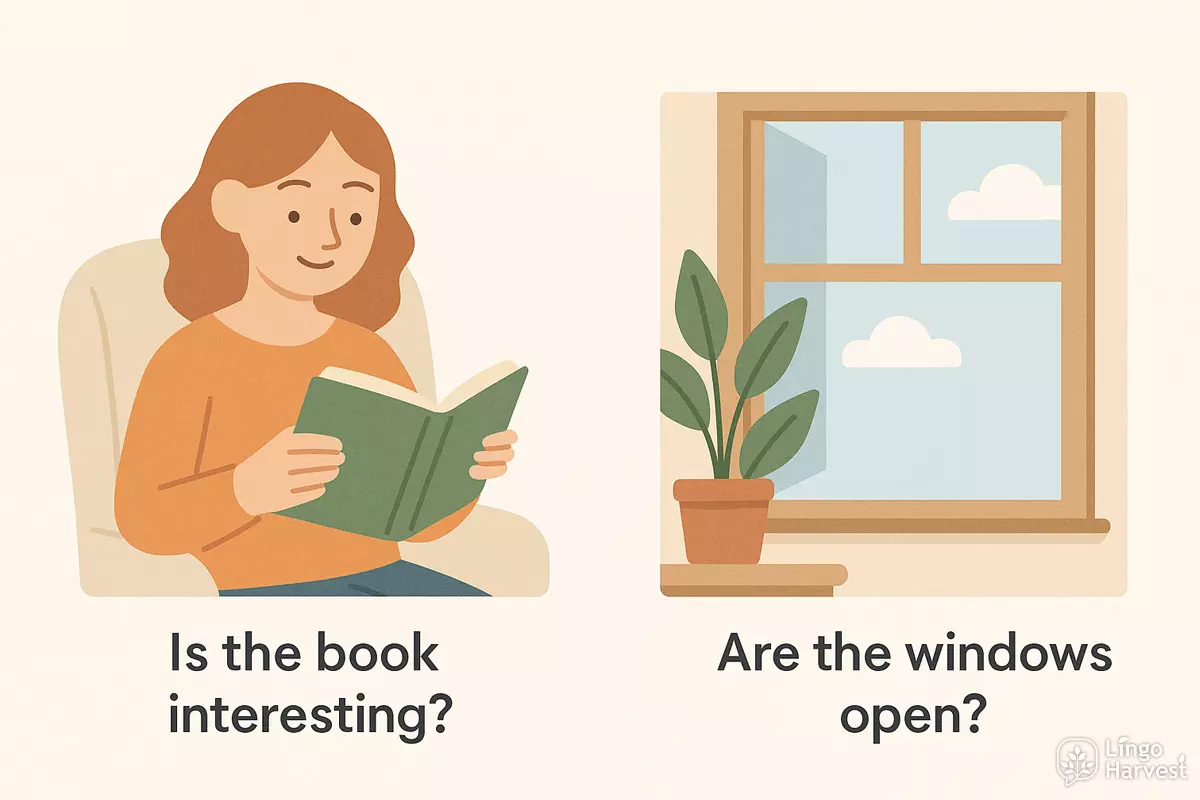
To ask if something is true or not, move the verb before the subject. Here are some common examples:
- Are you ready?
- Is he a student?
- Am I late?
- Is it cold?
- Are we friends?
- Are they at home?
- Is she your sister?
- Are you from Spain?
- Am I correct?
- Is the book interesting?
- Are the dogs outside?
- Is your name Anna?
- Are these seats taken?
- Is the class difficult?
- Are we in the right room?
- Is this your pen?
- Are you happy?
- Is he at work?
- Are the windows open?
- Are you tired?
Short Answers: How to Reply
When answering, use the same verb form as in the question. Positive answers use “Yes,” followed by the subject and verb. Negative answers use “No,” the subject, and the negative form of the verb.
| Question | Short Answers |
|---|---|
| Are you a teacher? | ✅ Yes, I am. ❌ No, I’m not. |
| Is she at home? | ✅ Yes, she is. ❌ No, she isn’t. |
| Are they ready? | ✅ Yes, they are. ❌ No, they aren’t. |
| Am I in the right place? | ✅ Yes, you are. ❌ No, you aren’t. |
Key Tips for Practice
- Always use the correct form of “to be” for the subject: am (I), is (he, she, it), are (you, we, they).
- In short answers, never repeat the full sentence—just the subject and verb.
- For negative replies, contract the verb: isn’t, aren’t, I’m not.
- Practice switching between statements and questions to build confidence.
Understanding how to ask and answer with “to be” is essential for everyday English. With practice, these question forms will become automatic in conversation.
WH Questions
When learning the present simple forms of the verb "to be," it's important to know how to ask for specific information using question words like who, what, where, and why. These types of queries help you find out details about people, places, things, and reasons. The verb "to be" changes slightly depending on the subject, and the word order is different in questions compared to statements.
How to Form Questions with "To Be"
To create a question, put the question word first, then the correct form of "to be" (am, is, are), and then the subject:
- Where are you?
- Who is she?
- What is it?
- Why are we here?
Notice that the verb comes before the subject in these sentences.
Common Question Words
These words help you ask for different types of information:
- Who – asks about a person
- What – asks about a thing or idea
- Where – asks about a place
- When – asks about time
- Why – asks for a reason
- How – asks about manner or condition
- Which – asks to choose from a group
- Whose – asks about possession
Examples of Present Simple "To Be" Questions
Here are some useful examples with different question words and forms of "to be":
- Who is your teacher?
- What is your name?
- Where are the keys?
- When is the meeting?
- Why are they late?
- How is your mother?
- Which is your bag?
- Whose book is this?
- Who are your friends?
- Where is he from?
- What is that noise?
- Why is it important?
- How are you?
- Where are we now?
- Who is at the door?
- When is your birthday?
- Which is correct?
- Whose idea is it?
Question Patterns with "To Be"
The structure is simple: Question word + am/is/are + subject + ... ? This pattern works for all the examples above.
| Question Word | Example with "To Be" |
|---|---|
| Who | Who is your brother? |
| What | What is this? |
| Where | Where are my shoes? |
| Why | Why is he tired? |
| How | How is your job? |
| Which | Which is your seat? |
| Whose | Whose is this pen? |
Practicing these patterns will help you speak and understand English with more confidence. Try making your own questions using different subjects and question words to build your skills.
Common Errors
Missteps with the present simple forms of "to be" are frequent for beginners. Many learners struggle to choose the right form or to place it correctly in a sentence. The verb “to be” (am, is, are) changes based on the subject, and forgetting this leads to mistakes that can make communication unclear.
Mixing Up Forms
One of the most common sources of confusion is using the wrong form for the subject. For example, saying “He am a student” instead of “He is a student” is a typical slip. Remembering which form matches each subject is crucial.
| Subject | Correct Form | Incorrect Example |
|---|---|---|
| I | am | I is happy. ❌ |
| He/She/It | is | She are tired. ❌ |
| We/You/They | are | They is ready. ❌ |
Omitting the Verb
In some languages, the verb “to be” is not always used in present tense. Beginners might write “She my friend” instead of “She is my friend.” Always include the correct form of the verb for a complete English sentence.
Negative and Question Forms
Mistakes also occur when making negatives or questions. Learners might say “You not are late” or “Is you tired?” instead of “You are not late” or “Are you tired?” Pay attention to word order and the placement of “not.”
- Incorrect: She not is here. ❌
- Correct: She is not here. ✅
- Incorrect: Are he a teacher? ❌
- Correct: Is he a teacher? ✅
- Incorrect: They is not ready. ❌
- Correct: They are not ready. ✅
- Incorrect: I are happy. ❌
- Correct: I am happy. ✅
- Incorrect: We am students. ❌
- Correct: We are students. ✅
- Incorrect: Is you okay? ❌
- Correct: Are you okay? ✅
- Incorrect: He is engineer. ❌
- Correct: He is an engineer. ✅
- Incorrect: My parents is at home. ❌
- Correct: My parents are at home. ✅
Forgetting Articles and Plurals
Another pattern is forgetting articles (“a,” “an,” “the”) or using the wrong noun form. For example, “She is teacher” instead of “She is a teacher.” These small words are important for natural sentences. Paying attention to these patterns and practicing with different subjects will help avoid frequent mistakes and make your English clearer and more accurate.
Practice: Complete the Table
Understanding how to use "to be" in the present simple is essential for building correct English sentences. Below, you'll find a structured table showing the different forms of the verb "to be" with various subjects. Study the forms carefully, then try the exercises that follow to check your understanding.
| Subject | Full Form | Contracted Form | Negative Form |
|---|---|---|---|
| I | am | I'm | am not |
| you | are | you're | are not / aren't |
| he | is | he's | is not / isn't |
| she | is | she's | is not / isn't |
| it | is | it's | is not / isn't |
| we | are | we're | are not / aren't |
| they | are | they're | are not / aren't |
Practice using the correct form of "to be" with the following sentences. Write the full form and the negative form for each example. Try not to look at the table above while you fill in the blanks. This will help you remember the correct choices.
- _____ (he) at home?
Negative: _____ - _____ (I) a student.
Negative: _____ - _____ (they) from Spain.
Negative: _____ - _____ (it) cold today.
Negative: _____ - _____ (you) happy?
Negative: _____ - _____ (we) ready.
Negative: _____ - _____ (she) my teacher.
Negative: _____
Show answers
- He is at home?
Negative: He is not (isn't) at home. - I am a student.
Negative: I am not a student. - They are from Spain.
Negative: They are not (aren't) from Spain. - It is cold today.
Negative: It is not (isn't) cold today. - Are you happy?
Negative: You are not (aren't) happy. - We are ready.
Negative: We are not (aren't) ready. - She is my teacher.
Negative: She is not (isn't) my teacher.
More Practice: Match the Contractions
Below is a list of contractions. Match each one to its full form:
- I'm
- you're
- he's
- she's
- it's
- we're
- they're
- I am
- you are
- he is
- she is
- it is
- we are
- they are
Show answers
- I'm = I am
- you're = you are
- he's = he is
- she's = she is
- it's = it is
- we're = we are
- they're = they are
Keep practicing by creating your own sentences with each subject and form of "to be". This will help you feel more confident using the verb in real conversations.