The Verb “To Have” in Present Simple: Grammar and Examples

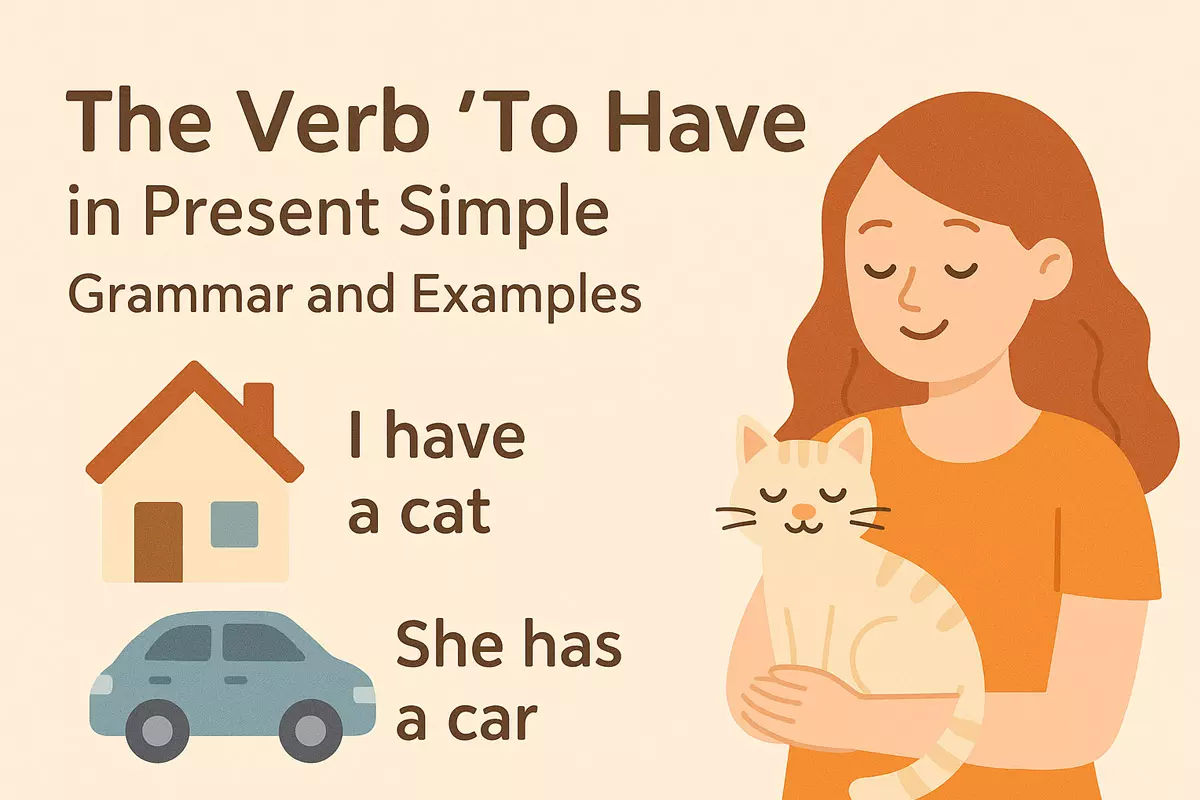 The article explains how to use have in the present simple tense, including forming affirmative and negative sentences, making questions with do and does, and recognizing common mistakes. It also provides a fill-in-the-blank practice exercise.
Learning to use “have” in the present tense is essential for expressing possession and describing characteristics in everyday English. This versatile verb allows us to clearly communicate what we own, feel, or experience, making it a fundamental part of effective conversations. Mastering “have” not only helps you talk about your belongings but also enables you to share personal experiences and describe physical or emotional states, which are important skills for building confidence and fluency in English communication.
Meaning and Function of Have
The verb have in the present simple tense is used in English to indicate possession, relationships, characteristics, and certain experiences. It helps describe what a person owns, their family connections, or features someone or something possesses. Additionally, it is a key part of various set expressions and idioms.
Primary Uses of "Have" in Present Simple
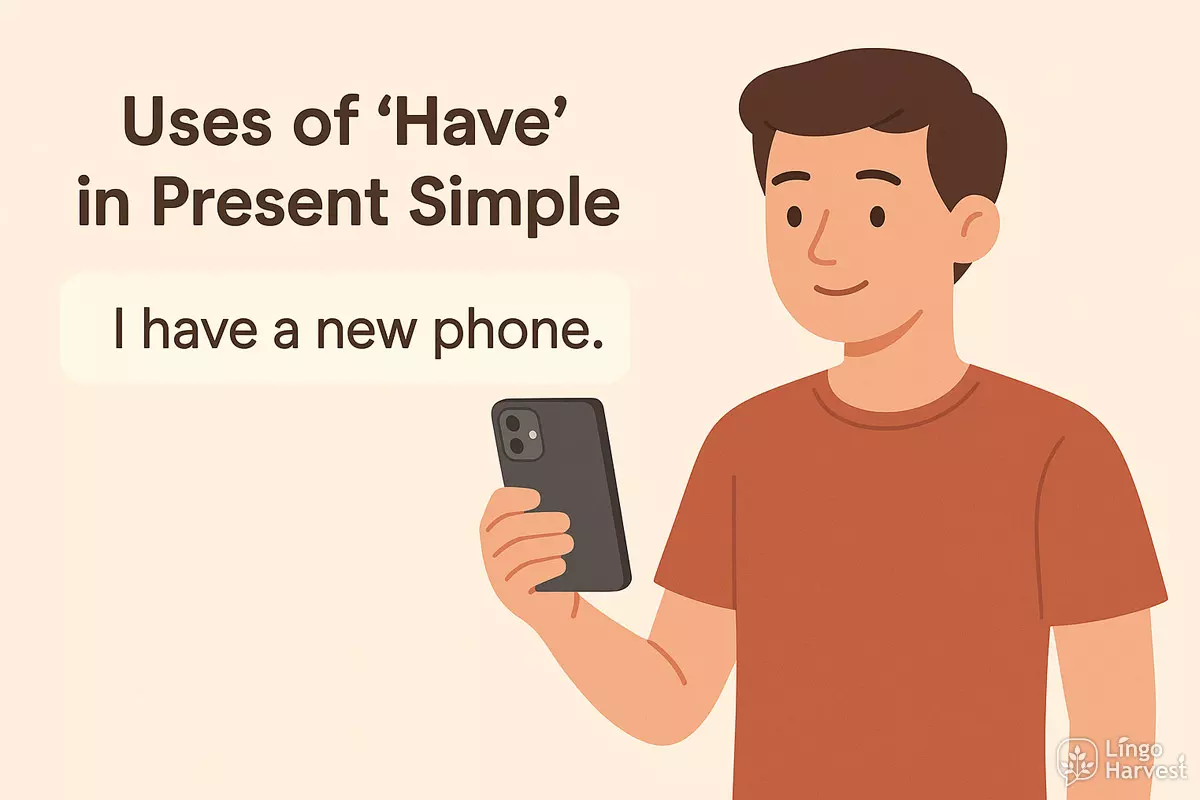
- Possession: Used to show ownership of objects, qualities, or abstract things. Example: "I have a new phone."
- Relationships: Indicates family members or social ties. Example: "She has two brothers."
- Characteristics: Describes features or attributes. Example: "The building has large windows."
- Experiences: Talks about actions like meals or habitual events. Example: "We have lunch at noon."
- Health: Commonly used to mention states or conditions. Example: "He has a headache."
- Obligations (in certain phrases): Forms expressions like "have to" for necessity. Example: "I have to leave early."
- Part of idioms: Appears in set phrases (e.g., "have a look", "have a rest").
Forms of "Have" in Present Simple
The verb changes form depending on the subject. "Have" is used with most subjects, while "has" is used with third person singular (he, she, it). Negative and question forms require auxiliary verbs.
| Subject | Affirmative | Negative |
|---|---|---|
| I / You / We / They | I have a car. | I do not have a car. |
| He / She / It | She has a car. | She does not have a car. |
Common Expressions with "Have"
In daily conversation, this verb frequently appears in set phrases. Here are several typical examples:
- have a shower
- have breakfast
- have a good time
- have an idea
- have trouble
- have a break
- have friends
- have a question
- have a meeting
- have patience
- have an appointment
- have a dream
- have fun
- have a chance
- have a seat
- have faith
- have a habit
- have time
These patterns show how flexible the verb is in describing everyday situations, possessions, and experiences. Understanding its uses helps learners express a wide range of ideas clearly and naturally.
Affirmative Sentences
When talking about what someone possesses or experiences in the present, English uses the verb “to have” in its simple form. The structure depends on the subject: for I, you, we, and they, the basic form “have” is used; for he, she, and it, the correct form is “has.” This distinction is crucial for proper grammar.
Basic Structure
The standard word order is: Subject + have/has + object. There are no auxiliary verbs in positive statements.
- I have a new phone.
- You have two brothers.
- We have a meeting at 10.
- They have a big garden.
- He has a cat.
- She has long hair.
- It has four wheels. (referring to a car)
- I have time today.
- My friends have tickets.
- Anna has an idea.
- The company has a new manager.
- We have lunch at noon.
- My parents have a house in the city.
- The dog has a collar.
- Each student has a textbook.
- The computer has a fast processor.
- He has a cold.
- They have a lot of homework.
Forms of “To Have” in Present Simple
The choice between “have” and “has” depends on the subject. Here’s a quick reference:
| Subject | Correct Form | Example |
|---|---|---|
| I | have | I have a question. |
| You | have | You have a nice smile. |
| We | have | We have free time. |
| They | have | They have a dog. |
| He | has | He has a car. |
| She | has | She has an appointment. |
| It | has | It has a problem. |
Usage Tips
Remember that “have” and “has” are used to talk about possessions, characteristics, relationships, and sometimes experiences. Do not use “do/does” in positive statements. For instance, say “She has a bike,” not “She does have a bike” (unless you want to emphasize). This present simple pattern is essential for everyday English. Mastering it helps you describe what people own, feel, or experience right now.
Negative Forms with Don’t/Doesn’t
To say that someone does not possess something or does not experience a particular state in the present, English uses the helping verbs “do not” (don’t) and “does not” (doesn’t) with the base form “have.” This is different from the affirmative, where “have” stands alone. The choice between “don’t” and “doesn’t” depends on the subject of the sentence.
How to Form the Negative
For most subjects (I, you, we, they), use “don’t have.” For third person singular subjects (he, she, it), use “doesn’t have.” Notice that “have” does not change; only the auxiliary verb does.
Negative Patterns
- I don’t have a car.
- You don’t have any questions.
- We don’t have enough time.
- They don’t have a dog.
- He doesn’t have a computer.
- She doesn’t have siblings.
- It doesn’t have a name.
- My friend doesn’t have a ticket.
- The students don’t have homework.
- Anna doesn’t have a job.
- You don’t have an appointment.
- We don’t have milk.
- He doesn’t have any money.
- They don’t have free time.
- She doesn’t have an umbrella.
- I don’t have a phone.
- It doesn’t have wheels.
- We don’t have the address.
Summary of Forms
Below is a comparison of negative structures for different subjects:
| Subject | Negative Form | Example |
|---|---|---|
| I / You / We / They | don’t have | I don’t have a pen. |
| He / She / It | doesn’t have | She doesn’t have a ticket. |
| Plural Nouns | don’t have | The dogs don’t have collars. |
| Singular Noun (not I/you) | doesn’t have | My brother doesn’t have a car. |
Common Mistakes to Avoid
It’s important not to use “has” after “doesn’t.” For example, say “He doesn’t have a book,” not “He doesn’t has a book.” Remember, the auxiliary verb already shows the tense and person; “have” stays in its base form.
Short Answers in the Negative
When replying negatively, use these patterns:
- No, I don’t.
- No, she doesn’t.
- No, we don’t.
- No, it doesn’t.
Practicing these forms will help you express absence or lack clearly and correctly in everyday conversation.
Questions with Do/Does
When talking about possession or relationships in the present, English often forms questions using “do” or “does” with the base form of “have.” This structure is especially common in American English, as opposed to the “have you got” form used in some varieties of British English. The auxiliary “do” is used with I, you, we, and they, while “does” is used with he, she, and it.
How to Form Questions
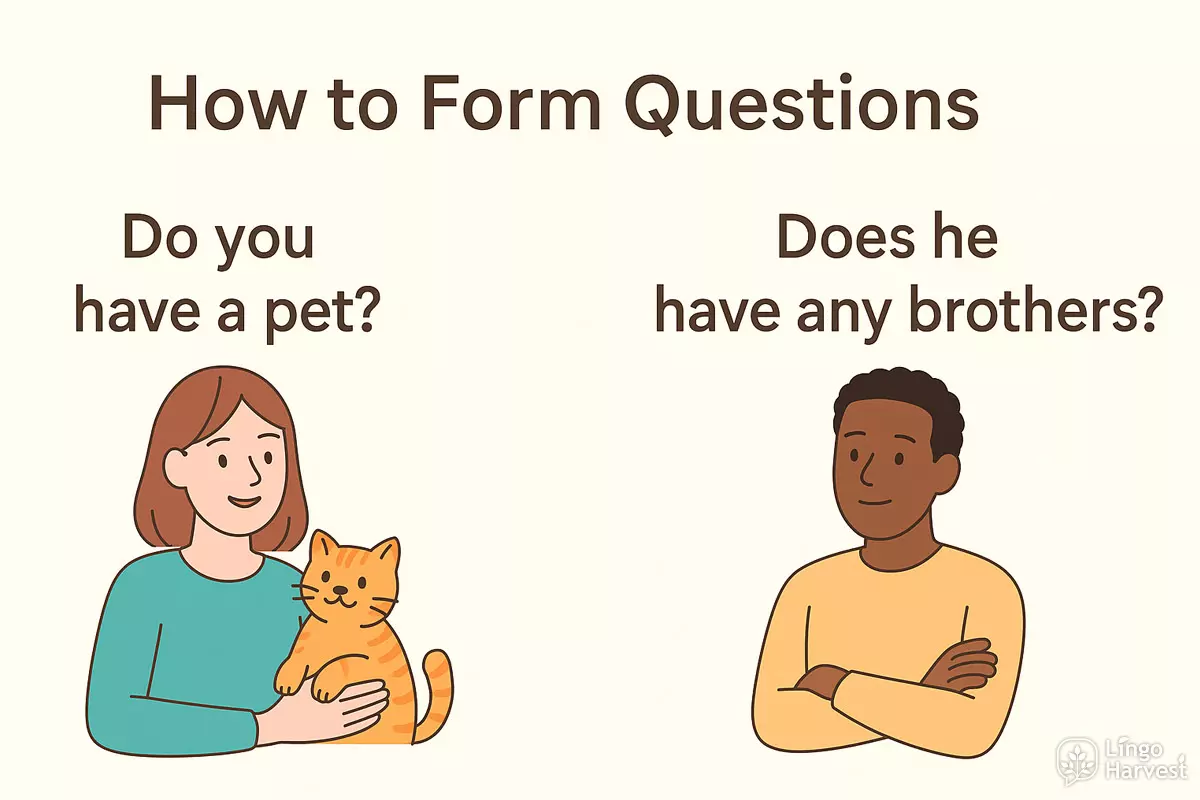
To create a question, place “do” or “does” at the beginning, followed by the subject, then “have,” and finally the object. For example:
- Do you have a pet?
- Does he have any brothers?
- Do they have enough time?
- Does it have a name?
Notice that after “does,” the verb “have” does not change form; it always stays as “have,” not “has.”
Common Patterns and Examples
Questions using this structure are useful for asking about possessions, family, features, or experiences. Here are more sample questions you might encounter or use:
- Do you have a driver’s license?
- Does your friend have a car?
- Do we have any homework today?
- Does your house have a garden?
- Do the students have their books?
- Does Anna have a favorite color?
- Do these shoes have laces?
- Does your phone have a camera?
- Do cats have nine lives?
- Does this restaurant have vegetarian options?
- Do you have any questions?
- Does he have an appointment?
- Do they have enough chairs for everyone?
- Does it have a warranty?
- Do you have time to talk?
Short Answers
When replying, it’s common to use short answers with “do/does” or “don’t/doesn’t.” These help keep responses clear and natural.
| Question | Short Answer |
|---|---|
| Do you have a pen? | Yes, I do. / No, I don’t. |
| Does she have a cat? | Yes, she does. / No, she doesn’t. |
| Do they have tickets? | Yes, they do. / No, they don’t. |
| Does it have a problem? | Yes, it does. / No, it doesn’t. |
This question format is essential for everyday conversation, making it easy to ask about what someone owns, needs, or experiences in the present. By practicing these patterns, you’ll become more comfortable forming and responding to questions about possession and characteristics.
Common Mistakes
Misusing “to have” in the present simple can cause frequent confusion, especially for English learners. The main issues often come from mixing up “have” and “has,” forgetting auxiliary verbs in questions and negatives, or applying the wrong word order. These errors make sentences unclear or grammatically incorrect.
Mixing Up “Have” and “Has”
Learners sometimes use “have” instead of “has” with he, she, or it, and vice versa. This is a basic but common slip, especially in spoken English.
- ❌ She have a car. → ✅ She has a car.
- ❌ My brother have two cats. → ✅ My brother has two cats.
- ❌ They has a new house. → ✅ They have a new house.
Problems with Negatives and Questions
Another source of mistakes is forgetting that present simple negatives and questions use “do/does” as auxiliaries. People sometimes say “He not have” or “Has he a dog?” which are incorrect in modern English.
| Incorrect Form | Correct Form |
|---|---|
| He not have a bike. | He does not have a bike. |
| Does she has a sister? | Does she have a sister? |
| Has he a pet? | Does he have a pet? |
| I doesn't have money. | I don't have money. |
Other Frequent Issues
Using contractions incorrectly or omitting them can also lead to awkward sentences. Sometimes, word order is mixed up, or extra auxiliary verbs are added by mistake. Here are more examples to watch out for:
- Writing “She don’t have” instead of “She doesn’t have.”
- Using “He do not has” instead of “He does not have.”
- Forgetting to use “do/does” in questions: “You have a pen?” instead of “Do you have a pen?”
- Confusing possessive “has” with modal “have to”: “She have to go” (should be “She has to go”).
- Incorrect double use: “Does he has?” instead of “Does he have?”
- Mixing up third person rules: “My friend have lunch at noon.”
- Overusing “has” for plural: “The students has books.”
- Incorrect negative: “They hasn’t homework.”
- Missing auxiliary: “He not have friends.”
- Wrong contraction: “He’s not have” instead of “He doesn’t have.”
Careful attention to these patterns will help you avoid the most typical pitfalls and use “to have” correctly in the present simple tense.
Practice: Fill in the Correct Form
Understanding how to use “have” and “has” correctly is essential for building accurate sentences in English. Below, you'll find exercises to help you get comfortable choosing the right present simple form based on the subject. Review the examples, try the tasks, and check your answers at the end.
Quick Reference: “Have” vs. “Has”
The verb “to have” changes depending on the subject. Use this reference before you start the exercises:
| Subject | Correct Form |
|---|---|
| I | have |
| You | have |
| He / She / It | has |
| We | have |
| They | have |
Fill in the Blank Sentences
Choose the correct form of “to have” for each subject.
- He ______ a new bicycle.
- They ______ three cats.
- I ______ a meeting at 10 a.m.
- She ______ an interesting book.
- We ______ lunch together every Sunday.
- It ______ four wheels.
- You ______ a great idea!
- My friends ______ a big house.
- The dog ______ a brown collar.
- Anna and Mark ______ two children.
Show answers
- has
- have
- have
- has
- have
- has
- have
- have
- has
- have
Identify the Mistakes
Some sentences below use the wrong form. Spot which are incorrect and rewrite them.
- She have two sisters.
- We have a garden.
- It have a long tail.
- You has a blue pen.
Show answers
- She has two sisters. (Correction)
- We have a garden. (Correct)
- It has a long tail. (Correction)
- You have a blue pen. (Correction)
Make Your Own Sentences
Try forming your own sentences using “have” or “has.” Consider these prompts:
- A sentence about your family.
- A sentence about something you own.
- A sentence about your friend’s hobby.
- A sentence about pets.
Write your answers and check them with the rules above. For best results, practice regularly and pay attention to the subject of each sentence to choose “have” or “has” correctly.