Be, Have, Do: The Three Essential Verbs for A1 Learners

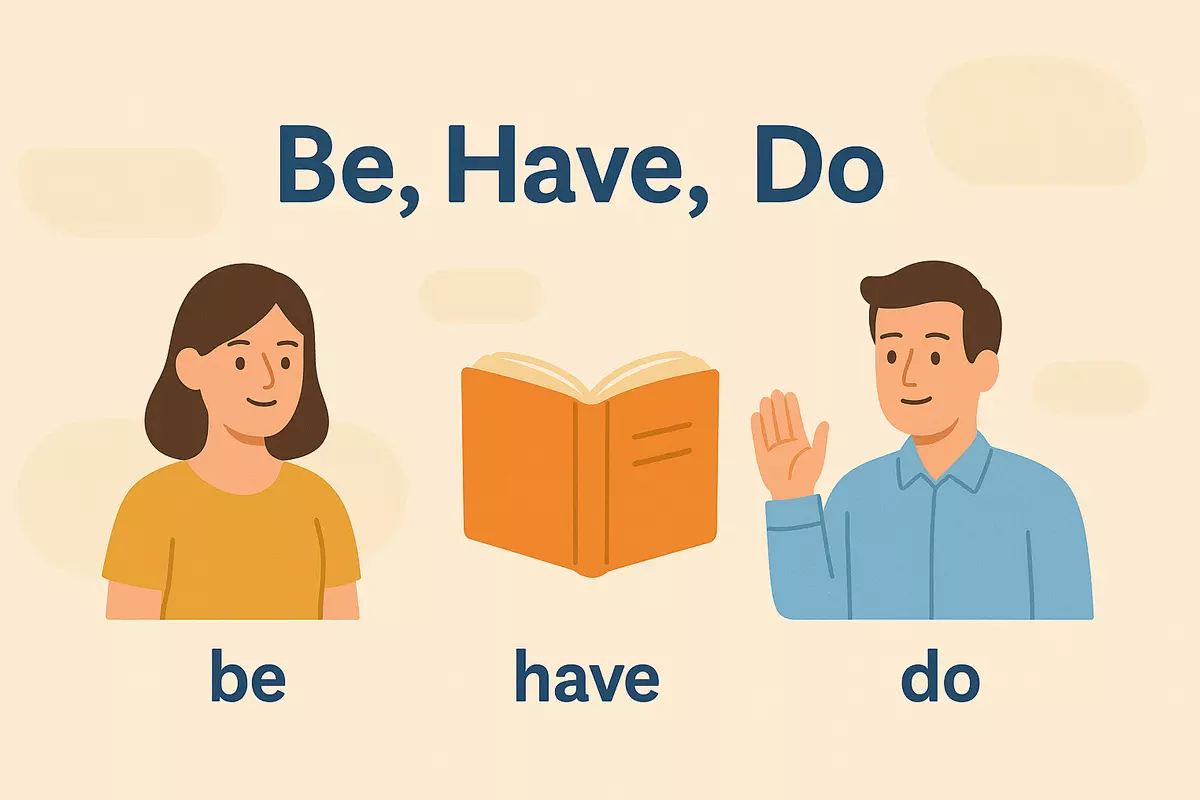 This article explains why be, have, and do are vital for A1 English learners. It covers how to use am, is, are, have, have got, do, and does in sentences, questions, and negatives, plus tips on word order, agreement, and common mistakes.
Beginning to learn English involves mastering essential building blocks such as expressing existence, possession, and actions. Grasping the use of basic verbs like "be," "have," and "do" is crucial for beginners, as these verbs form the foundation for constructing sentences and conveying meaning. By understanding how to use these verbs correctly, learners can start to communicate effectively in everyday situations, ask questions, describe experiences, and interact with others. This foundational knowledge opens up new opportunities to engage with the language and build confidence in using English.
Why Be, Have, and Do Are Essential at A1 Level
At the beginning of language learning, the verbs be, have, and do allow students to express a wide range of ideas with minimal vocabulary. These verbs form the backbone of basic sentences, enabling learners to talk about themselves, ask questions, and describe the world around them. Without mastering these three, it becomes nearly impossible to communicate even simple thoughts or needs.
Building Simple Sentences
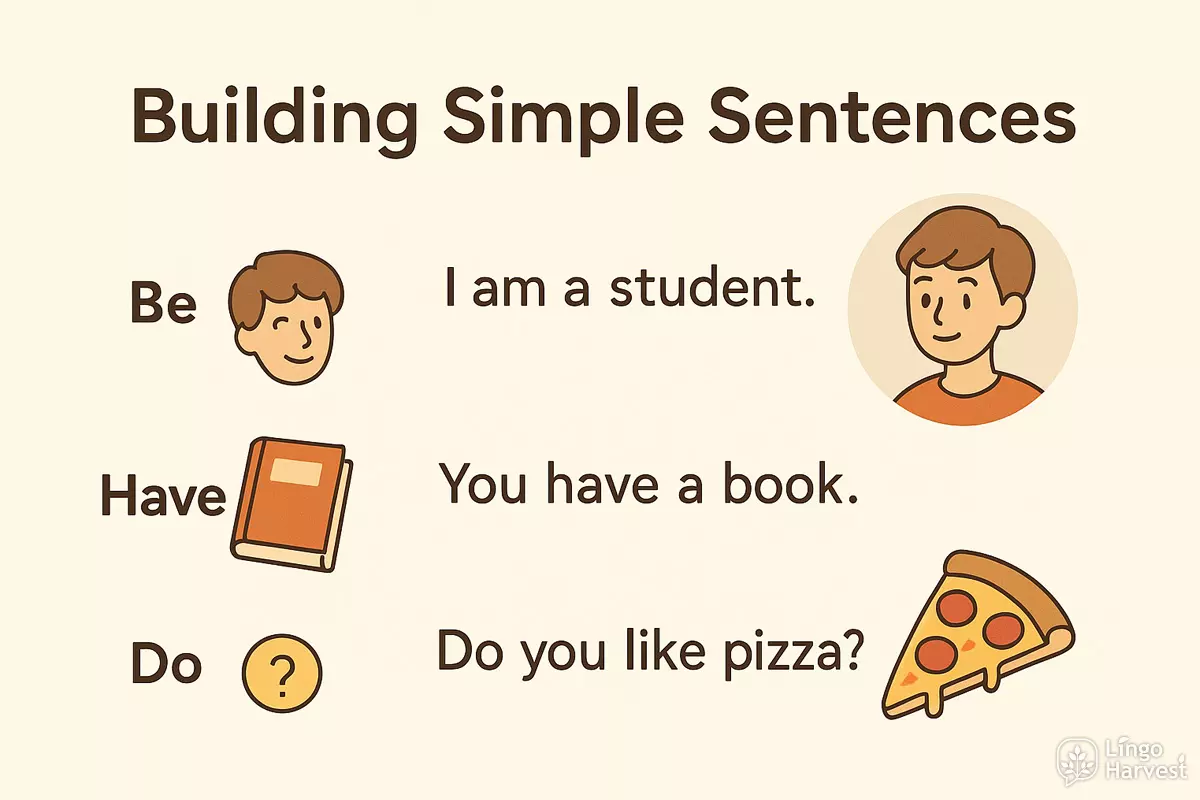
Early English learners rely on these verbs to create basic statements and questions. For example:
- Be: I am a student. / She is tired.
- Have: You have a book. / They have two cats.
- Do: Do you like pizza? / I do my homework.
Essential Functions at A1
These verbs are not just vocabulary—they are tools for grammar. Each one plays a different role:
- Be is used for describing people and things, giving information about status or condition, and forming the passive voice.
- Have helps express possession, relationships, and sometimes actions (like "have breakfast").
- Do is vital for making questions and negatives in the present simple, and for talking about general actions.
Comparison of Forms and Uses
| Verb | Common Uses & Forms (A1) | Examples |
|---|---|---|
| Be | am, is, are Describing identity, feelings, state |
I am happy. She is a teacher. |
| Have | have, has Possession, relationships |
We have a car. He has a brother. |
| Do | do, does Questions, negatives, actions |
Do you play chess? I do my work. |
Key Phrases and Patterns
Knowing how to use these verbs unlocks dozens of useful expressions. Here are some common starter phrases:
- Are you okay?
- I am from Spain.
- She is not here.
- We have time.
- He has blue eyes.
- Do you understand?
- I do not know.
- Does she speak English?
- They have a meeting.
- You are welcome.
- Do you have a question?
- It is cold today.
- We do our best.
- She has lunch at noon.
- I am not sure.
- Do they live here?
- He is my friend.
Mastering be, have, and do gives beginners the confidence to interact, ask for help, describe themselves, and understand basic instructions. These verbs are the keys to opening up real communication from the very start.
Be: am / is / are and Sentence Structure
Understanding how to use “am,” “is,” and “are” correctly is fundamental for English beginners. These forms of the verb “be” help us talk about people, things, and situations in the present. Choosing the right form depends on the subject of your sentence.
How to Choose: am, is, or are?
- am — used only with “I”
- is — used with he, she, it, or singular nouns
- are — used with you, we, they, or plural nouns
Sentence Patterns with “Be”
The verb “be” connects the subject to information about it. In basic sentences, the structure is:
- Subject + am/is/are + noun/adjective/prepositional phrase
Here are some common patterns:
- I am a student.
- He is happy.
- They are at home.
- We are friends.
- She is from Spain.
- You are early.
- It is cold.
- The dog is black.
- My parents are teachers.
- The books are on the table.
Making Questions and Negatives
To ask questions, move the form of “be” before the subject:
- Are you ready?
- Is she your sister?
- Am I late?
For negatives, add “not” after “be”:
- I am not tired.
- He is not here. (He isn’t here.)
- They are not busy. (They aren’t busy.)
Summary: Forms of “Be” in the Present
| Subject | Correct Form of “Be” |
|---|---|
| I | am |
| He / She / It / singular noun | is |
| You / We / They / plural noun | are |
Common Mistakes to Avoid
- ❌ He are my friend. → ✅ He is my friend.
- ❌ I is happy. → ✅ I am happy.
- ❌ They is here. → ✅ They are here.
Mastering these structures makes it much easier to build clear, correct sentences in English. Practice using each form with different subjects, and soon these patterns will feel natural.
Have vs Have Got in Everyday English
For A1 learners, understanding the difference between “have” and “have got” is helpful for speaking naturally. Both are used to talk about possession, family, or even certain conditions, but their usage can vary by formality, region, and sentence structure.
When to Use “Have” and “Have Got”
“Have” is common in both spoken and written English. It’s simple and works in all forms (positive, negative, questions). “Have got” is especially popular in informal British English and is mostly used in the present tense. In American English, “have” is preferred in most cases.
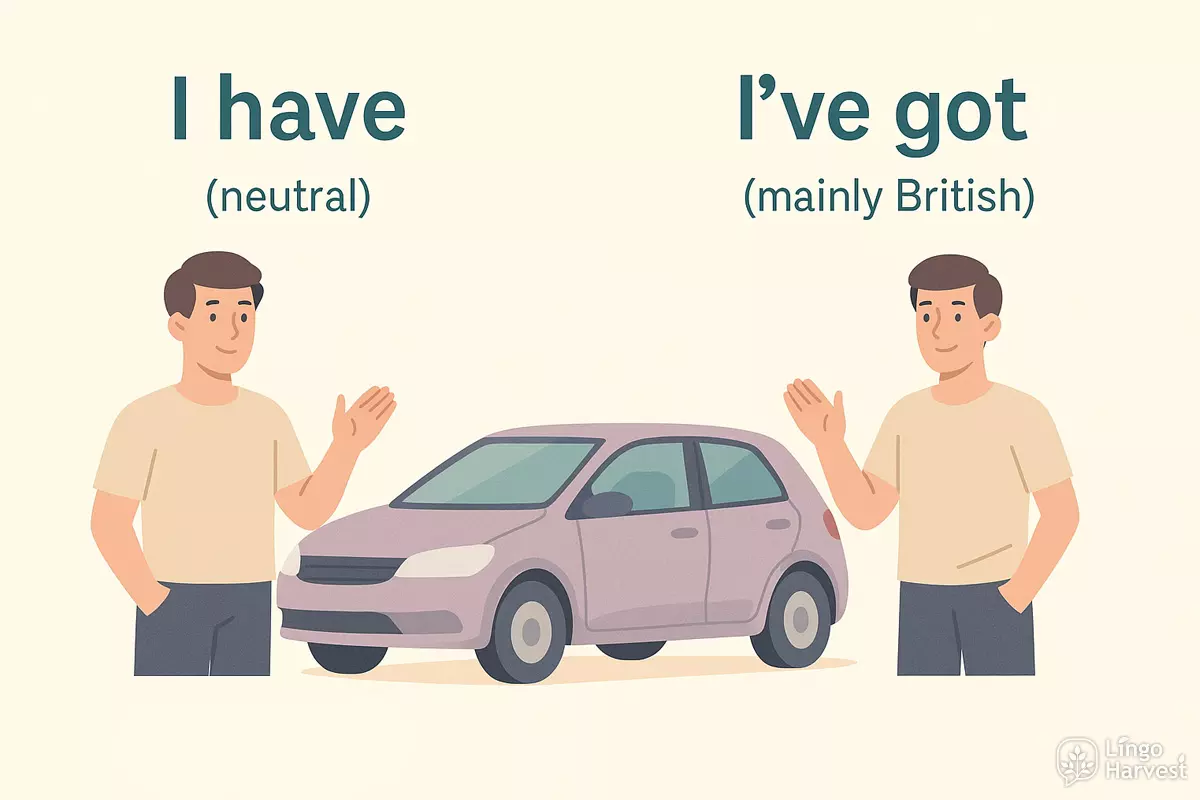
- I have a car. (neutral, all forms of English)
- I’ve got a car. (mainly British, informal)
- Do you have a brother? (question with “have”)
- Have you got a brother? (question with “have got”)
- She doesn’t have any pets.
- She hasn’t got any pets.
- We have some time.
- We’ve got some time.
- They have a problem.
- They’ve got a problem.
Key Differences in Structure
The main distinction is in how negatives and questions are formed. “Have” uses “do/does” for negatives and questions, while “have got” uses “have/has” directly.
| Form | Example |
|---|---|
| Positive | She has a cat. / She’s got a cat. |
| Negative | She doesn’t have a cat. / She hasn’t got a cat. |
| Question | Does she have a cat? / Has she got a cat? |
| Short Answer | Yes, she does. / Yes, she has. |
Notes on Use and Limitations
- “Have got” is rare in the past or future tenses. Use “had” or “will have” instead.
- For actions (not possession), only “have” is correct: I have breakfast, not I’ve got breakfast.
- In American English, “have got” is less formal and less common than in British English.
- Both can be contracted: I’ve got, you’ve got.
Summary
Choosing between “have” and “have got” depends on formality and style. Both are correct for expressing possession in the present, but their grammar differs in questions and negatives. For A1 learners, practicing both forms helps with understanding native speakers and sounding natural in different contexts.
Do: do / does in Questions and Negatives
Understanding how to use “do” and “does” is essential for A1 learners, especially when forming questions and negative sentences in English. These helping verbs act as supports for the main verb, allowing you to ask questions or say what someone does not do.
Using “do” and “does” in Questions
To form questions in the present simple, place “do” or “does” at the start of the sentence, followed by the subject and the base form of the main verb. “Do” is used with plural subjects and “I”, “you”, “we”, “they”. “Does” is for “he”, “she”, and “it”.
- Do you like apples?
- Does she play tennis?
- Do they work here?
- Does it rain often?
- Do we have class today?
- Do I need a ticket?
- Does he speak English?
- Do the children eat vegetables?
- Does your brother live near?
- Do cats like water?
Making Negatives with “do” and “does”
To make negative sentences, add “not” after “do” or “does.” “Do not” becomes “don’t” and “does not” becomes “doesn’t” in informal speech and writing. The main verb stays in its base form.
- I do not (don’t) understand.
- She does not (doesn’t) like coffee.
- We do not (don’t) work on Sundays.
- He does not (doesn’t) watch TV.
- You do not (don’t) need help.
- It does not (doesn’t) snow here.
- They do not (don’t) play football.
- My friend does not (doesn’t) drive.
- We do not (don’t) eat meat.
- She does not (doesn’t) have a cat.
Quick Reference: Forms with “do” and “does”
| Subject | Question Form | Negative Form |
|---|---|---|
| I / you / we / they | Do + subject + base verb? (Do you work?) |
Subject + do not (don’t) + base verb (We don’t sing.) |
| he / she / it | Does + subject + base verb? (Does he play?) |
Subject + does not (doesn’t) + base verb (She doesn’t read.) |
Common Mistakes to Avoid
- Don’t add -s to the main verb after “does”: Does he plays? ❌ → Does he play? ✅
- Use “do/does” only in present simple for questions and negatives, not with “be” or “have got”.
- Remember contractions: “don’t” and “doesn’t” are common in spoken English.
Mastering “do” and “does” helps you ask questions and express negatives clearly. Practice with different subjects and verbs to build confidence.
Short Answers and Contractions
Understanding how to reply quickly and naturally in English is essential for beginners. With verbs like "be", "have", and "do", learners often need to give brief responses and use contracted forms in everyday conversations. These compact replies help you sound more fluent and save time.
Quick Replies: Yes/No Answers
Short responses are common in English, especially in spoken language. Instead of repeating the whole question, use a simple pattern with the correct verb. For example:
- Are you ready? → Yes, I am. / No, I'm not.
- Do you like coffee? → Yes, I do. / No, I don't.
- Have you got a pen? → Yes, I have. / No, I haven't.
Notice how only the subject and verb are used. This form is direct and polite.
Using Contractions
Native speakers often shorten words when speaking. These contracted forms are not only natural but also make your speech sound less formal and more friendly. Here are some common contractions for "be", "have", and "do":
| Full Form | Contraction |
|---|---|
| I am | I'm |
| You are | You're |
| He is | He's |
| She is | She's |
| We are | We're |
| They are | They're |
| I have | I've |
| You have | You've |
| He has | He's |
| She has | She's |
| We have | We've |
| They have | They've |
| Do not | Don't |
| Does not | Doesn't |
| Have not | Haven't |
| Has not | Hasn't |
| Am not | I'm not |
| Are not | Aren't |
| Is not | Isn't |
Tips for Beginners
Practice using these short forms and brief answers in daily exchanges. Try responding with contractions when friends ask you simple questions. For instance, instead of "No, I am not", say "No, I'm not." This habit will help you communicate smoothly and confidently from the start.
Word Order and Agreement
Understanding how to arrange words and match verb forms with the subject is essential when using "be," "have," and "do." English has a fixed sentence structure, especially at the beginner level, and these three verbs often highlight how subjects and verbs must agree in person and number.
Basic Sentence Structure
The typical pattern for simple statements is Subject + Verb + (Object/Complement). Here are some examples:
- I am happy.
- She has a cat.
- We do homework.
- He is a teacher.
- They have two brothers.
- You do your best.
Notice that the verb follows the subject, and extra information (like an object or description) comes after.
Changing Word Order for Questions
To ask questions with these verbs, the order changes. The verb comes before the subject:
- Are you ready?
- Is he here?
- Do they play?
- Does she like it?
- Have you got a pencil?
- Has he finished?
This inversion is a key difference from statements.
Agreement Between Subject and Verb
Each verb form must match its subject. For "be," "have," and "do," the forms change depending on the subject:
| Subject | Be | Have | Do |
|---|---|---|---|
| I | am | have | do |
| You | are | have | do |
| He / She / It | is | has | does |
| We / They | are | have | do |
Common Mistakes to Watch For
Beginners often mix up verb forms or word order. Here are some typical errors and corrections:
- ❌ She have a dog. → ✅ She has a dog.
- ❌ He do his homework. → ✅ He does his homework.
- ❌ Are she your friend? → ✅ Is she your friend?
- ❌ You is tired. → ✅ You are tired.
Summary Tips
- Always match the verb form to the subject.
- For questions, place the verb before the subject.
- Remember the special forms for "be," "have," and "do" with he/she/it.
- Check your sentences for correct order and agreement every time you write or speak.
Mastering these patterns will help you build clear, correct sentences with the essential verbs.
Common Mistakes to Avoid
Many A1 learners struggle with the essential verbs "be," "have," and "do," especially when forming basic sentences or questions. Understanding how these verbs work and where errors often occur can help you communicate more clearly and confidently.
Confusing Verb Forms
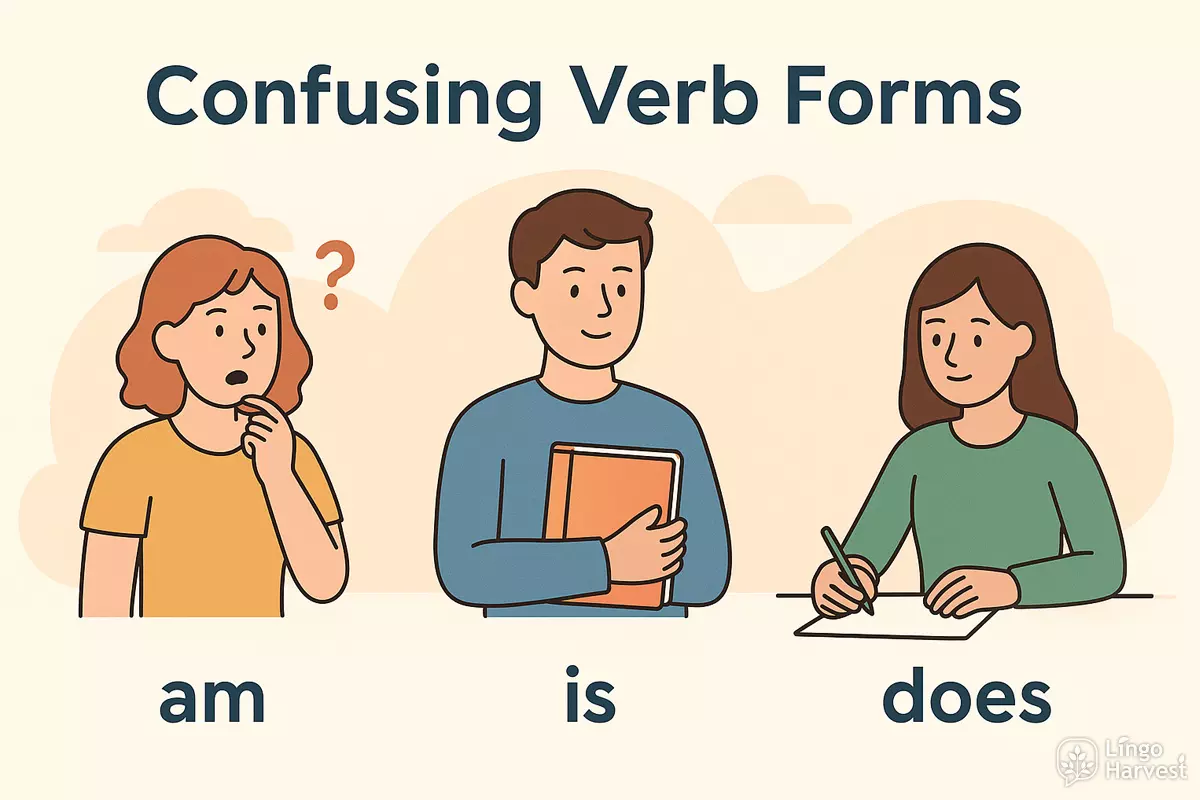
Beginners often mix up the forms of "be," "have," and "do," especially when switching subjects or tenses. For example, using "am" instead of "is," or forgetting the "s" in "does" for he/she/it. These small mistakes can make your speech sound unnatural.
| Incorrect Example | Correct Form |
|---|---|
| He am a student. | He is a student. |
| She have a cat. | She has a cat. |
| Do he like apples? | Does he like apples? |
| I does homework. | I do homework. |
Typical Errors to Watch For
- Using "am" or "is" with plural subjects: They is tired ❌ → They are tired ✅
- Omitting the auxiliary "do/does" in questions: You like pizza? ❌ → Do you like pizza? ✅
- Mixing up "have" and "has": He have a bike ❌ → He has a bike ✅
- Using "do" instead of "be" for descriptions: I do happy ❌ → I am happy ✅
- Forgetting the verb "be" in statements: She my friend ❌ → She is my friend ✅
- Adding unnecessary "do" in positive sentences: I do like pizza ❌ → I like pizza ✅
- Using "have" to express age: I have 20 years ❌ → I am 20 years old ✅
- Incorrect question word order: Where you are from? ❌ → Where are you from? ✅
- Confusing "do" and "does": She do homework? ❌ → Does she do homework? ✅
- Leaving out "do/does" in negative sentences: He not like coffee ❌ → He does not like coffee ✅
- Using "have got" incorrectly: I got a book ❌ → I have got a book ✅
Tips to Prevent These Errors
Pay close attention to the subject and verb agreement, and always check if you need an auxiliary verb for questions or negatives. Practicing simple sentence patterns and reviewing your mistakes will help you build strong habits. Remember, even small corrections can make a big difference in clarity and understanding.
Practice
Building confidence with "be," "have," and "do" starts with regular use in real-life situations and sentence creation. Below you’ll find a mix of sentence patterns, short tasks, and a comparison table to help you recognize and apply these three key verbs in various contexts.
Common Patterns with Essential Verbs
- Be: I am happy. / You are a student. / It is cold.
- Have: She has a cat. / We have homework. / They have time.
- Do: Do you like apples? / I do my work. / He does not (doesn’t) play chess.
- Be (questions): Are you ready? / Is he here?
- Have (questions): Do you have a pen? / Has she got a book?
- Do (negatives): I do not (don’t) know. / She does not (doesn’t) swim.
- Be (negatives): I am not tired. / They are not (aren’t) late.
- Have (negatives): I do not have a car. / She has not (hasn’t) got money.
- Short answers: Yes, I am. / No, I don’t. / Yes, she has.
- Polite requests: Do you have a minute? / Are you busy?
Comparing "Be," "Have," and "Do" in Simple Sentences
| Verb | Example in a Sentence | Negative Form | Question Form |
|---|---|---|---|
| Be | She is tall. | She is not tall. | Is she tall? |
| Have | We have books. | We do not have books. | Do we have books? |
| Do | I do my homework. | I do not do my homework. | Do I do my homework? |
| Be | You are ready. | You are not ready. | Are you ready? |
| Have | She has a bike. | She does not have a bike. | Does she have a bike? |
| Do | They do sports. | They do not do sports. | Do they do sports? |
Mini-Quiz: Choose the Correct Verb
- ___ you hungry? (be/have/do)
- She ___ a brother. (be/have/do)
- ___ they like pizza? (Be/Have/Do)
- I ___ not tired. (am/have/do)
- We ___ our homework every day. (be/have/do)
Show answers
- Are you hungry?
- She has a brother.
- Do they like pizza?
- I am not tired.
- We do our homework every day.
Make Sentences: Fill the Gaps
- He ___ not at home. (be)
- ___ you got a pet? (have)
- I ___ my best. (do)
- We ___ late. (be)
- They ___ a new car. (have)
Show answers
- He is not at home.
- Have you got a pet?
- I do my best.
- We are late.
- They have a new car.
Tips for Daily Use
- Try to use "be," "have," and "do" in simple conversations every day.
- Notice these verbs in short texts or dialogues; underline or write them out.
- Practice forming both positive and negative sentences aloud.
- Ask and answer basic questions with a partner using these verbs.
- Listen for these forms in songs and repeat them.