Transitive vs Intransitive Verbs: Easy Rules and Examples

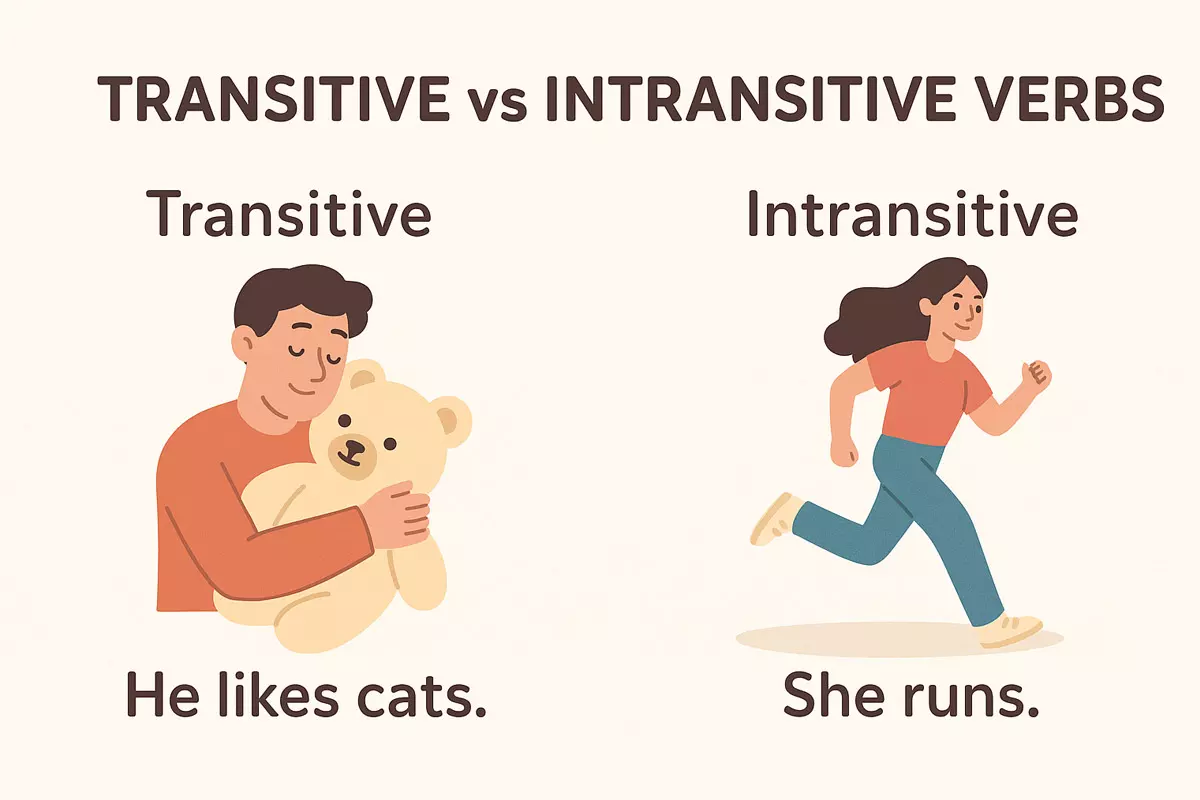 The article defines transitive and intransitive verbs, highlights their key differences, lists verbs that do or don’t take objects, shows verbs used both ways with examples, and provides a practice section to identify verb types.
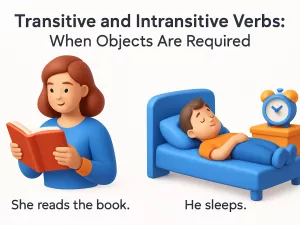
Have you ever wondered why some verbs in English require an object while others do not? Recognizing the difference between transitive verbs, which need an object to complete their meaning, and intransitive verbs, which stand alone, is key to writing clearer sentences and improving your grammar. For example, in the sentence “She reads books,” “reads” is transitive because it has an object, while in “He sleeps,” “sleeps” is intransitive and does not need an object. Understanding this distinction helps you construct sentences more accurately.
Definition and Key Difference
Transitive and intransitive verbs are two basic types of action words in English, and the main thing that sets them apart is whether or not they need a direct object to make sense. In other words, some verbs must have something or someone to receive the action, while others can stand alone without needing extra information.
What Is a Transitive Verb?
A transitive verb is an action word that always requires a direct object to complete its meaning. Without the object, the sentence feels unfinished or confusing. For example, in the sentence “She reads books,” the verb “reads” is transitive because it answers the question “reads what?”—the answer is “books.”
What Is an Intransitive Verb?
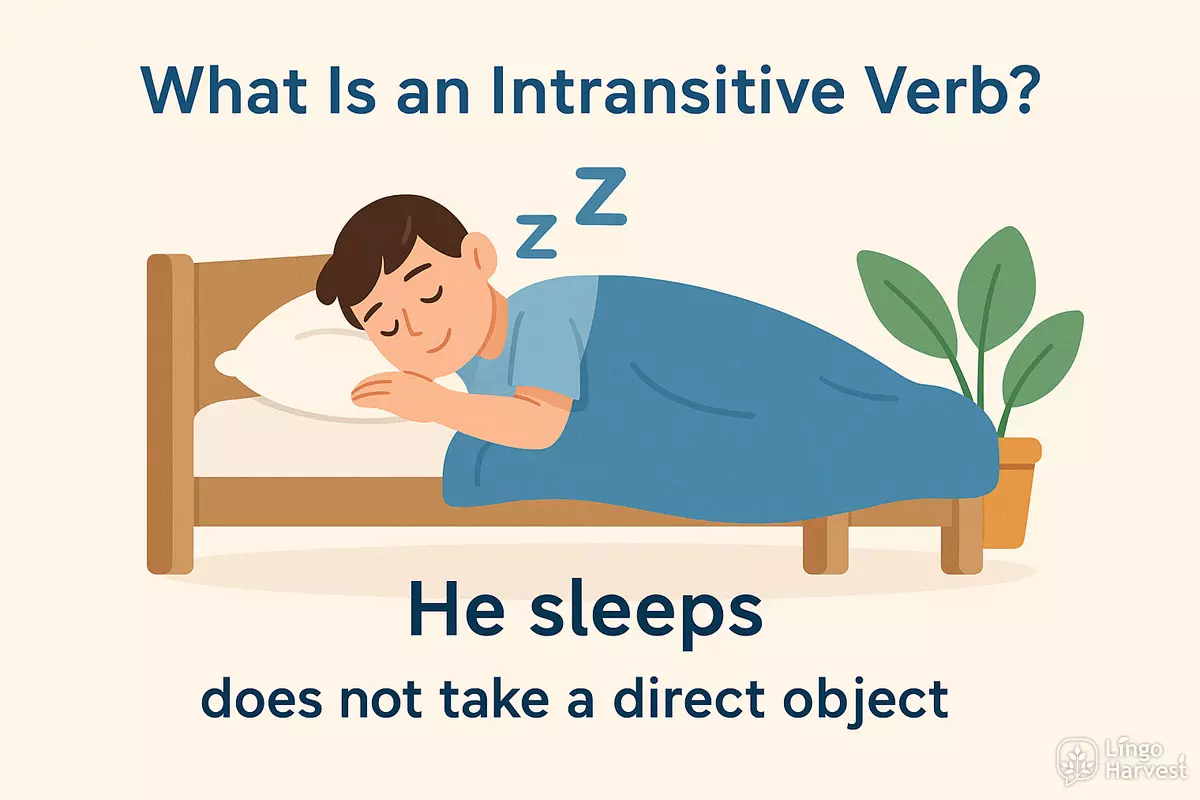
In contrast, an intransitive verb does not take a direct object. The action stops with the subject, and the sentence makes sense on its own. For example, “He sleeps” is complete; there’s no need to specify what he sleeps.
Key Distinctions at a Glance
To make things clearer, here’s a structured comparison between these two types of verbs:
| Transitive Verbs | Intransitive Verbs |
|---|---|
| Require a direct object | Do not need a direct object |
| Action passes from subject to object | Action stays with the subject |
| Examples: “eat (an apple),” “write (a letter),” “bring (a gift)” | Examples: “run,” “sleep,” “arrive” |
| Can be made passive (e.g., “The letter was written”) | Cannot be made passive (“He slept” cannot become “Slept was by him”) |
How to Spot the Difference
If you can answer the question “what?” or “whom?” after the verb, you’re dealing with a transitive verb. If not, it’s usually intransitive. For example:
- They built a house. (What did they build?)
- The sun rises. (No object needed)
Common Transitive and Intransitive Verbs
Here is a list of verbs commonly used in each category to help you recognize patterns:
- Transitive: buy, carry, choose, find, hold, know, make, need, open, play, send, take, tell, use, want, win
- Intransitive: arrive, cry, die, fall, go, happen, laugh, live, occur, remain, sit, sleep, sneeze, swim, vanish, wait
Understanding whether a verb needs an object or not is crucial for writing clear sentences and for using English naturally. This distinction also affects how sentences can be changed into passive voice, which only works with transitive verbs.
Verbs That Take Objects
Verbs in English can often be distinguished by whether they require an object to complete their meaning. These action words, known as transitive verbs, need something or someone to receive the action. Without an object, sentences with these verbs often sound incomplete or confusing.
What Are Transitive Verbs?
Transitive verbs are action words that must have a direct object—a noun or pronoun that receives the action. For instance, in “She reads books,” the word “books” is the object receiving the action of reading. Without “books,” the sentence “She reads” leaves us wondering: reads what?
- bring (Bring your notebook.)
- eat (He eats an apple.)
- find (Can you find my keys?)
- make (They made a cake.)
- need (I need help.)
- offer (She offered advice.)
- play (Do you play chess?)
- send (We sent a letter.)
- take (Take this umbrella.)
- write (He wrote a letter.)
- love (She loves music.)
- choose (Please choose a color.)
- buy (He bought a car.)
- hold (Hold my hand.)
- open (Open the door.)
- see (I see the mountains.)
- use (She uses a computer.)
- answer (Answer the question.)
- build (They built a house.)
- fix (Can you fix this?)
How to Identify If a Verb Needs an Object
A quick test is to ask “what?” or “whom?” after the verb. If the answer makes sense and completes the thought, the verb is transitive. For example:
- She kicked what? — the ball.
- He invited whom? — his friend.
Common Patterns with Transitive Verbs
Transitive verbs can take just one object, or sometimes two (a direct and an indirect object). Here is how these patterns look:
| Pattern | Example Sentence |
|---|---|
| Verb + Direct Object | She reads a book. |
| Verb + Indirect Object + Direct Object | He gave me the keys. |
| Verb + Direct Object + Object Complement | They named her president. |
| Verb + Pronoun Object | I called him. |
Why It Matters
Knowing which verbs require an object helps you form clear, natural sentences in English. This distinction is especially important for learners, as some verbs can only be used transitively, while others may be both transitive and intransitive depending on context. Practice identifying and using these verbs to make your speech and writing more precise.
Verbs Without Objects
Some verbs are complete all on their own and do not need an object to make sense. These are typically called intransitive verbs. When you use them in a sentence, there’s no direct recipient of the action—just the subject and the verb itself. For example, in “The baby sleeps,” the action is finished without anything or anyone receiving it.
Recognizing Intransitive Verbs
You can spot these verbs by checking if the action stops with the verb or if something else in the sentence is needed. Ask yourself: “What gets the action?” If there’s no answer, you’re likely looking at an intransitive verb.
Common Examples
Here are several verbs that typically do not take a direct object:
- arrive
- go
- run
- sleep
- fall
- cry
- exist
- swim
- die
- sit
- rise
- laugh
- walk
- happen
- grow
- shout
- wait
- appear
- change
- stand
Sample Sentences
Here are some ways these verbs are used in context:
- The sun rises.
- She laughed loudly.
- They waited patiently.
- The leaves fell.
- He shouted.
Important Notes
Some verbs can be both transitive and intransitive, depending on how you use them. For instance, “run” is intransitive in “He runs every morning,” but becomes transitive in “She runs a business.” Always check the sentence structure to determine if a direct object is present. Understanding which verbs do not require objects can help you form clear, concise sentences and avoid common mistakes.
Same Verb Used Both Ways
Some English verbs can act as either transitive or intransitive, depending on how they're used in a sentence. This means the same word can take a direct object in one context and stand alone in another. Recognizing these flexible verbs helps with both writing and understanding English sentences.
How It Works
When a verb is used transitively, it requires a direct object to complete its meaning. Used intransitively, it makes sense on its own, without a direct object. The meaning of the verb often changes slightly between these uses, but sometimes it just depends on whether the sentence needs more detail.
Common Examples
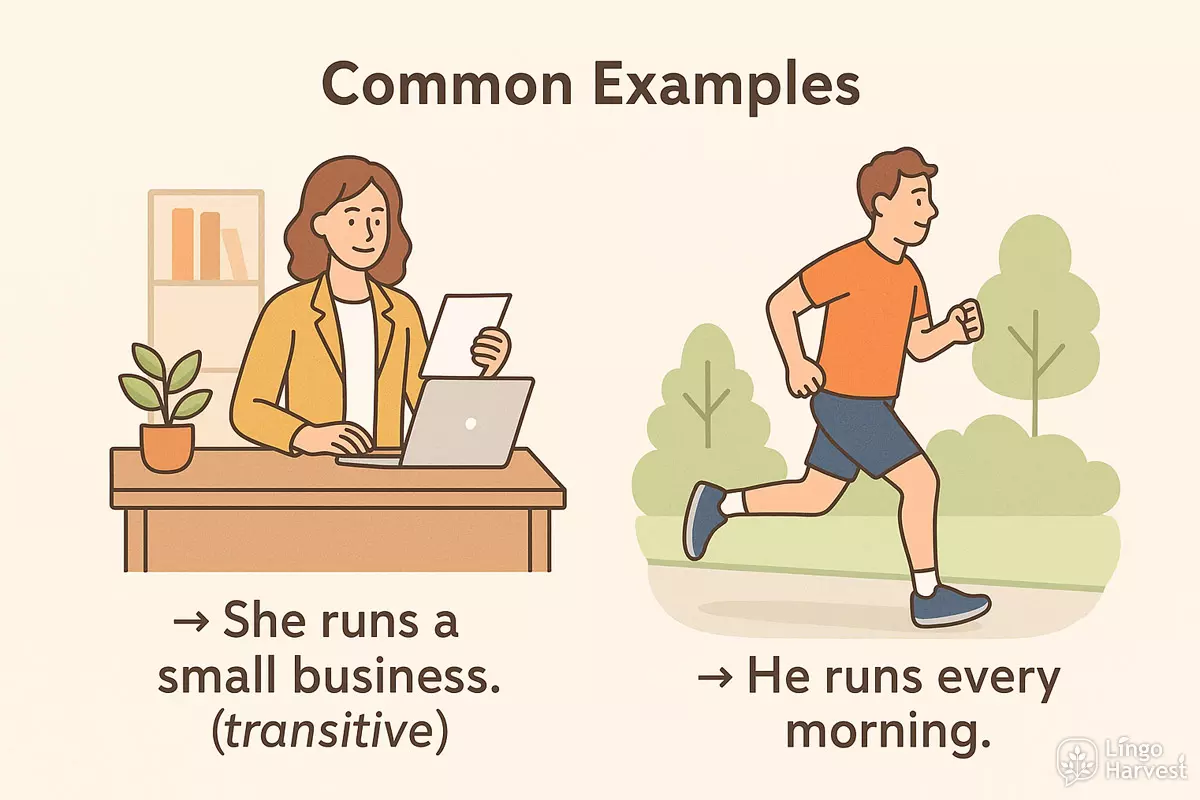
Here are some verbs that often appear in both roles. The examples show each verb in a transitive sentence (with a direct object) and an intransitive sentence (no direct object):
- Run
→ She runs a small business. (transitive)
→ He runs every morning. (intransitive) - Break
→ Please break the chocolate into pieces. (transitive)
→ Glass breaks easily. (intransitive) - Open
→ Can you open the window? (transitive)
→ The door opened suddenly. (intransitive) - Change
→ He changed his clothes. (transitive)
→ The weather changed quickly. (intransitive) - Grow
→ She grows tomatoes in her garden. (transitive)
→ Children grow fast. (intransitive) - Close
→ Please close the door. (transitive)
→ The shop closed at 8 p.m. (intransitive) - Start
→ They started the meeting late. (transitive)
→ The show started on time. (intransitive) - Move
→ She moved the chair. (transitive)
→ The leaves moved in the wind. (intransitive) - Boil
→ Boil the water. (transitive)
→ The water boiled quickly. (intransitive) - Stop
→ Please stop the car. (transitive)
→ The music stopped suddenly. (intransitive) - Ring
→ Can you ring the bell? (transitive)
→ The bell rang loudly. (intransitive) - Begin
→ She began her speech. (transitive)
→ The movie began at 7. (intransitive) - Sink
→ The storm sank the boat. (transitive)
→ The boat sank quickly. (intransitive) - Read
→ He read the book. (transitive)
→ She reads before bed. (intransitive) - Burn
→ He burned the toast. (transitive)
→ The candle burned all night. (intransitive)
Tips for Identifying Flexible Verbs
Pay attention to whether the verb has a direct object (answers “what?” or “whom?”). If it does, it’s transitive in that context. If not, it’s intransitive. Many common verbs allow both patterns, so context is key. This flexibility is a natural part of English, making sentences more varied and expressive.
Examples in Context
Understanding how action words function in real sentences makes it much easier to spot whether they need an object or stand alone. Below, you'll find everyday situations and sample sentences that highlight how these verbs operate in English.
Transitive Verbs in Everyday Use
- She reads a book every night.
- The chef prepared dinner for the guests.
- We watched the movie together.
- He lost his keys at the park.
- They built a sandcastle on the beach.
Notice that each of these verbs is followed by a direct object, showing what the action affects.
Intransitive Verbs in Real Sentences
- The baby cried loudly.
- Birds fly south for the winter.
- He sleeps early on weekdays.
- The sun rises at six o’clock.
- They arrived late.
Here, the verbs do not need a direct object to complete their meaning; the action is complete on its own.
Direct Comparison in Sentences
To see how these two types differ side by side, here's a comparison of similar verbs used with and without objects:
| Sentence with Transitive Verb | Sentence with Intransitive Verb |
|---|---|
| She opened the window. | The window opened easily. |
| They run the marathon every year. | They run every morning. |
| He left his bag at home. | He left early. |
| We finished the project on time. | The meeting finished late. |
Recognizing the difference in sentence patterns helps you choose the right verb form and avoid common mistakes. If an action clearly needs an object, use a transitive verb; if not, intransitive verbs will do the job.
Practice: Identify Verb Type
Understanding whether a verb is transitive or intransitive is key to building clear and correct sentences. In the following activities, you'll get to check your intuition by classifying verbs in context. Remember: transitive verbs need a direct object, while intransitive verbs do not.
Exercise 1: Classify the Verbs
Read each sentence below. For each, decide if the main verb is transitive or intransitive. If it’s transitive, identify the direct object.
- She drinks coffee every morning.
- The baby laughed loudly.
- We built a sandcastle on the beach.
- The dog sleeps in the afternoon.
- He opened the window.
- They arrived late.
- Maria writes poems.
- The sun rises at six o’clock.
- The chef cooked dinner.
- Birds fly south in winter.
Show answers
- 1. Transitive (object: coffee)
- 2. Intransitive
- 3. Transitive (object: a sandcastle)
- 4. Intransitive
- 5. Transitive (object: the window)
- 6. Intransitive
- 7. Transitive (object: poems)
- 8. Intransitive
- 9. Transitive (object: dinner)
- 10. Intransitive
Common Verb Patterns: Transitive vs. Intransitive
Some verbs can be both transitive and intransitive, depending on context. See how the meaning changes:
| Verb | Transitive Example | Intransitive Example |
|---|---|---|
| Run | She ran a marathon. | He ran quickly. |
| Break | I broke the glass. | The glass broke. |
| Change | They changed the rules. | The weather changed. |
| Grow | She grows vegetables. | Children grow fast. |
| Open | He opened the door. | The door opened suddenly. |
Quick Check: Spot the Direct Object
For each sentence, identify the direct object if there is one. If there isn’t, write “none”.
- Lucy reads before bed.
- Lucy reads books before bed.
- The team won the match.
- The team won easily.
Show answers
- 1. none
- 2. books
- 3. the match
- 4. none
Practicing with real examples helps you develop a feel for which verbs need objects and which do not. Keep testing yourself with sentences you hear or read, and you'll master these patterns over time.