How to Use Verbs in Questions Correctly

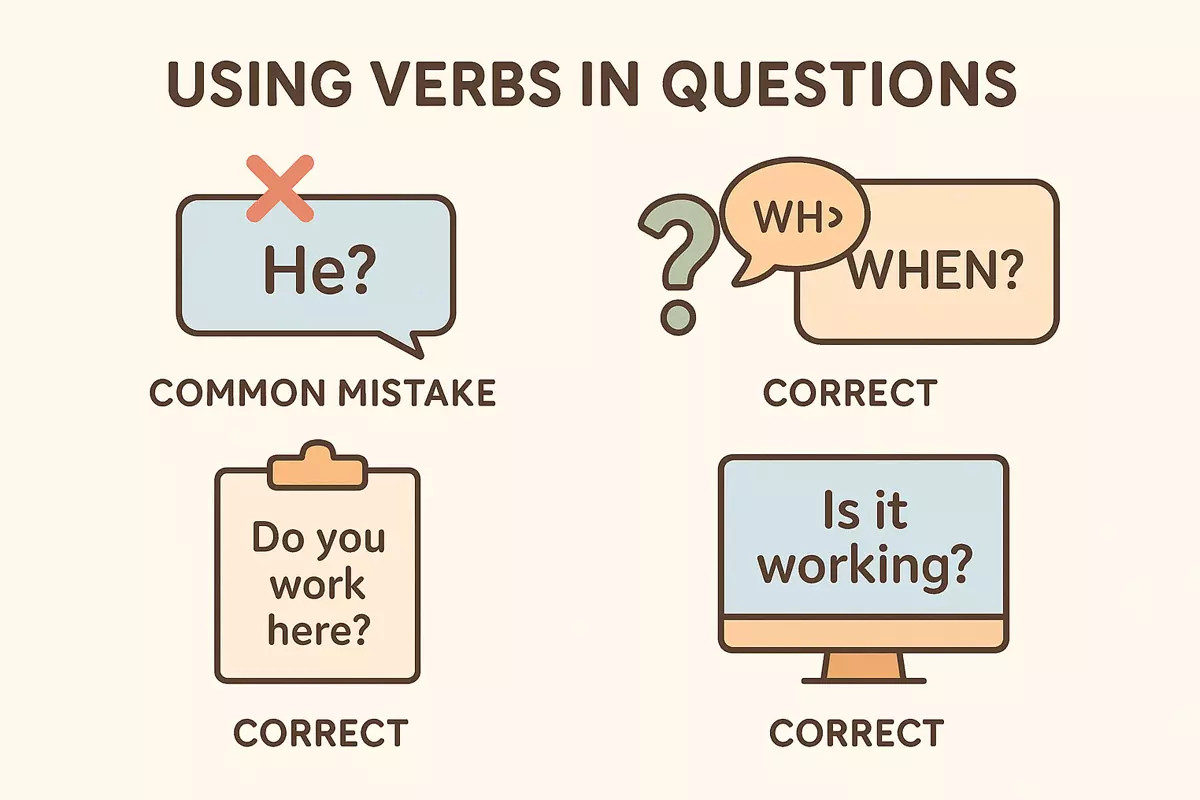 Here we how to form English questions, including word order, using do, does, did, and be, and making WH questions. It also highlights common mistakes and provides exercises for practice.
Learning to form questions in English can be challenging, particularly when it comes to selecting and positioning verbs correctly. Mastering the structure of questions involves understanding where to place auxiliary verbs like do, does, or did, as well as the main verb, depending on the tense and subject. For example, in the question "Do you like music?" the auxiliary verb "do" comes first, followed by the subject "you," and then the main verb "like." Practicing different types of questions will help you become more confident and accurate in your English communication.
Word Order in Questions
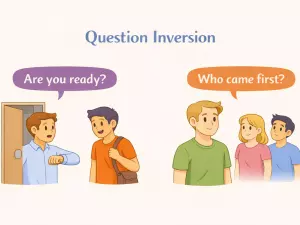
Understanding how to arrange verbs and other elements in English questions is essential for clarity. Unlike statements, interrogative sentences usually require inversion, meaning the auxiliary (or modal) verb comes before the subject. This structure helps listeners or readers quickly recognize that a question is being asked.
Basic Structure for Yes/No Questions
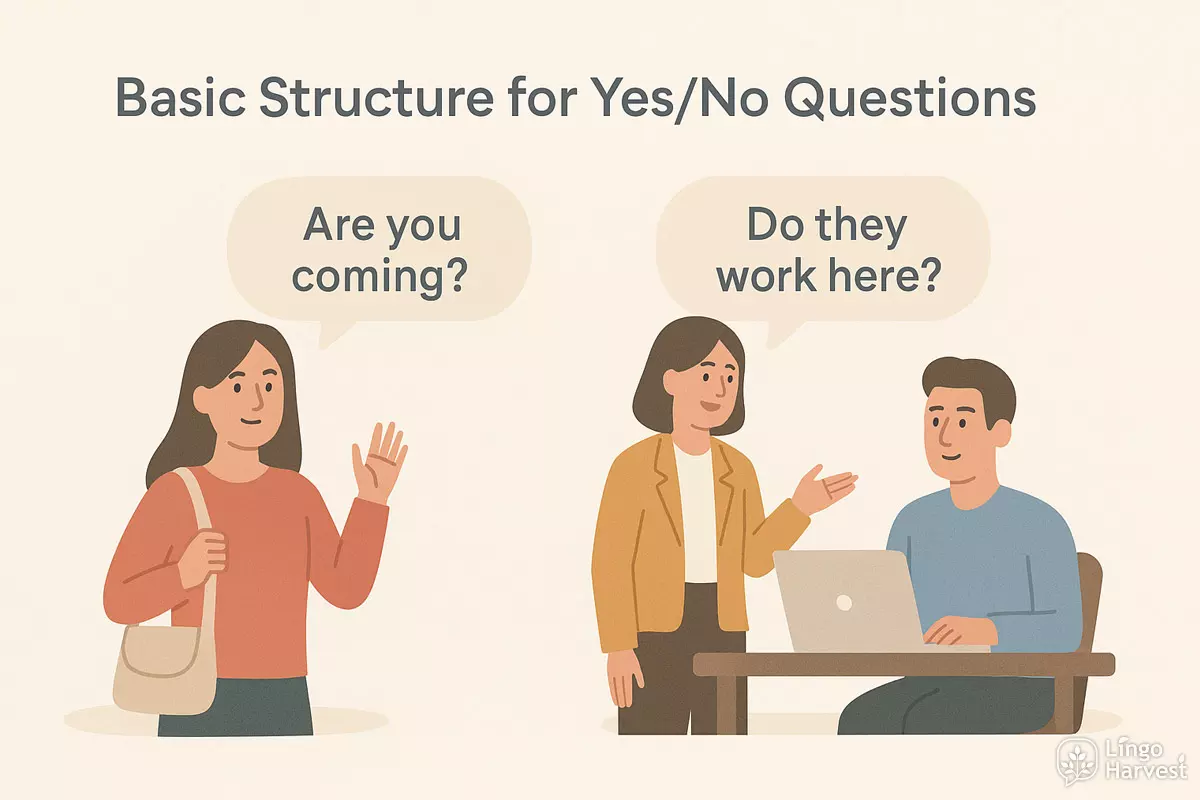
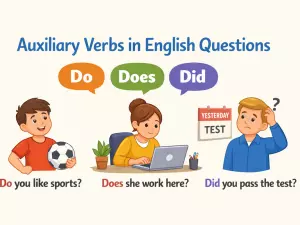
For yes/no questions, the auxiliary verb appears first, followed by the subject and the main verb. If there is no auxiliary in the statement, “do/does/did” is added as the helper. For example:
- Are you coming?
- Do they work here?
- Did she call?
- Has he finished?
- Will it rain?
- Can you help?
- Is this correct?
- Were they late?
- Should we wait?
- Have you eaten?
Wh- Questions
When using question words (who, what, where, when, why, how), these often lead the sentence, followed by the auxiliary verb, subject, and main verb. The structure is:
- Where are you going?
- What did she say?
- When will they arrive?
- How can I help?
- Why did he leave?
- Which book do you want?
- Who is coming?
- Whose bag is this?
- How much does it cost?
- What have you done?
Comparison: Statements vs. Questions
It is helpful to compare regular statements with their interrogative versions to see the word order shift. Notice how the verb and subject invert, and an auxiliary may be added.
| Statement | Question |
|---|---|
| She is reading. | Is she reading? |
| They have finished. | Have they finished? |
| You like coffee. | Do you like coffee? |
| He went home. | Did he go home? |
| We should leave. | Should we leave? |
Special Cases
Some questions, especially those beginning with “who” or “what” as the subject, do not require inversion. For example:
- Who called you?
- What happened?
- Which broke?
Here, the question word itself acts as the subject, so the order remains like a statement.
Summary Tips
- Use auxiliary verbs (do/does/did, have/has, is/are, will, can, etc.) before the subject in most questions.
- Start with a question word for more detailed queries.
- Don’t invert when the question word is the subject.
- Check verb tense and subject-verb agreement.
- Practice by converting statements into questions to reinforce patterns.
With these principles, forming correct questions becomes much more intuitive and accurate.
Do/Does in Present Simple
When forming questions in English that refer to habits, routines, or facts, we use special auxiliary verbs. "Do" and "does" help us structure these questions correctly in the present simple tense. The choice between them depends on the subject: "do" is used with "I," "you," "we," and "they," while "does" is for "he," "she," and "it." This usage makes it clear who is being asked about, and keeps the main verb in its base form.
How to Form Questions
To create a question, place the auxiliary verb first, followed by the subject and then the base form of the main verb. For example:
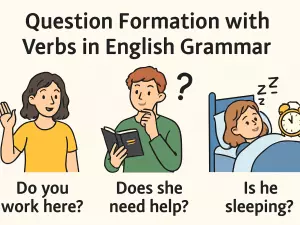
- Do you like coffee?
- Does she play tennis?
- Do they live nearby?
- Does it work properly?
Notice that the verb after "do" or "does" never takes an -s ending, even for third-person singular subjects.
Comparison Table: "Do" vs. "Does" in Questions
| Subject | Sample Question |
|---|---|
| I | Do I need a ticket? |
| You | Do you speak French? |
| We | Do we have homework? |
| They | Do they know the answer? |
| He | Does he like pizza? |
| She | Does she work here? |
| It | Does it rain often? |
Common Mistakes to Avoid
- ❌ Does she likes music? → ✅ Does she like music?
- ❌ Do he go to school? → ✅ Does he go to school?
Remember: use the base form of the main verb after the auxiliary.
Useful Patterns and Examples
Here are more examples to help you get comfortable with this structure:
- Do I have to wait?
- Do you understand?
- Do we need help?
- Do they agree?
- Does he know the way?
- Does she remember me?
- Does it matter?
- Do you work here?
- Do they travel often?
- Does he drive to work?
- Does she cook dinner?
- Do we meet today?
Mastering the use of these auxiliaries is key to asking questions about everyday actions and facts in English.
Did in Past Simple
Understanding how to form questions about past actions is essential for clear communication in English. When asking about something that happened before now, the auxiliary verb "did" is used, followed by the subject and the base form of the main verb. This structure helps listeners immediately recognize that the question refers to a completed action.
How to Build Questions
To form a question about a past event, place "did" at the beginning, then add the subject and the verb without any endings (not "played", but "play"). For example: "Did you see the movie?" or "Did she finish her homework?" The main verb always stays in its base form because "did" already shows the past tense.
Common Mistakes to Avoid
- Using the past tense form after "did" (Incorrect: "Did you went?") ❌
- Forgetting "did" in questions (Incorrect: "You saw the dog?") ❌
- Using double negatives (Incorrect: "Didn't you didn't go?") ❌
Examples of Correct Questions
- Did they call you yesterday?
- Did the train leave on time?
- Did you understand the instructions?
- Did we have homework last week?
- Did he bring his umbrella?
- Did she cook dinner last night?
- Did the team win the match?
- Did your friend visit Paris?
- Did it rain yesterday?
- Did the class start early?
- Did I lock the door?
- Did you enjoy the concert?
- Did they finish the project?
- Did you read the book?
- Did we miss the bus?
- Did he answer your question?
- Did she travel alone?
- Did the store close at 8?
Short Answers
When responding, use "Yes, [subject] did." or "No, [subject] didn’t." It’s not necessary to repeat the whole question unless you want to add detail.
| Question | Short Answer |
|---|---|
| Did you like the movie? | Yes, I did. / No, I didn’t. |
| Did they finish early? | Yes, they did. / No, they didn’t. |
| Did she call you? | Yes, she did. / No, she didn’t. |
| Did we win? | Yes, we did. / No, we didn’t. |
Tips for Practice
Practice by thinking of something that happened yesterday or last week, and try making questions using "did." Remember, the main action word must stay in its simplest form. This approach will help you become more confident in forming clear, correct questions about the past.
Questions with Be
Understanding how to form questions using the verb "be" is essential for constructing clear and accurate sentences in English. The verb "be" (am, is, are, was, were) acts as both a main verb and an auxiliary verb, which means it behaves differently from other verbs when forming questions.
Word Order in Yes/No Questions
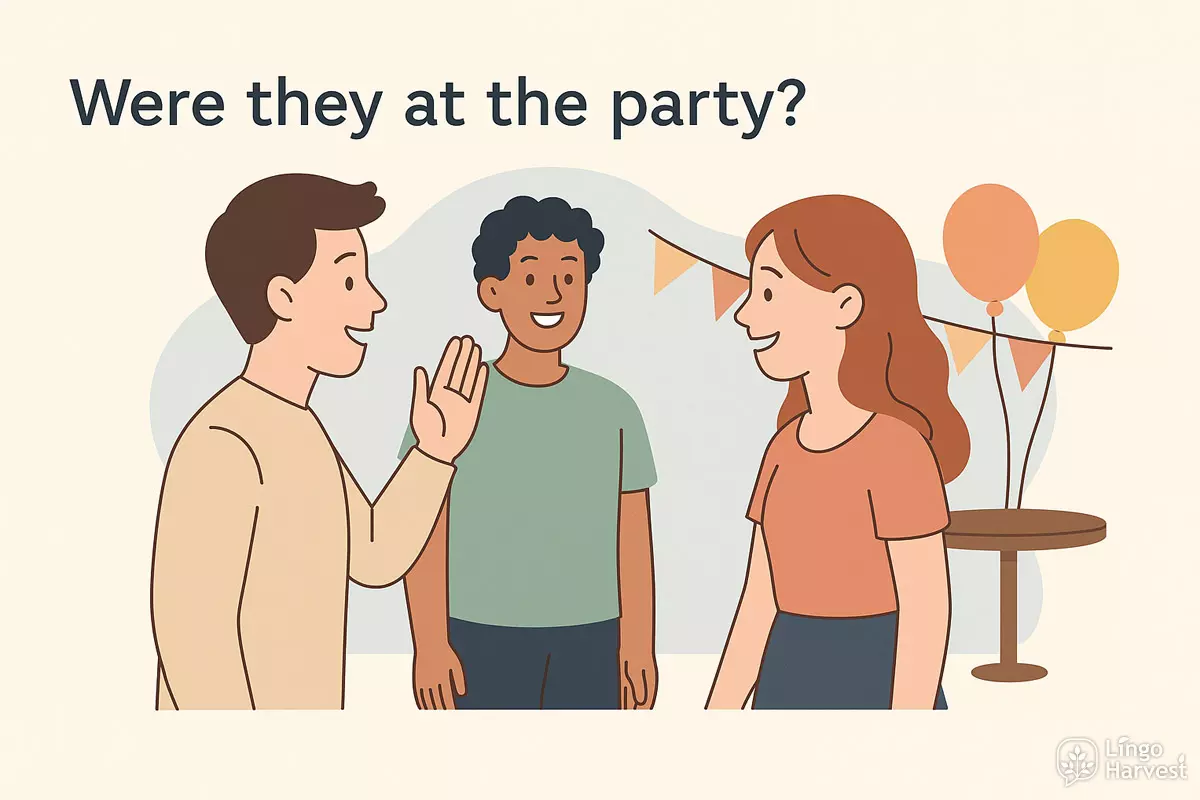
To ask a yes/no question with "be," simply invert the subject and the verb. Instead of following the standard subject-verb order, place the correct form of "be" before the subject. This structure is consistent across present and past forms.
- Are you ready?
- Is she your teacher?
- Were they at the party?
- Am I late?
Forming Wh- Questions with "Be"
For questions seeking specific information, begin with a question word (who, what, where, when, why, how) followed by the verb "be," then the subject.
- Where is the bus stop?
- Why are we here?
- Who is your friend?
- How was your trip?
Question Patterns with "Be"
The following table summarizes different question forms using "be" across tenses and subjects, providing a useful reference.
| Form | Example | Short Answer |
|---|---|---|
| Present Simple | Are they students? | Yes, they are. ✅ No, they aren't. ❌ |
| Past Simple | Was he tired? | Yes, he was. No, he wasn't. |
| Wh- Question | Where is your book? | It's on the table. |
| Negative Question | Isn't it cold? | Yes, it is. No, it isn't. |
Common Mistakes to Avoid
Learners often forget to invert the subject and "be" in questions or use the wrong form. Here are some frequent errors and corrections:
- She is your sister? ❌ → Is she your sister? ✅
- You are happy? ❌ → Are you happy? ✅
- Where you are? ❌ → Where are you? ✅
Useful Patterns and Examples
Here are more sample questions to illustrate proper usage:
- Are we late?
- Is it raining?
- Was the movie interesting?
- Were you at home yesterday?
- Why are they upset?
- How old are you?
- Who is at the door?
- Am I correct?
- Is this your bag?
- Were the results good?
- When is your birthday?
- Are those your keys?
- Why was it difficult?
- How was your weekend?
Mastering the structure and word order with "be" helps you ask clear, natural questions in English conversations. Practice with different subjects and tenses to reinforce your understanding.
WH Questions with Verbs
When forming questions in English, "wh" words (such as who, what, where, when, why, and how) often combine with verbs to ask about specific information. The choice and placement of the verb depend on the tense, the type of verb (auxiliary or main), and whether the question is about the subject or the object.
How WH Words Interact with Verbs
To structure a question, start with a "wh" word, then usually add an auxiliary verb (do, does, did, is, are, etc.), followed by the subject and the main verb. For example, "Where do you live?" or "Why did she leave?" However, when the "wh" word is the subject, the auxiliary is not needed: "Who called you?" is correct, not "Who did call you?"
Basic Patterns
- What + auxiliary + subject + main verb…?
What did you eat for lunch? - Where + auxiliary + subject + main verb…?
Where are they going? - Who + main verb…? (when 'who' is the subject)
Who wants coffee? - How + auxiliary + subject + main verb…?
How does this work?
Common Mistakes
Learners often confuse when to use an auxiliary verb. Remember, use an auxiliary (do/does/did, is/are, etc.) unless the question word itself is the subject.
Examples of WH Questions with Different Verbs
Below is a comparison of how different "wh" words combine with verbs in various tenses:
| WH Word | Present Simple Example | Past Simple Example |
|---|---|---|
| What | What do you read? | What did you read? |
| Where | Where does he work? | Where did he work? |
| Why | Why do they study? | Why did they study? |
| Who (subject) | Who calls every day? | Who called yesterday? |
| How | How do you travel? | How did you travel? |
Additional Examples for Practice
- Which book do you recommend?
- When does the movie start?
- Whose bag is this?
- How many people joined?
- Why is she smiling?
- Who made this cake?
- Where did you find it?
- What happened yesterday?
- How often do you exercise?
- When did they arrive?
- Which team won?
- How much does it cost?
- Why were you late?
- Who finished first?
The structure and verb placement in these questions help make your meaning clear. Always check whether your question is about the subject or object, and choose the right auxiliary accordingly.
Common Mistakes
Many English learners stumble when forming questions, especially with verb placement and auxiliary usage. Understanding where errors typically occur can help you avoid them and communicate more clearly.
Incorrect Word Order
A frequent issue is mixing up the order of the subject and verb. In standard questions, the auxiliary verb (do/does/did, will, can, etc.) usually comes before the subject, not after. For example, it’s correct to say, “Do you like pizza?” but not “You do like pizza?”
- “Are you coming?” ✅ vs. “You are coming?” ❌
- “Did she finish?” ✅ vs. “She did finish?” ❌
Forgetting Auxiliary Verbs
Another pitfall is omitting the necessary auxiliary verb in questions, especially in the present and past simple tenses. This often happens with negative or yes/no questions.
- “Does he play tennis?” ✅ not “He play tennis?” ❌
- “Did you see that?” ✅ not “You saw that?” ❌
Mixing Up Verb Forms
Choosing the wrong verb form can confuse the meaning. For instance, using the base form instead of the past tense in a question with “did,” or vice versa.
| Incorrect Question | Corrected Version |
|---|---|
| Did you went home? | Did you go home? |
| Does she eats meat? | Does she eat meat? |
| Is he understand? | Does he understand? |
| Was you at the party? | Were you at the party? |
Direct vs. Indirect Questions
Confusion also arises when forming indirect questions. Learners sometimes use auxiliary verbs where they aren’t needed or forget to change the word order.
- Direct: “Where does she live?”
- Indirect: “Can you tell me where she lives?” (not “where does she live?”)
Adding Unnecessary Words
Extra words can sneak in, especially in questions with “do” or “does.” Avoid doubling up on auxiliaries or repeating the subject.
- “Do you can help me?” ❌ (should be “Can you help me?” or “Do you help me?” depending on meaning)
- “Did he did it?” ❌ (should be “Did he do it?”)
Common Examples of Errors
Here’s a quick reference list of typical mistakes:
- Using statement order: “You are coming?” instead of “Are you coming?”
- Wrong tense after “did”: “Did you saw?” instead of “Did you see?”
- Forgetting auxiliary: “She likes ice cream?” instead of “Does she like ice cream?”
- Mixing up “is/are” and “do/does”: “Is you like it?” instead of “Do you like it?”
- Wrong word order in indirect questions: “Can you tell me where does he work?” instead of “Can you tell me where he works?”
- Double auxiliaries: “Did he did it?” instead of “Did he do it?”
- Using past tense with “did”: “Did you went?” instead of “Did you go?”
- Omitting subject: “Did go to the store?” instead of “Did you go to the store?”
- Incorrect negative form: “Don’t he know?” instead of “Doesn’t he know?”
- Redundant wording: “Do you do like coffee?” instead of “Do you like coffee?”
By being aware of these patterns and double-checking your questions, you’ll make your English much clearer and more natural.
Practice: Form Correct Questions
To master using verbs in interrogative sentences, it helps to work with real examples and exercises. Below, you'll find several activities designed to help you recognize patterns and practice forming grammatically correct questions in English.
Common Question Structures
Understanding how to arrange verbs with subjects and auxiliary words is key. Here are several typical formats you’ll encounter:
- Yes/No questions: Do/Does/Did + subject + base verb (e.g., Do you like coffee?)
- Wh- questions: Wh-word + auxiliary + subject + base verb (e.g., Where do they live?)
- To be questions (present simple): Am/Is/Are + subject + rest (e.g., Are you ready?)
- To be questions (past simple): Was/Were + subject + rest (e.g., Were they late?)
- Modal verb questions: Modal + subject + base verb (e.g., Can she swim?)
- Present continuous: Am/Is/Are + subject + verb-ing (e.g., Is he working?)
- Past continuous: Was/Were + subject + verb-ing (e.g., Were you watching TV?)
- Present perfect: Have/Has + subject + past participle (e.g., Have you finished?)
- Tag questions: Statement + auxiliary + n't/auxiliary + subject? (e.g., You’re coming, aren’t you?)
- Negative questions: Auxiliary + subject + not + base verb? (e.g., Didn’t you see it?)
Exercise: Fix the Questions
Try correcting the following sentences by arranging the words into proper questions. Focus on verb placement and auxiliary usage.
- you / do / like / pizza
- is / your / brother / playing / football
- did / when / they / arrive
- she / can / drive
- was / tired / he / last night
- they / have / finished / the project
- what / you / are / doing / now
- visited / who / you / yesterday
Show answers
- Do you like pizza?
- Is your brother playing football?
- When did they arrive?
- Can she drive?
- Was he tired last night?
- Have they finished the project?
- What are you doing now?
- Who did you visit yesterday?
Quick Reference Table: Question Patterns
Below is a summary of common English question forms featuring verbs, useful for quick comparison and review.
| Question Type | Example Structure |
|---|---|
| Present Simple (Do/Does) | Do/Does + subject + base verb (Does he work here?) |
| Past Simple (Did) | Did + subject + base verb (Did they call you?) |
| Present Continuous (Am/Is/Are) | Am/Is/Are + subject + verb-ing (Are you studying?) |
| Modal Verbs | Can/Could/Will/Must + subject + base verb (Can she help?) |
| Present Perfect (Have/Has) | Have/Has + subject + past participle (Have you eaten?) |
Challenge: Write Your Own
Now, try creating questions using these prompts. Use the correct verb and structure.
- Ask if someone has visited Paris.
- Find out what your friend is doing right now.
- Ask whether your classmate finished the homework yesterday.
- Ask someone if they can help you.
- Inquire about when the meeting starts.
Show answers
- Have you visited Paris?
- What are you doing right now?
- Did you finish the homework yesterday?
- Can you help me?
- When does the meeting start?
These exercises will help reinforce your understanding of how to use verbs in various types of questions. Practice regularly and check your answers to build confidence and accuracy.