Question Formation with Verbs in English Grammar

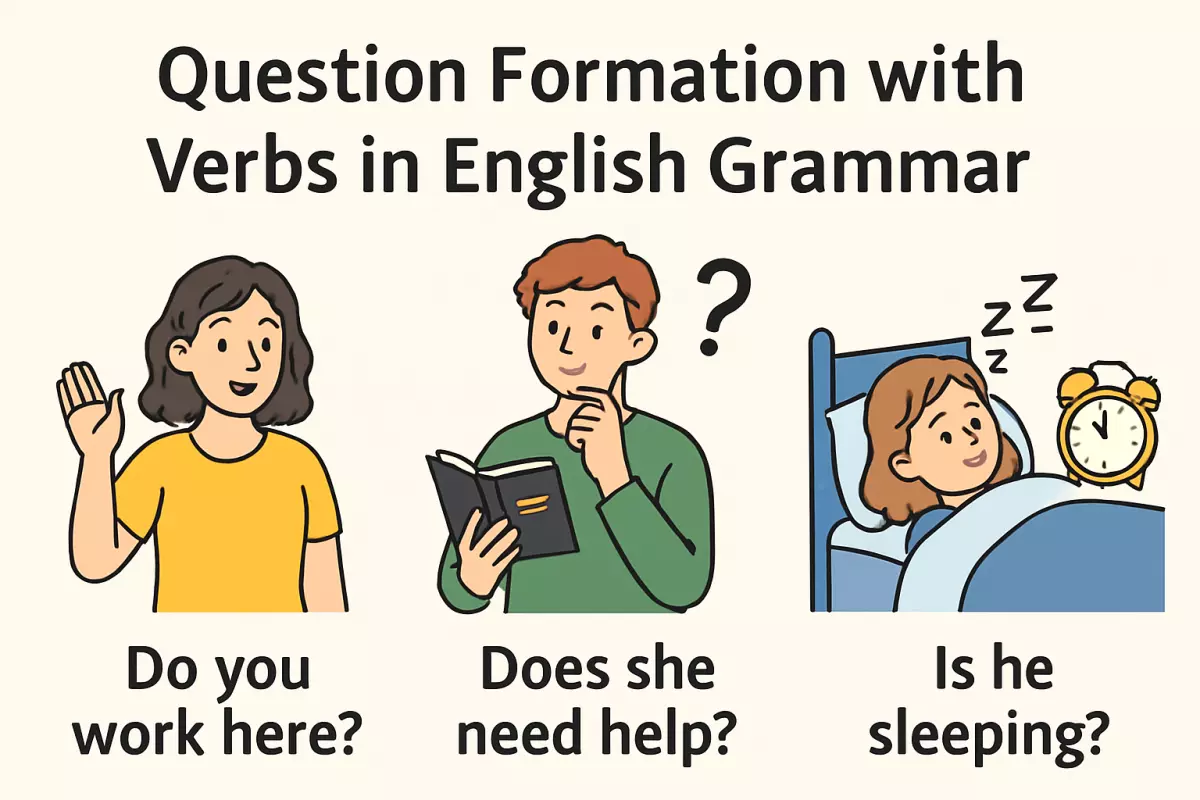 Learn how English questions work: basic structure, yes/no questions with auxiliaries, wh- word order, modal verb questions, and questions without auxiliaries. Also covers spoken intonation, common mistakes, and homework exercises.
Forming questions in English often depends on the main verb and the tense. In everyday speech, you learn when to add do or does, when to invert the subject and auxiliary, and how to use rising intonation to ask for information or confirm what you think you heard. Practice with real examples helps you choose the most natural structure in conversation.
Basic question structure in English
Most English questions are built by changing the usual statement word order. The most common pattern is auxiliary verb + subject + main verb, often called inversion. When there is no auxiliary in the statement, English typically adds do/does/did to form the question.
Core patterns you will use
- Yes/no questions (auxiliary inversion): Aux + subject + base form → Do you work?, Are they ready?
- Wh- questions: Wh-word + aux + subject + base form → Where do you live?, Why did she leave?
- Wh- as subject (no inversion): Wh-word (subject) + verb → Who called you?, What happened?
- Questions with “be” as the main verb: Be + subject → Is he your teacher?, Were they late?
- Questions with modal verbs: Modal + subject + base form → Can you help?, Should we go?
- Negative questions (often for surprise/confirmation): Aux + n’t + subject → Don’t you agree?, Isn’t it cold?
- Tag questions (confirmation checks): Statement + tag → You’re coming, aren’t you?, She didn’t call, did she?
Do-support: when English adds “do”
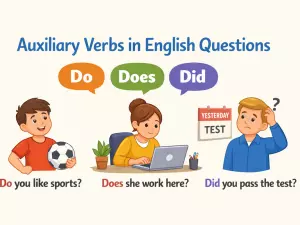
In the present and past simple, if the statement has no auxiliary, English inserts do/does/did. The main verb stays in the base form.
- ✅ You like it. → Do you like it? ❌ Like you it?
- ✅ She works here. → Does she work here? ❌ Does she works here?
- ✅ They finished early. → Did they finish early? ❌ Did they finished early?
Quick form guide with high-utility examples
- Present simple: Do/Does + subject + base verb → Do we need tickets?
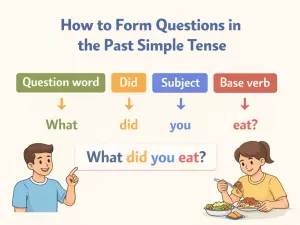
- Past simple: Did + subject + base verb → Did you see it?
- Present continuous: Am/Is/Are + subject + -ing → Are they waiting?
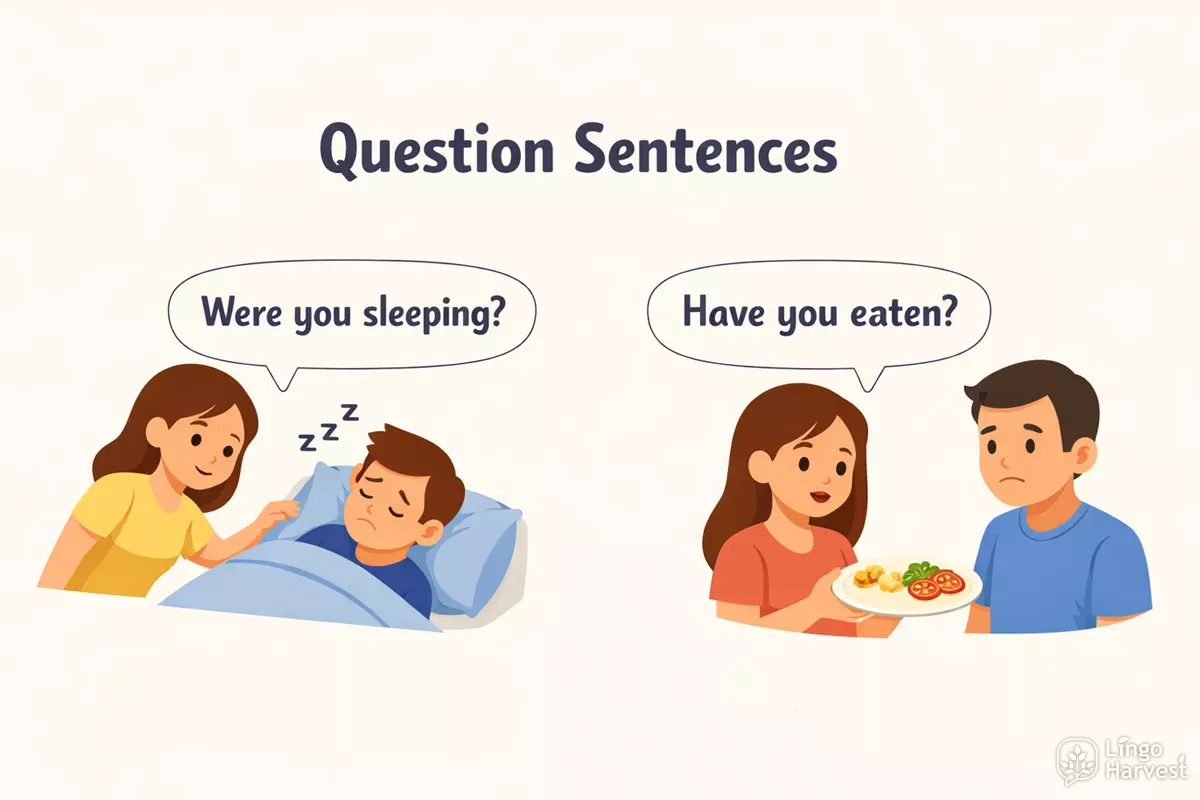
- Past continuous: Was/Were + subject + -ing → Were you sleeping?
- Present perfect: Have/Has + subject + past participle → Have you eaten?
- Past perfect: Had + subject + past participle → Had she left already?
- Future (will): Will + subject + base verb → Will it rain?
- Modal ability/permission: Can/Could/May + subject + base verb → Can I sit here?
- Modal advice/obligation: Should/Must + subject + base verb → Should we call them?
- Wh- question with time: When + aux + subject + verb → When did it start?
- Wh- question with place: Where + aux + subject + verb → Where do they live?
- Wh- question with reason: Why + aux + subject + verb → Why is he upset?
- Wh- question with manner: How + aux + subject + verb → How did you do that?
- Wh- subject question: Who/What + verb → Who knows the answer?
Common mistakes to avoid
- Keeping statement order: ❌ You are coming? → ✅ Are you coming?
- Double marking tense: ❌ Did she went? → ✅ Did she go?
- Using “do” with “be”: ❌ Do you are ready? → ✅ Are you ready?
- Inverting when the wh-word is the subject: ❌ Who did call you? → ✅ Who called you?
Yes or no questions with auxiliaries
When a clause already contains an auxiliary verb, form a closed (yes/no) question by placing the auxiliary before the subject. The main verb stays in its usual position, and the rest of the sentence follows normally.
Core word order pattern
- Statement: Subject + auxiliary + main verb (+ rest)
- Question: Auxiliary + subject + main verb (+ rest) → auxiliary–subject inversion
- Keep tense, aspect, and modality on the auxiliary; do not change the main verb form just because it becomes a question.
Which auxiliaries can invert
- BE (am/is/are/was/were): used for progressives and passives, and also as a main verb.
- HAVE (have/has/had): used for perfect aspect.
- DO (do/does/did): used as a support auxiliary when there is no other auxiliary, but it also inverts like other auxiliaries once present.
- Modals (can, could, will, would, shall, should, may, might, must): always invert directly with the subject.
Examples by auxiliary type
- BE (progressive): She is working. → Is she working?
- BE (passive): The files were deleted. → Were the files deleted?
- BE (main verb): They are ready. → Are they ready?
- HAVE (present perfect): You have finished. → Have you finished?
- HAVE (past perfect): She had left early. → Had she left early?
- Modal + base verb: He can drive. → Can he drive?
- Modal + perfect: They might have missed the train. → Might they have missed the train?
- Modal + passive: The report must be submitted today. → Must the report be submitted today?
- Modal + progressive: I should be studying. → Should I be studying?
- Two auxiliaries: She has been waiting. → Has she been waiting?
- Three auxiliaries: The system will have been tested. → Will the system have been tested?
- Negative question: You aren’t coming. → Aren’t you coming?
- Negative question (full form): She has not replied. → Has she not replied?
Placement notes and common pitfalls
- Only the first auxiliary moves: In a verb chain, invert the leftmost auxiliary, not the main verb. ✅ Has she been working? ❌ Been she has working?
- Keep contractions natural: Isn’t he…? is common in speech; Is he not…? is more formal or emphatic.
- Do not add extra auxiliaries: If an auxiliary is already present, avoid inserting do. ✅ Are you ready? ❌ Do you are ready?
- Rising intonation helps in speech: Word order creates the question in writing; intonation often signals it in conversation.
Wh-questions and word order
In English information questions, the key pattern is that the wh-word usually comes first, and the verb phrase often changes position. Most clauses use auxiliary inversion: an auxiliary verb moves before the subject, while the main verb stays after the subject.
Core patterns
- Wh-word + auxiliary + subject + base verb (most present/past simple questions): Where do you live?
- Wh-word + be + subject (no extra auxiliary needed): Why are they late?
- Wh-word + modal + subject + base verb: What can she do?
- Wh-word + have/has/had + subject + past participle (perfect): How long have you worked here?
- Wh-word + auxiliary + subject + -ing (continuous): What are they doing?
When there is no inversion: wh-word as the subject
If the wh-word itself is the subject of the clause, English normally keeps statement order (no auxiliary before the subject, because the subject is already first). This is a common source of errors.
- ✅ Who called you? → (Who = subject)
- ❌ Who did call you? (possible only for special emphasis, not the neutral pattern)
- ✅ What happened? → (What = subject)
- ✅ Which train arrives first?
- ✅ How many people live here?
Wh-phrases, prepositions, and longer question words
Many question words are actually multi-word phrases. Put the whole wh-phrase at the front. With prepositions, English often allows either placing the preposition at the end (more common in speech) or moving it before the wh-word (more formal).
- Wh-phrase first: How often do you travel?
- Wh-phrase first: Which of these did you choose?
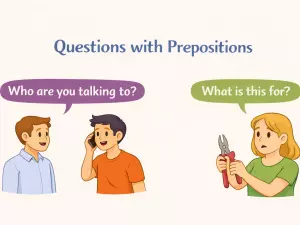
- Preposition at the end: Who are you talking to?
- Preposition before wh-word (formal): To whom are you talking?
- With “what…for”: What did you buy it for?
- Time expressions: How long will it take?
Common word-order problems to avoid
- Missing auxiliary in present/past simple: ❌ Where you live? → ✅ Where do you live?
- Double marking (auxiliary plus past tense on the main verb): ❌ What did he went? → ✅ What did he go?
- Keeping statement order after a wh-word: ❌ Why she is upset? → ✅ Why is she upset?
- Using inversion when the wh-word is the subject: ❌ Who did arrive first? → ✅ Who arrived first?
- Forgetting the main verb after an auxiliary: ❌ Where do you? → ✅ Where do you work?
Expanded example set (quick models)
- What do you mean?
- Where did they meet?
- When will you arrive?
- Why is he leaving?
- How have you been?
- Which book did you borrow?
- Whose phone is this?
- How many tickets do we need?
- What time does the store open?
- Who knows the answer?
- What caused the delay?
- Where can I park?
- How quickly did it change?
- What are you looking at?
- Which of them has she invited?
- Why were they waiting?
Questions with modal verbs
Modal auxiliaries (can, could, may, might, must, shall, should, will, would) form questions by inversion: the modal moves before the subject. The main verb stays in the base form (infinitive without to), and no extra do/does/did is used.
Core pattern
- Yes/no: Modal + subject + base verb + …? → Can you help?
- Wh-: Wh-word + modal + subject + base verb + …? → Where should we meet?
- Negative questions: Modal + subject + not + base verb…? or contracted Modaln’t + subject + base verb…? → Should we not wait? / Shouldn’t we wait?
Examples by function (common uses)
- Ability: Can she swim? / Could he read at four?
- Permission: May I leave early? / Can we park here?
- Polite requests: Could you open the window? / Would you email me the file?
- Offers: Shall I carry that? / Can I help you?
- Suggestions: Shall we start now? / Should we take a break?
- Advice: Should I call them today?
- Obligation/necessity: Must we submit it by Friday? / Do we have to submit it by Friday?
- Expectation: Shouldn’t the train be here soon?
- Prediction: Will it rain later?
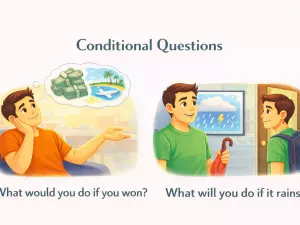
- Hypothetical situations: Would you move if you got the job?
- Possibility (uncertainty): Could it be a mistake? / Might they arrive late?
Accuracy notes (common pitfalls)
- No do-support with modals: ✅ Can he drive? ❌ Does he can drive?
- Use the base verb after the modal: ✅ Should we go? ❌ Should we to go?
- Keep word order in wh-questions: ✅ What can you see? ❌ What you can see?
- Negative contraction placement: ✅ Can’t you stay? (more natural) / Can you not stay? (more formal/emphatic)
- Tag questions follow the modal: You can drive, can’t you? / She should call, shouldn’t she?
- With must vs have to: questions with have to use do because have to behaves like a main verb: Do we have to leave?
Short answers
- Affirmative: Yes, + subject + modal. → Can you swim? Yes, I can.
- Negative: No, + subject + modal + not. → Should we wait? No, we shouldn’t.
- Avoid repeating the main verb: ✅ Yes, she will. (not Yes, she will go unless emphasis is needed)
Questions without auxiliaries
Some English questions form without adding do/does/did or another helper verb. This happens in a few predictable patterns, especially when the question word itself functions as the subject, or when the main verb is be. Recognizing the pattern helps you avoid unnecessary inversion or extra auxiliaries.
1) Wh- word as the subject (no do)
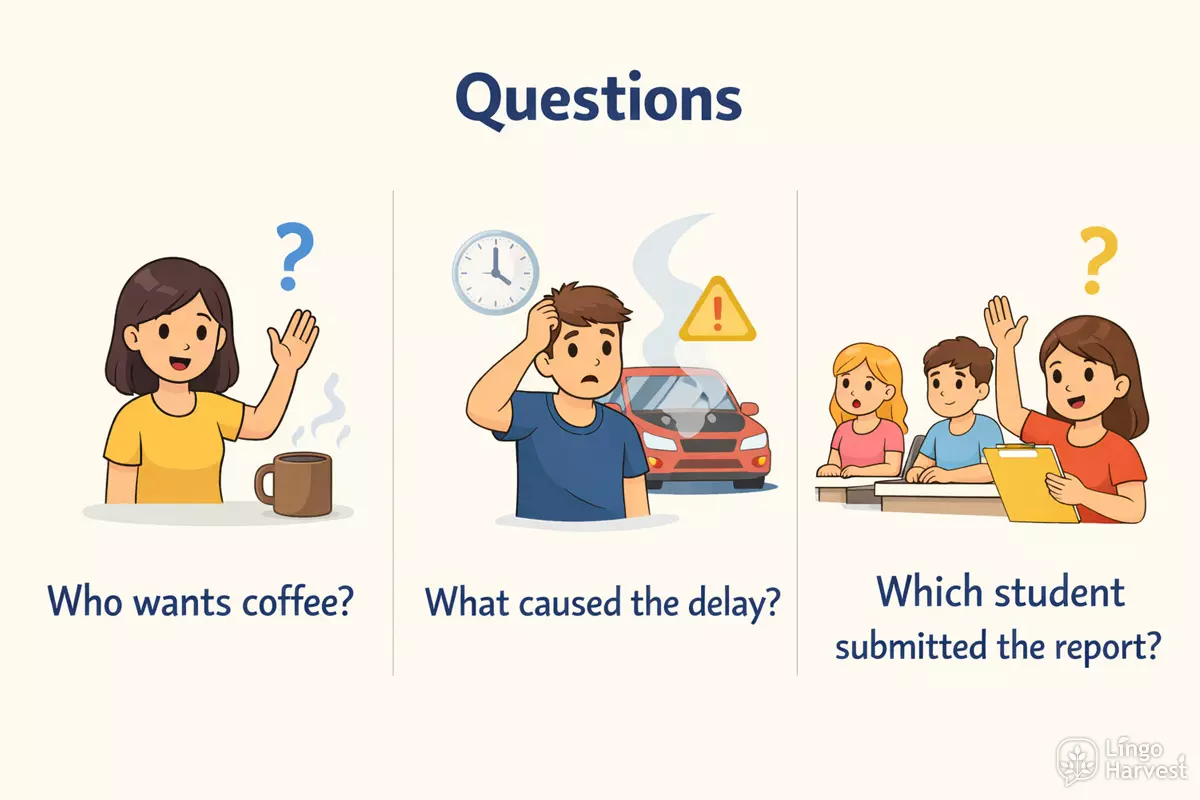
When who/what/which is the subject of the verb, you usually keep statement word order: Wh-word + verb. You do not add do because there is no subject-auxiliary inversion to perform.
- ✅ Who called you last night?
- ❌ Who did call you last night? (possible for emphasis, but not the normal choice)
- ✅ What happened?
- ✅ Which bus goes to the museum?
- ✅ Who wants coffee?
- ✅ What caused the delay?
- ✅ Which student submitted the report?
- ✅ Who broke the glass?
- ✅ What made you change your mind?
- ✅ Which key opens this door?
- ✅ Who told you that?
- ✅ What matters most here?
2) Wh- word as the object (often needs do)
To avoid confusion, check whether the wh- word is the subject or the object. If it is the object, English normally uses do-support in the present/past simple: Wh-word + do/does/did + subject + base verb.
- ✅ Who called you? (subject = “who”)
- ✅ Who did you call? (object = “who”)
- ✅ What happened? (subject = “what”)
- ✅ What did you do? (object = “what”)
- ✅ Which train stops here? (subject = “which train”)
- ✅ Which train did you take? (object = “which train”)
3) Questions with be (copular and progressive)
When the main verb is be, you form questions by inverting be and the subject. No do is used because be already behaves like an auxiliary.
- Are you ready?
- Was the meeting useful?
- Is this your bag?
- Were they late again?
- Am I in the right place?
- Is she working today?
- Were you waiting long?
- Why is he upset?
- Where are they staying?
- How was your trip?
4) Subject questions with “there” and “here”
With there and here, questions commonly invert be without adding do. These are especially frequent when asking about existence or arrival.
- Is there any milk left?
- Are there enough chairs?
- Was there a problem?
- Here’s the form. Is there anything else you need?
- Here comes the bus. Is it stopping?
5) Elliptical (short) questions in conversation
In informal speech, English sometimes omits words that are understood from context. These reduced forms are common in quick checks, offers, and follow-up questions, but they are less suitable for formal writing.
- Coming with us? (full form: Are you coming with us?)
- Need help? (full form: Do you need help?)
- Any questions? (full form: Do you have any questions?)
- Everything okay? (full form: Is everything okay?)
- More coffee? (full form: Would you like more coffee?)
Intonation in spoken questions
In speech, pitch movement helps listeners identify whether you are asking for information, checking something you already think is true, or offering choices. This matters because many question forms look identical on the page but sound different in conversation.
Common pitch patterns and what they signal
- Falling pitch (voice drops at the end) often signals a neutral, information-seeking question, especially with wh- words: Where are you going?
- Rising pitch (voice rises at the end) often signals a yes/no check, uncertainty, or a request for confirmation: Are you coming?
- Fall–rise can suggest “I think I know, but I’m checking” or “there’s more behind this”: You finished already?
- Rise–fall can sound more emphatic or surprised, depending on context: Did you really say that?
- Flat or low rise can sound routine, businesslike, or cautious: Could you sign here?
How intonation interacts with English question structures
- Wh- questions usually fall because the speaker expects a full answer, not just yes/no: What time does it start?
- Yes/no questions usually rise because the speaker is checking a proposition: Do you need help?
- Statement-form questions rely heavily on pitch to sound like questions: You’re leaving now? (rising at the end)
- Questions with modal verbs often rise when they function as requests: Could you open the window?
- Negative questions can rise or fall depending on meaning:
- Rise for confirmation: Don’t you want to come? (I think you do.)
- Fall for surprise/criticism: Don’t you want to come. (Sounds more challenging.)
- Embedded questions keep statement intonation because they are not direct questions: Do you know where he is? (main rise/fall on the whole sentence, not on where he is)
Tag questions: rise vs. fall changes the meaning
- Falling tag = the speaker expects agreement (more like a comment): It’s cold today, isn’t it?
- Rising tag = the speaker is genuinely asking (more like a real yes/no question): It’s cold today, isn’t it?
- Focus shifts to the tag when the speaker is unsure: the pitch peak often lands on isn’t or it.
Choice questions: rise on each option, fall on the last
- List rise, final fall signals “pick one”: Do you want tea (rise) or coffee (fall)?
- Final rise can blur the meaning and may sound like a yes/no question about the last option rather than a choice.
Where the stress goes in spoken questions
- Stress marks what is new or important, not simply the question word: Where did you put the keys?
- Contrastive stress highlights correction or surprise: Did you say Monday or Sunday?
- Auxiliaries are usually weak unless emphasized: Do you really need it? (not Do you really need it?)
- Emphatic stress can change the implication: Did you call her? (as opposed to texting)
Quick practice set (listen for the intended meaning)
- You’re ready? (rise → checking)
- You’re ready. (fall → confirming/closing)
- What did you say? (fall → asking for information)
- What did you say? (rise → disbelief or “repeat that?”)
- Can you help me? (rise → request)
- Can you help me. (fall → firmer, sometimes impatient)
- We meet at six, don’t we? (rise → unsure)
- We meet at six, don’t we? (fall → expecting agreement)
- Is it in the kitchen or the office? (rise on kitchen, fall on office)
- Didn’t you get my message? (rise → expecting “yes, I did”; fall → sounding accusatory)
Common learner mistakes
Many errors in English questions come from mixing up word order, forgetting an auxiliary, or using the wrong form of the main verb. The patterns below focus on what to change and what to keep the same when you turn a statement into a question.
1) Missing or incorrect auxiliary (do/does/did)
- ❌ You like coffee? → ✅ Do you like coffee?
- ❌ She like coffee? → ✅ Does she like coffee?
- ❌ They went yesterday? → ✅ Did they go yesterday?
- ❌ He works here? → ✅ Does he work here?
- ❌ Did she went? → ✅ Did she go?
Rule to remember: when do/does/did is used, the main verb stays in the base form (work, go, like), not -s or past.
2) Double auxiliaries or doubled tense marking
- ❌ Do you are ready? → ✅ Are you ready?
- ❌ Did you went? → ✅ Did you go?
- ❌ Does he can drive? → ✅ Can he drive?
- ❌ Do you have seen it? → ✅ Have you seen it?
Only one “operator” leads the question: either be, a modal (can, will, should), or have (perfect), or do (when there is no other auxiliary).
3) Wrong inversion with be and modals
- ❌ She is coming? → ✅ Is she coming?
- ❌ They are late? → ✅ Are they late?
- ❌ You can help me? → ✅ Can you help me?
- ❌ He should goes? → ✅ Should he go?
With be and modals, you usually form questions by swapping the auxiliary and the subject (inversion). You do not add do in these cases.
4) Wh-question word order mistakes
- ❌ Where you are going? → ✅ Where are you going?
- ❌ What she said? → ✅ What did she say?
- ❌ Why you didn’t call? → ✅ Why didn’t you call?
- ❌ When they will arrive? → ✅ When will they arrive?
- ❌ How much it costs? → ✅ How much does it cost?
Pattern: Wh-word + auxiliary + subject + main verb. A common exception is when the wh-word is the subject (see below).
5) Confusing “who/what” as subject vs. object
- ✅ Who called you? (who = subject, no do)
- ✅ Who did you call? (who = object, use do)
- ✅ What happened? (what = subject, no inversion)
- ✅ What did you buy? (what = object, use do)
If the question word replaces the subject, English typically keeps statement order (no auxiliary movement). If it replaces the object, you use the normal wh-question pattern with an auxiliary.
6) Indirect questions using direct-question word order
- ❌ Can you tell me where is the station? → ✅ Can you tell me where the station is?
- ❌ I wonder what did he say. → ✅ I wonder what he said.
- ❌ Do you know when will they arrive? → ✅ Do you know when they will arrive?
In embedded questions (after tell me, do you know, I wonder), use statement word order even though it’s a question in meaning.
7) Tag questions formed with the wrong auxiliary or polarity
- ❌ You’re coming, do you? → ✅ You’re coming, aren’t you?
- ❌ She can swim, can’t she? (correct) but ❌ She can swim, doesn’t she? (wrong auxiliary)
- ❌ They didn’t leave, didn’t they? → ✅ They didn’t leave, did they?
- ❌ He is here, is he? (usually not for confirmation) → ✅ He is here, isn’t he?
Tags normally repeat the auxiliary from the main clause and switch polarity: positive statement + negative tag, or negative statement + positive tag.
Homework: question formation exercises
These activities focus on building accurate English questions by choosing the right auxiliary, keeping correct word order, and matching tense and meaning. Complete each task in order; later items reuse the same patterns with new verbs and contexts.
1) Make yes/no questions (add the correct auxiliary)
Rewrite each statement as a yes/no question.
- She works on Saturdays.
- They went home early.
- He is waiting outside.
- You have finished the report.
- It rains a lot in April.
- Maria can drive a manual car.
- The meeting starts at 9.
- We were talking about you.
- Tom has been to Japan.
- I should call them today.
- The kids are asleep.
- He didn’t understand the question.
Show answers
- Does she work on Saturdays?
- Did they go home early?
- Is he waiting outside?
- Have you finished the report?
- Does it rain a lot in April?
- Can Maria drive a manual car?
- Does the meeting start at 9?
- Were we talking about you?
- Has Tom been to Japan?
- Should I call them today?
- Are the kids asleep?
- Did he understand the question?
2) Make wh- questions (choose the best question word)
Write a natural wh- question that matches the underlined information. (Assume the underlined part is the answer.)
- She lives in Bristol.
- They are meeting at 6:30.
- He bought a new laptop.
- We were talking about the budget.
- She is leaving because she feels sick.
- I spoke to the manager.
- They have been studying English for three years.
- He can fix it with a screwdriver.
- The train was late due to heavy snow.
- She goes running twice a week.
Show answers
- Where does she live?
- What time are they meeting?
- What did he buy?
- What were you talking about?
- Why is she leaving?
- Who did you speak to?
- How long have they been studying English?
- How can he fix it?
- Why was the train late?
- How often does she go running?
3) Correct the word order (one mistake in each)
Rewrite each sentence as a correct question. Focus on auxiliary + subject order and do-support when needed.
- Where you are going?
- What she said?
- Why he is late?
- When starts the class?
- You have finished already?
- How many people there are?
- What did happen?
- Where they did go yesterday?
- Is raining today?
- What means this word?
- Who you were talking to?
- Can drive he?
Show answers
- Where are you going?
- What did she say?
- Why is he late?
- When does the class start?
- Have you finished already?
- How many people are there?
- What happened?
- Where did they go yesterday?
- Is it raining today?
- What does this word mean?
- Who were you talking to?
- Can he drive?
4) Choose between subject questions and object questions
Write the correct question. Decide whether the wh- word is the subject (no do/does/did) or the object (use do/does/did as needed).
- Someone called you last night. (Ask: who?)
- You called someone last night. (Ask: who?)
- Someone broke the window. (Ask: what?)
- You broke something. (Ask: what?)
- Someone is helping her. (Ask: who?)
- She is helping someone. (Ask: who?)
- Something caused the problem. (Ask: what?)
- He caused something. (Ask: what?)
Show answers
- Who called you last night?
- Who did you call last night?
- What broke the window?
- What did you break?
- Who is helping her?
- Who is she helping?
- What caused the problem?
- What did he cause?
5) Mixed transformation (tense, aspect, and modals)
Rewrite each prompt as a question using the verb form given in brackets.
- You / ever / try / sushi? (present perfect)
- They / finish / by 5 p.m.? (future with will)
- She / not / come / yesterday. (past simple)
- He / study / when you arrived? (past continuous)
- We / be able to / park / here? (modal ability)
- It / be / repaired / yet? (present perfect passive)
- You / mind / open / the window? (polite request)
- She / have to / work / tomorrow? (obligation)
- They / be / told / about the change? (past passive)
- He / been / waiting / long? (present perfect continuous)
Show answers
- Have you ever tried sushi?
- Will they finish by 5 p.m.?
- Did she come yesterday?
- Was he studying when you arrived?
- Are we able to park here?
- Has it been repaired yet?
- Would you mind opening the window?
- Does she have to work tomorrow?
- Were they told about the change?
- Has he been waiting long?
6) Production task (write your own)
Write 12 original questions about everyday topics (work, study, travel, health, plans). Use these patterns at least once each:
- Present simple with do/does
- Past simple with did
- Present continuous with am/is/are
- Present perfect with have/has
- A modal question with can/could/should
- A passive question
- A question with a preposition at the end (e.g., Who are you talking to?)
- A subject question (e.g., Who called?)