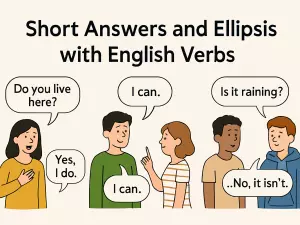
Verbs in Short Answers: Yes, I Do / No, I Don’t

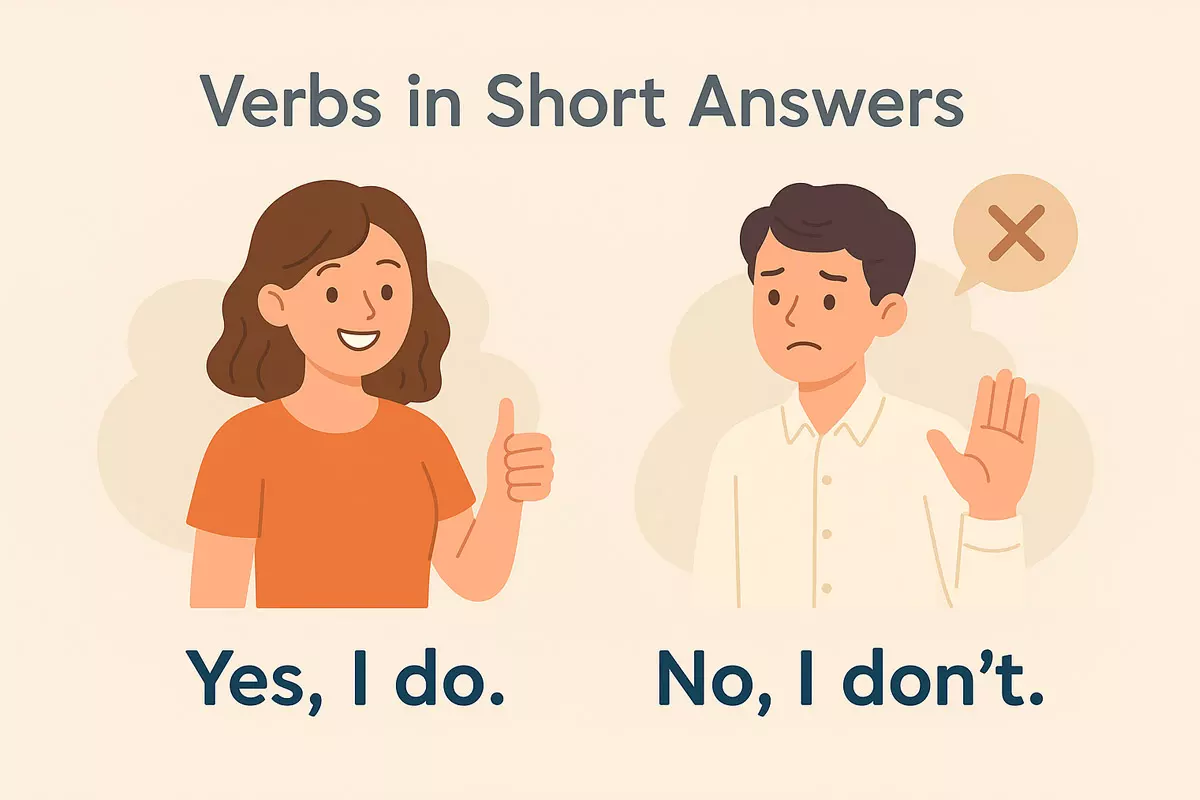 The article explains when to use short answers, how to form both positive and negative ones, and covers questions with be, do, have, and modal verbs. It also highlights natural speech patterns and provides short answer practice.
Brief responses in English typically use only a few words, particularly when expressing agreement or disagreement, and mastering the use of action words in these situations is essential for sounding natural and confident. For example, simple replies like "I do," "She did," or "They will" efficiently convey your stance without unnecessary detail. Learning to choose the correct verb form and structure allows your replies to be clear and direct, which is valued in everyday conversations and helps you communicate effectively with native speakers.
When to Use Short Answers
Short answers are a natural way to reply to yes/no questions in English, especially when you want to be polite, clear, or avoid repeating the whole question. They are common in spoken English, where quick responses keep the conversation flowing smoothly. Using these concise replies helps you sound more fluent and prevents awkward repetition.
Situations Where Short Answers Are Preferred
- Responding to yes/no questions in daily conversations: "Do you like tea?" → "Yes, I do."
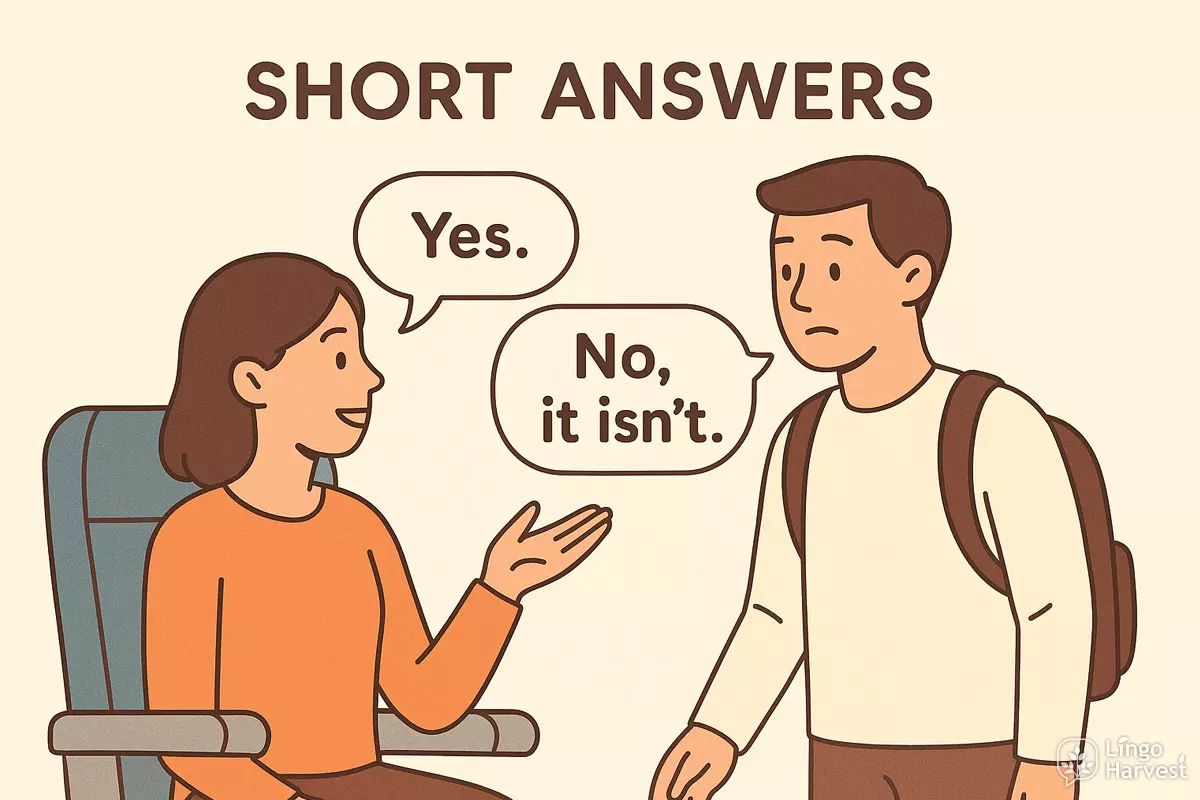
- Answering politely in formal or semi-formal contexts: "Is this your seat?" → "No, it isn’t."
- Clarifying information without repeating the whole sentence: "Have you finished?" → "No, I haven’t."
- Avoiding one-word answers, which may sound rude or uninterested: "Are you coming?" → "Yes, I am."
- Showing agreement or disagreement quickly: "Can you swim?" → "Yes, I can." / "No, I can’t."
- Reacting to offers or suggestions: "Would you like some coffee?" → "No, I wouldn’t."
- Replying in classrooms or exams: "Did you study for the test?" → "Yes, I did."
- Confirming details in customer service: "Is your account active?" → "Yes, it is."
- Expressing certainty or uncertainty: "Will it rain tomorrow?" → "No, it won’t."
- Participating in interviews or formal meetings: "Have you worked here before?" → "No, I haven’t."
Why Use Short Answers?
Using these brief replies helps you sound respectful and attentive. Instead of just saying "yes" or "no," you include the subject and auxiliary verb, which shows you understand the question and are engaged in the conversation.
Common Patterns for Short Answers
The structure usually follows this pattern:
- Yes/No + subject + auxiliary/modal verb (+ not for negatives)
For example:
- "Are they ready?" → "Yes, they are." / "No, they aren’t."
- "Do you play chess?" → "No, I don’t."
- "Has she called?" → "Yes, she has."
- "Will he join us?" → "No, he won’t."
Quick Reference Table: Short Answer Forms
| Question Type | Example Short Answer |
|---|---|
| Present Simple (Do/Does) | Yes, I do. / No, he doesn’t. |
| Past Simple (Did) | Yes, we did. / No, she didn’t. |
| Present Continuous (Am/Is/Are) | Yes, she is. / No, they aren’t. |
| Modal Verbs (Can/Will/Should, etc.) | Yes, I can. / No, we won’t. |
Remember, short answers are especially helpful in keeping your replies polite, clear, and natural in both speaking and writing.
Positive and Negative Forms
Understanding how to reply with short answers in English often means choosing between an affirmative or a negative structure. These forms are especially common in everyday conversation, helping to keep exchanges natural and efficient. Short answers use an auxiliary verb (like "do," "does," or "did") and, if needed, a subject pronoun.
How Affirmative and Negative Short Answers Work
When someone asks a yes/no question, the reply usually echoes the auxiliary verb. For example, if the question is "Do you like pizza?", a natural short answer would be "Yes, I do" (affirmative) or "No, I don’t" (negative). The auxiliary matches the subject and tense of the question.
- ✅ Yes, I do.
- ❌ No, I don't.
- ✅ Yes, she does.
- ❌ No, he doesn’t.
- ✅ Yes, we did.
- ❌ No, they didn’t.
- ✅ Yes, you can.
- ❌ No, I can’t.
- ✅ Yes, it is.
- ❌ No, it isn’t.
- ✅ Yes, I will.
- ❌ No, we won’t.
- ✅ Yes, they have.
- ❌ No, she hasn’t.
- ✅ Yes, you should.
- ❌ No, he shouldn’t.
Pattern for Constructing Short Replies
The structure is simple:
- Affirmative: Yes, + subject + auxiliary.
- Negative: No, + subject + auxiliary + not (often contracted).
This approach keeps communication clear and polite, especially when you want to avoid repetition of the full sentence.
Comparison Table: Common Auxiliary Verbs in Short Answers
| Question Type | Affirmative Reply | Negative Reply |
|---|---|---|
| Present Simple (do/does) | Yes, I do. Yes, she does. |
No, I don't. No, she doesn't. |
| Past Simple (did) | Yes, we did. Yes, he did. |
No, we didn't. No, he didn't. |
| Present Continuous (am/is/are) | Yes, I am. Yes, they are. |
No, I'm not. No, they aren't. |
| Modal Verbs (can/will/should) | Yes, I can. Yes, you will. |
No, I can't. No, you won't. |
This table helps you visualize how the auxiliary verb changes depending on the tense or modal used in the question. By matching the right form, your short answers will sound natural and correct. Practice these structures to build confidence in daily conversations.
Questions with Be, Do, Have
Understanding how to form and answer questions with "be," "do," and "have" is crucial for everyday English conversations. These verbs act as auxiliaries and help structure both questions and their short answers, which often use just the verb and a subject pronoun.
How Each Verb Works in Questions
When making yes/no questions, the word order changes. "Be" comes before the subject, while "do" and "have" often need an auxiliary in the present simple and present perfect, respectively. Each verb follows its own pattern, influencing how you reply in short answers.
- Am/Is/Are: Used for present simple questions and short answers (e.g., Are you ready? Yes, I am.)
- Do/Does/Did: Used for present and past simple questions (e.g., Do you like tea? Yes, I do.)
- Have/Has: Used for possession or perfect tenses (e.g., Have you finished? No, I haven’t.)
Short Answer Patterns
For clarity, here's a comparison of how these verbs appear in both questions and their concise replies:
| Question | Short Answer (Positive / Negative) |
|---|---|
| Are you a student? | Yes, I am. / No, I’m not. |
| Do they work here? | Yes, they do. / No, they don’t. |
| Has she arrived? | Yes, she has. / No, she hasn’t. |
| Did you see it? | Yes, I did. / No, I didn’t. |
| Is it raining? | Yes, it is. / No, it isn’t. |
Common Examples of Yes/No Questions and Short Answers
Here are some practical examples to show how these verbs function in questions and their brief responses:
- Are we late? → No, we aren’t.
- Is she here? → Yes, she is.
- Do you want coffee? → Yes, I do.
- Does he play tennis? → No, he doesn’t.
- Have they called? → Yes, they have.
- Has it started? → No, it hasn’t.
- Did you enjoy it? → Yes, I did.
- Were you tired? → No, I wasn’t.
- Was it difficult? → Yes, it was.
- Do we need tickets? → No, we don’t.
- Have you finished? → No, I haven’t.
- Are they open? → Yes, they are.
Tips for Using Short Answers
Short answers help you sound natural and avoid unnecessary repetition. Remember to match the auxiliary verb in the question. For example, if the question uses "do," the reply uses "do" or "don’t." Politeness and clarity improve when you use these concise forms, especially in spoken English.
Modal Verbs in Short Answers
When responding to yes/no questions that use modal verbs like “can,” “should,” or “must,” the answer usually repeats the modal verb instead of “do/does.” This keeps replies clear and avoids confusion. Short answers with modals are direct and reflect the question’s structure.
How Modal Verbs Work in Replies
Modal verbs in English include: can, could, will, would, shall, should, may, might, and must. When someone asks a question with a modal, the short answer uses the same modal plus the subject. For negative answers, add “not” after the modal (often contracted).
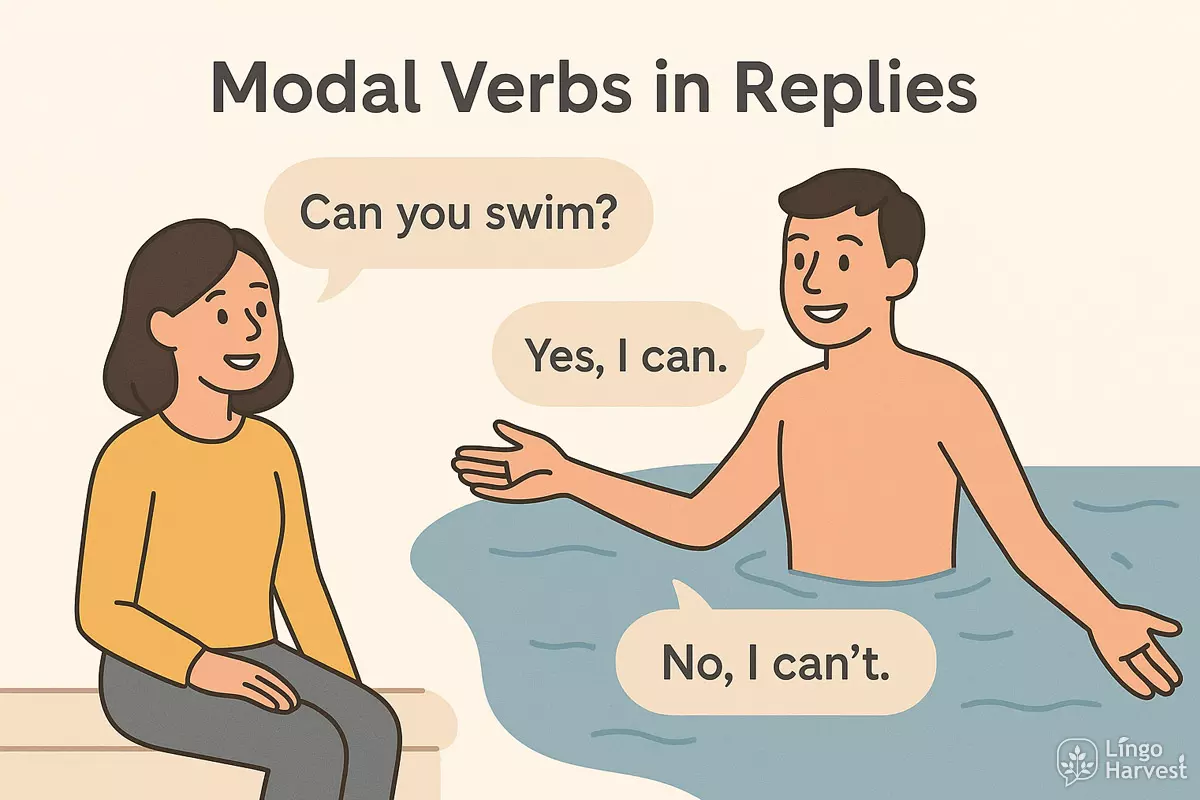
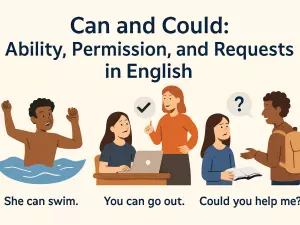
- Can you swim? – Yes, I can. / No, I can’t.
- Should we leave now? – Yes, we should. / No, we shouldn’t.
- Will they come? – Yes, they will. / No, they won’t.
- May I open the window? – Yes, you may. / No, you may not.
- Must I finish this today? – Yes, you must. / No, you mustn’t.
- Could she help us? – Yes, she could. / No, she couldn’t.
- Would you like tea? – Yes, I would. / No, I wouldn’t.
- Might it rain? – Yes, it might. / No, it might not.
- Shall we start? – Yes, we shall. / No, we shan’t.
Patterns for Positive and Negative Short Answers
The structure is straightforward:
- Affirmative: Yes, + subject + modal.
- Negative: No, + subject + modal + not (often contracted).
Common Modal Reply Patterns
| Question | Short Answer Examples |
|---|---|
| Can you help? | Yes, I can. ✅ No, I can’t. ❌ |
| Should he go? | Yes, he should. No, he shouldn’t. |
| Will they join? | Yes, they will. No, they won’t. |
| Must we wait? | Yes, we must. No, we mustn’t. |
| Could Anna come? | Yes, she could. No, she couldn’t. |
| Would you like more? | Yes, I would. No, I wouldn’t. |
| Might it snow? | Yes, it might. No, it might not. |
| Shall we begin? | Yes, we shall. No, we shan’t. |
Key Points to Remember
- Always match the modal verb in the reply to the one in the question.
- Use contractions for negatives in casual speech (can’t, won’t, shouldn’t).
- Some modals (like “may not”) sound formal or are rare in negatives.
- The subject in short answers is typically a pronoun (I, you, he, etc.).
Using modal verbs in this way makes your English sound natural and helps avoid confusion in conversations.
Natural Speech Patterns
When native speakers answer yes/no questions, they often rely on shortened forms that include just the auxiliary verb and a subject. This habit keeps conversations flowing naturally without sounding stiff or overly formal. In everyday English, you’ll hear people say “Yes, I do” or “No, I don’t” instead of repeating the entire question.
Common Short Answer Structures
Short answers almost always use the correct auxiliary (helping verb) from the original question. This makes the answer clear and avoids awkward repetition. Here are some typical patterns:
- Yes, I do. / No, I don’t. (present simple with “do”)
- Yes, he does. / No, he doesn’t.
- Yes, we are. / No, we aren’t. (present continuous with “be”)
- Yes, she can. / No, she can’t. (modal verbs)
- Yes, they have. / No, they haven’t. (present perfect)
- Yes, I will. / No, I won’t. (future with “will”)
- Yes, it is. / No, it isn’t.
- Yes, you did. / No, you didn’t. (past simple with “did”)
- Yes, he was. / No, he wasn’t.
- Yes, I would. / No, I wouldn’t.
- Yes, we should. / No, we shouldn’t.
- Yes, they must. / No, they mustn’t.
Why Use Short Answers?
Responding with just “Yes” or “No” can sound abrupt or even rude. By including the auxiliary and subject, your reply feels more polite and complete, especially in spoken English. It’s a subtle way to show engagement and clarity in conversation.
Quick Comparison: Full vs. Short Answers
| Full Answer | Short Answer |
|---|---|
| Yes, I like coffee. | Yes, I do. |
| No, she is not coming. | No, she isn’t. |
| Yes, we have finished. | Yes, we have. |
| No, they cannot swim. | No, they can’t. |
| Yes, he did his homework. | Yes, he did. |
Tips for Sounding Natural
- Match the auxiliary verb to the question.
- Use contractions in negative answers (don’t, isn’t, can’t) for more natural speech.
- Keep your tone friendly and clear.
- Avoid repeating the main verb unless you need to add emphasis.
By practicing these patterns, you’ll feel more confident and sound more like a fluent speaker in everyday conversations.
Practice: Complete the Short Answers
Understanding how to form correct short responses with verbs is essential in everyday English conversation. Let’s work through some exercises to help you get comfortable with positive and negative short answers using auxiliary verbs like "do" and "does."
Task 1: Fill in the Blanks
Read each question and write the correct short answer (Yes/No) using "do," "does," "don't," or "doesn't".
- Do you like pizza? __________
- Does she play tennis? __________
- Do they speak Spanish? __________
- Does it rain a lot here? __________
- Do we have homework? __________
- Does John work on Mondays? __________
- Do cats like water? __________
- Does your brother drive? __________
- Do you need help? __________
- Does this bus stop here? __________
Show answers
- Yes, I do / No, I don’t
- Yes, she does / No, she doesn’t
- Yes, they do / No, they don’t
- Yes, it does / No, it doesn’t
- Yes, we do / No, we don’t
- Yes, he does / No, he doesn’t
- Yes, they do / No, they don’t
- Yes, he does / No, he doesn’t
- Yes, I do / No, I don’t
- Yes, it does / No, it doesn’t
Patterns for Short Answers
Notice the structure for forming these concise replies. The subject and auxiliary verb must agree. Here’s a quick reference for positive and negative forms:
| Question | Short Answer |
|---|---|
| Do you like coffee? | Yes, I do / No, I don’t |
| Does he play guitar? | Yes, he does / No, he doesn’t |
| Do they work here? | Yes, they do / No, they don’t |
| Does it snow in April? | Yes, it does / No, it doesn’t |
| Do we need tickets? | Yes, we do / No, we don’t |
Task 2: Choose the Correct Short Answer
Select the best response for each question below.
- Do your friends live nearby?
- A) Yes, they do
- B) Yes, they does
- Does your mother cook Italian food?
- A) No, she don’t
- B) No, she doesn’t
- Do you read every day?
- A) Yes, I does
- B) Yes, I do
- Does it get cold here?
- A) No, it doesn’t
- B) No, it don’t
Show answers
- 1. A) Yes, they do
- 2. B) No, she doesn’t
- 3. B) Yes, I do
- 4. A) No, it doesn’t
Practicing these responses will help you sound more natural and confident when answering yes/no questions in English. Pay attention to the subject and verb agreement for accuracy.