Short Answers and Ellipsis with English Verbs

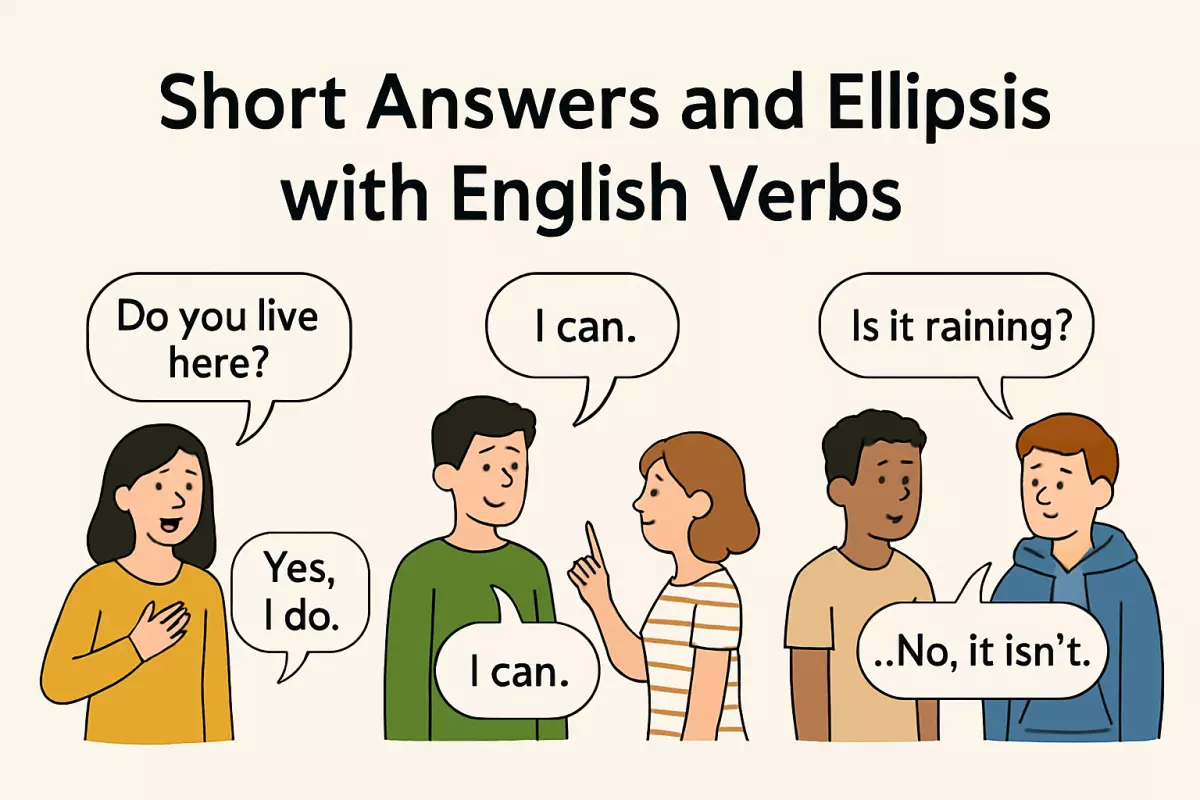 Covers what English short answers are, how auxiliaries like do, be, and have form them, and how positive vs negative replies work. Explains ellipsis to avoid repetition in conversation, common learner problems, and homework practice tasks.
In everyday conversation, we often answer with short verb-based phrases and omit words that are already understood from context. This lesson explains how to do that smoothly and naturally, helping you sound clear, confident, and conversational while keeping your replies efficient and avoiding unnecessary repetition or overexplaining.
What short answers are in English
In everyday conversation, English often answers yes/no questions with a short reply that repeats only the key grammar: an auxiliary verb (or be/do) plus the subject. This avoids repeating the whole sentence while keeping tense, polarity, and meaning clear.
Core pattern
- Form: Yes/No + auxiliary (or be/do) + subject.
- Match the question: keep the same auxiliary and tense where possible.
- Use do-support when needed: if the question has no auxiliary, the short reply uses do/does/did.
- Keep polarity consistent: negative questions can take either a negative or positive short reply depending on meaning.
Common short-answer types (with examples)
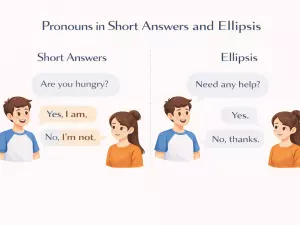
- Be (present): “Are you ready?” → ✅ “Yes, I am.” / “No, I’m not.”
- Be (past): “Was it expensive?” → “Yes, it was.” / “No, it wasn’t.”
- Do/does (present simple): “Do they live nearby?” → “Yes, they do.” / “No, they don’t.”
- Did (past simple): “Did you call her?” → “Yes, I did.” / “No, I didn’t.”
- Have/has (present perfect): “Have you finished?” → “Yes, I have.” / “No, I haven’t.”
- Had (past perfect): “Had he left already?” → “Yes, he had.” / “No, he hadn’t.”
- Will (future): “Will she join us?” → “Yes, she will.” / “No, she won’t.”
- Would (conditional/polite): “Would you like tea?” → “Yes, I would.” / “No, I wouldn’t.”
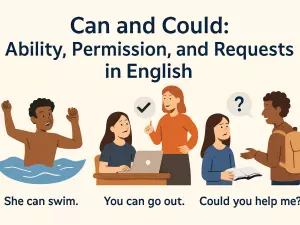
- Can (ability/permission): “Can we park here?” → “Yes, you can.” / “No, you can’t.”
- Could (past/polite): “Could he swim at five?” → “Yes, he could.” / “No, he couldn’t.”
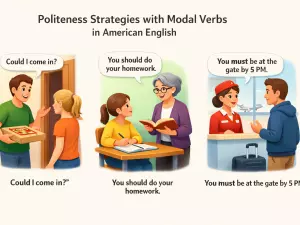
- Should (advice): “Should I email them?” → “Yes, you should.” / “No, you shouldn’t.”
- Must (obligation): “Must we leave now?” → “Yes, you must.” / “No, you mustn’t.”
- Might (possibility): “Might it rain?” → “Yes, it might.” / “No, it might not.”
- Modal + have (past possibility): “Could he have forgotten?” → “Yes, he could have.” / “No, he couldn’t have.”
- There is/are: “Are there any seats?” → “Yes, there are.” / “No, there aren’t.”
- Tag-style confirmation: “You’re coming, right?” → “Yes, I am.” / “No, I’m not.”
Usage notes and frequent pitfalls
- Don’t answer with the main verb alone: ❌ “Yes, like.” → ✅ “Yes, I do.”
- Keep the auxiliary from the question: “Has she arrived?” → ✅ “Yes, she has.” (not “Yes, she did.”)
- Pronouns are typical: short replies usually use I/you/he/she/it/we/they, even if the question used a name.
- Short answers can be reduced in speech: “Yes, I am” often becomes “Yes, I’m,” but the underlying pattern stays the same.
- Negative questions need meaning checks: “Don’t you like it?” can be answered “No, I don’t” (I dislike it) or “Yes, I do” (I like it), depending on intent.
Using auxiliaries in short answers
In English, brief replies usually keep only an auxiliary verb (or the verb be) plus the subject, while the main verb phrase is left out because it is understood from the question or statement. This creates a natural-sounding response and avoids repeating information.
Core pattern
- Yes/No + subject + auxiliary → Yes, I do. / No, she isn’t.
- If there is no auxiliary in the question, English typically supplies do/does/did in the short answer: Do you like it? → Yes, I do.
- With be, use am/is/are/was/were (not do): Are they ready? → Yes, they are.
- With modal verbs, repeat the modal: Can he swim? → Yes, he can.
- With perfect forms, repeat have/has/had: Have you finished? → No, I haven’t.
- With continuous forms, repeat am/is/are/was/were: Is she working? → Yes, she is.
Which auxiliary to choose (match the question)
- Present simple: Do you drive? → Yes, I do.
- Present simple (3rd person): Does he know? → No, he doesn’t.
- Past simple: Did they call? → Yes, they did.
- Be (present): Is it cold? → Yes, it is.
- Be (past): Were you late? → No, I wasn’t.
- Present continuous: Are you waiting? → Yes, I am.
- Past continuous: Was she sleeping? → No, she wasn’t.
- Present perfect: Have we met? → Yes, we have.
- Past perfect: Had he left? → Yes, he had.
- Future with will: Will you come? → No, I won’t.
- Be going to: Are they going to stay? → Yes, they are.
- Modals (ability/permission): Can I sit here? → Yes, you can.
- Modals (advice/obligation): Should we tell her? → Yes, we should.
- Modals (necessity): Must I pay now? → No, you needn’t. (common alternative to No, you mustn’t)
- Tag-like confirmation: You’ve seen it? → Yes, I have.
Common usage notes and pitfalls
- Keep the tense and polarity (positive/negative) aligned with the question: Did she call? → No, she didn’t.
- Don’t repeat the main verb in a short answer: ❌ Yes, I like. ✅ Yes, I do.
- Don’t use do-support with be: ❌ Yes, I do. (to Are you ready?) ✅ Yes, I am.
- Use the first auxiliary when there is more than one: Has it been repaired? → Yes, it has. (not Yes, it been)
- Contract negatives naturally: isn’t, aren’t, wasn’t, weren’t, don’t, doesn’t, didn’t, haven’t, hasn’t, hadn’t, won’t, can’t.
- Pronoun choice matters: match the subject to the meaning, not just the last noun mentioned: Is your sister coming? → Yes, she is.
- Short answers can follow statements for agreement/disagreement: “I don’t think it’ll work.” → “I do.” / “I don’t.”
- Emphasis is possible by stressing the auxiliary in writing with context: I did. / She has. (still leaving the main verb understood).
Positive and negative short answers
In English, brief replies usually repeat the auxiliary verb (or be) from the question and replace the rest of the clause with ellipsis. The subject stays, and the main verb phrase is left understood: “Yes, I do.” (meaning I do like it / I do want it).
Core pattern
- Positive: Yes + subject + auxiliary/be. (Yes, she is.)
- Negative: No + subject + auxiliary/be + not (often contracted). (No, she isn’t.)
- If the question has no auxiliary, English supplies do/does/did in the short reply. (Do you swim? → Yes, I do.)
- With modal verbs, repeat the modal. (Can he drive? → Yes, he can.)
- With be as the main verb, repeat be. (Are they ready? → No, they aren’t.)
Examples by verb type (common in conversation)
- Be: Is Maya at home? → Yes, she is. / No, she isn’t.
- Be (past): Were you tired? → Yes, I was. / No, I wasn’t.
- Do-support (present): Do they know? → Yes, they do. / No, they don’t.
- Do-support (3rd person): Does it matter? → Yes, it does. / No, it doesn’t.
- Do-support (past): Did you call? → Yes, I did. / No, I didn’t.
- Present continuous: Are you working? → Yes, I am. / No, I’m not.
- Past continuous: Was he waiting? → Yes, he was. / No, he wasn’t.
- Present perfect: Have they finished? → Yes, they have. / No, they haven’t.
- Past perfect: Had you met her before? → Yes, I had. / No, I hadn’t.
- Will: Will it rain? → Yes, it will. / No, it won’t.
- Would: Would you help? → Yes, I would. / No, I wouldn’t.
- Can: Can she come? → Yes, she can. / No, she can’t.
- Could: Could they hear you? → Yes, they could. / No, they couldn’t.
- Should: Should we leave? → Yes, we should. / No, we shouldn’t.
- Must: Must I sign? → Yes, you must. / No, you needn’t. (common alternative to mustn’t for “no obligation”)
What to avoid (typical learner errors)
- ❌ Yes, I’m. → ✅ Yes, I am. (don’t contract am in short answers)
- ❌ Yes, I do. to a be question → ✅ match the auxiliary: Are you ready? → Yes, I am.
- ❌ No, I not. → ✅ No, I’m not. / No, I am not.
- ❌ repeating the main verb instead of the auxiliary: Do you like it? → ❌ Yes, I like. → ✅ Yes, I do.
Notes on meaning: “No” answers with modals
- No obligation: Must I pay now? → No, you don’t have to. / No, you needn’t.
- Prohibition: Must I pay now? → No, you mustn’t. (means “you are not allowed to”)
- Ability vs permission: Can I park here? → No, you can’t. (often permission) vs No, you can’t (also possible for ability, depending on context)
Ellipsis and omitted verb forms
In short answers and follow-up clauses, English often drops parts of the verb phrase when the meaning is already clear from context. The remaining words act as a “skeleton” that keeps tense, polarity, and emphasis, while avoiding repetition.
Common patterns: what gets left out
- Auxiliary-only replies: keep the auxiliary (or modal) and omit the main verb.
“Do you work here?” → “Yes, I do.” (meaning: I do work here.) - Be as a complete answer: be can stand alone when it carries the meaning.
“Are they ready?” → “They are.” - Have as a complete answer: have can stand alone as auxiliary (perfect) or as main verb when understood.
“Have you finished?” → “Yes, I have.”
“Do you have a pen?” → “Yes, I do.” (not “Yes, I have” in many everyday contexts) - Modal-only replies: keep the modal; omit the following verb phrase.
“Can you swim?” → “Yes, I can.” - Negative short answers: keep the auxiliary + not (often contracted).
“Did she call?” → “No, she didn’t.” - Tag-like agreement without a full tag question: echo the auxiliary to show agreement or disagreement.
“I shouldn’t worry.” → “No, you shouldn’t.” - Ellipsis after conjunctions (and, but, or): omit repeated verb phrases in coordinated clauses.
“He can drive, but she can’t.” (meaning: can’t drive) - Ellipsis after comparatives (than/as): omit repeated material after than/as.
“She works longer than I do.” - Ellipsis after “so” and “neither/nor”: use auxiliary inversion; omit the main verb phrase.
“I’m tired.” → “So am I.”
“He didn’t go.” → “Neither did she.” - Ellipsis in question-answer sequences: answers often mirror the auxiliary used in the question.
“Will they arrive soon?” → “They will.” - Ellipsis in reported confirmations: omit what can be recovered from the previous clause.
“I said I’d help, and I did.” - Reduced infinitives after “to”: keep to and omit the infinitive when it is obvious.
“Are you going to call her?” → “I don’t want to.” - Reduced perfect infinitives: keep to have and omit the past participle when context supplies it (more formal).
“He claims to have finished, but he doesn’t seem to have.” - Substitution with “do” (do-support as a stand-in): use do/does/did to avoid repeating a lexical verb phrase.
“I like jazz, and my sister does too.” - Omitting “that” + clause after verbs of saying/thinking: not verb ellipsis, but a frequent omission in the same economy-of-words style.
“I think (that) it’s fine.”
What must stay: tense, polarity, and the right auxiliary
- Match the auxiliary to the question’s tense/aspect:
✅ “Have you eaten?” → “Yes, I have.”
❌ “Yes, I did.” (wrong aspect) - Use do-support when there is no other auxiliary:
✅ “She likes it.” → “Yes, she does.”
❌ “Yes, she likes.” (possible as a full sentence, but not the standard short-answer pattern) - Keep modal meaning intact:
“You should apologize.” → “I should.” (not “I do.”) - Keep negatives attached to the auxiliary:
“Did they agree?” → “No, they didn’t.” - Avoid stranded main verbs without support in short replies:
✅ “He went.” → “Yes, he did.”
❌ “Yes, he went.” (sounds like a full restatement, not a reduced answer)
Where omission is less natural
- When the missing verb phrase is not recoverable: if more than one action is possible, repeat or clarify.
“Are you meeting Alex?” → “I might.” (unclear: might meet? might call? might go?) - When emphasis requires the full verb phrase: repetition can be chosen for contrast.
“Did you break it?” → “No, I didn’t break it. He did.” - When “have” is lexical (possession) and the context is formal or contrasts are sharp: full forms may be preferred.
“Do you have any questions?” → “Yes, I do.” (most common)
“Yes, I have.” (possible, but often sounds more formal or marked)
Avoiding repetition with ellipsis
English often leaves out words that are understood from context, especially after auxiliary verbs. This omission keeps answers and follow-up clauses short while staying grammatical. The key is that the missing material must be recoverable from what came just before.
Core pattern: auxiliary + (not) + ellipted verb phrase
When a verb phrase is repeated, English commonly keeps only the auxiliary (or a substitute like do) and omits the rest of the verb phrase. The auxiliary carries tense, agreement, and polarity, so the meaning stays clear.
- Be: “Are you ready?” → “Yes, I am.” (understood: ready)
- Have: “Have you finished?” → “Yes, I have.” (understood: finished)
- Will: “Will she call?” → “She will.” (understood: call)
- Can: “Can they swim?” → “They can.” (understood: swim)
- Do-support with lexical verbs: “Do you like it?” → “Yes, I do.” (understood: like it)
- Negative short answers: “Did you see it?” → “No, I didn’t.” (understood: see it)
- Tag-like follow-up: “I can’t attend, but my sister can.” (understood: attend)
What can be omitted (and what usually cannot)
Ellipsis typically removes the repeated verb phrase, not the auxiliary that makes the clause work. In many cases, the auxiliary is required to host negation and to show tense.
- Omit the main verb phrase after an auxiliary: “She has been invited, and he has been invited too.” → “She has been invited, and he has too.”
- Keep the auxiliary for tense/agreement: “I didn’t call, but she did.” (not: ❌ “but she called” if you are specifically matching the contrast with didn’t)
- Keep the auxiliary for negation: “He said he would help, but he won’t.” (understood: help)
- Don’t drop required complements when they are the new information: “Who did you speak to?” ❌ “I did.” ✅ “I did to Alex.” / “I spoke to Alex.”
- Don’t omit if it creates ambiguity: “She promised to call, and he did too.” (ambiguous: did he promise or call?) Prefer: “and he promised too” or “and he called too.”
Common environments for ellipsis
Omission is especially frequent in short answers and in coordinated clauses where the second clause repeats the first clause’s verb phrase.
- Short answers: “Are they coming?” → “They are.” / “They aren’t.”
- Coordination with and/but: “I can drive, but my partner can’t.”
- Comparatives: “She works harder than he does.” (understood: works)
- Conditionals: “If you do, let me know.” (understood from context: do it/agree/come, depending on the prior clause)
- Responses with emphasis: “I said I’d apologize, and I did.” (the auxiliary carries the stress)
- So/neither + auxiliary: “I’m tired.” → “So am I.” / “I’m not.” → “Neither am I.”
Choosing the right auxiliary in elliptical replies
Match the auxiliary to the tense/aspect/modality of the original clause. If there is no auxiliary, use do in the appropriate form.
- Present simple: “She plays tennis.” → “He does too.”
- Past simple: “They arrived early.” → “We did too.”
- Present continuous: “I’m working.” → “She is too.”
- Past continuous: “He was joking.” → “They were too.”
- Present perfect: “You’ve met her.” → “I have too.”
- Past perfect: “She had left.” → “He had too.”
- Modal: “You should call.” → “I should.”
- Future with will: “They’ll notice.” → “They will.”
Used well, ellipsis produces natural-sounding short answers and avoids repeating full verb phrases. When clarity is at risk, keeping more of the verb phrase (or restating it) is usually the better choice.
Short answers in conversation
In everyday dialogue, speakers often reply with a reduced clause that keeps only the auxiliary (or a form of be) plus the subject. The rest of the verb phrase is understood from the question or previous sentence. This creates a natural, efficient response while staying grammatically complete.
Core pattern
The most common structure is:
- Yes/No + auxiliary (or be) + subject → “Yes, I do.” “No, she isn’t.”
- Auxiliary (or be) + subject (without yes/no, especially in quick replies) → “I have.” “They won’t.”
- Echo short answer to agree/disagree with a statement → “I can’t.” “Yes, you can.”
Which verb stays in the short answer?
Use the same first auxiliary that appears in the full verb phrase. If there is no auxiliary in the question, English typically supplies do (do/does/did) in the short answer.
- Be stays as be: “Are you ready?” → “Yes, I am.”
- Have (perfect) stays as have: “Have they left?” → “No, they haven’t.”
- Modal verbs stay as the modal: “Can you swim?” → “Yes, I can.”
- Progressive uses be: “Is he working?” → “Yes, he is.”
- Passive uses be: “Was it delivered?” → “No, it wasn’t.”
- No auxiliary in the main verb → add do: “Do you like it?” → “Yes, I do.”
Common short-answer models (with correct vs. incorrect)
- “Do you drive?” → ✅ “Yes, I do.” ❌ “Yes, I drive.” (possible, but not the typical short answer)
- “Did she call?” → ✅ “No, she didn’t.”
- “Are they coming?” → ✅ “Yes, they are.”
- “Was he late?” → ✅ “No, he wasn’t.”
- “Have you finished?” → ✅ “Yes, I have.”
- “Has it started?” → ✅ “No, it hasn’t.”
- “Will you be there?” → ✅ “Yes, I will.”
- “Would they help?” → ✅ “No, they wouldn’t.”
- “Can we leave now?” → ✅ “Yes, we can.”
- “Should I email her?” → ✅ “Yes, you should.”
- “Must we pay today?” → ✅ “No, you mustn’t.” (prohibition) / “No, you don’t have to.” (no necessity)
- “Is it being repaired?” → ✅ “Yes, it is.”
- “Has it been approved?” → ✅ “No, it hasn’t.”
- “Do they ever complain?” → ✅ “Yes, they do.”
- “Did you meet her?” → ✅ “No, I didn’t.”
Ellipsis and what gets omitted
In these replies, English usually omits everything after the auxiliary because it is recoverable from context. Compare:
- Full: “Yes, I have finished the report.” → Short: “Yes, I have.”
- Full: “No, she isn’t coming tonight.” → Short: “No, she isn’t.”
- Full: “Yes, they will be there at six.” → Short: “Yes, they will.”
Practical usage notes
- Match tense and polarity to the question: “Did…?” → “did/didn’t”; “Have…?” → “have/haven’t”.
- Use contractions naturally in negatives: “No, I don’t.” “No, she hasn’t.”
- Avoid answering with only “Yes” or “No” in careful speech; adding the auxiliary sounds clearer and more polite: “Yes, I do.”
- Use stress for contrast when correcting someone: “He didn’t.” → “He did.”
- Don’t repeat the main verb unless you want emphasis or a fuller reply: “Yes, I do.” (neutral) vs. “Yes, I drive.” (more specific/marked).
Typical learner problems
Learners often understand the meaning of a reply but struggle with the form: which auxiliary to use, what can be left out, and what must stay. Many errors come from mixing full sentences with reduced replies, or from copying patterns from the first clause without adjusting tense, polarity, or verb type.
1) Choosing the wrong auxiliary in short answers
- Using be when the main verb needs do: ❌ “Do you like it?” “Yes, I am.” → ✅ “Yes, I do.”
- Using do with be: ❌ “Are you ready?” “Yes, I do.” → ✅ “Yes, I am.”
- Forgetting that have can be auxiliary (perfect) or main verb (possession): “Have you eaten?” ✅ “Yes, I have.” but “Do you have a car?” ✅ “Yes, I do.”
- Using the wrong modal in the reply: ❌ “Can she drive?” “Yes, she will.” → ✅ “Yes, she can.”
2) Mismatching tense, aspect, or polarity
- Replying in the present when the question is past: ❌ “Did they call?” “Yes, they do.” → ✅ “Yes, they did.”
- Mixing progressive and simple forms: ❌ “Are you working?” “Yes, I work.” → ✅ “Yes, I am.”
- Using a positive short answer after a negative question without checking meaning: “Don’t you like it?” can mean either “I do like it” or “No, I don’t.” Learners often choose the wrong one for the situation.
- Adding an extra negative: ❌ “You didn’t call, did you?” “No, I didn’t not.” → ✅ “No, I didn’t.”
3) Overusing full answers or incomplete fragments
- Giving a full clause where a short answer is expected in conversation (not wrong, but can sound heavy): “Yes, I do like it” instead of “Yes, I do.”
- Giving a fragment with no auxiliary: ❌ “Have you finished?” “Yes, finished.” → ✅ “Yes, I have.”
- Dropping the subject when it is needed for clarity: ❌ “Will Anna come?” “Yes, will.” → ✅ “Yes, she will.”
4) Ellipsis mistakes: leaving out the wrong part
- Omitting the auxiliary but keeping the main verb: ❌ “She hasn’t called, but I have called.” (unnatural) → ✅ “..., but I have.”
- Keeping too much after do/does/did: ❌ “I didn’t go, but she did go.” → ✅ “..., but she did.”
- Using ellipsis where English normally repeats a key word for contrast or clarity: “I can’t, but you can” is fine; “I can’t, but you” is not.
- Forgetting that ellipsis depends on a clear earlier verb phrase: if the first clause is long or ambiguous, a reduced second clause may confuse the listener.
5) Confusion with “so/neither + auxiliary” patterns
- Wrong word order: ❌ “I’m tired.” “So I am.” (possible, but usually means “That’s true”) → ✅ “So am I.”
- Mixing so and neither with the wrong polarity: ❌ “I don’t eat meat.” “So do I.” → ✅ “Neither do I.”
- Using me too where an auxiliary echo is required in formal writing: in conversation “Me too” is common, but in more controlled grammar practice, “So do I / So am I” is the target form.
6) Tag questions and echo replies
- Answering a tag question with the wrong auxiliary: “You were there, weren’t you?” ✅ “Yes, I was.” (not “Yes, I did.”)
- Misinterpreting yes/no with tags: “You didn’t see it, did you?” ✅ “No, I didn’t.” (confirming the negative) vs. ✅ “Yes, I did.” (contradicting it). Learners often answer based on the tag alone, not the main clause.
7) Common verb-by-verb trouble spots
- Be: “Are you…?” → “Yes, I am / No, I’m not.”
- Do-support (simple present/past): “Do/Does/Did…?” → “Yes, I do/does/he does/did.”
- Perfect: “Have/Has…?” → “Yes, I have / No, she hasn’t.”
- Modals: “Can/Will/Should…?” → “Yes, I can/will/should.”
- Used to: “Did you use to…?” → “Yes, I did.” (not “Yes, I used to” as a short answer in this pattern).
Homework: short answer practice tasks
Use these tasks to practise choosing the right auxiliary verb (or modal), keeping the correct tense, and deciding when ellipsis is natural. Focus on the pattern: Yes/No + auxiliary/modal (+ subject), and remember that the main verb is usually omitted because it is understood from the question.
Task 1: Choose the best short answer
Write a short answer for each question. Use the natural form (usually with an auxiliary). Do not repeat the full verb phrase unless it is needed for contrast.
- “Do you work on Fridays?” (Yes)
- “Did Maya call you last night?” (No)
- “Are they coming now?” (Yes)
- “Was the meeting useful?” (No)
- “Have you finished the report?” (Yes)
- “Has he ever lived abroad?” (No)
- “Will you be there at six?” (Yes)
- “Would you like some tea?” (No)
- “Can she drive?” (Yes)
- “Could you help me tomorrow?” (No)
- “Should we tell them?” (Yes)
- “Must I sign this today?” (No)
Show answers
- Yes, I do.
- No, she didn’t.
- Yes, they are.
- No, it wasn’t.
- Yes, I have.
- No, he hasn’t.
- Yes, I will.
- No, I wouldn’t.
- Yes, she can.
- No, I couldn’t.
- Yes, we should.
- No, you mustn’t. / No, you don’t have to.
Task 2: Fix the short answer (auxiliary choice and form)
Each reply has a problem (wrong auxiliary, wrong tense, missing subject, or unnatural ellipsis). Rewrite the reply so it matches the question.
- “Do they know?” → “Yes, they know.”
- “Did you see it?” → “Yes, I do.”
- “Are you ready?” → “Yes, I’m.”
- “Has Lina arrived?” → “No, she didn’t.”
- “Will he call?” → “Yes, he calls.”
- “Can you swim?” → “Yes, I’m.”
- “Were they late?” → “No, they aren’t.”
- “Should I wait?” → “Yes, you do.”
- “Do we have to pay now?” → “No, we mustn’t.”
- “Is it raining?” → “Yes, it is raining.”
Show answers
- Yes, they do.
- Yes, I did.
- Yes, I am.
- No, she hasn’t.
- Yes, he will.
- Yes, I can.
- No, they weren’t.
- Yes, you should.
- No, we don’t have to. / No, we don’t.
- Yes, it is. (Also possible: Yes, it’s raining, if you want to repeat for emphasis.)
Task 3: Add ellipsis naturally (avoid unnecessary repetition)
Rewrite each pair as a short exchange. Keep the meaning, but make the answer sound natural by omitting repeated information where possible.
- Q: “Are you staying for dinner?” A: “Yes, I am staying for dinner.”
- Q: “Have they been to Rome?” A: “No, they have not been to Rome.”
- Q: “Did Sam email you?” A: “Yes, Sam emailed me.”
- Q: “Can we start now?” A: “No, we cannot start now.”
- Q: “Will you help us?” A: “Yes, I will help you.”
- Q: “Is the shop open?” A: “No, the shop is not open.”
- Q: “Were you listening?” A: “Yes, I was listening.”
- Q: “Should I apologise?” A: “Yes, you should apologise.”
Show answers
- Yes, I am.
- No, they haven’t.
- Yes, he did.
- No, we can’t.
- Yes, I will.
- No, it isn’t.
- Yes, I was.
- Yes, you should.
Task 4: Mixed tense and modal drill (match the auxiliary)
Answer each question twice: once with Yes and once with No. Keep contractions natural in the negative where appropriate.
- “Do you agree?”
- “Did it happen yesterday?”
- “Are they waiting?”
- “Was she joking?”
- “Have we met before?”
- “Has he been working?”
- “Will it be expensive?”
- “Would you go alone?”
- “Can I sit here?”
- “Should we leave now?”
Show answers
- Yes, I do. / No, I don’t.
- Yes, it did. / No, it didn’t.
- Yes, they are. / No, they aren’t.
- Yes, she was. / No, she wasn’t.
- Yes, we have. / No, we haven’t.
- Yes, he has. / No, he hasn’t.
- Yes, it will. / No, it won’t.
- Yes, I would. / No, I wouldn’t.
- Yes, you can. / No, you can’t.
- Yes, we should. / No, we shouldn’t.
Task 5: When a full answer is better (contrast and clarification)
Write the best reply. Use a short answer if it is enough; use a fuller clause if the short form would be unclear or if you need contrast.
- “Are you coming on Monday or Tuesday?” (You are coming on Tuesday.)
- “Did you mean Anna or Emma?” (You meant Emma.)
- “Can you print it, or should I?” (You can’t print it.)
- “Is he driving, or is she?” (She is driving.)
- “Do you want the red one?” (You want the blue one.)
- “Have you finished, or are you still working?” (You are still working.)
Show answers
- No, I’m coming on Tuesday.
- No, I meant Emma.
- No, I can’t. (Or: No, I can’t print it.)
- She is. / She is driving.
- No, I want the blue one.
- No, I’m still working.