Let’s + Verb: How to Make Friendly Suggestions

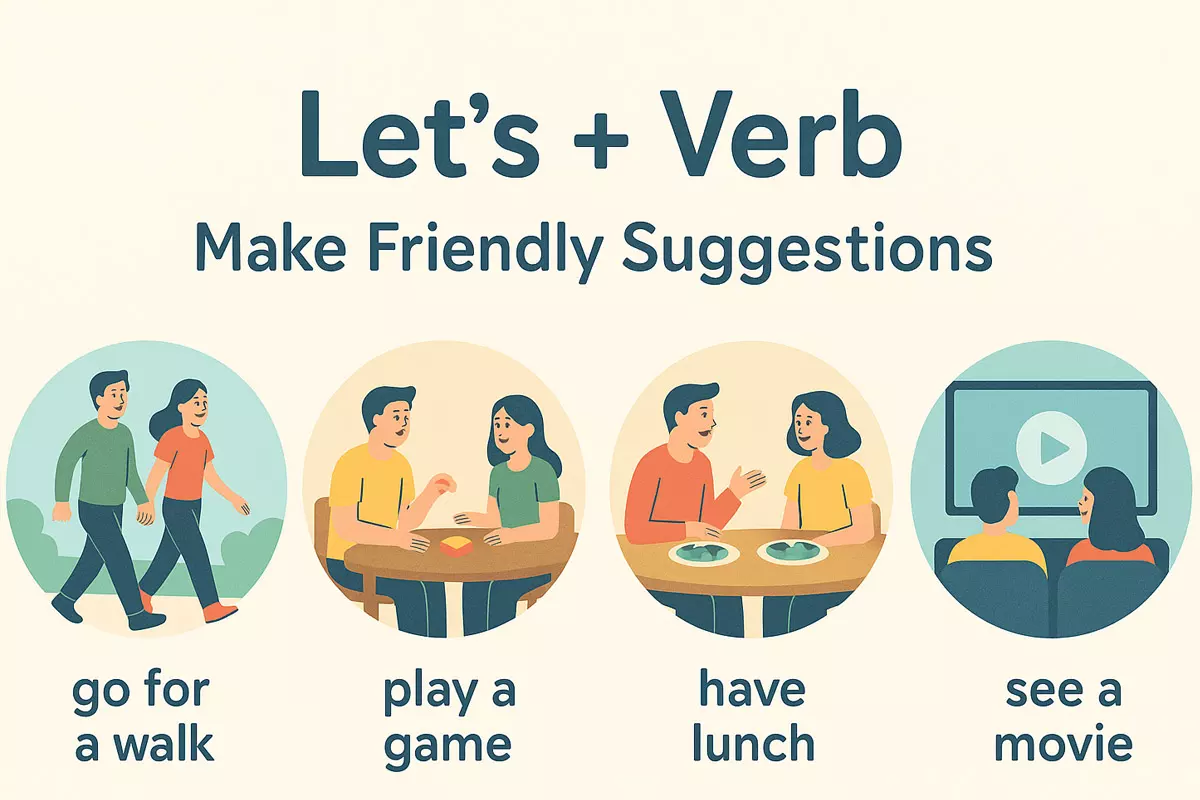 This article explains what let's means, how to form sentences with it, and the difference between making suggestions and giving commands. It also covers adding tag questions, common mistakes, and practice making suggestions correctly.
Inviting someone to participate in an activity or share their thoughts is a great way to build connections, and English provides simple, friendly ways to do this. By using inclusive phrases like "Why don't we..." or "Let's try...", you can encourage others to join in or express their ideas, making everyone feel welcome. These kinds of suggestions help create a positive atmosphere, promote teamwork, and make conversations more engaging for everyone involved, whether in casual or professional settings.
What Let’s Means
The phrase “let’s” is a contraction of “let us.” In everyday English, it’s used to make suggestions, invite others to join in an activity, or propose a plan together. Rather than giving commands or making demands, this construction is friendly and inclusive. It’s commonly followed by the base form of a verb, such as “let’s go,” “let’s eat,” or “let’s start.”
How “Let’s” Functions in Conversation
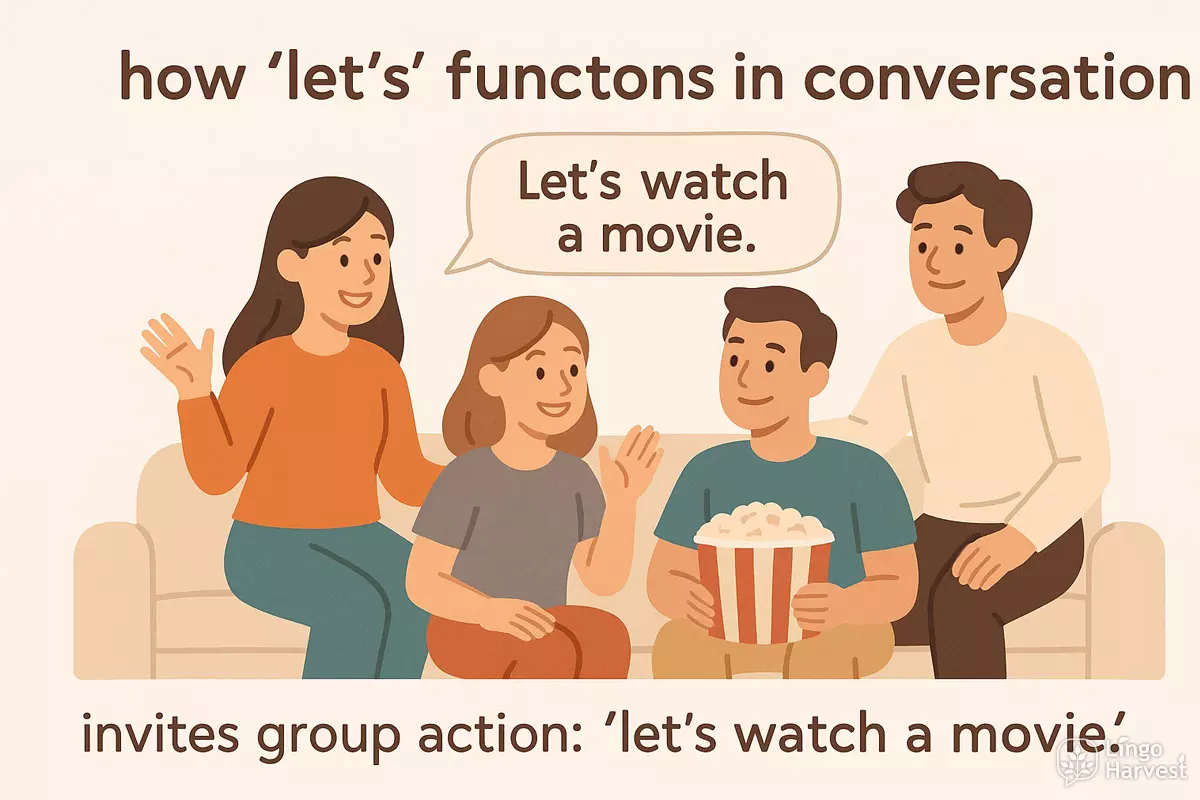
When people use “let’s,” they are not speaking only for themselves—they are inviting at least one other person to participate. The tone is collaborative, and the listener is included in the action or decision. This makes it softer and more polite than simply telling someone what to do.
- Invites group action: “Let’s watch a movie.”
- Suggests a plan: “Let’s meet at 7.”
- Encourages participation: “Let’s try something new.”
- Proposes solutions: “Let’s fix this together.”
- Offers help: “Let’s see if I can help.”
- Motivates: “Let’s keep going.”
- Initiates discussion: “Let’s talk about it.”
- Expresses excitement: “Let’s celebrate!”
- Asks for opinions: “Let’s decide what to do.”
- Suggests alternatives: “Let’s take a different route.”
- Encourages action: “Let’s get started.”
- Suggests a break: “Let’s take a rest.”
- Invites agreement: “Let’s agree on this.”
- Proposes an experiment: “Let’s see what happens.”
- Introduces a new idea: “Let’s imagine the possibilities.”
- Suggests a change: “Let’s try another approach.”
Meaning and Nuance
Using “let’s” signals openness and cooperation. It’s less direct than an imperative (“Do this”), so it’s ideal for group settings, teamwork, or when you want to be polite. The suggestion can be gentle or enthusiastic, depending on the context and intonation.
Common Patterns with “Let’s”
The structure is simple: “Let’s” + base verb. Here are some familiar patterns:
- Let’s + eat / go / see / begin / stop
- Let’s + try / plan / discuss / find / make
- Let’s + wait / check / review / remember / hope
Because “let’s” is about shared action, it’s rarely used for solo activities. It’s perfect for invitations and proposals that include others.
Forming Sentences with Let’s
When you want to make a suggestion or invite someone to do something with you, the phrase “let’s” is a natural choice in English. It is a contraction of “let us,” and it always comes before the base form of a verb. This structure is simple but very effective for sounding friendly and inclusive.
Basic Sentence Structure
The usual pattern is: Let’s + verb (base form). Notice that you don’t add “to” or change the verb form. For example:
- Let’s eat.
- Let’s start.
- Let’s go.
- Let’s try.
You can add more details after the verb for clarity or context:
- Let’s watch a movie tonight.
- Let’s meet at the café after work.
- Let’s finish this project together.
- Let’s take a break for lunch.
- Let’s call Sarah and invite her.
- Let’s look for a better solution.
- Let’s review the plan again.
- Let’s not forget our keys.
- Let’s clean up before we leave.
- Let’s celebrate when we’re done!
Negative Form
To suggest not doing something, use let’s not before the verb:
- Let’s not argue.
- Let’s not worry about it.
- Let’s not be late.
- Let’s not forget to call.
Responding to Suggestions
When someone makes a suggestion with “let’s,” you can agree or disagree politely. Here are some common responses:
- ✅ Sure, let’s do that!
- ✅ Good idea!
- ✅ Sounds great!
- ❌ I’d rather not.
- ❌ Maybe another time.
Sample Patterns and Variations
To help you get comfortable, here’s a table with various “let’s” sentence patterns and their meanings:
| Pattern | Example |
|---|---|
| Let’s + verb | Let’s walk. |
| Let’s + verb + object | Let’s bake a cake. |
| Let’s not + verb | Let’s not rush. |
| Let’s + verb + place/time | Let’s meet at noon. |
| Let’s + verb + with someone | Let’s study with Tom. |
Mastering this simple structure makes your invitations and suggestions sound natural and approachable. With a bit of practice, you’ll use it automatically in conversation.
Suggestions vs Commands
Understanding the difference between a gentle proposal and a direct order is essential for clear, polite communication. In English, using “Let’s + verb” is a common way to propose an idea or invite others to join in an activity. Unlike imperative sentences, which can sound like instructions or demands, this construction feels more inclusive and friendly.
How “Let’s” Softens the Message
When we say “Let’s go for a walk,” we’re including ourselves and the listener in the action. This shared involvement makes the sentence feel like a group activity, not a solo command. It’s much more inviting than simply saying, “Go for a walk,” which can seem abrupt or bossy.
Comparing Tone and Meaning
The main difference lies in the intention and tone. “Let’s” is used to:
- Invite others to join in (e.g., “Let’s have lunch together.”)
- Make group decisions sound democratic
- Encourage participation without pressure
Imperative forms, on the other hand, are used to:
- Give direct instructions (e.g., “Sit down.”)
- Express urgency or necessity
- Assign tasks or orders
Structure and Examples
Below is a comparison of how “Let’s” and commands differ in structure and effect:
| Form | Example & Effect |
|---|---|
| Let’s + verb | Let’s start the meeting. ✅ Friendly, includes everyone |
| Imperative verb | Start the meeting. ❌ Direct, can sound like a command |
| Let’s not + verb | Let’s not argue about this. ✅ Suggests avoiding something together |
| Negative imperative | Don’t argue about this. ❌ Direct prohibition |
Common “Let’s” Suggestions
Here are some practical examples of using “Let’s” for friendly proposals:
- Let’s take a break.
- Let’s try a new restaurant.
- Let’s watch a movie tonight.
- Let’s finish this together.
- Let’s call her now.
- Let’s not worry about it.
- Let’s ask for help.
- Let’s see what happens.
- Let’s meet at 6 PM.
- Let’s plan a trip.
- Let’s check the schedule.
- Let’s keep it simple.
- Let’s get started.
- Let’s not forget the deadline.
- Let’s be careful.
- Let’s move on.
- Let’s share ideas.
- Let’s think about it.
Choosing “Let’s + verb” helps maintain a positive, collaborative tone, especially when you want to avoid sounding bossy or impolite. This subtle difference in phrasing makes conversations smoother and relationships stronger.
Adding Tags (Shall We?)
When you want to sound even more natural and friendly with “Let’s + verb” suggestions, it’s common to add short phrases—called “question tags”—at the end. These tags turn a suggestion into a gentle prompt for agreement or confirmation, softening your language and inviting the listener to join in. They’re especially useful in spoken English and create a cooperative, inclusive tone.
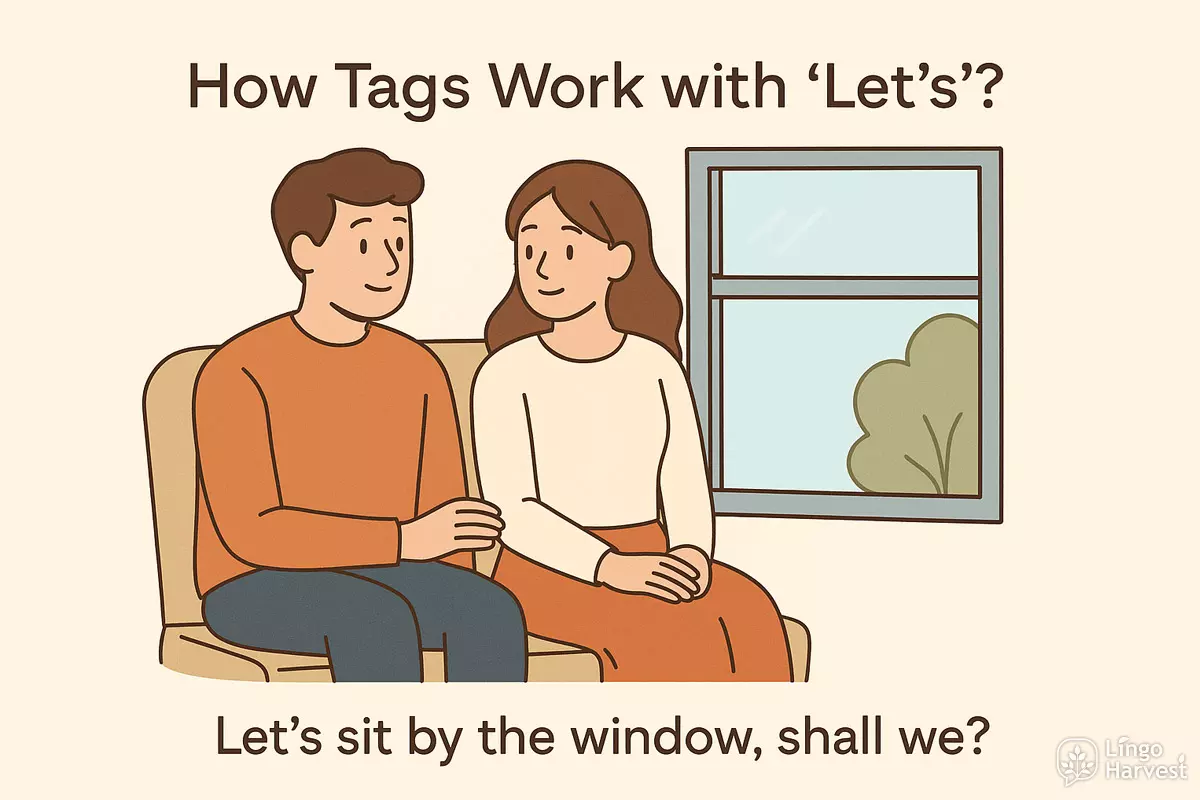
How Do Tags Work with “Let’s”?
With “Let’s” sentences, the most typical tag is “shall we?” This tag is unique because it doesn’t follow the usual pattern for question tags (which often use auxiliary verbs like “don’t,” “isn’t,” etc.). Instead, “shall we?” matches the suggestion and sounds polite and inviting.
- Let’s take a break, shall we?
- Let’s sit by the window, shall we?
- Let’s watch a movie, shall we?
It’s rare, but sometimes “let’s” sentences may use other tags, depending on the context or region. However, “shall we?” remains the standard.
Comparing Tag Endings: “Shall We?” vs. Other Question Tags
| Suggestion | Tag Ending | Example Sentence |
|---|---|---|
| Let’s + verb | shall we? | Let’s grab some lunch, shall we? |
| Let’s + verb | can we? (informal, rare) | Let’s start early, can we? |
| Let’s + verb | will you? (uncommon) | Let’s finish this quickly, will you? |
| Statement (not “let’s”) | usual auxiliary (e.g., don’t you?) | You want some coffee, don’t you? |
Other Ways to Invite Agreement
Although “shall we?” is the classic tag for “let’s” suggestions, English offers a variety of short phrases to check for agreement or encourage participation. Here are some common alternatives and related expressions:
- Okay?
- All right?
- What do you think?
- Sound good?
- Does that work?
- How about it?
- Are you in?
- Want to join?
- Up for it?
- Ready?
- Deal?
- Agreed?
- Shall we go?
- Would you like to?
- Care to join?
These alternatives can follow a “let’s” suggestion or stand alone. They’re especially useful in less formal situations or when speaking with friends and colleagues.
Quick Tips for Natural Use
- Use “shall we?” after “let’s” for a classic, friendly tag.
- Swap in other phrases for variety or informality.
- Keep the tone light and inclusive—tags are about inviting, not commanding.
Adding a tag transforms a suggestion into a shared plan, making your English sound approachable and cooperative.
Common Mistakes
When using the “Let’s + verb” structure to offer friendly suggestions, learners often run into several pitfalls. Understanding these frequent errors helps you sound more natural and polite in conversation.
Mixing Up “Let’s” and “Let Us”
One of the most frequent problems is confusing “let’s” (used for suggestions) with “let us” (more formal, often used in writing or prayers). In spoken English, “let’s” is almost always the right choice for making casual recommendations.
- Incorrect: Let us go to the park! ❌
- Correct: Let’s go to the park! ✅
Forgetting the Base Form of the Verb
Another error is using the wrong verb form after “let’s.” The verb must always be in its base form (the infinitive without “to”).
- Incorrect: Let’s to eat dinner. ❌
- Incorrect: Let’s eating dinner. ❌
- Correct: Let’s eat dinner. ✅
Negative Form Confusion
When you want to suggest not doing something, the negative form is “Let’s not + verb.” Many learners incorrectly use “don’t let’s” or “let’s don’t,” which are not standard in modern English.
- Incorrect: Don’t let’s argue. ❌
- Incorrect: Let’s don’t argue. ❌
- Correct: Let’s not argue. ✅
Misusing “Let’s” for Commands or Requests
“Let’s” is for inclusive suggestions (the speaker and listener together), not for giving orders or asking someone else to do something alone.
- Incorrect: Let’s you clean the room. ❌
- Correct: Let’s clean the room (together). ✅
Pronunciation and Spelling Mistakes
Some learners pronounce “let’s” as two separate words or miss the apostrophe when writing. This can change the meaning or make the sentence unclear.
- Incorrect spelling: Lets go! (means “permits” or “allows”) ❌
- Correct spelling: Let’s go! (suggestion) ✅
Summary Table: Correct and Incorrect Usage
| Incorrect Form | Correct Suggestion |
|---|---|
| Let us watch a movie. | Let’s watch a movie. |
| Let’s to meet at six. | Let’s meet at six. |
| Let’s eating out tonight. | Let’s eat out tonight. |
| Let’s don’t forget our keys. | Let’s not forget our keys. |
| Lets try it! (missing apostrophe) | Let’s try it! |
Other Frequent Issues
- Using “let’s” with a subject: Let’s we go ❌
- Inserting unnecessary words: Let’s to us start ❌
- Suggesting things without being inclusive: Let’s you start ❌
- Forgetting contractions: Let us instead of let’s
- Using “let’s” in formal writing where “let us” might be needed
- Adding “please” in the wrong place: Let’s please go (better: Please, let’s go)
Paying attention to these patterns will help you use “let’s + verb” naturally and accurately in your suggestions.
Practice: Make Suggestions Correctly
Making friendly suggestions with "Let’s + verb" is a simple way to invite others to join an activity or share an idea. To get comfortable using this structure, try practicing with different verbs and situations. Remember, "Let’s" is short for "let us," but is only used in suggestions, not commands or questions.
Common Situations for "Let’s" Suggestions
- Inviting friends to do something together
- Proposing ideas at work or school
- Encouraging group action in meetings or teams
- Making plans for leisure activities
Examples: "Let’s + Verb" in Action
Here are some useful suggestion patterns. Notice how the verb follows directly after "Let’s" without "to" or other changes:
- Let’s go for a walk.
- Let’s have lunch together.
- Let’s start the meeting now.
- Let’s watch a movie tonight.
- Let’s try that new restaurant.
- Let’s finish this project today.
- Let’s call her and ask.
- Let’s take a break.
- Let’s review the plan.
- Let’s clean up before we leave.
- Let’s meet at 7 PM.
- Let’s discuss this tomorrow.
- Let’s check the schedule.
- Let’s help each other.
- Let’s take turns speaking.
- Let’s order pizza.
- Let’s make a list.
- Let’s celebrate!
Practice: Choose the Correct Suggestion
Read each situation and pick the best way to suggest using "Let’s + verb".
- Your friend looks tired. What do you say?
- a) Let’s rest for a while.
- b) Rest for a while.
- c) You resting for a while.
- You want to suggest ordering food. What’s correct?
- a) Let’s order pizza.
- b) Let us to order pizza.
- c) Ordering pizza, let’s.
- The meeting is about to start. What do you say?
- a) Let’s begin.
- b) Begin let’s.
- c) Let’s to begin.
Show answers
- 1: a) Let’s rest for a while.
- 2: a) Let’s order pizza.
- 3: a) Let’s begin.
Quick Practice: Make Your Own Suggestions
Use "Let’s + verb" to make suggestions for these situations:
- You want to go outside because it’s sunny.
- The group is hungry.
- It’s getting late and you need to finish homework.
- You want to watch a movie together.
- Everyone is bored at the party.
Show answers
- Let’s go outside.
- Let’s eat something.
- Let’s finish our homework.
- Let’s watch a movie.
- Let’s play a game.
Positive and Negative Suggestions
You can also make negative suggestions to avoid something. The structure is "Let’s not + verb".
- Let’s not argue.
- Let’s not be late.
- Let’s not forget the tickets.
- Let’s not worry about it.
Comparing "Let’s" Suggestions
See how "Let’s" compares with other suggestion forms:
| Form | Example | Use |
|---|---|---|
| Let’s + verb | Let’s start. | Group suggestion (including speaker) |
| Shall we + verb? | Shall we start? | Polite question, often British English |
| Why don’t we + verb? | Why don’t we start? | Friendly, informal suggestion |
| How about + verb-ing? | How about starting? | Alternative way to suggest |