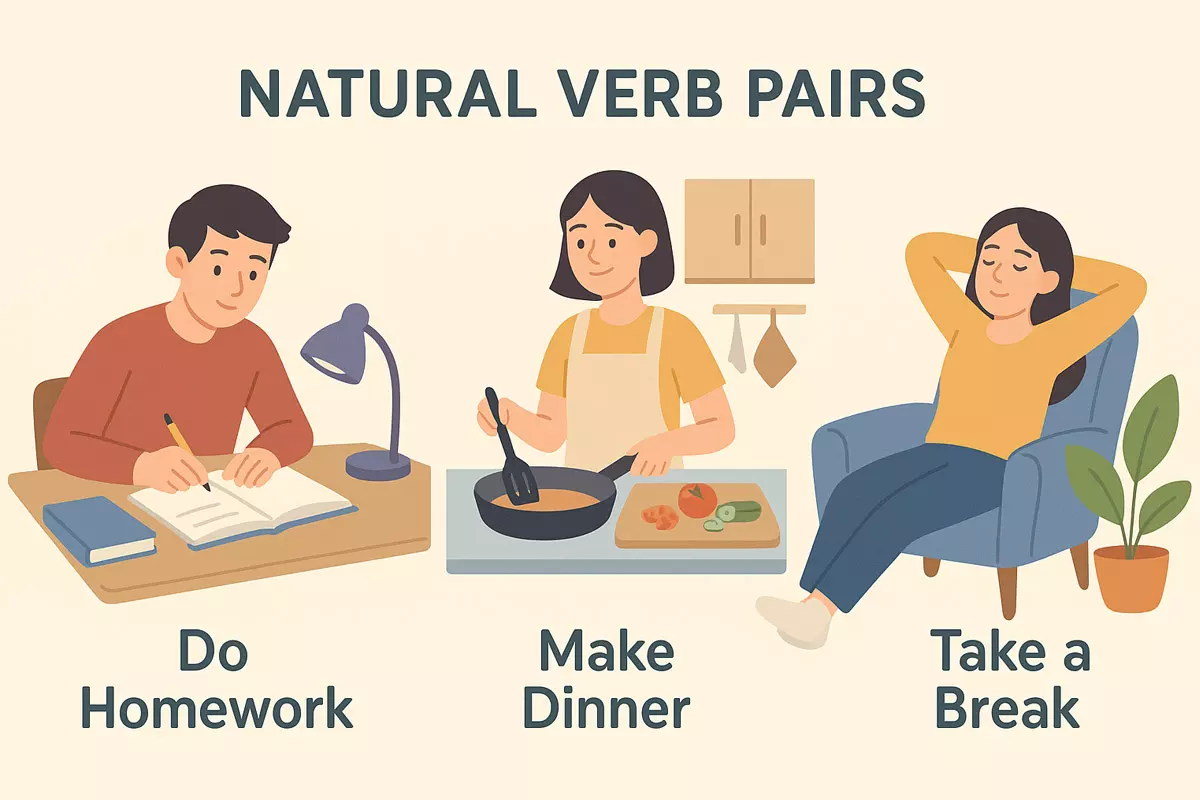
Natural Verb Pairs: Do Homework, Make Dinner, Take a Break

 The article defines collocations, highlights common verb and noun pairs like do, make, and take, gives practical examples, points out typical mistakes, and offers exercises to choose the correct verb in context.
Everyday English is filled with familiar verb and noun combinations that native speakers use naturally, such as making decisions, catching a bus, or taking notes. Mastering these common pairings not only helps your language sound more fluent and authentic but also makes communication clearer and more effective. By practicing these combinations, you can express yourself more confidently in daily conversations and better understand the way English is spoken in real-life situations.
What Are Collocations?
When learning English, you’ll quickly notice that some words naturally go together. These typical combinations, often called “collocations,” make language sound more fluent and authentic. Instead of choosing words at random, native speakers tend to use familiar pairs, especially when it comes to verbs and their objects. For example, we say “do homework” but not “make homework,” and “make dinner” rather than “do dinner.” These pairs aren’t always logical or predictable, so it helps to recognize them as set phrases.
Why Are Common Word Combinations Important?
Using standard word pairings helps your English sound more natural and clear. If you get them wrong, your meaning might still be understood, but it can sound awkward or even confusing. Mastering these combinations will improve both your writing and speaking, bringing you closer to native-like fluency.
Typical Verb + Noun Pairings
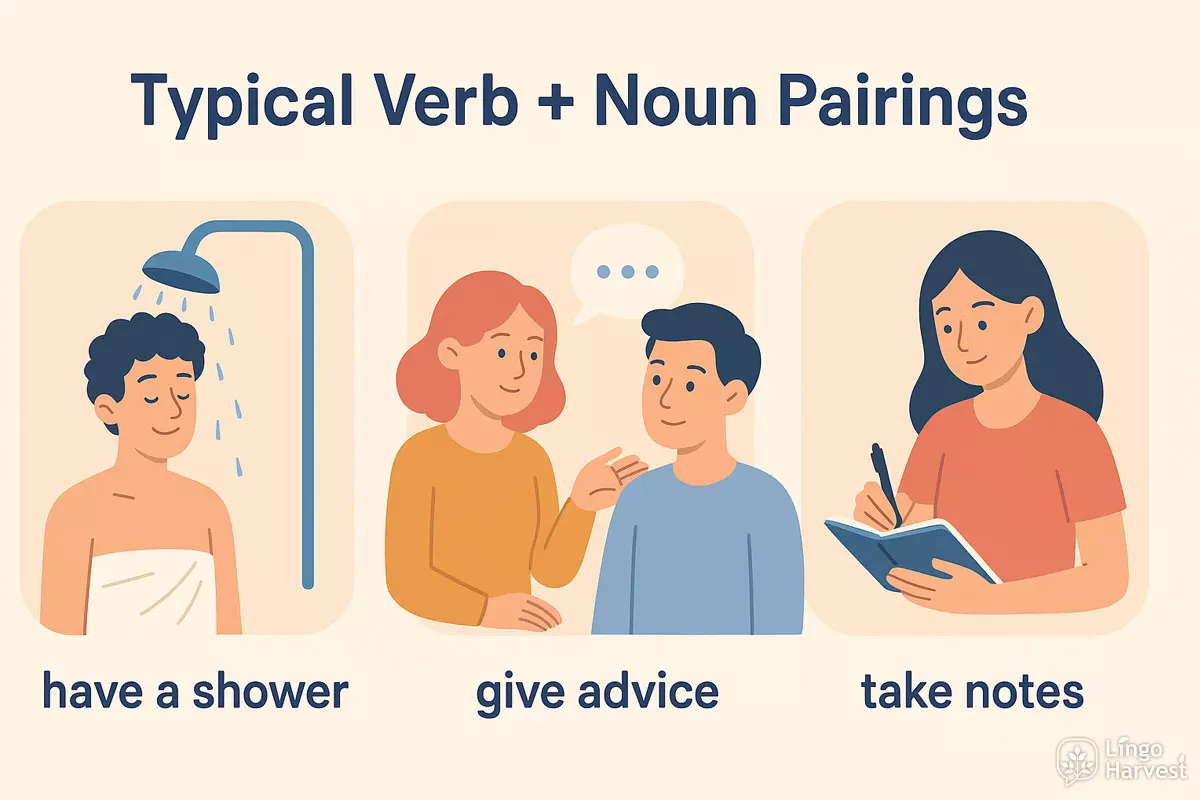
Here are some widely used combinations you’ll hear every day:
- do homework
- make dinner
- take a break
- catch a cold
- have a shower
- give advice
- take notes
- make a decision
- do business
- make a mistake
- take responsibility
- have fun
- give a presentation
- take action
- make friends
- do research
- give someone a call
- make a bed
- take a photo
- have lunch
Patterns and Features
These phrases often follow a simple verb + noun structure. The verb in each phrase isn’t always interchangeable with similar verbs, even if the literal meaning seems close. For example, you “take a photo” but don’t “make a photo” (unless you’re developing film).
| Verb | Typical Noun Partner |
|---|---|
| do | homework, business, research |
| make | dinner, a decision, a mistake |
| take | a break, responsibility, a photo |
| give | advice, a presentation, a call |
| have | fun, a shower, lunch |
How to Learn Them
The best way to become familiar with these natural pairs is by noticing them in context. Reading, listening, and practicing sentences will help these combinations stick. Over time, you’ll find that using these word pairs becomes automatic, making your English smoother and more idiomatic.
Common Verb + Noun Pairs
Understanding how certain verbs naturally combine with nouns is essential for sounding fluent in English. Native speakers tend to use specific word combinations, often without thinking, such as “do homework,” “make dinner,” or “take a break.” These pairings, sometimes called collocations, help language sound natural and clear.
Why Certain Combinations Sound Right
Some verbs just “fit” with certain nouns because of tradition and usage. For example, we say “do homework,” not “make homework.” These patterns are rarely logical, so memorizing them is useful for speaking and writing accurately.
Everyday Examples of Natural Verb + Noun Combinations
Here are some of the most frequent pairings you’ll hear in daily English conversations:
- do the dishes
- make a decision
- take a shower
- have breakfast
- give advice
- catch a cold
- set the table
- pay attention
- break a record
- lose weight
- find a solution
- save money
- draw a picture
- keep a promise
- get permission
- meet a deadline
- run a business
- hold a meeting
- miss a bus
- win a prize
Patterns and Tips for Learning
Paying attention to these natural combinations can help you avoid awkward translations from your native language. Practice using them in sentences, and listen to how native speakers use them in context. Over time, these patterns will become more familiar and automatic.
Comparing Common Verbs with Different Nouns
Some verbs combine with many nouns, but the meaning can change. Here’s a quick look at how “make,” “do,” and “take” often form natural-sounding phrases:
| Verb | Typical Nouns |
|---|---|
| do | homework, the laundry, a favor, business |
| make | dinner, a mistake, progress, a plan |
| take | a break, a photo, a seat, responsibility |
When learning English, focus on these natural pairings instead of translating word by word. This approach helps you communicate more clearly and sound more like a native speaker.
Do, Make, and Take Patterns
Understanding which verb to use with common nouns—such as "do," "make," or "take"—is an essential part of sounding natural in English. These verbs often create fixed expressions or collocations that may not translate directly from other languages. Here’s how each verb typically pairs with different types of activities or objects.
Typical Uses for Each Verb
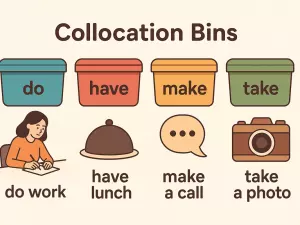
- Do is generally used for tasks, work, or activities: do homework, do the dishes, do your best.
- Make often appears with things you create or produce: make dinner, make a mistake, make a decision.
- Take is used with actions involving movement or time: take a break, take a seat, take a shower.
Common Collocations
Below are more examples showing how these verbs combine with different nouns in everyday English:
- do the laundry
- do a favor
- do business
- make friends
- make money
- make a phone call
- make progress
- take notes
- take responsibility
- take a chance
- take medicine
- take a look
- do research
- make plans
- take a trip
- do exercise
- make a list
- take action
How to Choose the Right Verb?
Choosing between these verbs can be tricky because the meaning changes with each pairing. For instance, “do a job” focuses on performing work, while “make a job” (rare) would mean creating employment. There are no strict rules, so memorizing common combinations helps.
| Verb | Typical Noun Pairings |
|---|---|
| do | homework, chores, research, work, exercises |
| make | dinner, mistakes, decisions, friends, plans |
| take | a break, notes, a shower, a photo, responsibility |
Activity-Based Examples
Understanding how to use common verb combinations in real-life situations is essential for natural English. Let’s look at how these word pairs fit into daily routines, using practical scenarios and sample sentences. These examples will help you recognize patterns and improve your fluency.
Everyday Situations with Verb Pairs
- Do homework: After dinner, I always do my homework before watching TV.
- Make dinner: She makes dinner for her family every evening at 7 o’clock.
- Take a break: Let’s take a break after this meeting.
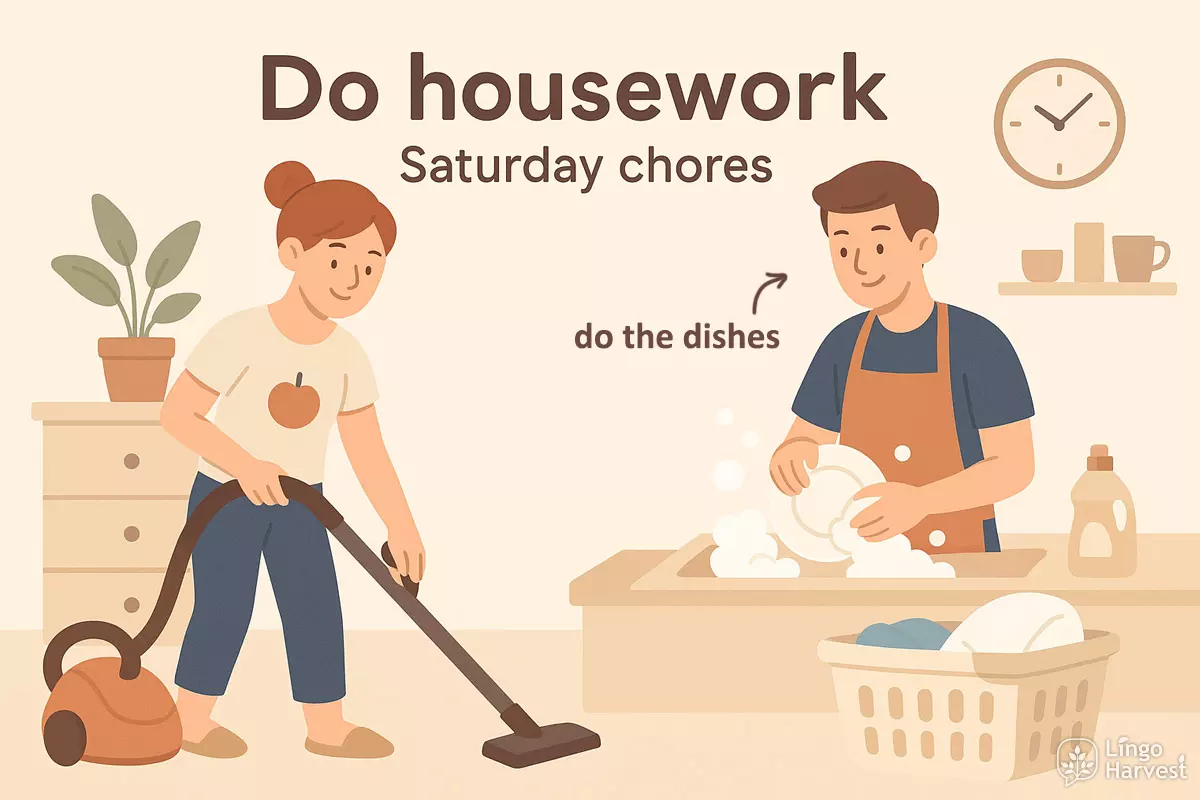
- Do the dishes: He does the dishes while listening to music.
- Make a phone call: I need to make a phone call before we leave.
- Take a shower: I take a shower every morning to wake up.
- Do your best: Always do your best, even if the task is difficult.
- Make a mistake: It’s okay to make a mistake as long as you learn from it.
- Take notes: Students should take notes during the lecture.
- Do housework: On Saturdays, we do housework together.
- Make friends: It can be hard to make friends in a new city.
- Take a nap: I like to take a nap after lunch.
- Do exercise: She does exercise every morning to stay healthy.
- Make a decision: He needs to make a decision by Friday.
- Take responsibility: We should take responsibility for our actions.
Comparing Verb Pair Usage
Some activities can use more than one verb, but the meaning or tone changes. Here’s a comparison of typical combinations and what they mean:
| Verb Pair | Example Sentence | Notes |
|---|---|---|
| do homework | You should do your homework before playing games. | Standard for school tasks; not “make homework”. |
| make dinner | Can you make dinner tonight? | Used for preparing food; not “do dinner”. |
| take a break | Let’s take a break at 3 PM. | Means to pause work or study. |
| do the dishes | I’ll do the dishes after lunch. | Means washing plates, not “make the dishes”. |
| make a decision | It’s time to make a decision. | Used for choices; not “do a decision”. |
Practice: Match the Activity to the Correct Verb Pair
- ______ a mistake
- ______ exercise
- ______ a nap
- ______ friends
- ______ the dishes
Show answers
- make a mistake
- do exercise
- take a nap
- make friends
- do the dishes
Try using these combinations in your own sentences to make your English sound more natural and accurate. Notice how “do,” “make,” and “take” each have their own typical patterns.
Mistakes with Collocations
Learners often struggle with natural-sounding verb-noun combinations. Using the wrong verb can make speech or writing sound awkward, even if the grammar is otherwise correct. For example, people sometimes say “make homework” or “do dinner,” which are not used by native speakers. These small errors can lead to misunderstandings or mark someone as a non-native speaker.
Common Errors with Verb Pairs
Mistakes usually happen because verbs like “make,” “do,” and “take” have meanings that overlap in some languages but not in English. It’s helpful to memorize typical combinations to avoid confusion. Here are some frequent missteps:
- Make homework ❌ instead of do homework ✅
- Do dinner ❌ instead of make dinner ✅
- Take dinner ❌ instead of have dinner ✅
- Make a break ❌ instead of take a break ✅
- Do a photo ❌ instead of take a photo ✅
- Make an exam ❌ instead of take an exam ✅
- Do a decision ❌ instead of make a decision ✅
- Make a shower ❌ instead of take a shower ✅
- Do a mistake ❌ instead of make a mistake ✅
- Take exercise ❌ instead of do exercise ✅
- Do a party ❌ instead of have a party ✅
- Make a nap ❌ instead of take a nap ✅
- Do a call ❌ instead of make a call ✅
- Make sports ❌ instead of do sports ✅
- Take a decision ❌ (British English allows this, but “make a decision” is standard in American English) ✅
Why These Errors Happen
Often, learners translate directly from their native language without realizing that English has fixed verb-noun combinations, known as collocations. These patterns are not always logical or predictable. Native speakers remember them through exposure, not rules.
Correcting Collocation Usage
To sound more natural, focus on learning whole phrases and practicing them in context. Flashcards or phrase lists can help. Whenever you learn a new noun, pay attention to the verbs that commonly go with it. Some learners find it helpful to create their own lists of correct and incorrect combinations for quick review.
| Incorrect Combination | Natural Usage |
|---|---|
| make homework | do homework |
| do dinner | make dinner |
| make a break | take a break |
| do a mistake | make a mistake |
| do a photo | take a photo |
| make a shower | take a shower |
| do exercise | take exercise / do exercise |
| make an exam | take an exam |
Learning the typical verb pairings will help you avoid these common pitfalls and communicate more naturally. Practice, exposure, and review are the best ways to master these patterns.
Practice: Choose the Right Pair
Understanding which verb naturally fits with a noun is a key skill for sounding fluent. Some combinations feel automatic to native speakers—these are called "natural collocations" or "verb-noun pairs." Practicing these helps avoid awkward phrasing and builds confidence in everyday situations.
Match the Verb to the Noun
Below are several everyday actions. Select the verb that best fits each noun. Try covering the answer block first!
- _____ homework
- _____ dinner
- _____ a break
- _____ a mistake
- _____ a phone call
- _____ notes
- _____ a shower
- _____ the bed
- _____ a decision
- _____ a photo
- _____ friends
- _____ a promise
- _____ an effort
- _____ your time
- _____ a question
- _____ money
- _____ a noise
- _____ a journey
- _____ a list
- _____ the dishes
Show answers
- do homework
- make dinner
- take a break
- make a mistake
- make a phone call
- take notes
- take a shower
- make the bed
- make a decision
- take a photo
- make friends
- make a promise
- make an effort
- take your time
- ask a question
- make money
- make a noise
- take a journey
- make a list
- do the dishes
Common Mistakes: Similar Nouns, Different Verbs
Some nouns seem similar, but only one verb sounds right with each. Review these pairs and notice the pattern:
- do homework → not make homework
- make dinner → not do dinner
- take a break → not make a break
- take a photo → not do a photo
Quick Check: Which Verb?
Choose the correct verb for each noun below:
- _____ a nap
- _____ a suggestion
- _____ a plan
- _____ your homework
Show answers
- take a nap
- make a suggestion
- make a plan
- do your homework
Summary Table: Typical Verb-Noun Pairs
Below is a quick reference for some of the most frequent combinations.
| Verb | Common Nouns |
|---|---|
| do | homework, the dishes, a job, work, exercise |
| make | dinner, a mistake, a decision, a list, a promise |
| take | a break, a shower, a photo, a nap, notes |
| ask | a question, for help, permission |
Practice these combinations regularly to internalize them. Over time, using the right verb with each noun will become second nature.