Do vs Make: Easy Grammar Guide for Beginners

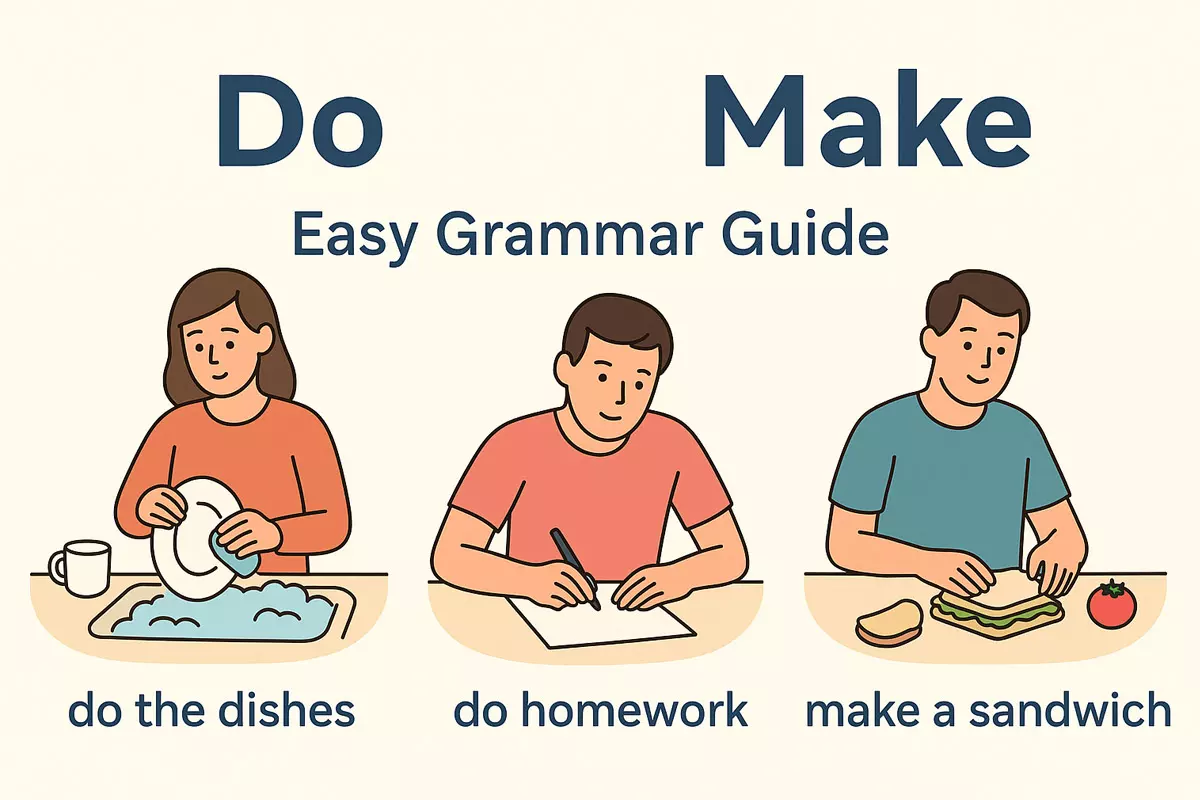 This article explains when to use do or make, highlights common fixed phrases, points out typical mistakes to avoid, and offers quick tips. It ends with practice exercises to help you choose do or make correctly in different situations.
Understanding when to use “do” and when to use “make” can be challenging for English learners, but knowing the difference will help you communicate more clearly. Generally, “do” is used for actions, tasks, or general activities, such as “do homework” or “do the dishes,” while “make” is used when creating or producing something, like “make a cake” or “make a decision.” By practicing these distinctions, you will improve your fluency and feel more confident using these common verbs in everyday conversations.
When to Use Do
"Do" is commonly used for general actions, tasks, or activities where the action itself is more important than the result. It often appears with work, jobs, chores, or non-specific activities. If you are talking about duties, routines, or things that don’t produce something physical, "do" is usually the right choice.
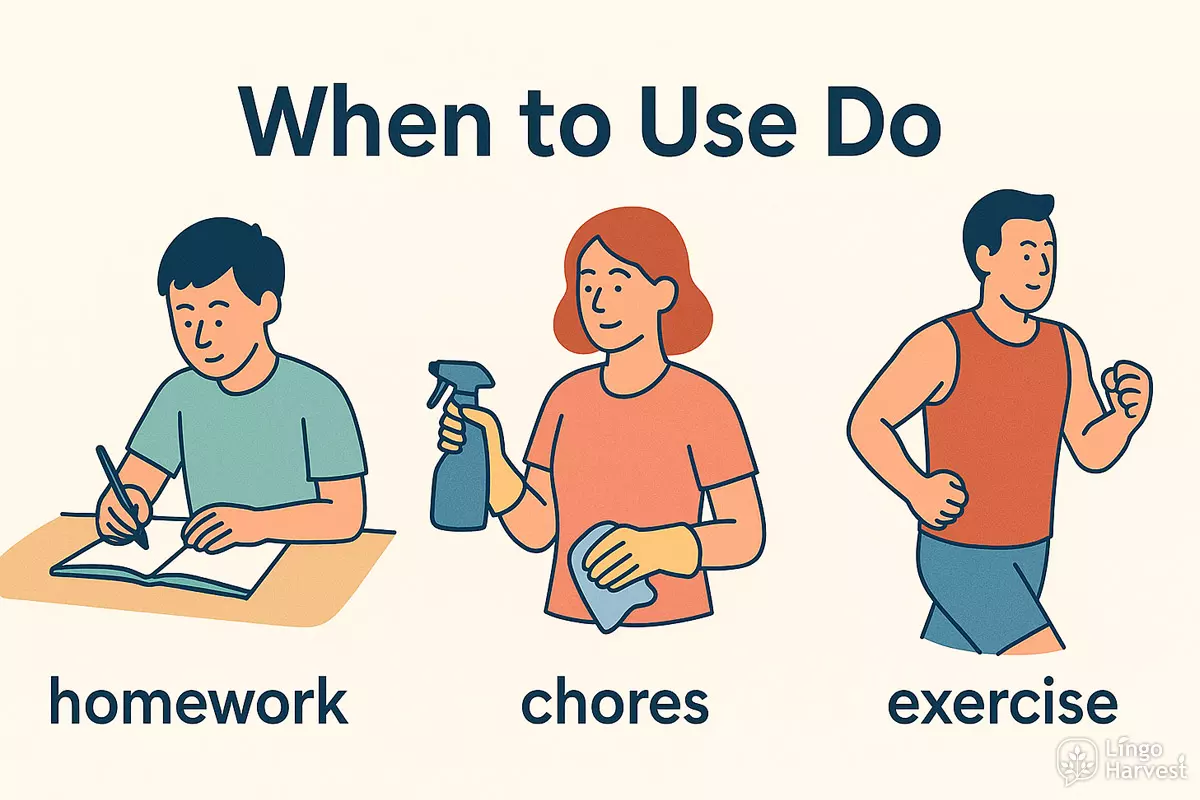
Common Situations for "Do"
- Describing work or study: do homework, do research, do a job, do business
- Talking about housework or repetitive tasks: do the dishes, do the laundry, do the cleaning, do chores
- General, unspecified actions: do something, do anything, do nothing, do everything
- Discussing personal care: do your hair, do your nails, do makeup
- Expressing favors or help: do someone a favor
- Referring to well or badly performed actions: do well, do badly, do your best
- Talking about sports or exercise (sometimes): do yoga, do aerobics, do exercises
- Describing experiments or tests: do an experiment, do a test
- In questions about actions: What do you do? (for a job) / What are you doing?
Examples in Context
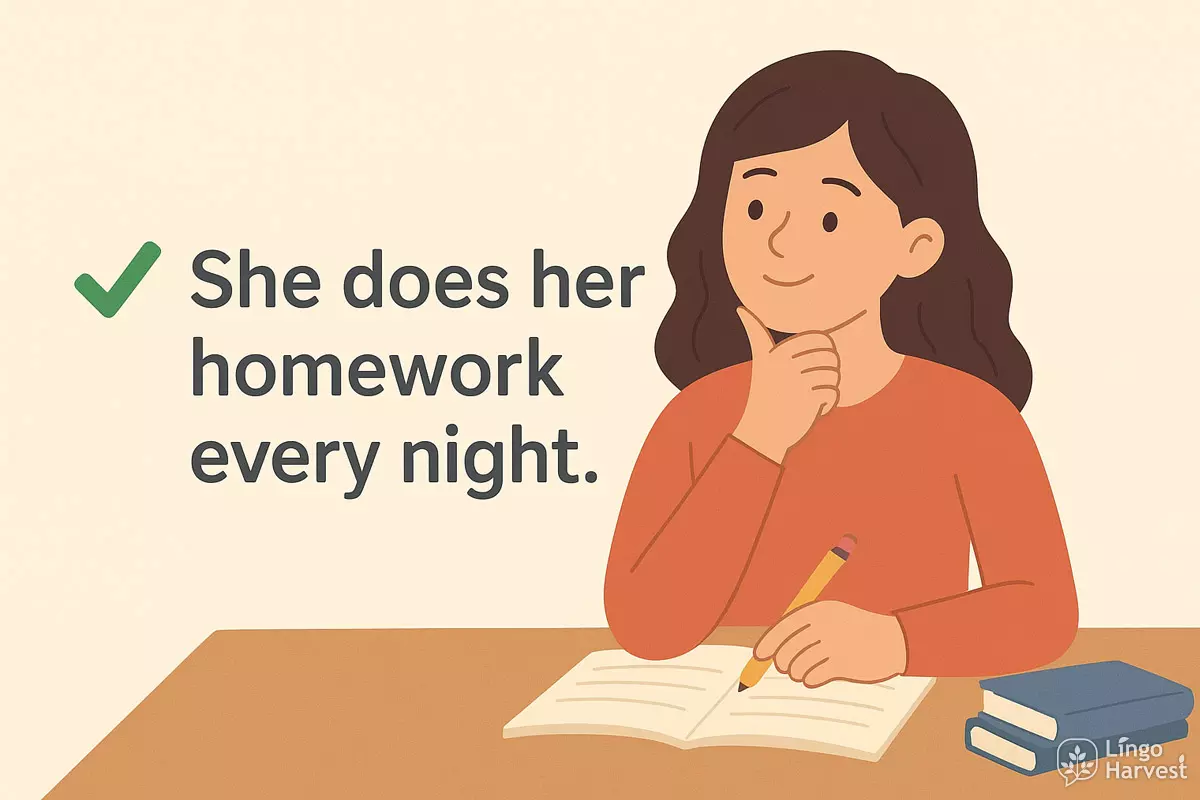
- She does her homework every night.
- Could you do the dishes after dinner?
- He did well on the exam.
- They do yoga in the mornings.
- I need to do some research before the meeting.
Quick Reference: "Do" vs "Make" for Activities
| Action | Correct Verb |
|---|---|
| homework | do homework ✅ |
| the bed | make the bed ✅ |
| the dishes | do the dishes ✅ |
| a cake | make a cake ✅ |
| an effort | make an effort ✅ |
| an experiment | do an experiment ✅ |
| business | do business ✅ |
| noise | make noise ✅ |
Remember, "do" is your go-to verb for routine tasks and activities that don’t create something new. If you’re ever unsure, think about whether the focus is on the action itself rather than the result—if so, "do" is likely correct.
When to Use Make
Understanding how to use "make" correctly helps you sound more natural in English. "Make" usually refers to creating, producing, or causing something. It can also be used for actions that result in something new or a change in state. Unlike "do," which often covers general activities or tasks, "make" focuses on the result or product of the action.
Common Situations for "Make"
You typically use "make" in these contexts:
- When producing something physical or abstract (e.g., make a cake, make a decision)
- For plans and arrangements (e.g., make plans, make an appointment)
- With sounds and speech (e.g., make a noise, make a suggestion)
- To describe causing a feeling or reaction (e.g., make someone happy, make you laugh)
- In expressions about success or progress (e.g., make money, make progress)
- For meals and food (e.g., make breakfast, make dinner)
- With mistakes and changes (e.g., make a mistake, make a change)
- To form relationships or agreements (e.g., make friends, make a deal)
- When referring to building or constructing (e.g., make a model, make a house)
- For rules and laws (e.g., make a rule, make a law)
Useful Examples with "Make"
Here are some commonly used phrases and collocations:
- make a promise
- make an effort
- make a choice
- make a phone call
- make a list
- make a reservation
- make a point
- make a wish
- make a complaint
- make an excuse
- make a mess
- make a difference
- make up your mind
- make a journey
- make a fortune
- make time
- make arrangements
- make an impression
Comparing "Make" and "Do"
To clarify how "make" differs from "do," see the examples below:
| Expression with "Make" | Expression with "Do" |
|---|---|
| make a cake | do homework |
| make a decision | do the dishes |
| make a mistake | do a job |
| make friends | do exercise |
| make a promise | do business |
Pay attention to these set phrases, as using the wrong verb may sound unnatural to native speakers. If you are unsure, check common collocations or examples to guide your choice. Practice these expressions in context to build confidence and fluency.
Common Fixed Phrases
When learning how to use "do" and "make," it's useful to remember that some expressions are fixed and don't follow the general rules. These set phrases are often used by native speakers, so memorizing them can help you sound more natural and avoid mistakes.
Typical Expressions with "Do"
- do homework
- do the dishes
- do business
- do your best
- do someone a favor
- do the shopping
- do exercise
- do your hair
- do the laundry
- do research
Common Expressions with "Make"
- make a decision
- make a mistake
- make money
- make a phone call
- make an effort
- make friends
- make a promise
- make a plan
- make noise
- make progress
Some of these combinations might seem illogical at first, but they are standard in English. For example, we say "do homework" (not "make homework") and "make a decision" (not "do a decision"). Learning these expressions as phrases, rather than translating word-for-word, will help you communicate more accurately.
| Use "Do" with | Use "Make" with |
|---|---|
| Tasks, work, or chores (e.g., do the cleaning, do the ironing) |
Creation, results, or producing something (e.g., make a cake, make a list) |
| General activities (e.g., do nothing, do something) |
Decisions and plans (e.g., make a choice, make arrangements) |
| Non-specific actions (e.g., do well, do badly) |
Communication and sound (e.g., make a speech, make a suggestion) |
| Work with people (e.g., do business, do someone a favor) |
Emotions or reactions (e.g., make someone happy, make an impression) |
Paying attention to these frequent combinations will help you avoid common mistakes. If you’re unsure, try to remember these patterns or look up the phrase in a dictionary. With practice, using the right verb will become automatic.
Typical Mistakes to Avoid
Understanding when to use “do” and “make” can be tricky for English learners. Many mix these verbs up because similar words in other languages don’t have this distinction. Here are the most common errors and confusion points, with tips to help you steer clear of them.
Confusing Tasks and Results
Learners often use “make” for activities and “do” for creating things, but the rule is actually the opposite. If you talk about work, jobs, or general activities, “do” is usually correct. Use “make” when you talk about producing, creating, or constructing something.
- ❌ She makes her homework every night. → ✅ She does her homework every night.
- ❌ I want to do a cake for the party. → ✅ I want to make a cake for the party.
Direct Translations from Native Language
Some languages use only one verb for both actions and creations, so it’s easy to transfer that habit into English. Be mindful that “do” and “make” are not interchangeable.
Set Expressions and Idioms
A lot of confusion comes from fixed phrases you just need to memorize. These don’t always follow the general rules.
| Expression | Correct Verb | Example |
|---|---|---|
| the dishes | do | Can you do the dishes? |
| a mistake | make | He made a mistake. |
| your bed | make | I made my bed. |
| your best | do | Try to do your best. |
| a decision | make | She made a decision. |
| homework | do | He does his homework. |
| a promise | make | I made a promise. |
| an effort | make | They made an effort. |
| an appointment | make | She made an appointment. |
| a favor | do | Can you do me a favor? |
Forgetting about Collocations
Some combinations just “sound right” to native speakers. If you use “make” where “do” is expected (or vice versa), it can sound odd even if the meaning is clear. Practice common collocations to build your confidence.
Overusing One Verb
Beginners sometimes use “do” for everything, because it feels safer. This habit can make your English sound unnatural. Try to notice which verb native speakers use in different situations, and follow their example.
Tips to Help You Get It Right
- Learn and practice common phrases in context, not just rules.
- Pay attention to new collocations when you read or listen.
- Review lists of common “do” and “make” expressions regularly.
- Don’t worry about mistakes—correction and repetition help you improve.
By watching out for these common mix-ups and memorizing typical expressions, you’ll quickly become more confident in choosing between “do” and “make.”
Quick Tips to Remember
Understanding when to use "do" and when to use "make" can feel tricky at first, but remembering a few basic ideas will help you choose the right verb. Both are used for actions, but they often appear in different types of situations. Here are some guidelines and examples to help you build confidence.
How to Decide: General Rules
- Use "do" for general activities, tasks, jobs, or when the action is indefinite or routine.
- Use "make" when talking about creating, producing, or constructing something new or specific.
Common Expressions with Each Verb
Some phrases are fixed in English; they simply use "do" or "make." Here’s a list of frequent collocations to help you remember:
- do homework
- do the dishes
- do business
- do your best
- do a favor
- do research
- make a mistake
- make a decision
- make money
- make an effort
- make a phone call
- make a promise
- make lunch/dinner
- make friends
- make noise
- make a plan
- make progress
- make an appointment
Quick Comparison Table
| "Do" — Typical Uses | "Make" — Typical Uses |
|---|---|
| ✅ Activities & chores e.g. do the laundry, do the cleaning |
✅ Creating or producing e.g. make a cake, make a drawing |
| ✅ Work, jobs, studies e.g. do your homework, do a job |
✅ Plans, decisions, promises e.g. make a plan, make a promise |
| ✅ Nonspecific actions e.g. do something, do nothing |
✅ Results & changes e.g. make a difference, make progress |
| ✅ Good/bad, best/worst e.g. do good, do your best |
✅ Social situations e.g. make friends, make a phone call |
Extra Advice
- If you’re not sure, think: Are you creating something (use "make") or just performing an action (use "do")?
- Some expressions are exceptions. Over time, you’ll remember set phrases by practice.
Practice these patterns regularly, and soon choosing the right verb will become automatic.
Practice: Choose Do or Make
Mastering the correct use of do and make can be tricky for beginners. Both verbs often translate to similar words in other languages, but English uses them in different contexts. Below, you'll find practical exercises and examples to help you understand when to use each verb.
Quick Guide: Typical Uses
- Do: Use for jobs, tasks, work, and general activities (often when you do not specify exactly what the action is).
- Make: Use for creating or producing something, or for actions that result in a change or a product.
Common Expressions with "Do" and "Make"
| Typical with "Do" | Typical with "Make" |
|---|---|
| do homework | make a mistake |
| do the dishes | make a decision |
| do your best | make a cake |
| do business | make friends |
| do an exercise | make a noise |
| do the shopping | make a plan |
| do housework | make a phone call |
| do a favor | make money |
| do research | make an effort |
| do your hair | make a promise |
Exercise: Fill in the Blank
Choose the correct verb (do or make) for each sentence. Write the correct form.
- Can you _____ me a favor and help with the bags?
- I always _____ my homework after dinner.
- He _____ a lot of mistakes in his essay.
- She needs to _____ a phone call before we leave.
- They _____ the shopping every Saturday morning.
- Did you _____ any progress on your project?
- We _____ plans to visit our grandparents.
- Please _____ your bed before going out.
- My friend _____ an effort to arrive on time.
- Who will _____ the dishes tonight?
Show answers
- make
- do
- make
- make
- do
- make
- make
- make
- make
- do
Challenge: Spot the Mistake
Some sentences below use the wrong verb. Identify and correct them.
- I did a cake for my sister’s birthday.
- She made the laundry yesterday.
- Let’s do a decision about dinner.
- He made his homework before school.
Show answers
- I made a cake for my sister’s birthday.
- She did the laundry yesterday.
- Let’s make a decision about dinner.
- He did his homework before school.
Review these patterns regularly to build confidence in choosing between do and make. With practice, these expressions will become second nature.