Making Negative Adjectives with un-, dis-, and im-

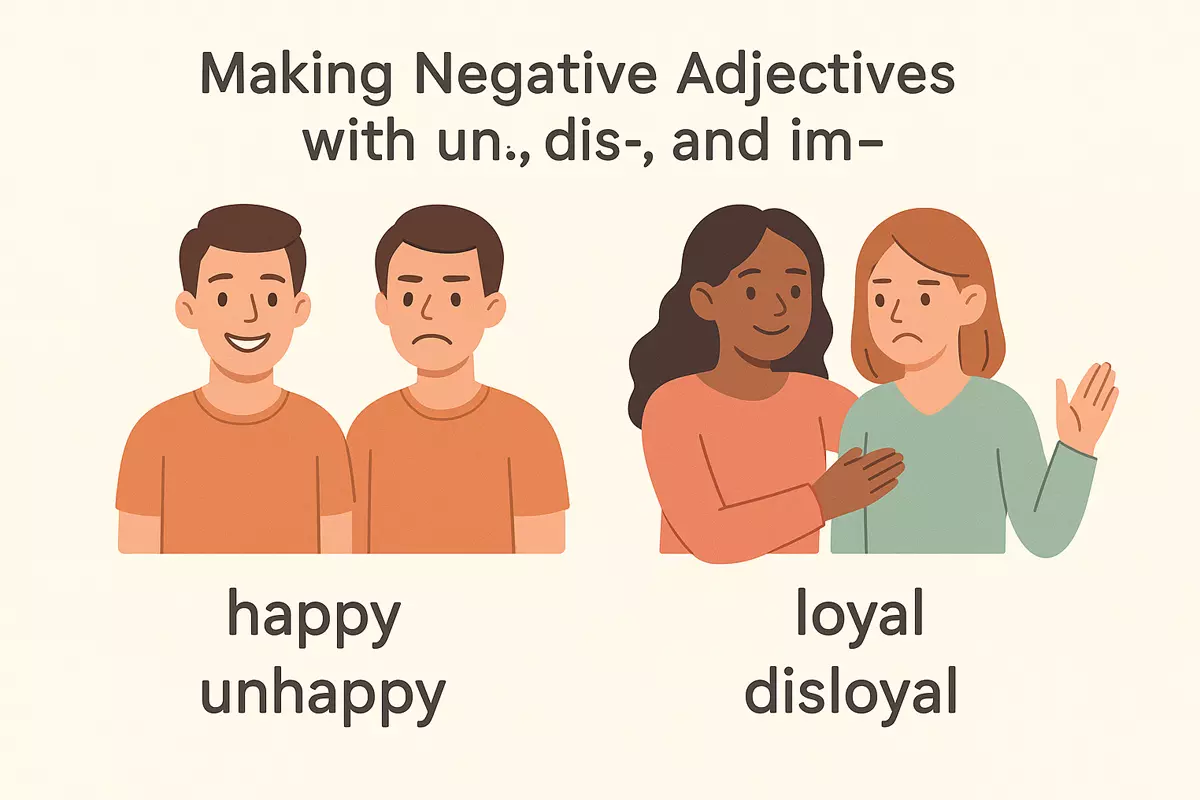 This article explains how prefixes such as un-, dis-, and im- turn adjectives into their opposites. It covers correct usage, provides common examples, notes on spelling and pronunciation, and includes a practice section for prefix selection.
Have you ever wondered how we form the opposites of positive adjectives in English? By adding prefixes such as un-, dis-, or im-, we can easily change the meaning of a word and communicate the exact nuance we intend. For example, turning "happy" into "unhappy" or "possible" into "impossible" gives us a simple way to express the opposite quality. This process allows us to expand our vocabulary and describe a wide range of situations with greater precision and clarity.
What Are Prefixes?
Prefixes are small groups of letters added to the beginning of words to alter their meaning. By attaching a prefix, you can transform the sense of a base word—often making it negative, showing the opposite, or expressing a different nuance. For example, adding un- to "happy" creates "unhappy," which means not happy.
How Prefixes Work in English
In English, prefixes don’t stand alone; they always appear as part of another word. They can change adjectives, verbs, and nouns, but in this context, they are especially useful for forming negative adjectives. The base word keeps its original spelling, while the prefix gives it a new meaning.
Common Negative Prefixes
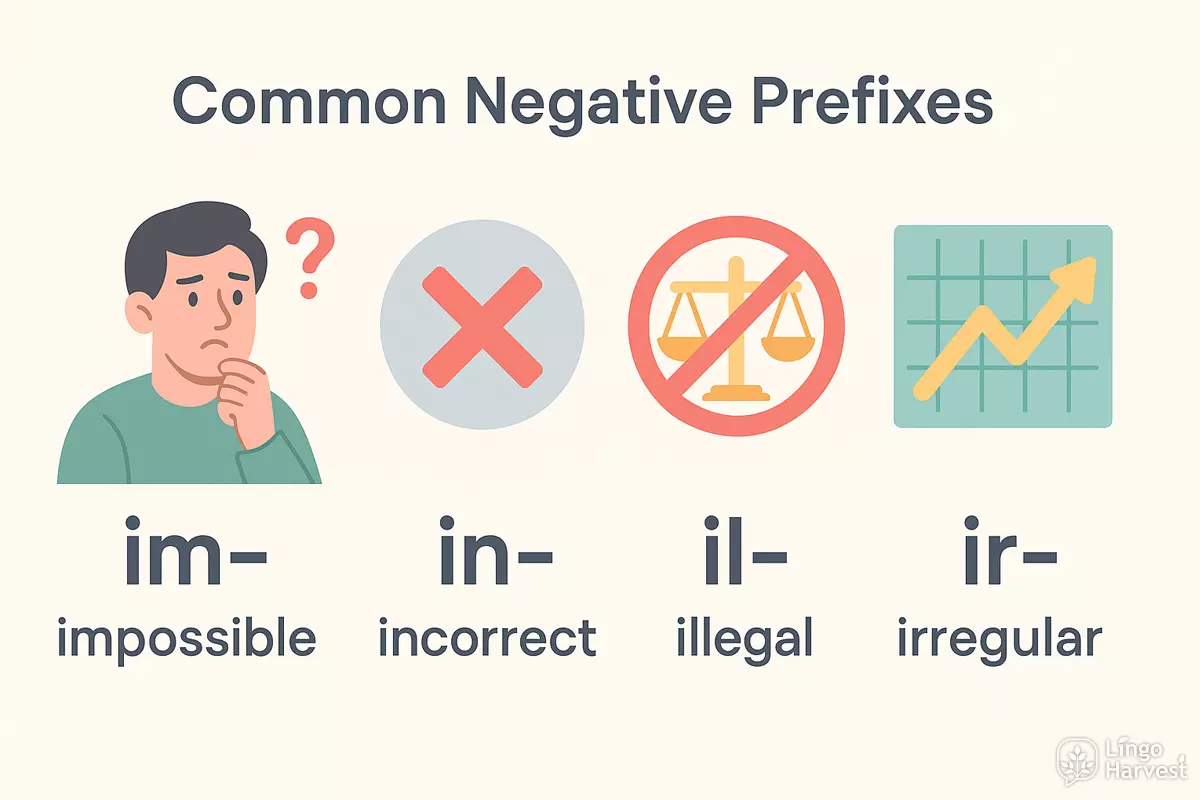
Some of the most frequently used negative prefixes include:
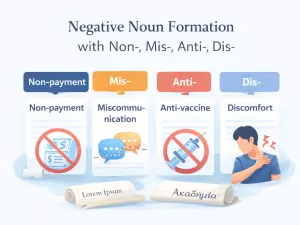
- un- (as in "unfair")
- dis- (as in "disloyal")
- im- (as in "impossible")
- in- (as in "incorrect")
- il- (as in "illegal")
- ir- (as in "irregular")
Each of these can be used to create words with an opposite or negative meaning.
Examples of Prefix Use
Here are some adjectives formed with different prefixes to show how their meanings change:
- unhappy → not happy
- disagreeable → not agreeable
- impolite → not polite
- incomplete → not complete
- illegal → not legal
- irresponsible → not responsible
- unfriendly → not friendly
- dishonest → not honest
- impatient → not patient
- invisible → not visible
- immature → not mature
- unusual → not usual
- disorganized → not organized
- imperfect → not perfect
- inaccurate → not accurate
Why Prefixes Matter
Understanding how these word beginnings work helps expand your vocabulary and improves comprehension. When you come across an unfamiliar adjective with a prefix, you can often guess its meaning by recognizing the prefix and the root word. This skill is especially valuable in reading and listening, where context clues are limited. Prefixes are a fundamental part of English word formation, especially when it comes to creating opposites or expressing negativity. By learning common patterns, you’ll find it easier to recognize and use a wide range of adjectives in everyday language.
Using un-, dis-, im- Correctly
Prefixes like un-, dis-, and im- are commonly used in English to create negative adjectives, but choosing the right one can be tricky. Often, the correct form depends on convention rather than a strict rule. However, there are some useful guidelines and patterns that can help you decide which prefix to use.
General Patterns for Each Prefix
- un-: This is the most widely used prefix for forming negatives, especially with adjectives that describe states or qualities (e.g., unhappy, unfair).
- dis-: Typically appears with adjectives that are derived from verbs, particularly when indicating a reversal or opposite action (e.g., disloyal, disorganized).
- im-: Used before adjectives starting with m or p (e.g., impossible, impolite). For other letters, in- or il-/ir- are used, but those are outside this article's scope.
Examples: Negative Adjectives with un-, dis-, and im-
- unusual → not usual
- unfair → not fair
- uncertain → not certain
- uncomfortable → not comfortable
- disloyal → not loyal
- disorganized → not organized
- dishonest → not honest
- disrespectful → not respectful
- disobedient → not obedient
- impossible → not possible
- impolite → not polite
- immature → not mature
- impatient → not patient
- immobile → not mobile
Choosing the Right Prefix: Quick Comparison
| Adjective | Negative Form | Prefix Used |
|---|---|---|
| fair | unfair | un- |
| loyal | disloyal | dis- |
| patient | impatient | im- |
| honest | dishonest | dis- |
| comfortable | uncomfortable | un- |
| possible | impossible | im- |
| organized | disorganized | dis- |
| mature | immature | im- |
Tips for Avoiding Common Errors
- When in doubt, un- is often a safe choice, but not always correct. Some adjectives only work with dis- or im-.
- Some negative forms are fixed expressions: for example, dishonest (not unhonest), impossible (not unpossible).
- Practice and exposure to common usage will help you develop an instinct for which prefix to use.
Understanding these patterns will make it easier to form negative adjectives naturally. Remember, exceptions exist, so it’s helpful to read and listen to authentic English for more exposure.
Examples with Common Words
Learning to form negatives with prefixes like un-, dis-, and im- helps you quickly expand your vocabulary. These prefixes are attached to the beginning of an adjective to give it the opposite meaning. Not every word can use every prefix, so it’s important to see common patterns and notice which adjectives use which form.
Negative Adjectives with un-
- uncertain (not certain)
- unfair (not fair)
- unusual (not usual)
- unfriendly (not friendly)
- uncomfortable (not comfortable)
- unlucky (not lucky)
- unimportant (not important)
- unnecessary (not necessary)
- unpleasant (not pleasant)
Negative Adjectives with dis-
- dishonest (not honest)
- disloyal (not loyal)
- disorganized (not organized)
- disrespectful (not respectful)
- disagreeable (not agreeable)
- disobedient (not obedient)
- disconnected (not connected)
- discontent (not content)
Negative Adjectives with im-
- impossible (not possible)
- impolite (not polite)
- impatient (not patient)
- imperfect (not perfect)
- impersonal (not personal)
- immature (not mature)
- immobile (not mobile)
- impure (not pure)
When to Use Each Prefix
Choosing the correct negative prefix depends on the root word. For example, un- is most common with adjectives starting with consonants, im- is typically used before words that begin with m or p, and dis- often appears with adjectives related to behavior or attitude.
| Positive | Negative with Prefix | Prefix Used |
|---|---|---|
| polite | impolite | im- |
| honest | dishonest | dis- |
| comfortable | uncomfortable | un- |
| possible | impossible | im- |
| loyal | disloyal | dis- |
| happy | unhappy | un- |
Practice using these forms in sentences to get comfortable with their meaning and usage. Not every adjective will take a negative prefix, so consult a dictionary or reliable source if you are unsure.
Spelling and Pronunciation Notes
When working with negative adjectives formed by adding un-, dis-, or im-, it’s important to pay attention to how these prefixes affect both spelling and pronunciation. Each prefix has its own rules and patterns, which can help you choose the right form and say it correctly.
Spelling Patterns
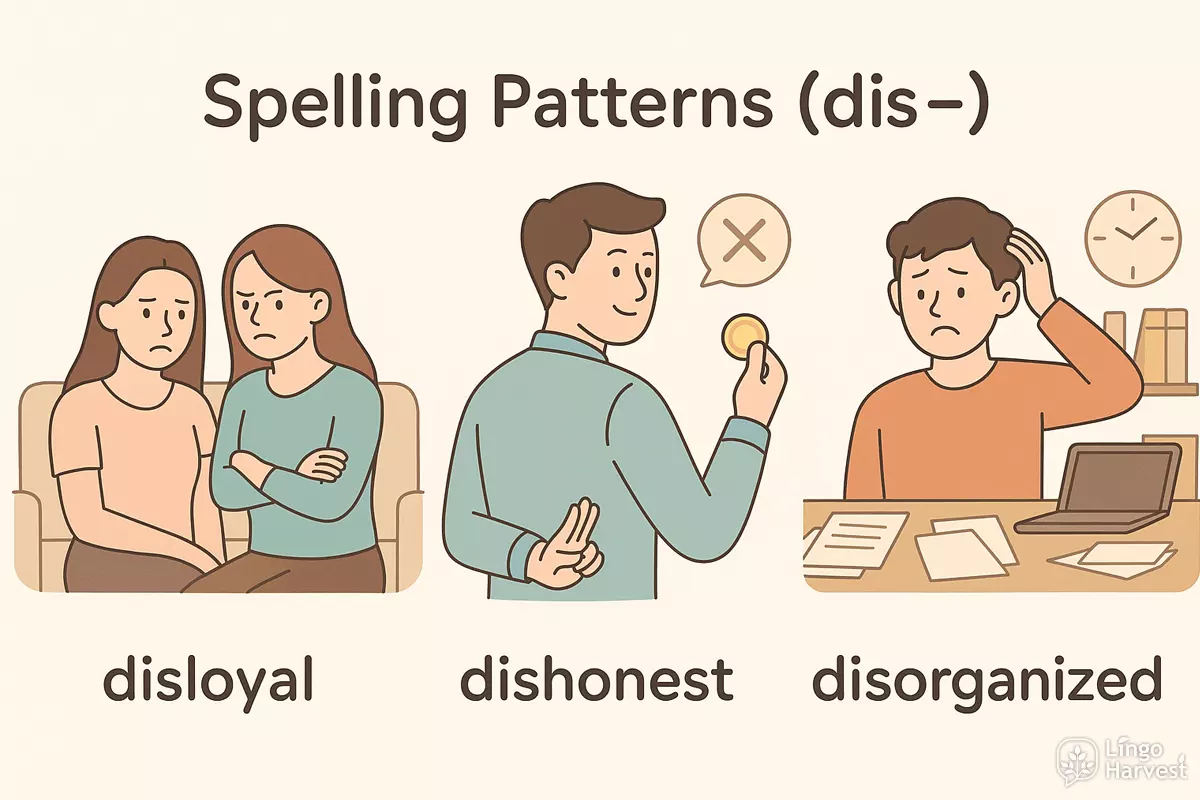
- un- is the most flexible prefix and can be attached to many adjectives: unhappy, uncertain, unfair.
- dis- often goes with adjectives starting with vowels or soft consonants: disloyal, dishonest, disorganized.
- im- is used before words beginning with m or p: impossible, impolite, impatient. This helps with ease of pronunciation.
- Other prefixes like in-, ir-, il- also exist, but are not the main focus here.
- Some adjectives only accept one prefix: unhappy ✅ but dis-happy ❌ is incorrect.
Pronunciation Tips
- The prefix un- is pronounced /ʌn/ as in uncertain (/ʌnˈsɜː.tən/).
- dis- is pronounced /dɪs/ as in dishonest (/dɪsˈɒn.ɪst/).
- im- is pronounced /ɪm/ as in impossible (/ɪmˈpɒs.ə.bəl/).
- Stress usually remains on the original adjective: happy → unHAPPY.
- Be careful not to add an extra syllable; the prefix blends smoothly with the base word.
Common Examples and Their Forms
| Base Adjective | Negative Form | Pronunciation |
|---|---|---|
| happy | unhappy | /ʌnˈhæp.i/ |
| honest | dishonest | /dɪsˈɒn.ɪst/ |
| patient | impatient | /ɪmˈpeɪ.ʃənt/ |
| polite | impolite | /ˌɪmpəˈlaɪt/ |
| certain | uncertain | /ʌnˈsɜː.tən/ |
| organized | disorganized | /dɪsˈɔː.ɡə.naɪzd/ |
| possible | impossible | /ɪmˈpɒs.ə.bəl/ |
| fair | unfair | /ʌnˈfeə(r)/ |
| loyal | disloyal | /dɪsˈlɔɪ.əl/ |
| mature | immature | /ˌɪməˈtjʊə(r)/ |
Quick Reminders
- Not all adjectives can use these prefixes—always check a dictionary if unsure.
- Some negative adjectives have unique forms, so memorization helps.
- Listening to native speakers is useful for mastering how these prefixes sound in real speech.
Opposites in Meaning
Creating words that express the reverse of an adjective’s original sense is a common feature in English. This is often achieved by adding prefixes like un-, dis-, or im- to the beginning of adjectives. These prefixes signal that the quality described by the adjective is not present or is contradicted in some way. For example, adding un- to “happy” forms “unhappy,” which means “not happy.” The choice of prefix depends on the word’s origin, pronunciation, and established usage.
Prefixes and Their Patterns
Each prefix has its own tendencies. Un- is the most widely used and can be attached to many native English adjectives (unfair, unkind). Dis- is often used where a stronger or more formal negation is needed (dishonest, disloyal). Im- is used mainly before adjectives beginning with “m” or “p” (impossible, impolite), following patterns of pronunciation for easier speech.
Examples of Negative Adjectives Formed with Prefixes
Below is a list of common adjective pairs. The first word is the base adjective, and the second is its negative form created with one of the prefixes discussed:
- happy → unhappy
- fair → unfair
- friendly → unfriendly
- honest → dishonest
- loyal → disloyal
- patient → impatient
- polite → impolite
- possible → impossible
- comfortable → uncomfortable
- clear → unclear
- mature → immature
- perfect → imperfect
- legal → illegal
- logical → illogical
- responsible → irresponsible
- regular → irregular
- respectful → disrespectful
- trustworthy → untrustworthy
- known → unknown
- organized → disorganized
Comparing Prefix Usage
| Base Adjective | Negative Form | Prefix Used |
|---|---|---|
| possible | impossible | im- |
| honest | dishonest | dis- |
| happy | unhappy | un- |
| legal | illegal | il- |
| logical | illogical | il- |
| regular | irregular | ir- |
Understanding which prefix to use requires practice, as not all adjectives follow the same rule. Some adjectives, especially those borrowed from Latin or French, take dis-, im-, il-, or ir- instead of un-. Checking a dictionary is helpful when in doubt. Mastering these patterns will help you express contrast and negation more naturally in English.
Practice: Add the Correct Prefix
Try your hand at forming negative adjectives by choosing the correct prefix (un-, dis-, or im-) for each word. These prefixes are not always interchangeable, so pay close attention to the base word’s spelling and meaning.
Choose the Right Prefix
- (___)possible
- (___)agree
- (___)happy
- (___)polite
- (___)appear
- (___)kind
- (___)patient
- (___)legal
- (___)honest
- (___)regular
- (___)organized
- (___)fortunate
- (___)mature
- (___)logical
- (___)trust
Show answers
- impossible
- disagree
- unhappy
- impolite
- disappear
- unkind
- impatient
- illegal
- dishonest
- irregular
- disorganized
- unfortunate
- immature
- illogical
- mistrust
Common Patterns: When to Use Each Prefix
Some negative prefixes are more likely with certain spelling patterns. Here’s a quick overview of typical combinations:
| Prefix | Common Base Words | Example Negatives |
|---|---|---|
| un- | Adjectives (general) | unhappy, unfair, uncertain, unknown |
| dis- | Verbs & adjectives | dislike, disagree, dishonest, disloyal |
| im-/il-/ir-/in- | Adjectives starting with m, p, l, r, n | impossible, illegal, irregular, inactive |
Apply Your Knowledge
- Try making negative forms for these: (___)mobile, (___)logical, (___)responsible, (___)clear, (___)moral.
- Notice how im-, il-, and ir- are variations of in- used before certain letters.
Show answers
- immobile
- illogical
- irresponsible
- unclear
- immoral
Practicing with real examples helps you master when to use each negative prefix. As you read or listen to English, pay attention to how these forms appear in context.