Easy Adverbs That Make Speech Sound Natural

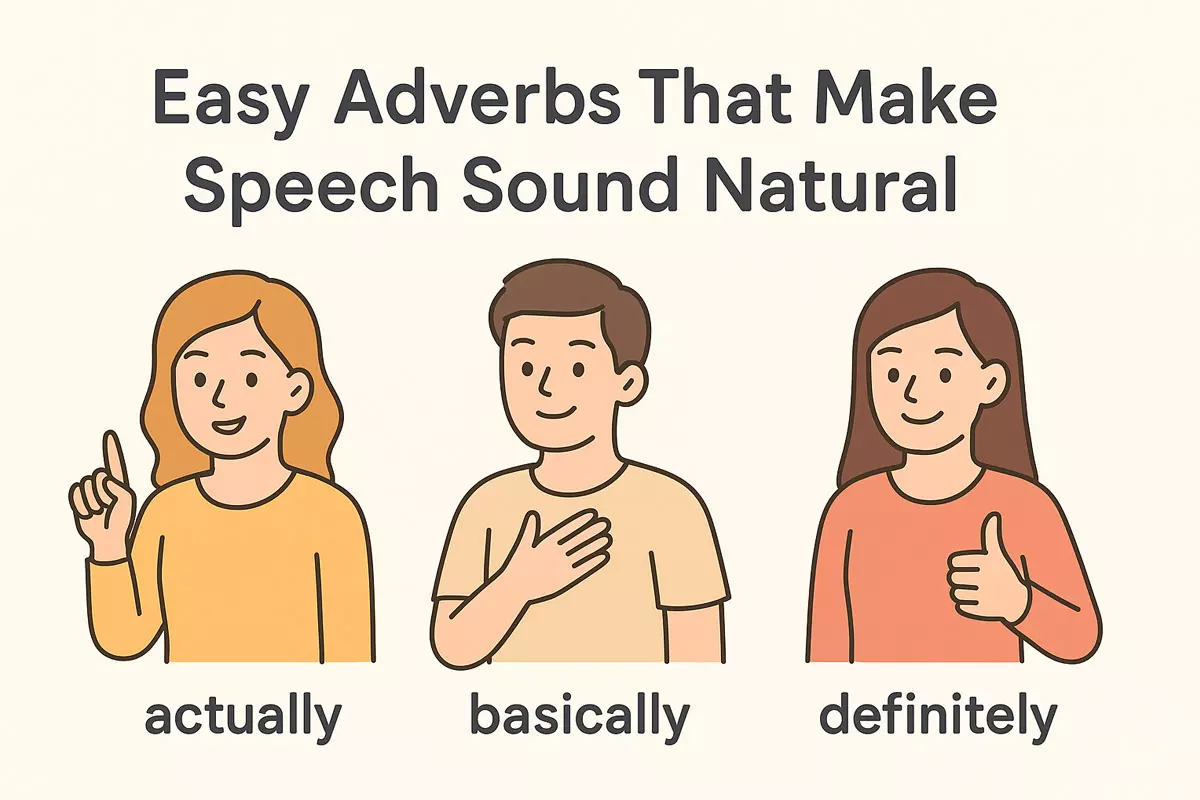 Here we how to use adverbs of degree and manner for smoother, more natural conversations. It explains adding flow, avoiding overuse, and provides examples and practice exercises to help your speech sound authentic in daily situations.
Sounding smooth and confident when you speak is often easier than it seems, especially if you choose your words thoughtfully. By using simple modifiers and placing them carefully, you can make your speech flow more naturally, helping you come across as relaxed and self-assured. This approach not only makes your conversations more engaging but also allows you to express your ideas clearly and effectively, creating a positive impression on your listeners.
Adverbs for Smooth Conversations
Using the right adverbs can help your speech flow naturally and make your conversations easier to follow. These words often show how, when, or how often something happens, and they can soften statements, show agreement, or help ideas connect. Adding just a few simple adverbs to your everyday language can make your speaking style sound more relaxed and friendly.
Useful Adverbs for Everyday Speech
- actually – to clarify or correct information
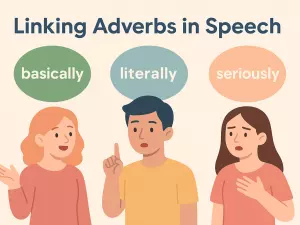
- basically – to simplify a complex idea
- definitely – to show certainty or agreement
- honestly – to add sincerity
- naturally – to indicate something expected
- literally – to stress the real meaning
- obviously – when something should be clear
- really – to add emphasis
- simply – to present information in a clear way
- seriously – to stress importance
- frankly – to introduce a direct opinion
- perhaps – to sound less forceful or more polite
- usually – to describe common habits
- generally – to talk about most cases
- sometimes – for occasional actions
- actually – to gently correct or add detail
- clearly – to highlight obvious points
- certainly – to express strong agreement
- just – to soften a request or statement
- probably – to show something is likely
How Adverbs Smooth Out Conversations
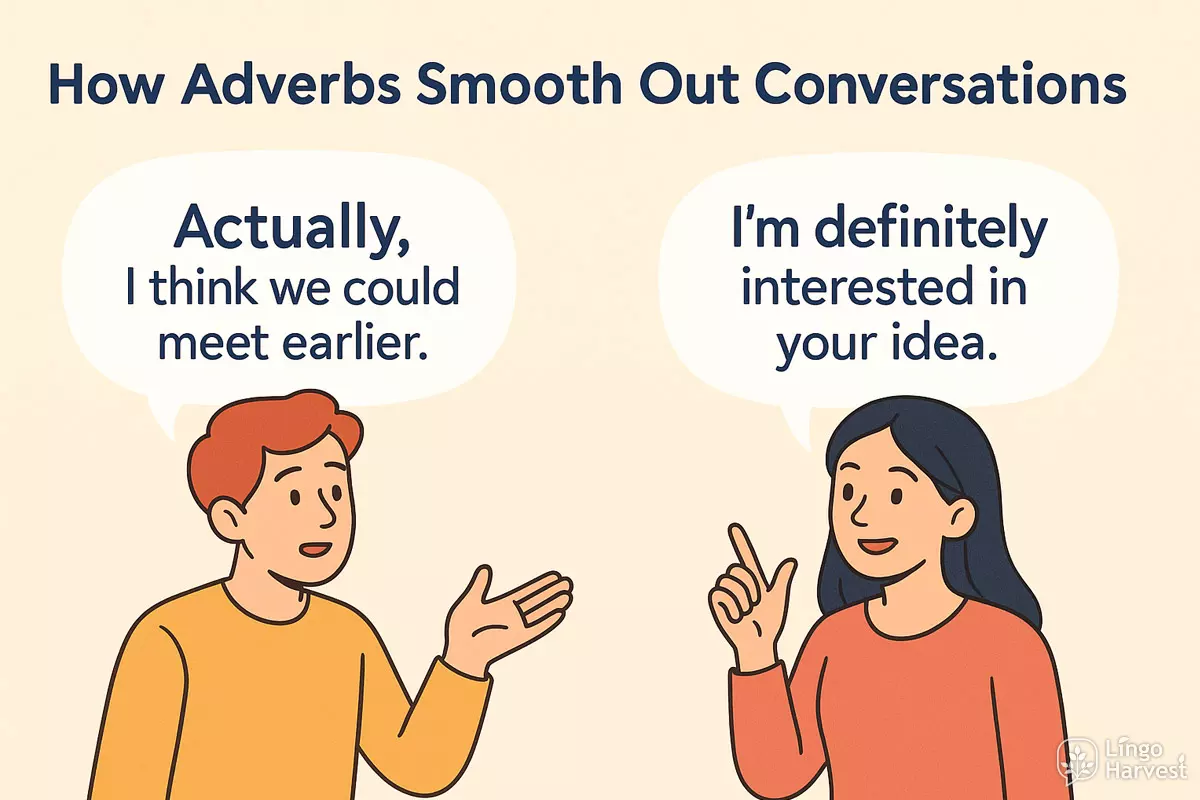
These adverbs can help you sound more polite, avoid sounding too direct, and keep your listener engaged. For instance, saying "Maybe we could try this" sounds softer than "We must try this." Adverbs like really or definitely make your opinions sound clear without being harsh.
| Adverb | Example in Conversation |
|---|---|
| Actually | Actually, I think we could meet earlier. |
| Definitely | I'm definitely interested in your idea. |
| Honestly | Honestly, I didn't expect that result. |
| Maybe | Maybe we can discuss this tomorrow? |
| Usually | I usually take the bus to work. |
| Obviously | Obviously, we need more information. |
| Just | Could you just send me the details? |
| Simply | You can simply call me if you need help. |
Try practicing these adverbs in your daily conversations. They help your speech sound more friendly and natural, and make it easier for listeners to follow your meaning.
Adverbs of Degree and Manner
How strongly or in what way something happens can completely change the feel of a sentence. Words like very, quite, or slowly are often used to add detail, making everyday speech sound more natural and expressive. These small additions help listeners understand not just what happened, but the intensity and style of the action.
Expressing Intensity: Degree Adverbs
Degree modifiers show how much or to what extent something is true. They can strengthen or soften statements, making them more accurate or polite. Here are some commonly used words in this category:
- very → The lecture was very interesting.
- quite → She felt quite confident before the exam.
- almost → The results were almost identical in both groups.
- too → The task was too difficult for beginners.
- enough → The sample size was large enough to draw conclusions.
- fairly → The instructions were fairly easy to follow.
- just → The difference between the two scores is just 1 point.
- nearly → Nearly half of the participants agreed with the statement.
- so → The room was so noisy that nobody could concentrate.
- absolutely → The outcome was absolutely unexpected.
- completely → The data were completely lost due to a system error.
- barely → She barely finished the report before the deadline.
- hardly → We hardly had time to discuss all the questions.
- totally → The two opinions are totally different.
- extremely → The temperature was extremely low during the experiment.
Using these words, you might say, “She is quite tired,” or “That’s absolutely impossible.” Notice how each choice changes the impression of the sentence.
Describing How: Manner Adverbs
When you want to explain how something is done, adverbs of manner are useful. They often end in -ly and provide more detail about the verb. Consider these common examples:
- slowly → The temperature slowly increased over the course of the day.
- quickly → The audience quickly understood the main idea.
- carefully → The researcher carefully recorded each observation.
- easily → The task can be easily completed in one hour.
- loudly → The students laughed loudly at the joke.
- quietly → She quietly left the room to answer a call.
- happily → The participants happily agreed to take part in the study.
- sadly → Sadly, several files were deleted by mistake.
- neatly → He wrote his answers neatly on the answer sheet.
- badly → The microphone worked badly during the presentation.
- politely → She politely asked for clarification.
- clearly → The results clearly support the hypothesis.
- softly → The teacher spoke softly to avoid disturbing other classes.
- bravely → The team bravely presented their controversial findings.
- gently → He gently closed the door behind him.
- well → The experiment was well designed and carefully controlled.
For example, “He answered politely,” or “She sang beautifully.” These words help your speech sound more rich and descriptive.
Quick Comparison: Degree vs. Manner
| Degree (How much?) | Manner (How?) |
|---|---|
| “very” (e.g., very cold) | “quickly” (e.g., run quickly) |
| “almost” (e.g., almost finished) | “neatly” (e.g., write neatly) |
| “completely” (e.g., completely wrong) | “loudly” (e.g., speak loudly) |
| “barely” (e.g., barely visible) | “carefully” (e.g., drive carefully) |
Choosing the right modifier can make your English sound less robotic and more authentic. Try mixing and matching these options to match different situations and emotions in daily conversations.
Adding Natural Flow
When you want your spoken English to sound effortless and authentic, adverbs can make a big difference. They help connect ideas, adjust tone, and add subtlety to your meaning. Instead of memorizing complex grammar, you can focus on some simple adverbs that are often used by native speakers in everyday conversation.
Common Adverbs for Smooth Speech
Some adverbs are especially useful for making your speech sound more natural. Here are several that frequently appear in casual dialogue:
- actually → I actually enjoyed the lecture more than I expected.
- basically → Basically, the study shows that exercise improves mood.
- honestly → Honestly, I didn’t understand the last part of the presentation.
- really → The results are really surprising.
- just → I just wanted to ask one more question.
- literally → The room was literally silent during the exam.
- seriously → We need to seriously consider the long-term effects.
- probably → The new policy will probably affect younger workers the most.
- definitely → I definitely agree that more research is needed.
- obviously → Obviously, we cannot ignore these findings.
- clearly → The data clearly support the main hypothesis.
- simply → The instructions are simply too complicated for beginners.
- eventually → The team eventually found a practical solution.
- hopefully → Hopefully, the results will help improve treatment.
- naturally → Naturally, some participants were nervous before the test.
- especially → This question is especially important for international students.
- certainly → The project certainly requires more funding.
- finally → Finally, the committee approved the new curriculum.
- apparently → Apparently, the software update caused the error.
- frankly → Frankly, the conclusions are not very convincing.
These words often soften statements, add emphasis, or clarify your intentions. For example, saying "I just finished my work" sounds more relaxed and conversational than "I finished my work."
Where to Place Adverbs in Sentences
Placement can affect how natural your sentence feels. Typically, adverbs like "really," "just," and "actually" come before the main verb, but sometimes they fit better at the start or end of a sentence for emphasis or style. Consider these examples:
- "I really appreciate your help." → Emphasizes gratitude.
- "Honestly, I don't know." → Adds sincerity at the beginning.
- "Let's meet soon, hopefully." → Ends with a hopeful tone.
Comparing Adverbs: Subtle Differences
Some adverbs seem similar but can change the nuance of a sentence. Here's a quick look at a few commonly confused options:
| Adverb | Typical Use / Example |
|---|---|
| Actually | Corrects or clarifies: "Actually, I meant Thursday." |
| Basically | Simplifies: "Basically, it's just a simple process." |
| Seriously | Shows you mean it: "Seriously, you should try this." |
| Literally | Emphasizes factual meaning: "I literally ran five miles." |
| Apparently | Reports something you heard: "Apparently, it’s going to rain." |
Tips for Sounding More Natural
- Mix adverbs in with your regular speech, but avoid overusing any single one.
- Listen to native speakers and note how they use these words for emphasis or connection.
- Practice by repeating short phrases or sentences that include these adverbs.
- Try recording yourself and noticing if your speech sounds more relaxed and spontaneous.
Using these simple adverbs in the right places can help your English flow more like a native speaker’s, making your conversations both clear and engaging.
Avoiding Overuse
It’s easy to slip into the habit of adding adverbs everywhere, but doing so can make speech sound unnatural or even awkward. Native speakers use adverbs thoughtfully, choosing them only when they truly add meaning or emphasis. To keep your speech sounding smooth and authentic, focus on clarity and simplicity first, then add modifiers only where they help.
Spotting When Adverbs Are Unnecessary
Many adverbs simply repeat what the verb already tells us. For example, in “whisper quietly,” the adverb “quietly” is redundant because “whisper” already means to speak quietly. Try to notice these patterns and trim out the extras.
- Return back → Return
- Shout loudly → Shout
- Advance forward → Advance
- Completely finished → Finished
- Absolutely essential → Essential
- End result → Result
- Very unique → Unique
- Plan ahead → Plan
- Close proximity → Proximity
- Repeat again → Repeat
Tips for More Natural Speech
Ask yourself if the modifier changes the meaning of the sentence or just adds bulk. If you can remove it and your idea is still clear, it’s usually better without it. Listen to native speakers: they often use adverbs sparingly, letting strong verbs and context carry the meaning.
- Use adverbs mainly to clarify time, frequency, or degree when needed.
- Avoid pairing strong verbs with adverbs that simply restate the obvious.
- Swap out adverbs for a more precise verb when possible (for example, “run quickly” → “sprint”).
- Read your sentences aloud; if they sound wordy or forced, try trimming the modifiers.
- Balance is key: too few adverbs can make speech sound blunt, but too many can feel unnatural.
Common Adverbs That Are Often Overused
Some modifiers show up everywhere but rarely add much value. Here are a few to use thoughtfully:
- Really → I really appreciate your honest feedback.
- Very → The lecture was very challenging but rewarding.
- Just → I just don’t think this approach is effective.
- Literally → The hall was literally full, with no seats left.
- Totally → The two reports give totally different explanations.
- Absolutely → I absolutely agree that more data are needed.
- Actually → We actually found the opposite pattern in our results.
- Basically → Basically, the study compares two teaching methods.
- Completely → The questions were completely clear to all participants.
- Seriously → We have to seriously rethink our research design.
- Simply → The task is simply too big for one person.
- Definitely → This topic will definitely appear in the final exam.
- Extremely → The sample was extremely small, so the results are limited.
- Perfectly → The two graphs perfectly illustrate the contrast between groups.
- Probably → The meeting will probably take longer than expected.
Remember, natural-sounding speech usually relies on clear verbs and only uses adverbs when they add something important or specific. With practice, you’ll learn which modifiers help your message and which ones you can skip.
Examples in Everyday Talk
Making your speech sound more natural often depends on the small words that add nuance and flow to your sentences. Adverbs like “just,” “really,” or “actually” are sprinkled throughout everyday conversations. These simple additions help express feelings, soften statements, or clarify meaning. Below are some common adverbs and sample uses to show how they fit seamlessly into casual dialogue.
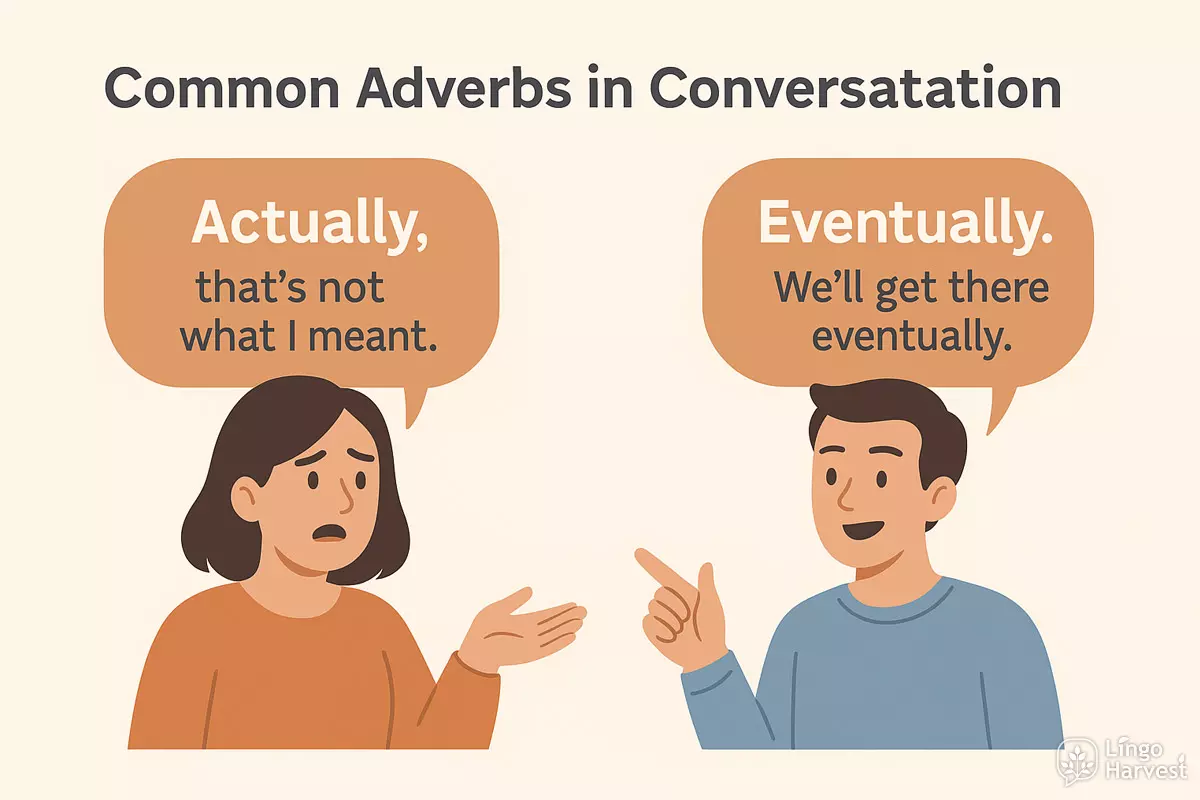
Common Adverbs in Conversation
- Really: “I really like this movie.”
- Just: “I just finished my homework.”
- Actually: “Actually, I haven’t seen that show.”
- Probably: “She’ll probably call you later.”
- Almost: “He almost missed the bus.”
- Always: “You always know what to say.”
- Usually: “We usually eat dinner at 7.”
- Still: “Are you still working?”
- Already: “I’ve already done it.”
- Even: “I can’t even believe it!”
- Maybe: “Maybe we can meet tomorrow.”
- Definitely: “I’ll definitely be there.”
- Sometimes: “Sometimes I forget my keys.”
- Never: “He never eats breakfast.”
- Actually: “Actually, that’s not what I meant.”
- Simply: “You can simply ask for help.”
- Mostly: “I’m mostly tired after work.”
- Hardly: “She hardly ever gets angry.”
- Clearly: “You clearly did your best.”
- Eventually: “We’ll get there eventually.”
How These Words Change Tone
Adding these short adverbs can make requests sound more polite, statements less direct, or opinions more tentative. For example, compare: “I don’t like it” versus “I just don’t really like it.” The second version sounds softer and more conversational.
| Without Adverb | With Adverb |
|---|---|
| I know. | I actually know. |
| She’s late. | She’s probably late. |
| He finished. | He just finished. |
| This is easy. | This is really easy. |
Try listening for these words in real conversations or TV shows. You’ll notice how often speakers use them to sound friendly and genuine. Practicing these natural adverbs can help your speech flow better and feel more authentic.
Practice: Rewrite for Natural Sound
Using adverbs in a natural way can make your spoken English flow better and sound more authentic. Below, you’ll find practical exercises and examples to help you recognize which adverbs fit best in everyday speech, and how to avoid making your sentences sound too stiff or forced. Try rewriting each sentence to include an adverb that sounds more casual and natural.
Rewrite These Sentences
For each sentence, replace the awkward or stiff adverb with one that would sound more at home in a conversation.
- I rapidly finished my homework.
- She extremely likes pizza.
- He totally forgot about the meeting.
- They truly enjoyed the show.
- We frequently go to that café.
- He hardly speaks during meetings.
- She barely passed the exam.
- I completely agree with your point.
- They usually eat lunch together.
- We rarely watch television.
Show answers
- I quickly finished my homework.
- She really likes pizza.
- He completely forgot about the meeting.
- They really enjoyed the show.
- We often go to that café.
- He rarely speaks during meetings.
- She almost failed the exam.
- I totally agree with your point.
- They regularly eat lunch together.
- We hardly ever watch television.
Level Up: Compare Formal vs. Natural Adverbs
Some adverbs sound too formal in casual speech. Notice the difference in tone and choose the more natural option for your conversations.
| Formal/Unnatural | Natural/Conversational |
|---|---|
| subsequently | then |
| additionally | also |
| thus | so |
| moreover | plus |
| consequently | so |
| nevertheless | still |
| approximately | about |
| frequently | often |
| rapidly | quickly |
| extremely | really |
Quick Quiz: Choose the Best Adverb
Select the adverb that would sound most natural in each blank:
- We’ll be there _______. (soon / presently)
- It’s _______ raining outside. (currently / still)
- She’s _______ tired after work. (totally / really)
- I _______ forgot my keys. (completely / utterly)
- They _______ moved to Canada. (recently / lately)
- He _______ understands the problem now. (finally / lately)
- The train arrived _______. (eventually / lately)
- She was _______ surprised by the news. (highly / genuinely)
- The instructions were _______ unclear. (totally / fairly)
- We _______ see each other these days. (seldom / recently)
Show answers
- soon
- still
- really
- completely
- recently
- finally
- eventually
- genuinely
- totally
- seldom
Notice how choosing the right adverb can help you sound more relaxed and approachable in conversation. Keep practicing by swapping out stiff, formal words for ones you hear in everyday English.