Prepositions for Rooms and Places in the House

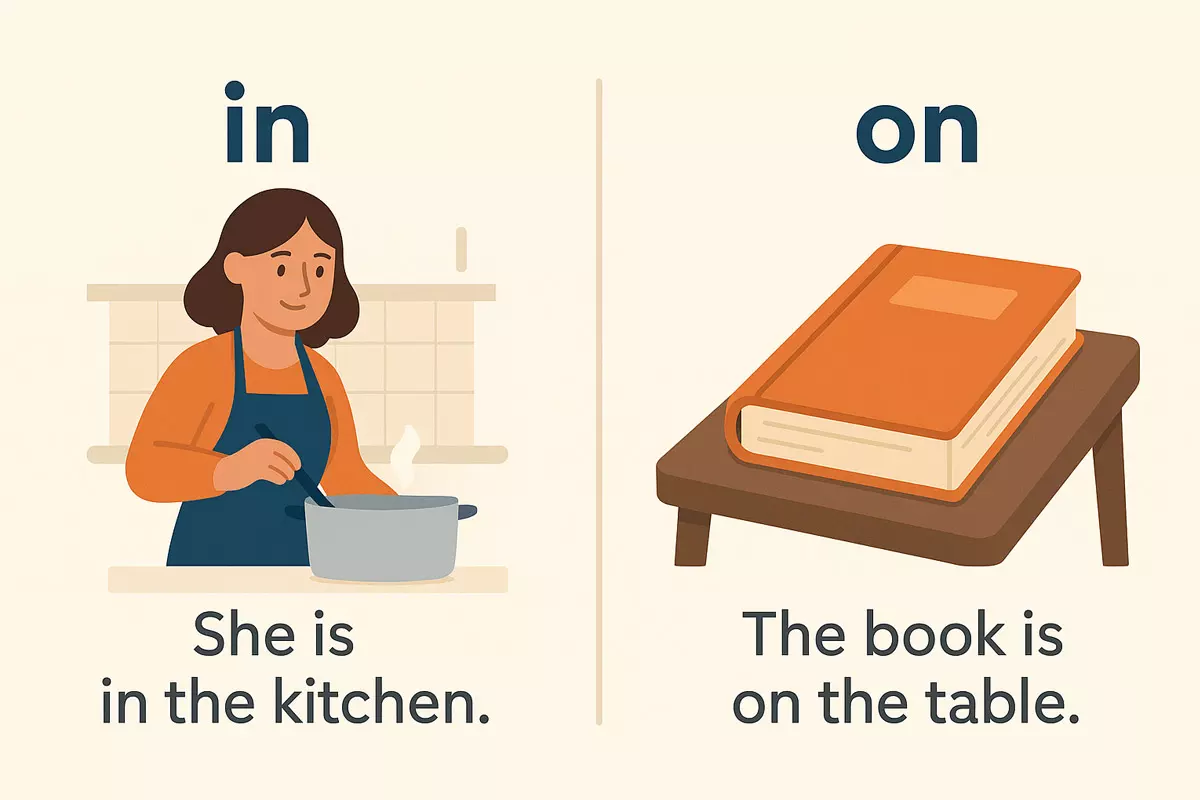 This article explains how to use prepositions such as in, on, and at to describe places inside the house, including the kitchen, bedroom, furniture, and corners. It offers visual examples and matching exercises for effective practice.
Describing the location of objects in your home can sometimes be challenging, particularly when choosing the correct connecting words to clarify where things are. Mastering these expressions, such as next to, behind, under, or between, allows you to communicate more clearly about your surroundings. With a good grasp of these terms, you can give accurate directions, find items more efficiently, and help others understand the layout of your living space, making everyday interactions smoother and more effective.
Prepositions Inside the House
Navigating the spaces within a home requires a variety of prepositions to describe where things and people are located. These words help us express relationships between objects, furniture, and rooms, making our descriptions more precise and easier to understand. Whether you’re talking about where you left your keys or describing a cozy reading corner, choosing the right preposition is essential.
Common Prepositions for Describing Locations
- in — The most general way to say something is inside a room or area. “She is in the kitchen.”
- on — Used for surfaces. “The book is on the table.”
- under — Something is directly below. “The shoes are under the bed.”
- next to — Right beside another object. “The sofa is next to the window.”
- between — In the middle of two things. “The lamp is between the chairs.”
- behind — At the back of something. “The broom is behind the door.”
- in front of — Facing or before another object. “The TV is in front of the sofa.”
- above — Higher than but not touching. “The picture is above the fireplace.”
- below — Lower than something else. “The rug is below the coffee table.”
- near — Close, but not necessarily touching. “The armchair is near the bookshelf.”
- opposite — Facing each other, across a space. “The sink is opposite the stove.”
- at — Used for specific points. “She is at the door.”
Describing Objects and Furniture Placement
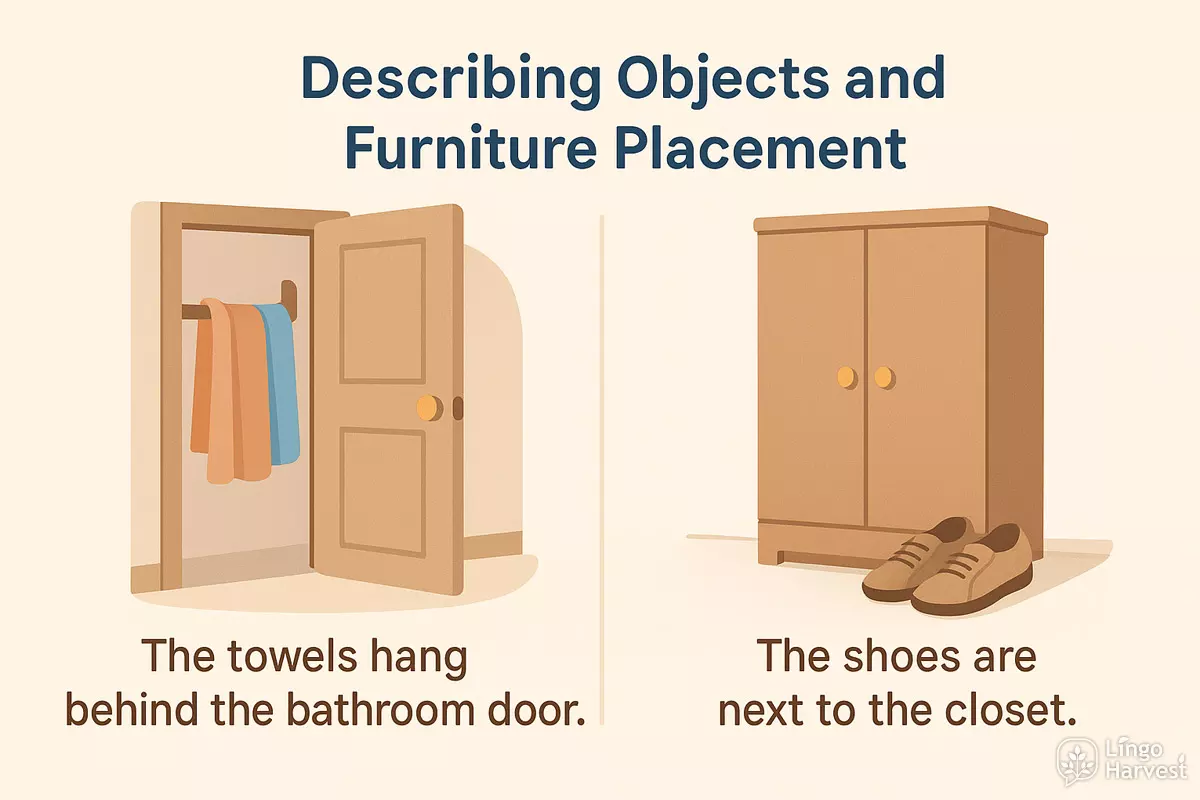
It’s helpful to use these prepositions when giving directions or explaining where to find something in the house. Let’s see some practical examples:
- The clock is on the wall.
- The cat sleeps under the chair.
- There’s a mirror above the sink.
- The towels hang behind the bathroom door.
- The shoes are next to the closet.
- The keys are in the drawer.
- The lamp sits between the two armchairs.
- The dining table is in front of the window.
- The remote is on the coffee table.
- The laundry basket is near the washing machine.
Comparison of Prepositions for Spatial Relations
| Preposition | Example in the House |
|---|---|
| in | The kids are in their bedroom. |
| on | The vase is on the shelf. |
| under | The dog is under the table. |
| behind | The umbrella is behind the coat rack. |
| between | The nightstand is between the beds. |
| in front of | The mat is in front of the door. |
| next to | The fridge is next to the oven. |
| above | The lamp hangs above the table. |
| below | The cabinet is below the sink. |
| opposite | The sofa is opposite the TV. |
Using these prepositions lets you give clear, accurate directions and descriptions about locations within different rooms. Practicing with real objects in your own home can help reinforce the correct usage and make everyday communication easier.
In the Kitchen, In the Bedroom
When talking about specific rooms like the kitchen or bedroom, English prepositions help express location, movement, and position. The most common preposition is in for indicating that something or someone is inside the room. However, other prepositions such as on, at, under, and by are used to describe more precise locations or actions.
Common Prepositions for Rooms
- in the kitchen (general location inside)
- on the table/bed (surface position)
- under the bed (below something)
- by the window (next to/near)
- at the door (specific point or entry)
- next to the fridge (immediately adjacent)
- between the chairs (in the middle of two items)
- above the counter (higher than, not touching)
- behind the curtain (at the back of)
- in front of the wardrobe (facing or before)
- over the sink (directly above, possibly covering)
- opposite the bed (facing across from)
Examples of Usage
- The keys are on the kitchen table.
- She is in the bedroom, reading a book.
- There is a rug under the bed.
- The cat is sleeping by the radiator.
- He waited at the kitchen door.
- The lamp is next to the sofa.
- There is a painting above the stove.
- The slippers are in front of the wardrobe.
- The laundry basket is behind the door.
Comparing Prepositions for Kitchen and Bedroom
| Preposition | Example in a Room | Meaning/Use |
|---|---|---|
| in | She is in the kitchen. | Inside the area or space |
| on | The phone is on the bed. | Resting on a surface |
| under | The shoes are under the bed. | Beneath or below |
| by | The chair is by the window. | Close to or beside |
| at | He stood at the door. | Specific point or position |
| above | The light is above the table. | Higher than, not touching |
| between | The table is between the chairs. | In the middle of two items |
| behind | The box is behind the curtain. | At the back of |
| in front of | The mirror is in front of the bed. | Facing or before |
| next to | The clock is next to the fridge. | Immediately adjacent |
Understanding which preposition to use helps clarify where things are in different parts of the house. The right choice depends on the object’s relation to the room or furniture. Practicing with real-life examples can make these patterns feel more natural.
At the Door, On the Table
Prepositions often help us describe the location of objects and people in relation to furniture, doors, and surfaces within a home. Knowing when to use "at," "on," and similar words is essential for clear communication about where things are placed or where actions happen.
Using "at" with House Features
The preposition "at" is commonly used to talk about a specific point or area, like an entrance or boundary. For example, you might say someone is "at the door" when they are right by the entrance, possibly knocking or waiting to come in. It does not mean they are inside or outside specifically, but at the location itself.
- She is at the window (standing close to the window, possibly looking out).
- The cat waits at the back door.
- I'll meet you at the gate.
- There's a package at the front porch.
- Someone is at the stairs (right by the stairs, not necessarily on them).
Using "on" for Surfaces
"On" is used when something is resting on the surface of another object, such as tables, shelves, or countertops. It means direct contact with the surface, not above or under it.
- The keys are on the table.
- Put your bag on the chair.
- There's a book on the shelf.
- We placed the vase on the windowsill.
- Lunch is served on the kitchen counter.
- Her phone is on the bed.
- A note is on the fridge.
- There are shoes on the floor.
- He left his glasses on the nightstand.
- The picture hangs on the wall.
Comparing "at" and "on" in Home Contexts
To clarify how these prepositions differ in describing household locations, see the structured comparison below:
| Preposition | Typical Usage in a House |
|---|---|
| at | Used for points or boundaries (e.g., at the door, at the entrance, at the window). |
| on | Used for surfaces (e.g., on the table, on the shelf, on the bed). |
| in | Used for enclosed spaces (e.g., in the room, in the closet, in the kitchen). |
| under | Used for locations beneath something (e.g., under the table, under the stairs). |
Prepositions for Furniture and Corners
Describing where things are in a room often involves talking about their relationship to furniture and the edges or corners of the space. Using the right prepositions helps you give clear directions, explain where to find something, or set the scene for a room’s layout. Commonly used prepositions include on, in, under, behind, next to, between, in front of, beside, at, and near.
Describing Position Around Furniture
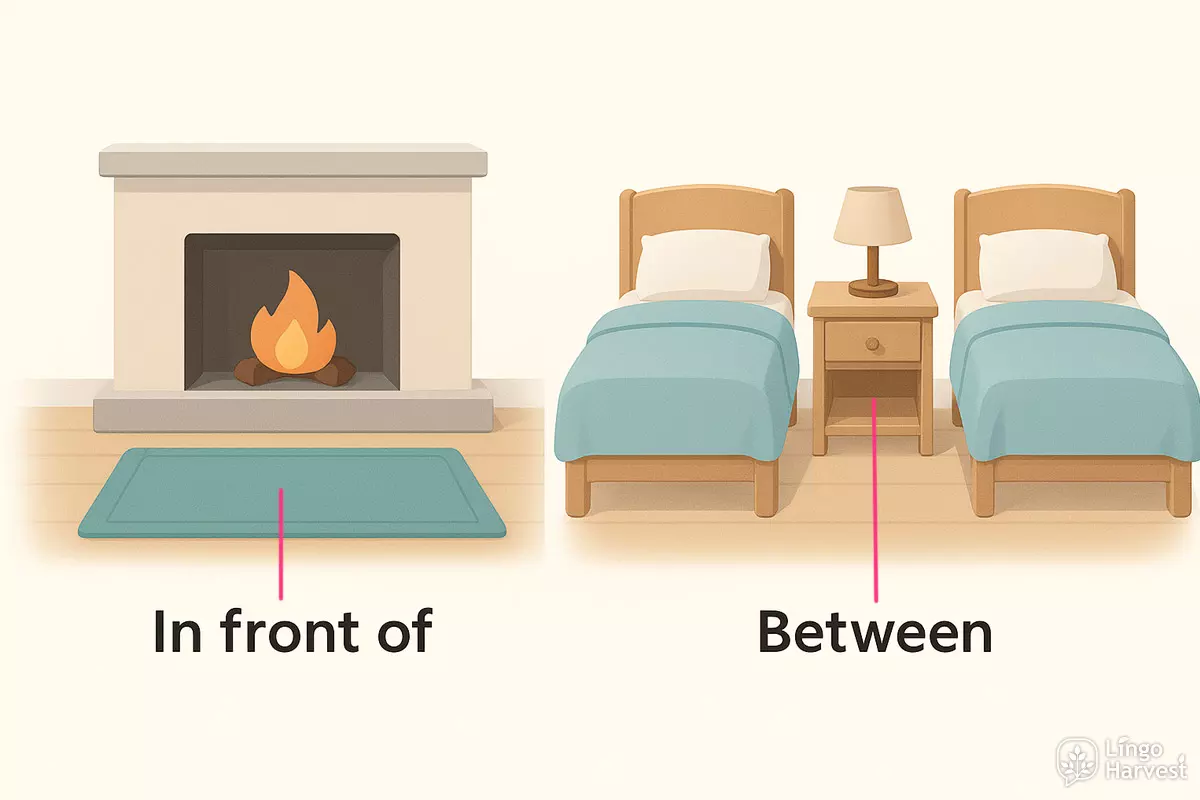
When talking about items in relation to furniture, these prepositions are especially useful:
- On — The book is on the table.
- Under — The shoes are under the bed.
- Behind — The lamp is behind the sofa.
- In front of — The rug is in front of the fireplace.
- Next to — The chair is next to the desk.
- Between — The nightstand is between the beds.
- Beside — The trash bin is beside the dresser.
- Above — The painting is above the couch.
- Below — The storage box is below the shelf.
- Near — The plant is near the window.
Talking About Corners and Edges
Corners and edges of rooms are often referenced with a slightly different set of prepositions. The word in is typically used for corners, while at can also be correct in some contexts. Here are some patterns:
- In the corner — The armchair is in the corner of the living room.
- At the corner — The lamp stands at the corner of the room (less common, but possible for emphasis).
- Near the corner — The bookshelf is near the corner.
- By the wall — The cabinet is by the wall.
- Along the wall — The sofa is along the wall.
| Preposition | Example in a Room |
|---|---|
| on | The keys are on the kitchen counter. |
| under | The cat is hiding under the armchair. |
| between | The lamp is between the sofa and the window. |
| in the corner | The plant is in the corner of the study. |
| beside | The stool is beside the coffee table. |
| behind | The radiator is behind the curtain. |
| in front of | The TV is in front of the sofa. |
| near | The phone is near the lamp. |
| along | The bookshelf runs along the wall. |
| at | The coat rack is at the entrance. |
Choosing the right preposition helps make your descriptions precise and easy to visualize. Whether you are giving directions or describing a room, these small words make a big difference in clarity.
Visual Practice Examples
To clarify how prepositions work with rooms and spaces at home, let's look at real-life scenarios and common sentence patterns. These help you recognize which prepositions fit different locations and how to use them naturally in everyday conversation.
Sample Sentences: Prepositions with House Rooms
- The cat is under the table in the dining room.
- She left her keys on the kitchen counter.
- There is a painting above the fireplace in the living room.
- The children are playing in the backyard.
- The book is next to the lamp in the bedroom.
- We hung our coats behind the door in the hallway.
- The laundry basket is beside the washing machine in the bathroom.
- The shoes are by the front door.
- The remote control is between the sofa and the armchair.
- There is a window opposite the bed.
- The towels are on the shelf above the sink.
- The dog sleeps in its bed in the corner of the living room.
- The umbrella stand is near the entrance.
- The clock is over the dining table.
- The shoes are under the bench in the hallway.
Comparing Prepositions: Where is the Object?
Below is a structured overview showing how different prepositions help specify the location of items within various spaces at home.
| Preposition | Example Phrase | Where? |
|---|---|---|
| in | in the kitchen | Inside a room or space |
| on | on the sofa | Resting on a surface |
| under | under the bed | Below an object or surface |
| between | between the chairs | In the middle of two things |
| next to | next to the window | Immediately beside something |
| behind | behind the door | At the back of something |
| near | near the stairs | Close to a place/object |
| above | above the sink | Higher than something else |
| by | by the entrance | Next to or at the edge of |
| opposite | opposite the TV | Facing or across from |
Mini Practice: Choose the Correct Preposition
Fill in the blanks with suitable prepositions: in, on, under, between, next to, behind, near, above, by, or opposite.
- The cat is ______ the sofa.
- The keys are ______ the kitchen table.
- The armchair is ______ the window and the bookshelf.
- The shoes are ______ the bed.
- The mirror is ______ the sink.
Show answers
- on
- on
- between
- under
- above
Visualizing Prepositions in Context
Imagine these situations for clarity:
- There is a clock above the door in the hallway.
- The laundry basket is beside the bathroom sink.
- The lamp stands by the bed.
- A chair is placed opposite the window.
Try drawing a simple floor plan and labeling objects using different prepositions to reinforce your understanding.
Practice: Match Preposition to Place
Understanding how to use prepositions with different rooms and areas in a home is essential for describing locations clearly. Below, you’ll find exercises and examples to help you connect the correct preposition to each type of place or object. This will help reinforce your understanding and offer practical context.
Task 1: Choose the Right Preposition
For each sentence, select the correct preposition (in, on, at, under, behind, between, next to, above, below, in front of) to complete the phrase:
- The sofa is ____ the living room.
- There’s a clock ____ the wall.
- The shoes are ____ the bed.
- The kitchen is ____ the dining room and the hallway.
- The books are ____ the shelf.
- The cat is hiding ____ the curtains.
- The table is ____ the window.
- The lamp is ____ the desk.
- The bathroom is ____ the end of the hallway.
- The rug is ____ the coffee table.
Show answers
- in
- on
- under
- between
- on
- behind
- in front of
- on
- at
- under
Common Prepositions Used with Rooms and Places
Here’s a quick reference of which prepositions are often paired with various locations in the house:
| Place | Typical Preposition | Example Sentence |
|---|---|---|
| Kitchen | in | The food is in the kitchen. |
| Wall | on | The picture is on the wall. |
| Table | on/under | The keys are on the table. The dog is under the table. |
| Door | at/behind | He is at the door. She is behind the door. |
| Bed | on/under/next to | My book is on the bed. The slippers are under the bed. The nightstand is next to the bed. |
| Window | in front of/behind | The chair is in front of the window. The curtain is behind the window. |
| Stairs | on/at | The cat is on the stairs. She is waiting at the stairs. |
| Hallway | in/at | The kids are in the hallway. The closet is at the end of the hallway. |
| Shelf | on/above | The books are on the shelf. The lamp is above the shelf. |
| Closet | in | The coats are in the closet. |
Task 2: Match the Place to Its Preposition
- ____ the bathroom
- ____ the sofa
- ____ the hallway
- ____ the shelf
- ____ the front door
- ____ the rug
- ____ the kitchen counter
- ____ the window
- ____ the stairs
- ____ the closet
Show answers
- in the bathroom
- on the sofa
- in the hallway
- on the shelf
- at the front door
- on the rug
- on the kitchen counter
- in front of the window
- on the stairs
- in the closet
Practicing these patterns will help you remember which prepositions fit with different rooms and objects at home. Focus on the context and the relationship between object and place to choose the best option.