Using So for Results and Consequences

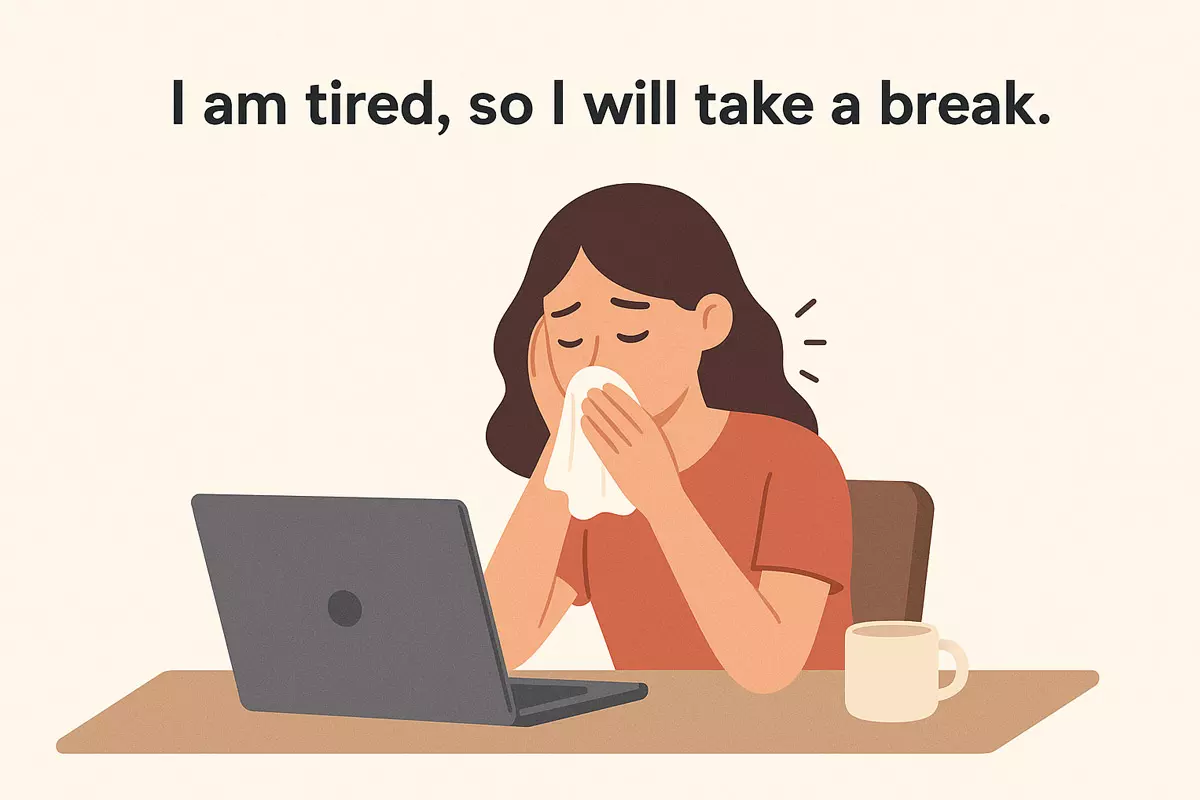 The article explains how to use so to connect actions and results, compares so with therefore and because, and clarifies correct sentence order. It also points out common mistakes and provides practice combining sentences with so.
Connecting actions with their outcomes is crucial for effective communication, as it helps others understand the reasons behind your statements or decisions. By learning to express results and consequences clearly, you can make your language more precise and ensure your message is understood as intended. This skill not only improves your conversations but also allows you to explain your thoughts logically, making your interactions more meaningful and persuasive in both personal and professional settings.
Meaning and Function of So
When used to introduce results or consequences, "so" acts as a connector that signals a cause-and-effect relationship between two clauses. It helps speakers and writers show that one action, event, or condition leads directly to another. This small word makes it easy for readers or listeners to follow the logical flow from reason to outcome, which is crucial for clear communication in both spoken and written English.
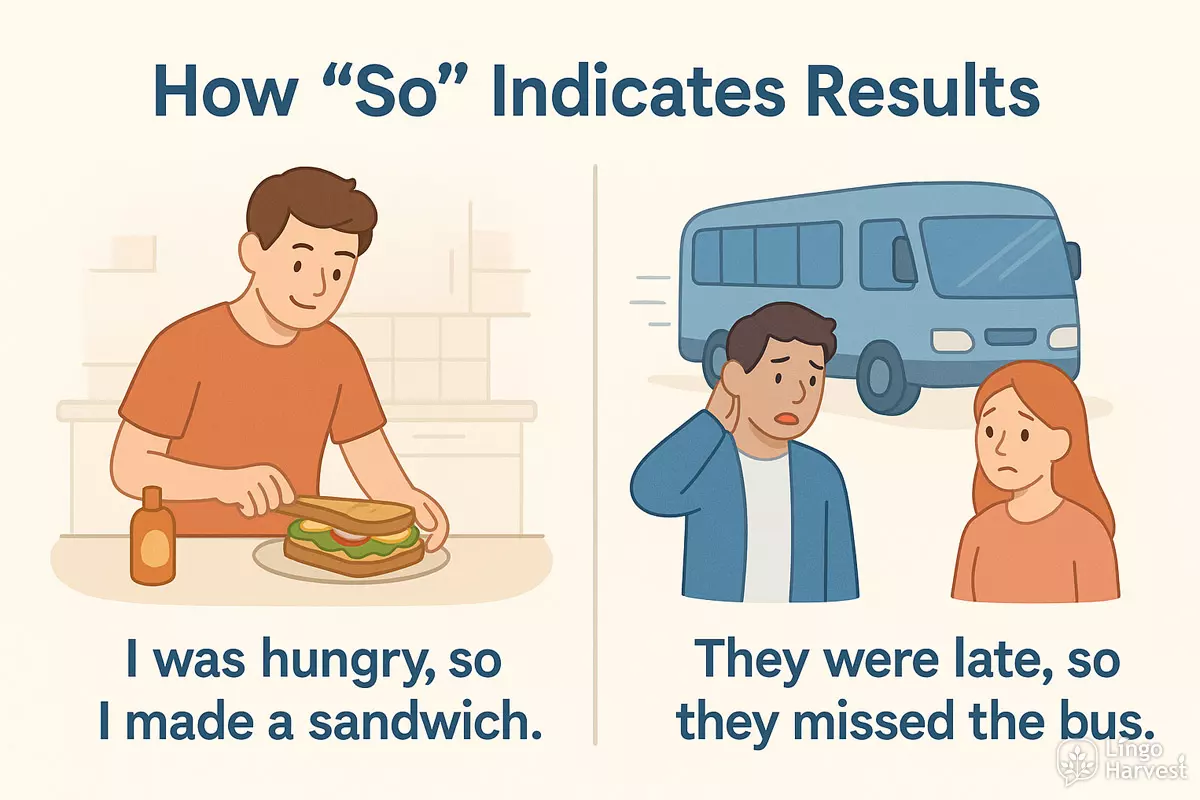
How "So" Indicates Results
In sentences, "so" usually appears before the result clause. The first part of the sentence presents a situation or cause, and the clause after "so" explains the effect. This structure helps clarify why something happened, preventing confusion or ambiguity. For example: "It started raining, so we went inside."
- "She forgot her umbrella, so she got wet."
- "He studied hard, so he passed the exam."
- "The store was closed, so we went home."
- "I was hungry, so I made a sandwich."
- "They were late, so they missed the bus."
- "The movie was boring, so we left early."
- "He didn’t set his alarm, so he overslept."
- "She saved money, so she could buy a new phone."
- "The weather was nice, so we had a picnic."
- "The instructions were unclear, so I made a mistake."
Common Patterns and Alternatives
"So" often works interchangeably with phrases like "as a result," "therefore," or "consequently," but it is more conversational and less formal. In speech, it is popular for its simplicity and clarity. Other connectors may be used for more formal writing or to add variety.
| Connector | Example Sentence |
|---|---|
| so | It was cold, so I wore a jacket. |
| therefore | It was cold; therefore, I wore a jacket. |
| as a result | It was cold. As a result, I wore a jacket. |
| consequently | It was cold. Consequently, I wore a jacket. |
Key Functions in Communication
- Clarifies logical sequence between actions
- Helps express reasons and outcomes clearly
- Makes explanations easier to follow
- Frequently used in storytelling and instructions
Overall, "so" is a versatile word for expressing results and consequences, making it a valuable tool for anyone aiming to communicate cause and effect efficiently in English.
Sentence Order with So
Understanding how to structure sentences when expressing results or consequences with "so" can help your writing and speaking sound more natural. In English, "so" is most often used as a conjunction to connect two clauses: the first clause presents a reason or cause, and the second shows the result or consequence.
Basic Structure
The typical pattern is:
- Cause/Reason + so + Result/Consequence
For example: It started to rain, so we went inside.
Word Order Rules
- The clause before "so" explains why something happens.
- The clause after "so" shows what happened as a result.
- "So" always comes after the cause and before the result.
- Both clauses are typically complete sentences (subject + verb).
- A comma is usually placed before "so" in written English when joining two independent clauses.
Examples of Common Patterns
Here are some example sentences to illustrate various ways "so" can be used to express results and consequences:
- She was tired, so she went to bed early.
- They missed the bus, so they took a taxi.
- I forgot my umbrella, so I got wet.
- He studied hard, so he passed the exam.
- The store was closed, so we couldn't buy milk.
- It was cold outside, so we wore jackets.
- The movie was interesting, so we watched until the end.
- We had no food left, so we ordered pizza.
- She didn't feel well, so she stayed home.
- The road was blocked, so we took another route.
- He lost his keys, so he couldn't open the door.
- I was hungry, so I made a sandwich.
- The lesson was difficult, so we asked the teacher for help.
- They arrived late, so they missed the beginning of the show.
- My phone battery died, so I couldn't call you.
- The weather was nice, so we went for a walk.
- She worked overtime, so she earned extra money.
- The alarm didn't ring, so I overslept.
- He forgot the meeting, so he apologized.
- We finished early, so we had time to relax.
Comparing Correct and Incorrect Order
Below is a quick reference comparing correct and incorrect ways to use "so" when indicating a consequence:
| ✅ Correct Order | ❌ Incorrect Order |
|---|---|
| He was late, so he missed the train. | So he missed the train, he was late. |
| It was raining, so we stayed inside. | We stayed inside, so it was raining. |
| She didn't study, so she failed the test. | So she failed the test, she didn't study. |
| I was hungry, so I ate lunch early. | So I ate lunch early, I was hungry. |
Tips for Natural Usage
- Do not start a sentence with "so" when showing a consequence; always use it between the cause and result.
- If you want to emphasize the result, use "as a result," "therefore," or "thus" at the start instead.
- Keep both clauses clear and direct for easier understanding.
By following these patterns and tips, your use of "so" to show results and consequences will be both accurate and natural.
So vs Therefore vs Because
When discussing results and consequences, English offers several connectors—each with a slightly different use. “So,” “therefore,” and “because” all help show relationships between actions and results, but they aren’t interchangeable. Understanding their unique roles can clarify your writing and speech.
How Each Connector Functions
“So” is commonly used in everyday conversation to show a direct result. It links a cause and its effect, often in informal settings. “Therefore” provides a more formal or logical connection, typical in academic or professional contexts. “Because” introduces the reason for an action, focusing on the cause rather than the result.
| Connector | Function | Example |
|---|---|---|
| So | Shows a consequence or result; informal | It was raining, so we stayed inside. |
| Therefore | Indicates a logical conclusion; formal | The roads were icy; therefore, school was canceled. |
| Because | Gives the reason or cause; neutral tone | We stayed inside because it was raining. |
Patterns and Examples
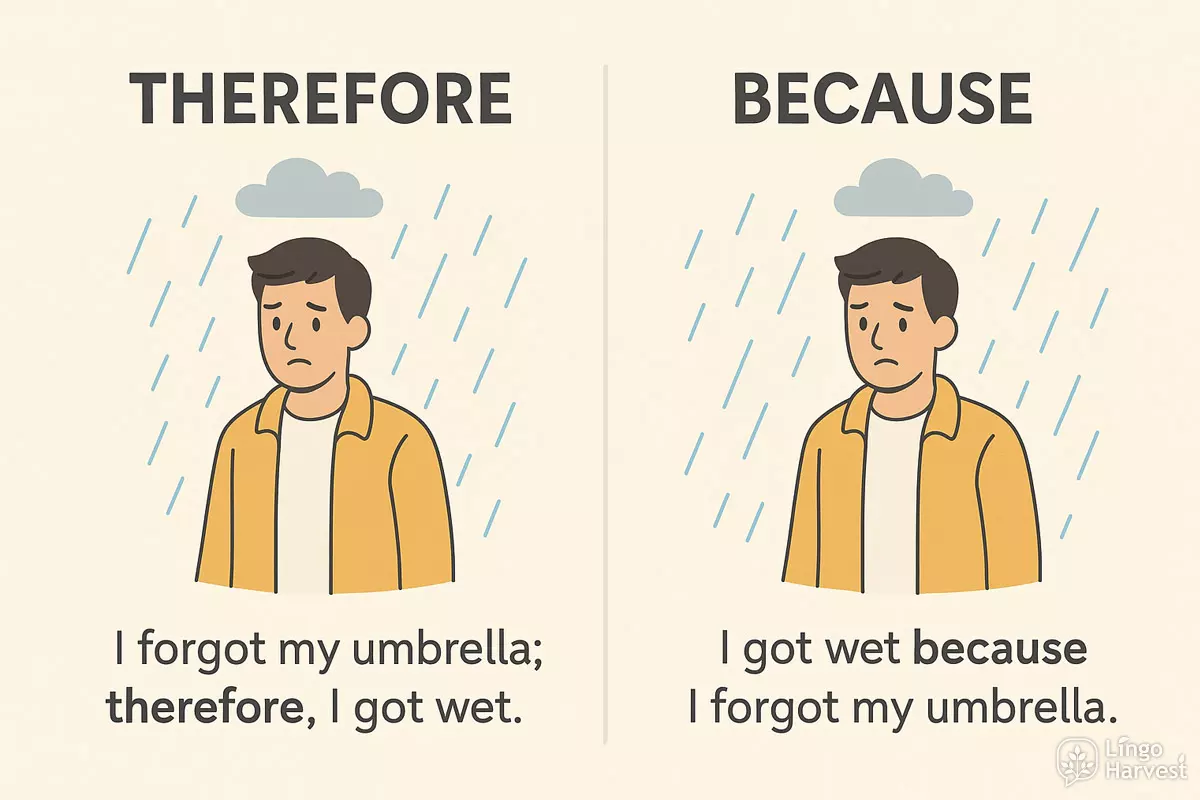
Here are some typical ways these words appear in sentences:
- I was hungry, so I made a sandwich.
- I forgot my umbrella; therefore, I got wet.
- I got wet because I forgot my umbrella.
- She didn’t study, so she failed the test.
- He didn’t set an alarm; therefore, he woke up late.
- He woke up late because he didn’t set an alarm.
- The store was closed, so we went home.
- The instructions were unclear; therefore, I made a mistake.
- I made a mistake because the instructions were unclear.
- It was cold, so I wore a jacket.
Key Distinctions to Remember
- So and therefore both highlight results, but “therefore” is more formal and often follows a semicolon.
- Because always introduces the reason, not the result.
- Switching these connectors can change the focus of your sentence from cause to effect or vice versa.
- Use “so” for everyday speech, “therefore” for reports or essays, and “because” when you need to explain why something happened.
Choosing the right connector helps your sentences flow logically and makes your meaning clear. Paying attention to tone and context ensures you communicate your ideas effectively.
Common Mistakes
When using "so" to express results or consequences, learners often stumble over sentence structure, punctuation, or even word choice. These pitfalls can lead to confusion, awkward phrasing, or sentences that don’t clearly show cause and effect. Let’s look at what tends to go wrong and how to avoid these issues.
Mixing Up "So" with Similar Connectors
"So" is sometimes confused with other words that indicate reasons or results, such as "because," "therefore," or "such that." Each has a specific role, and swapping them can change the entire meaning of a sentence.
- Incorrect: She was tired, because she went to bed early. ❌
- Correct: She was tired, so she went to bed early. ✅
- Incorrect: He forgot his umbrella, so he got wet. (correct)
- Incorrect: He forgot his umbrella, because he got wet. ❌
Word Order and Sentence Structure
It’s easy to misplace "so" or use it in fragments. "So" should connect two clauses, with the result following it.
- Don’t start a sentence with "so" unless continuing from previous context.
- Avoid using "so" without a clear cause in the first clause.
- Don’t use "so" when only one action is described.
Punctuation Errors
Commas often trip people up. A comma is typically used before "so" when connecting two independent clauses.
- Correct: It rained, so we stayed inside.
- Incorrect: It rained so we stayed inside. ❌
- Correct: She was late, so she missed the bus.
Overuse or Redundancy
Repeating "so" or combining it with other connectors can make sentences wordy or unclear.
- Incorrect: I was hungry, so therefore I ate lunch. ❌
- Correct: I was hungry, so I ate lunch. ✅
Confusing "So" as an Intensifier
Remember, "so" can also mean "very" (e.g., "so tired"), but that’s different from its result/consequence use. Mixing these up can create ambiguity.
- Incorrect: He was so hungry he ate. (Ambiguous)
- Correct: He was so hungry that he ate. (Intensifier + result)
- Correct: He was hungry, so he ate. (Result/consequence)
Expanded List of Frequent Errors
- Using "so" with incomplete clauses
- Omitting the subject in the result clause
- Using "so" after "because" in the same sentence
- Placing "so" at the end of a sentence
- Combining "so" with "that" unnecessarily
- Forgetting the comma before "so"
- Using "so" to start a sentence without prior context
- Applying "so" instead of "although" or "but"
- Creating run-on sentences with multiple "so"s
- Using "so" with adjectives instead of "so...that"
- Confusing "so" (result) with "so that" (purpose)
- Using "so" in formal writing where "therefore" is better suited
- Misplacing "so" in compound sentences
- Forgetting to express the cause before the result
- Using "so" to connect unrelated ideas
By paying attention to these common traps, you can make your sentences clearer and your use of "so" more effective for expressing results and consequences.
Practice: Combine Two Sentences with So
Understanding how to join two related ideas using "so" is essential for expressing cause and effect clearly. Review the following pairs of sentences. Your task is to combine each pair into a single sentence using "so" to show the result or consequence. Read each pair carefully and think about the logical connection before you write your answer.
Combine the Sentences
- The weather was cold. We stayed inside.
- She forgot her umbrella. She got wet.
- He was hungry. He made a sandwich.
- They finished their homework early. They watched a movie.
- The store was closed. I couldn’t buy any bread.
- Mia studied hard for the exam. She got a high score.
- My phone battery died. I couldn’t call you.
- Tom didn’t set an alarm. He was late for work.
- The dog barked loudly. The neighbors complained.
- We missed the bus. We walked to school.
- It started raining. We brought our jackets.
- The cake was delicious. Everyone asked for seconds.
- He didn’t eat breakfast. He felt tired by noon.
- Linda lost her keys. She couldn’t open the door.
- The train was delayed. We arrived late.
Useful Pattern
When combining sentences with "so," the result comes after "so."
- Cause + so + Result
- Example: It was late, so we went home.
Common Mistakes to Avoid
- Do not use "so" at the beginning of a sentence when combining causes and results.
- Remember to use a comma before "so" when writing in one sentence.
- Make sure the result logically follows the cause.
Show answers
- The weather was cold, so we stayed inside.
- She forgot her umbrella, so she got wet.
- He was hungry, so he made a sandwich.
- They finished their homework early, so they watched a movie.
- The store was closed, so I couldn’t buy any bread.
- Mia studied hard for the exam, so she got a high score.
- My phone battery died, so I couldn’t call you.
- Tom didn’t set an alarm, so he was late for work.
- The dog barked loudly, so the neighbors complained.
- We missed the bus, so we walked to school.
- It started raining, so we brought our jackets.
- The cake was delicious, so everyone asked for seconds.
- He didn’t eat breakfast, so he felt tired by noon.
- Linda lost her keys, so she couldn’t open the door.
- The train was delayed, so we arrived late.