Adding Descriptions: Using Adjectives and Adverbs Naturally

 This article explains how to describe nouns and verbs, where to place adjectives, and how to use adverbs with action words. It includes examples of natural description and practice exercises to help you write more detailed sentences.
Bringing your writing to life depends on how you use vivid language to paint clear and memorable details. By skillfully incorporating descriptive words and modifiers that explain how actions occur, you can transform ordinary sentences into engaging and dynamic stories. These techniques help your ideas stand out and capture the reader’s attention, making your writing more interesting and impactful. Using precise and lively language ensures your message is not only understood but also enjoyed by your audience.
How to Describe Nouns and Verbs
Adding detail to sentences often means choosing the right words to modify nouns and verbs. For nouns, adjectives give us information about qualities like size, color, or origin. With verbs, adverbs step in to clarify how, when, where, or to what degree an action happens. Using these types of words naturally makes writing and speech more engaging and precise.
Using Adjectives to Modify Nouns
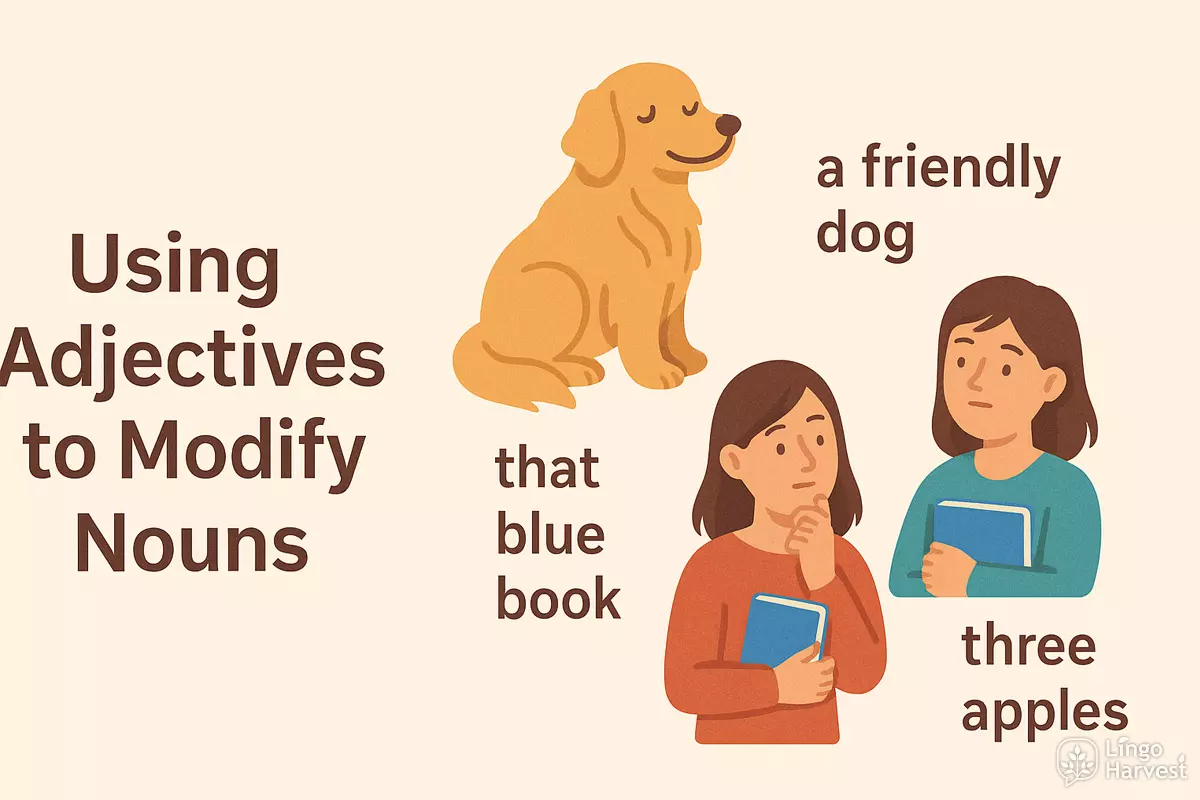
Adjectives answer questions such as "What kind?", "Which one?", and "How many?" They often appear before the noun they describe but can also follow linking verbs. Here are some ways adjectives make nouns clearer:
- Color: red apple, blue sky
- Size: tiny kitten, enormous building
- Shape: round table, square room
- Age: ancient tree, modern phone
- Origin: French bread, American car
- Material: wooden chair, glass window
- Quantity: several books, two dogs
- Opinion: beautiful painting, boring movie
- Purpose: sleeping bag, running shoes
- Condition: broken clock, healthy plant
Adding Detail to Verbs with Adverbs
Adverbs help clarify actions by describing how, when, where, and to what extent something happens. These modifiers often end in "-ly," but not always. Placing an adverb thoughtfully can completely change the meaning of a sentence:
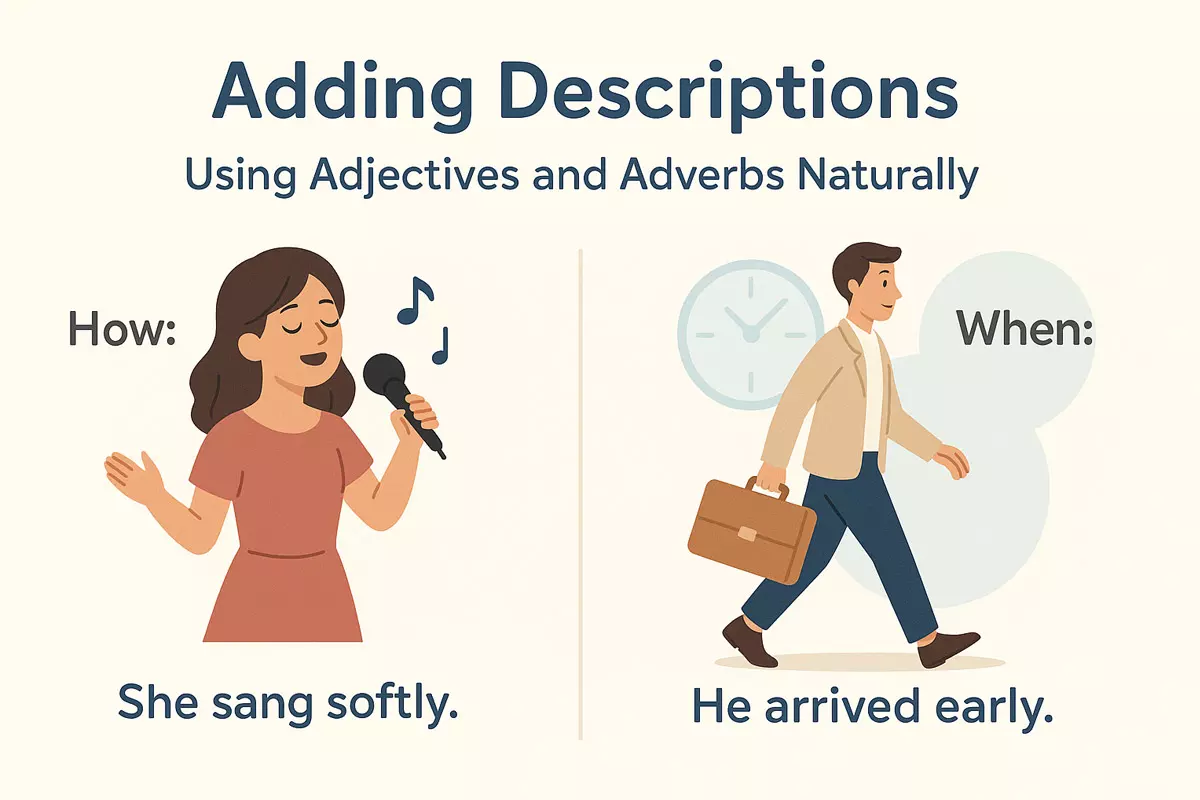
- How: She sang softly.
- When: He arrived early.
- Where: They looked everywhere.
- Frequency: We visit often.
- Degree: The soup is very hot.
- Certainty: She will definitely call.
- Time: I will finish soon.
- Focus: He only eats fruit.
- Direction: The dog ran outside.
- Result: She spoke clearly.
Common Placement Patterns
Modifiers usually come close to the word they describe. Adjectives are placed before nouns, while adverbs can move around depending on what they modify. For example, in "She quickly finished her homework," the adverb "quickly" tells us about "finished." Misplacing a modifier can lead to confusion or unintended humor.
| Modifier Type | Example Sentence |
|---|---|
| Adjective (before noun) | The old house creaked at night. |
| Adjective (after linking verb) | The soup tastes delicious. |
| Adverb (modifying verb) | He quickly finished his meal. |
| Adverb (modifying adjective) | The test was incredibly difficult. |
| Adverb (modifying another adverb) | She spoke very softly. |
Tips for Natural Use
- Choose specific, vivid modifiers over general ones.
- Avoid overloading sentences with too many adjectives or adverbs—clarity comes first.
- Read your sentences aloud to check if the description flows smoothly.
- Mix short and long modifiers for a more interesting rhythm.
- Revise to remove unnecessary words that don't add meaning.
By thoughtfully selecting and placing adjectives and adverbs, you bring clarity and color to your writing without making it feel forced or unnatural.
Where to Place Adjectives
Adjectives usually appear close to the nouns they describe, but their position can vary depending on language rules and stylistic choices. In English, the most common spot for a descriptive word is directly before the noun, as in "a blue car" or "an interesting idea." This placement helps readers immediately connect the description to what’s being described.
The Most Common Position: Before the Noun
In everyday English, adjectives are usually placed right before the noun they modify. This is called the "attributive" position. Here are some typical examples:
- a delicious meal
- three old houses
- her new job
- my favorite book
- several large windows
- the red apple
- an expensive watch
- a quiet street
- the next train
- a tall building
After the Noun: Predicative Position
Sometimes, adjectives come after the noun, especially when connected by linking verbs like "be," "seem," or "become." This is called the "predicative" position. For example:
- The soup is hot.
- Her ideas are brilliant.
- The sky looks clear tonight.
- My hands feel cold.
Notice that in these cases, the adjective follows the verb and describes the subject of the sentence.
Order When Using Multiple Adjectives
When you want to use more than one adjective, there’s a general order native speakers tend to follow. The usual sequence is:
- Quantity or number (e.g., two, several)
- Opinion (e.g., lovely, boring)
- Size (e.g., big, tiny)
- Age (e.g., old, new)
- Shape (e.g., round, square)
- Color (e.g., green, black)
- Origin (e.g., Italian, wooden)
- Material (e.g., metal, silk)
- Purpose (e.g., running [shoes], sleeping [bag])
For example: "three small red Italian leather chairs."
Adjectives After Certain Words
Some adjectives always follow the noun, especially with words like "something," "anyone," "nothing," etc. For example:
- something interesting
- anyone capable
- nothing important
- somewhere quiet
Summary of Placement Patterns
| Pattern | Example |
|---|---|
| Before the noun (attributive) | a beautiful garden |
| After the noun with linking verb (predicative) | The garden is beautiful. |
| After pronouns (something/anyone/nothing + adjective) | nothing serious |
| Multiple adjectives (follow order of adjectives) | two large wooden tables |
Getting comfortable with these positions will make your writing and speaking sound more natural. When in doubt, place the adjective before the noun, and remember that some exceptions exist, especially with certain verbs or pronoun structures.
Using Adverbs for Action Words
Describing how an action is performed brings sentences to life. Adverbs are words that modify verbs, providing extra details about the manner, time, place, or degree of an action. Instead of saying someone "ran," you can explain how they ran—quickly, awkwardly, or silently. This subtle addition helps readers or listeners picture events more clearly.
Common Ways Adverbs Add Detail
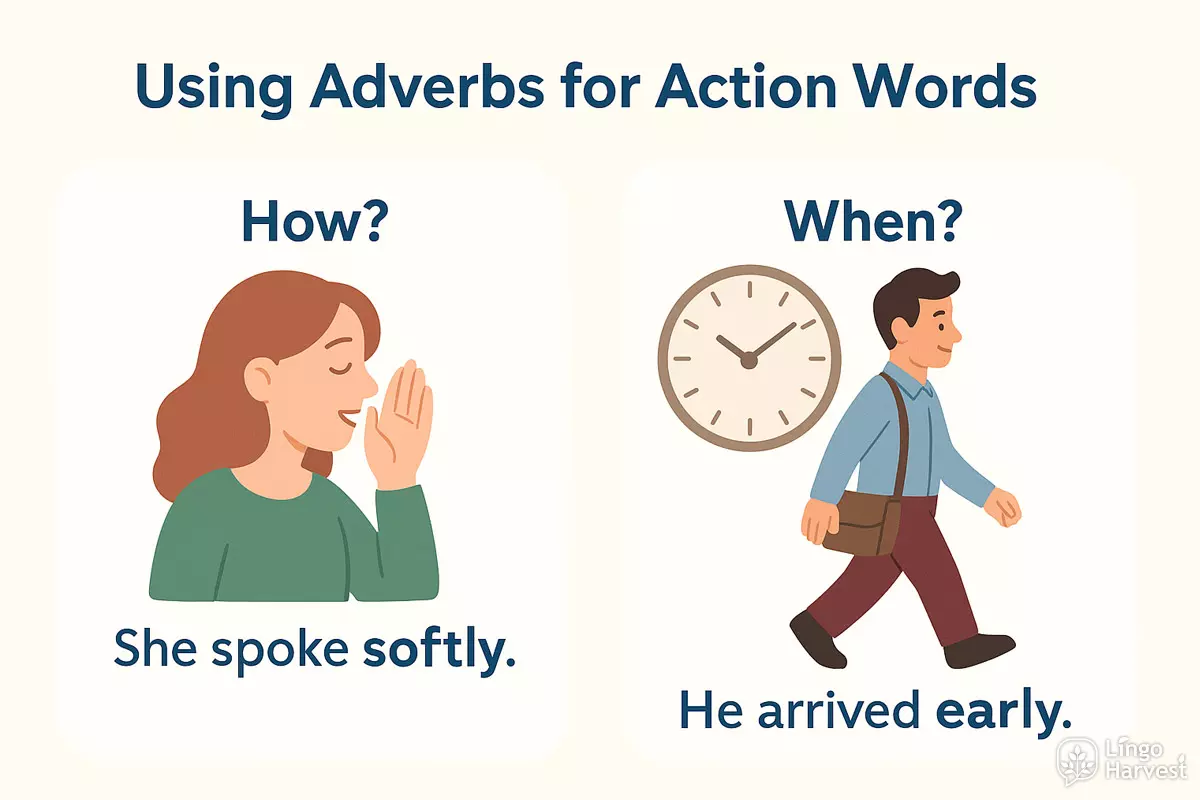
Adverbs often answer questions like "How?", "When?", "Where?", and "To what extent?" Here are some examples:
- How? She spoke softly.
- When? He arrived early.
- Where? They looked everywhere.
- To what extent? The dog almost barked.
Examples of Adverbs Modifying Verbs
- He quickly finished his homework.
- She carefully painted the vase.
- They happily cheered for their team.
- The cat silently crept up the stairs.
- We rarely eat out.
- He almost missed the bus.
- The baby loudly cried.
- It always rains here in April.
- She never forgets a birthday.
- The train suddenly stopped.
- He barely passed the test.
- They often visit their grandparents.
- We usually walk to school.
- She immediately answered the phone.
- The dog eagerly waited for a treat.
Placement of Adverbs in Sentences
Adverbs can appear in different places within a sentence, depending on what you want to emphasize. For instance:
- Before the verb: She quickly finished.
- After the verb: She finished quickly.
- At the beginning: Quickly, she finished her work.
Choosing the right position can subtly change the focus or flow of your sentence.
Comparing Adverb Use with Adjectives
While adjectives describe nouns, adverbs are used to modify verbs, adjectives, or other adverbs. Here’s a comparison to clarify their roles:
| Adjective Example | Adverb Example |
|---|---|
| The quiet child. | The child spoke quietly. |
| A happy dog. | The dog wagged its tail happily. |
| An early train. | The train arrived early. |
| A careful driver. | He drove carefully. |
Tips for Natural Adverb Use
- Choose adverbs that add meaningful detail, not just extra words.
- Vary your adverbs to avoid repetition and keep writing lively.
- Read your sentence aloud; if it sounds awkward, try moving or removing the adverb.
Adding adverbs thoughtfully can make your descriptions vivid and precise, helping your writing feel natural and engaging.
Examples of Natural Description
When describing people, places, or actions, adjectives and adverbs should fit naturally into the flow of your sentences. Forced or excessive modifiers can feel awkward, but well-chosen words add clarity and color. Here are a variety of ways writers use descriptive language smoothly in different contexts.
Describing People and Characters
- She walked gracefully into the sunlit room.
- His messy hair stuck out in every direction.
- The child eagerly opened the brightly wrapped present.
- Her gentle voice calmed everyone around her.
- He answered quickly, barely pausing to think.
Natural Settings and Environments
- The crisp morning air smelled faintly of pine.
- A quietly flowing stream wound through the valley.
- Clouds drifted lazily across the pale blue sky.
- The old, creaky bridge groaned under our weight.
- Leaves softly rustled in the evening breeze.
Comparing Overused and Natural Descriptions
| Overused or Forced | More Natural Alternative |
|---|---|
| The very big dog barked loudly. | The large dog barked sharply. |
| She really quickly ran to the store. | She hurried to the store. |
| It was an extremely beautiful sunset. | The sunset was striking. |
| He is very smart. | He is insightful. |
Tips for Writing Natural Descriptions
- Choose specific adjectives over generic ones (e.g., fragrant flower instead of nice flower).
- Use adverbs sparingly; sometimes a strong verb or adjective is enough.
- Let context guide your word choices—sometimes, a simple noun is most effective.
- Vary sentence length and structure for a more natural feel.
- Read your sentences aloud to check if the description flows smoothly.
Whether you’re painting a vivid scene or adding subtle nuance, the right modifiers help your writing feel authentic and engaging.
Practice: Make Sentences More Detailed
Adding vivid adjectives and adverbs is a simple way to enrich your writing. Let's explore how you can transform basic statements into more expressive and precise sentences. This section guides you through practical exercises and examples, helping you build confidence in using descriptive language naturally.
How to Expand Basic Sentences
Start with a plain sentence. Ask: "What kind? How? When? Where? To what extent?" Answering these questions with descriptive words turns flat phrases into vivid images. Consider the following example:
- Basic: The dog barked.
- Expanded: The small brown dog barked loudly at the passing car.
Notice how simple additions give the reader a much clearer picture.
Practice: Add Details
Try expanding the sentences below by adding suitable adjectives and adverbs. Think about size, color, manner, frequency, or any other relevant detail.
- The girl ran.
- The cake was eaten.
- He spoke.
- The wind blew.
- The car stopped.
- The teacher smiled.
- The sun rose.
- The cat slept.
- The phone rang.
- The river flows.
Show answers
- The young girl ran quickly down the steep hill.
- The delicious chocolate cake was eaten eagerly at the party.
- He spoke softly and politely to the elderly woman.
- The cold wind blew fiercely through the empty streets.
- The red car stopped suddenly at the busy intersection.
- The friendly teacher smiled warmly at her students.
- The bright sun rose slowly above the quiet mountains.
- The fluffy white cat slept peacefully on the cozy couch.
- The old phone rang loudly in the silent house.
- The wide river flows gently through the green valley.
Common Adjectives and Adverbs to Use
Here is a list of useful words you can add to your sentences for more detail:
- quickly
- slowly
- carefully
- bright
- noisy
- beautiful
- angrily
- quiet
- eagerly
- colorful
- peacefully
- gently
- sadly
- delicious
- old
- friendly
- massive
- tiny
- softly
- happily
Before and After: Sentence Transformations
Compare the basic and detailed versions of sample sentences below to see the difference clearly.
| Simple Sentence | Detailed Version |
|---|---|
| The boy laughed. | The cheerful boy laughed loudly at the funny joke. |
| The flowers bloomed. | The colorful spring flowers bloomed beautifully in the warm sunlight. |
| The rain fell. | The heavy rain fell steadily throughout the dark night. |
| The birds sang. | The small birds sang sweetly in the early morning. |
| She answered. | She answered quickly and confidently during the exam. |
Practicing with these techniques will help you write with more color and clarity. As you get comfortable, you'll find your descriptions feel more natural and effective.