Negative Sentences with Do and Does: Easy Beginner Guide

 Here we how to form negatives in the present simple tense, the difference between do not and does not, using contractions like don’t and doesn’t, common errors, and offers practice making sentences negative.
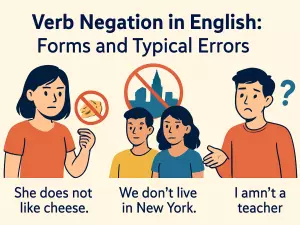
Forming basic negative statements in English can be challenging for beginners, particularly when it comes to using do and does correctly. To create a negative statement in the present simple tense, use do not (don't) with I, you, we, and they, and does not (doesn't) with he, she, and it, followed by the base form of the verb. For example, you would say, I don't like apples or She doesn't play tennis. Remember not to add an -s to the main verb after does not or doesn't. This approach will help you express negative ideas clearly and accurately.
How to Form Negatives in Present Simple
Making negative statements in the present simple tense is straightforward once you know the basic structure. In English, we use the auxiliary verbs do and does to help form negatives. The right choice depends on the subject of the sentence.
Basic Negative Structure
To create a negative sentence in the present simple, place do not (don't) or does not (doesn't) before the base form of the main verb. Use do not with plural subjects and I, you, we, they. Use does not with singular third-person subjects: he, she, it.
Pattern Examples
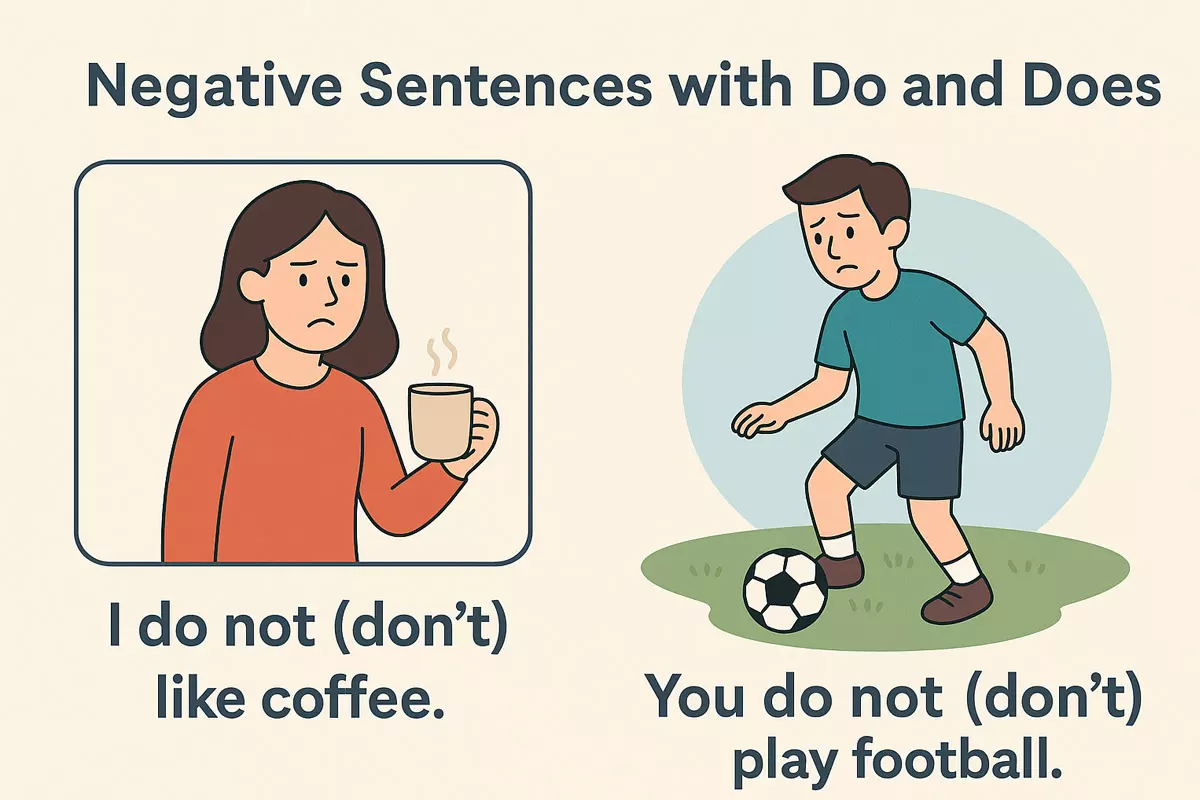
- I do not (don't) like coffee.
- You do not (don't) play football.
- We do not (don't) understand.
- They do not (don't) live here.
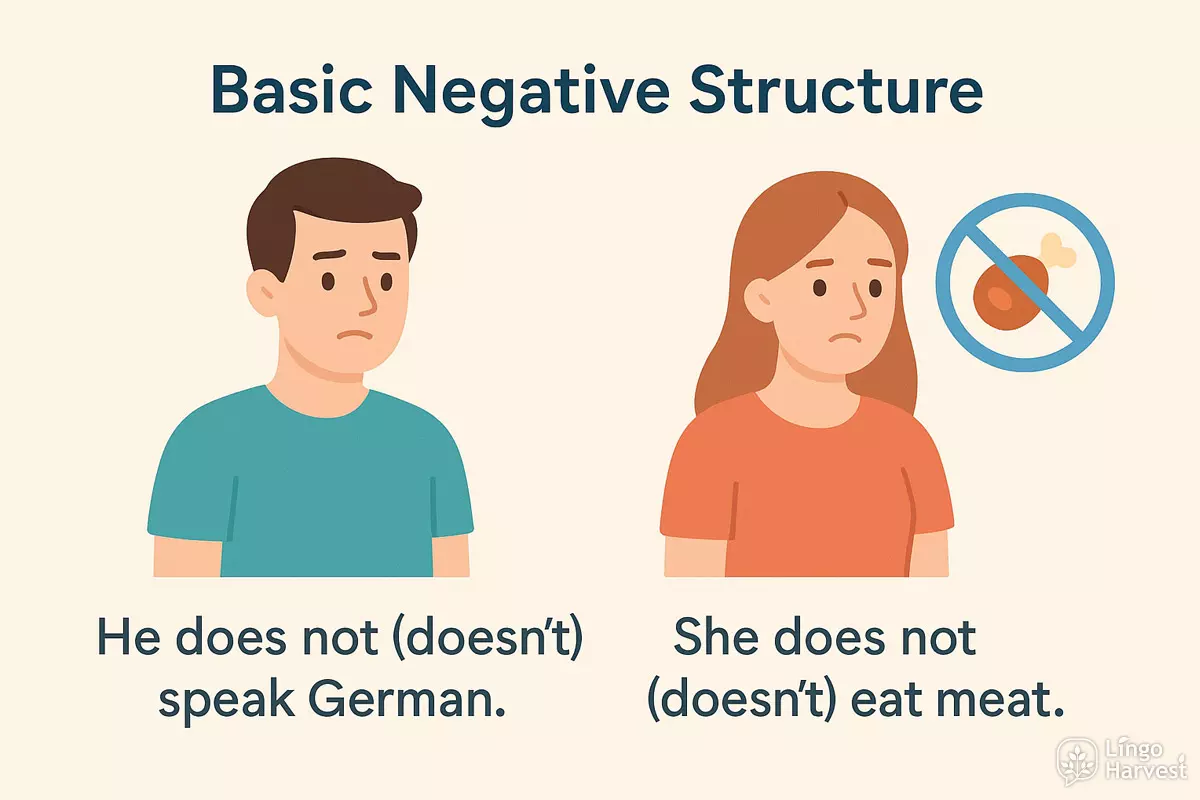
- He does not (doesn't) speak German.
- She does not (doesn't) eat meat.
- It does not (doesn't) rain often.
- My brother does not (doesn't) drive.
- The dog does not (doesn't) bark at night.
- Anna does not (doesn't) study French.
Important Notes
- Always use the base form of the main verb after do not or does not. For example: He doesn't go (not goes).
- Contractions are common in spoken and informal written English: don't and doesn't.
- Never add -s to the main verb in negatives with does not or doesn't.
Quick Reference Table
| Subject | Negative Form | Example |
|---|---|---|
| I / you / we / they | do not (don't) + base verb | You don't work here. |
| he / she / it (singular nouns) |
does not (doesn't) + base verb | He doesn't like apples. |
| Plural nouns | do not (don't) + base verb | The students don't understand. |
| Singular noun | does not (doesn't) + base verb | The cat doesn't sleep here. |
Common Mistakes to Avoid
- ❌ She doesn't likes tea. → She doesn't like tea. (after “doesn't”, use the base form)
- ❌ They doesn't know. → They don't know. (“they” takes “don't”, not “doesn't”)
- ❌ I don't goes. → I don't go. (after “don't”, use the base form)
- ❌ He doesn’t works here. → He doesn’t work here. (no -s after “doesn’t”)
- ❌ She don't understands. → She doesn’t understand. (“she” takes “doesn’t”, base verb follows)
- ❌ It doesn't rains a lot. → It doesn’t rain a lot. (after “doesn’t”, no -s)
- ❌ We doesn't like it. → We don't like it. (“we” uses “don't”)
- ❌ He don't knows the answer. → He doesn’t know the answer. (he → “doesn’t”)
With practice, forming negatives using do and does becomes automatic. Remember to check your subject and always use the base verb after the auxiliary.
Do Not vs Does Not
Understanding when to use "do not" and "does not" is essential for forming correct negative sentences in English. These phrases help us say that something is not true or does not happen, but each one is used with different subjects. Getting this right makes your English sound more natural and accurate.
Choosing Between "Do Not" and "Does Not"
"Do not" (often shortened to "don't") and "does not" ("doesn't") both express negation in the present simple tense. The main difference comes down to the subject of the sentence:
- "Do not" is used with I, you, we, they.
- "Does not" is used with he, she, it (and singular nouns).
Common Patterns and Examples
Below are typical sentence structures and examples for each form. Notice how the verb after "do not" or "does not" always stays in the base form—no -s, -es, or -ing endings.
| Subject | Negative Form | Example |
|---|---|---|
| I / you / we / they | do not + base verb | I do not like coffee. |
| He / she / it | does not + base verb | She does not play soccer. |
| My friends | do not + base verb | My friends do not study here. |
| The cat | does not + base verb | The cat does not eat fish. |
| We | do not + base verb | We do not know the answer. |
| It | does not + base verb | It does not rain today. |
Quick Reference: When to Use Each Form
- Use "do not" for plural subjects and "I" or "you".
- Use "does not" for third person singular (he, she, it, or singular nouns).
Extra Examples for Practice
- You do not need help. ✅
- He does not understand. ✅
- They do not visit often. ✅
- It does not work. ✅
- We do not agree. ✅
- She does not believe the story. ✅
- Dogs do not fly. ✅
- My brother does not like tea. ✅
- I do not remember. ✅
- The bus does not stop here. ✅
Summary
Choosing the correct negative form depends on your subject. Practice with different sentences to become more comfortable, and remember: after "do not" or "does not," always use the base form of the verb. This simple rule keeps your negative sentences clear and correct.
Contracted Forms (Don’t / Doesn’t)
In everyday English, it’s much more common to use shorter versions of “do not” and “does not.” These reduced forms, “don’t” and “doesn’t,” sound natural in conversations, informal writing, and friendly messages. Using them helps your speech flow and makes you sound less formal or stiff.
When and How to Use “Don’t” and “Doesn’t”
“Don’t” is the contracted form of “do not,” and “doesn’t” comes from “does not.” The choice depends on the subject of your sentence:
- Don’t is used with I, you, we, they and plural nouns.
- Doesn’t is used with he, she, it and singular nouns (except “I” and “you”).
Here are some examples to make it clearer:
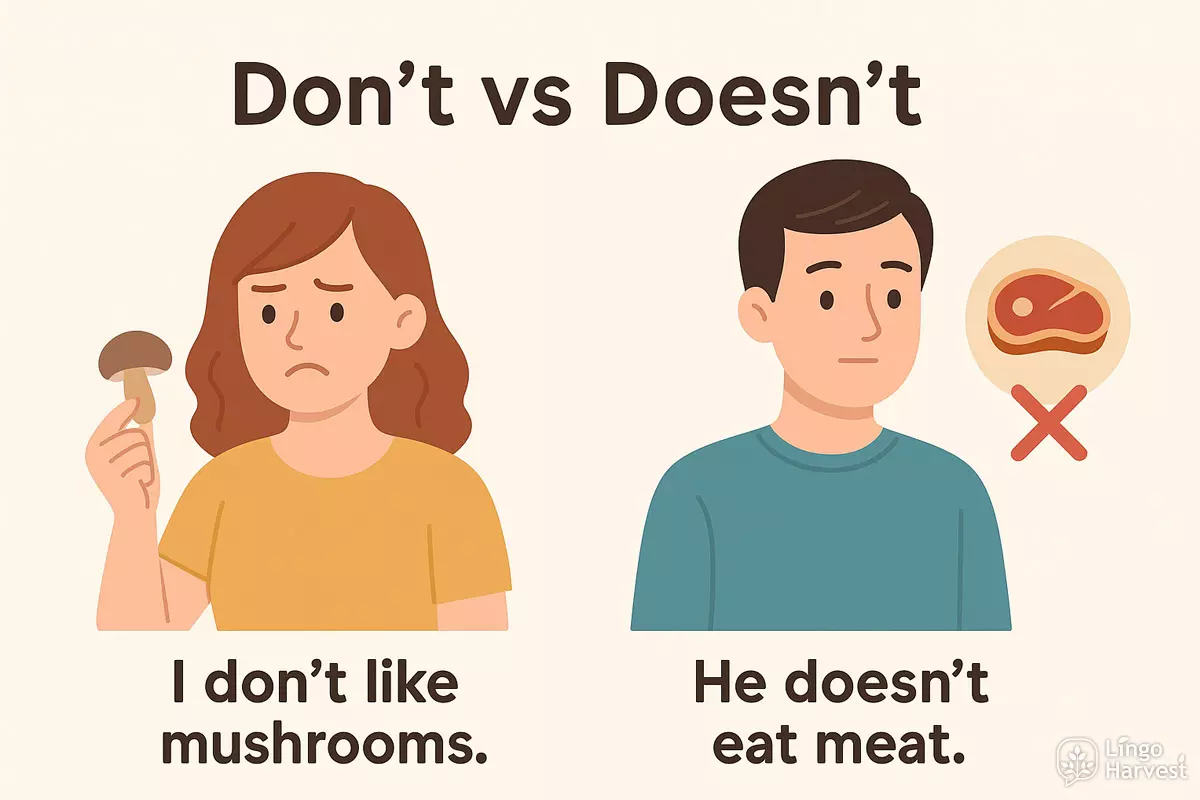
- I don’t like mushrooms.
- You don’t understand the question.
- They don’t play chess.
- We don’t need help.
- He doesn’t eat meat.
- She doesn’t work on weekends.
- It doesn’t make sense.
- The dog doesn’t bark at night.
- My friends don’t live nearby.
- Anna doesn’t drive to work.
- The books don’t belong here.
- Tom doesn’t remember the answer.
Common Mistakes to Avoid
Mixing up “don’t” and “doesn’t” is a frequent error. Always match the contracted form with the correct subject. For example:
- ❌ He don’t like pizza. → He doesn’t like pizza.
- ❌ They doesn’t go to school. → They don’t go to school.
Quick Reference Table
| Subject | Contracted Negative Form | Example |
|---|---|---|
| I | don’t | I don’t know. |
| You | don’t | You don’t care. |
| He / She / It | doesn’t | She doesn’t sing. |
| We / They | don’t | They don’t agree. |
Summary Tips
- Use contractions in spoken and informal written English.
- Match “don’t” with plural subjects and “doesn’t” with third person singular.
- Remember: the main verb stays in its base form after both “don’t” and “doesn’t.”
Common Mistakes to Avoid
When learning how to make negative sentences using "do" and "does," beginners often fall into some typical traps. Recognizing these errors early can help you build stronger English skills and communicate more clearly.
Mixing Up "Do" and "Does"
A frequent problem is using the wrong auxiliary verb for the subject. "Do" is used with I, you, we, and they, while "does" matches he, she, and it. Confusing these can make sentences sound unnatural.
Forgetting to Use the Base Verb
After "do not" or "does not," always use the base form of the main verb, not the -s or -ed form. Beginners sometimes say "She doesn’t goes" instead of "She doesn’t go."
Adding Extra Words or Forms
It's easy to add unnecessary words or mix forms when making simple negatives. Watch out for these issues:
- Using double negatives: "She doesn't not like pizza."
- Adding -s to the main verb after "doesn't": "He doesn't plays football."
- Using "am/are/is" with "do/does": "She does not is happy."
- Leaving out "not": "I do want to go" (when you mean the negative).
- Forgetting the auxiliary: "He not like apples."
- Using "do" with third person singular: "He do not work."
- Writing "doesn't likes" or "doesn't goes."
- Switching word order: "Not she does like it."
- Omitting the subject: "Doesn't like chocolate."
- Using "don't" with singular: "She don't know."
Comparison Table: Correct vs. Incorrect Forms
| Incorrect | Correct |
|---|---|
| He don't likes ice cream. | He doesn't like ice cream. |
| She doesn't goes to school. | She doesn't go to school. |
| We doesn't play football. | We don't play football. |
| I do not eats breakfast. | I do not eat breakfast. |
| It don't rain here. | It doesn't rain here. |
| You doesn't understand. | You don't understand. |
| Does not she like music? | Doesn't she like music? |
| He does not is happy. | He is not happy. |
Remember These Tips
Pay close attention to the form of the verb after "do/does not," and always match the auxiliary to the subject. Practice rewriting any sentence you’re unsure about, and listen for these patterns in everyday English. With regular practice, these common errors will become much easier to spot and avoid.
Practice: Make Sentences Negative
Working with negative sentences is a great way to check your understanding of "do" and "does" in English. Let's try some exercises to help you get comfortable forming negatives in the present simple.
Change These Sentences to Negative
Rewrite the following positive sentences as negatives. Remember: use do not (don't) for I/you/we/they, and does not (doesn't) for he/she/it.
- She likes apples.
- They play football.
- He works on Mondays.
- I eat breakfast at 7 am.
- We watch TV every night.
- It rains a lot here.
- You speak French.
- The dog barks at strangers.
- My friends visit often.
- Anna reads books.
Show answers
- She does not (doesn't) like apples.
- They do not (don't) play football.
- He does not (doesn't) work on Mondays.
- I do not (don't) eat breakfast at 7 am.
- We do not (don't) watch TV every night.
- It does not (doesn't) rain a lot here.
- You do not (don't) speak French.
- The dog does not (doesn't) bark at strangers.
- My friends do not (don't) visit often.
- Anna does not (doesn't) read books.
Quick Reference: Positive vs. Negative Sentences
See how the structure changes when you make a sentence negative. Notice how the main verb goes back to its base form in the negative.
| Positive | Negative |
|---|---|
| I play tennis. | I do not play tennis. |
| She likes pizza. | She does not like pizza. |
| They walk to school. | They do not walk to school. |
| He drinks coffee. | He does not drink coffee. |
| We study English. | We do not study English. |
| It works well. | It does not work well. |
Identify the Mistakes
Some of these negative sentences have errors. Spot the incorrect ones and correct them.
- He don't like winter.
- They doesn't live here.
- I don't understand.
- She doesn't eats meat.
- We don't go to bed late.
Show answers
- He doesn't like winter. (Corrected: don't → doesn't)
- They don't live here. (Corrected: doesn't → don't)
- I don't understand. (Correct)
- She doesn't eat meat. (Corrected: eats → eat)
- We don't go to bed late. (Correct)
More Practice: Make Negative Sentences
Now try making negative sentences with these prompts. Use the right form of "do" or "does" and change the verb to its base form.
- You / like / coffee
- He / play / the guitar
- They / work / on Sundays
- It / snow / in July
- We / eat / fish
Show answers
- You do not (don't) like coffee.
- He does not (doesn't) play the guitar.
- They do not (don't) work on Sundays.
- It does not (doesn't) snow in July.
- We do not (don't) eat fish.
Review your answers to check for common mistakes, like using the wrong form of "do/does" or forgetting to use the base form of the verb. Practicing these patterns will help you speak and write more confidently in English.