Short Answers in English: Yes, I Do / No, I Don’t

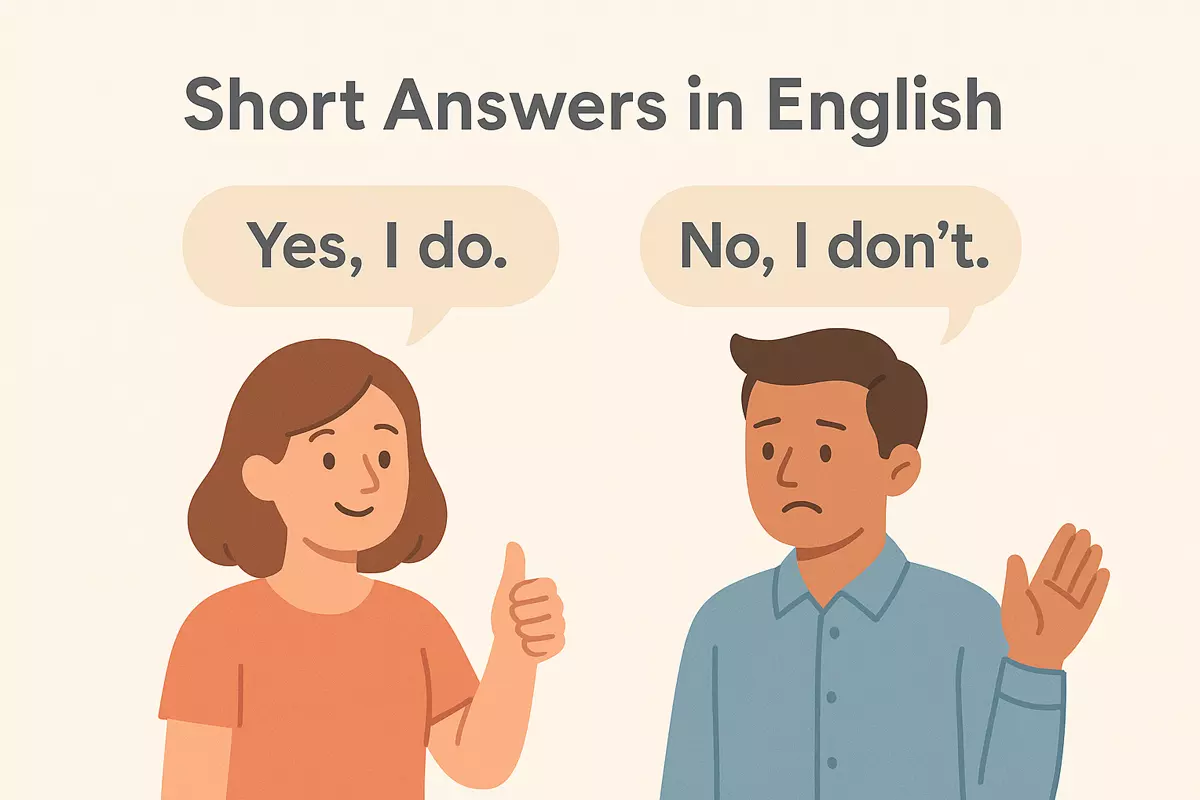 Here we when to use short answers in English, explains positive and negative patterns, and details how to respond to questions using be, do, have, and modal verbs. It also provides practice matching questions with appropriate answers.
Being able to respond briefly in English, such as expressing agreement or disagreement, is a valuable skill for everyday conversations. Learning how to give quick and clear replies not only helps you communicate more efficiently but also makes your interactions feel more natural and confident. This ability is especially useful when answering simple questions, allowing you to participate actively and comfortably in discussions with others. Practicing these short responses can greatly improve your overall fluency and ease in English conversations.
When to Use Short Answers
Short replies like "Yes, I do" or "No, I don’t" are common in everyday English, especially in spoken conversations. These brief responses help you sound natural and polite, instead of just saying "yes" or "no" alone, which can seem abrupt. Using these forms shows you understand the question and keeps the dialogue smooth.
Typical Situations for Short Answers
You’ll most often hear these concise forms in the following situations:
- Answering yes/no questions politely.
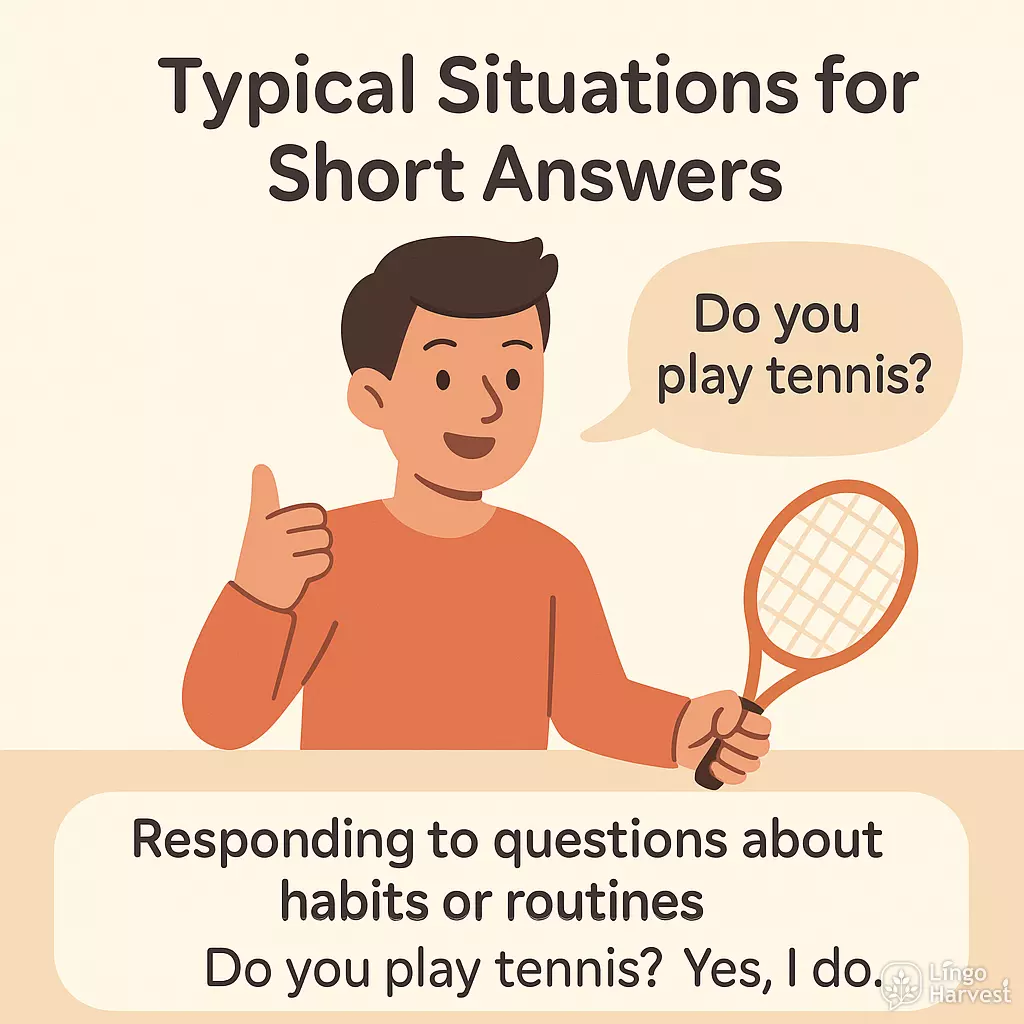
- Responding to questions about habits or routines (Do you play tennis? Yes, I do.).
- Replying to questions about ability (Can you swim? No, I can’t.).
- Talking about experiences (Have you been to London? Yes, I have.).
- Reacting in interviews or formal settings.
- Agreeing or disagreeing without repeating the whole question.
- Confirming or denying information in group discussions.
- Giving quick answers in classrooms or language exams.
- Clarifying when someone mishears (Did you say coffee? No, I didn’t.).
- Expressing politeness or friendliness in casual chats.
Common Patterns for Short Answers
The structure of short answers depends on the verb used in the question. These patterns help you reply quickly and correctly. Here’s a comparison of typical forms:
| Question Type | Short Answer Example |
|---|---|
| Present Simple (do/does) | Do you like tea? → Yes, I do. / No, I don’t. |
| Present Continuous (am/is/are) | Are they coming? → Yes, they are. / No, they aren’t. |
| Past Simple (did) | Did she call you? → Yes, she did. / No, she didn’t. |
| Modal Verbs (can/will/must/etc.) | Can you help? → Yes, I can. / No, I can’t. Will he join us? → No, he won’t. |
| Present Perfect (have/has) | Have you finished? → Yes, I have. / No, I haven’t. |
When to Avoid Short Answers
While these brief replies are useful, sometimes a longer response is better—like when more details are needed, or to avoid sounding rude in sensitive situations. If someone asks for your opinion or expects more information, expand your answer. By mastering when and how to use short answers, you’ll communicate more smoothly and naturally in English conversations.
Positive and Negative Patterns
Understanding how to form short answers in English is essential for clear and natural communication. These responses typically follow set structures, making it easy to reply quickly and correctly to yes/no questions. The pattern depends on whether you are agreeing (affirmative) or disagreeing (negative) with the question.
How Short Answers Are Built
Short answers are made up of three main parts:
- The word "Yes" or "No"
- The subject pronoun (I, you, he, she, it, we, they)
- The auxiliary or modal verb from the question (do, does, did, have, can, etc.)
For negative replies, you add "not" (often contracted, like "don't" or "doesn't").
Common Question Patterns and Short Answers
The structure of the reply matches the type of auxiliary verb used in the question. Here are some typical examples:
- Do you like coffee? – Yes, I do. / No, I don't.
- Does she play tennis? – Yes, she does. / No, she doesn't.
- Did they arrive on time? – Yes, they did. / No, they didn't.
- Are you ready? – Yes, I am. / No, I'm not.
- Is it raining? – Yes, it is. / No, it isn't.
- Can he swim? – Yes, he can. / No, he can't.
- Have you finished? – Yes, I have. / No, I haven't.
- Will she come? – Yes, she will. / No, she won't.
- Should we start? – Yes, we should. / No, we shouldn't.
- Would you like some tea? – Yes, I would. / No, I wouldn't.
Patterns for Different Pronouns and Verbs
The choice of auxiliary verb and pronoun depends on the question. The reply always echoes the verb and pronoun in the question for clarity. For example:
- Are they coming? – Yes, they are. / No, they aren't.
- Do you understand? – Yes, I do. / No, I don't.
Comparison Table: Affirmative vs. Negative Forms
| Question | Affirmative Reply | Negative Reply |
|---|---|---|
| Do you like apples? | Yes, I do. | No, I don't. |
| Does he drive? | Yes, he does. | No, he doesn't. |
| Are we late? | Yes, we are. | No, we aren't. |
| Have they left? | Yes, they have. | No, they haven't. |
| Can she help? | Yes, she can. | No, she can't. |
Helpful Tips
- Always use the same auxiliary or modal verb from the question in your answer.
- Contract negative forms in speech and informal writing (e.g., "don't" instead of "do not").
- Match the subject pronoun to the person or thing in the question.
- Keep answers short and avoid repeating the full question.
Mastering these reply structures helps you sound more fluent and natural in everyday English conversations.
Questions with Be, Do, Have
Understanding how to form and answer questions using “be,” “do,” and “have” is essential for clear everyday communication. Each verb acts differently in questions and short answers, so paying attention to their patterns helps you respond naturally and correctly.
How “Be,” “Do,” and “Have” Work in Questions
The verbs “be,” “do,” and “have” serve as auxiliary (helping) verbs in English. They change the structure of a question and influence the way you give short answers. Here’s how they function:
- Be: Used for questions about identity, state, or characteristics (e.g., “Are you ready?”).
- Do/Does/Did: Used to form questions in the simple present or past for most verbs (e.g., “Do you like tea?”).
- Have/Has/Had: Used for possession or perfect tenses (e.g., “Have you finished?”).
Short Answers: Patterns and Examples
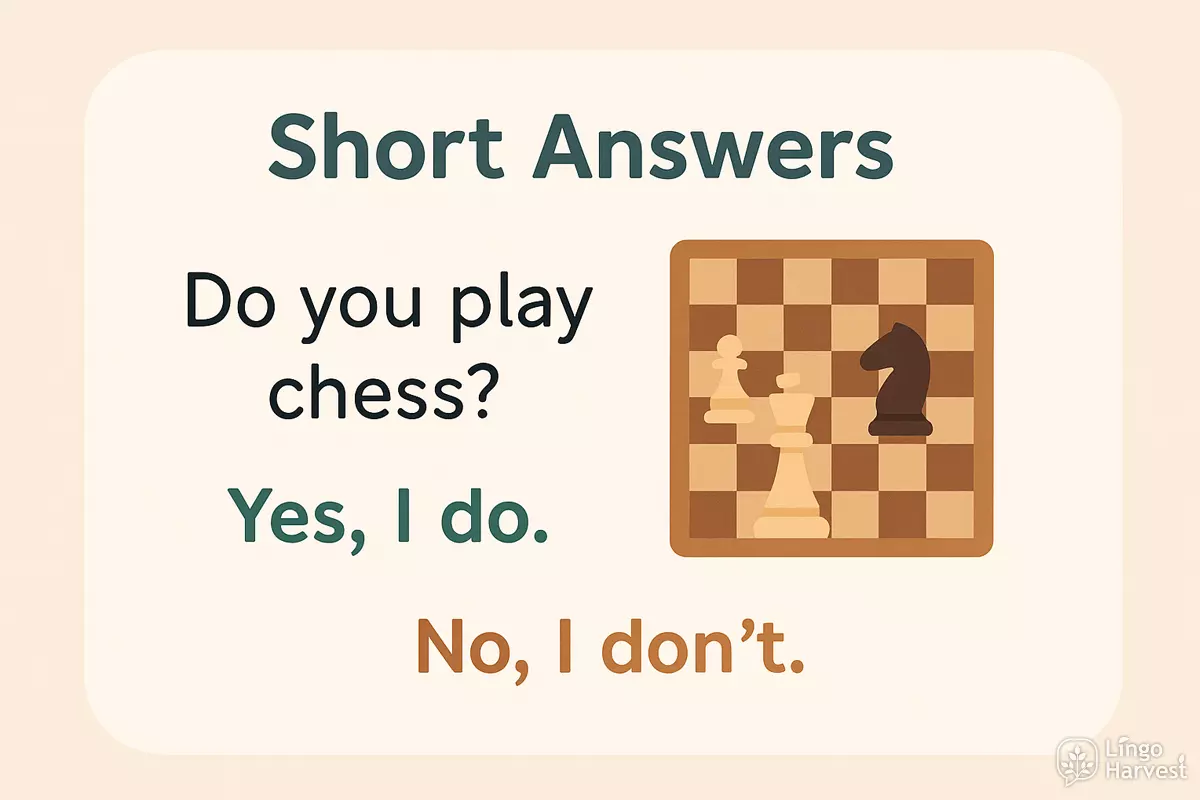
Short answers typically use the auxiliary verb from the question. The structure is: Yes/No + subject + auxiliary (be, do, have). This avoids unnecessary repetition and sounds more natural.
| Question | Short Answer: Yes / No |
|---|---|
| Are you tired? | Yes, I am. / No, I’m not. |
| Is she at home? | Yes, she is. / No, she isn’t. |
| Do you play chess? | Yes, I do. / No, I don’t. |
| Does he drive? | Yes, he does. / No, he doesn’t. |
| Did they call? | Yes, they did. / No, they didn’t. |
| Have you seen it? | Yes, I have. / No, I haven’t. |
| Has she finished? | Yes, she has. / No, she hasn’t. |
| Had you eaten? | Yes, I had. / No, I hadn’t. |
Key Tips for Natural Short Answers
- Always match the auxiliary verb in your answer to the one in the question.
- Use contractions in negative short answers for a conversational style: isn’t, don’t, haven’t.
- Don’t repeat the whole question—just give the short form.
- If the question uses “do/does/did,” answer with “do/does/did.”
- For “be” questions (am/are/is/was/were), repeat the same verb.
- For “have” as an auxiliary (perfect tenses), use “have/has/had” in your reply.
Mastering these patterns helps you sound fluent and confident, especially in everyday conversations.
Modal Verbs in Answers
When responding to questions that use modal verbs (like can, must, should, will, etc.), English speakers typically mirror the modal in their short answers. This means the same modal verb appears in the reply, creating clear and natural-sounding responses. For example, if someone asks, "Can you swim?" the short answer would be "Yes, I can" or "No, I can't." The modal verb stays the same as in the question.
How Short Answers with Modals Work
Short answers with modal verbs follow a simple structure: Yes/No + subject + modal (+ not). The subject is usually a pronoun (I, you, he, she, we, they). The negative form is made by adding not (often contracted, e.g., can't, won't, shouldn't).
- Can you drive? → Yes, I can. / No, I can't.
- Should she study more? → Yes, she should. / No, she shouldn't.
- Will they join us? → Yes, they will. / No, they won't.
- Must we leave now? → Yes, we must. / No, we mustn't.
- Could he help us? → Yes, he could. / No, he couldn't.
- Would you like tea? → Yes, I would. / No, I wouldn't.
- Might it rain? → Yes, it might. / No, it might not.
- May I sit here? → Yes, you may. / No, you may not.
- Shall we go? → Yes, we shall. / No, we shan't.
- Ought he to apologize? → Yes, he ought. / No, he ought not.
| Question | Short Answer (Yes/No) |
|---|---|
| Can she come? | Yes, she can. / No, she can't. |
| Will you help? | Yes, I will. / No, I won't. |
| Should we start? | Yes, we should. / No, we shouldn't. |
| Must I go? | Yes, you must. / No, you mustn't. |
| Would he agree? | Yes, he would. / No, he wouldn't. |
| May they leave? | Yes, they may. / No, they may not. |
| Could you repeat? | Yes, I could. / No, I couldn't. |
| Might it snow? | Yes, it might. / No, it might not. |
Points to Remember
- Always match the modal verb in your reply to the one in the question.
- Use contractions in negative answers for natural speech (e.g., can't, won't).
- Some modals (like "mustn't" or "shan't") are less common in everyday conversation.
- In formal contexts, avoid contractions and use the full form (e.g., "No, I cannot.").
These patterns help you give clear, concise answers and sound more fluent when responding to questions with modal verbs.
Practice: Match Questions with Answers
Understanding how to give short answers in English, especially using "Yes, I do" or "No, I don’t," is essential for clear daily communication. Below, you’ll find a variety of questions you might hear in conversations. Your task is to match each question with the correct brief response.
Match Each Question with Its Short Answer
Read the questions and decide which short answer fits best. Answers are provided at the end.
- Do you like chocolate?
- Do they live in London?
- Do we have class today?
- Do you play tennis?
- Do I need a ticket?
- Do cats like water?
- Do you speak Spanish?
- Do your friends know the answer?
- Do your parents work on weekends?
- Do we need more milk?
- Do you remember his name?
- Do dogs eat vegetables?
- Do I call you tomorrow?
- Do we have any homework?
- Do you often travel?
- Yes, I do.
- No, I don’t.
- Yes, they do.
- No, they don’t.
- Yes, we do.
- No, we don’t.
Show answers
- Yes, I do.
- No, they don’t.
- Yes, we do.
- No, I don’t.
- Yes, you do.
- No, they don’t.
- Yes, I do.
- No, they don’t.
- No, they don’t.
- Yes, we do.
- No, I don’t.
- No, they don’t.
- No, you don’t.
- Yes, we do.
- No, I don’t.
Common Patterns: Short Answers with "Do"
Short answers in English often use "do" or "don’t" with the subject. Here are typical forms:
| Question | Short Answer |
|---|---|
| Do you like tea? | Yes, I do. / No, I don’t. |
| Do we need help? | Yes, we do. / No, we don’t. |
| Do they understand? | Yes, they do. / No, they don’t. |
| Do I call now? | Yes, you do. / No, you don’t. |
| Do your friends agree? | Yes, they do. / No, they don’t. |
By practicing these question-and-answer patterns, you’ll become more confident in giving quick, natural responses in English.