Pronoun Choice Exercise: He, She, It, or They?

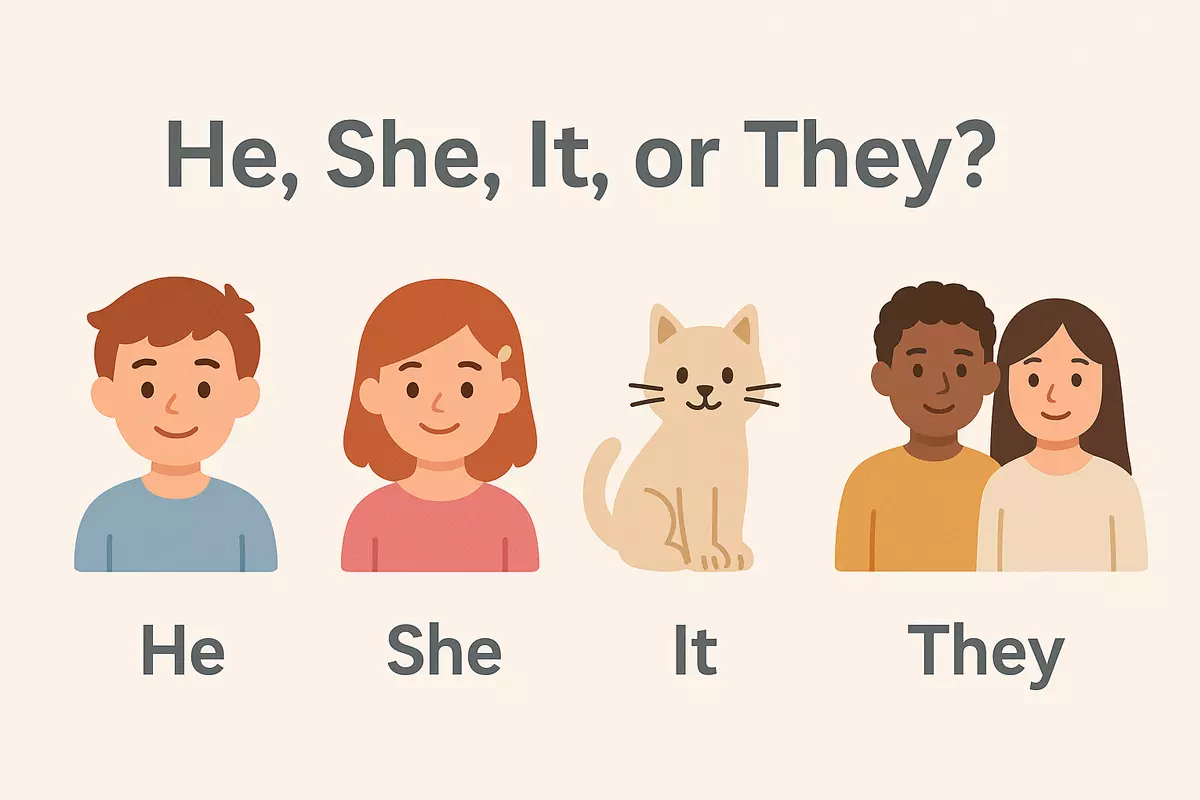 The article reviews subject pronouns, explains when to use he, she, it, or they, and discusses gender-neutral pronouns. It also gives context-based examples and practice exercises to help you choose the right pronoun in various situations.
Selecting the appropriate word to refer to people, animals, or objects can be more challenging than it appears at first. This exercise is designed to help you improve your skills in choosing the correct form when discussing individuals, groups, or things in various contexts. By practicing with different examples, you will become more confident in identifying and using the right words, which is essential for clear and effective communication in both writing and speech.
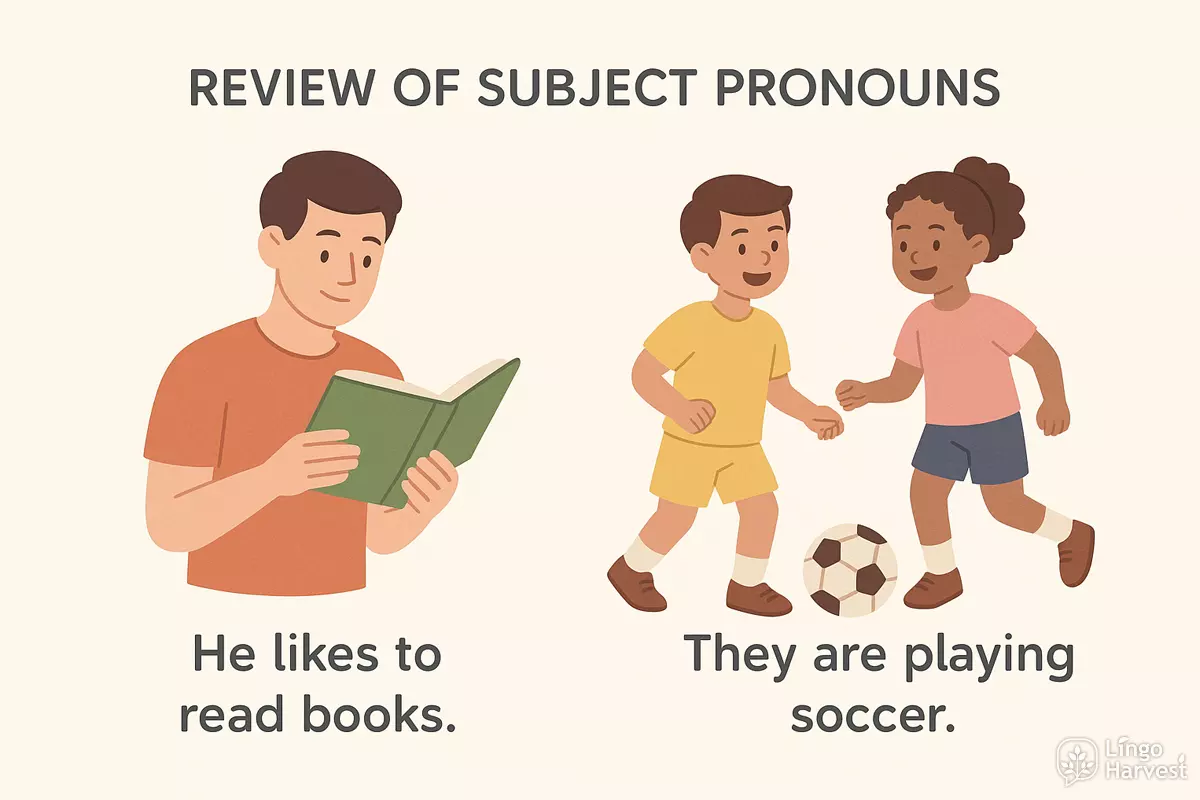
Review of Subject Pronouns
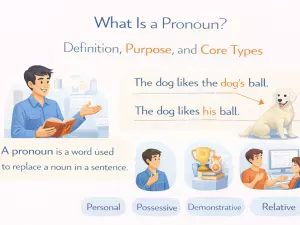
Understanding subject pronouns is essential for clear and accurate communication in English. These words take the place of nouns and indicate who or what is performing the action in a sentence. By choosing the correct pronoun, you avoid unnecessary repetition and make your writing or speech more natural.
What Are Subject Pronouns?
Subject pronouns are words like he, she, it, and they that act as the subject of a sentence. They replace specific nouns, such as names of people, animals, things, or groups. Each pronoun matches the number and gender (where relevant) of the noun it replaces.
English Subject Pronouns: Forms and Uses
| Pronoun | When to Use | Example Sentence |
|---|---|---|
| I | Speaker refers to themselves | I am learning English. |
| He | One male person | He likes to read books. |
| She | One female person | She is a doctor. |
| It | One thing, animal, or unknown gender | It is raining outside. |
| They | More than one person or thing; singular for nonbinary | They are playing soccer. |
| We | The speaker and at least one other person | We will travel tomorrow. |
| You | The person or people spoken to | You are welcome here. |
Quick Reference: When to Use Each Pronoun
- I: Use when talking about yourself.
- He: Use for a single male individual.
- She: Use for a single female individual.
- It: Use for objects, animals (when gender is unknown or irrelevant), or ideas.
- They: Use for groups or when referring to a person of unspecified gender.
- We: Use when talking about a group including yourself.
- You: Use when addressing one or more people directly.
Practice: Choose the Correct Subject Pronoun
- _____ is my sister. (Anna)
- _____ are going to the movies. (Tom and I)
- _____ is raining today.
- _____ love pizza. (My friends)
- _____ is from Brazil. (Lucas)
- _____ am tired.
- _____ are my teachers. (Mr. Lee and Ms. Patel)
Show answers
- She is my sister. (Anna = she)
- We are going to the movies. (Tom and I = we)
- It is raining today. (weather = it)
- They love pizza. (My friends = they)
- He is from Brazil. (Lucas = he)
- I am tired.
- They are my teachers. (Mr. Lee and Ms. Patel = they)
Getting comfortable with these pronouns improves your ability to construct sentences efficiently and correctly. Practice using them in context to develop fluency and accuracy.
When to Use He, She, It, or They
Choosing the right pronoun depends on what or whom you are referring to. English pronouns help avoid repetition and make sentences clearer, but each one has its own use. Let's break down how to select among these options for people, animals, and objects.
Singular Pronouns: He, She, It
Use he and she for individual people, based on gender identity or expression. It is typically used for things, animals (when gender is unknown or unimportant), or sometimes babies.
- He: For a male person or animal (if gender is known and relevant).
- She: For a female person or animal (if gender is known and relevant).
- It: For objects, ideas, places, or animals when gender is not specified.
Plural or Gender-Neutral: They
The pronoun they serves two main functions: referring to more than one person or thing, and as a gender-neutral singular pronoun when gender is unknown, unspecified, or non-binary.
- They: For two or more people or things.
- They: For a single person when gender is unknown or should not be specified (e.g., "Someone left their bag. They will come back for it.").
Quick Reference Table
| Pronoun | Typical Usage |
|---|---|
| He | Male person or animal (singular) |
| She | Female person or animal (singular) |
| It | Object, idea, place, or animal (gender unknown/not important) |
| They | Plural people/things, or a single person (gender-neutral) |
Examples in Sentences
Seeing these pronouns in action can help clarify their use:
- He is my brother.
- She works at the hospital.
- It is raining outside.
- They are playing soccer.
- If anyone calls, tell them I’ll be back soon.
- The cat is hungry. It wants food.
- My teachers said they would help.
- Someone forgot their umbrella. They might return for it.
- She and he are friends. They go to school together.
- The company announced it will expand soon.
Understanding these patterns makes it easier to choose the right pronoun in any context, whether you’re writing or speaking.
Gender-Neutral Pronouns
English speakers often need words that refer to someone without specifying their gender. This is especially useful when the gender is unknown, irrelevant, or when talking about people who do not identify as exclusively male or female. The most common choice is "they," used both in the singular and plural, but other forms and strategies exist as well.
Commonly Used Options
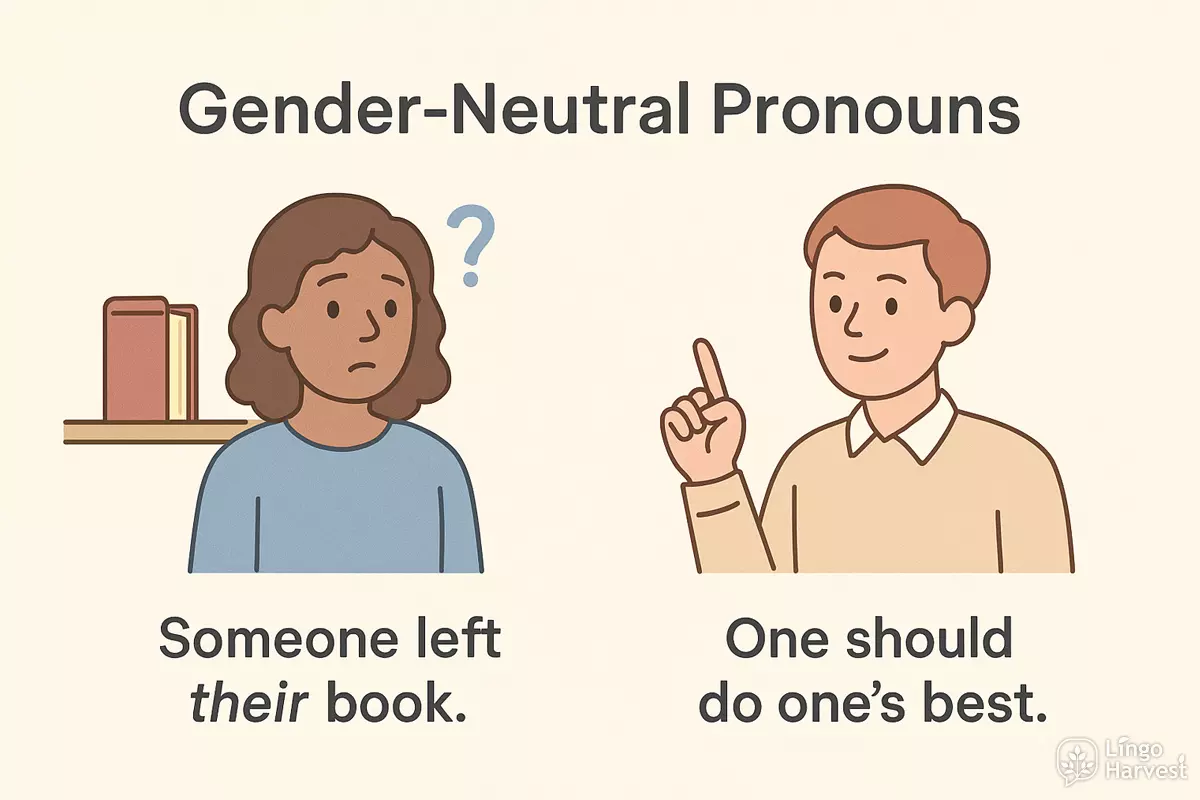
- They/them/their: Used as a singular pronoun for individuals of any gender, as in "Someone left their book."
- One/one's: More formal, often found in instructions or general statements, e.g., "One should do one's best."
- You/your: Casual or direct, sometimes used to avoid gender altogether.
- None: Sometimes, sentences are reworded to avoid pronouns, e.g., "The student should submit the assignment."
Examples in Sentences
- "Each participant should submit their form by Monday."
- "If anyone calls, tell them I’ll call back."
- "No one wants to lose their place in line."
- "Every child should bring their favorite book."
- "A person can choose what they want."
- "Nobody likes when their efforts go unnoticed."
- "Someone left their umbrella."
- "If a customer is unhappy, they should contact support."
- "The winner will be announced when they arrive."
- "Whoever finishes first can collect their prize."
Less Common Gender-Inclusive Pronouns
Some individuals prefer neopronouns—new or invented forms that serve the same purpose. These are less widely used but recognized in some communities:
- ze/zir/zir (e.g., "Ze forgot zir book.")
- xe/xem/xyr (e.g., "Xe will bring xyr laptop.")
- ey/em/eir (e.g., "Ey said eir opinion.")
- per/per/per (e.g., "Per wrote per name.")
Comparison of Gendered vs. Neutral Pronouns
| Subject | Object | Possessive Adjective | Possessive Pronoun | Reflexive |
|---|---|---|---|---|
| He | him | his | his | himself |
| She | her | her | hers | herself |
| They | them | their | theirs | themself/themselves |
| Ze | zir | zir | zirs | zirself |
| Xe | xem | xyr | xyrs | xemself |
Choosing a neutral pronoun helps keep language inclusive and respectful. When unsure what to use, "they" is generally accepted in both spoken and written English. If someone shares a specific preference, using their chosen words shows consideration and respect.
Context-Based Examples
Understanding how to select the right pronoun often depends on the situation and the noun being replaced. Let’s look at practical sentences where “he,” “she,” “it,” or “they” would be the appropriate choice. Seeing these pronouns in action, in different contexts, can help clarify their correct usage.
Choosing the Right Pronoun
The subject, gender, and number of the noun are crucial factors. For people, use “he” for males and “she” for females when gender is known. “They” serves for groups or when gender is unknown. For objects, animals, or things, “it” is standard, unless the animal’s gender is specified or personified.
- My brother forgot his keys, so he was late. ✅
- The teacher said she would help us after class. ✅
- The weather is strange today; it keeps changing. ✅
- Someone left their umbrella here. (gender unknown) ✅
- The cats are hungry; they want food. ✅
- He is playing soccer. (A boy or man)
- She is reading a book. (A girl or woman)
- It is raining outside. (Weather/thing)
- They are going to the park. (A group of people or animals)
- The dog is barking because it hears something. (Gender unspecified)
- Emily and John said they would arrive soon.
- Each student must bring their own lunch. (Singular “they” for inclusivity)
- The company announced it will open a new branch.
- The doctor said he would call tomorrow. (Assuming doctor is male)
- The committee made its decision. (A group as a single entity)
- Neither of the boys said he was tired.
- Every employee must submit their report by Friday.
Comparison Table: Pronoun Use in Context
| Situation | Correct Pronoun |
|---|---|
| Talking about a male friend | he |
| Describing a female teacher | she |
| Referring to a group of people | they |
| Speaking about a car | it |
| Unknown or unspecified person | they |
| Animal without specified gender | it |
| Two or more pets | they |
| Company or organization (as one unit) | it |
By practicing with these scenarios, you can build confidence in selecting the right word for each situation. Remember: context always determines which form is accurate and natural.
Practice: Choose the Correct Pronoun
Test your understanding of English pronouns by selecting the appropriate word in each sentence. Focus on the subject pronouns: he, she, it, and they. These are used to refer to people, animals, things, or groups, depending on context. Pay attention to clues in each sentence that suggest the correct choice.
Fill in the Blank Sentences
- Maria is a doctor. ____ works at the city hospital every day.
- The cat is sleeping. ____ looks very comfortable on the sofa.
- Tom and Jerry are best friends. ____ always play together after school.
- My phone is missing. ____ was on the table this morning.
- Mr. Brown is our teacher. ____ explains math very clearly.
- The apples are fresh. ____ are from the local market.
- Emily and I went to the park. ____ had a picnic under the trees.
- The dog is barking loudly. ____ wants to go outside.
- Anna is reading a book. ____ enjoys mystery stories.
- The books are on the shelf. ____ belong to the library.
Show answers
- She
- It
- They
- It
- He
- They
- We
- It
- She
- They
Quick Pronoun Identification
Decide which pronoun to use for each noun or group. Use the options: he, she, it, or they.
- Sarah
- My friends
- The computer
- John
- The dogs
- The sun
- Lisa and Mark
- The car
- My parents
- Jessica
Show answers
- She
- They
- It
- He
- They
- It
- They
- It
- They
- She
Common Mistakes to Watch For
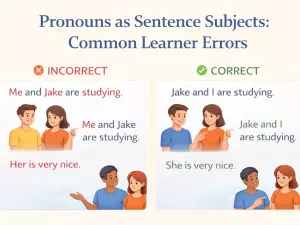
Choosing the right pronoun can be tricky, especially with groups or things. Here are some examples of typical errors and the correct forms:
- Incorrect: The books is on the table.
Correct: They are on the table. - Incorrect: My brother are tall.
Correct: He is tall. - Incorrect: The cat are hungry.
Correct: It is hungry. - Incorrect: Anna and Paul is here.
Correct: They are here.
Remember, use he for a man or boy, she for a woman or girl, it for an object or animal (when gender is unknown or not important), and they for plural nouns or groups. Practice these distinctions to improve your accuracy in English.