Prepositions for Travel: to, from, into, out of

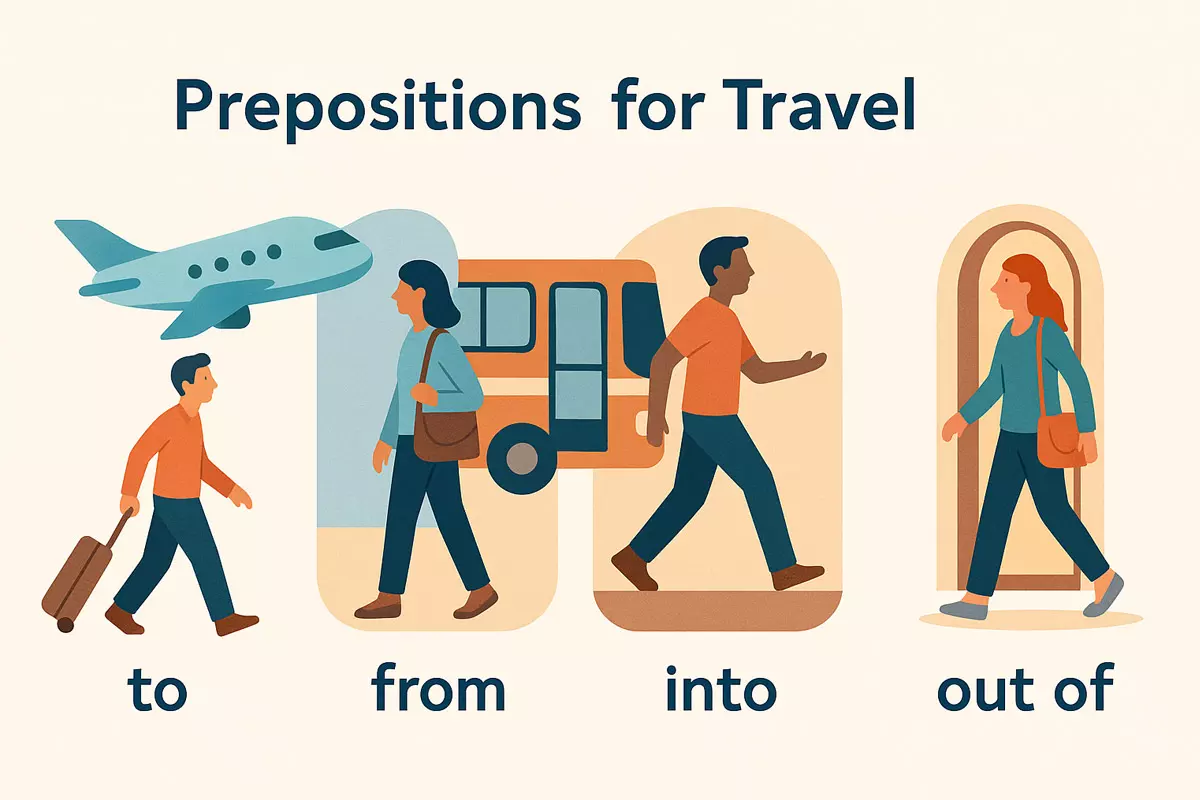 Here we essential prepositions for travel, explains the difference between arrive in/at and go to/go into, and provides useful phrases for directions. It also includes practice describing short journeys.
Selecting the appropriate connecting words is essential when describing journeys and movement between places, as it enhances clarity and precision in communication. Words such as "to," "from," "into," and "out of" each serve specific purposes: "to" indicates direction toward a destination, "from" shows the starting point, "into" suggests entering a place, and "out of" implies leaving. Mastering these terms allows us to share our travel experiences more effectively, ensuring our meaning is understood and our stories are engaging.
Moving from A to B
Understanding how to express direction and movement is essential in English, especially when talking about travel. Prepositions like to, from, into, and out of help clarify where someone is going or coming from. Each one has a specific function in a sentence, and using them correctly makes your meaning clear.
Key Prepositions for Direction and Travel
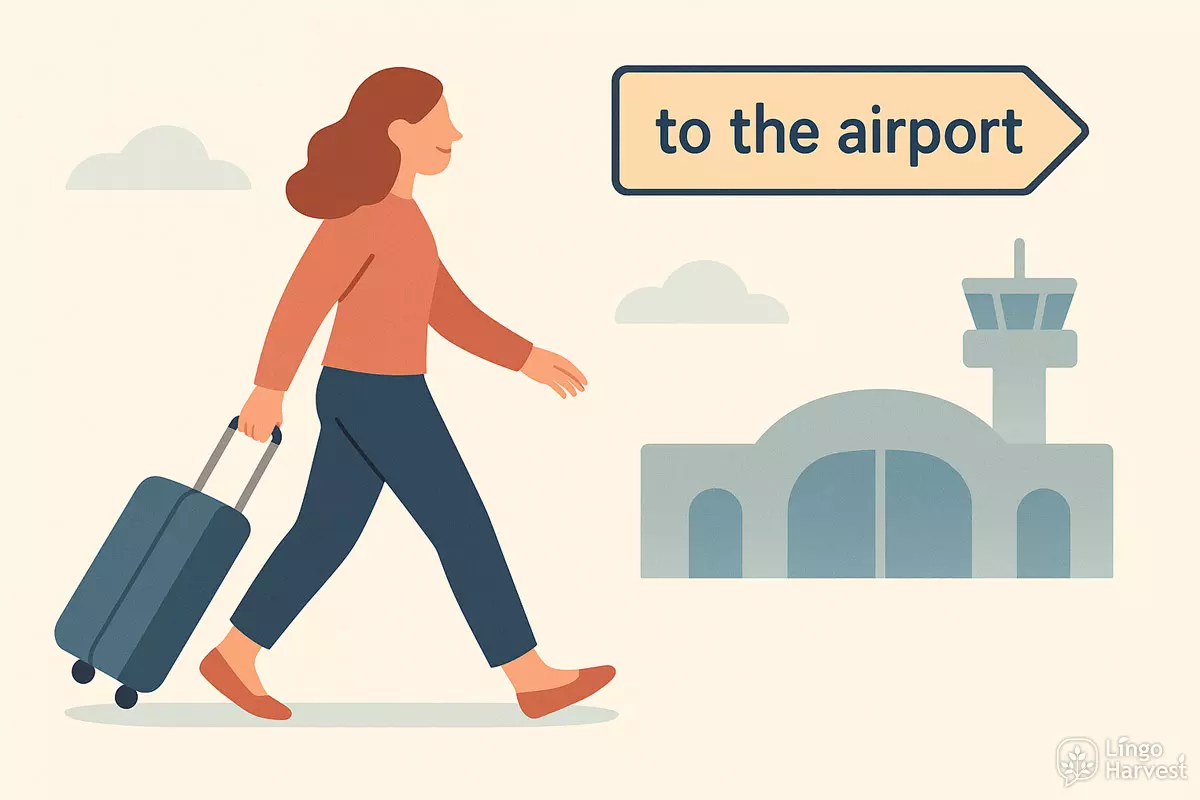
- to — shows the destination or goal of movement.
Example: She is going to the airport. - from — indicates the starting point of movement.
Example: They are coming from Spain. - into — describes entering a space or enclosure.
Example: He walked into the building. - out of — refers to leaving a space or enclosure.
Example: She ran out of the house.
Common Patterns and Examples
When describing movement, these prepositions often appear with verbs of motion. Here are some common patterns and phrases:
- get to (a place): I got to the station on time.
- return from (a trip): We returned from vacation yesterday.
- step into (a vehicle/room): She stepped into the car.
- move out of (a building): He moved out of the apartment.
- travel to (a country/city): They traveled to Italy.
- leave from (a location): The train leaves from platform 3.
- walk into (a shop): We walked into the bakery.
- jump out of (a vehicle): She jumped out of the taxi.
- drive to (an address): I will drive to your house.
- fly from (an airport): They fly from JFK every week.
- go into (a room): Please go into the kitchen.
- run out of (a building): He ran out of the office.
Comparing Prepositions in Travel Contexts
| Preposition | Typical Use | Example |
|---|---|---|
| to | Destination | We are driving to the city. |
| from | Origin/Starting Point | He is coming from work. |
| into | Entering an enclosed space | She walked into the room. |
| out of | Leaving an enclosed space | They rushed out of the building. |
Paying attention to these prepositions helps you communicate travel routes and directions more precisely. Practice by making your own sentences about recent journeys, using each preposition in context.
Entering and Leaving Places
Understanding how to use prepositions when describing movement in and out of locations is essential for clear communication. Different prepositions highlight whether you are describing going inside somewhere or exiting from a place, and their use often depends on the type of location or context.
Using “into” and “out of” for Movement
When you want to be specific about moving from outside to inside a space, use “into.” For example, “She walked into the room.” Conversely, “out of” is used when someone or something exits from inside to outside, as in “They ran out of the building.” These prepositions are commonly paired with physical spaces or enclosed areas.
- He jumped into the pool.
- The cat ran out of the house.
- Put the keys into your bag.
- Take the books out of your backpack.
- She drove into the parking lot.
- We stepped out of the elevator.
- They moved into a new apartment.
- He rushed out of the classroom.
- Throw that into the trash can.
- Get out of the car, please.
“To” and “From” for General Destinations
“To” and “from” are often used for more general directions or locations, not focusing on the boundary between inside and outside. “To” indicates direction toward a place, while “from” shows origin or departure.
- We are going to the museum.
- She returned from Italy yesterday.
- I walked to the station.
- They drove from the airport.
Summary of Prepositions for Entering and Exiting
The following table compares common prepositions used to describe entering and leaving various types of locations:
| Action | Typical Preposition + Example |
|---|---|
| Going inside | into – “She went into the store.” |
| Exiting | out of – “He walked out of the office.” |
| Heading toward a place | to – “We’re driving to the beach.” |
| Coming from somewhere | from – “They just arrived from Paris.” |
Common Mistakes
Learners sometimes confuse “in” with “into” or “on” with “onto.” Remember, “into” and “out of” describe movement across a boundary, while “in” and “on” usually describe position or state. For example: ❌ “He put the book in the bag” (static) vs. ✅ “He put the book into the bag” (movement). Using the correct preposition helps your listener or reader understand whether someone is moving or already at a location. Practice with different examples to get comfortable choosing the best word for each situation.
Arrive in vs Arrive at
Understanding when to use "in" and "at" with the verb "arrive" can be confusing for English learners. The choice depends on the type of place you are talking about. Generally, "arrive in" is used with countries, cities, or large areas, while "arrive at" is used for specific points or locations.
When to Use "Arrive in"
Use "arrive in" for larger geographic areas or places that are considered expanses rather than specific sites. For example:
- arrive in France
- arrive in London
- arrive in Asia
- arrive in a town
- arrive in the city
- arrive in New York State
- arrive in the mountains
- arrive in a region
- arrive in Italy
- arrive in my hometown
The idea is that "in" works with places big enough that you enter them, not just reach a particular point.
When to Use "Arrive at"
"Arrive at" is preferred for smaller or more specific locations—places you can identify as a point rather than an area.
- arrive at the airport
- arrive at the station
- arrive at the hotel
- arrive at the office
- arrive at the party
- arrive at the bus stop
- arrive at the museum
- arrive at the restaurant
- arrive at the school
- arrive at the corner
These refer to precise destinations, not broad areas.
| Use "arrive in" for... | Use "arrive at" for... |
|---|---|
| Cities, countries, regions | Buildings, addresses, events |
| Large areas (e.g., "in the mountains") | Specific places (e.g., "at the door") |
| States or provinces | Transport stops (airport, station, bus stop) |
| Neighborhoods (sometimes) | Meetings, parties, gatherings |
Common Mistakes
Mixing up these prepositions is a frequent error. For example, ❌ "arrive at France" is incorrect—use "arrive in France." Likewise, ❌ "arrive in the station" should be "arrive at the station."
Quick Tips
If you can go inside and it's a large place, use "in." If it's a specific spot, use "at." When in doubt, think about the scale of the location. This small change can make your travel English sound much more natural!
Go to vs Go into
Choosing between "go to" and "go into" can be confusing for English learners, especially when talking about travel or movement. The difference comes down to whether you are focusing on the destination in general or on entering a specific place. "Go to" is used when talking about going toward a destination, city, country, or place, without focusing on entering it. "Go into" highlights the action of entering or moving inside a particular space or enclosure.
When to Use "Go to"

Use "go to" for destinations, cities, countries, or buildings as points on a map—where the act of arriving is more important than entering. This phrase is common when you simply want to mention where someone is headed:
- She will go to Paris next week.
- I need to go to the bank today.
- We plan to go to the university after lunch.
- They went to the concert last night.
- He wants to go to the gym before work.
When to Use "Go into"
"Go into" is used when you are emphasizing the act of entering a space, such as a room, building, or container. It focuses on crossing a boundary and being inside:
- Please go into the classroom quietly.
- He went into the store to buy bread.
- The cat went into the box to sleep.
- She went into the office for a meeting.
- Don't go into the kitchen while I'm cooking!
Quick Comparison
| Phrase | Typical Use & Example |
|---|---|
| Go to | Used for destinations (cities, buildings, events) Example: I go to school every day. |
| Go into | Focuses on entering a space Example: She went into the classroom. |
Common Mistakes and Tips
Remember, "go to" is not used with rooms or small enclosed spaces (like "go to the box" is incorrect). Use "go into" when you want to stress the action of moving inside. For public places or large areas, "go to" is usually correct. If you’re unsure, ask yourself: Do I mean arriving at a place, or entering inside it?
Real Phrases for Directions and Trips
Knowing how to give and understand directions is essential when traveling or navigating new places. Using prepositions like to, from, into, and out of accurately helps you sound natural and clear. Below, you’ll find practical phrases and sentence patterns that travelers use in real-life situations, whether asking for help, describing routes, or talking about journeys.
Common Expressions for Giving and Asking Directions
- How do I get to the train station?
- Go into the building and take the elevator.
- Walk out of the supermarket, then turn left.
- She’s coming from the airport.
- We drove into town just before sunset.
- Take the bus to the city center.
- He moved from Paris to Berlin last year.
- Go out of the park and cross the street.
- They’re traveling from Spain to Portugal.
- Enter into the museum through the main gate.
- Come out of the subway at Exit 3.
- We’re heading to the mountains for the weekend.
- Take the stairs up to the second floor.
- Leave from gate 12.
- Get into the taxi here.
- Exit from the rear door, please.
- She walked to the library after class.
- Go from the square to the river.
- Drive into the parking garage on your right.
- Step out of the elevator and turn left.
Quick Reference: Prepositions for Movement and Origin
| Preposition | Example Phrase |
|---|---|
| to → destination | We’re going to the museum. |
| from → origin | She came from the airport. |
| into → entering | He walked into the store. |
| out of → exiting | They ran out of the building. |
Applying these expressions when you travel or give directions makes your communication smoother and more precise. Whether you’re talking about where you’re heading, where you started, or how to move through spaces, these patterns are useful every day.
Practice: Describe a Short Journey
Imagine you are telling someone about a quick trip you took. To make your description clear, use prepositions such as to, from, into, and out of correctly. These words help show direction and movement during travel.
Step-by-Step: Building a Short Journey Description
Start by thinking about a simple route. For example, going from your home to a nearby park and back. Pay attention to the places you enter or leave, and mention your starting point and destination.
- I walked from my house to the bus stop.
- I got into the bus and found a seat.
- The bus took me to the city center.
- I went out of the bus and walked to the museum.
- After my visit, I came out of the museum and headed to a café.
- I met a friend and we walked from the café to the park.
- When it started to rain, we ran into a nearby shop.
- Later, I left the shop and took a taxi to my house.
Common Patterns Using Travel Prepositions
Here are useful sentence structures that help describe movement and direction:
- go to [place]
- come from [place]
- walk into [building/room]
- step out of [vehicle/building]
- return to [starting point]
- leave from [location]
- drive into [garage/city]
- exit out of [station/airport]
- arrive at [destination]
- depart from [origin]
- move to [another area]
- enter into [building/vehicle]
Mini-Task: Write Your Own Short Journey
Try to create a brief story about a recent trip. Use at least four different prepositions from this lesson. Make sure each preposition shows movement or direction.
- Start with where you began your journey.
- Mention at least two places you entered or left.
- Describe how you returned or finished your trip.
Show answers
- I left my apartment and walked to the train station.
- I went into the train and traveled to the next town.
- After arriving, I got out of the train and visited a bookstore.
- Finally, I returned from the town to my apartment in the evening.
Quick Check: Which Preposition Fits?
Fill in the blanks with the correct preposition: to, from, into, out of.
- She drove ___ the garage and parked the car.
- We came ___ the airport late at night.
- He walked ___ the room quietly.
- I ran ___ my office when I finished work.
Show answers
- into
- from
- into
- out of