Prepositions with Transport: by bus, on foot, in a car

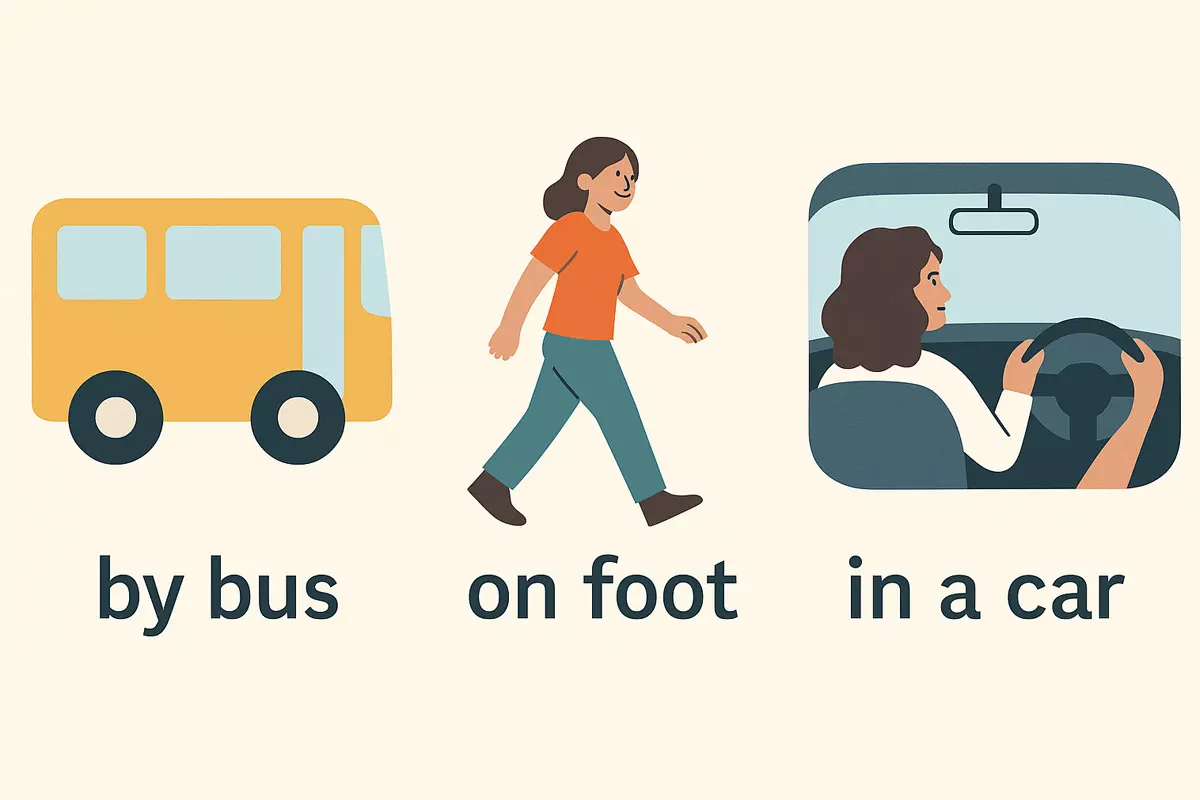 The article clarifies how to use by, on, and in with transport, including phrases like by train and on foot. It also covers talking about trips, typical learner mistakes, and gives practice describing how you travel.
Have you ever wondered why we say we travel by train, but on foot or in a taxi? The English language uses a variety of prepositions with different modes of transportation, and understanding these subtle rules can help make your conversations sound smoother and more natural. For example, we typically use by with most forms of transport, such as by bus, by plane, or by car, because it refers to the general means of travel. However, we use on foot to indicate walking, and in a taxi or in a car because we are inside a smaller, enclosed space. These distinctions, while sometimes confusing, are important for clear and accurate communication.
by vs on vs in: Core Meaning Differences
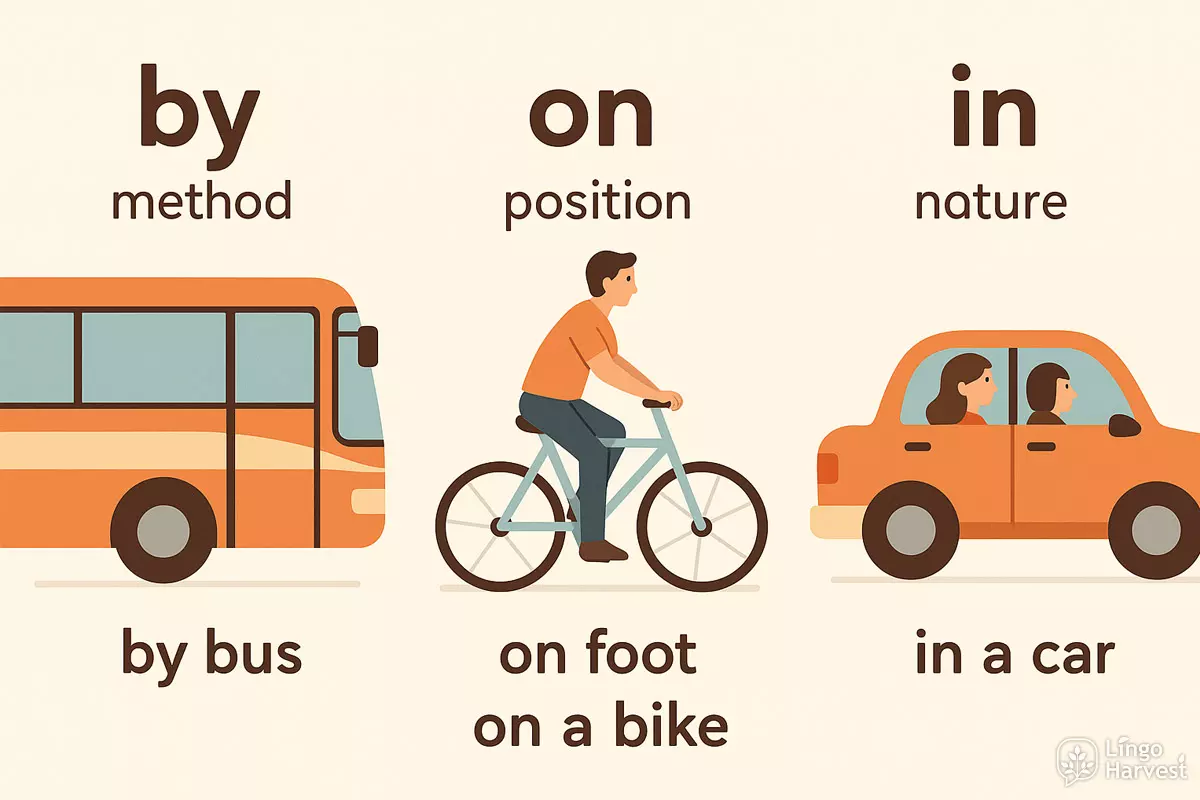
Understanding how to choose between "by," "on," and "in" when talking about transportation is key for clear English communication. Each preposition signals a slightly different relationship with the mode of transport—sometimes referring to method, sometimes to physical position, and sometimes to the nature of the journey.
When to Use "by"
"By" is used to describe the general means or method of travel, focusing on the type of transport rather than the vehicle itself. This form is impersonal and does not specify a particular vehicle, but rather the mode as a concept.
- by bus
- by train
- by plane
- by taxi
- by car
- by boat
- by subway
- by tram
- by bicycle
- by helicopter
When to Use "on"
"On" is chosen when you are physically on the surface of a large vehicle or form of transportation, especially those you can walk inside or on top of. It's also used for certain expressions like "on foot," even though it seems less literal.
- on the bus
- on a train
- on a plane
- on a ship
- on a bike
- on a motorcycle
- on a ferry
- on a tram
- on a horse
- on foot
When to Use "in"
"In" is used for smaller vehicles where you are enclosed inside, or when you talk about being inside a specific car, taxi, or similar space.
- in a car
- in a taxi
- in a van
- in a truck
- in a helicopter
- in a limousine
- in an ambulance
- in a boat (small boat)
- in a canoe
- in a hot air balloon
Summary Table: Prepositions and Transport Types
| Preposition | Typical Use with Transport |
|---|---|
| by | General method: by bus, by train, by car (not specific vehicle, but type) |
| on | Surface/large/open transport or idioms: on a bus, on a bike, on foot |
| in | Enclosed/small vehicles: in a car, in a taxi, in a van |
Quick Tips
- Use "by" for general, unspecified transport types.
- Choose "on" for larger, shared, or open vehicles and certain idiomatic expressions.
- Pick "in" for smaller, private, enclosed vehicles.
Selecting the correct preposition depends on whether you’re describing the method, the experience of being inside or on the vehicle, or referring to a specific transport situation. Practice with real-life examples is the best way to get comfortable with these subtle distinctions.
Transport for Daily Routines (by train, by taxi)
When talking about how we get from place to place in everyday life, English uses specific prepositions with means of transport. For instance, “by train” and “by taxi” are common phrases to describe commuting or running errands. These prepositional choices help make speech concise and natural.
Prepositions: “by” vs. “in” vs. “on”
Generally, the preposition by is used with most forms of public or shared transport. This includes “by train,” “by taxi,” “by bus,” and “by tram.” However, for personal vehicles or when emphasizing the inside of something, “in” or “on” might be used instead. Learn the patterns to sound more fluent in daily conversations.
- I usually go to work by train.
- She returns home by taxi after late meetings.
- They travel by bus every morning.
- He prefers to commute by tram.
- We sometimes take the kids by subway to school.
- My friend often goes shopping by taxi when it rains.
- You can get to the airport by train.
- The team arrived by minibus.
- I came by cab last night.
- She travels by metro during the week.
Quick Reference: When to Use “by”
Use by with most modes of transport when you are talking in general. Do not use “the” or “a” after “by” in these cases:
- ✅ I go by train (not by the train)
- ✅ She travels by taxi (not by a taxi)
Exceptions and Special Cases
For some forms of transport, “in” or “on” is more natural, especially when specifying a particular vehicle or emphasizing being inside:
- I am in a taxi now. (specific taxi)
- We met on the train yesterday. (specific train)
Common Daily Routine Phrases
| Transport Phrase | Example Sentence |
|---|---|
| by train | I get to the office by train every day. |
| by taxi | She often goes home by taxi after work. |
| in a taxi | We are in a taxi right now. |
| on the train | He met his friend on the train this morning. |
| by bus | They travel by bus to school. |
| by subway | Most people commute by subway in big cities. |
Remember, using the correct preposition with transport makes your English clearer and more idiomatic. Practice these patterns to describe your daily journeys easily and accurately.
Special Case: on foot (not by foot)
When describing travel using your own legs, English speakers always say “on foot,” not “by foot.” This is a unique exception among transport prepositions. Most means of transport use “by” (by bus, by train, by car), but walking stands out with its own distinct phrase.
- She goes to work on foot every morning. ✅
- He prefers to explore the city on foot. ✅
- We visited the museum on foot, not by taxi. ✅
- “By foot” is incorrect in standard English. ❌
Why “on foot” and not “by foot”?
English uses “on” for walking because you are physically on your feet, using them as the means of movement. Other transport options use “by” to indicate the method or vehicle, but when you walk, your own feet are not considered a vehicle.
Common phrases and examples
Here are some everyday sentences using the correct form:
- I usually go to school on foot.
- The park is close enough to reach on foot.
- They finished the last part of the journey on foot.
- It took us 20 minutes on foot to get there.
- Is it safe to walk on foot after dark?
- We toured the old town on foot.
- He commutes on foot in good weather.
- The mountain can only be climbed on foot.
- Many students arrive on foot every day.
- She enjoys going places on foot to see more of the city.
Quick Comparison: “by” vs. “on” for transport
| Transport Expression | Correct Preposition |
|---|---|
| by bus | by |
| by train | by |
| by plane | by |
| on foot | on |
| by bike | by |
| in a car | in |
| on horseback | on |
Remember: while “by” works for most forms of transport, the correct way to talk about walking is always “on foot.” This small detail helps your English sound natural and fluent.
Talking About Trips and Routes
When describing how you travel from one place to another, the choice of preposition depends on both the type of transport and the focus of your sentence. For example, we usually say "by bus" or "by train" to talk about the general means of transport, but "on foot" for walking. If you want to explain the specific route or journey, different structures and prepositions come into play.
Common Patterns for Describing Journeys
English offers several typical ways to talk about how you get somewhere and what route you take. Here are some useful examples and phrases:
- We went by bus to the city center.
- She travels on foot every morning.
- I get to work by car.
- They arrived by train.
- He commutes by bike.
- Let’s go by taxi.
- We walked along the river.
- Take the bus to the station.
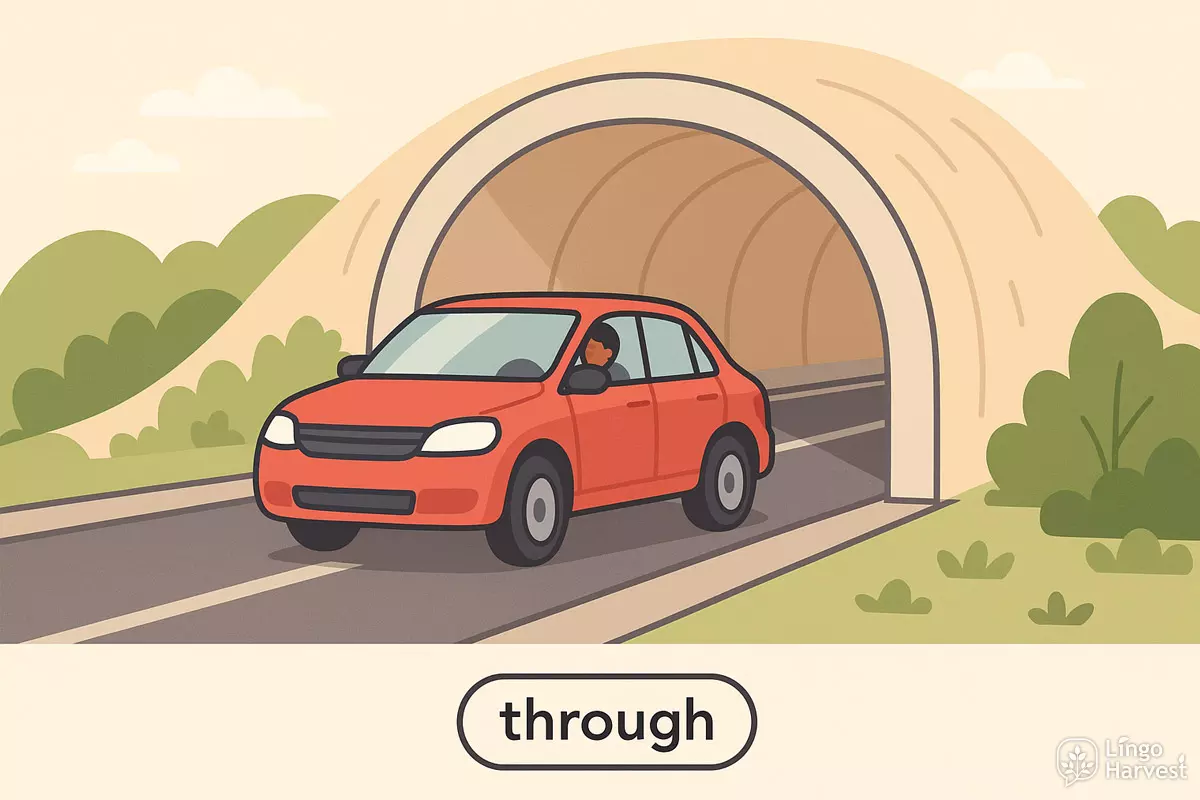
- Drive through the tunnel.
- Cycle over the bridge.
- Turn left at the crossroads.
- Continue past the school.
- Get off at the next stop.
- We went in a car with friends.
- She rode on a motorbike.
- We travelled by boat across the lake.
Comparing Prepositions: Means vs. Position
Sometimes it’s important to choose the right preposition for clarity. Here’s a quick look at some typical uses:
| Transport Phrase | Example Sentence |
|---|---|
| by bus / by train / by plane | We travelled by bus to Paris. |
| on foot | He goes to school on foot every day. |
| in a car / in a taxi | They sat in a car for hours. |
| on a bus / on a train | I left my bag on the bus. |
| by bike / on a bike | She goes to work by bike but forgot her helmet on the bike. |
Describing Routes and Directions
To make your route clear, use prepositions like through, along, over, across, and past. These help show the path you take or the places you pass:
- Walk along the avenue until you reach the park.
- Go through the shopping center.
- Drive over the bridge and turn right.
- Continue past the cinema.
- Take the shortcut across the field.
Choosing the right pattern and preposition helps you give clear, natural-sounding directions and descriptions of your journeys, making communication about travel much easier.
Questions and Short Replies (How did you get there?)
When talking about travel or daily routines, people often ask how you arrived somewhere. This is a great opportunity to practice using prepositions with various means of transport. The most common question is simply, “How did you get here?” or “How did you get to work/school?” Your answer will usually include a preposition and a type of transport.
Typical Questions
- How did you come here?
- How did you get to the station?
- What transport did you use?
- Did you walk or take a bus?
- Which bus did you take?
- How do you usually travel to work?
- Did you drive or cycle?
- How long did it take to get here?
- Did you come by taxi?
- Were you on foot?
Short Replies: Patterns and Examples
You can answer these questions with a short phrase. The preposition depends on the type of transport:
- By bus/train/car/plane/taxi: “By” is used with most vehicles.
- On foot: We use “on” for walking.
- In a car/taxi: Use “in” if you talk about being inside a small vehicle.
- On a bike/horse: “On” is used for things you sit or ride on top of.
Here are some natural short replies to “How did you get here?” and similar questions:
- By bus.
- On foot.
- In a car.
- By train.
- On my bike.
- By taxi.
- By tram.
- On the subway.
- By plane.
- In my friend’s car.
- By ferry.
- On a scooter.
- By motorcycle.
- By boat.
- On horseback.
- By coach.
- By metro.
- On a skateboard.
- By cable car.
- By helicopter.
Patterns for Questions and Answers
Below is a comparison of common question forms and their typical short replies:
| Question Example | Short Reply |
|---|---|
| How did you get here? | By bus. |
| Did you walk? | Yes, on foot. |
| Did you come by car? | No, by train. |
| How did you travel? | In a taxi. |
| Were you on your bike? | Yes, on my bike. |
| Did you take the metro? | No, by tram. |
Tips for Natural Conversation
When replying, keep it short and use the correct preposition. If you want to add details, you can expand: “By bus, it took twenty minutes,” or “On foot, because the weather was nice.” This helps your English sound more fluent and natural.
Typical Learner Mistakes and Fixes
Learners often get confused by which preposition to use with different modes of transport. This confusion isn’t surprising—English uses “by,” “on,” and “in” differently, depending on the vehicle and the context. Below are some of the most common slip-ups and how to correct them, with clear explanations and examples.
Common Confusions with Transport Prepositions
- Using “in” instead of “by”: Many say “in bus” or “in train” instead of the correct “by bus” or “by train.”
- Mixing up “on foot” and “by foot”: “On foot” is correct for walking, but “by foot” is a mistake.
- Swapping “on” and “in” for cars and bikes: It’s “in a car” but “on a bike,” not the other way around.
- Adding “the” unnecessarily: For general travel, don’t say “by the bus”; just use “by bus.”
- Omitting the preposition entirely: Phrases like “I go bus” are incorrect; always use the right preposition.
Quick Reference: Correct Prepositions with Common Transport Modes
| Transport Mode | Correct Preposition | Example | Common Error |
|---|---|---|---|
| Bus, train, plane, taxi | by | I go by bus. | I go in bus. |
| Car (as a passenger) | in | I am in a car. | I am on a car. |
| Bike, horse, motorcycle | on | I travel on a bike. | I travel in a bike. |
| Foot (walking) | on | I go on foot. | I go by foot. |
| Ship, boat | by / on | I went by ship / on a boat. | I went in ship. |
How to Fix These Mistakes
- Remember: “by” + transport for general travel (by train, by plane).
- Use “on” when you are physically on top of or astride something (on a bike, on a horse, on foot).
- Choose “in” when you are inside a small vehicle (in a car, in a taxi).
- Skip articles with “by” (by bus, not by the bus).
- Practice with real-life sentences to reinforce the correct combinations.
Extra Tips
- If you are talking about a specific vehicle, use “in” or “on”: “I left my bag in the car.” - For public transport, “by” is most common: “She commutes by train every day.” - For walking, always choose “on foot,” not “by foot.” Being aware of these patterns helps you sound more natural and avoids misunderstandings.
Practice: Describe How You Travel
Thinking about how you get from place to place is a great way to practice using prepositions with different types of transport. When you talk about your daily routine, trips, or favorite ways to travel, you’ll need to use phrases like “by bus,” “on foot,” or “in a car” correctly. Below, you’ll find practical exercises and common language patterns to help you describe your journeys more naturally.
Useful Patterns for Talking About Transportation
- I go to work by train.
- She travels by bicycle every morning.
- We usually get to school on foot.
- They prefer to travel by taxi.
- He often commutes by subway.
- My parents drive in a car.
- I went home by tram yesterday.
- We explored the city on foot.
- You can get there by ferry.
- Sometimes I ride on a motorcycle.
- She likes to travel by plane when visiting family.
- We went to the island by boat.
- I came here by scooter.
- He went to the meeting in a taxi.
- We went to the countryside in a van.
Which Preposition? Choose the Right Option
Pick the correct preposition for each transport method:
- I usually go to the gym ___ foot.
- She travels to London ___ train.
- We arrived ___ car.
- He commutes ___ bus every day.
- They went to the airport ___ taxi.
Show answers
- on
- by
- in
- by
- by
Describe Your Own Commute
Write 2-3 sentences about how you usually travel to school, work, or another place. Try to use different prepositions with transport. Here are some prompts to get started:
- How do you get to your favorite place in your city?
- Is there a time when you use a different type of transport?
- Do you prefer to walk or use public transportation?
Show answers
Sample sentences:
- I go to work by metro. On weekends, I visit my friend by bike. Sometimes, I walk home on foot if the weather is nice.
- Usually, I travel in a car with my family, but I sometimes go by bus if I am alone.
Summary Table: Common Transport Prepositions
| Transport | Correct Preposition |
|---|---|
| Bus, train, plane, ferry, taxi | by |
| Car, taxi, van, truck | in |
| Foot | on |
| Bicycle, motorcycle, horse | on |
By practicing these forms and using them in your daily conversations, you’ll become more confident describing your journeys and routines in English with the right prepositions.