Prepositions in News Headlines: Grammar Style and Usage Effects

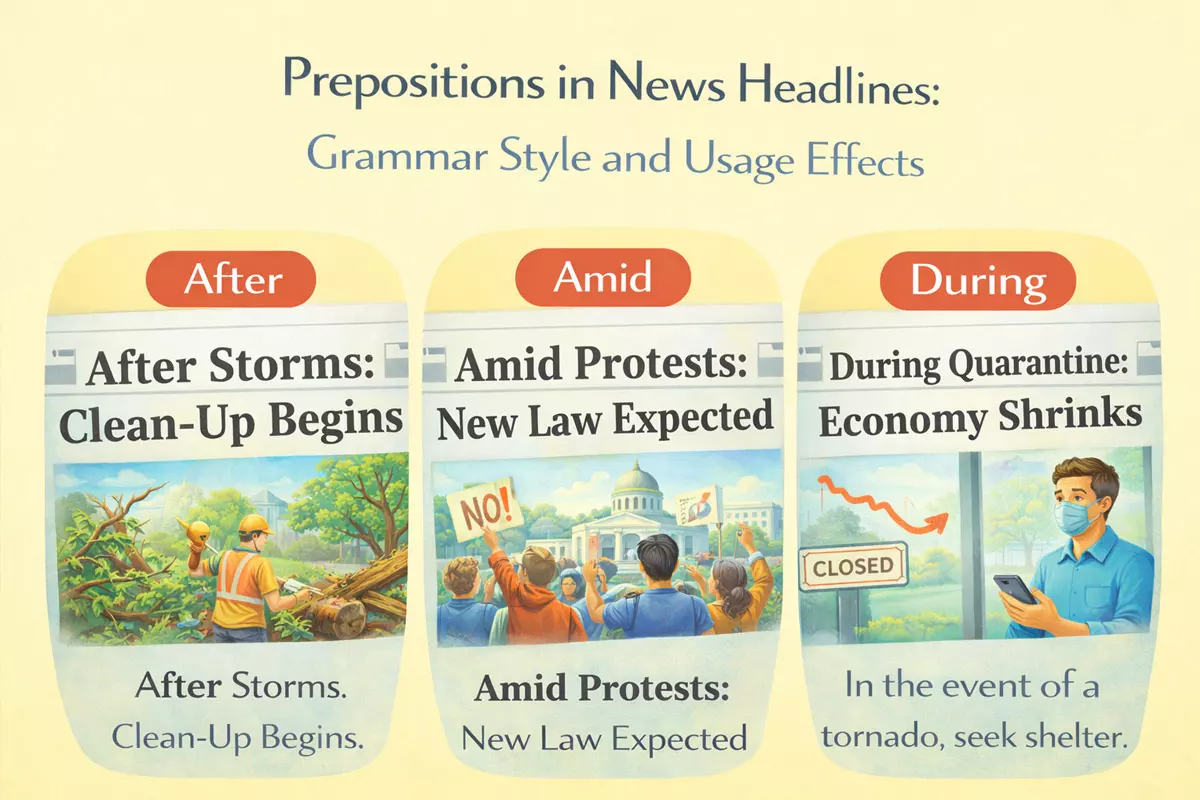 Here we how prepositions shape news headlines, including telegraphic speech, functional substitution, and geopolitical framing. It also compares tabloid and broadsheet styles, emotional triggers in clickbait, ambiguity, and headline rewriting.
- The Grammar of Brevity: How 'Telegraphic Speech' dictates prepositional choice in headlines
- Functional Substitution: Using 'to' for future events and 'on' for topical discussion
- Geopolitical Framing: The impact of 'over', 'against', and 'amid' in conflict and crisis reporting
- Tabloid vs. Broadsheet: Comparing sensationalist prepositional density with formal precision
- Attention Economy: How 'Up', 'Down', and 'In' are used as emotional triggers in clickbait
- Ambiguity and Misinterpretation: Analyzing 'Crash Blossoms' caused by misplaced prepositions
- Practice: Decoding and rewriting cryptic news headlines for standard grammatical clarity
Journalistic headlines frequently break traditional grammar rules, particularly in their use of connecting words such as prepositions. This deliberate bending of conventions is not merely a stylistic choice; it serves to make headlines more concise and attention-grabbing, which is crucial in the fast-paced world of news. By analyzing these headline structures, we can better understand how subtle changes in language influence both the readability and the overall impact of news reporting on readers.
The Grammar of Brevity: How 'Telegraphic Speech' dictates prepositional choice in headlines
News headlines often strip language down to its essentials. This practice, known as "telegraphic speech," involves omitting non-critical words—especially articles, auxiliary verbs, and sometimes even prepositions. When prepositions do appear, their selection is tightly governed by the need for clarity and space efficiency. The result is a unique, compressed grammar style that can look ungrammatical in standard prose but is instantly recognizable in the news.
What is Telegraphic Speech in Headlines?
Telegraphic speech in headlines mimics the concise, information-heavy style of telegrams and early news wires. It prioritizes the most vital content: subjects, verbs, objects, and, only when required for meaning, prepositions. This approach helps convey maximum information with minimal words.
How Brevity Influences Prepositional Use
Writers often drop prepositions that are implied or understood in context, while retaining those that clarify relationships or avoid ambiguity. For example, "Minister Resigns Over Scandal" keeps "Over" to specify the cause, but "Minister Resigns" drops the preposition entirely when the context is clear.
Common Patterns: Prepositions Most Likely to Survive
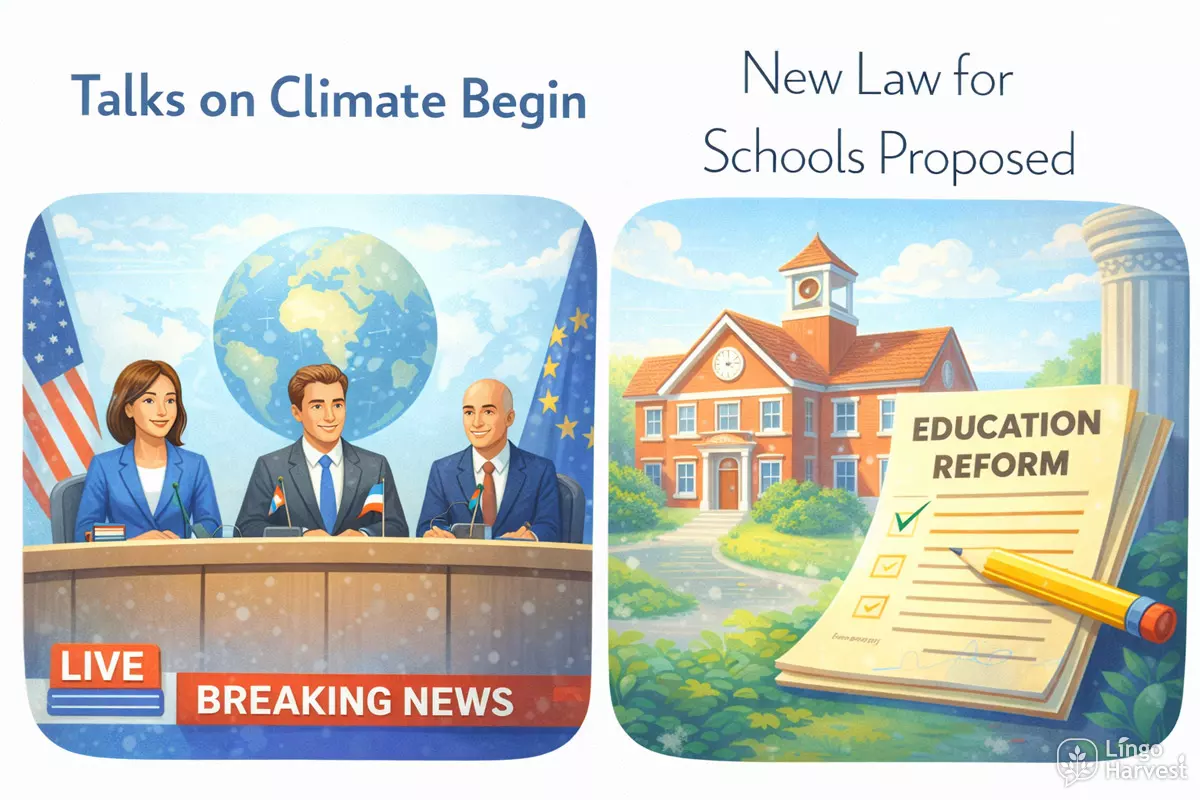
Some prepositions are almost always retained due to their functional necessity, while others are frequently omitted. Here are common headline patterns involving prepositions:
- Man Arrested in Fraud Case
- Talks on Climate Begin
- New Law for Schools Proposed
- Protest against Tax Hike
- Strike over Wages Ends
- CEO Steps Down after Probe
- Police Search for Suspect
- Floods hit City (no preposition needed)
- Prices Up by 10%
- Team Wins in Overtime
- Agreement between Companies Signed
- Students Rally against Cuts
- Deadline for Bids Extended
- Storm Moves toward Coast
- Debate on Policy Intensifies
- Driver Jailed over Crash
- Efforts to Save Species Grow
- Funds for Hospitals Approved
- Mayor Faces Pressure from Council
- Talks Resume after Break
Comparison: Full Sentences vs. Headline Style
To illustrate how brevity shapes prepositional usage, compare standard sentences with their headline counterparts:
| Full Sentence | Headline Version |
|---|---|
| The minister resigned because of the scandal. | Minister Resigns Over Scandal |
| Talks about climate change begin today. | Talks on Climate Begin |
| The police are searching for a suspect. | Police Search for Suspect |
| Students rallied against education cuts. | Students Rally against Cuts |
| The deadline for bids has been extended. | Deadline for Bids Extended |
Why Some Prepositions Stay—and Others Go
Prepositions that signal time, cause, or agency are more likely to be preserved, since their omission would create confusion. In contrast, prepositions that serve a merely grammatical function, or whose meaning can be inferred, are often dropped. This selective process is a key feature of headline grammar, balancing brevity with the need for immediate reader comprehension.
Summary
Headline writers rely on "telegraphic" brevity, carefully selecting prepositions for maximum clarity and minimum word count. Understanding these choices can help readers decode headlines more effectively and appreciate the subtle grammar at play in everyday news.
Functional Substitution: Using "to" for future events and "on" for topical discussion
In news headline writing, prepositions are often used in ways that differ from standard English. Editors frequently rely on concise forms that signal time, intent, or topic quickly. Two of the most common substitutions are using ‘to’ to indicate planned or imminent events, and ‘on’ to introduce the subject of discussion. This approach streamlines headlines and clarifies the focus, but it requires readers to interpret meaning from context.
"To" as a Marker for Upcoming Actions
When headlines feature organizations, officials, or individuals, the preposition ‘to’ is regularly used to signal a scheduled or expected action. Instead of longer phrases like “will announce” or “is set to,” the substitution with ‘to’ keeps headlines brief and direct. For example:
- President to address nation tonight
- City council to vote on new budget
- Company to launch new product next week
- Minister to visit flood-affected regions
- Film festival to open with premiere
- Team to unveil new coach Friday
- Government to implement tax reform
- School to reopen after inspection
- Airline to resume flights in July
- Judge to rule on case tomorrow
This practice saves space and delivers the essential information about what will happen, without auxiliary verbs or future tense markers.
"On" for Framing the Subject
Conversely, ‘on’ is frequently used in headlines to introduce the theme or issue under discussion. This substitution helps signal the reader what the following report will focus on. Examples include:
- Experts on climate change debate solutions
- Update on election results
- Panel on education reform meets today
- Report on housing market released
- Study on vaccine efficacy published
- Briefing on security concerns scheduled
- Q&A on new regulations
- Survey on consumer confidence
- Workshop on digital literacy offered
- Debate on tax policy continues
Such headline constructions prioritize topical clarity, allowing readers to quickly grasp the subject matter.
Comparing Headline Usage: ‘To’ vs. ‘On’
The table below contrasts these functional substitutions in real headline patterns, highlighting their distinct roles in journalistic style:
| Form with ‘to’ (Future Action) | Form with ‘on’ (Topical Discussion) |
|---|---|
| Mayor to announce new policy | Analysis on policy impact |
| School to reopen Monday | Report on school safety |
| Senate to vote this week | Debate on legislative process |
| Company to expand operations | Interview on business growth |
Usage Effects and Reader Expectations
Relying on these prepositional shortcuts in headlines not only economizes space but also shapes how readers interpret time and topic. The choice between ‘to’ and ‘on’ signals whether the news is about something that will happen or about discussion and analysis. Understanding these conventions helps readers process news efficiently and allows writers to maintain clarity despite tight headline constraints.
Geopolitical Framing: The impact of 'over', 'against', and 'amid' in conflict and crisis reporting
When news headlines report on international disputes or emergencies, the choice of prepositions can dramatically shift public perception. Words like over, against, and amid are not just grammatical connectors; they function as powerful framing devices that influence how readers interpret the nature and urgency of a situation. Each preposition subtly guides the audience toward a particular understanding of events, whether highlighting confrontation, context, or causality.
Prepositions as Framing Tools in Headlines
Headlines do more than summarize—they frame. For example, “Talks break down over border dispute” foregrounds the cause of disagreement, while “Protests against new law escalate” sets up a clear adversarial relationship. Meanwhile, “Aid arrives amid ongoing violence” places an event within a broader, turbulent context. These choices shape not only what readers notice, but also how they emotionally and cognitively process the news.
- Over: Suggests a point of contention or cause (e.g., “Tensions rise over trade policies”).
- Against: Highlights opposition or sides (e.g., “Nations unite against cyber threats”).
- Amid: Emphasizes timing and backdrop (e.g., “Elections held amid unrest”).
Comparing Effects: Nuance and Implication
The following table outlines how these prepositions function in news headlines, illustrating their different connotations and the subtle signals they send to readers.
| Preposition | Typical Use in Headlines | Implied Framing Effect |
|---|---|---|
| Over | Debate over reforms intensifies | Spotlights the cause or issue at stake; draws attention to the trigger of conflict |
| Against | Rallies against new policy spread | Frames the story as a confrontation between parties or groups; signals clear opposition |
| Amid | Talks resume amid ongoing crisis | Places the event within a broader context; highlights environment or timing rather than direct conflict |
Headline Patterns and Reader Perception
Frequent patterns in media headlines reveal just how much these prepositions shape narratives:
- “Sanctions imposed over nuclear tests”
- “Demonstrations against government reforms”
- “Evacuations amid rising floodwaters”
- “Talks collapse over territorial claims”
- “Allies unite against regional threats”
- “Markets volatile amid political turmoil”
- “Dispute grows over resource allocation”
- “Protests swell against austerity measures”
- “Negotiations continue amid uncertainty”
- “Strikes against government policy increase”
- “Agreements reached over border controls”
- “Peace talks held amid escalating violence”
Why Preposition Choice Matters
Selecting over, against, or amid is not a trivial stylistic decision. These prepositions help newsrooms quickly anchor stories in conflict, opposition, or context, which can impact public understanding, empathy, and even policy discussions. Awareness of these subtle cues can lead to more critical reading and a deeper appreciation for the role of language in shaping global narratives.
Tabloid vs. Broadsheet: Comparing sensationalist prepositional density with formal precision
When looking at news headlines, it becomes clear that tabloid and broadsheet newspapers often take very different approaches to grammar—especially in how they use prepositions. Tabloids, known for dramatic and attention-grabbing headlines, tend to stack prepositions to create a sense of urgency or intrigue. In contrast, broadsheet headlines usually aim for accuracy and clarity, often reducing prepositional use to maintain a formal tone.
Prepositional Patterns in Tabloid Headlines
Tabloid headlines are notorious for their dense, sometimes overloaded, prepositional phrases. This technique packs multiple facts or actions into a single line, albeit at the cost of grammatical neatness. Common characteristics include:
- Multiple prepositions strung together (e.g., "Man in car on bridge at midnight")
- Ambiguity due to missing verbs or connectors
- Compression of details to fit space and maximize impact
- Preference for prepositions that suggest drama: under, amid, after, over
- Occasional omission of articles to further compress text
Broadsheet Approach: Precision and Minimalism
Broadsheet headlines, by contrast, strive for grammatical precision. Editors select prepositions carefully, focusing on clarity and exactness rather than sensationalism. Their style is marked by:
- Minimal, strategically placed prepositional phrases
- Clear subject-verb-object structure
- Use of prepositions to clarify relationships, not to create suspense
- Avoidance of stacking multiple prepositions in one headline
- Preference for standard forms: in, of, for, by
Comparative Examples
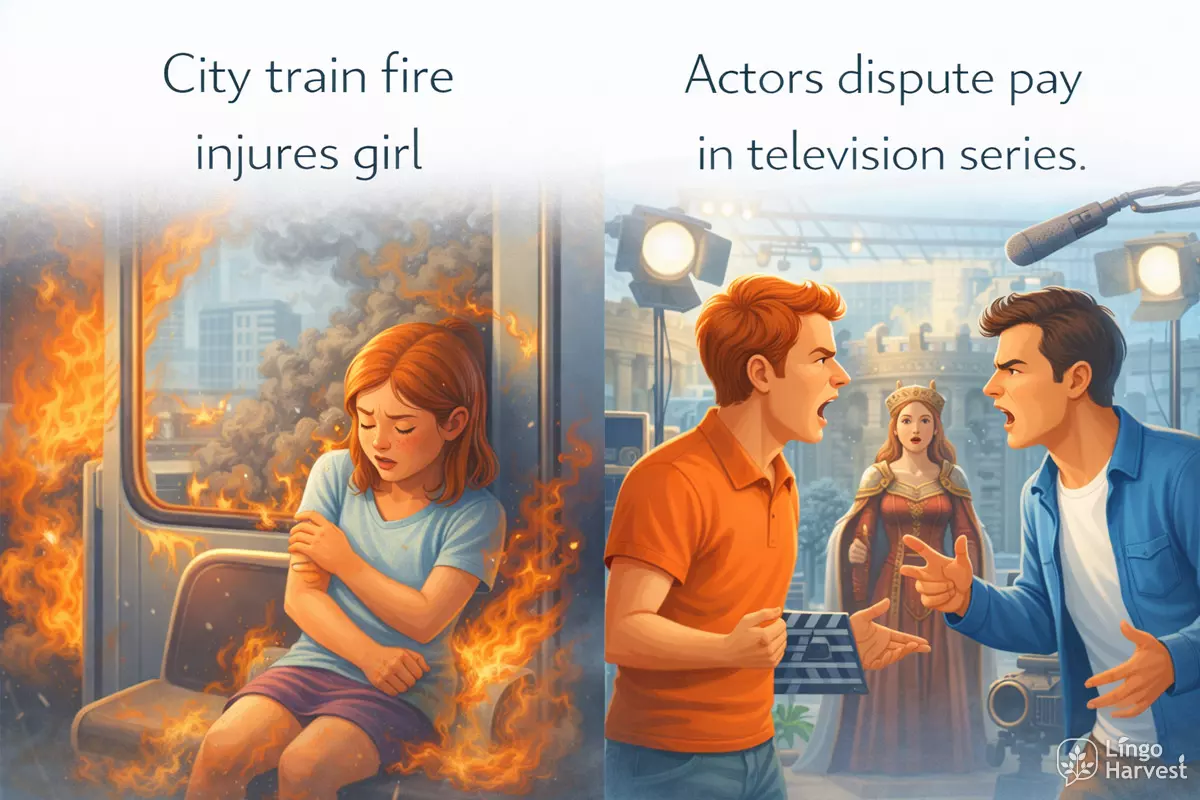
To illustrate the stylistic gap, consider the following typical headline patterns from each genre:
| Tabloid Headline | Broadsheet Headline |
|---|---|
| Girl in fire on train in city | City train fire injures girl |
| Stars at war over pay in show | Actors dispute pay in television series |
| Man on run after raid at bank | Police seek suspect following bank robbery |
| Chaos in streets amid protest over law | Protesters rally against new law downtown |
Common Prepositions: Frequency and Function
In sensationalist headlines, prepositions often serve to layer events and locations, making the story feel immediate. By contrast, broadsheets use prepositions to clarify relationships and maintain grammatical coherence. Here are some of the most frequently used prepositions in each style:
- Tabloid favorites: in, on, at, after, under, amid, over, behind, during, from, to, with, for
- Broadsheet staples: in, of, for, by, with, about, after, during, among, between
The contrast in prepositional usage reflects broader editorial philosophies. Tabloids prioritize impact and immediacy, sometimes at the expense of grammatical structure, while broadsheets value formality and precision, letting prepositions serve as subtle connectors rather than headline drivers. This divergence not only shapes the reader's first impression but also subtly guides interpretation and perceived credibility.
Attention Economy: How 'Up', 'Down', and 'In' are used as emotional triggers in clickbait
In digital journalism, small words can have an outsized effect on how readers perceive and interact with headlines. Prepositions like “up,” “down,” and “in” are frequently chosen not just for clarity, but because they tap into emotional responses that drive clicks. These prepositions subtly suggest movement, involvement, or change—concepts that grab attention and spark curiosity.
Emotional Resonance of Directional Prepositions
When headlines include words such as “up” or “down,” they imply a shift—either a rise or a fall—which can create an immediate sense of urgency or drama. “In” often signals inclusion or being at the center of an event, making the reader feel closer to the story. These linguistic choices aren’t accidental; they’re part of a strategy to trigger engagement in a crowded media landscape.
- “Up” can suggest improvement, escalation, or opportunity (e.g., “Prices Go Up Tomorrow”).
- “Down” often signals decline, danger, or loss (e.g., “Markets Down After Announcement”).
- “In” draws readers into an event or space (e.g., “What’s Happening in Parliament?”).
Headline Patterns Leveraging Prepositions
Writers frequently use certain formulaic structures to highlight the emotional stakes of a story. These patterns make use of prepositions to maximize reader engagement:
- “Breaking: Stock Market Down 400 Points”
- “What’s Up With the Weather This Week?”
- “Trapped in Traffic for Hours—Commuters Share Their Stories”
- “Team Moves Up in the Rankings After Surprise Win”
- “Interest Rates Go Down as Economy Slows”
- “What’s Really Happening in City Hall?”
- “Locked In: How Employees Feel About Remote Work”
- “Gas Prices Shoot Up Overnight”
- “Crime Rates Down in Major Cities”
- “Caught Up in the Drama: Celebrity Feud Escalates”
- “Sign Up Now for Early Access”
- “Significant Drop Down in Test Scores Raises Concerns”
- “Find Out What’s in the New Law”
- “Prices Go Up—Here’s How to Save”
- “Stuck in the Middle: The Dilemma Facing Voters”
- “Locked Down: Life Under New Restrictions”
Comparing Emotional Effects
| Preposition | Common Emotional Trigger | Typical Usage Example |
|---|---|---|
| Up | Hope, excitement, urgency | “Sign Up Now”, “Cases Go Up” |
| Down | Fear, concern, loss | “Prices Down”, “Power Down in City” |
| In | Inclusion, intrigue, immediacy | “In Trouble”, “What’s in the Bill?” |
Ultimately, the strategic placement of these prepositions isn’t just about grammatical style—it’s about tapping into the reader’s emotions and prompting action in an ever-competitive attention marketplace. Recognizing these patterns can help readers become more critical consumers of news, aware of the subtle cues that shape their online experience.
Ambiguity and Misinterpretation: Analyzing "Crash Blossoms" caused by misplaced prepositions
Misplaced or omitted prepositions in news headlines can lead to confusion, double meanings, or even humorous misreadings. These puzzling headlines, often called "crash blossoms," arise when readers interpret the structure in unexpected ways. The compact style of headline writing, which omits articles and shortens phrases, increases the risk that prepositions will be left out or misplaced, resulting in unintended ambiguity.
How Prepositions Influence Headline Clarity
Prepositions signal relationships between words, so even a slight change can dramatically alter meaning. In headlines, where brevity is prized, the omission or misplacement of a preposition can leave readers guessing about who did what to whom. For example, "Man helps dog bite victim" could mean a man helps a dog bite someone, or he helps a victim bitten by a dog.
Common Patterns Leading to "Crash Blossoms"
Certain patterns make headlines particularly susceptible to misinterpretation:
- Leaving out necessary prepositions (e.g., "Teacher marries student mother" instead of "Teacher marries student's mother")
- Using the wrong preposition, changing agency or direction (e.g., "Woman shot by police on bridge" vs. "Woman shot police on bridge")
- Ambiguous placement creating multiple readings (e.g., "Kids make nutritious snacks")
- Stacking noun phrases without clear connectors
- Prepositional phrases that can attach to multiple parts of the sentence
- Headlines relying on context not provided in the text
- Compound subjects or objects with unclear prepositional links
- Overuse of passive voice obscuring the agent
- Fronted prepositional phrases that cause confusion
- Dangling modifiers dependent on missing prepositions
Examples of Headline Ambiguity Caused by Preposition Issues
The following table illustrates some classic and recent headline ambiguities, showing the original wording and the possible unintended interpretations:
| Headline Text | Possible Misinterpretation |
|---|---|
| Juvenile Court to Try Shooting Defendant | The court will attempt to shoot the defendant, rather than try a case about a shooting. |
| Miners Refuse to Work After Death | Miners refuse to work after their own deaths, not after someone else’s. |
| Squad Helps Dog Bite Victim | The squad helps a dog bite a victim, rather than helping a victim of a dog bite. |
| Stolen Painting Found by Tree | The painting was discovered next to a tree, or possibly the tree found the painting. |
| Drunk Gets Nine Months in Violin Case | Person sentenced to jail, or literally inside a violin case? |
| Police Looking into Dog Attack | Police are physically looking into a dog attack, or investigating it? |
| Man Shot Dead in Hunting Accident | Was the man shot while dead, or did the accident kill him? |
| Hospitals Sued by Seven Foot Doctors | Hospitals sued by seven doctors specializing in feet, or by doctors who are seven feet tall? |
| Kids Make Nutritious Snacks | Children create snacks, or children are the snacks? |
| Local High School Dropouts Cut in Half | Number of dropouts reduced by 50%, or dropouts physically cut in half? |
Strategies to Avoid Ambiguous Prepositional Usage
Writers and editors can minimize confusion by:
- Including necessary prepositions, even if it slightly lengthens the headline
- Testing headlines for alternate readings before publication
- Prioritizing clarity over brevity in complex stories
- Rewriting headlines to avoid stacked noun phrases
- Using active voice to clarify agency
Careful attention to prepositional placement can prevent these infamous "crash blossoms," ensuring that headlines inform rather than confuse.
Practice: Decoding and rewriting cryptic news headlines for standard grammatical clarity
News headlines often compress information to save space, omitting prepositions or articles and creating phrases that can be ambiguous or grammatically unclear. Understanding how to interpret and rephrase these headlines is an essential skill for both learners and those interested in media literacy.
Common Features of Cryptic Headlines
Headlines frequently drop prepositions, use present tense for past events, and favor brevity over clarity. Here are typical patterns you might encounter:
- Omission of "in," "at," or "on" before places or times (e.g., "Fire City Hall" instead of "Fire at City Hall")
- Leaving out articles ("the," "a," "an") for brevity
- Using noun strings (e.g., "Mayor Scandal Investigation")
- Ambiguity in subject/object relationships
Decoding and Rewriting Practice
Try to expand and clarify the following condensed headlines by adding necessary prepositions and articles. This helps restore grammatical completeness and make the meaning explicit.
- Police Raid Warehouse Downtown
- Minister Resigns Amid Scandal
- Storm Leaves Thousands Without Power
- Talks Collapse Over Trade Deal
- School Opens Doors Refugees
- City Council Approves Budget Cuts
- Protests Grow Capital
- Scientists Warn Climate Crisis
- Agreement Reached Paris Summit
- Firefighters Battle Blaze Night
- Interest Rates Up Next Month
- Actor Returns Stage After Illness
- Government Faces Criticism Handling Pandemic
- Students Call Action Education Reform
- Bank Reports Losses Quarter
- Mayor Under Investigation Bribery
- Travel Restrictions Lifted Borders
- Wildlife Numbers Down Decade
- Team Wins Championship Overtime
- New Law Targets Online Fraud
Show answers
- Police raid a warehouse in downtown.
- The minister resigns amid a scandal.
- The storm leaves thousands without power.
- Talks collapse over a trade deal.
- The school opens its doors to refugees.
- The city council approves budget cuts.
- Protests grow in the capital.
- Scientists warn about the climate crisis.
- An agreement is reached at the Paris summit.
- Firefighters battle a blaze at night.
- Interest rates are up next month.
- The actor returns to the stage after illness.
- The government faces criticism over its handling of the pandemic.
- Students call for action on education reform.
- The bank reports losses for the quarter.
- The mayor is under investigation for bribery.
- Travel restrictions are lifted at the borders.
- Wildlife numbers are down this decade.
- The team wins the championship in overtime.
- The new law targets online fraud.
Headline Patterns and Their Standard Forms
To illustrate how prepositions are dropped or altered in headlines, compare the original headline forms with their expanded versions:
| Headline Form | Standard Grammatical Version |
|---|---|
| Fire City Hall | There is a fire at City Hall. |
| Talks Collapse Over Trade Deal | The talks collapse over a trade deal. |
| School Opens Doors Refugees | The school opens its doors to refugees. |
| Protests Grow Capital | Protests are growing in the capital. |
| Mayor Under Investigation Bribery | The mayor is under investigation for bribery. |
Tips for Interpreting Headlines
- Look for missing prepositions such as "at," "in," "for," or "on."
- Add articles ("a," "an," "the") where they make the sentence clearer.
- Identify noun strings and break them into logical relationships.
- Convert present tense to past when reporting completed events.
By practicing these techniques, you will become more adept at both reading and rewriting news headlines for grammatical clarity and better understanding.