Tricky Prepositions for Beginners: for vs since, to vs for

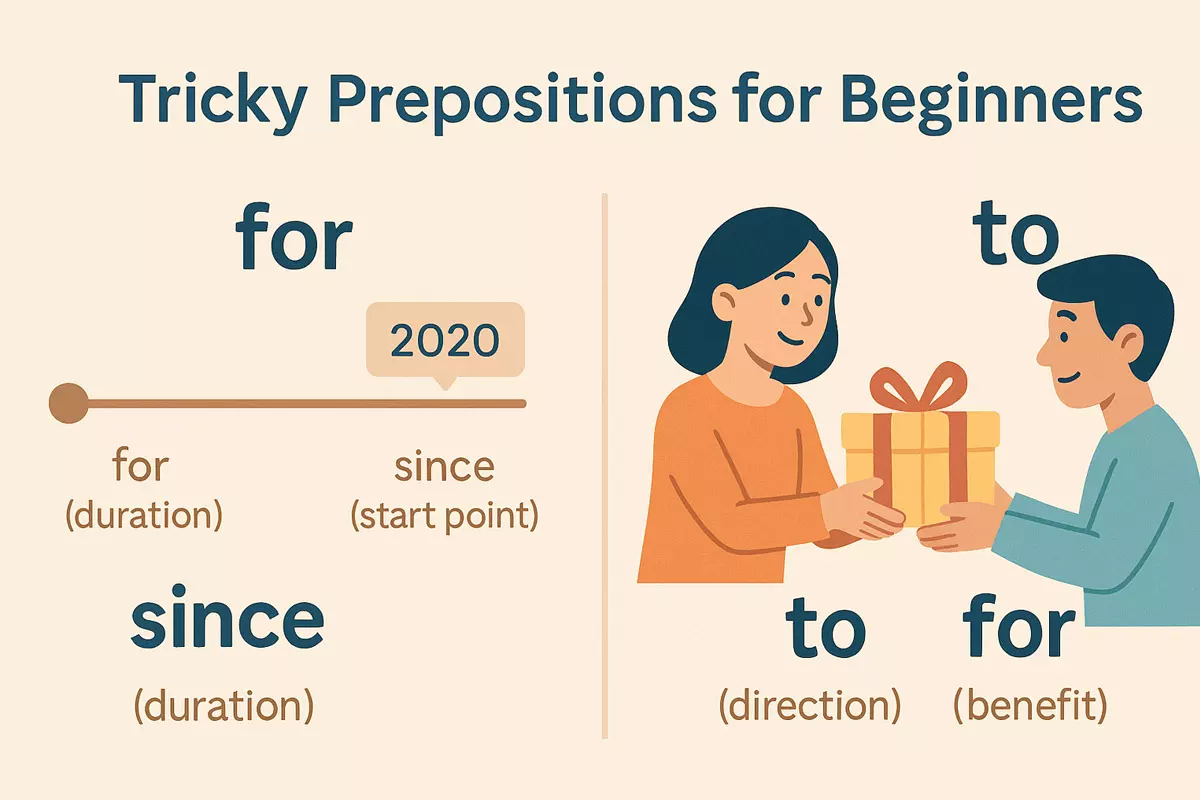 This article explains how to use for, since, and to when discussing time duration, starting points, direction, and purpose. It includes clear examples, common confusion patterns, and practice exercises for choosing the correct preposition.
Mastering the subtle differences between prepositions can be challenging for English learners, particularly when choosing between words like "for" and "since" with time expressions or deciding whether to use "to" or "for" in different situations. These small distinctions play a significant role in achieving fluency and accuracy. By paying close attention to context and practicing with real examples, learners can gradually become more confident and avoid common errors that might otherwise hinder clear communication.
for vs since: Duration vs Start Point
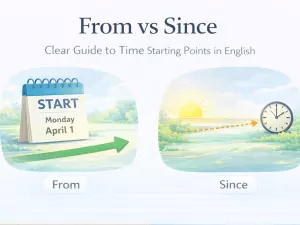
Understanding when to use for and since is a common challenge for English beginners. Both words relate to time, but their meanings and uses are different. For is used to talk about the length of time something happens, while since refers to the specific point in time when something started.
When to Use for
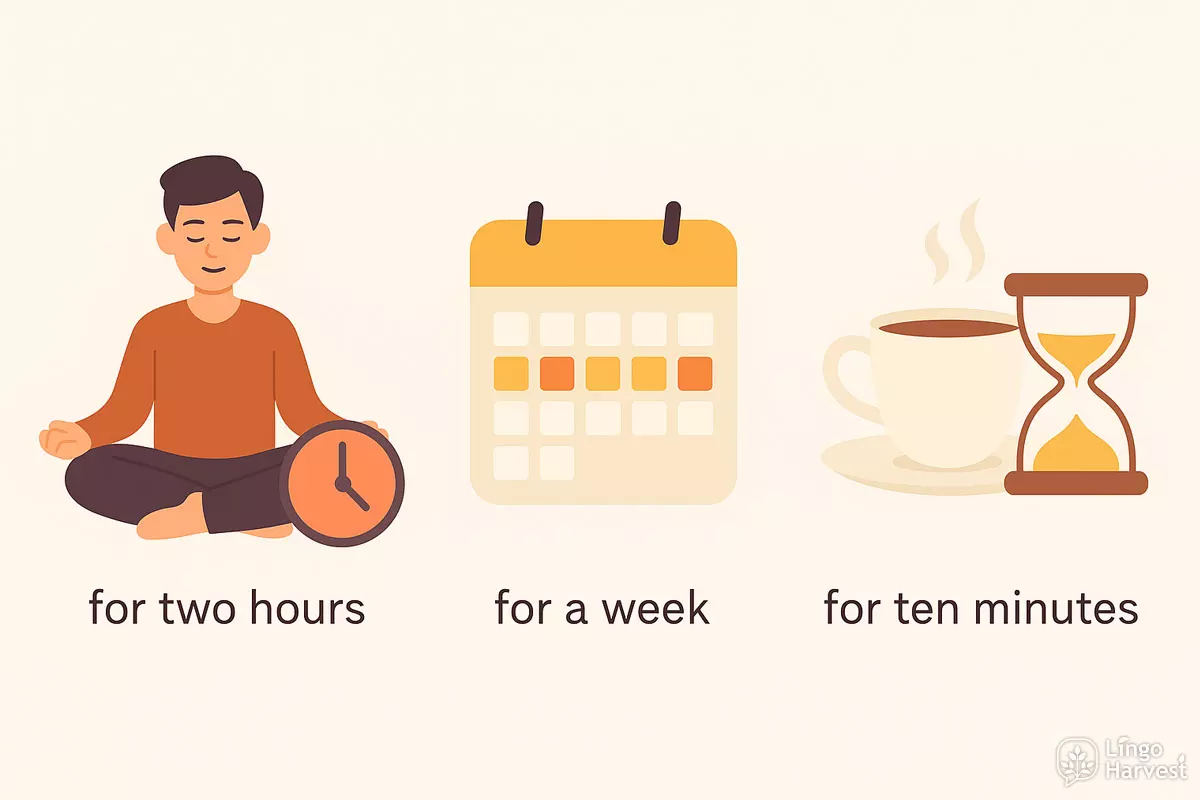
Use for to describe the duration of an action or event. It answers the question "How long?" and is followed by a period of time.
- for two hours
- for a week
- for ten minutes
- for a long time
- for several years
- for a month
- for ages
- for a decade
- for the whole day
- for a moment
When to Use since
Since is used to indicate the starting point of an action that continues up to the present. It answers the question "Since when?" and is followed by a specific time or date.
- since Monday
- since 2010
- since yesterday
- since last night
- since August
- since I was a child
- since 7 o’clock
- since lunchtime
- since Christmas
- since we moved here
Quick Comparison
| For (Duration) |
Since (Start Point) |
|---|---|
| for three days | since Monday |
| for a year | since 2022 |
| for half an hour | since 8 o’clock |
| for centuries | since the Middle Ages |
| for two weeks | since I started my job |
A simple way to remember: for tells you how long something lasts; since tells you when it began. Both are often used with perfect tenses, especially the present perfect: "I have lived here for five years." / "I have lived here since 2019." Practice with your own life events to get comfortable with these prepositions.
to vs for: Direction vs Benefit
Understanding when to use "to" and when to use "for" can be confusing, especially for beginners. These two prepositions often appear in similar contexts, but their meanings are distinct. "To" usually expresses movement or direction toward a place, person, or goal. On the other hand, "for" is about benefit, purpose, or giving something to someone.
When to Use "To"
"To" is used when you want to show direction, destination, or transfer. It answers the question "where?" or "to whom?" Here are some common situations:
- Indicating physical direction: She walked to the store.
- Showing the recipient of something: I gave the book to my friend.
- Expressing time until a point: It’s ten minutes to midnight.
- Describing a goal or end point: He wants to go to college.
- Connecting verbs with infinitives: I like to read.
When to Use "For"
"For" focuses on benefit, purpose, or duration. It answers questions like "for what purpose?" or "for whom?" Here are some typical uses:
- Describing the reason or purpose: This tool is for cutting paper.
- Stating who benefits: I cooked dinner for you.
- Talking about duration: We waited for two hours.
- Expressing support or favor: They voted for the new policy.
- Indicating replacement: Can you substitute tea for coffee?
Common Mistakes and Quick Tips
Learners often mix up these prepositions in everyday sentences. Remember, if you’re talking about a destination, use "to." If you mean purpose or benefit, choose "for."
| Use | Example Sentence |
|---|---|
| Direction or destination (to) | I am going to the gym. |
| Giving something (to) | She sent a letter to her friend. |
| Purpose/benefit (for) | This gift is for you. |
| Duration (for) | He lived there for five years. |
| Reason (for) | Thank you for your help. |
| Infinitive (to) | I want to learn English. |
By practicing these patterns, you’ll get more comfortable choosing the right word. If you’re ever unsure, ask yourself: Am I talking about a destination or direction? (Use "to.") Or am I talking about someone’s benefit or purpose? (Use "for.") This simple check can help you avoid common mistakes as you improve your English.
Talking About Time Length (for 3 years)
When you want to describe the duration of an action or state, English uses the preposition for to specify how long something has happened. This is different from since, which marks the starting point in time. Beginners often mix these up, so let's focus on the right way to express periods like "for three years."
How to Use for with Time Periods
Use for before a length of time to say how long something lasts. This pattern is common in both present perfect and past simple sentences. Here are some typical examples:
- She has lived here for three years.
- They studied English for two months.
- We will stay for a week.
- I worked there for five years.
- He’s been asleep for an hour.
- My parents traveled for six weeks.
- I haven’t eaten for a day.
- We have known each other for ages.
- She’s been married for a decade.
- He waited for a long time.
Common Mistakes: for vs since
Learners sometimes confuse for and since. Remember:
- Use for + duration: for three years, for ten minutes
- Use since + starting point: since 2021, since Monday
Quick Comparison
| Pattern | Example |
|---|---|
| for + period | for three years for two hours for a month for a long time |
| since + starting point | since 2020 since last week since Tuesday since morning |
Tips for Remembering
If you are talking about "how long," use for. If you are talking about "when it began," use since. Practice by thinking of your own experiences and forming sentences using both prepositions to reinforce the difference.
Talking About Starting Point (since 2020)
When we want to show exactly when something began, English uses since to mark the starting point. This preposition is very useful for describing actions or situations that started in the past and continue to the present. For beginners, it's important to remember that since is always followed by a specific point in time, not a duration.
How to Use "since"
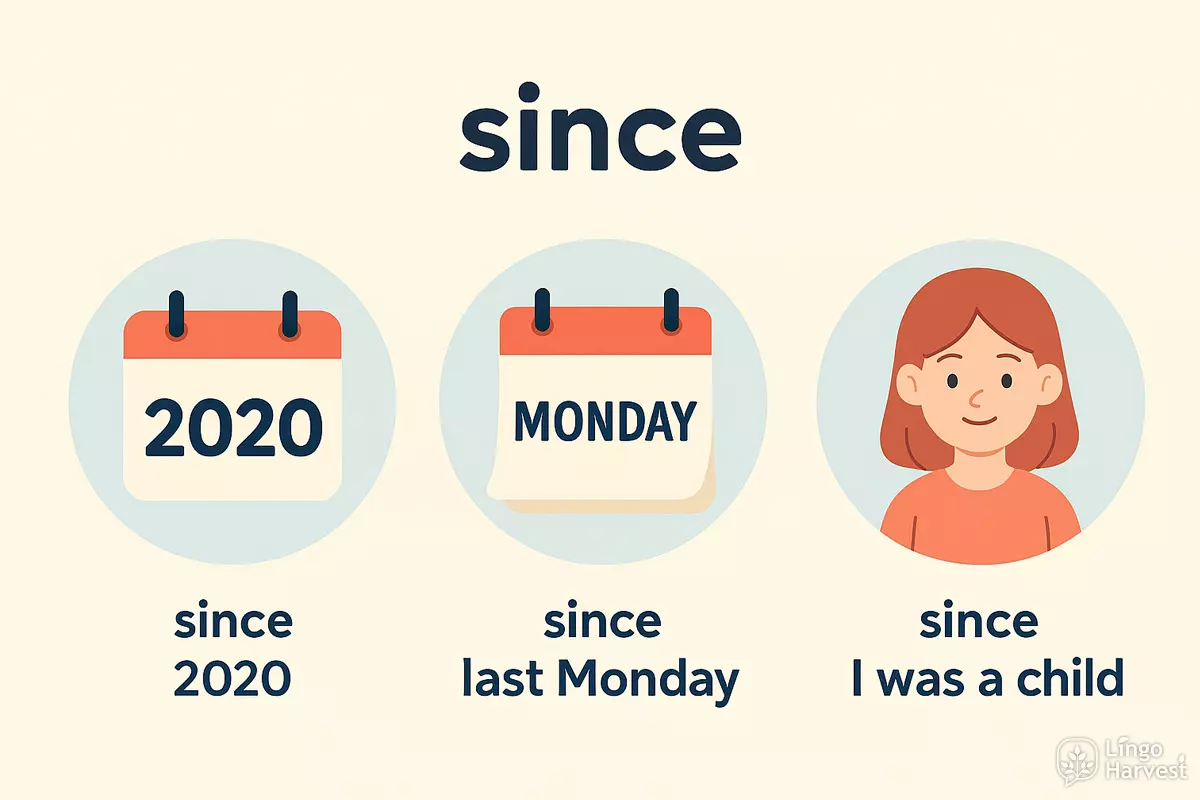
Use since with dates, years, months, days, or exact moments. For example:
- since 2020
- since last Monday
- since I was a child
- since 9 o’clock
- since January
- since the beginning of the year
- since lunchtime
- since my birthday
- since we met
- since the pandemic started
Notice that each phrase pinpoints the start of something, not the period it lasted.
Common Mistakes with "since"
- ❌ Incorrect: I have lived here since five years.
✅ Correct: I have lived here for five years. - ❌ Incorrect: She has worked here since a long time.
✅ Correct: She has worked here for a long time. - ❌ Incorrect: They have been friends since ages.
✅ Correct: They have been friends for ages.
In these examples, since is misused with durations. Remember: use since with a starting moment, and for with a length of time.
Comparison: "since" vs. "for"
| Preposition | Used With | Example |
|---|---|---|
| since | Specific point in time | I have lived here since 2020. |
| for | Period or duration | I have lived here for three years. |
| since | Event/starting moment | She has worked here since May. |
| for | Amount of time | She has worked here for six months. |
To sum up, since helps you pinpoint when something began, while for tells us how long it has lasted. Mastering this difference is key for clear, natural English when talking about time.
Purpose Expressions (This is for you)
When you want to explain why something exists or what it’s meant for, English often uses the preposition for. This is especially important for beginners who might confuse it with to. Understanding how to express purpose accurately can make your sentences clearer and more natural.
Using "for" to Show Purpose
The preposition for is commonly used to indicate the intended use or recipient of something. It answers the question: "What is this intended for?" or "Who is this for?" Here are some typical patterns:
- This gift is for you.
- She bought a cake for the party.
- These shoes are for running.
- I need a pen for writing.
- He saved money for his vacation.
- That tool is for opening bottles.
- Is this chair for guests?
- We use this room for meetings.
- This medicine is for headaches.
- I'm looking for my keys.
- The app is for learning English.
- This form is for new customers.
When to Use "to" Instead
While for often expresses purpose, to is used with verbs to show intention, especially in the infinitive form. For example:
- I came here to study.
- She called to ask a question.
- He went outside to get some air.
Remember, if you’re talking about the function of a thing or the beneficiary, use for. If you’re talking about the action you want to do, use to + verb.
Common Mistakes: "for" vs "to" in Purpose
Beginners often mix up these prepositions. Compare the following sentences:
| Incorrect | Correct |
|---|---|
| I went to the store for buy milk. | I went to the store to buy milk. |
| This brush is to painting walls. | This brush is for painting walls. |
| I called you for ask about your day. | I called you to ask about your day. |
| This cup is to coffee. | This cup is for coffee. |
By paying attention to these patterns, you’ll avoid common errors and use prepositions for purpose more confidently. Practice forming your own examples to reinforce the difference.
Common Confusion Patterns
Learners often mix up "for" and "since" when talking about time, and confuse "to" and "for" when describing purpose or direction. These prepositions look simple, but their usage can be unexpectedly tricky, especially for those new to English. Let’s break down some of the patterns that tend to cause the most mistakes.
Time Expressions: "for" vs "since"
"For" is used with a period of time, while "since" refers to a specific starting point. Beginners sometimes swap them, leading to sentences that sound unnatural or are difficult to understand.
- Incorrect: I have lived here since five years. ❌
- Correct: I have lived here for five years. ✅
- Incorrect: She has worked here for 2018. ❌
- Correct: She has worked here since 2018. ✅
Purpose and Direction: "to" vs "for"
Another frequent pitfall is using "to" and "for" interchangeably, especially when talking about reasons or recipients. "To" is generally about direction or movement, while "for" is about benefit or purpose.
| Preposition | Typical Use | Example |
|---|---|---|
| to | Direction, destination | I am going to the store. |
| for | Purpose, benefit, duration | This gift is for you. We waited for an hour. |
Frequent Learner Mix-Ups
Some mistakes keep repeating, especially in spoken English. Here are common slip-ups and how to avoid them:
- Using "since" with durations (e.g., since three days ❌ instead of for three days ✅)
- Choosing "for" with destinations (e.g., Go for home ❌ should be Go to home or better, Go home ✅)
- Saying "to" for purpose (e.g., I came to help you ✅ is correct, but I bought this to you ❌ should be for you)
- Mixing up "to" and "for" with verbs like "give," "send," "bring" (e.g., Give this to her ✅, This is for her ✅)
- Using "for" in time points (e.g., for Monday ❌ instead of since Monday ✅)
- Incorrectly saying "since ever" instead of "since forever" or "for a long time"
- Using "for" with infinitives (e.g., for go ❌ instead of to go ✅)
- Placing "for" before verbs when not needed (e.g., I called for tell you ❌ should be I called to tell you ✅)
- Using "to" with periods of time (e.g., to two hours ❌ instead of for two hours ✅)
- Saying "since" with future events (e.g., since next week ❌ is never correct)
Spotting these patterns helps in building confidence with prepositions. Practice, and paying attention to these frequent traps, leads to steady improvement.
Practice: Choose the Correct Preposition
Understanding how to use "for," "since," and "to" correctly is essential for clear communication, especially for beginners. Below, you'll find practical exercises and tips to help you master these tricky prepositions. Take your time with each activity; focus on the meaning behind each choice.
Fill in the Blank: For vs Since
Choose either for or since for each sentence:
- She has lived here ____ 2019.
- They have studied English ____ three years.
- I have been awake ____ 6 a.m.
- He has worked at this company ____ last summer.
- We have known each other ____ a long time.
- I've been on vacation ____ Monday.
- They've been married ____ ten years.
- My friend has been sick ____ yesterday.
Show answers
- since
- for
- since
- since
- for
- since
- for
- since
Multiple Choice: To vs For
Pick the correct preposition (to or for) for each sentence below:
- I gave the book ____ my sister.
- This present is ____ you.
- She went ____ the store.
- He made coffee ____ his friend.
- We are going ____ the park.
- I sent an email ____ my teacher.
- This key is ____ the front door.
- They brought flowers ____ their mother.
Show answers
- to
- for
- to
- for
- to
- to
- for
- for
Common Patterns: For, Since, To
Here are some typical expressions and structures. Notice the typical uses:
- I've lived here for five years.
- I've worked here since 2020.
- This gift is for you.
- She went to the supermarket.
- He has been tired since yesterday.
- They waited for an hour.
- I sent a letter to my friend.
- We have been friends since childhood.
- She baked a cake for his birthday.
- He drove to work.
- The medicine is for headaches.
- She has known him since high school.
- They left for Paris in the morning.
- This towel is for drying hands.
- He walked to the station.
- We have lived here for a decade.
- I've been waiting since noon.
- She called to say hello.
- The present is for you.
- He went to the gym.
Quick Reference: When to Use "For," "Since," and "To"
| Preposition | Typical Use & Example |
|---|---|
| for | Duration of time I've lived here for two years. |
| since | Starting point in time I've lived here since 2021. |
| to | Movement or direction She went to the store. |
| for | Purpose or recipient This cake is for you. |
Review these examples and patterns regularly to reinforce your understanding. Practice makes these prepositions much easier to use correctly in real conversations.