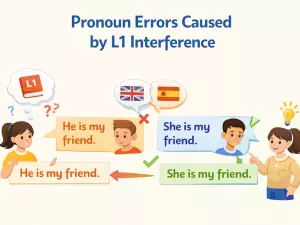
Pronouns for Beginners: I, You, He, She, It, We, They

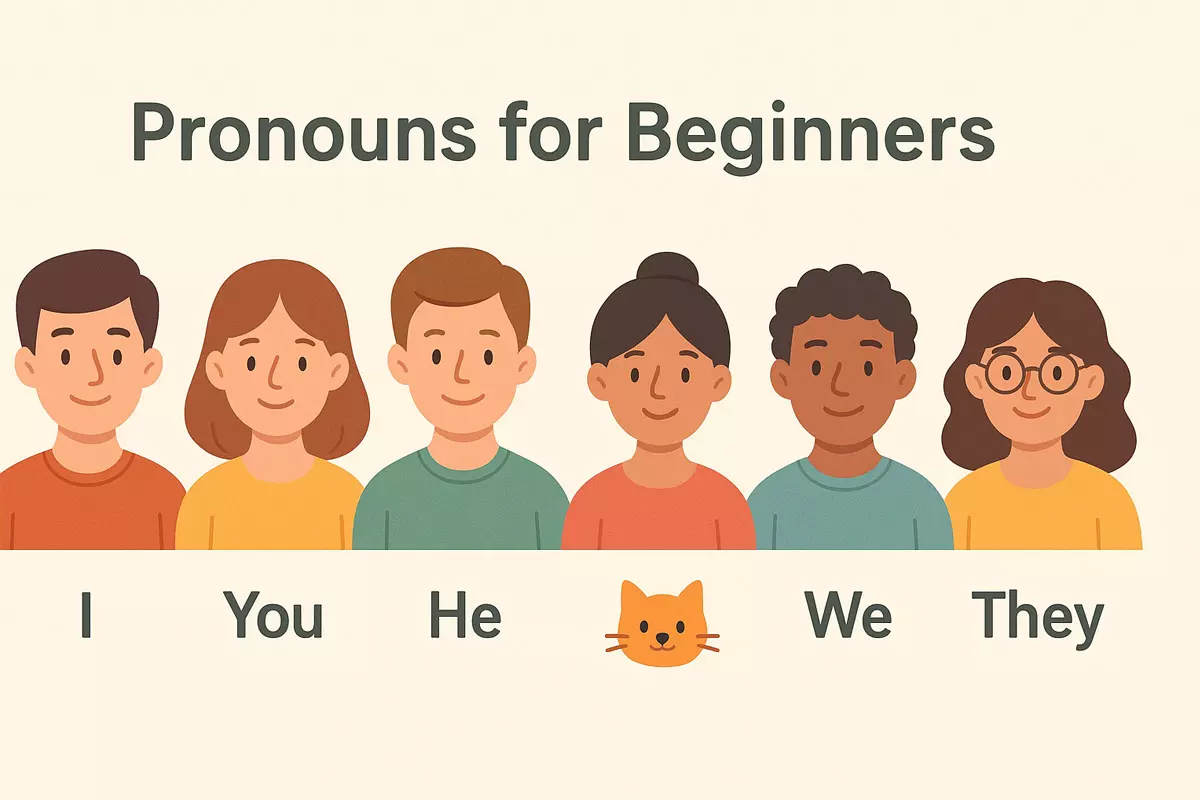 This article is a beginner's guide to personal English pronouns, covering their roles, the use of subject pronouns, and the "be" verbs. It explains third-person basics for "he/she/it" and how to use "it" for things, time, and weather.
- What Are Personal Pronouns?
- Subject Pronouns and Roles
- Be Verb with Pronouns (am/is/are)
- He/She/It: Third-Person Basics
- Using It for Things, Time, and Weather
- Contractions and Short Answers (I'm/you're/he's)
- Replacing Nouns in Simple Sentences
- Common Mistakes to Avoid
- Practice: Fill In, Choose, Rewrite
Understanding basic pronouns is crucial for mastering any language, as they form the foundation of effective communication. These small yet powerful words, such as "I," "you," "we," and "they," play a vital role in identifying and describing people, objects, and groups. By using pronouns correctly, we can make conversations clear and meaningful, ensuring that our messages are easily understood. Mastering pronouns not only aids in clarity but also enhances our ability to connect with others, making it an essential skill for anyone learning a new language.
What Are Personal Pronouns?
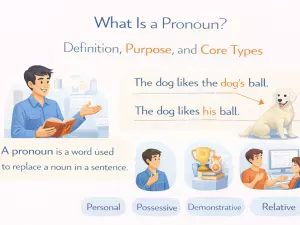
Personal pronouns are words used to replace specific nouns, typically to avoid repetition and to streamline communication. They are essential in everyday language, helping to convey who is involved in the action or who possesses something. Personal pronouns vary based on the grammatical person, number, gender, and case.
Types of Personal Pronouns
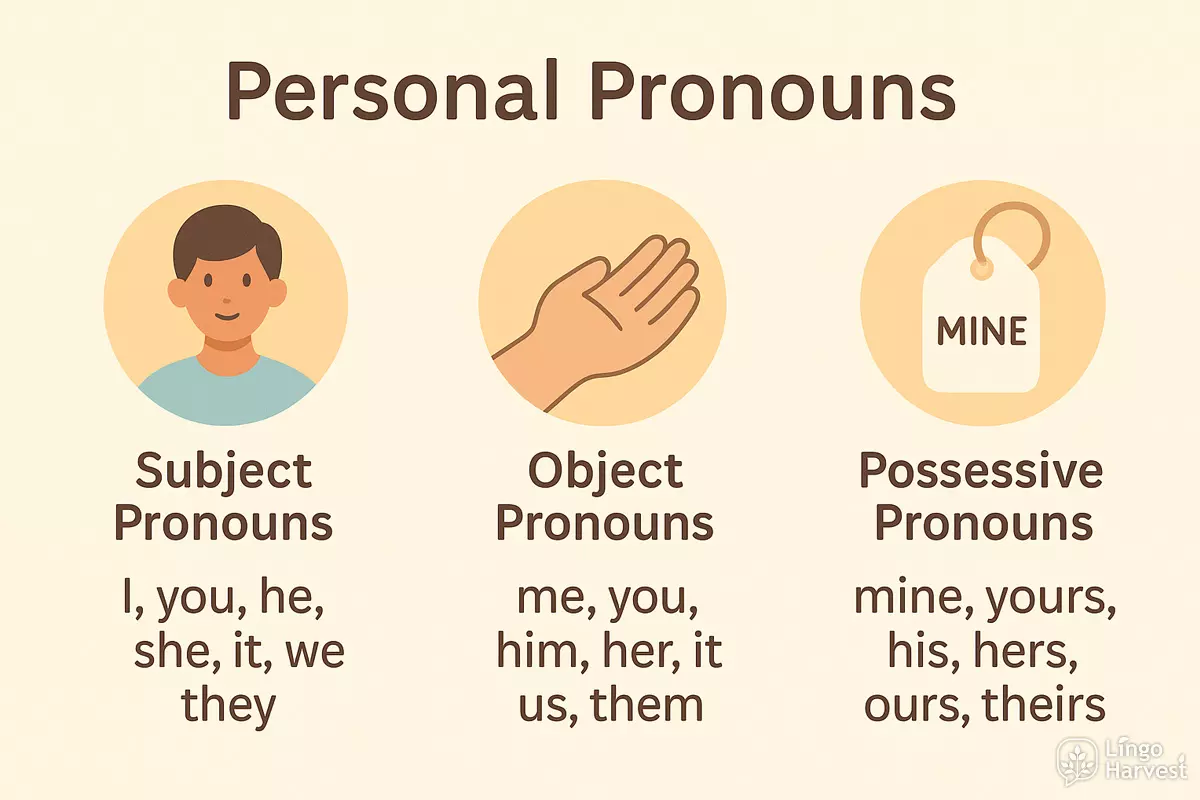
Personal pronouns are categorized into different types based on their role in a sentence. Here are the main types:
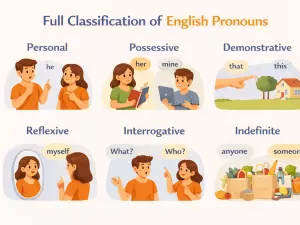
- Subject Pronouns: These pronouns act as the subject of a sentence. Examples include I, you, he, she, it, we, and they.
- Object Pronouns: These are used as the object of a verb or preposition. Examples include me, you, him, her, it, us, and them.
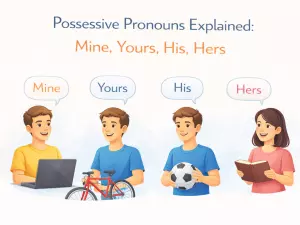
- Possessive Pronouns: These indicate ownership or possession. Examples are mine, yours, his, hers, ours, and theirs.
Personal Pronouns in Use
Understanding how to use personal pronouns correctly is crucial for clear communication. Here’s a more detailed look at their usage:
| Pronoun Type | Example Sentence |
|---|---|
| Subject Pronoun | She is going to the store. |
| Object Pronoun | Michael called them yesterday. |
| Possessive Pronoun | This book is mine. |
| Reflexive Pronoun | He made it himself. |
Choosing the Right Pronoun
Selecting the appropriate pronoun depends on the context and the grammatical rules of the sentence. Subject pronouns are used when the pronoun is the doer of the action, while object pronouns are used when the pronoun receives the action. Possessive pronouns show who owns something, and reflexive pronouns are used when the subject and object of the verb are the same. By understanding the functions and types of personal pronouns, you can enhance your communication skills and ensure clarity in your writing and speech.
Subject Pronouns and Roles
Understanding how subject pronouns function in a sentence is crucial for mastering basic grammar. Subject pronouns replace the subject of a sentence, usually a noun, to avoid repetition and simplify sentences. These pronouns are essential for identifying who or what is performing the action of the verb.
Basic Subject Pronouns
The most common subject pronouns in English are:
- I - used when the speaker is referring to themselves.
- You - used when addressing one or more people directly.
- He, She, It - used to refer to a third person or thing.
- We - used when the speaker includes themselves with others.
- They - used to refer to a group of people or things.
Roles and Examples
Each subject pronoun serves a specific role in a sentence. Here are some examples showing their usage:
- I am going to the store. (I is the person performing the action.)
- Do you want to join us for dinner? (You is the person being addressed.)
- He is reading a book. (He is the person performing the action.)
- She loves to paint. (She is the person performing the action.)
- It is raining outside. (It refers to the weather.)
- We are planning a trip. (We includes the speaker and others.)
- They are playing soccer. (They refers to a group of people.)
Special Considerations
While using subject pronouns, it's important to match the pronoun with the correct verb form. For instance, I takes a different verb form than he or she. Additionally, consider the context and clarity when choosing the appropriate pronoun. In some cases, gender-neutral pronouns like they can be used for individuals who prefer them or when the gender of a person is unknown.
Be Verb with Pronouns (am/is/are)
Understanding how to use the "be" verb with pronouns is essential for constructing simple and clear sentences in English. This verb changes form depending on the pronoun it is paired with, which can sometimes be confusing for beginners. Let's break down how each pronoun pairs with the correct form of the "be" verb.
Forms of the "Be" Verb
The "be" verb has three main forms that are used with different pronouns: "am," "is," and "are." Here's how they are typically paired: - I goes with am. Example: I am a student. - You goes with are. Example: You are my friend. - He/She/It goes with is. Example: He is a teacher. - We goes with are. Example: We are happy. - They goes with are. Example: They are playing.
Usage in Sentences
The "be" verb is used to describe a state of being, identity, or characteristics. Here are a few examples illustrating its use: - Identity: She is a doctor. - State of Being: We are excited about the trip. - Characteristics: It is a sunny day.
| Pronoun | Form of "Be" Verb | Example Sentence |
|---|---|---|
| I | am | I am learning English. |
| You | are | You are very kind. |
| He/She/It | is | She is a musician. |
| We | are | We are going to the park. |
| They | are | They are my neighbors. |
By mastering these basic forms, you can start forming sentences that convey clear and precise meanings. Remember, practice is key to becoming comfortable with using the "be" verb in everyday conversation.
He/She/It: Third-Person Basics
Understanding the third-person pronouns is essential when learning English, as they are used to refer to people or things other than the speaker or the listener. These pronouns help to clarify who or what is being discussed, reducing ambiguity in conversations and writing.
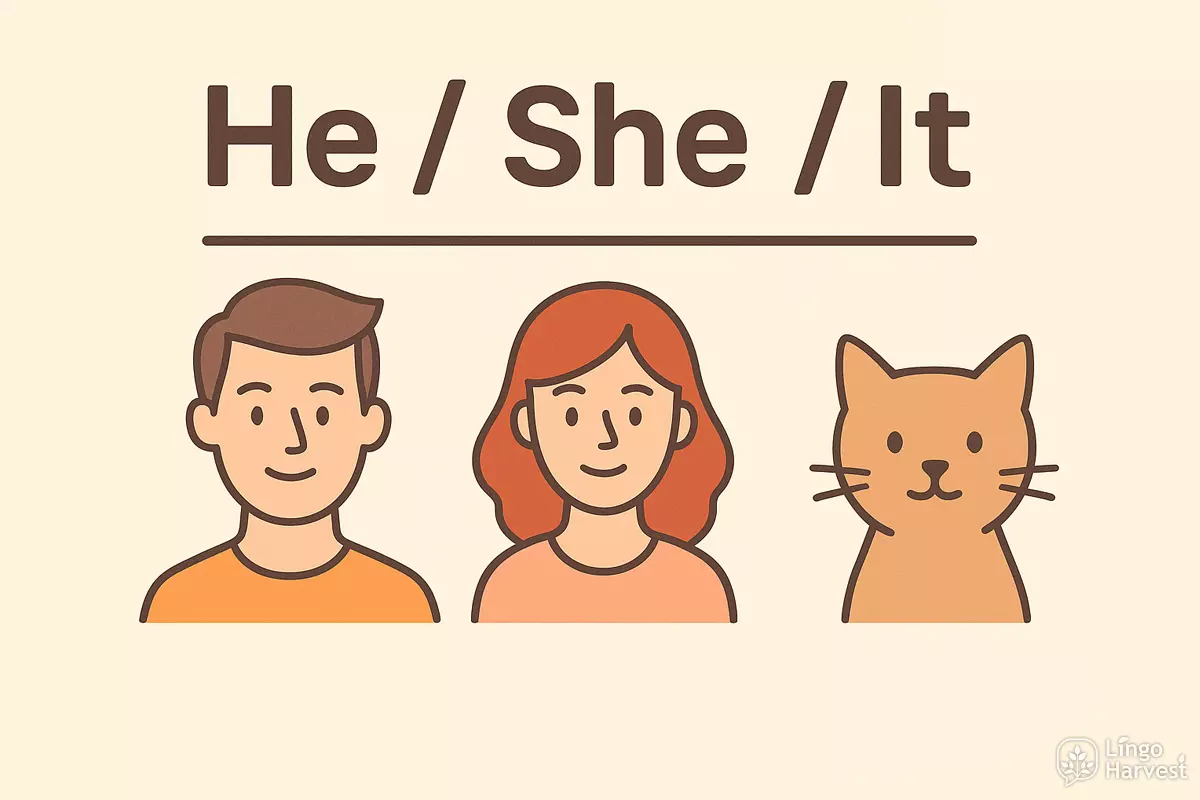
Using "He," "She," and "It"
The pronoun "he" is used for males, "she" for females, and "it" for objects, animals, or ideas without a specified gender. For instance, "he" can refer to your brother, "she" to your sister, and "it" to your pet cat or a car. Here are some examples to illustrate:
- He is going to the store. (Referring to a male)
- She has a new book. (Referring to a female)
- It is raining outside. (Referring to the weather)
Key Differences and Usage
When choosing the correct pronoun, consider the gender and specificity of the subject. Use "he" or "she" when the gender is known and relevant. If the gender is unknown or irrelevant, "it" might be appropriate, especially for non-human subjects.
| Pronoun | Usage Example |
|---|---|
| He | He is a doctor. |
| She | She loves to paint. |
| It | It is a sunny day. |
Common Mistakes to Avoid
A common error is misusing "it" when referring to people, which can be perceived as impersonal or disrespectful. Always use "he" or "she" when discussing individuals with known genders. Additionally, ensure subject-verb agreement; for example, "he is" and "it is," not "he are" or "it are." By mastering these third-person basics, you can communicate more effectively and clearly, ensuring that your message is well understood.
Using It for Things, Time, and Weather
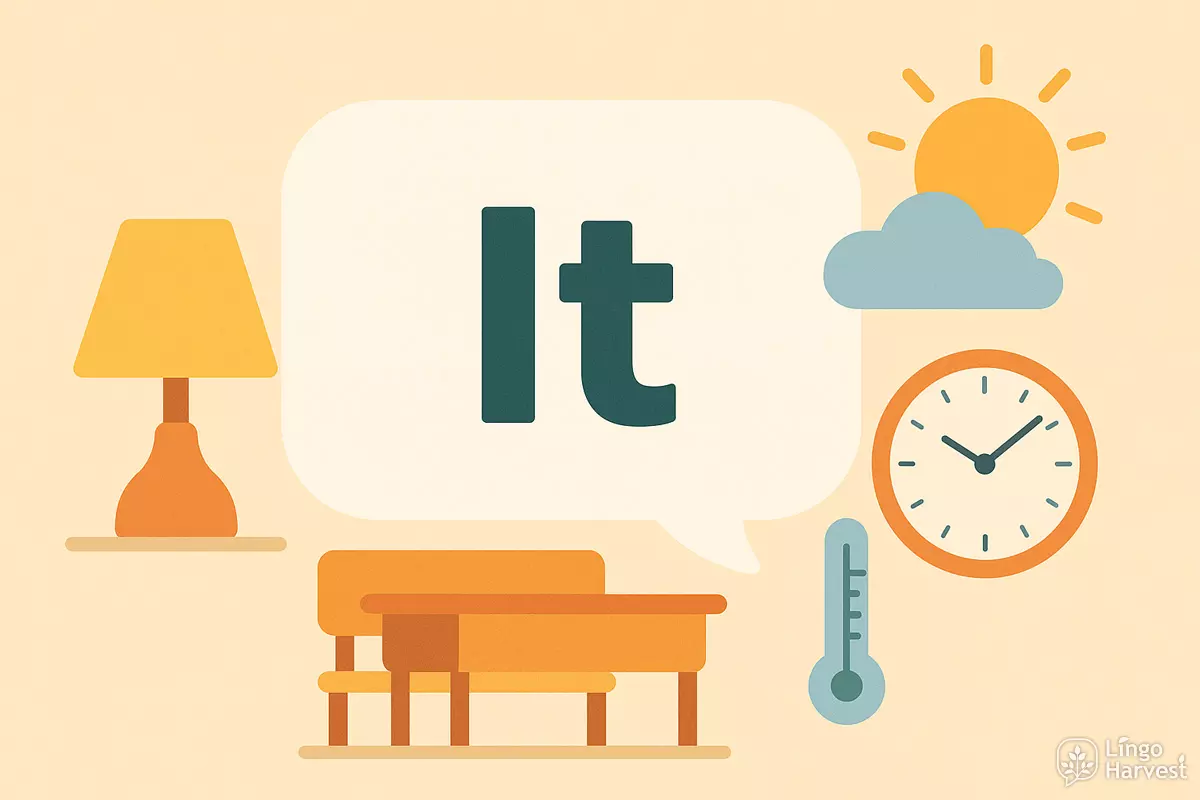
The pronoun "it" is incredibly versatile and is often used to refer to inanimate objects, abstract concepts, and environmental conditions. Understanding how to use "it" correctly can enhance your communication skills significantly. Let's explore some common contexts where "it" is used effectively.
Referring to Objects
When talking about things that do not have a gender, "it" is the go-to pronoun. Whether you're discussing a book, a car, or a mysterious sound, "it" can stand in for any object that lacks a specific gender identity. For instance:
- The book was on the table. It was very interesting.
- I heard a noise. It came from the attic.
- The car is new. It drives smoothly.
Expressing Time and Weather
"It" is also commonly used in expressions of time and weather, which are abstract concepts that do not have a specific subject. Here are some examples:
- It is 3 PM.
- It was raining all day.
- It is supposed to be sunny tomorrow.
Using "It" in Sentences
The following table illustrates various ways "it" can be used in sentences to refer to different contexts:
| Context | Example Sentence |
|---|---|
| Object | The lamp is broken. It needs to be fixed. |
| Weather | It is snowing heavily outside. |
| Time | It is almost midnight. |
| Abstract Idea | It is important to stay positive. |
Mastering the use of "it" in these scenarios can make your English more fluent and natural. Remember, practice makes perfect, and using "it" in different contexts will help you become more confident in your language skills.
Contractions and Short Answers (I'm/you're/he's)
In English, contractions are a convenient way to combine a pronoun and a verb, making speech and writing more fluid and natural. For beginners learning about pronouns, understanding how to use contractions like "I'm," "you're," and "he's" is essential. These contractions are not only common in everyday conversation but also in writing, particularly in informal settings.
Common Contractions
Contractions are formed by merging a pronoun with a verb, typically involving an apostrophe to replace omitted letters. Here are some frequently used contractions:
- I'm: The contraction of "I am."
- You're: The contraction of "you are."
- He's/She's/It's: The contractions of "he is," "she is," and "it is," respectively.
- We're: The contraction of "we are."
- They're: The contraction of "they are."
Using Short Answers
Short answers are a concise way to respond to questions, often utilizing contractions. They help in maintaining the flow of conversation without redundancy. Here are some examples:
- Are you coming? - Yes, I'm.
- Is he ready? - No, he's not.
- Are they joining us? - Yes, they're.
Contractions in Everyday Use
Understanding contractions is crucial for effective communication. They are prevalent in conversations, casual writings, and even some formal contexts. While learning them, it's essential to practice both forming and using them in various sentences.
| Pronoun | Contraction | Example Sentence |
|---|---|---|
| I | I'm | I'm going to the store. |
| You | You're | You're welcome to join us. |
| He | He's | He's already left. |
| She | She's | She's cooking dinner. |
| It | It's | It's raining outside. |
| We | We're | We're planning a trip. |
| They | They're | They're coming over later. |
By mastering contractions, learners can enhance their fluency in English, making their conversations smoother and more efficient.
Replacing Nouns in Simple Sentences
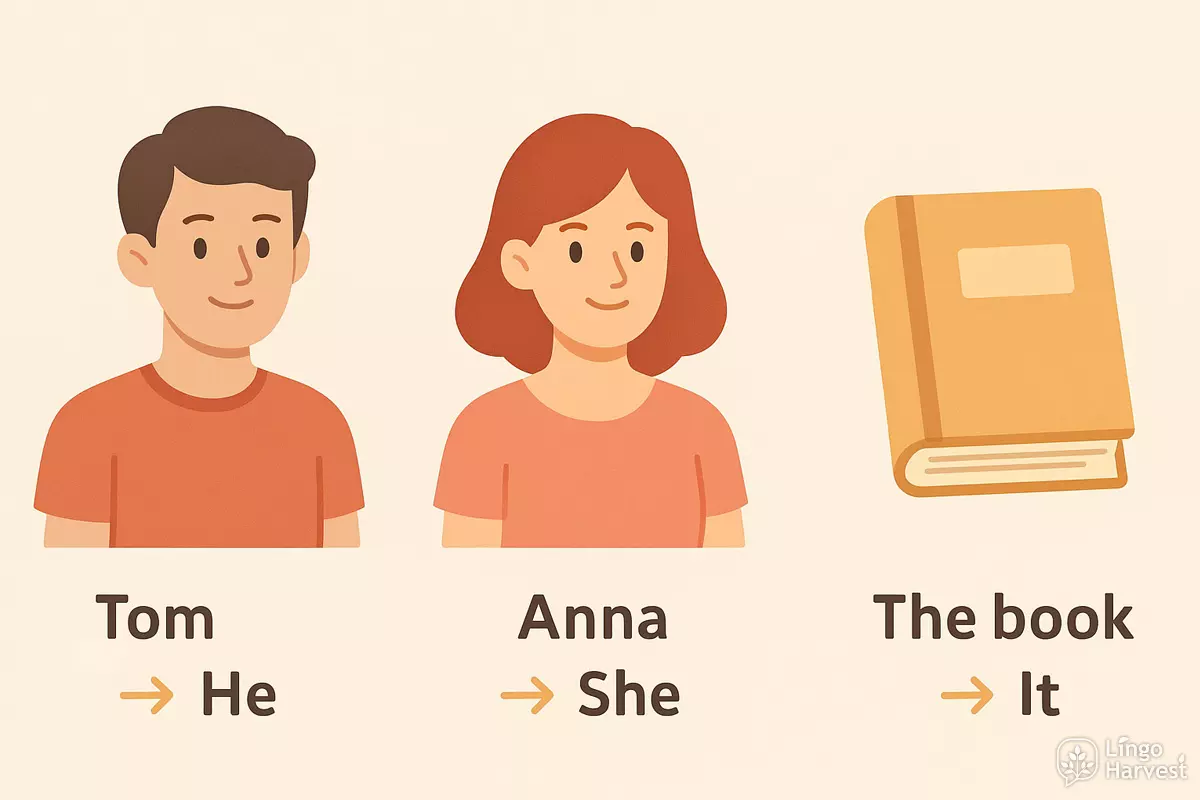
In everyday communication, pronouns serve as handy tools for replacing nouns, making sentences less repetitive and more fluent. Instead of repeating the same noun multiple times, pronouns allow us to refer back to a person, place, or thing with ease. This not only simplifies our language but also enhances clarity and flow.
Understanding Basic Pronouns
Pronouns like I, you, he, she, it, we, and they are fundamental in English. Each pronoun has a specific role and is used according to the context and the nouns they replace. Here’s a quick overview:
- I: Used when the speaker is referring to themselves.
- You: Used to address the person or people being spoken to.
- He/She: These pronouns are used for singular male and female subjects, respectively.
- It: Used for objects, animals, or ideas that are singular and not gender-specific.
- We: Refers to a group that includes the speaker.
- They: Used for plural subjects or when the gender is unknown or irrelevant.
Practical Examples
Consider the following sentences where nouns are replaced by pronouns:
| Sentence with Nouns | Sentence with Pronouns |
|---|---|
| Sarah likes apples. | She likes them. |
| The book is on the table. | It is on it. |
| John and I went to the park. | We went there. |
| The dogs are barking. | They are barking. |
Choosing the Right Pronoun
Using the correct pronoun is crucial for clear communication. Misusing them can lead to confusion. It’s important to match the pronoun to the noun it replaces in terms of number (singular/plural) and gender when applicable. For instance, he and she are gender-specific, whereas they can be used for both plural and singular cases where gender is not specified.
By mastering pronouns, you not only refine your language skills but also make your conversations more engaging and easier to follow. Remember, the key to using pronouns effectively is understanding their role and ensuring they align with the nouns they substitute.
Common Mistakes to Avoid
Understanding pronouns can be tricky for beginners, and it's easy to fall into some common pitfalls. One frequent error is mixing up subject and object pronouns. For instance, using "I" instead of "me" or "he" instead of "him." This can lead to sentences that sound awkward or are grammatically incorrect.
Subject vs. Object Pronouns
Pronouns change form depending on their function in a sentence. Here’s a quick guide:
- Subject Pronouns: I, you, he, she, it, we, they
- Object Pronouns: me, you, him, her, it, us, them
For example, "She gave the book to him" is correct, whereas "Her gave the book to he" is not.
Agreement in Number and Gender
Another common mistake involves ensuring pronouns agree in number and gender with the nouns they replace. For instance, using "they" to refer to a singular noun when contextually inappropriate can confuse the reader. Always match the pronoun to the singular or plural form of the noun.
| Correct Usage | Incorrect Usage |
|---|---|
| She is going to the store. | Her is going to the store. |
| They are playing outside. | He are playing outside. |
| We saw them at the park. | Us saw they at the park. |
Pronoun Consistency
Maintaining consistency in pronoun use is crucial for clarity. Switching between "I" and "we" in the same context can confuse the reader about who is being referred to. Stick to one perspective unless there's a reason to change.
Common Example List
Here’s a list of some frequent pronoun errors to watch out for:
- Using "me" as a subject: "Me went to the store." (should be "I went to the store.")
- Using "I" as an object: "He gave it to I." (should be "He gave it to me.")
- Confusing "its" and "it's": "Its a nice day." (should be "It's a nice day.")
- Incorrect plural pronouns: "Each student must submit their paper." (should be "Each student must submit his or her paper.")
- Using "they" for singular entities without context: "The company announced they are hiring." (consider revising for clarity)
By being aware of these common errors, you can improve your pronoun usage and make your communication more precise and effective.
Practice: Fill In, Choose, Rewrite
Now let’s practice using the pronouns I, you, he, she, it, we, they in real sentences. Try each exercise before opening the answers.
Fill In the Blanks
- Maria loves to read. ___ goes to the library every week.
- Tom and Jerry are friends. ___ play soccer together.
- My cat is very playful. ___ loves to chase the laser pointer.
- John and I are going to the concert. ___ are very excited.
- Do you know where my keys are? ___ were on the table.
Show answers
- She
- They
- It
- We
- They
Choose the Correct Pronoun
- (He / She) is my brother.
- (We / They) are going to the park.
- The dog is hungry. (It / They) wants food.
- (You / I) are my best friend.
- (I / We) am going to the store.
Show answers
- He
- We
- It
- You
- I
Rewrite the Sentences
- Sarah and Mike are planning a trip. Sarah and Mike are excited.
- The book is on the table. The book is new.
- My parents and I went to the museum. My parents and I had a great time.
Show answers
- They are excited.
- It is new.
- We had a great time.
Pronoun Usage Table
Here is a quick reference showing how each pronoun is used in a sentence:
| Pronoun | Example Sentence |
|---|---|
| I | I am learning French. |
| You | You are very kind. |
| He | He is a great teacher. |
| She | She loves to paint. |
| It | It is raining outside. |
| We | We are going on vacation. |
| They | They won the match. |
Practice regularly, and using pronouns correctly will become natural and automatic.